

Home Safety Locks & Keys: Ultimate 2026 Guide
Are you worried your baby might open an under-sink cabinet, a medicine drawer, or the dishwasher before you even notice? That moment is exactly why many parents start researching home safety locks before crawling turns into pulling up, cruising, climbing, and copying every adult move.
Home safety locks are not about making a home "perfectly childproof." No lock can do that. The goal is to slow access to hazards, create safer routines, and give adults more time to respond. Guidance from the CPSC home safety resources, CDC medication safety guidance, Poison Control, and Safe Kids medication safety tips consistently supports a layered approach: supervise, store dangerous items up and away, lock high-risk storage when possible, and inspect safety devices regularly.
Recommended product landing pages:
| Use case | Product or category | Product image note |
|---|---|---|
| Broad cabinet and drawer babyproofing | Magnetic Cabinet Locks collection | 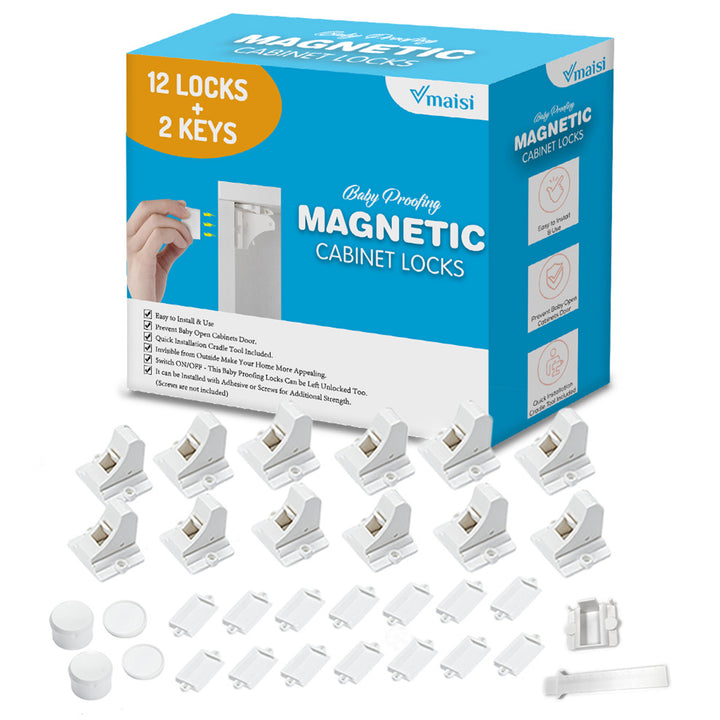 |
| Whole-kitchen or multi-room setup | Vmaisi Child Safety Magnetic Drawer & Cabinet Locks 20 Pack | 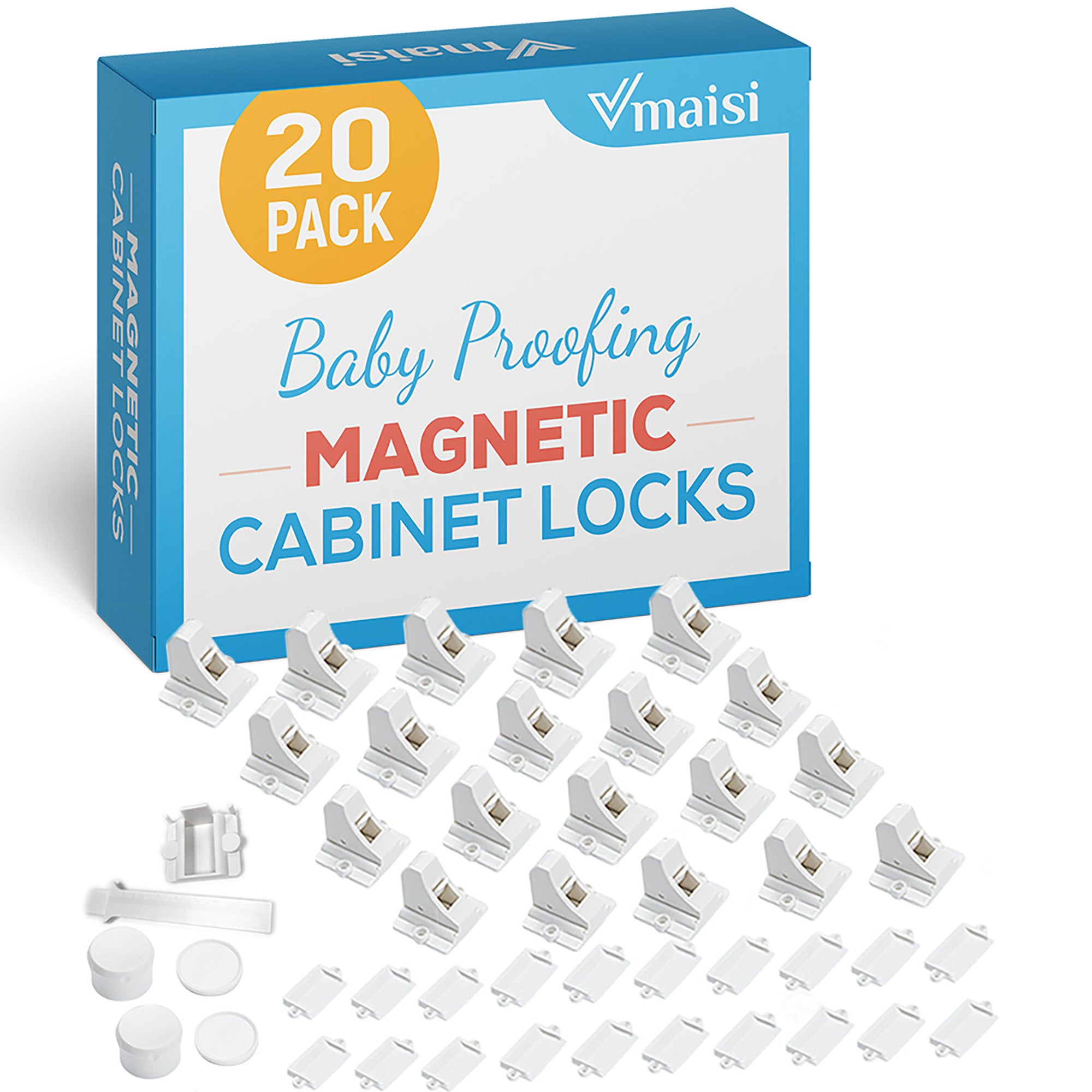 |
| Mid-size cabinet babyproofing | Vmaisi Baby Proofing Magnetic Cabinet Locks 12 Pack | 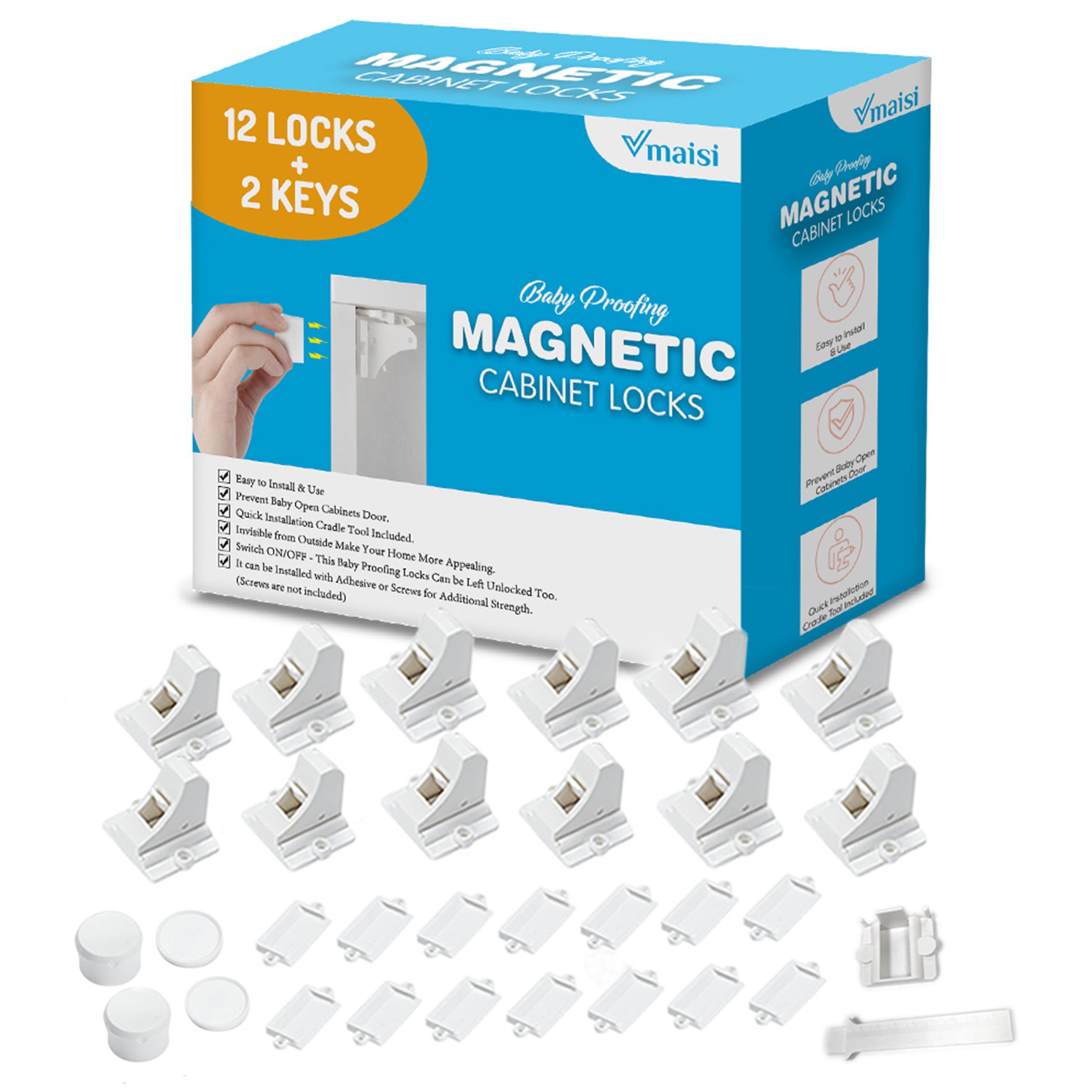 |
| Multiple child safety cabinet locks | Magnetic Child Safety Cabinet Locks 16 Pack | 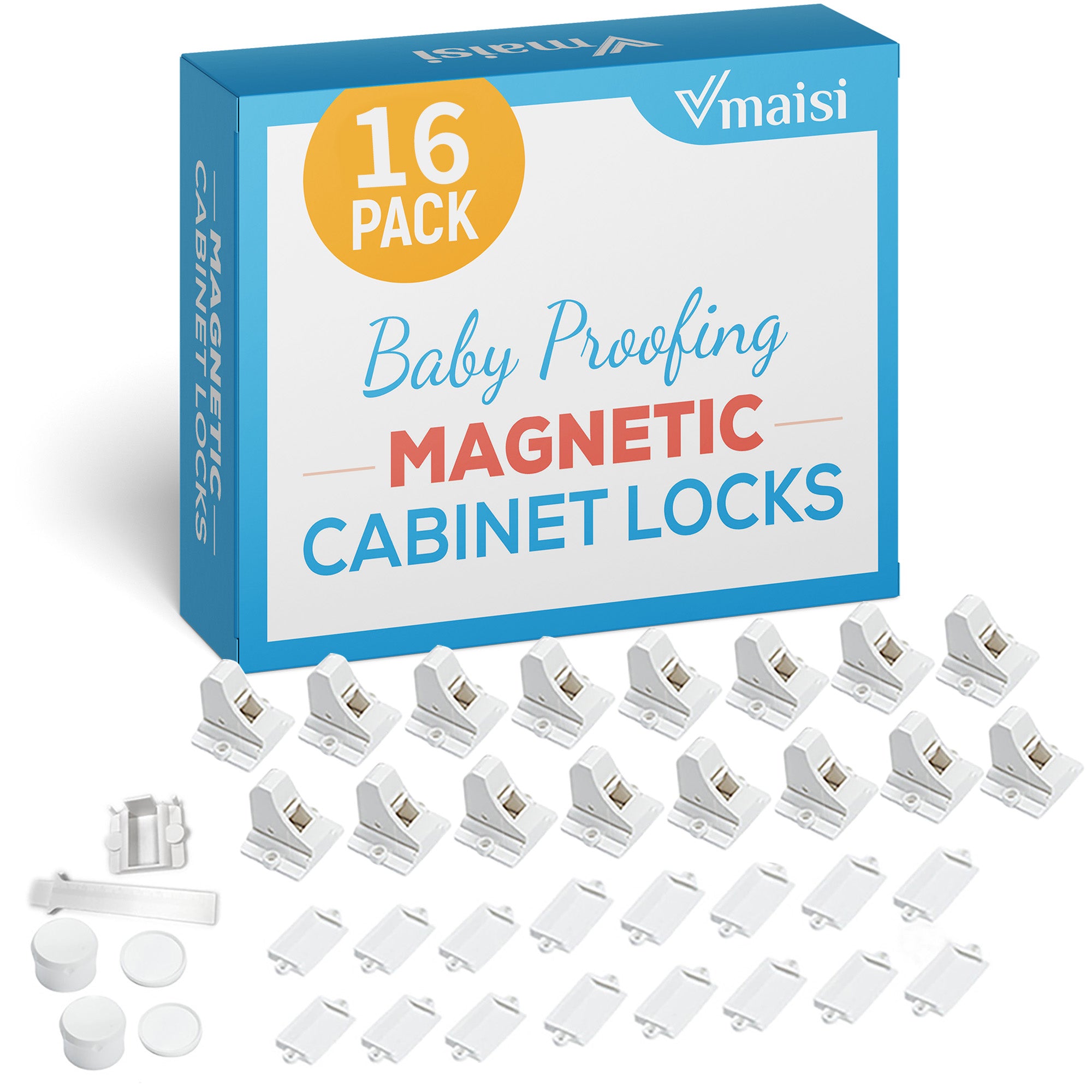 |
| Appliance, toilet, fridge, dishwasher, and trash can access | 6 Pack Vmaisi Multi-Use Adhesive Straps Locks | 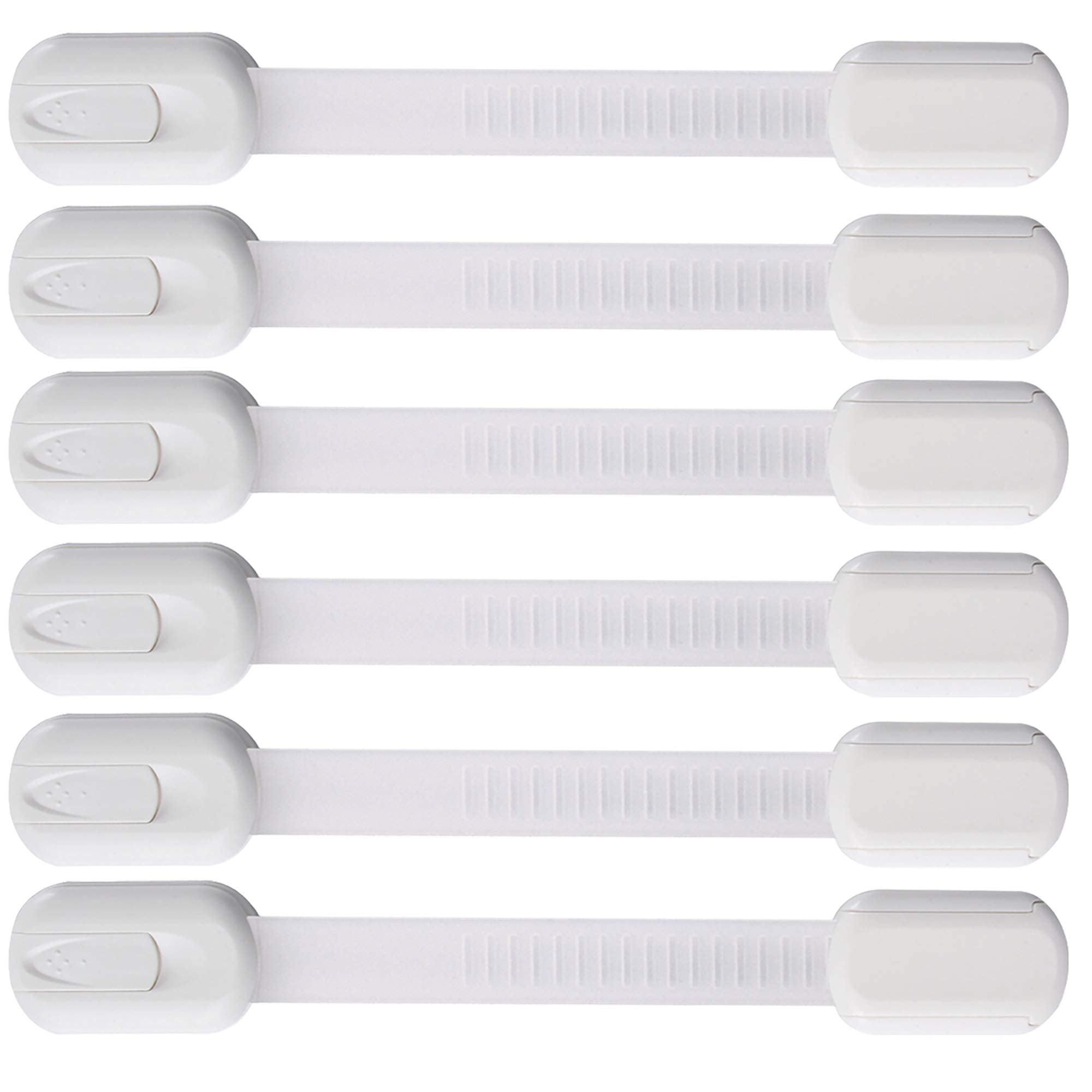 |
What home safety locks do for cabinets, drawers, and daily routines
Home safety locks are childproofing devices that help reduce a baby or toddler's access to cabinets, drawers, appliances, toilets, and storage areas. They are commonly used for kitchen cleaners, detergent pods, medicine, sharp utensils, razors, batteries, small choking hazards, glass items, and bathroom products.
For parents searching terms like safety usa, safetyfirst, baby cabinet locks, or cabinet locks for babies, the core question is usually the same: "Which lock should I trust in the place where my child is most likely to reach?" The answer depends on the surface, the hazard, the layout, and how adults will use the lock every day.
| Area | Common hazard | Useful lock category |
|---|---|---|
| Kitchen cabinets | Cleaners, trash, glass, small objects | Magnetic cabinet locks or screw-reinforced cabinet locks |
| Kitchen drawers | Knives, scissors, peelers, batteries | Magnetic drawer locks or child safety locks for drawers |
| Bathroom cabinets | Medicine, razors, cosmetics, cleaners | Child safety cabinet locks plus safe storage habits |
| Medicine cabinet | Prescription drugs, vitamins, supplements | Cabinet lock plus lockable medicine box for higher-risk items |
| Fridge | Glass jars, choking hazards, refrigerated medicine | External child safety locks for fridge |
| Dishwasher | Detergent pods, knives, hot steam, glassware | Physical child safety locks for dishwasher |
| Oven | Hot door, controls, knobs, racks | Heat-aware child safety locks for oven plus knob protection |
| Toilet seat | Water access and hygiene concerns | Child safety locks for toilet seat |
For standard cabinets and drawers, many parents prefer hidden options such as magnetic cabinet locks, because they install inside the cabinet and stay invisible from the outside. For appliances and odd surfaces, a strap-style option from the multi-use child safety locks collection is often a better fit.
The most important safety reminder is simple: locks reduce access risk, but they do not replace supervision, safe storage, or regular inspection. A curious toddler can grow stronger, learn patterns, and test the same lock repeatedly.
Choosing home safety locks by room and risk level
A useful way to choose home safety locks is to walk through your home at child height. Open every low cabinet and drawer. Ask: "If my baby reached this today, what would happen?" Prioritize the highest-risk areas first: under-sink cabinets, bathroom storage, medicine storage, knife drawers, laundry cabinets, dishwashers, toilets, and ovens.
For cabinets and drawers, Vmaisi Child Safety Magnetic Drawer & Cabinet Locks are designed for both drawers and cabinets, with hidden installation and magnetic key operation. For smaller homes, grandparents' houses, or testing fit before a larger setup, the 4 Pack Magnetic Cabinet Locks may be a practical starting point.
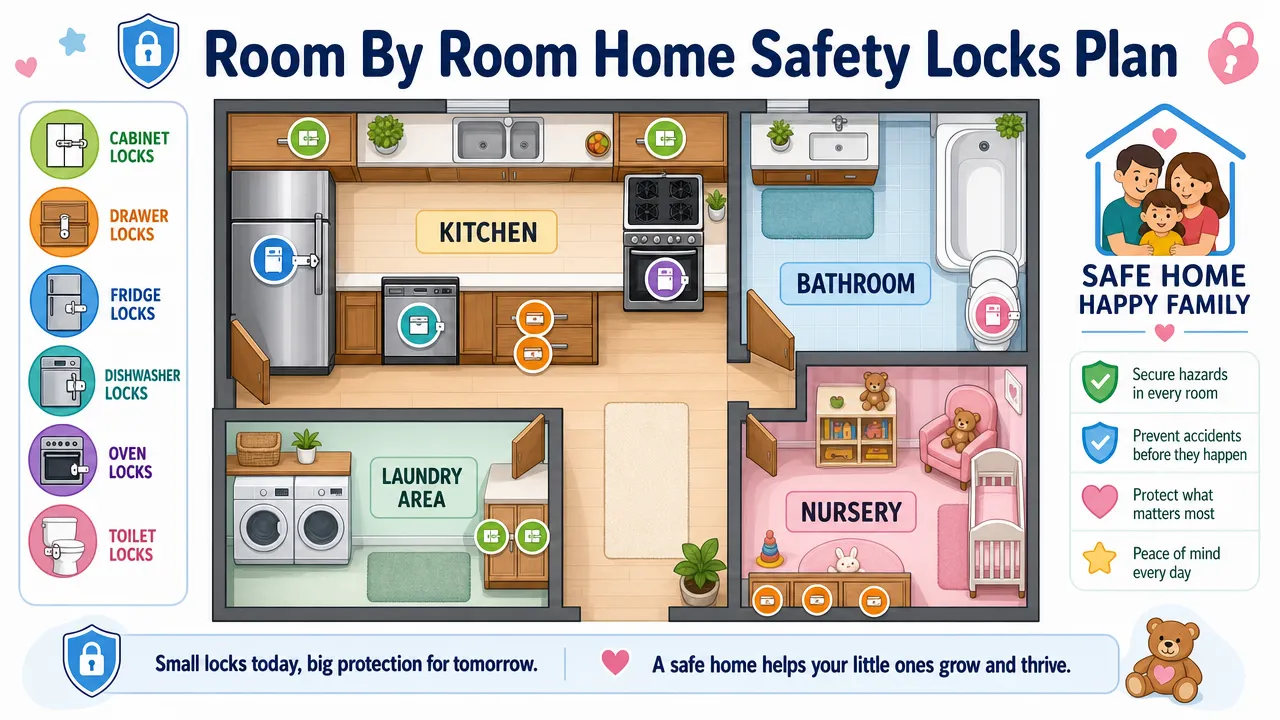
If you are wondering how to baby proof cabinets and drawers, start with content before hardware. Move the most dangerous items up high and out of sight when possible. Then lock the areas that still contain hazards. This is especially important for medicine. The CDC recommends keeping medicines "up and away" and out of sight, and Poison Control in the U.S. can be reached at 1-800-222-1222 if exposure is suspected.
For a deeper medicine-specific plan, see Vmaisi's guide on how to childproof a medicine cabinet and the article on the best child locks for medicine cabinet. A medicine cabinet may need more than one layer: locked cabinet access, high storage, original containers, and possibly a lockable medicine box for high-risk medications.
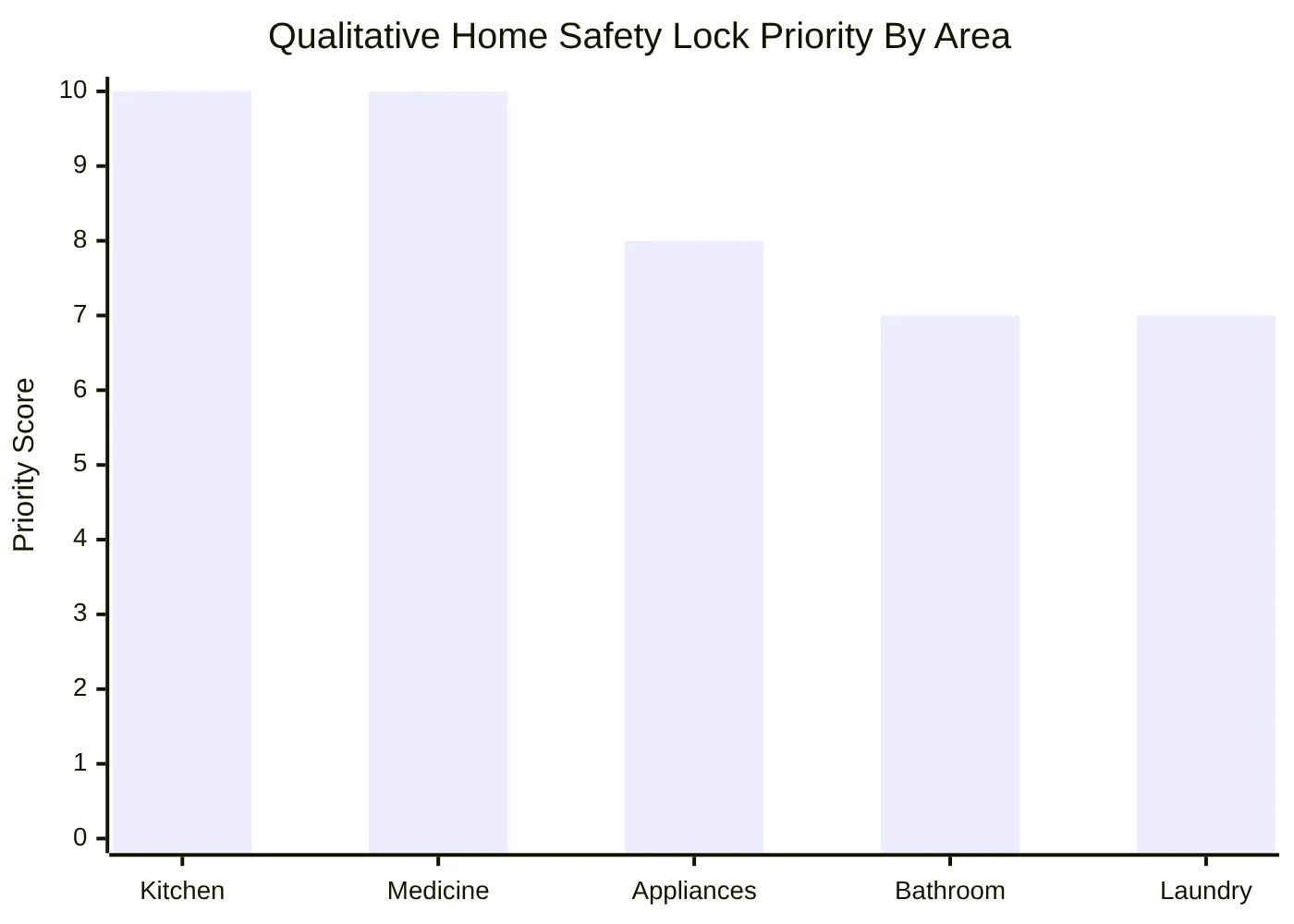
This chart is a qualitative planning tool, not injury incidence data. It simply reflects how often these areas combine easy access with serious household hazards.
Comparing home safety locks: magnetic, adhesive, screw-mounted, and appliance locks
Different home safety locks solve different problems. Magnetic cabinet locks, baby proofing cabinet locks, babyproof cabinet locks, child safety cabinet locks, magnetic drawer locks, and invisible cabinet locks are closely related, but they are not identical to appliance straps or toilet locks.
Magnetic cabinet locks and invisible cabinet locks
Magnetic cabinet locks install inside the cabinet or drawer. Adults open them with a magnetic key from the outside. Because they are hidden, they are also commonly called invisible cabinet locks. This design can help preserve the look of modern kitchens and make the release mechanism less obvious to toddlers.
Vmaisi's baby proofing magnetic cabinet locks include locks and keys for everyday cabinet babyproofing, while the Magnetic Child Safety Cabinet Locks 16 Pack is a good fit when parents need child safety cabinet locks for multiple drawers and cabinets.
Magnetic drawer locks
Magnetic drawer locks are commonly used for knife drawers, utensil drawers, bathroom grooming drawers, and office drawers with small objects. They require careful alignment, especially with inset drawers or unusual drawer frames. Always test one drawer before installing locks throughout the whole room.
Cabinet locks with adhesive vs screws
Adhesive locks are popular because they are easier to install, often no-drill, and more rental-friendly. Screw-mounted locks are usually better for long-term strength when the cabinet material and household situation allow drilling.
| Factor | Adhesive cabinet locks | Screw-mounted cabinet locks |
|---|---|---|
| Installation | Easier, usually peel-and-stick | Requires screws or drilling |
| Rental fit | Usually better | Usually worse |
| Surface damage | Lower risk, but not zero | Leaves holes |
| Long-term strength | Depends on surface prep and cure time | Often stronger when installed correctly |
| Removal | Warm, peel slowly, clean residue carefully | Unscrew and patch holes if needed |
| Best use | Temporary setups, rentals, lower-risk cabinets | High-use or high-risk cabinets |
The adhesive magnetic cabinet locks for babies are relevant for parents comparing adhesive convenience with possible screw reinforcement. Vmaisi's magnetic cabinet lock troubleshooting page notes important adhesive basics: clean the surface, avoid metal interference, and allow proper cure time before use.
Appliance and toilet locks
Magnetic hidden locks are generally best for standard cabinets and drawers, not appliance doors. For child safety locks for fridge, child safety locks for dishwasher, child safety locks for toilet seat, and some child safety locks for oven, external adhesive straps or dedicated appliance locks are usually more appropriate.
For fridge and oven planning, review Vmaisi's guide to child safety locks for fridge and oven. You can also see more specific advice on child safety locks for fridge, child safety locks for dishwasher, and child safety locks for oven.
For these appliance zones, the 6 Pack Vmaisi Multi-Use Adhesive Straps Locks is the most relevant product landing page because it is designed for multiple surfaces such as fridge, dishwasher, toilet seat, cupboard, oven, trash can, cabinets, and drawers.
Installing and maintaining home safety locks correctly
Even good home safety locks can fail if they are installed on greasy, dusty, wet, or incompatible surfaces. Before you install magnetic cabinet locks, read the product instructions, clean and dry the surface, test alignment, and check for hidden metal. Screws, nails, staples, knobs, handles, or metal cabinet parts can interfere with magnetic function.
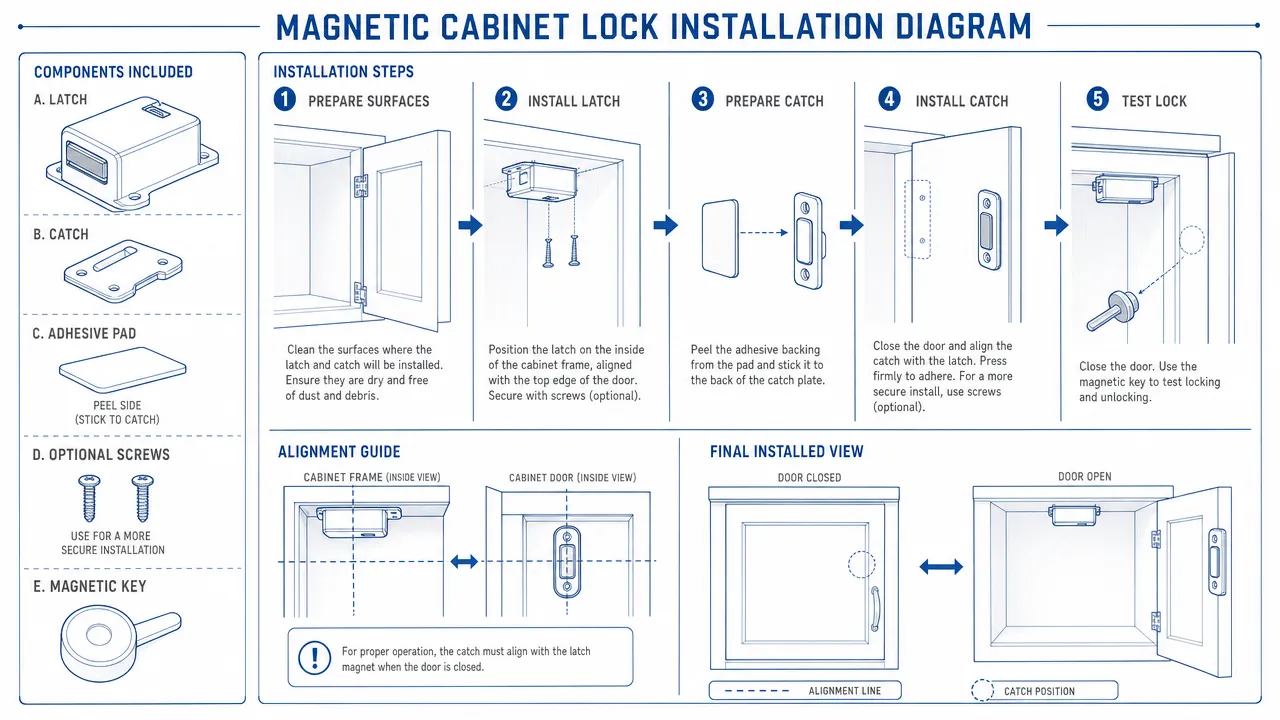
To answer the common question "how to install magnetic cabinet locks," use this sequence:
- Read the manufacturer instructions first.
- Clean the cabinet surface to remove dust, oil, moisture, and residue.
- Let the surface dry fully.
- Dry-fit the latch and catch before removing adhesive backing.
- Use a template, cradle, or ruler if included.
- Test the magnetic key through the cabinet front.
- Check for hidden metal or nearby metal hardware.
- Press adhesive locks firmly into place or install screws if using screw reinforcement.
- Confirm the door closes and catches.
- Store the magnetic key out of children's reach.
- Allow adhesive cure time before heavy use.
- Recheck the lock after 24 hours and inspect regularly.
The key is part of the system. Do not leave magnetic keys on the floor, in low drawers, or attached where a toddler can reach them. If you need extras for adults, Vmaisi offers replacement magnetic cabinet lock keys.
Parents also ask: do magnetic cabinet locks work on corner cabinets? Often, yes, but not always. Success depends on the corner cabinet geometry, door overlap, frame access, Lazy Susan movement, door thickness, and whether the key can reach the lock position. Before sticking anything permanently, dry-fit the lock and test key range. For more detail, read Vmaisi's guide to magnetic locks for corner cabinets.
If you need to know how to remove magnetic cabinet locks, first identify whether the lock is adhesive-only, screw-mounted, or both. For adhesive locks, gently warming the adhesive may help if the cabinet finish allows it. Work slowly with dental floss, fishing line, or a plastic card. Avoid metal scrapers on finished cabinetry. For screw-mounted locks, remove screws carefully and collect all small parts immediately so they do not become choking hazards.
2026 home safety locks buying checklist and product recommendations
The best home safety locks are the ones that match the hazard, the surface, the cabinet layout, and the way adults actually use the space. A beautiful invisible lock is not helpful if the surface is incompatible. A strong screw-mounted lock may not be right for a rental cabinet. A magnetic lock may be ideal for drawers but not for a fridge door.
Use this checklist before buying:
| Question | Why it matters |
|---|---|
| What hazard am I blocking? | Medicine, knives, cleaners, and detergent need higher priority. |
| Is the surface wood, composite, glass, metal, or textured? | Lock compatibility depends on material and finish. |
| Is this a cabinet, drawer, fridge, dishwasher, oven, or toilet? | Different access points need different lock styles. |
| Do I need adhesive, screws, or both? | Adhesive is easier; screws may offer stronger long-term hold. |
| Can adults open it easily every day? | A lock that frustrates adults may be left unlocked. |
| Can my child see or copy the mechanism? | Hidden locks can reduce toddler imitation. |
| Where will the key go? | Magnetic keys must stay accessible to adults, not children. |
| How often will I inspect it? | Monthly checks help catch peeling adhesive, cracks, and misalignment. |
For most parents, the starting point is simple: secure high-risk cabinets and drawers first, then add appliance and bathroom locks where your child shows interest. Explore magnetic cabinet locks for hidden cabinet and drawer protection, and add multi-use child safety locks for appliances, toilet seats, trash cans, and awkward surfaces.
Locks are one layer of protection. The safer routine is the full system: move hazards up and away, lock what remains accessible, supervise closely, inspect monthly, and replace any lock that becomes loose, cracked, misaligned, or easy for your child to defeat.