

Do Magnetic Cabinet Locks Fit Corner Cabinets?
Do Magnetic Cabinet Locks Fit Corner Cabinets?
Are you trying to babyproof a tricky kitchen corner and wondering whether magnetic cabinet locks will actually work there, or whether you need a completely different setup? The good news is that in many cases, they can. If you are learning how to install magnetic cabinet locks, the main difference with corner cabinets is not the lock itself, but the mounting position, door geometry, and how easily the magnetic key can reach the latch.
Magnetic locks are a popular option for families who want hidden child safety hardware that does not change the look of the kitchen or bathroom. For many standard cabinets and drawers, installation is straightforward. Corner cabinets are more nuanced, but they are not automatically off-limits.
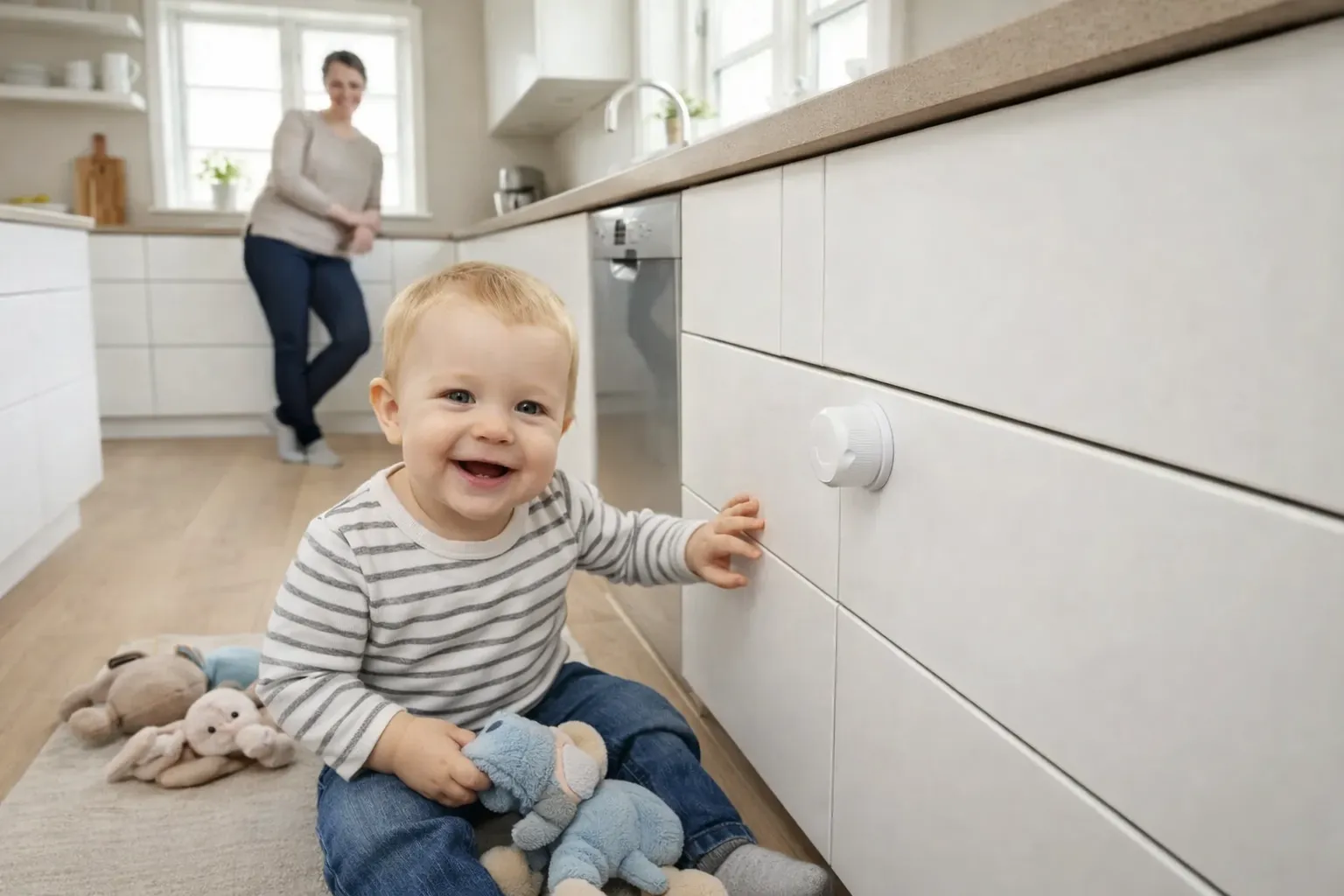
In this guide, we will cover whether magnetic locks fit corner cabinets, how to install magnetic cabinet locks, what to know about cabinet locks with adhesive vs screws, how they fit into how to baby proof cabinets and drawers, and the safest approach for how to remove magnetic cabinet locks later on.
How to install magnetic cabinet locks on standard and corner cabinets
Before deciding whether a corner cabinet is a good candidate, it helps to understand how magnetic systems work. A magnetic lock is installed inside the cabinet or drawer, and a separate magnetic key releases it from the outside. Because the hardware is hidden, many parents choose it over visible straps and external latches.
If you are shopping by room or cabinet count, Vmaisi offers options such as the Vmaisi Child Safety Magnetic Drawer & Cabinet Locks 20 Pack, the Vmaisi Baby Proofing Magnetic Cabinet Locks 12 Pack, and the Vmaisi Child Safety Magnetic Cabinet Locks 4 Pack.
For standard cabinets and drawers, the general process is simple:
- Empty the cabinet or drawer.
- Clean the interior mounting surfaces thoroughly.
- Use the alignment cradle or jig if your kit includes one.
- Mount the lock body on the inside of the door or drawer front.
- Position the catch on the frame or cabinet interior so both pieces align when closed.
- Test repeatedly with the magnetic key before relying on it daily.
Vmaisi also provides a step-by-step installation reference in this guide on how to install Vmaisi magnetic cabinet locks for childproof the house.
A quick comparison helps show where corner cabinets fit:
| Cabinet type | Difficulty | Notes |
|---|---|---|
| Standard single-door cabinet | Easy | Best-case scenario for magnetic locks |
| Standard drawer | Easy | Usually mounts on inner drawer front and frame |
| Double-door cabinet | Easy to moderate | Check overlap and center alignment |
| Diagonal-front corner cabinet | Moderate | Usually workable with adjusted placement |
| L-shaped corner cabinet | Moderate to difficult | Depends on frame access and door clearance |
| Blind corner cabinet | Difficult | Usually lock only the main accessible door |
| Lazy Susan corner cabinet | Moderate to difficult | Rotating interior can complicate placement |
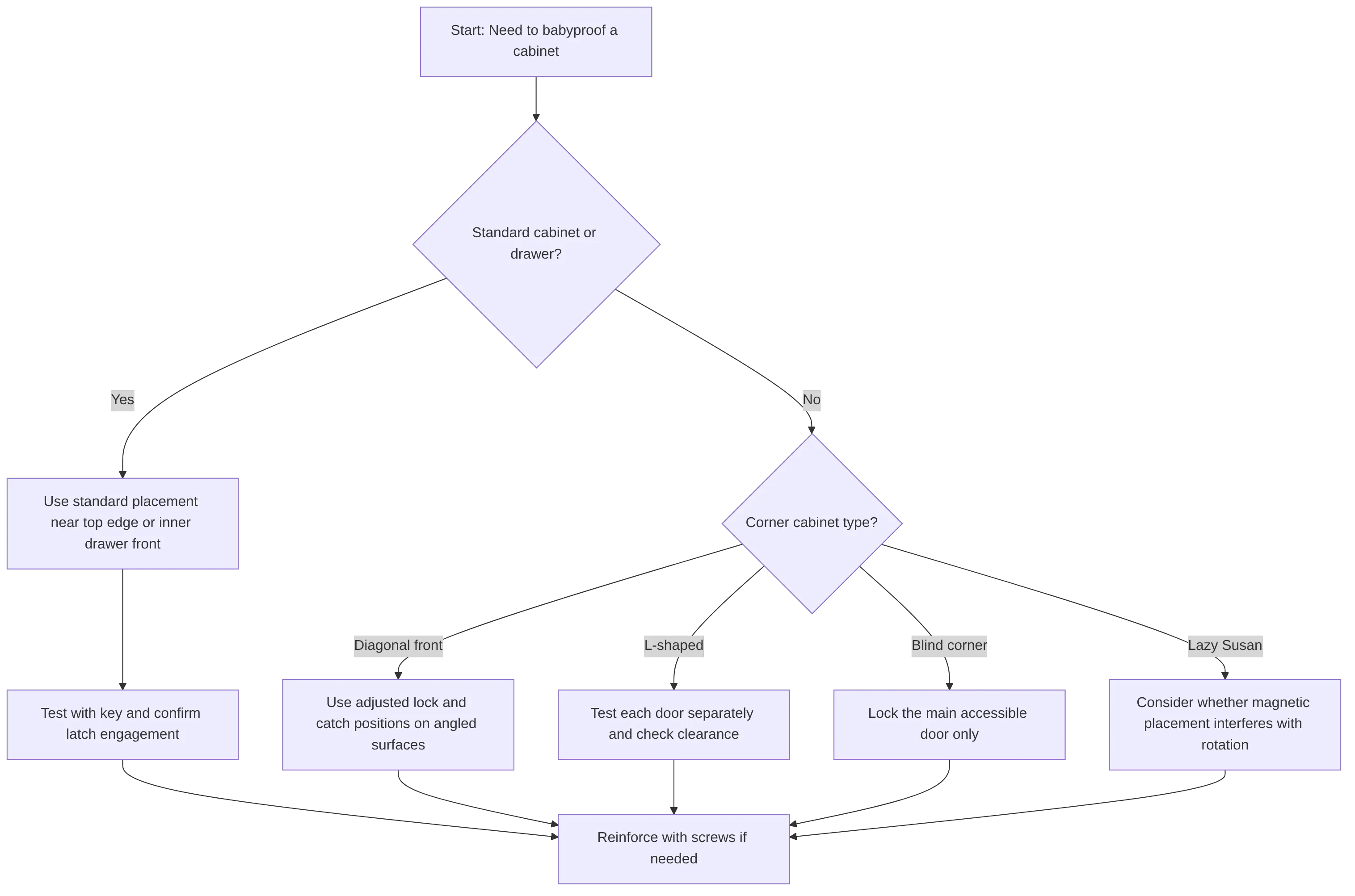
Do magnetic cabinet locks work on corner cabinets when you install magnetic cabinet locks correctly
The short answer is yes, many of them do. But the exact answer depends on the cabinet style.
A diagonal-front corner cabinet is usually the easiest corner style for magnetic locks. Even though the face is angled, it still has a defined door panel and a nearby internal surface for the catch. In many kitchens, this means you can adapt the same method used for a standard cabinet, just with more careful alignment.
An L-shaped corner cabinet is more variable. If each door has its own frame section, you can often treat each door like a standard cabinet. If the doors meet without a useful interior mounting point, installation becomes more experimental. In those cases, some homeowners create a small internal mounting block to give the catch a stable surface.
Blind corner cabinets are different. The blind space itself is not the part you secure. Instead, you secure the accessible door that leads into the cabinet. As long as that door stays locked, the blind interior remains inaccessible too.
Lazy Susan cabinets can sometimes work with magnetic locks, but rotating shelves and unusual internal geometry may make other childproofing methods easier.
Vmaisi specifically notes real-world success with a lock installed sideways in a corner cabinet in its article on magnetic cabinet locks work for a corner cabinets. That same article also points out an important issue: hidden ferrous metal inside cabinetry can interfere with locking, so testing the area first with the magnetic key is a smart step.
Here is a practical fit guide:
| Corner cabinet style | Will magnetic locks work? | Best approach |
|---|---|---|
| Diagonal-front corner cabinet | Usually yes | Install on door interior and angled or adjacent fixed surface |
| L-shaped corner cabinet with separate frame areas | Often yes | Treat each door separately |
| L-shaped corner cabinet without clear frame area | Maybe | Use careful testing or an internal mounting block |
| Blind corner cabinet | Partly | Lock only the accessible entry door |
| Lazy Susan corner cabinet | Sometimes | Test for clearance, or use another childproofing method if needed |
The biggest success factors are:
- Flat internal mounting surfaces.
- Door thickness within the lock's range.
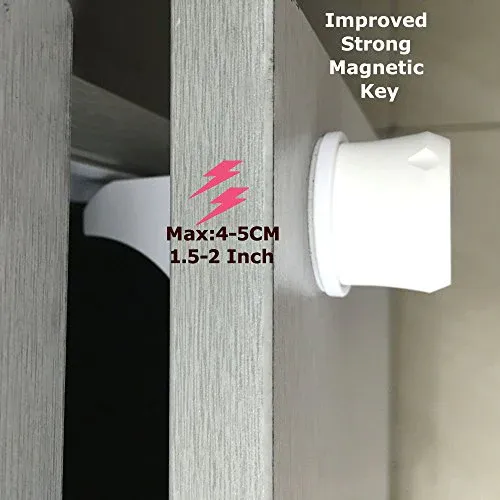
- Enough room for the magnetic key to activate the latch.
- No hidden metal hardware close to the lock position.
For thicker cabinet fronts or replacement accessories, Vmaisi also offers a replacement key with extra stronger magnets.
Cabinet locks with adhesive vs screws when you install magnetic cabinet locks
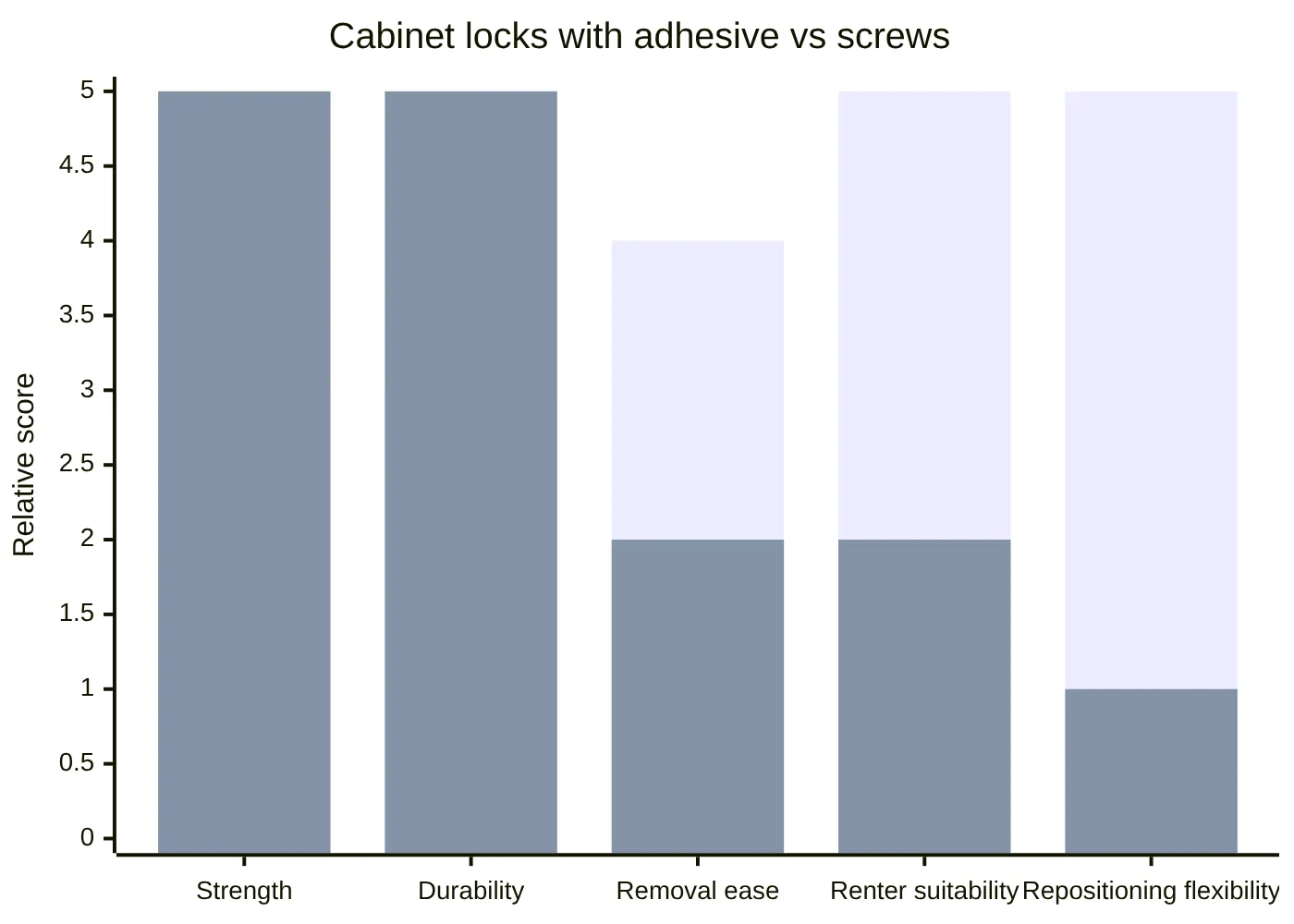
One of the most common questions from parents and renters is whether adhesive is enough, or whether screws are better. This is where cabinet locks with adhesive vs screws really matters.
Adhesive-mounted locks are popular because they are quick to install, require no drilling, and are easier on cabinetry. That makes them appealing for renters and for anyone testing placement on a difficult cabinet. Vmaisi highlights this approach in its post about magnetic cabinet locks without screws.
Screw-mounted locks are usually stronger over time. Independent testing and product comparisons commonly find that hardware-mounted options hold up better against repeated pulling and everyday wear. That matters most on high-risk cabinets, like under-sink storage, cleaning product cabinets, or heavy-use kitchen doors.
For corner cabinets, adhesive often makes the best starting point because placement may need adjustment. Once you confirm that the lock lines up and releases consistently, you can decide whether adding screws is worth it.
| Feature | Adhesive | Screws |
|---|---|---|
| Installation speed | Fast | Slower |
| Tools required | Minimal | Drill or screwdriver needed |
| Best for renters | Yes | Usually no |
| Long-term strength | Moderate | High |
| Easy repositioning | Better at first | Harder once installed |
| Surface damage risk | Lower, but not zero | Higher due to holes |
A simple rule of thumb:
- Choose adhesive first for rentals, quick installs, and corner-cabinet trial fitting.
- Choose screws, or adhesive plus screws, for hazardous storage and high-use cabinets.
How to baby proof cabinets and drawers with magnetic cabinet locks and other methods
When parents search how to baby proof cabinets and drawers, magnetic locks are often the top choice for kitchens and bathrooms because they stay hidden and are difficult for toddlers to figure out. But the best solution depends on what is inside the cabinet and how the cabinet is built.
Magnetic locks are especially useful for:
- Cleaning product storage.
- Medicine cabinets with suitable wood construction.
- Knife and utensil drawers.
- Pantry areas with choking hazards.
- Bathroom cabinets with cosmetics or small dangerous items.
That said, babyproofing should never depend on one tool alone. U.S. consumer safety guidance consistently recommends keeping hazardous items high up and in locked storage whenever possible. A lock adds an important layer, but safer storage habits matter too.
If you want a broader overview of hidden magnetic options, the Vmaisi article on how to babyproof cabinets with magnetic locks is a useful follow-up read. You can also browse the full magnetic cabinet locks child safety collection to compare pack sizes and accessories.
Here is a practical selection table:
| Situation | Recommended childproofing choice |
|---|---|
| Standard kitchen cabinet | Magnetic lock |
| Standard drawer | Magnetic lock |
| Diagonal corner cabinet | Magnetic lock with careful placement |
| L-shaped corner cabinet | Magnetic lock if frame access works, otherwise alternative latch |
| Lazy Susan cabinet | Test magnetic lock first, but consider another method if rotation is affected |
| Rental property | Adhesive magnetic locks |
| Cabinet with chemicals or sharp tools | Magnetic lock, ideally reinforced for durability |
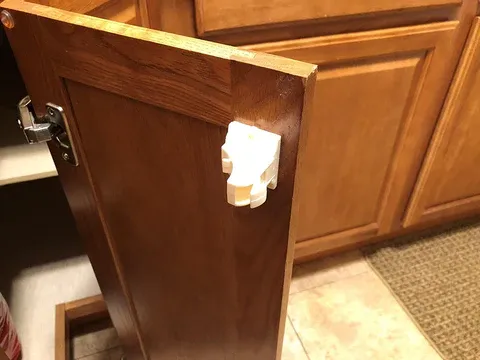
If you are installing several locks at once, it helps to standardize placement where possible. Consistent positioning makes the key easier to use from day to day and reduces the learning curve for other adults in the home.
How to remove magnetic cabinet locks and troubleshoot after you install magnetic cabinet locks
Sooner or later, many families need to know how to remove magnetic cabinet locks. Maybe your child has outgrown them, maybe you are moving, or maybe you are switching from adhesive-only to a more permanent setup.
For adhesive-mounted locks, the safest approach is gradual removal:
- Warm the adhesive with a hair dryer on low or medium heat.
- Lift an edge gently with a plastic card or scraper.
- Peel slowly at a low angle.
- Clean residue with a finish-safe adhesive remover.
- Wipe clean and inspect the surface.
For screw-mounted locks, removal is simpler mechanically but leaves small holes behind. Unscrew carefully, collect all hardware immediately, and fill holes if needed.
Troubleshooting is also worth knowing because many problems come down to setup rather than a defective lock.
| Problem | Likely cause | Fix |
|---|---|---|
| Key does not release lock reliably | Lock mounted too far back, door too thick, or key position off | Move lock closer to front edge and mark the correct key spot |
| Lock will not latch | Catch misalignment or cabinet door sag | Reposition catch and adjust hinges |
| Lock sticks open or behaves oddly | Hidden metal inside cabinet | Shift installation location slightly |
| Adhesive does not hold | Dirty or greasy surface | Clean thoroughly and reinstall |
| Corner door is awkward to unlock | Poor key access angle | Reposition closer to where the key can approach directly |
If you are unsure whether your surface or cabinet style is a good fit, start with a single test area first rather than installing every lock in one session.
In the end, the answer to Do magnetic cabinet locks fit corner cabinets? is yes, often they do, especially on diagonal-front cabinets and many L-shaped layouts. The key is careful planning, dry fitting, and choosing the right mounting method for the cabinet you actually have.
If you are ready to get started, a practical next step is to choose the right product page for your layout and cabinet count, whether that is the Vmaisi Child Safety Magnetic Drawer & Cabinet Locks 20 Pack, the Vmaisi Baby Proofing Magnetic Cabinet Locks 12 Pack, or the Vmaisi Child Safety Magnetic Cabinet Locks 4 Pack. For unusual layouts, keep the corner cabinet installation article and the main installation guide handy while you work.