

Child Safety Locks for Drawers and Fridges
Are you worried that the moment your baby starts crawling, the kitchen drawer, fridge door, or medicine cabinet suddenly becomes the most interesting and risky place in your home? You are not alone. Many parents, especially mothers with new babies, start searching for home safety locks when they notice a baby pulling on handles, opening drawers, or imitating everyday routines.
The right lock is not about making a home ‘100% safe.’ It is about adding practical layers of protection: safer storage, supervision, reliable locks, regular checks, and emergency readiness. Trusted resources such as CPSC Safe Home, MedlinePlus childproofing guidance, HealthyChildren home safety, and Poison Control prevention tips all support a layered safety approach.
Recommended Vmaisi options
| Need | Product or landing page | Product image |
|---|---|---|
| Hidden cabinet and drawer protection | Vmaisi magnetic cabinet locks | 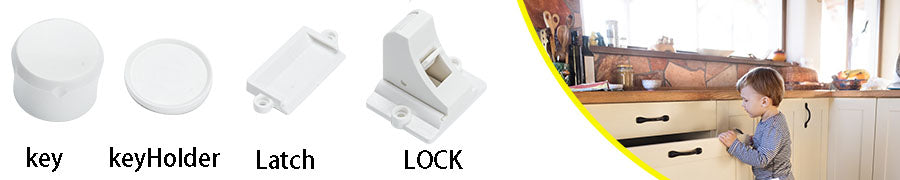 |
| Child safety locks for drawers and cabinets | Vmaisi Child Safety Magnetic Drawer & Cabinet Locks 20 Pack | 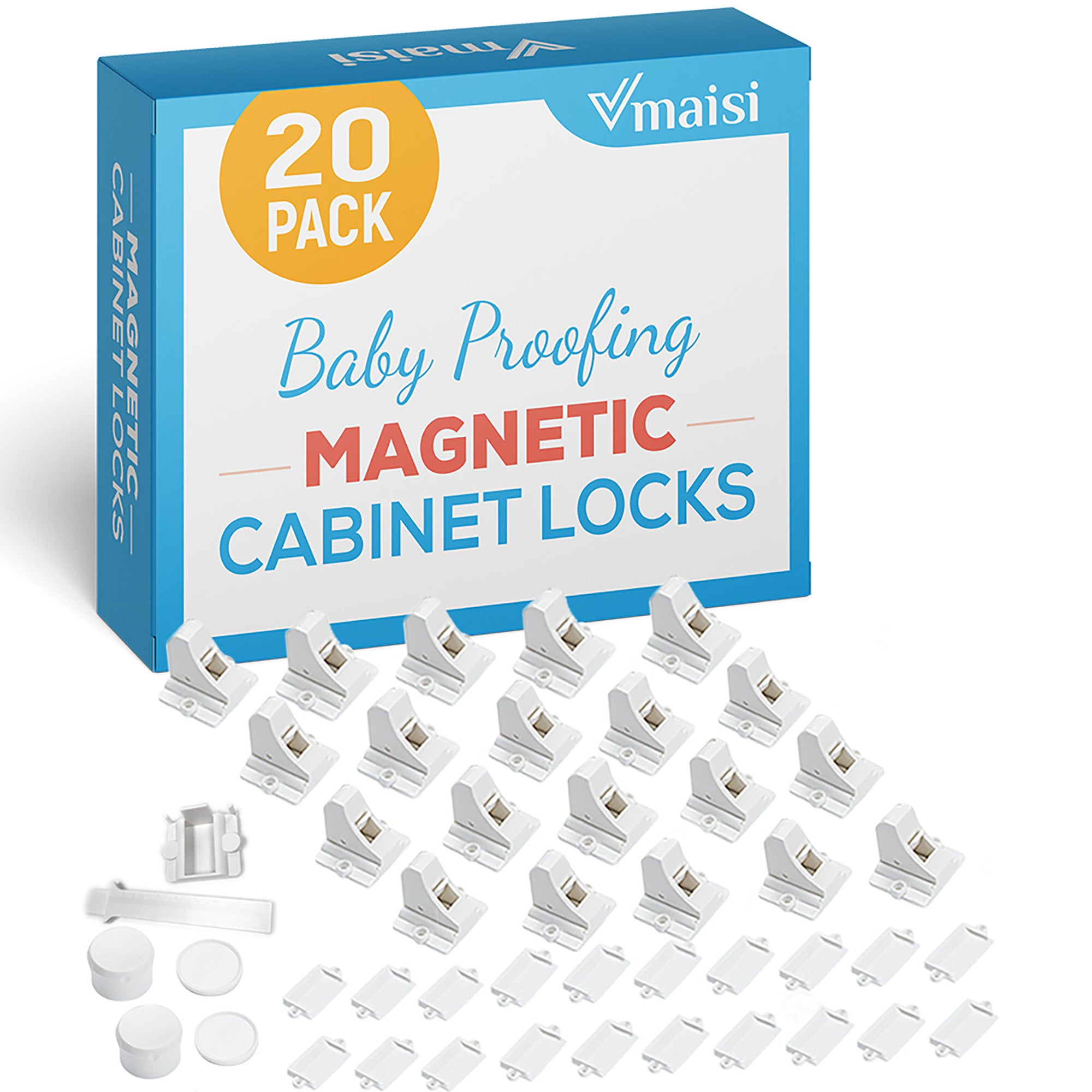 |
| Invisible adhesive magnetic cabinet locks | Vmaisi Adhesive Magnetic Cabinet Locks for Babies 8 Locks and 2 Keys | 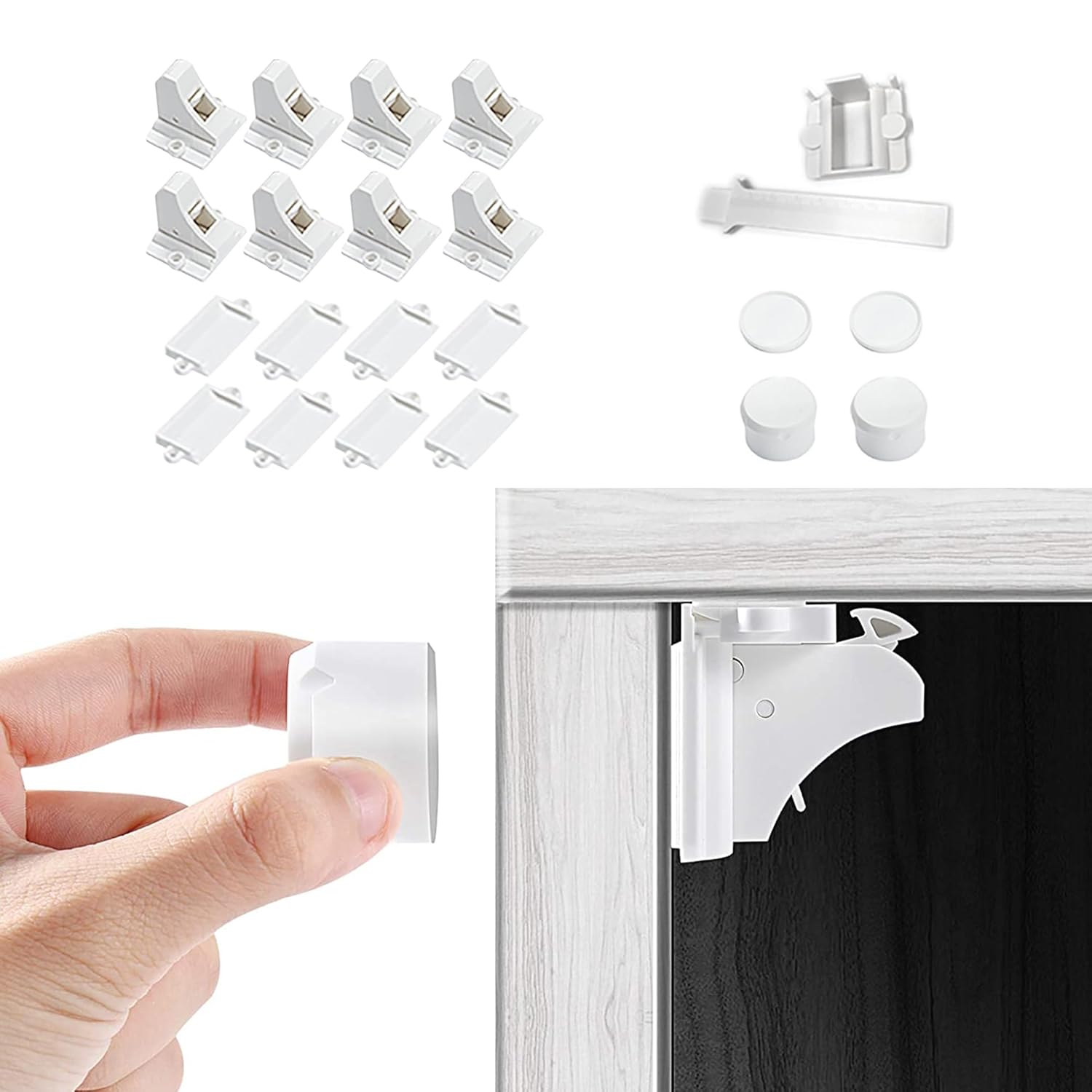 |
| Fridge, dishwasher, toilet seat, and multi-use appliance locking | 6 Pack Vmaisi Multi-Use Adhesive Straps Locks | 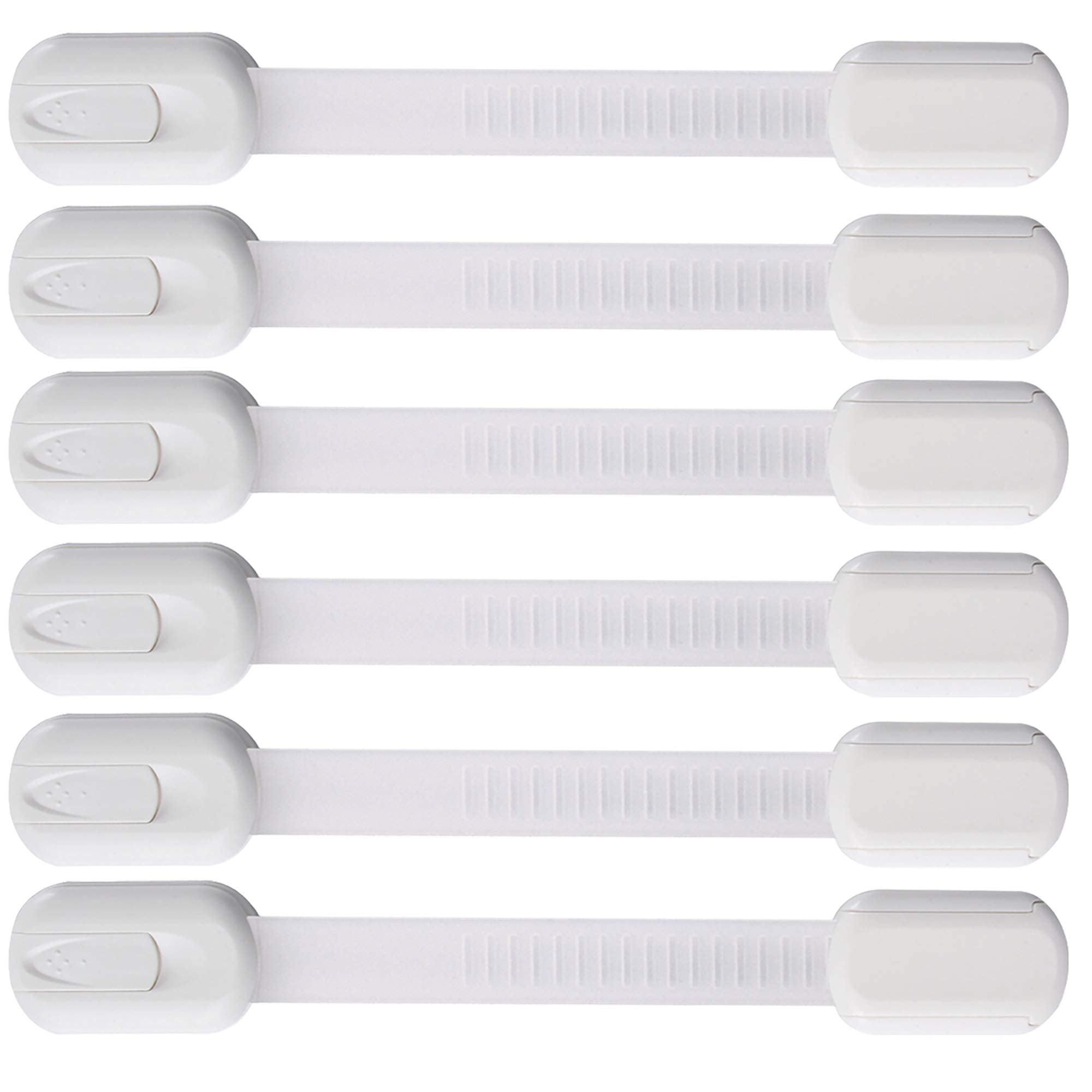 |
The safest choice is the one that fits the surface, the hazard, and your daily routine. Start with the most dangerous areas, install each lock carefully, test it before relying on it, and check it regularly as your baby grows stronger and more curious. Home safety locks are not a guarantee, but they are a practical layer in a calmer, more prepared babyproofing plan.
Choosing home safety locks for drawers, cabinets, and fridges
Different rooms need different lock styles. One product will not fit every cabinet, appliance, and drawer. A good setup usually combines magnetic cabinet locks, magnetic drawer locks, invisible cabinet locks, and multi-use adhesive strap locks depending on the surface and risk.
| Area | Common hazard | Best-fit lock type | What to check |
|---|---|---|---|
| Cabinets | Cleaners, chemicals, sharp tools | Magnetic cabinet locks or child safety cabinet locks | Door thickness, internal clearance, metal interference |
| Drawers | Knives, batteries, cosmetics, small objects | Magnetic drawer locks or strap locks | Drawer clearance and pinch gaps |
| Fridge | Glass jars, spills, food access, cold medicine | Adhesive strap lock | Avoid gasket, hinge, dispenser, and display |
| Medicine cabinet | Medicine, vitamins, supplements | Magnetic lock, strap lock, or lockable box | Store up, away, out of sight, and locked |
| Dishwasher | Detergent pods, knives, glass, steam | Appliance strap lock | Control lock may not physically stop door opening |
| Toilet seat | Water, hygiene concerns, bathroom cleaners nearby | Toilet seat lock or flexible strap lock | Humidity and cleaning products can weaken adhesive |
| Oven | Hot door, racks, knobs | Oven-compatible lock plus knob/control protection | Avoid vents, hot glass, and high-heat zones |
For cabinets and drawers, Vmaisi offers the Vmaisi Child Safety Magnetic Drawer & Cabinet Locks 20 Pack, designed for cabinets and drawers with no-drill adhesive installation in many setups. For a broader cabinet category, you can explore Vmaisi magnetic cabinet locks.
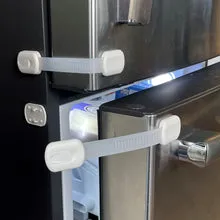
For fridges, dishwashers, toilet seats, and selected appliance use, the 6 Pack Vmaisi Multi-Use Adhesive Straps Locks are a flexible no-drill option. Always confirm surface fit and placement before relying on any adhesive lock.
Using home safety locks for magnetic cabinet locks and magnetic drawer locks
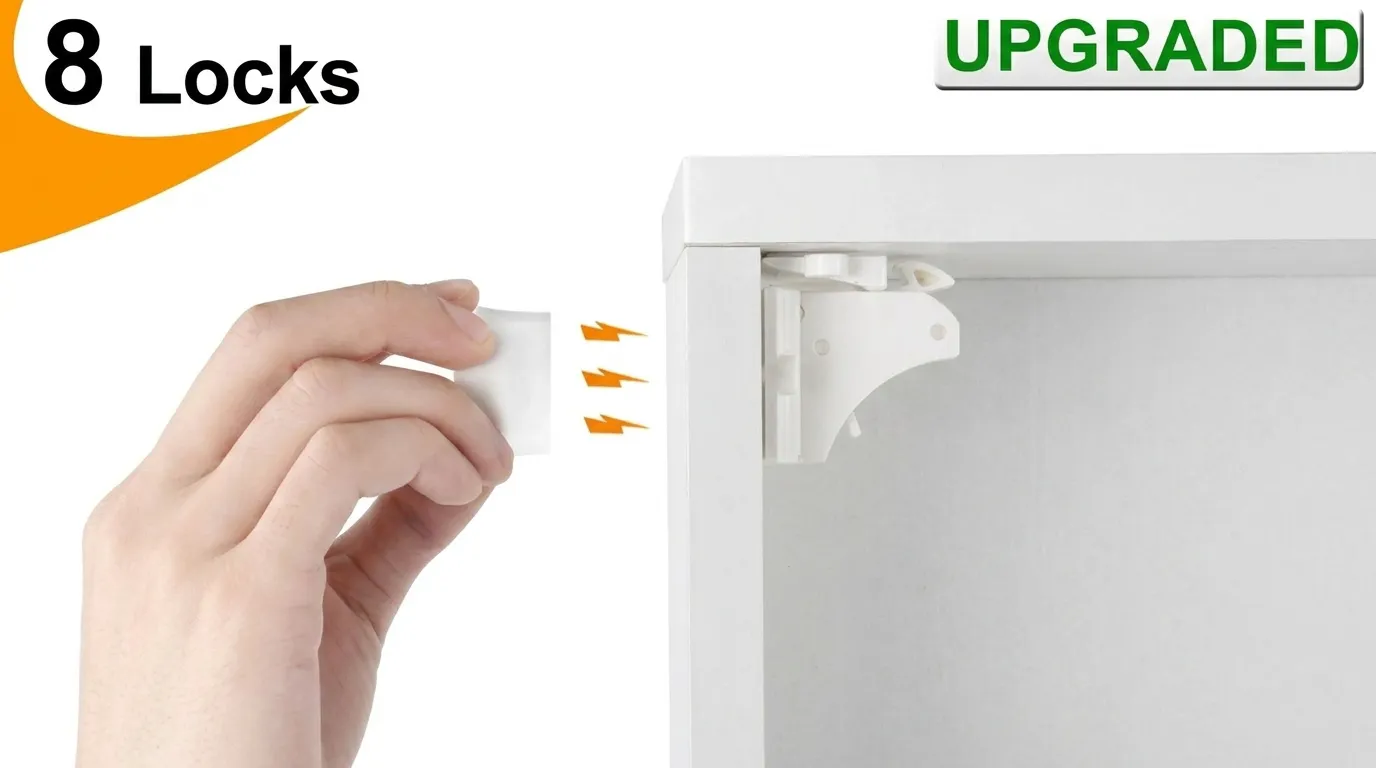
Magnetic cabinet locks are popular because they are installed inside the cabinet or drawer. When closed, the latch catches automatically. Adults use a magnetic key from the outside to release the latch. This is why many parents call them invisible cabinet locks: the hardware is hidden during normal use.
They are a strong fit for standard wood or composite cabinets, lower kitchen cabinets, bathroom cabinets, many medicine cabinets, and drawers with enough internal clearance. However, they are not universal. Alignment matters, and hidden metal can interfere with the magnetic mechanism. Vmaisi notes in its magnetic cabinet lock troubleshooting guidance that surfaces should be clean and dry, locks should be kept away from iron or metal interference, and adhesive installations should be allowed time to set before use.
How to install magnetic cabinet locks
If you are wondering how to install magnetic cabinet locks, follow this basic checklist and always follow the product instructions:
- Empty enough of the cabinet or drawer to work safely.
- Check cabinet material, door thickness, and internal clearance.
- Clean the surface and let it dry completely.
- Dry-fit the lock and catch before attaching adhesive.
- Use the included template or cradle if provided.
- Press firmly after placement.
- Wait the recommended cure time before heavy use.
- Test with the magnetic key several times.
- Store the magnetic key out of your child's reach.
- Recheck the lock regularly.
For drawers, test that the drawer closes fully and does not leave a pinch gap. The Vmaisi Child Safety Magnetic Drawer & Cabinet Locks 20 Pack is the most direct product match for child safety locks for drawers and magnetic drawer locks.
How to remove magnetic cabinet locks
Parents also ask how to remove magnetic cabinet locks when they move, remodel, or no longer need baby cabinet locks. For adhesive models, warm the adhesive gently with a hair dryer on low or medium heat. Then use floss, a plastic card, or a blunt plastic tool to peel slowly at a low angle. Avoid knives, metal scrapers, and abrasive tools because they can damage finishes. Clean residue with a finish-safe cleaner or rubbing alcohol after testing a small hidden spot.
Comparing home safety locks with adhesive vs screws
The question of cabinet locks with adhesive vs screws is really about balancing safety, durability, furniture damage, and rental needs.
| Factor | Adhesive locks | Screw-mounted locks |
|---|---|---|
| Installation | Usually faster and no-drill | Requires tools and careful placement |
| Surface damage | Lower risk, but not zero | Leaves holes |
| Strength | Depends on surface prep, adhesive quality, and cure time | Often stronger mechanically |
| Best for | Rentals, appliances, smooth surfaces, temporary setups | High-use or high-risk cabinets |
| Main caution | Clean, dry, press firmly, cure, inspect | Measure carefully before drilling |
Adhesive baby proofing cabinet locks can work well when installed correctly on clean, smooth, dry surfaces. They are also helpful for appliances and rented homes. However, adhesive can fail on dusty, oily, damp, textured, or high-heat surfaces. Screw-mounted locks may be better for high-risk areas, such as cabinets with cleaners, tools, or medicine, if holes are acceptable.
For a hidden no-drill cabinet option, consider Vmaisi Adhesive Magnetic Cabinet Locks for Babies 8 Locks and 2 Keys. These are useful when parents want invisible cabinet locks without changing the outside look of a kitchen or bathroom cabinet.
A smart approach is to prioritize by risk. Use stronger or more permanent solutions where the contents are dangerous, and use flexible adhesive options where convenience, surface protection, or appliance fit matters most.
Applying home safety locks to medicine cabinets and corner cabinets
One of the most important questions is how to childproof a medicine cabinet. Medicine, vitamins, gummies, supplements, and pill organizers can look interesting to children. Child-resistant caps are helpful, but they are not childproof. Poison Control recommends prevention habits such as keeping medicines out of sight and reach, and Poison prevention for children emphasizes safe storage.
To make a medicine cabinet safer:
- Move medicine up high, away, and out of sight.
- Keep products in original containers.
- Lock the cabinet.
- Use a second lockable box for higher-risk medicines if needed.
- Put medicine away immediately after use.
- Keep Poison Help saved: 1-800-222-1222.
For wood or composite cabinets, magnetic locks may be a good fit. For mirrored, metal, glass, or frameless cabinets, an adhesive strap lock may be more practical. Vmaisi has more detail in its guide on how to childproof a medicine cabinet and its article on the best child locks for medicine cabinet.
Another common question is do magnetic cabinet locks work on corner cabinets. The short answer is: often, but not always. Diagonal-front corner cabinets and many L-shaped corner cabinets can work if there is a usable mounting point and enough clearance. Blind corner cabinets may only need the accessible door secured. Lazy Susan cabinets can be trickier because rotation and interior spacing may affect fit. For more layout-specific advice, read Vmaisi's guide on whether magnetic cabinet locks fit corner cabinets.
Selecting home safety locks for appliances and everyday routines
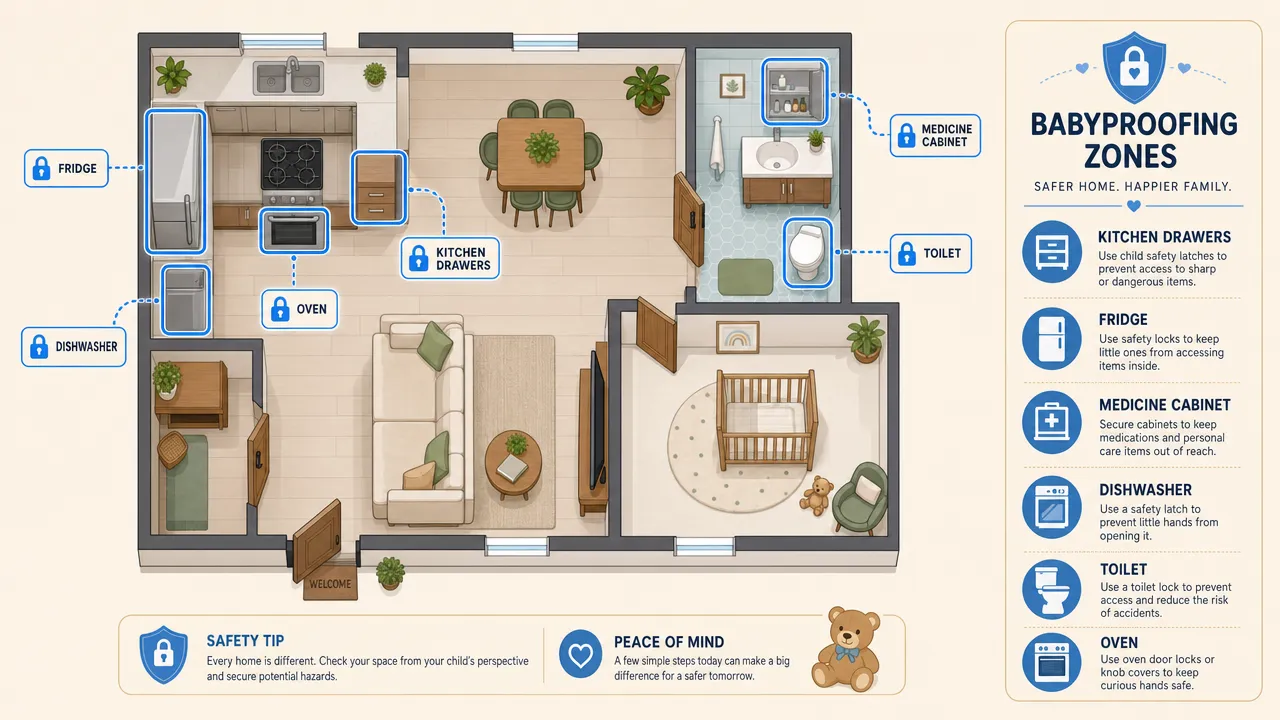
Child safety locks for fridge doors should be easy for adults to use many times a day, but difficult for a toddler to defeat. Adhesive strap locks are often used because many fridges have smooth exterior surfaces. Placement matters: avoid the gasket, hinge, vent, water dispenser, digital display, and any spot that interferes with the door seal. Vmaisi's guide on choosing child safety locks for your fridge explains fridge layout differences and placement cautions.
For child safety locks for dishwasher doors, remember that a built-in control lock may stop buttons from working, but it may not physically stop the door from opening. That matters because dishwashers may contain detergent pods, knives, glassware, hot dishes, or steam. You can compare appliance options in Vmaisi's article on child safety locks for dishwasher.
Child safety locks for oven doors require extra caution. Avoid hot glass, vents, and high-heat areas. An oven door lock also does not protect knobs by itself, so knob covers or control protection may be needed. Vmaisi's fridge and oven safety lock guide gives more appliance-specific guidance.
Child safety locks for toilet seat use can help reduce access to toilet water, but bathroom humidity and cleaning products may affect adhesive. Inspect these locks often and never treat them as a substitute for supervision around water.
If you want one product category for multiple home areas, explore Vmaisi multi-use child safety locks. For a specific product option, the 6 Pack Vmaisi Multi-Use Adhesive Straps Locks are designed for uses such as fridge, dishwasher, toilet seat, cupboard, drawers, selected oven placement, and trash can applications when installed on suitable surfaces.