

How to Choose Child Safety Locks for Oven
Are you confused in a certain scenario where your toddler keeps reaching for the oven door while you cook, but you also worry about the fridge, dishwasher, and even the toilet seat when you turn away for a second? Choosing the right setup can feel harder than it should be. The good news is that once you understand how appliance risks differ, it becomes much easier to pick child safety locks that fit your home and your routine.
If your goal is to secure the kitchen first, start by thinking beyond one appliance. Many parents search for child safety locks for fridge access first because the fridge is opened constantly and quickly becomes a target for curious toddlers. But when burns, hot surfaces, and control knobs are part of the picture, the oven usually needs a more specific plan. In this guide, you will learn how to choose the right oven lock, when multi-use straps make sense, and how the same system can support child safety locks for dishwasher and child safety locks for toilet seat use too.
Why child safety locks for fridge and oven should be planned together
Authoritative childproofing guidance from the U.S. Consumer Product Safety Commission childproofing guide recommends using safety latches and locks to reduce access to hazardous areas. The Cleveland Clinic childproofing guide also highlights kitchen and bathroom safety as a major priority for families with babies and toddlers. That matters because most homes do not have just one appliance problem.
A fridge may look harmless until a toddler learns that it opens easily and contains snacks, jars, bottles, and tempting shelves to pull on. An oven creates a higher-severity risk because of heat, burns, and accidental activation. A dishwasher can expose children to knives, detergent pods, and hot steam. A toilet seat raises both hygiene concerns and a real drowning risk for very young children. That is why many families prefer a practical system that uses compatible locks across several appliances instead of mixing random products.
One useful starting point is the Vmaisi multi-use child safety locks collection, which is designed around no-drill adhesive strap locks for multiple household surfaces. This style is often attractive for renters and busy parents because it can work across several high-risk areas with one familiar opening method.
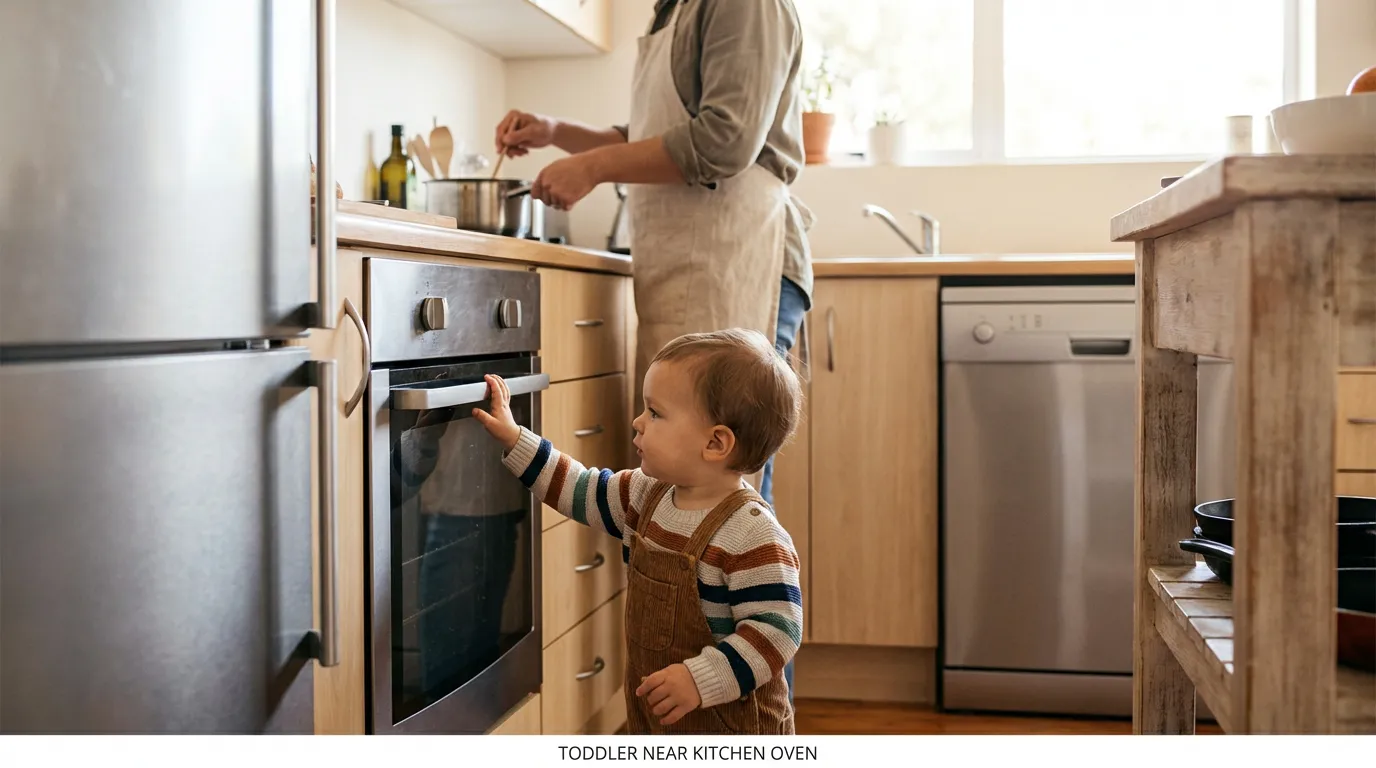
Before choosing any product, it helps to match the appliance with the main danger. For ovens, the question is not just ’Can my child open this?’ It is also ‘Can my child turn this on?’ That is why child safety locks for fridge and oven often belong in the same conversation, but they do not always use the exact same solution in the exact same way.
| Appliance | Main risk | Most common lock style | Special concern |
|---|---|---|---|
| Fridge | Food access, glass breakage, climbing | Adhesive strap lock | Must not affect door seal |
| Oven | Burns, falls, accidental activation | Door lock plus knob protection | Heat and vent placement matter |
| Dishwasher | Knives, detergent, steam | Adhesive strap lock | Moisture and steam exposure |
| Toilet | Water access, hygiene, drowning risk | Toilet lid strap or hinge lock | Frequent cleaning and humidity |
If you want a broader overview before choosing, Vmaisi also has a related guide on child safety locks for fridge and oven, which complements the more oven-focused advice here.
How to choose child safety locks for oven based on your real risk
The best oven setup depends on which behavior you are actually trying to stop. If your toddler mainly pulls the oven door, you need a door-focused lock. If your child is fascinated by knobs, a door lock alone is not enough. If both are happening, you need layered protection.
In general, oven risks fall into three categories:
- Door opening when the oven is hot.
- Climbing or stepping on the oven door.
- Turning knobs or controls on.
This is where oven type matters. A built-in wall oven often has flatter surrounding surfaces that may suit adhesive locks more easily. A freestanding range may have exposed sides, front controls, or bar handles that change placement options. Gas ranges with front knobs usually need extra attention because accidental turning can create a much more serious hazard.
The 6 Pack Vmaisi Multi-Use Adhesive Straps Locks are marketed for fridge, dishwasher, toilet seat, cupboard, and oven use, which makes them a practical option when you want consistency across the home. However, placement on an oven must be done carefully. The research is very clear on this point: adhesive locks should be installed on cooler exterior zones and never over vents or surfaces that become excessively hot.
Here is a simple decision framework:
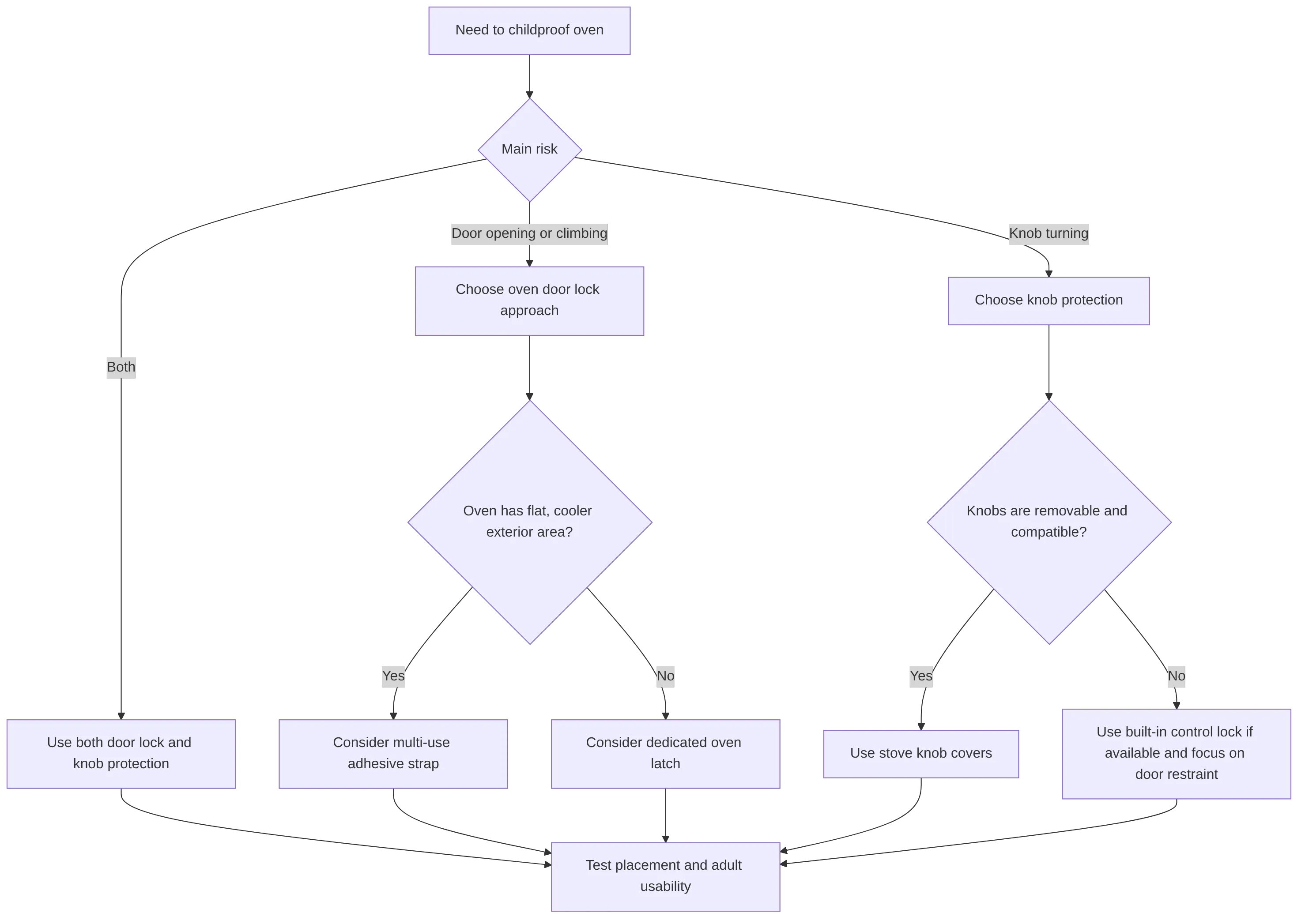
The biggest mistake parents make is assuming that any multi-use lock can be placed anywhere on an oven. It cannot. The product may be suitable for oven use, but the exact mounting area still has to stay within safe temperature limits. In other words, the appliance and the placement matter just as much as the lock itself.
Which child safety locks for fridge, dishwasher, and toilet seat can also work near the oven
This is where multi-use products become appealing. Many no-drill strap locks are designed for multiple household applications, and they are especially common for child safety locks for fridge doors, child safety locks for dishwasher doors, and child safety locks for toilet seat lids. The advantage is obvious: one lock style, one installation process, and one consistent release method for adults.
For the fridge, these locks are often the easiest choice because there is no heat issue. You mainly need good adhesion, correct placement, and a position that does not interfere with the door seal. For the dishwasher, multi-use straps also make sense, but they should be mounted away from direct steam venting. For the toilet, the same basic adhesive concept can work well if the design matches the lid shape and the bathroom cleaning routine.
Where the oven differs is environmental stress. Heat affects adhesive longevity. That is why child safety locks for fridge can often be installed more flexibly, while oven use requires more caution and a closer look at the appliance surface temperature during normal cooking.
A quick comparison helps:
| Lock type | Best for child safety locks for fridge | Best for oven use | Best for dishwasher use | Best for toilet seat use |
|---|---|---|---|---|
| Multi-use adhesive strap | Excellent | Good if placed on cooler zones | Excellent | Excellent |
| Dedicated oven latch | Not typical | Excellent for oven-specific setups | Rare | No |
| Knob cover | No | Excellent for stove controls | No | No |
| Hidden magnetic lock | Cabinets, not appliance doors | Not typical | Not typical | No |
If your goal is a coordinated household setup, the Vmaisi installation video page can help you understand how no-drill systems are meant to be positioned and used. And if you are building out a more complete kitchen safety plan, it also makes sense to secure hazardous storage with Vmaisi Child Safety Magnetic Cabinet Locks - 4 Pack, especially for cleaners or sharp tools stored below counter height.
Another useful reference is Vmaisi's blog content on how to babyproof cabinets with magnetic locks, which fits naturally into a layered safety strategy around the kitchen and bathroom.
How to install child safety locks for fridge and oven so they actually stay on
One of the most common complaints in reviews and demonstrations is not that the lock design is wrong, but that the installation was rushed. Surface prep has a huge impact on whether adhesive locks hold over time.
For child safety locks for fridge and oven, follow these best practices:
- Clean the surface thoroughly with rubbing alcohol or a degreasing cleaner.
- Dry the area completely.
- Dry-fit the lock before removing the adhesive backing.
- Press firmly for at least 30 seconds.
- Allow full cure time, usually 12 to 24 hours when instructions recommend it.
- Test gently before trusting it with daily use.
On ovens, add three more rules:
- Avoid vents.
- Avoid surfaces that get too hot to touch comfortably.
- Make sure the lock does not interfere with proper door closing.
For dishwashers, the extra concern is steam and humidity. For toilet lids, it is frequent cleaning and moisture. For fridges, cold surfaces can reduce initial bonding if the area is damp or not fully clean. So while the method is similar across appliances, the environment changes what ‘good installation' really means.
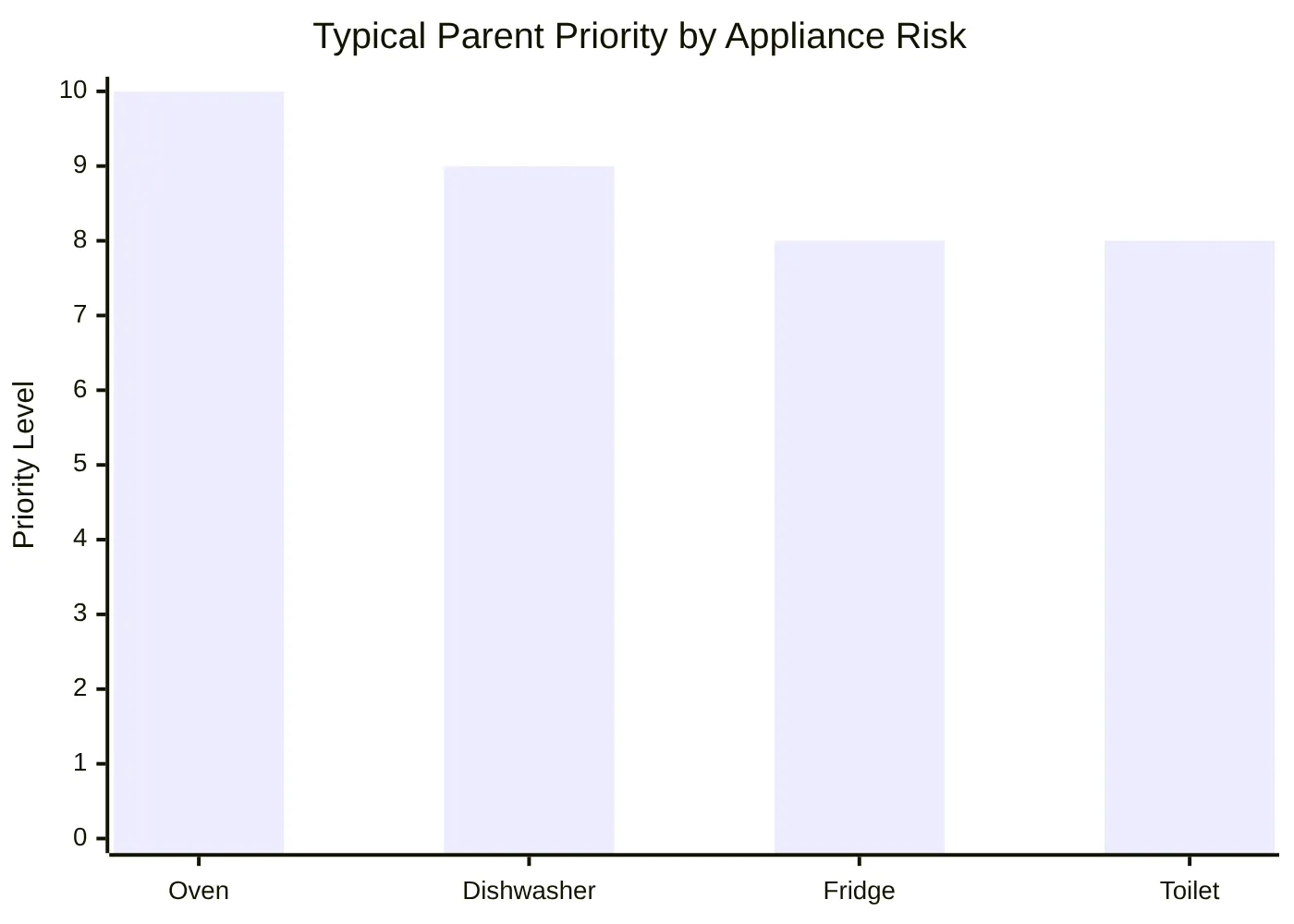
The chart below summarizes how parents commonly prioritize appliance locks by risk level:
A practical maintenance routine matters too. Check adhesive locks monthly for peeling, looseness, grease buildup, or cracks. Replace them if they show wear or if your child has started figuring out the mechanism. Locks are a delay tool, not a guarantee, and they work best when adults keep re-evaluating them as children grow stronger and more observant.
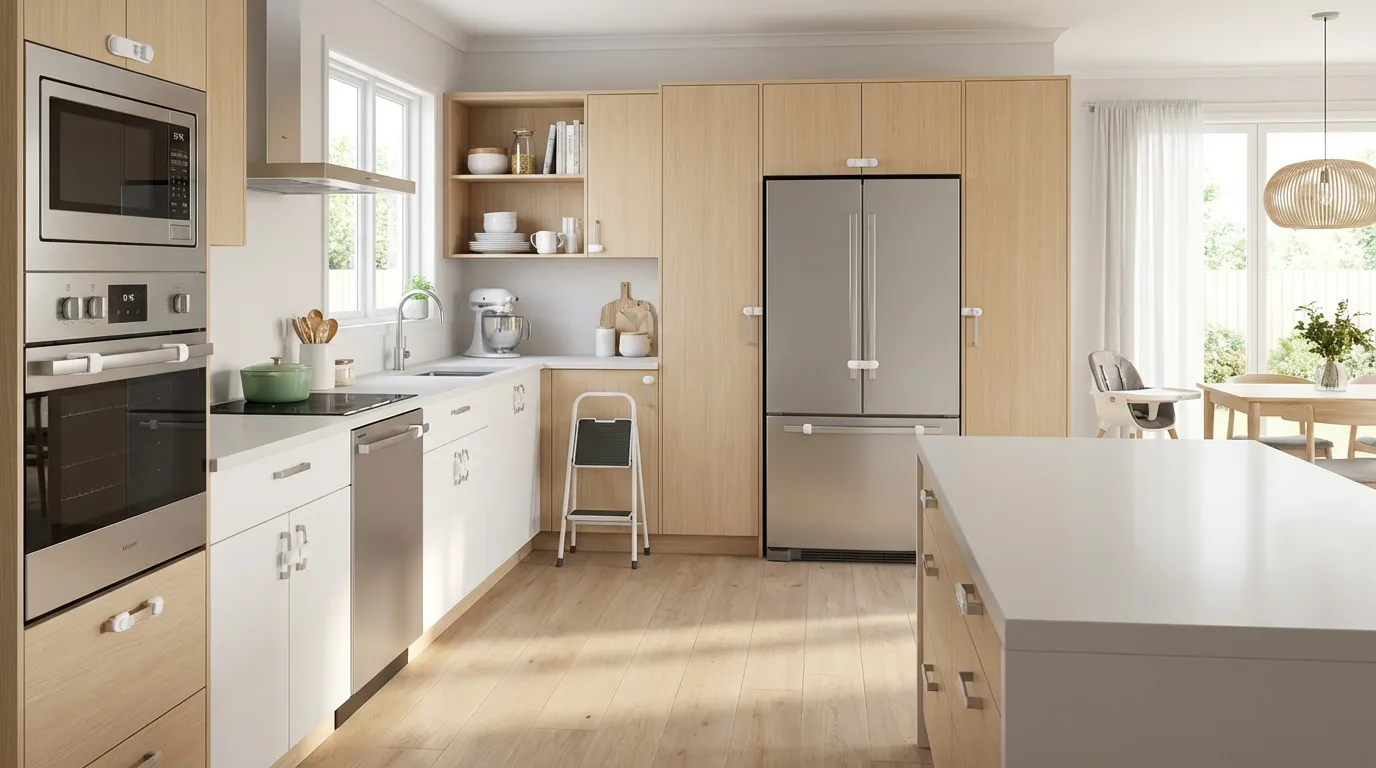
Best child safety locks for fridge and oven setups: what smart parents look for
When parents compare products, the strongest choices usually share the same traits. They are difficult for children under five to operate, easy enough for adults to use consistently, and compatible with the actual surface and shape of the appliance. According to the CPSC guidance, that adult ease plus child resistance balance is exactly what you want.
Here are the features worth prioritizing:
- No-drill installation for easier setup and less damage risk.
- Strong adhesive designed for smooth appliance surfaces.
- A release that is not obvious to toddlers.
- Flexible placement across fridge, dishwasher, and toilet seat applications.
- Clear instructions and realistic use guidance for ovens.
- Good replacement value if you need to refresh worn locks later.
This is why a multi-pack often makes sense financially. Research in this category shows that multi-use strap locks commonly fall around $8 to $20 per pack, while knob covers are often in a similar general range. For many families, the best value is not a single specialized item. It is a system that secures multiple daily risk points at once.
If you are ready to take action, the simplest next step is to compare the Vmaisi multi-use child safety locks collection and choose the size that fits your home. If you already know you want a direct no-drill appliance solution, the 6 Pack Vmaisi Multi-Use Adhesive Straps Locks is a natural place to start because it is specifically positioned for fridge, dishwasher, toilet seat, cupboard, and oven use.
For most homes, the smartest plan is simple: use child safety locks for fridge access first if that is your toddler's favorite target, add a carefully placed oven door restraint if heat and climbing are concerns, and do not forget child safety locks for dishwasher and child safety locks for toilet seat areas if your child explores every room. Combined with supervision, smart storage, and anti-tip protection for freestanding ranges, that layered approach is far more realistic than relying on one product alone.