

Which Medicine Cabinet Lock Is Hardest for Kids?
A properly installed hidden internal magnetic lock is generally the hardest everyday medicine cabinet lock for young children to figure out. For most standard wood or composite cabinets, it works because the mechanism is concealed, the opening action is not obvious, and an adult needs a separate magnetic key placed in the right spot. But the safest answer to "how to childproof a medicine cabinet" is not one lock alone. It is a layered system: medicine stored up, away, out of sight, and locked, with extra protection for high-risk prescriptions.
For parents, especially mothers with a newly crawling baby or a toddler who has started watching every cabinet door, the real worry is simple: will the lock still work when life is busy, hands are wet, grandparents are helping, and medicine gets used every day? The hardest lock is the one your child cannot study easily and adults will actually relock every single time.

How to childproof a medicine cabinet when child-resistant caps are not enough
Child-resistant caps reduce risk, but they do not make medicine inaccessible. The FDA medicine storage guidance recommends keeping medicines in original containers, closing caps tightly, and storing medicine up and away, out of sight. Poison Control also emphasizes locked storage when possible.
The reason is serious. The CPSC 2024 pediatric poisoning report reported 68,600 emergency-department-treated unintentional pediatric poisoning injuries among children under 5 in 2022. Medicine cabinets can contain prescription drugs, over-the-counter medicine, vitamins, supplements, razors, cosmetics, and small items that look harmless to adults but attractive to children.
A high bathroom cabinet can still be reachable if a toddler climbs on a toilet, stool, drawer, hamper, or lower shelf. A bottle left on a counter between doses can defeat the best cabinet lock. A purse, backpack, or visitor's bag can become an unplanned medicine cabinet at child height.
A practical medicine safety routine looks like this:
| Safety layer | What it does | Parent habit that matters |
|---|---|---|
| High storage | Reduces easy reach | Do not rely on height alone if climbing is possible |
| Out-of-sight placement | Reduces curiosity | Avoid clear bins or visible pill bottles |
| Cabinet lock | Blocks routine access | Relock immediately after every use |
| Original containers | Keeps labels and dosing information | Avoid loose pills or unlabeled organizers around children |
| Lockable medicine box | Adds protection for high-risk medicine | Use inside a locked cabinet for opioids, sedatives, stimulants, or strong pain relievers |
| Poison Help access | Supports fast action | Keep 1-800-222-1222 visible in the U.S. |
For a deeper step-by-step approach, Vmaisi's guide to childproofing a medicine cabinet safely is a useful companion to this decision guide.
How to childproof a medicine cabinet with the lock kids are least likely to decode
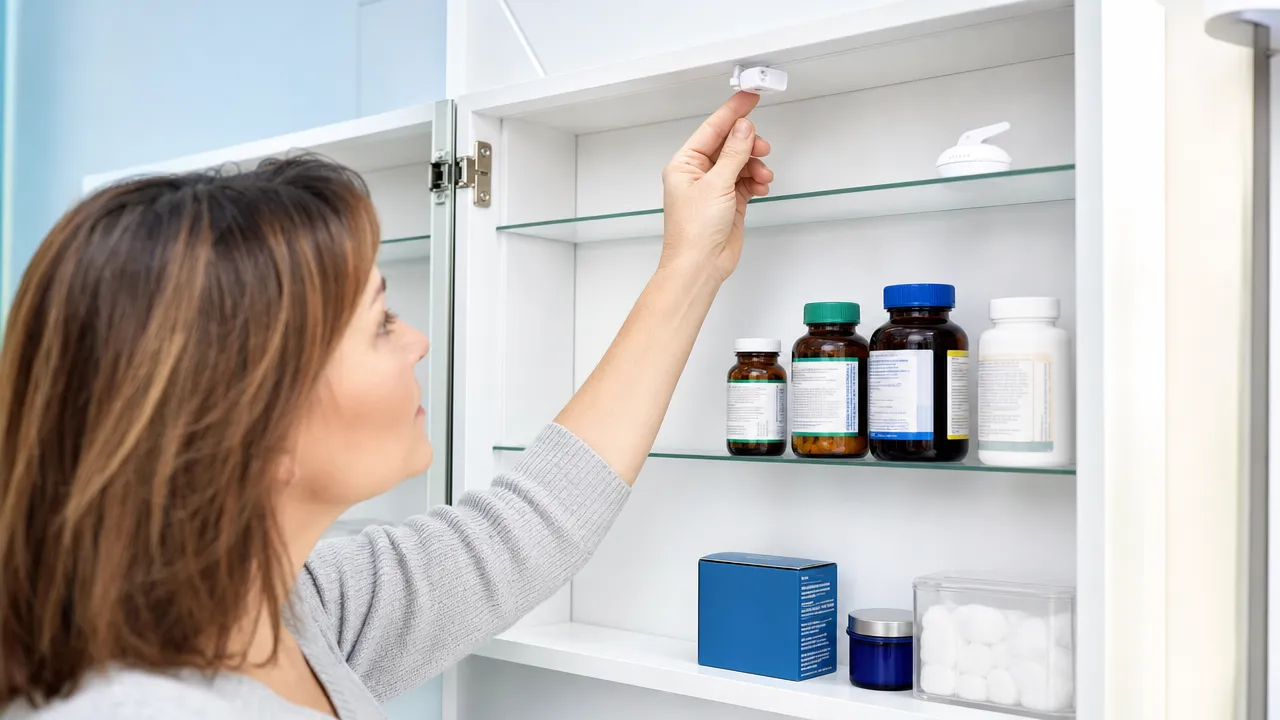
A hidden internal magnetic cabinet lock is often the best balance of child resistance and adult convenience. It installs inside the cabinet, so a child does not see a strap, button, sliding tab, or latch to copy. Adults open it by placing a magnetic key outside the cabinet in the right position.
That combination matters. Young children learn by watching and repeating. A visible strap lock can become a puzzle. A slide lock can become a challenge. A spring latch may allow the door to open slightly before release. A hidden magnetic lock gives fewer clues.
The Vmaisi Magnetic Cabinet Locks collection is the strongest fit for standard wood or composite medicine cabinets where an internal latch can align properly. For parents securing several bathroom and kitchen cabinets, the Vmaisi Magnetic Child Safety Cabinet Locks - 16 Pack offers hidden inside-cabinet installation with magnetic key access and adhesive no-drill mounting for compatible surfaces.
For a smaller setup, the Vmaisi Baby Proofing Magnetic Cabinet Locks 12 Pack can work well when you need to secure a medicine cabinet plus a few nearby drawers. For whole-home babyproofing, the Vmaisi Child Safety Magnetic Drawer & Cabinet Locks 20 Pack is more practical.
No lock should be described as impossible for a child to defeat. The CPSC childproofing guidance is clear that safety devices are helpful, but they do not replace supervision. Still, for everyday cabinet access, hidden magnetic locks are often harder for toddlers to study than visible external locks.
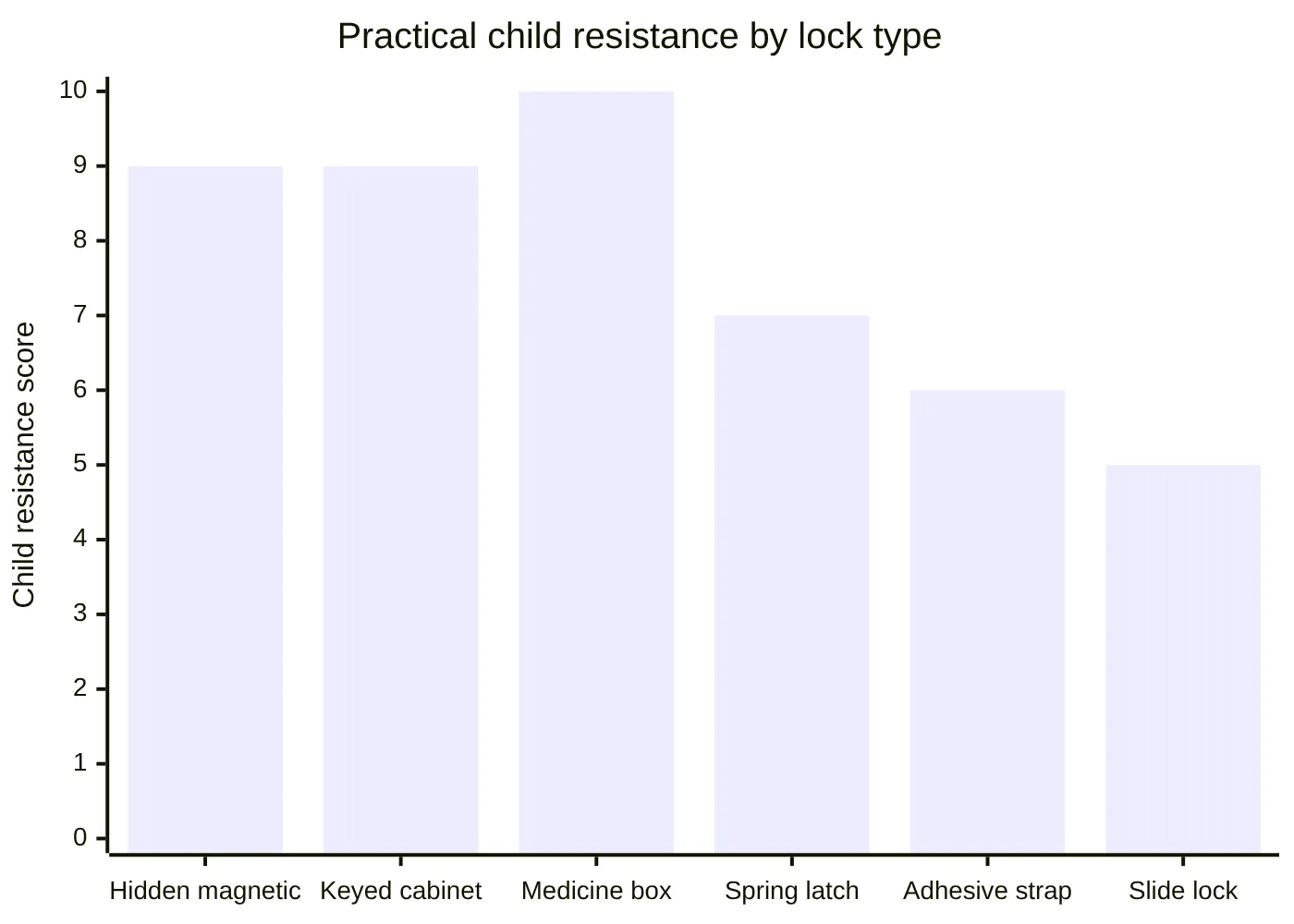
These scores are practical guidance, not laboratory certification. The safest setup changes by cabinet material, installation quality, and the medicine stored inside.
How to childproof a medicine cabinet by matching the lock to the cabinet type
The best child locks for medicine cabinet use are not the same for every bathroom. A standard wooden cabinet, mirrored cabinet, metal cabinet, and frameless cabinet may need different solutions.
| Cabinet type | Best everyday option | Why it fits | Watch out for |
|---|---|---|---|
| Wood or composite cabinet | Hidden magnetic lock | Concealed, clean exterior, convenient for adults | Alignment and key storage matter |
| Mirrored cabinet | Adhesive strap lock | Works when internal mounting is difficult | Visible to children, inspect adhesive |
| Metal cabinet | Adhesive strap or keyed option | Magnetic locks may be affected by metal | Test fit before relying on magnetic release |
| Frameless cabinet | Adhesive strap lock | Flexible placement | Surface prep is critical |
| Permanent wood cabinet | Screw-reinforced magnetic or spring latch | Stronger mounting option | Drilling may not suit renters |
| High-risk medicine storage | Lockable medicine box plus locked cabinet | Protects the medicine itself | Still keep it high and out of sight |
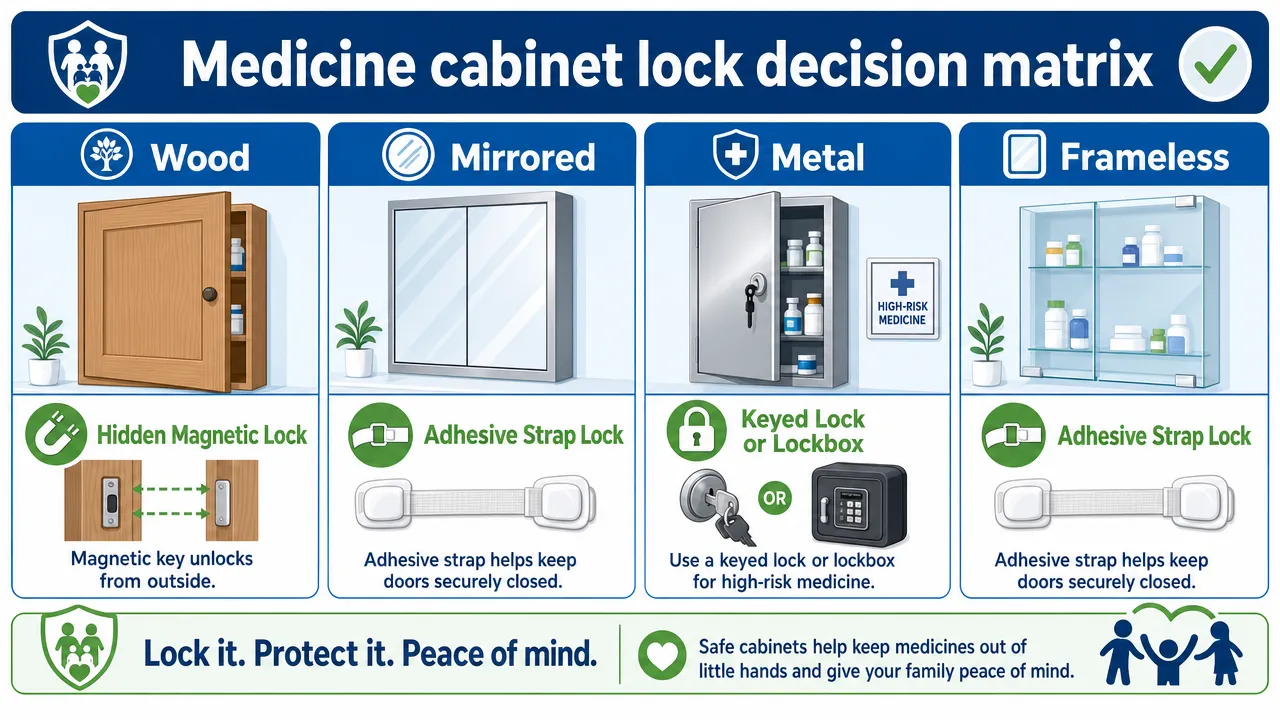
If your cabinet is mirrored, metal, glass, or hard to align internally, a visible adhesive strap may be more realistic than forcing a magnetic latch into the wrong setting. The Vmaisi Multi-Use Adhesive Straps Locks are designed as no-drill flexible locks for cabinets, drawers, appliances, and other household surfaces. For medicine cabinets, they are most useful when the cabinet style does not allow a clean internal magnetic installation.
Adhesive straps are visible, so determined toddlers may tug or study them. That does not make them useless. It means they should be installed carefully, inspected often, and used as part of a broader medicine safety routine. If you are comparing options, Vmaisi's article on the best child locks for medicine cabinets that last gives more product-specific context.
How to childproof a medicine cabinet without weakening the lock during installation
Most lock failures are not caused by the general lock type. They come from poor fit, weak surface prep, rushed adhesive curing, bad alignment, or inconsistent adult use.
For magnetic locks, alignment is the big issue. The lock body and catch need to meet cleanly. If the latch is offset, the door may not close fully or may open with enough force. The magnetic key also needs to be strong enough for the cabinet thickness and stored where children cannot reach or see it.
For adhesive locks, surface prep is everything. Bathroom cabinets collect moisture, soap film, lotion residue, cleaning spray, and dust. Adhesive should be applied only to a clean, dry, oil-free surface. Many adhesive products also need time to cure before full use. Vmaisi's magnetic lock installation guide explains why cleaning, placement, and cure time matter.
Common mistakes to avoid:
| Mistake | Why it matters | Better choice |
|---|---|---|
| Placing the magnetic key in a low drawer | A child may find and imitate it | Store the key high, hidden, and away from the cabinet |
| Installing adhesive on a damp bathroom surface | Adhesive may loosen | Clean, dry, apply, press firmly, and allow curing time |
| Using a magnetic lock on metal without testing | Metal may interfere with the mechanism | Test before installation or use a strap/keyed option |
| Leaving medicine near the door edge | A small gap may allow access | Push bottles to the back or use a lockable box |
| Leaving pill organizers on counters | Cabinet lock no longer helps | Store organizers inside locked storage |
| Forgetting visitors' bags | Medicine may be accessible elsewhere | Put purses and backpacks up and away |
If your cabinet has unusual geometry, corner placement, or hidden metal, Vmaisi's guide on whether magnetic cabinet locks fit corner cabinets can help you think through placement before you commit adhesive or screws.
Parents should also plan for caregivers. If grandparents, babysitters, or another parent cannot operate the lock, they may leave it disengaged. A spare key can help, but it must be stored safely. Vmaisi offers magnetic cabinet lock replacement keys for households that need backups while keeping keys out of children's reach.
How to childproof a medicine cabinet with the best child locks for medicine cabinet safety
The best child locks for medicine cabinet safety depend on risk level. For ordinary bathroom items and standard compatible cabinets, a hidden magnetic lock is usually the best everyday choice. For mirrored, metal, or frameless cabinets, adhesive straps may fit better. For dangerous prescriptions, the strongest setup is a locked cabinet plus a lockable medicine box inside.
Use this quick decision guide:
| Parent situation | Recommended solution | Product direction |
|---|---|---|
| "My cabinet is wood or composite." | Hidden magnetic cabinet lock | Shop Vmaisi Magnetic Cabinet Locks |
| "I need to secure several cabinets." | Multi-pack magnetic locks | Consider the Vmaisi Magnetic Child Safety Cabinet Locks - 16 Pack |
| "My cabinet is mirrored or metal." | Adhesive strap lock | Compare Vmaisi Multi-Use Adhesive Straps Locks |
| "I rent and do not want to drill." | Adhesive magnetic lock or strap lock, depending on cabinet style | Test surface compatibility first |
| "I store high-risk prescriptions." | Locked cabinet plus lockable medicine box | Follow Poison Control medicine storage guidance |
| "My child already studies visible locks." | Hidden internal lock where compatible | Keep the magnetic key hidden and high |
The product image to use in your store or CMS should match the cabinet type being discussed. For the primary CTA, use the main image from the Vmaisi Magnetic Child Safety Cabinet Locks - 16 Pack product page with alt text such as "Vmaisi magnetic child safety cabinet locks for medicine cabinet." For mirrored or metal cabinet sections, use the main image from the Vmaisi Multi-Use Adhesive Straps Locks page with alt text such as "Vmaisi multi-use adhesive strap lock for mirrored medicine cabinet."
A few final safety rules matter more than any product claim. Store medicine in original containers. Put it away immediately after each use. Keep medicine up, away, out of sight, and locked. Secure purses, backpacks, and visitor bags. Keep Poison Help visible: 1-800-222-1222 in the U.S. If a child may have swallowed medicine, contact Poison Help right away; if the child collapses, has trouble breathing, has a seizure, or cannot wake up, call emergency services immediately, consistent with HealthyChildren guidance from the AAP.
The hardest medicine cabinet lock for kids is usually hidden, correctly installed, consistently relocked, and matched to the actual cabinet. For many families, that means starting with Vmaisi Magnetic Cabinet Locks for a standard wood or composite cabinet, then adding adhesive straps or a lockable medicine box where the cabinet type or medicine risk calls for another layer.