

Child Safety Locks for Fridge & Oven Guide
Are you constantly catching your toddler tugging at the refrigerator door, reaching for the dishwasher handle, or wandering too close to the oven when you are busy for just a second? If so, choosing the right child safety locks for fridge access and other high-risk appliances can make everyday routines feel far more manageable.
Parents usually start with the kitchen, and for good reason. A curious child can open a fridge, pull down heavy or breakable items, reach dishwasher detergent, or touch a hot oven door faster than most adults expect. The good news is that modern no-drill locks can help reduce those risks without turning your home into a construction project.
This guide explains how to choose child safety locks for fridge doors, when to use child safety locks for oven setups, and how the same multi-purpose style can often work for child safety locks for dishwasher doors and child safety locks for toilet seat lids too. The goal is simple: help you pick practical, easy-to-use solutions that fit real family life.
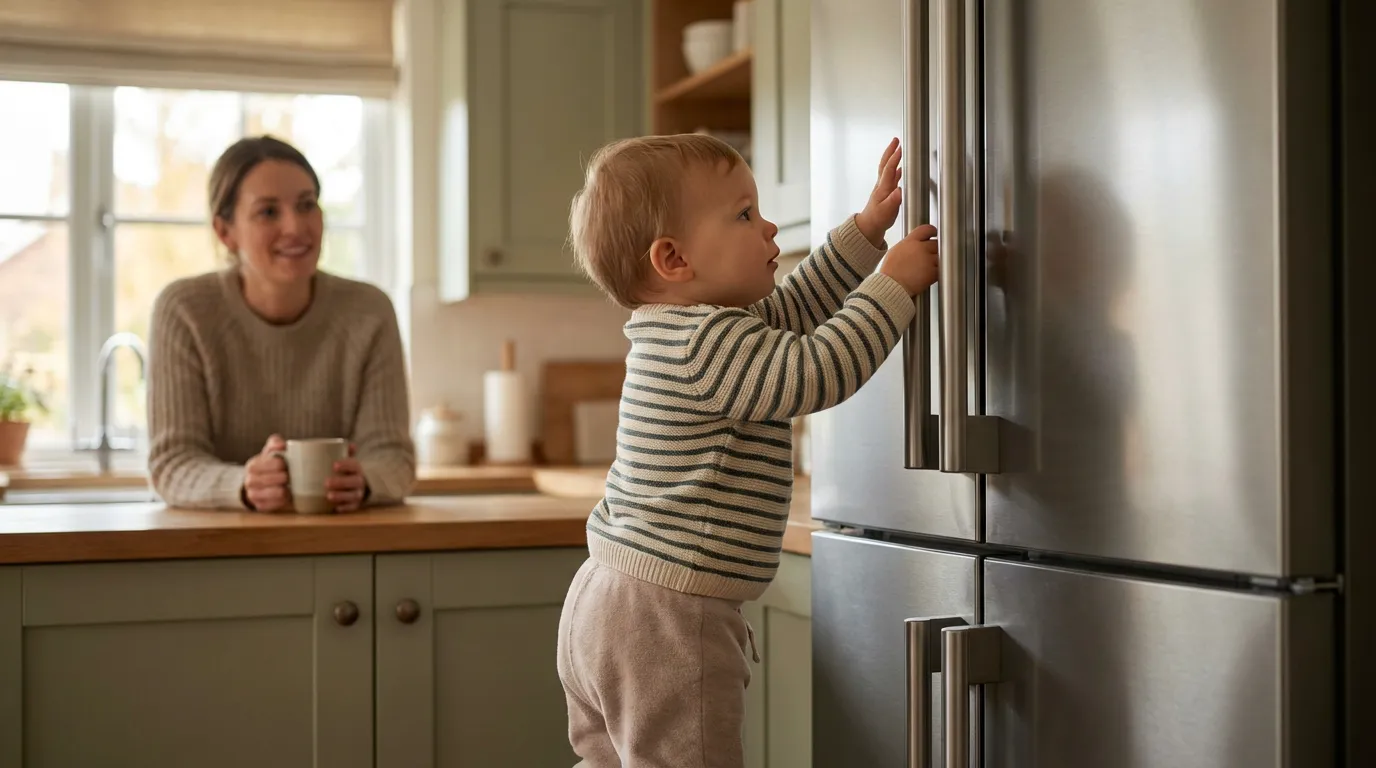
Why child safety locks for fridge and other appliances matter
Many parents think of cabinets first, but large household appliances often create the most immediate day-to-day risks.
A fridge may seem harmless until a toddler starts opening it repeatedly. Once inside, they may grab glass jars, spill drinks, access choking hazards, or try to climb shelves. Older-style freezer concerns are rare in modern homes, but falling items, food safety issues, and broken containers are still very real concerns.
An oven creates a different level of risk. Hot doors, hot racks, and stove controls can cause serious burns. Some children also pull on the oven door or try to step on it, which adds fall risk to burn risk.
Dishwashers are often overlooked. Even if the machine has a built-in control lock, that usually disables buttons rather than physically preventing the door from opening. That means children may still access knives, glassware, detergent pods, hot steam, or damp dishes right after a cycle.
Bathrooms deserve equal attention. Child safety locks for toilet seat lids can help reduce access to toilet water, germs, and a small-but-serious drowning hazard for very young children.
Authoritative childproofing guidance from Cleveland Clinic recommends treating locks as one part of a broader safety plan, not a complete substitute for supervision. You can review their broader home safety guidance in this helpful resource from Cleveland Clinic on childproofing your home.
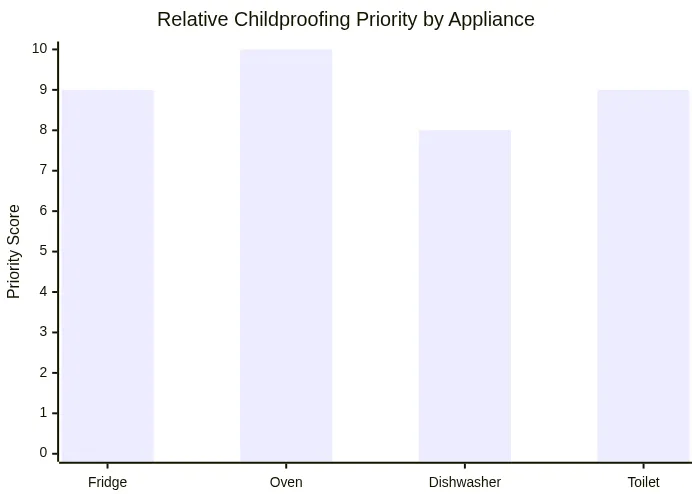
At-a-glance risk comparison
| Appliance | Main risks | Why children target it | Lock priority |
|---|---|---|---|
| Fridge | Falling jars, glass, choking hazards, spoiled food | Easy handle access, frequent family use | High |
| Oven | Burns, hot surfaces, accidental activation, falls | Interesting lights, knobs, door access | High |
| Dishwasher | Knives, glass, detergent pods, steam | Low handle height, curiosity after cycles | High |
| Toilet | Water access, germs, cleaners, clogs | Open water source, easy lid lifting | High for crawlers and toddlers |
How to choose child safety locks for fridge use first
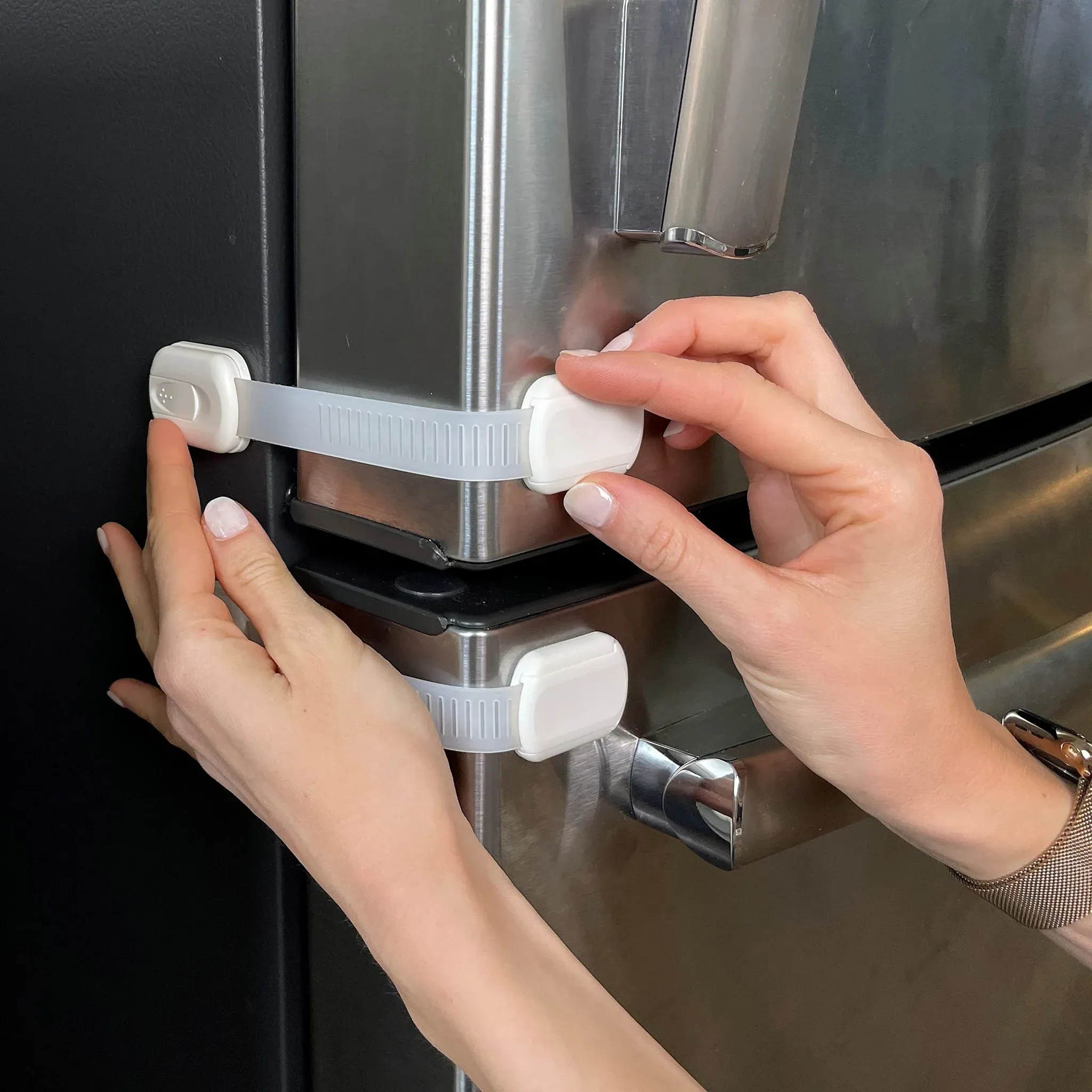
If your main concern is the refrigerator, start there. The best child safety locks for fridge doors are usually adhesive strap-style locks because they are versatile, renter-friendly, and compatible with many appliance shapes.
These locks typically use two adhesive anchor points connected by a flexible strap. For adults, they are quick to release. For toddlers, they are much harder to understand and pull open.
When comparing options, focus on these five factors:
1. Fridge style and door layout
Not every refrigerator opens the same way. A side-by-side model may need a different placement than a top-freezer or French door unit.
- For a single-door fridge, a strap often runs from the door to the side panel.
- For a French door fridge, some families use one lock placed strategically across one active opening area, while others may need two points depending on the door behavior.
- For side-by-side models, placement should avoid interfering with seals.
2. Handle or no-handle design
Handleless or flat-front refrigerators usually benefit from flexible straps because rigid latch designs may not sit correctly on curved or flush surfaces.
3. No-drill installation
Most parents prefer adhesive locks because they avoid screws, holes, and potential finish damage. This is especially helpful in rental homes or on newer stainless steel appliances.
4. Everyday adult use
The best child safety locks for fridge setups should be easy enough for adults, grandparents, and babysitters to open consistently. If a lock is too annoying, people are more likely to leave it undone.
5. Your child's age and determination
A newly mobile toddler may be stopped by almost any well-installed lock. A strong, persistent three-year-old may need a more secure placement and more regular maintenance checks.
Best choice for most homes
Based on the research, multi-purpose adhesive strap locks are the leading recommendation for child safety locks for fridge applications because they offer:
- No-drill installation
- Broad appliance compatibility
- Strong versatility across fridge, oven, dishwasher, and toilet seat use
- Easy replacement if your setup changes
If you are building a broader childproofing plan, it also makes sense to pair appliance straps with cabinet solutions such as magnetic cabinet locks for lower cupboards, where appropriate.
Why child safety locks for oven, dishwasher, and toilet seat often work best as a matching system
One of the biggest mistakes parents make is buying one lock for one problem, then realizing the same toddler can now open three other things in the same room.
That is why multi-purpose planning works so well.
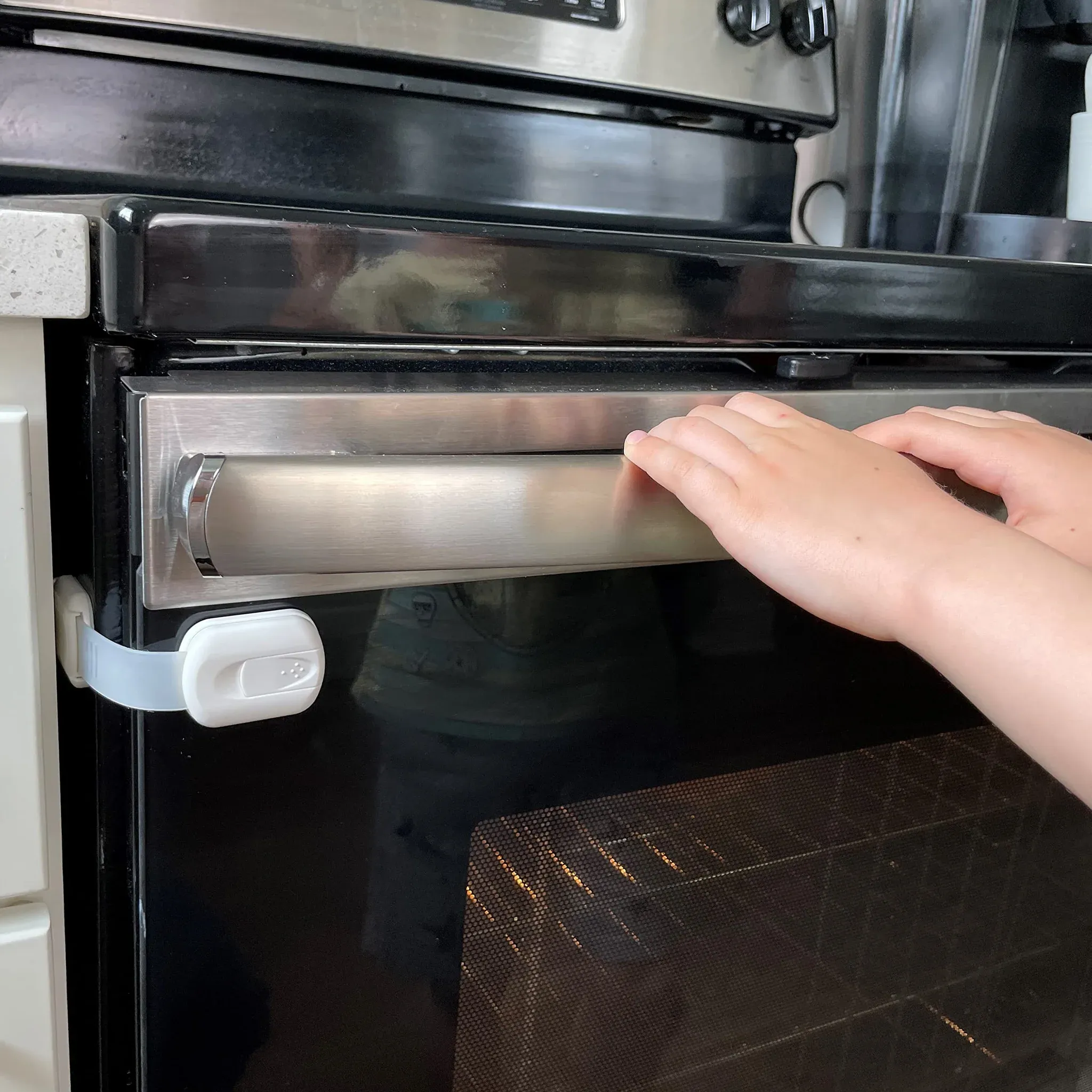
Child safety locks for oven
For oven safety, you may need two layers:
- A physical door lock to discourage opening the oven
- Knob covers or built-in control locks to reduce accidental activation
A strap-style lock can work on many oven doors, but placement matters. It should be installed on an exterior area that does not become too hot to touch and does not interfere with vents or normal operation. For ranges with front controls, knob protection may be necessary in addition to the door lock.
Child safety locks for dishwasher
Child safety locks for dishwasher doors are especially useful when:
- The dishwasher sits at toddler height
- Sharp items are frequently loaded in the lower rack
- Detergent pods are stored nearby
- Your model has a control lock but no physical door restraint
A simple adhesive strap from the dishwasher door to an adjacent cabinet or secure frame area is often the most practical no-drill approach.
Child safety locks for toilet seat
Child safety locks for toilet seat lids are most important during the crawling and early toddler stage. A dedicated toilet lid lock can work well, but many families also use the same style of flexible adhesive strap that secures appliances.
This matching approach has real advantages:
- You learn one opening method
- Installation is more consistent
- You can buy in packs and secure several danger points at once
- The whole home feels more predictable for caregivers
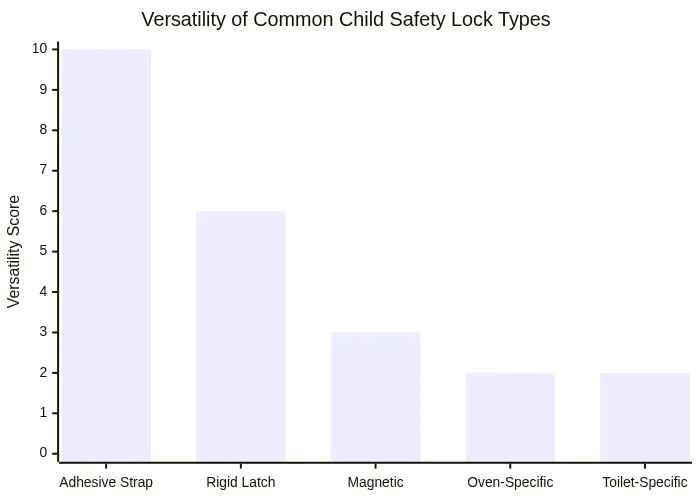
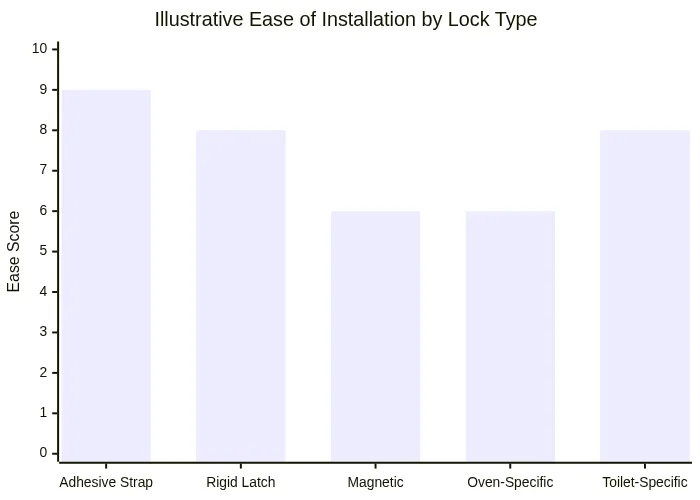
Multi-appliance lock comparison
| Lock type | Fridge | Oven | Dishwasher | Toilet seat | Best for |
|---|---|---|---|---|---|
| Adhesive strap lock | Excellent | Very good with proper placement | Excellent | Very good | Most families |
| Adhesive rigid latch | Good | Limited | Good | Limited | Flat surfaces |
| Magnetic hidden lock | Poor | Poor | Poor | Poor | Cabinets and drawers |
| Oven-specific door lock | No | Excellent | No | No | Dedicated oven safety |
| Toilet-specific lid lock | No | No | No | Excellent | Dedicated bathroom use |
How to install child safety locks for fridge, oven, dishwasher, and toilet seat without drilling
The most common complaint about appliance locks is not the lock itself. It is failed installation. In many cases, the issue is surface prep, placement, or using the lock before the adhesive has cured.
Step-by-step method
-
Clean the surface thoroughly.
Remove grease, soap film, fingerprints, and dust. A mild cleaner followed by an alcohol wipe is often the best prep. -
Dry the area completely.
Adhesive does not bond well to moisture. -
Test the lock position before peeling anything.
Make sure the lock can close fully and does not block normal use. -
Mark the placement lightly.
Painter's tape can help you line up both anchor points. -
Press each adhesive anchor firmly.
Apply firm, even pressure for 30 to 60 seconds. -
Let the adhesive cure.
Many systems need 12 to 24 hours before they reach full strength. Do not let a child test it immediately.
Fridge-specific placement tips
For child safety locks for fridge placement:
- Avoid soft gasket areas
- Do not place the lock where it breaks the seal
- Choose a position that limits leverage from little hands
- For French door units, test door swing before final placement
Oven-specific placement tips
For child safety locks for oven installation:
- Keep the lock away from the hottest zones
- Avoid vents
- Confirm the surface remains safe for adult touch during and after use
- If knobs are accessible, add knob covers or use the appliance's built-in control lock too
Dishwasher-specific placement tips
For child safety locks for dishwasher doors:
- Check that the strap will not scrape cabinetry
- Open and close the machine slowly during test fitting
- Keep detergent pods stored separately and high up even after locking the door
Toilet-specific placement tips
For child safety locks for toilet seat lids:
- Check that the lid and tank alignment is stable
- Test one-handed adult access
- Recheck the bond after bathroom deep cleaning because moisture and chemicals can weaken adhesion over time
Common installation mistakes to avoid
| Mistake | What happens | Better approach |
|---|---|---|
| Installing on greasy surfaces | Adhesive peels off early | Clean with alcohol and dry fully |
| Using lock immediately | Bond fails under first pull | Wait for full cure time |
| Poor alignment | Lock is easy to pry or does not close well | Dry-fit and mark first |
| Ignoring heat near oven | Adhesive weakens faster | Place on cooler exterior zone |
| Assuming one lock fits every layout | Frustration and poor performance | Match lock style to appliance shape |
Smart everyday use tips for child safety locks for fridge and beyond
Once your locks are installed, a few habits make them more effective.
First, treat appliance locks as part of a layered setup. Even with child safety locks for fridge doors, it still helps to store glass containers, choking hazards, and tempting snacks thoughtfully. Likewise, child safety locks for dishwasher doors work best when sharp knives and detergent pods are also kept out of reach.
Second, check the locks monthly. Tug gently on the adhesive points and inspect the strap for wear, cracks, or loosening. Heat, humidity, and repeated use can gradually reduce performance.
Third, adapt as your child grows. A lock that easily stops a one-year-old may not be enough for a highly determined preschooler. You may need to adjust placement or upgrade your mix of safety tools over time.
Fourth, remember that built-in electronic locks are not the same as physical locks. Many appliances can lock controls but still allow the door or lid to open. For families with curious toddlers, physical restraint is still important.
When should you stop using them?
There is no universal age. Many families use appliance locks from around 8 to 10 months, when crawling and pulling up begin, through age 3 or 4, depending on the child's strength, impulse control, and curiosity.
Are adhesive locks strong enough?
Usually yes, if:
- The surface is smooth and properly cleaned
- The adhesive cures fully
- The lock is correctly aligned
- The child is not able to get leverage under the edge
This is why installation quality matters almost as much as the lock design itself.
Will they damage stainless steel?
Many no-drill locks are designed to minimize damage risk, but safe removal still matters. To remove adhesive:
- Warm it gently with a hair dryer on low heat
- Peel slowly or roll adhesive back on itself
- Clean residue with a finish-safe cleaner
- Avoid abrasive tools
How to build a safer home around child safety locks for fridge, oven, dishwasher, and toilet seat
The best childproofing plan is not the one with the most gadgets. It is the one that targets your child's real behavior.
If your toddler always heads for the kitchen first, prioritize:
- Child safety locks for fridge access
- Child safety locks for oven doors and stove controls
- Child safety locks for dishwasher doors
- Lower cabinet protection
- Safe storage for cleaners, glassware, and knives
If your child loves splashing in the bathroom, prioritize:
- Child safety locks for toilet seat lids
- Locked or elevated cleaning products
- Closed bathroom doors when possible
- Consistent adult supervision
A practical setup often uses one style of multi-purpose lock for the fridge, dishwasher, toilet, and possibly oven, then adds other childproofing where needed.
If you are ready to secure multiple high-risk spots with one simple approach, the best next step is to compare no-drill appliance lock options on vmaisi8.com and choose a kit that covers your fridge, oven, dishwasher, and toilet seat together.
In short, child safety locks for fridge access should usually come first because the fridge is one of the most frequently opened and tempting appliances in the home. But the strongest plan does not stop there. Adding child safety locks for oven doors, child safety locks for dishwasher use, and child safety locks for toilet seat lids creates a more complete, more realistic layer of protection for everyday family life.
Choose locks that are easy for adults, difficult for toddlers, compatible with your appliance layout, and simple to install correctly. When combined with supervision and smart storage habits, that setup can reduce daily stress and help make your home safer in the places children love exploring most.