

Buy Strong Child Safety Locks for Dishwasher
Are you confused when your toddler keeps pulling open the dishwasher, then heads straight for the fridge, the oven, or even the bathroom toilet the moment you turn away? If that sounds familiar, choosing the right lock is less about buying ‘any’ babyproofing tool and more about finding a strong, practical system that works where real household risks happen.
When parents shop for child safety locks for dishwasher use, they are usually very close to buying. The reason is simple: dishwasher hazards are immediate and specific. A child can reach sharp utensils, detergent pods, glassware, or a hot, steamy interior in seconds. But in most homes, the dishwasher is only one part of the problem. The same child who tugs that door often tries the fridge next, then the oven, then the toilet lid.
That is why many families prefer a multi-use no-drill lock solution instead of mixing several unrelated products. A flexible adhesive strap lock can often cover the dishwasher first, while also helping with child safety locks for fridge setups, some child safety locks for oven placements, and many child safety locks for toilet seat needs when installed correctly.
If you want a dishwasher-first solution that also helps simplify whole-home childproofing, the Vmaisi 6 Pack Multi-Use Adhesive Straps Locks is the most direct match to this use case. You can also browse multi-use child safety locks if you want to compare options first.
Why child safety locks for fridge and dishwasher matter most in busy homes
Dishwashers create a very specific kind of urgency. Unlike a generic cabinet, they can hold knives, forks, fragile dishes, chemical detergent pods, and recently heated interior surfaces. According to guidance referenced across pediatric and safety resources, childproofing should focus on reducing direct access to hazards, not only reacting after a child gets there. The CPSC childproofing guide, UCSF Benioff Children's childproofing advice, and Seattle Children's home checklist all support layered home safety measures.
A dishwasher also creates confusion for many parents because some machines include a built-in control lock. That feature can disable buttons, but it often does not physically stop the door from opening. If your child can still pull the dishwasher door down, the risk remains. Vmaisi's own fridge and oven appliance lock guide explains this distinction clearly, and it is one of the most important buying points.
Fridges are close behind in urgency. Parents looking for child safety locks for fridge doors are often dealing with repeated food access, spills, broken glass containers, and constant opening and closing throughout the day. In real use, that means the best lock is not just one that stops a child, but one adults can tolerate using many times daily.
This is exactly why a multi-use lock style is attractive. Instead of learning different release methods for each room, you get one consistent lock approach across high-risk access points. For families trying to simplify routines, that matters.

A practical way to think about it is this: dishwasher childproofing is often the purchase trigger, but fridge and nearby storage areas are what turn it into a whole-kitchen safety plan. If you are also securing lower cabinets near the sink or dishwasher, Vmaisi Magnetic Cabinet Locks can complement appliance locks well for cleaners, sharp tools, and drawer storage.
What makes child safety locks for fridge, dishwasher, oven, and toilet seat ‘strong'
In this category, ’strong‘ does not just mean hard to yank on. Based on the research report and supporting product-testing sources such as Consumer Reports and BabyGearLab, strength is really a combination of five things: adhesive performance, material durability, toddler resistance, adult usability, and long-term reliability.
Here is a simple breakdown:
| Strength factor | Why it matters | What to look for |
|---|---|---|
| Adhesive bond | Keeps the lock attached under pulling and daily use | Clean installation surface, firm pressure, full cure time |
| Strap durability | Prevents cracking or weakening with repeated opening | Flexible but sturdy strap material |
| Child resistance | Helps stop pulling, prying, or simple imitation | Release method that is not obvious to toddlers |
| Adult usability | Makes it more likely adults keep using it | Easy one-hand opening and relocking |
| Surface compatibility | Affects performance on appliances and bathroom fixtures | Works on smooth surfaces like many fridge and dishwasher exteriors |
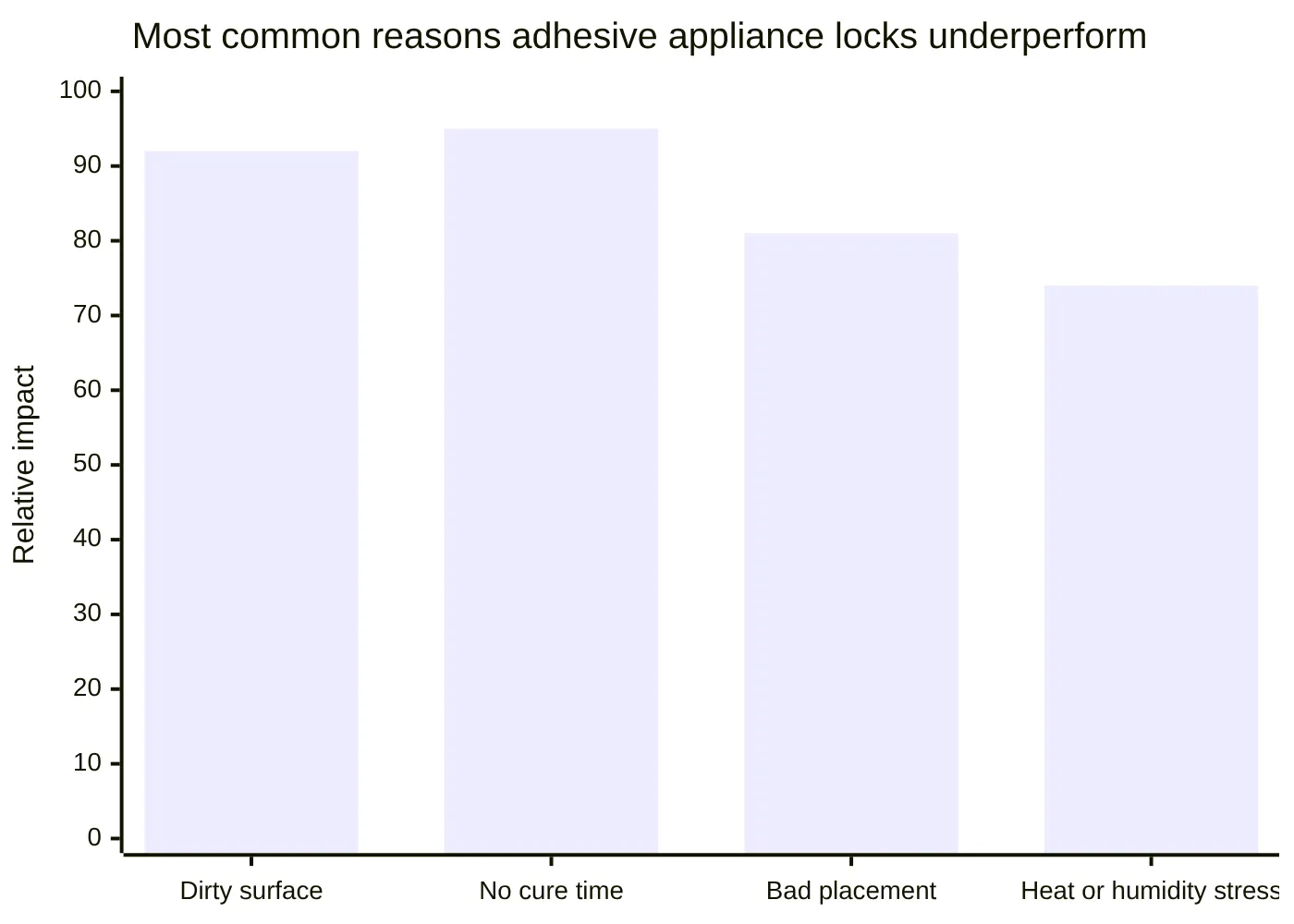
For most families, a strong lock is one that still works after weeks of normal kitchen mess, wiping, humidity, and repeated opening, not one that sounds impressive in product copy. That is why installation quality matters so much. Vmaisi's troubleshoot page and related guidance emphasize what many buyers overlook: grease, moisture, and rushed setup can weaken even a good adhesive lock.
If your priority is a no-drill option that can cover multiple appliances, the Vmaisi 6 Pack Multi-Use Adhesive Straps Locks fits the buying intent behind strong child safety locks for dishwasher use because the product is designed for fridge, dishwasher, toilet seat, cupboard, and some oven applications without drilling.
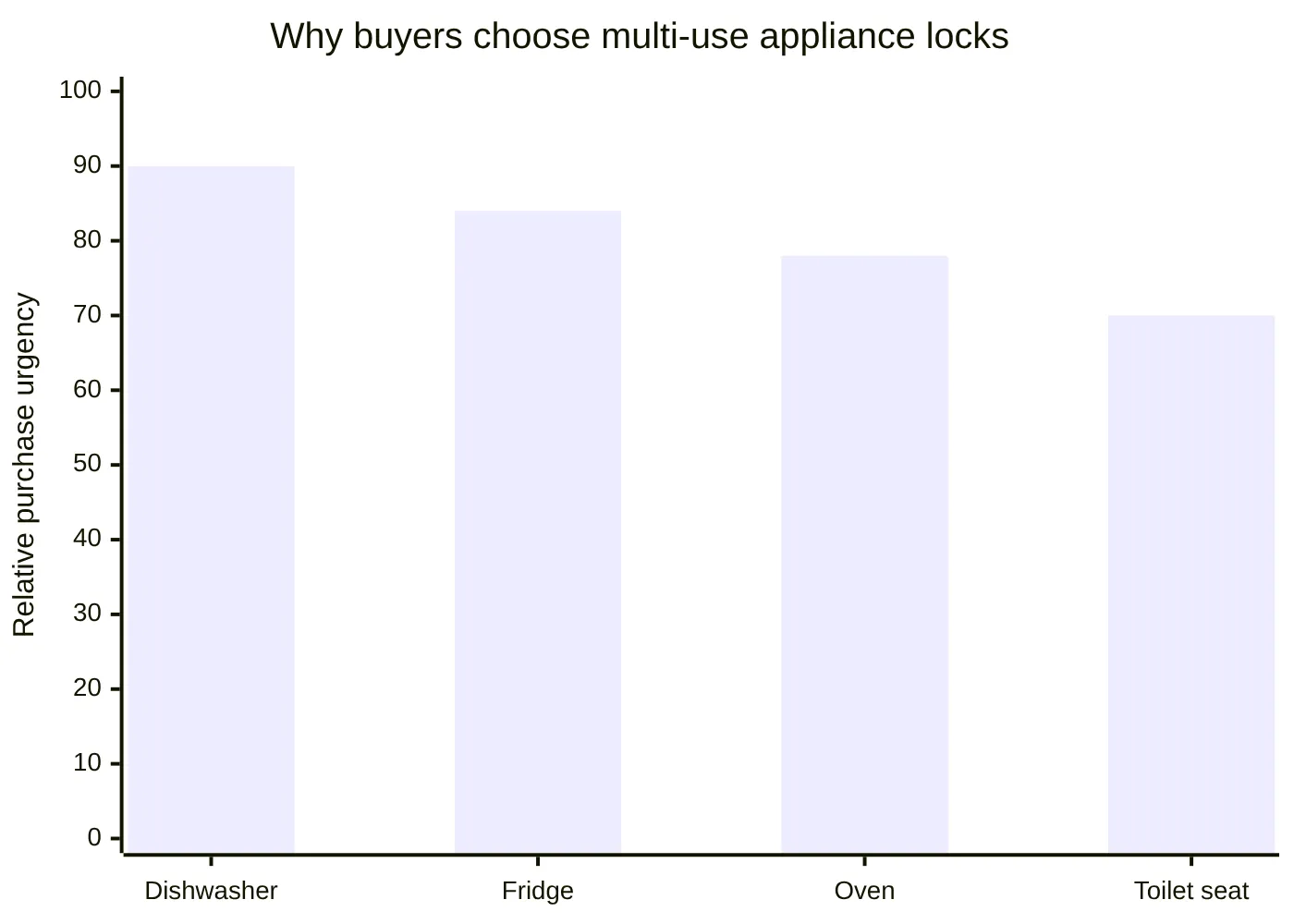
One more important point: even the strongest lock is only one layer of protection. Authorities consistently recommend supervision alongside childproofing tools. Locks reduce access. They do not replace attention.
How child safety locks for fridge compare with child safety locks for oven and toilet seat
Not every lock type fits every location equally well. That is where many articles stay too vague. If you want the shortest route to a smart purchase, it helps to compare where each style works best.
| Use case | Main risk | Best lock approach | Key caution |
|---|---|---|---|
| Child safety locks for dishwasher | Knives, pods, glassware, steam | Adhesive strap lock | Let adhesive cure fully before use |
| Child safety locks for fridge | Food access, spills, breakage, climbing | Adhesive strap lock | Avoid interfering with seals or door movement |
| Child safety locks for oven | Burns, hot door, controls | Strap lock with careful placement, sometimes paired with control protection | Keep away from hottest zones and vents |
| Child safety locks for toilet seat | Water access, germs, fall or drowning concern | Adhesive strap lock or dedicated toilet lock | Humidity and alignment matter |
For child safety locks for fridge doors, flexible placement is a major advantage. Fridge designs vary widely, and a no-drill strap lock is often easier to adapt than a rigid latch. If you want more guidance on choosing and placing appliance locks, Vmaisi's child safety locks for fridge and oven guide is a useful internal reference.
For child safety locks for oven use, the key issue is honesty. A multi-use strap lock can be helpful on some ovens, but placement matters. It should stay on a cooler exterior area and away from vents or heat-heavy zones. Some households also need a second layer, such as knob or control protection, depending on the appliance design. In other words, child safety locks for oven applications are often part of a layered setup, not always a one-product answer.
For child safety locks for toilet seat concerns, many families want the quickest possible solution because the risk appears as soon as a crawler or new walker starts exploring. A multi-use strap can work well if bathroom humidity and toilet alignment are suitable. But if your toilet shape is unusual or bathroom use patterns are complex, a dedicated toilet lock may sometimes make more sense.
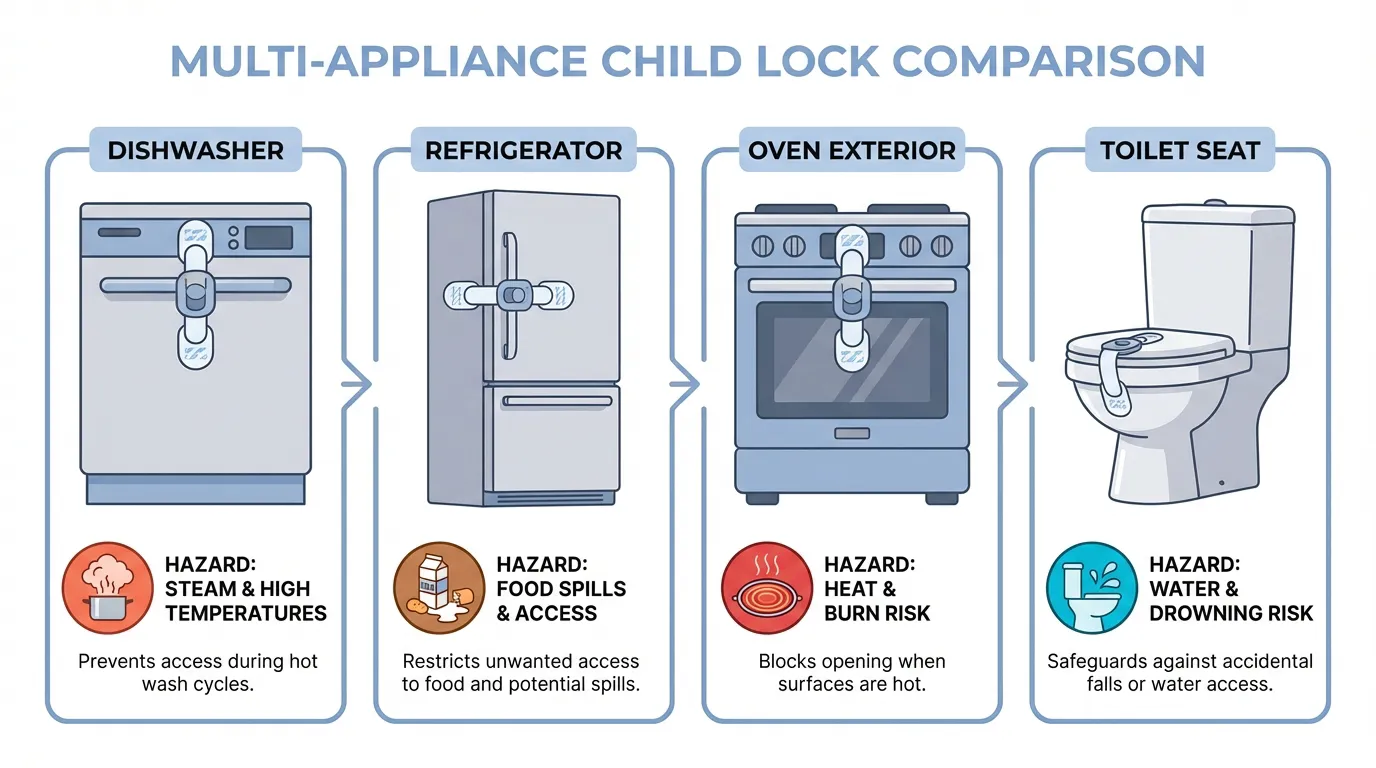
The buying advantage of a multi-use system is consistency. You can secure the most urgent risk first, usually the dishwasher, then extend the same lock style to the fridge, oven, or toilet without starting your search all over again.
If your home also has drawers or corner cabinets close to the dishwasher area, you can pair appliance locks with hidden cabinet locks for cleaners and sharp tools. For planning around awkward cabinet layouts, this related guide on magnetic cabinet locks for corner cabinets can help you expand protection beyond appliances.
How to install child safety locks for fridge and dishwasher so they actually hold
A surprising number of adhesive lock failures are not product failures. They are installation failures. Research in the report, including Vmaisi guidance and user-demo patterns, repeatedly shows the same problems: surfaces are not fully cleaned, alignment is rushed, or the lock is used before the adhesive cures.
If you want strong performance, follow this order:
- Clean the appliance surface thoroughly.
- Remove grease, dust, and soap film.
- Dry the area completely.
- Test the lock position before peeling the adhesive backing.
- Press both anchor points firmly into place.
- Wait the full cure time, ideally 12 to 24 hours.
- Test adult access before depending on it daily.
- Inspect the lock regularly for wear or lifting edges.
This matters for child safety locks for fridge doors because kitchen surfaces collect grease quickly. It also matters for child safety locks for dishwasher installations because many units sit near steam, splashes, and frequent wiping.
A few practical reminders can save a lot of frustration:
- Do not assume a built-in dishwasher control lock replaces a physical door lock.
- Do not install an oven lock in a hot zone without checking placement carefully.
- Do not expect bathroom humidity to be harmless over time.
- Do not skip periodic inspections, especially after repeated cleaning.
If you want more help with adhesive performance, placement, and curing, see Vmaisi's troubleshooting advice for adhesive locks. If you are ready to buy the product that most directly matches this article's use case, go straight to the Vmaisi 6 Pack Multi-Use Adhesive Straps Locks.
When child safety locks for fridge, oven, and toilet seat should be part of one system
The best reason to buy a multi-use lock is not only convenience. It is hazard clustering. In real homes, kids rarely explore one danger at a time. They move through the kitchen and bathroom in patterns. They tug the dishwasher because it is low and easy to reach. They open the fridge because adults open it often. They grab the oven handle because it looks like something to pull. They lift the toilet lid because it is new and interesting.
That is why a single-system approach often feels more realistic than buying separate specialty products first. A dishwasher-focused purchase can become the foundation of a broader setup:
- Use child safety locks for dishwasher access as your first priority.
- Add child safety locks for fridge doors if food access and spills are recurring.
- Use child safety locks for oven areas carefully, with proper placement and heat awareness.
- Add child safety locks for toilet seat use where bathroom access has become a concern.

This kind of setup also reduces decision fatigue. Instead of comparing dozens of unrelated products, you can start with one no-drill option that covers the most common appliance and bathroom access points. For many households, that is the fastest way to improve safety without turning childproofing into a long project.
Before you finish, it helps to keep one final principle in mind: childproofing works best in layers. A physical lock on the dishwasher should be paired with safe detergent storage. A fridge lock should not replace supervision around glass containers or choking hazards. An oven lock may still need extra control protection. And a toilet seat lock should be one part of broader bathroom safety.
If you are ready to act on the most urgent risk first, the Vmaisi 6 Pack Multi-Use Adhesive Straps Locks is the clearest product match for strong child safety locks for dishwasher use, while still supporting child safety locks for fridge, child safety locks for toilet seat, and selected child safety locks for oven placements in one system. If you want to compare the broader range first, you can also browse multi-use child safety locks.
In short, if your child keeps testing the same doors and lids every day, the smartest buy is usually not the most complicated one. It is the lock you can install correctly, use consistently, and trust across the places your toddler actually reaches first.