

Buy Invisible Cabinet Locks for Baby Safety
Are you worried your baby will open a cabinet the moment you look away? If your little one has started crawling, pulling up, or exploring kitchen drawers, you are probably comparing home safety locks and wondering which ones actually fit your cabinets, drawers, medicine storage, and appliances. For many parents, especially mothers with new babies, the goal is simple: reduce access to everyday hazards without turning the whole home into a maze of bulky plastic locks.
Invisible cabinet locks, especially magnetic cabinet locks, are popular because they install inside suitable cabinets and drawers. From the outside, your cabinet looks normal. Adults open it with a magnetic key, while babies and young toddlers are less likely to understand where the latch is. Still, the safest approach is layered: locks help, but they do not replace supervision, safe storage, or regular checks.
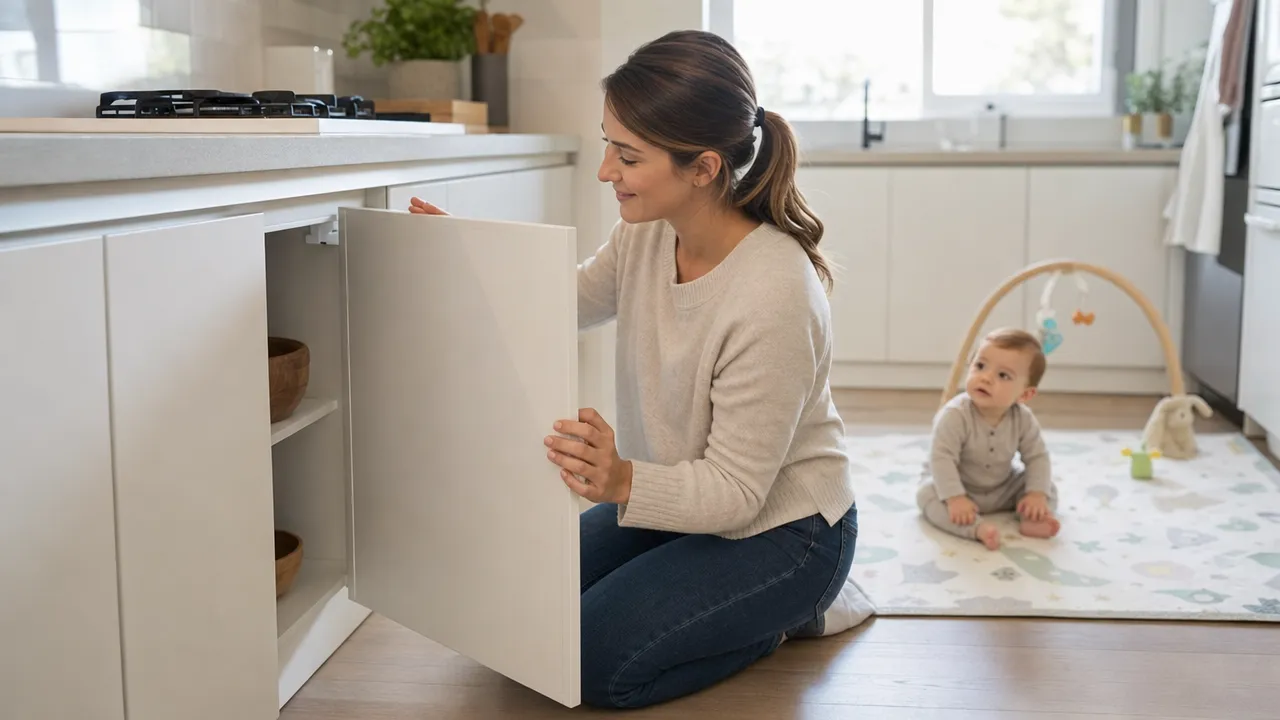
Home safety locks for cabinets, drawers, and everyday hazards
Home safety locks are most useful when they are matched to the hazard, not just the room. The U.S. Consumer Product Safety Commission recommends safety latches and locks on cabinets and drawers to help prevent access to items such as medicines, household cleaners, knives, matches, and other hazards. You can review the agency's guidance in the CPSC childproofing guide.
Common cabinet and drawer risks include cleaners under the sink, laundry products, sharp utensils, razors, cosmetics, small choking hazards, batteries, tools, and medicines. This is why searches like baby proofing cabinet locks, babyproof cabinet locks, child safety cabinet locks, cabinet locks for babies, baby cabinet locks, and child safety locks for drawers are so common once a baby becomes mobile.
Medicine storage deserves special attention. The FDA recommends keeping medicines up and away and out of sight, preferably locked. Poison Control also reminds U.S. families to call Poison Help at 1-800-222-1222 if exposure is suspected. For parents searching safety usa guidance, these are the kinds of U.S. safety resources worth prioritizing: FDA Up and Away, Poison Control, and the Poison Control national statistics.
| Area | Common hazard | Better lock approach |
|---|---|---|
| Kitchen cabinets | Cleaners, trash bags, small objects | Magnetic cabinet locks or internal latches |
| Kitchen drawers | Knives, peelers, scissors, gadgets | Magnetic drawer locks or child safety locks for drawers |
| Bathroom vanity | Razors, cosmetics, cleaners | Invisible cabinet locks or suitable strap locks |
| Medicine cabinet | Pills, supplements, creams | High storage plus lockable cabinet or box |
| Laundry room | Detergents, pods, stain removers | Cabinet locks and high storage |
| Appliances | Fridge, toilet, dishwasher, oven | Appliance straps or purpose-built locks |
No child safety product should be described as a guarantee. Children develop quickly, and older toddlers may observe routines. Home safety locks reduce access, but supervision, storing hazards high, and keeping dangerous products in original containers remain essential.
Home safety locks and what invisible magnetic cabinet locks do
Invisible cabinet locks are installed inside the cabinet or drawer, so the locking mechanism is hidden from the outside. In the Vmaisi product lineup, this usually means magnetic cabinet locks that use an internal lock body, a catch, and a magnetic key.
The Vmaisi Baby Proofing Magnetic Cabinet Locks 12 Pack is a strong match for parents who want hidden cabinet locks for babies. The product is designed for cabinets and drawers, includes 12 locks and 2 keys, uses adhesive installation, and may support screw reinforcement depending on installation needs. It is intended for areas such as kitchens, bathrooms, pantry rooms, storage spaces, and bedrooms.

Magnetic locks generally work like this: the lock body mounts inside the cabinet, the catch mounts on the frame or opposing surface, and the latch engages when the door closes. To open it, an adult places the magnetic key on the outside of the cabinet near the lock location. The magnet releases the latch so the door or drawer can open. For a deeper installation overview, Vmaisi also provides a guide on how to babyproof cabinets with magnetic locks.
| Product type | Best for | Visibility | Key consideration |
|---|---|---|---|
| Magnetic cabinet locks | Standard cabinets and some medicine cabinets | Hidden | Door thickness, material, and key access matter |
| Magnetic drawer locks | Kitchen and bathroom drawers | Hidden | Drawer clearance and alignment matter |
| Adhesive strap locks | Fridge, toilet seat, dishwasher, some cabinets | Visible | Surface prep and humidity matter |
| Screw-mounted latches | High-use cabinets | Usually hidden | Stronger hold but leaves holes |
| Purpose-built appliance locks | Oven, fridge, dishwasher | Usually visible | Must fit appliance shape and heat area |
Parents sometimes compare these products with broad search terms like safetyfirst or safetyfirst cabinet locks. The important thing is not the search wording but whether the lock type matches your cabinet construction, hazard level, and daily routine.
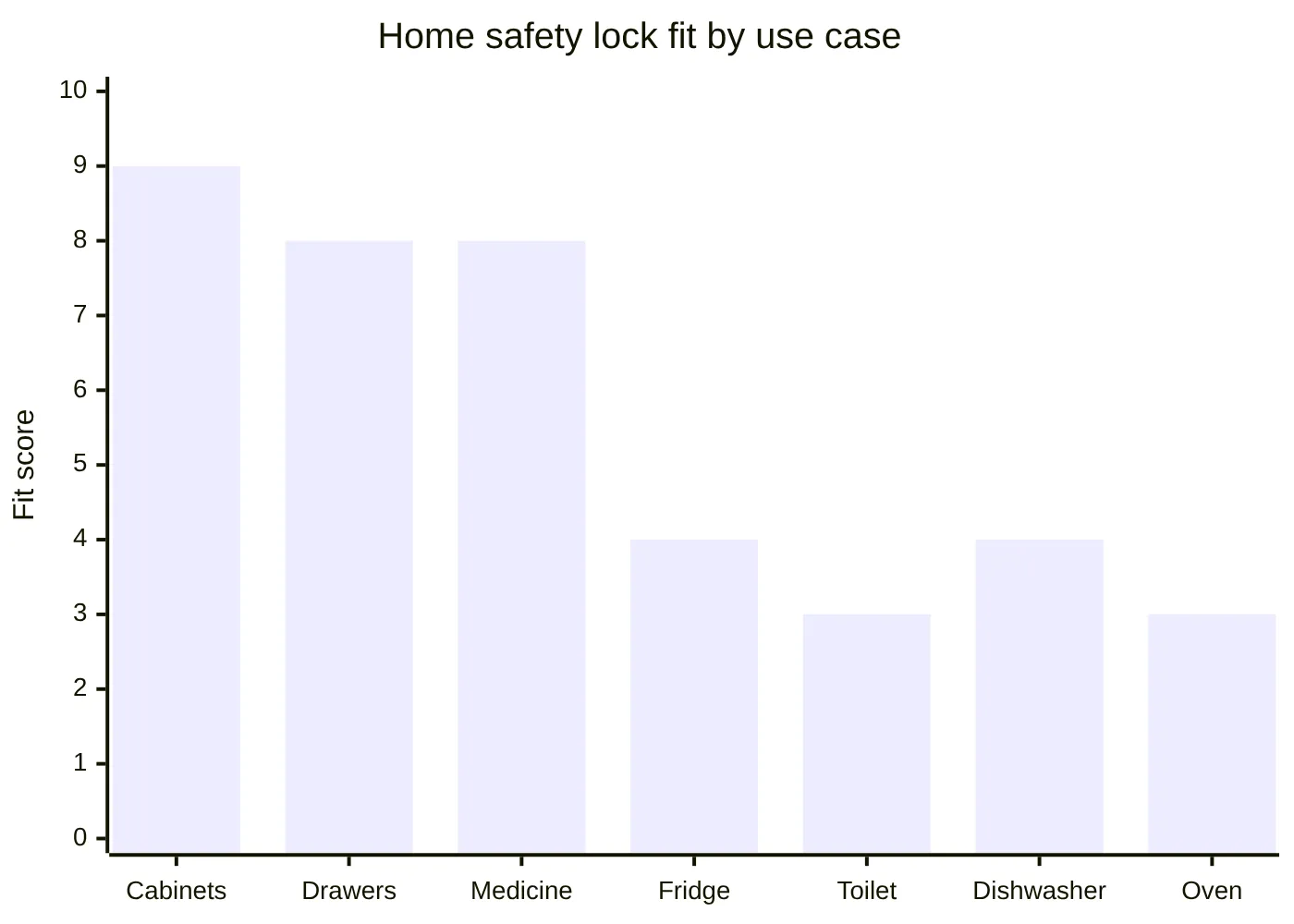
This chart reflects a practical fit pattern: magnetic and invisible cabinet locks are usually strongest for cabinets, drawers, and some medicine storage. Child safety locks for fridge, child safety locks for toilet seat, child safety locks for dishwasher, and child safety locks for oven usually need strap-style or appliance-specific solutions instead.
Home safety locks with adhesive vs screws
One of the most important buying questions is cabinet locks with adhesive vs screws. Adhesive locks are popular because they are no-drill, renter-friendly, and quicker to install. Screw-mounted locks are often more durable for high-use cabinets, but they require tools and leave holes.
Adhesive magnetic cabinet locks can work well on smooth, clean, dry, non-oily surfaces when installed correctly. Problems are more likely on dusty, greasy, damp, rough, curved, peeling, or textured surfaces. Humidity, repeated pulling, and skipped cure time can also weaken the bond. Vmaisi's troubleshoot page notes practical issues such as surface preparation, metal interference, and waiting before use.
Screws can add strength, especially for cabinets opened many times per day or for higher-risk storage. However, they may not be right for renters, thin cabinet panels, or surfaces where holes are not acceptable.
| Factor | Adhesive locks | Screw-mounted locks |
|---|---|---|
| Installation | Usually no tools | Screwdriver or drill may be needed |
| Renter-friendly | High | Low unless approved |
| Strength over time | Good with proper surface prep | Usually stronger for long-term use |
| Removal | Easier, but residue or finish damage is possible | Leaves screw holes |
| Best use | Smooth standard cabinets, rentals, quick babyproofing | High-use or long-term cabinets |
| Caution | Allow cure time and test often | Use correct screw length and placement |
For many parents, a practical strategy is to start with adhesive invisible cabinet locks on suitable cabinet doors and drawers, then consider screw reinforcement for high-use areas if the product allows it and the cabinet material is appropriate.
Home safety locks installation guide for magnetic cabinet locks
If you are asking how to install magnetic cabinet locks, the most important rule is to test before committing. Alignment matters. So do surface material, cabinet thickness, and the magnetic key position.
Start with the cabinets your baby can reach first. Prioritize under-sink cleaners, sharp-tool drawers, medicine storage, laundry products, and pantry areas with choking hazards. Then follow a careful installation process:
- Open the cabinet or drawer and identify a flat internal mounting area.
- Check that the surface is not metal and that nearby metal hardware will not interfere with the magnetic mechanism.
- Clean the mounting area with a surface-safe cleaner and let it dry completely.
- Use the included template or cradle if provided.
- Dry-fit the lock body and catch before removing adhesive backing.
- Test whether the magnetic key can release the lock through the cabinet or drawer front.
- Apply the adhesive pieces or screws according to the product instructions.
- Press firmly and allow cure time if adhesive is used.
- Test the lock several times before relying on it.
- Store the magnetic key high, out of sight, and out of reach.
For corner cabinets, the answer to do magnetic cabinet locks work on corner cabinets is: often, but not always. Diagonal-front and some L-shaped corner cabinets may work if there is a flat internal mounting area and the magnetic key can reach the latch. Lazy Susan cabinets, unusual internal geometry, metal parts, or very thick doors can make installation harder. Vmaisi has a dedicated guide on whether magnetic cabinet locks fit corner cabinets.
If a lock does not release smoothly, do not force the door. Recheck the key position, alignment, latch placement, and any nearby metal. If the adhesive loosens, remove hazards from that cabinet immediately, reinstall correctly, or choose another lock type.
Knowing how to baby proof cabinets and drawers also means knowing when not to use magnetic locks. Metal cabinets, mirrored frameless medicine cabinets, and some appliance doors may need strap locks instead. For appliance areas, see Vmaisi's guide on child safety locks for fridge and oven and the guide on choosing child safety locks for your fridge.
Home safety locks for medicine cabinets and appliances
Parents often ask how to childproof a medicine cabinet because medicine storage carries higher stakes. The best child locks for medicine cabinet use depend on the cabinet type. A standard wood or composite cabinet may work well with hidden magnetic locks. A mirrored, glass, frameless, or metal medicine cabinet may be better suited to an adhesive strap lock or a separate lockable medicine box.
For medicine safety, use layers:
- Store medicines up high, away, and out of sight.
- Keep medicines in original containers.
- Lock the cabinet or use a lockable medicine box when possible.
- Do not rely only on child-resistant caps.
- Put medicine away immediately after every use.
- Keep purses, guest bags, and pill organizers out of reach.
- Save Poison Help at 1-800-222-1222 in the U.S.
Vmaisi offers more detail in its guide to childproofing a medicine cabinet safely and its article on best child locks for medicine cabinets at home.
Appliances need different thinking. Magnetic cabinet locks are not usually the first choice for a refrigerator, toilet seat, dishwasher, or oven. For child safety locks for fridge, use a dedicated fridge lock or suitable appliance strap that does not interfere with the seal. For child safety locks for toilet seat, choose a toilet lid lock or moisture-appropriate strap. For child safety locks for dishwasher, remember that detergent pods, sharp items, and hot steam are key concerns. For child safety locks for oven, use heat-appropriate products and avoid hot vents or unsafe placement.
The 6 Pack Vmaisi Multi-Use Adhesive Straps Locks is a useful option for appliance-style needs such as fridge, dishwasher, toilet seat, cupboard, oven, and trash can applications when the surface and placement are suitable.

Home safety locks buying checklist and Vmaisi recommendation
Before buying, count the cabinets and drawers your baby can reach. Include under-sink cabinets, medicine storage, kitchen drawers, bathroom vanities, pantry doors, laundry cabinets, and any drawer holding sharp tools or small objects. Then decide whether you need hidden magnetic locks, magnetic drawer locks, visible appliance straps, or a mix.
Here is a simple checklist:
| Question | Why it matters |
|---|---|
| Is the cabinet wood or composite rather than metal? | Metal may interfere with magnetic locks |
| Is the internal surface flat and clean? | Adhesive and alignment need a stable surface |
| Is the door very thick? | The magnetic key must release the latch through the front |
| Is this a high-use cabinet? | Screws or reinforcement may be better |
| Is this an appliance instead of a cabinet? | Strap or appliance-specific locks may fit better |
| Can the key be stored high and hidden? | Toddlers can imitate adults over time |
| Can you inspect the lock regularly? | Loose or damaged locks should be replaced |
If you want a clean look without visible plastic on suitable cabinets and drawers, start with the Vmaisi Baby Proofing Magnetic Cabinet Locks 12 Pack. For larger projects, browse the Vmaisi Magnetic Cabinet Locks collection, including options for magnetic cabinet locks, baby cabinet locks, child safety cabinet locks, and magnetic drawer locks.
To remove adhesive-mounted locks, first disable the lock if the model allows it, remove any screws if used, gently warm the adhesive with a hair dryer on low or medium, and slowly lift with a plastic card, floss, or plastic scraper. Peel at a low angle and avoid yanking. If using adhesive remover, test a hidden area first. Do not assume removal will always be damage-free, especially on painted or delicate finishes.
Home safety locks work best when parents treat them as one part of a safer routine: lock low cabinets, store dangerous items high, keep medicines locked and out of sight, use appliance locks where appropriate, and check everything regularly as your child grows.