

How to Babyproof Cabinets with Magnetic Locks
Are you worried that the moment your toddler learns to open lower cabinets, the cleaning products under the sink or sharp tools in a drawer will suddenly become reachable? If that sounds familiar, learning how to use home safety locks keys with magnetic cabinet locks can make everyday babyproofing feel much more manageable.
Magnetic cabinet locks are one of the cleanest-looking ways to secure cabinets and drawers because the hardware stays hidden inside. Adults use a magnetic key on the outside of the door to release the lock, while children usually cannot see how the system works, let alone open it. For many families, that combination of invisible design and strong child resistance makes them a practical answer for baby proofing cabinet locks in kitchens, bathrooms, laundry rooms, and beyond.
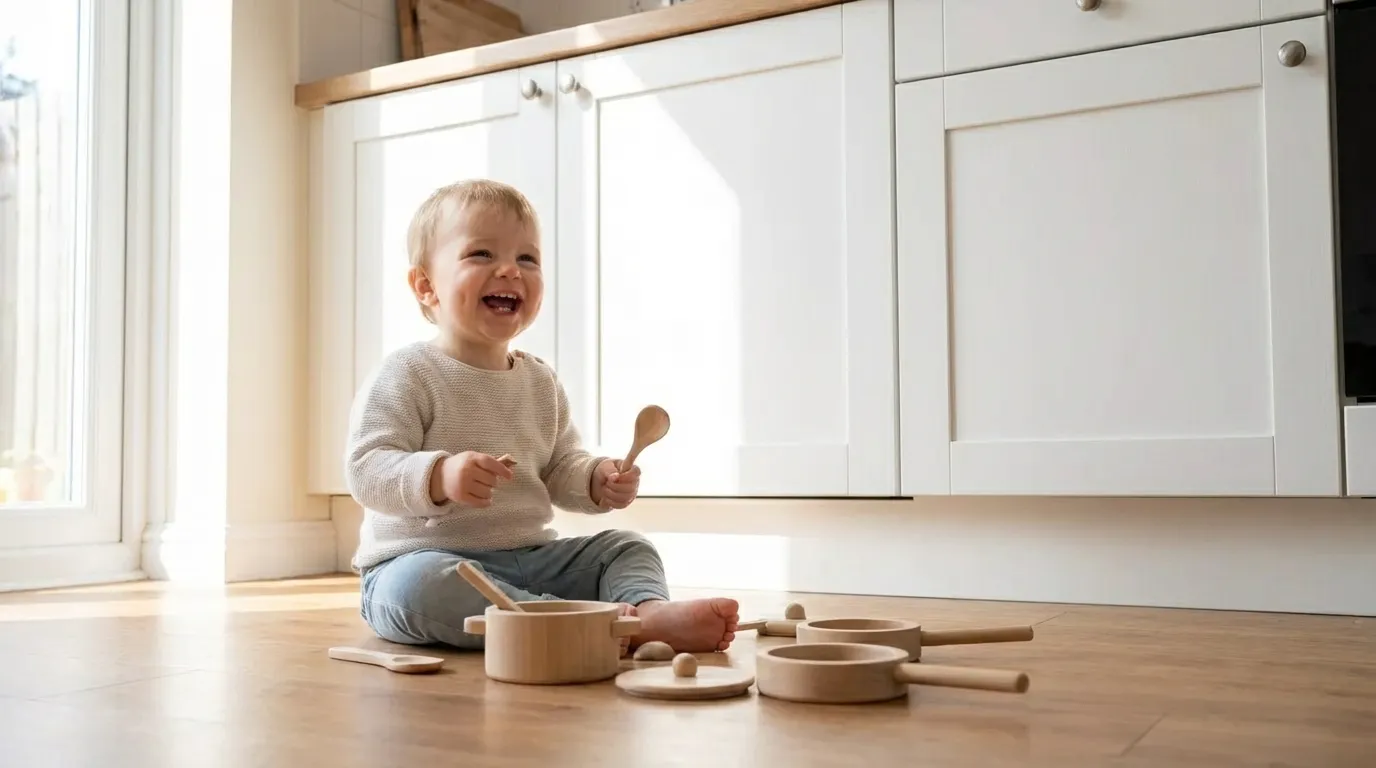
Why home safety locks keys matter for babyproofing cabinets and drawers
When parents search for home safety locks keys, they are often looking for a system that is hard for children to defeat but still easy for adults to use multiple times a day. In the case of magnetic systems, the 'key' is a handheld magnet that releases the hidden latch from outside the cabinet door.
This matters because cabinet and drawer hazards are everywhere in a typical home:
- Cleaning products under kitchen and bathroom sinks.
- Medications and supplements in bathroom storage.
- Knives, scissors, peelers, and sharp utensils in drawers.
- Dishwasher pods, plastic bags, foil, and other choking or poisoning risks.
According to the CDC's poisoning prevention guidance and the American Academy of Pediatrics medication safety advice, dangerous items should be stored up high and in locked storage whenever possible. That is an important point: child safety cabinet locks are a strong layer of protection, but they should not be the only layer.
For families trying to babyproof efficiently, magnetic systems stand out because they combine:
- Hidden hardware.
- Strong toddler resistance.
- Everyday convenience.
- Compatibility with many standard cabinets and drawers.
If you want an invisible setup for cabinet locks for babies, a dedicated magnetic cabinet locks collection is the logical place to start.
How home safety locks keys work with magnetic cabinet locks
Magnetic cabinet locks, magnetic drawer locks, and invisible cabinet locks all refer to a similar concept: the lock is mounted inside the cabinet or drawer, and the release happens when a magnetic key is placed on the outside surface in the correct spot.
Here is how the mechanism typically works:
- The lock body is mounted inside the cabinet frame or drawer box.
- A catch plate is attached to the door or drawer.
- When the cabinet closes, a spring-loaded latch engages and blocks opening.
- When an adult places the magnetic key over the lock location, the internal mechanism retracts.
- The cabinet or drawer opens normally.
This hidden setup is one reason babyproof cabinet locks of the magnetic type are so popular. There is no visible strap across your cabinets, and toddlers have fewer clues about how to bypass them.
Key benefits of magnetic cabinet locks
| Feature | Why it helps |
|---|---|
| Hidden installation | Keeps cabinets looking clean and uncluttered |
| Magnetic key access | Quick for adults, difficult for toddlers |
| Strong child resistance | Often performs better than simple external locks |
| Good for cabinets and drawers | Useful in kitchens, bathrooms, and laundry rooms |
| Adhesive options available | Helpful for renters or no-drill installation |
Compared with some external latch styles, invisible cabinet locks are also less likely to disrupt your kitchen design. That aesthetic advantage is especially useful in open-concept homes where visible plastic straps can stand out.
Magnetic cabinet locks vs other child safety cabinet locks
Parents often compare magnetic systems with external straps, slide locks, and internal mechanical latches. Each can work, but they fit different situations.

The chart above reflects the general strengths of magnetic cabinet locks: moderate installation effort, strong child resistance, excellent aesthetics, and good renter-friendliness when adhesive mounting is used.
Here is a more practical comparison:
| Lock type | Best use | Main advantage | Main trade-off |
|---|---|---|---|
| Magnetic cabinet locks | Standard cabinets and drawers | Hidden and hard for toddlers to figure out | Need proper alignment |
| External strap locks | Fridge, dishwasher, odd surfaces | Easy to install | Visible from outside |
| Internal mechanical latches | Long-term fixed installations | Durable | Often requires drilling |
| Knob slide locks | Cabinets with paired knobs | Low cost and simple | Less secure overall |
If your goal is a cleaner look and stronger resistance, magnetic systems are often the better fit than simple strap-style baby cabinet locks for everyday cabinets and drawers.
How to install home safety locks keys systems on cabinets
If you are wondering how to install magnetic cabinet locks, the process is usually straightforward, especially with adhesive kits that include an alignment tool.
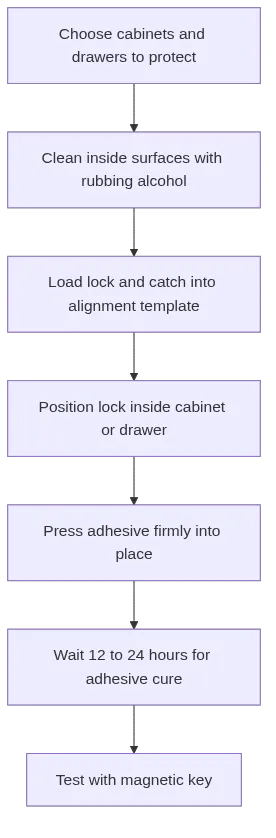
Step-by-step: how to install magnetic cabinet locks
-
Choose the right cabinets and drawers first
Prioritize high-risk zones such as under-sink storage, bathroom cabinets, low drawers with sharp tools, and laundry cabinets. -
Clean the inside surfaces thoroughly
Wipe the mounting area with rubbing alcohol and let it dry fully. This helps the adhesive bond properly. -
Use the installation template if included
Many systems come with a positioning guide that helps align the lock body and latch. -
Place the lock and catch in the correct location
Make sure the magnetic key will be able to activate the lock through the cabinet front. -
Press adhesive firmly into place
Hold pressure for several seconds to create the initial bond. -
Allow curing time
Many instructions recommend waiting 12 to 24 hours before heavy use. -
Test with the magnetic key
Close the cabinet, confirm it locks, then unlock it using the magnetic key.
Cabinet locks with adhesive vs screws
One of the biggest buying questions is cabinet locks with adhesive vs screws. Both methods have advantages.
| Mounting method | Best for | Pros | Cons |
|---|---|---|---|
| Adhesive | Renters, quick installs, finished cabinetry | No drilling, faster setup, less visible damage risk | Can loosen on rough or dirty surfaces |
| Screws | Heavy drawers, long-term use, high-traffic cabinets | More permanent and robust | Requires tools and leaves holes |
For many households, adhesive-based child safety cabinet locks are enough when installed correctly on clean surfaces. If you are securing a heavy drawer or planning a long-term setup, screws may be worth considering.
A practical tip from installation tutorials is to keep at least one spare magnetic key and store keys high up, ideally in a holder that children cannot reach. That is one of the simplest ways to make home safety locks keys more convenient in real life.
How home safety locks keys fit into whole-home child safety
Babyproofing should not stop at lower kitchen cabinets. Once a child becomes mobile, your lock plan needs to expand room by room. Magnetic systems are excellent for standard cabinets and drawers, but some areas are better secured with specialized products.
Where magnetic locks work best
- Kitchen base cabinets.
- Bathroom vanities.
- Laundry room cabinets.
- Standard drawers with household hazards.
- Some medicine cabinets, depending on material and thickness.
When other lock types may be better
- Child safety locks for fridge often work better as external strap locks because refrigerator doors are thick and metal.
- Child safety locks for toilet seat usually require a toilet-specific design.
- Child safety locks for dishwasher are commonly adhesive strap locks across the door area.
- Child safety locks for oven usually involve oven door locks and knob covers rather than magnetic cabinet systems.
Here is a simple whole-home planning table:
| Area | Common hazard | Best lock type |
|---|---|---|
| Kitchen cabinets | Cleaners, chemicals, trash | Magnetic cabinet locks |
| Kitchen drawers | Knives, peelers, gadgets | Magnetic drawer locks |
| Bathroom cabinet | Medicines, razors, cleaners | Magnetic locks or dedicated cabinet lock |
| Fridge | Food hazards, medicines | External strap lock |
| Toilet | Water and contamination risk | Toilet seat lock |
| Dishwasher | Pods, sharp utensils, hot steam | External strap lock |
| Oven | Burn risk, door opening | Oven lock and knob covers |
This is why many families mix lock types rather than relying on one product category alone.
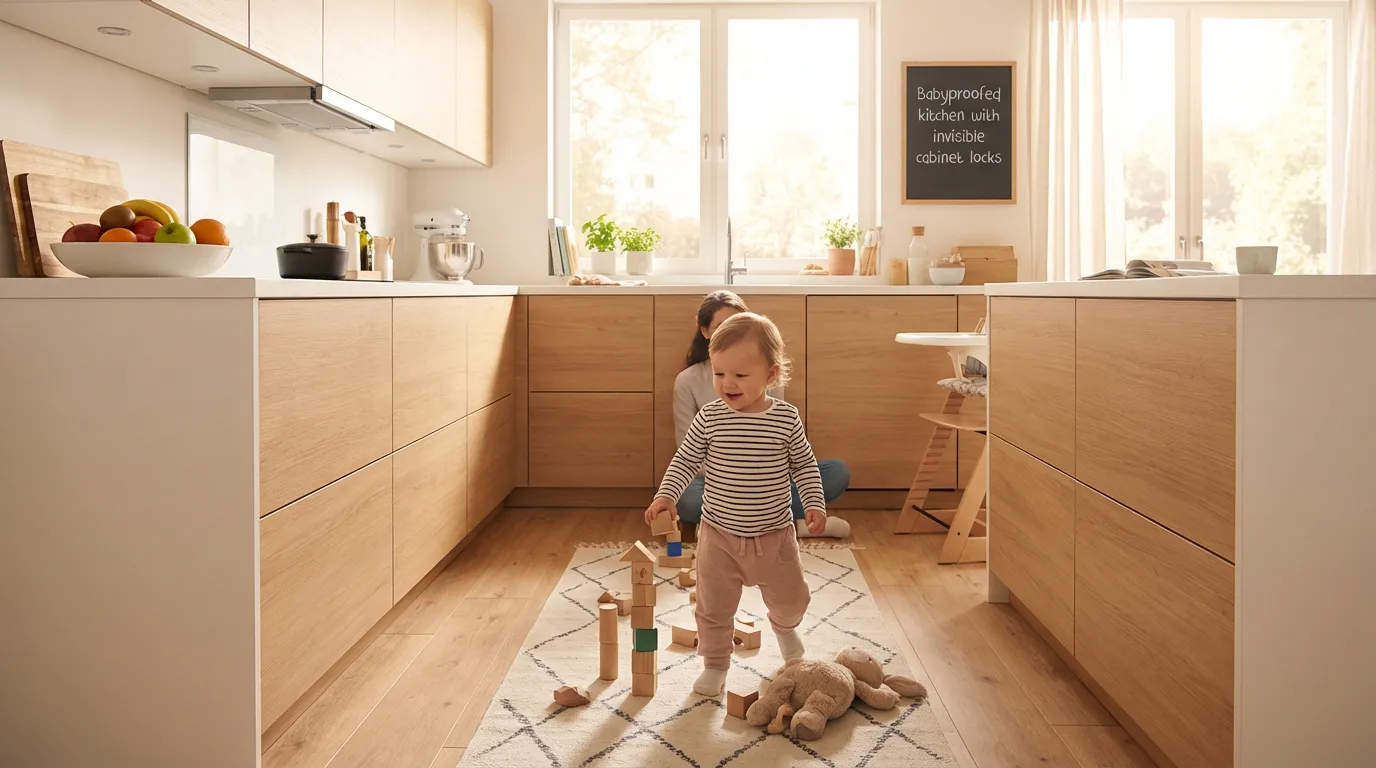
How to childproof a medicine cabinet with home safety locks keys
If you are researching how to childproof a medicine cabinet or the best child locks for medicine cabinet use, the most important guidance from pediatric sources is simple: medicines should be locked, up high, and out of sight whenever possible.
A medicine cabinet lock should do three things:
- Prevent casual opening by toddlers.
- Be used consistently by adults.
- Work with the cabinet material and door thickness.
A magnetic system can help if the cabinet construction supports it, but for some medicine cabinets, a more dedicated keyed or combination solution may be a better fit. Even then, a second layer such as a locked medication box adds more safety.
You can also review broader guidance from HealthyChildren.org on home safety basics and bathroom safety recommendations.
Common questions about home safety locks keys and magnetic cabinet locks
Do magnetic cabinet locks work on corner cabinets?
Sometimes yes, but corner cabinets can be trickier. The angle of the doors, cabinet thickness, and interior geometry can make alignment more difficult. If you are asking do magnetic cabinet locks work on corner cabinets, the best answer is: they can, but test the magnet range and installation position before committing. If alignment is poor, an external strap lock may be more practical.
Do magnetic cabinet locks damage cabinets?
Adhesive versions are usually chosen to reduce cabinet damage, especially in rentals. However, improper removal can still affect delicate finishes. To reduce risk:
- Install only on clean, dry surfaces.
- Let adhesive cure fully.
- Remove slowly with gentle heat if needed.
How to remove magnetic cabinet locks
If you need to know how to remove magnetic cabinet locks, start by disengaging the lock if your model includes an unlock switch. Then gently warm the adhesive with a hairdryer, work under the pad with floss or a plastic card, and clean residue with a finish-safe adhesive remover or rubbing alcohol.
How many babyproof cabinet locks do I need?
Focus first on the highest-risk storage areas rather than trying to lock every single door at once. A smart rollout often starts with:
- Under-sink kitchen cabinet.
- Bathroom vanity or medicine storage.
- Knife or sharp-tool drawers.
- Laundry room chemical storage.
Are magnetic locks enough on their own?
No. Cabinet locks are one layer. According to the CDC medication safety advice, and AAP guidance, the safest approach is still to keep medications and toxic products high up, out of sight, and in locked storage.
Final thoughts on choosing home safety locks keys for your family
For parents who want a clean-looking, effective way to secure cabinets and drawers, home safety locks keys built around magnetic cabinet locks offer a strong balance of convenience, appearance, and child resistance. They are especially useful when you want invisible cabinet locks that do not change the look of your kitchen or bathroom.
The key is to use them as part of a larger home safety plan:
- Lock the highest-risk cabinets first.
- Store poisons and medicines up high whenever possible.
- Use the right lock style for each location.
- Keep magnetic keys out of reach and maintain a spare.
If you are ready to upgrade your setup, explore childproofing options from Vmaisi and choose the right solution for your cabinets, drawers, and everyday routine.