

Which Child Safety Latches Work Best for Renters?
Are you renting your home and wondering how to baby-proof cabinets without drilling holes, leaving marks, or risking move-out repair issues? If your baby is starting to crawl, pull up, or explore lower cabinets, the right child safety latches can help reduce access to household hazards while keeping your rental setup practical.
For renters, the best choice is usually adhesive, no-drill child safety latches for cabinets and drawers. They are designed to help secure everyday access points without screws, tools, or permanent cabinet changes. They are not a replacement for supervision, and hazardous items should still be stored high and out of sight when possible, but they can be an important layer in a safer home setup.

Why child safety latches matter more in rental homes
Renters have a different baby-proofing challenge than homeowners. You may want to secure cabinets and drawers, but you also need to think about lease rules, cabinet finishes, and your security deposit. Screw-mounted options can be useful in some homes, but they may leave holes or visible marks. If your lease limits modifications, drilling into cabinets may not be worth the risk unless you have landlord approval.
Adhesive child safety latches are often the better starting point because they support no-drill installation. They can be especially useful in apartments, condos, rental houses, grandparents' homes, and temporary living spaces where parents want a practical setup without making permanent changes.
According to the American Academy of Pediatrics through HealthyChildren.org home safety guidance, families should use safety locks on cabinets that contain cleaning fluids or other dangerous items. HealthyChildren.org also recommends keeping harmful products out of reach and out of sight in its poison prevention guidance. Cleveland Clinic similarly recommends securing cabinets and drawers that children can reach, especially where cleaners, medicines, sharp objects, and chemicals are stored, in its childproofing guide.
For renters, the goal is not to make a cabinet impossible to open forever. The goal is to reduce easy access, slow down curious hands, and support safer daily routines while still respecting the limits of a rental home.
| Renter concern | Why it matters | Best practical response |
|---|---|---|
| Security deposit | Holes, chipped finishes, or visible marks may cause move-out concerns | Choose no-drill adhesive cabinet latches when surfaces are suitable |
| Lease restrictions | Some rentals limit permanent modifications | Check the lease before drilling |
| Fast setup | New parents often need simple solutions | Use adhesive options that install without tools |
| Mixed cabinet styles | Rentals may have older, painted, laminate, or uneven cabinets | Test fit and check surface compatibility |
| Move-out removal | Parents may need to remove latches later | Remove slowly and avoid harsh scraping |
| Multiple rooms | Hazards are not only in the kitchen | Count cabinets and drawers room by room |
Which child safety latches work best for renters?
The best child safety latches for renters are usually adhesive, no-drill cabinet latches. They offer the strongest balance of renter-friendly installation, cabinet and drawer coverage, and everyday convenience. They are especially helpful for lower kitchen cabinets, bathroom vanities, laundry cabinets, storage cabinets, and drawers that may contain sharp tools, small objects, or breakables.
Here is a practical comparison of common latch types:
| Latch type | Renter suitability | Best use case | Main advantage | Main limitation |
|---|---|---|---|---|
| Adhesive cabinet latches | High | Cabinets and drawers in rental homes | No drilling and low visual impact | Adhesive depends on clean, smooth surfaces |
| Adhesive strap-style latches | Medium to high | Irregular cabinet shapes or tricky layouts | Flexible placement | More visible from outside |
| Sliding handle latches | Medium to high when compatible | Paired cabinet handles or knobs | No adhesive and no drilling | Does not work on many drawers |
| Temporary handle-based latches | Medium | Travel, short-term use, grandparents' homes | Easy to move | Cabinet-handle dependent |
| Screw-mounted internal latches | Low to medium for renters | Landlord-approved or long-term setups | Durable when installed correctly | May leave holes or marks |
For most rental kitchens and bathrooms, adhesive child safety latches are the most practical first choice. They work well when the cabinet surface is clean, dry, smooth, and intact. They may not perform as well on rough, oily, damp, peeling, or heavily textured surfaces.
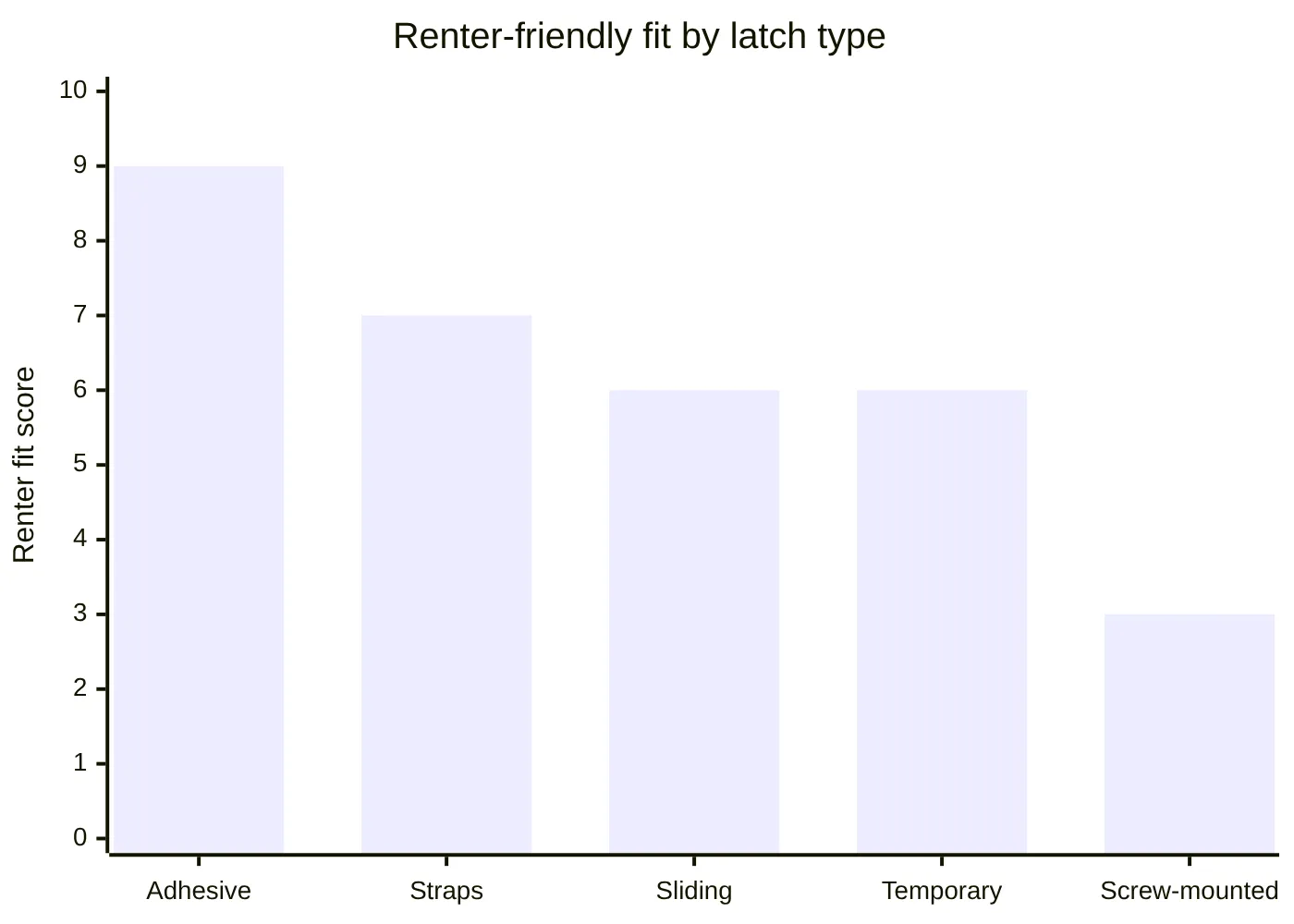
Child safety latches should also be easy enough for adults to use consistently. If a latch is too frustrating, adults may leave cabinets unsecured. A good renter-friendly latch should reduce access for babies and toddlers while still allowing parents to open cabinets when needed.
Where to install child safety latches first
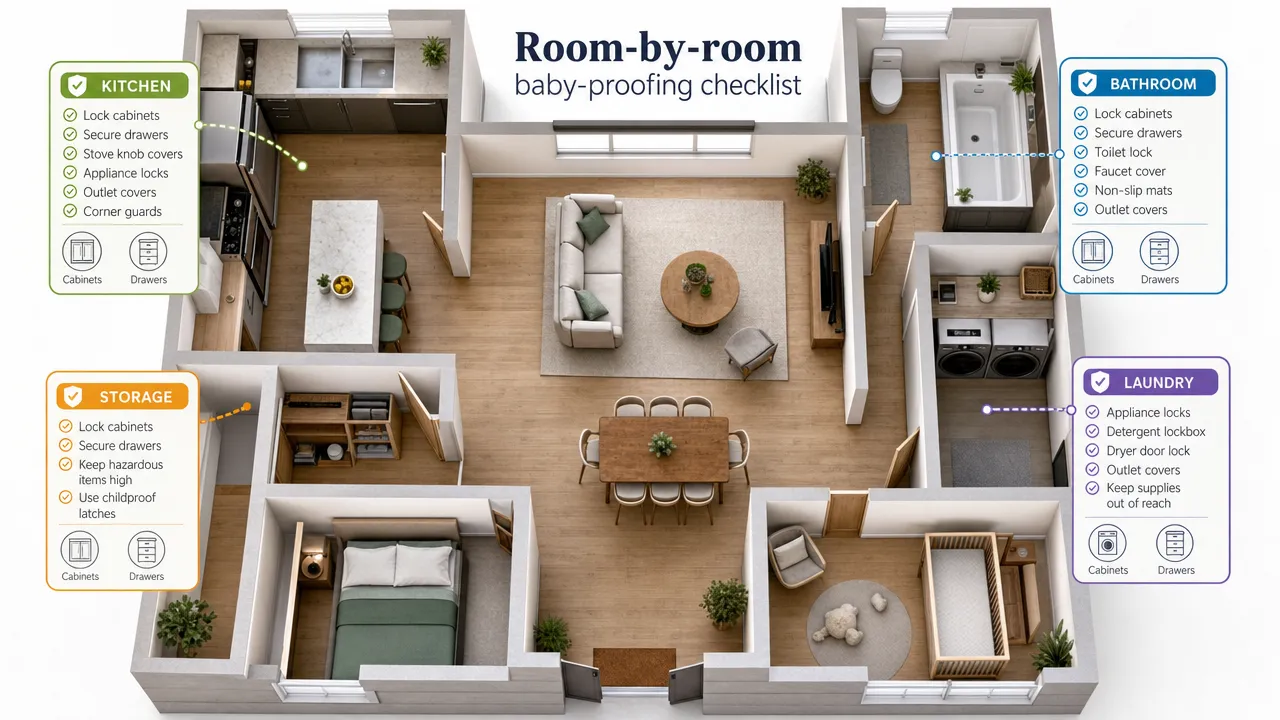
Before buying child safety latches, walk through your rental from your baby's eye level. Look at every cabinet and drawer your child can reach. Prioritize places where a baby or toddler could access unsafe items, not simply every cabinet in the home.
The highest-priority areas are usually the kitchen, bathroom, laundry area, and storage spaces. Lower cabinets and drawers deserve special attention because babies often explore them first.
| Area | Common items to secure | Priority level |
|---|---|---|
| Kitchen sink cabinet | Cleaning products, dishwasher detergent, trash bags, sponges | Very high |
| Bathroom vanity | Medicines, razors, cosmetics, cleaners, small items | Very high |
| Laundry area | Detergents, stain removers, household chemicals | Very high |
| Kitchen drawers | Sharp tools, peelers, small objects, breakables | High |
| Pantry lower cabinets | Glass containers, heavy items, choking hazards | Medium to high |
| Storage cabinets | Tools, batteries, craft supplies, hardware | Medium to high |
| Bedroom or living room drawers | Small objects, cords, fragile items | Medium |
Consumer Reports also recommends locking cabinets containing cleaning supplies, medications, or sharp items in its babyproofing checklist, while noting that storing these items high and out of reach is even better. That point matters for renters: a latch helps, but safer storage habits still matter.
For a small apartment, you may only need to start with the kitchen sink cabinet, one bathroom vanity, and a few lower drawers. For a larger rental home, count every lower cabinet and drawer in the kitchen, bathrooms, laundry space, pantry, bedroom, and storage areas.
A simple count can help you avoid buying too few latches:
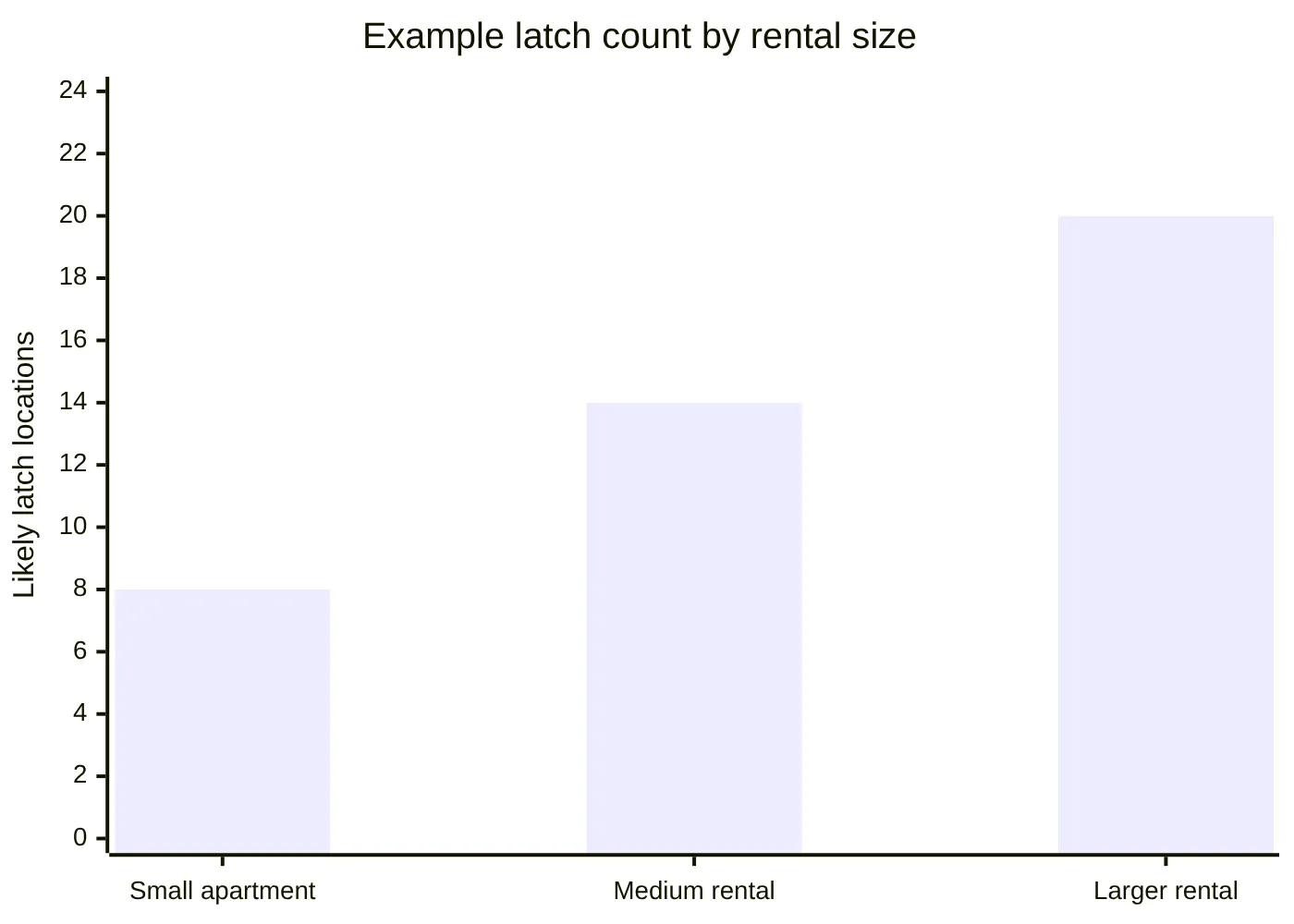
If you are unsure, start with the most hazardous areas first. You can always expand your setup after observing where your child tries to explore.
How to choose VMAISI child safety latches by pack size
VMAISI offers adhesive, no-drill child safety cabinet latches for parents who want to help secure cabinets and drawers without drilling. For renters, the pack size decision usually comes down to how many high-priority spots you need to cover.
For smaller rentals or a first baby-proofing pass, the VMAISI Cabinet Locks Child Safety Latches 12 Pack is a practical starter option. It is a good fit if you mainly need to secure the kitchen sink cabinet, bathroom vanity, and several lower drawers.

For larger rentals, multiple bathrooms, a bigger kitchen, or room-by-room coverage, the VMAISI Cabinet Locks Child Safety Latches 20 Pack may be the better fit. It gives parents more latches for multiple cabinets and drawers across the home, and the product page highlights no-drill installation and upgraded stronger adhesive.
| Choose this option | Best for | Typical use case |
|---|---|---|
| VMAISI Cabinet Locks Child Safety Latches 12 Pack | Smaller rentals or starter setups | Kitchen sink cabinet, bathroom vanity, and a few lower drawers |
| VMAISI Cabinet Locks Child Safety Latches 20 Pack | Larger rentals or fuller coverage | Kitchen, bathroom, laundry, pantry, storage, and multiple drawer areas |
Here is a quick way to decide:
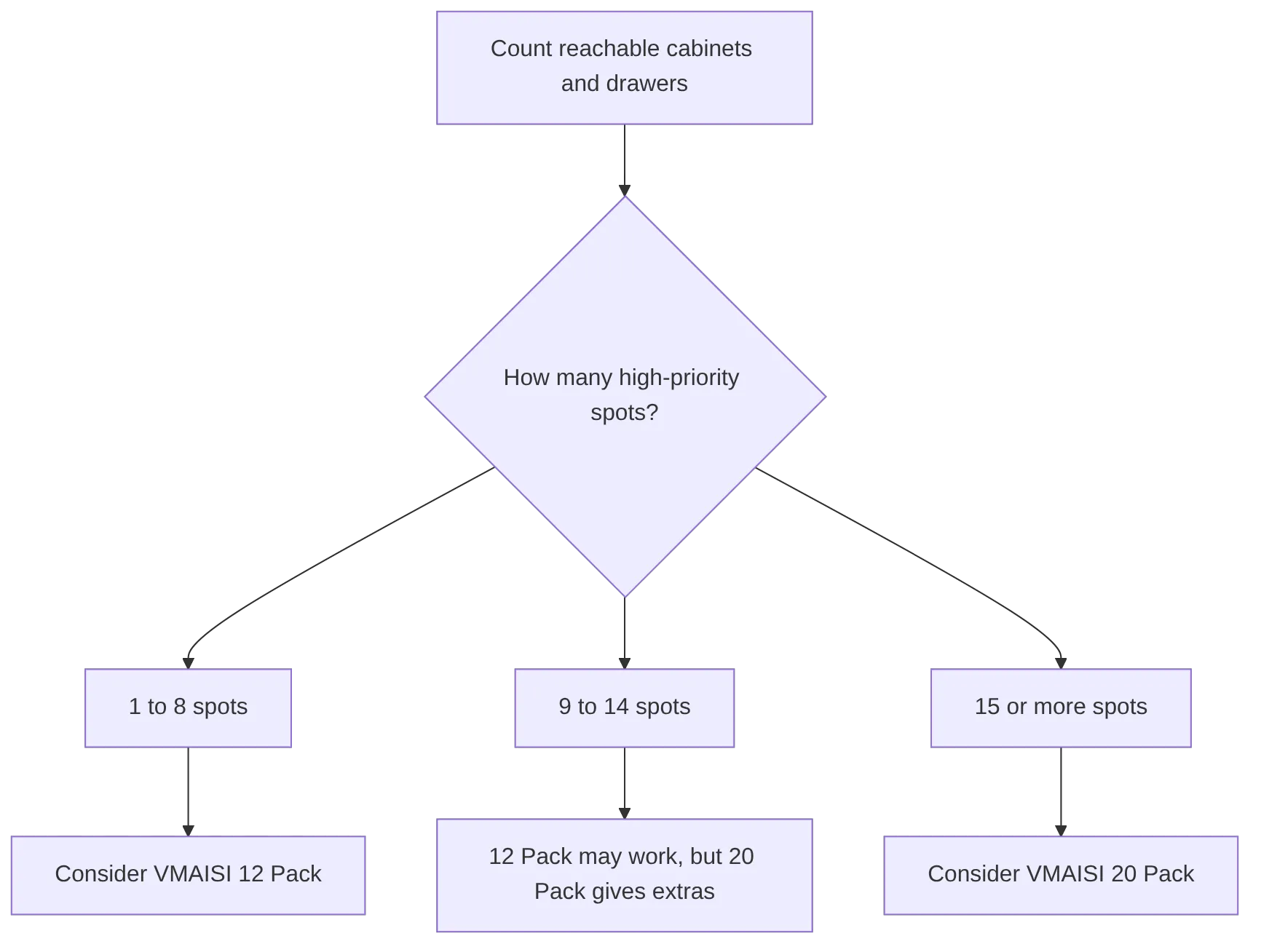
If you are new to baby-proofing, do not feel pressured to secure every cabinet at once. Start with the most hazardous locations, then add more latches as your baby becomes more mobile and curious. The key is consistency: a latch only helps if it is installed correctly, checked regularly, and used every time the cabinet or drawer is closed.
Because no accessible product image URL was included in the research report, the safest conversion path is to use the official product landing pages above rather than inserting an unverified product image. Parents can review the current product images, pack details, and installation information directly on the VMAISI product pages.
Installation tips for child safety latches in rentals
Good installation matters as much as product choice. Adhesive cabinet latches depend on surface prep, alignment, pressure, and bonding time. If the surface is greasy, dusty, damp, peeling, or uneven, the adhesive may not hold as intended.
Before installing adhesive child safety latches, clean and dry the cabinet or drawer surface. Remove grease, soap film, dust, and residue. If your product instructions allow it, an alcohol wipe can help prepare the surface. Let the area dry fully before applying the latch.
Next, dry-fit the latch before removing the adhesive backing. Check that the cabinet or drawer can close properly and that the latch aligns with the catch point. Poor alignment is one of the most common reasons parents struggle with adhesive latches.
After placing the latch, press firmly according to the product instructions. If the instructions recommend a waiting period before regular use, do not let your child pull on the cabinet before the adhesive has had time to bond. Many adhesive products perform better when parents allow bonding time before depending on them.
Use this rental-friendly checklist:
| Step | What to do | Why it helps |
|---|---|---|
| 1. Identify hazards | Start with cabinets and drawers containing unsafe items | Prioritizes the most important areas |
| 2. Clean the surface | Remove grease, dust, and residue | Helps adhesive contact the surface |
| 3. Let it dry | Wait until the area is fully dry | Moisture can weaken adhesion |
| 4. Test alignment | Check placement before final application | Prevents misaligned latches |
| 5. Press firmly | Apply steady pressure after placement | Supports better bonding |
| 6. Wait if instructed | Follow the product's bonding guidance | Reduces early failure |
| 7. Recheck often | Look for lifting, cracking, or looseness | Keeps the setup reliable over time |
Removal also deserves care, especially in a rental. Peel slowly and avoid metal scrapers, abrasive pads, or harsh chemicals that could damage paint, laminate, veneer, or cabinet finish. If residue remains, test any cleaner in a hidden spot first. If a latch is lifting, misaligned, cracked, or difficult to close, do not rely on it; reinstall or replace it according to product instructions.
Final answer on child safety latches for renters
Adhesive, no-drill child safety latches generally work best for renters because they help reduce access to cabinets and drawers without screws, tools, or permanent cabinet changes. They are a strong fit for rental kitchens, bathrooms, laundry areas, storage spaces, and lower drawers when the surfaces are clean, smooth, dry, and intact.
Choose the VMAISI Cabinet Locks Child Safety Latches 12 Pack if you live in a smaller rental or want to start with the highest-risk cabinets and drawers first.
Choose the VMAISI Cabinet Locks Child Safety Latches 20 Pack if your rental has multiple lower cabinets, several drawers, more than one bathroom, or you want extra coverage across the home.
Most importantly, remember that child safety latches are one layer of protection. Store hazardous items high, out of sight, and in secured areas when possible. Supervise babies and toddlers closely, and check every latch regularly so your baby-proofing setup stays practical, consistent, and renter-friendly.