

Babyproofing Mistakes That Put Toddlers at Risk
Toddler injuries often happen when parents secure the obvious hazards but miss the ordinary doors, drawers, cords, appliances, and climbable furniture that a curious child discovers first. Are you staring at your crawling toddler opening cabinets, tugging on the dishwasher, and wondering whether your babyproofing checklist missed something important?
A safer home is not created by one product purchase. Comprehensive home babyproofing works best as a layered system: supervision, safer storage habits, room-by-room checks, correct installation, regular re-checks, and safety devices matched to the actual risks in your home.
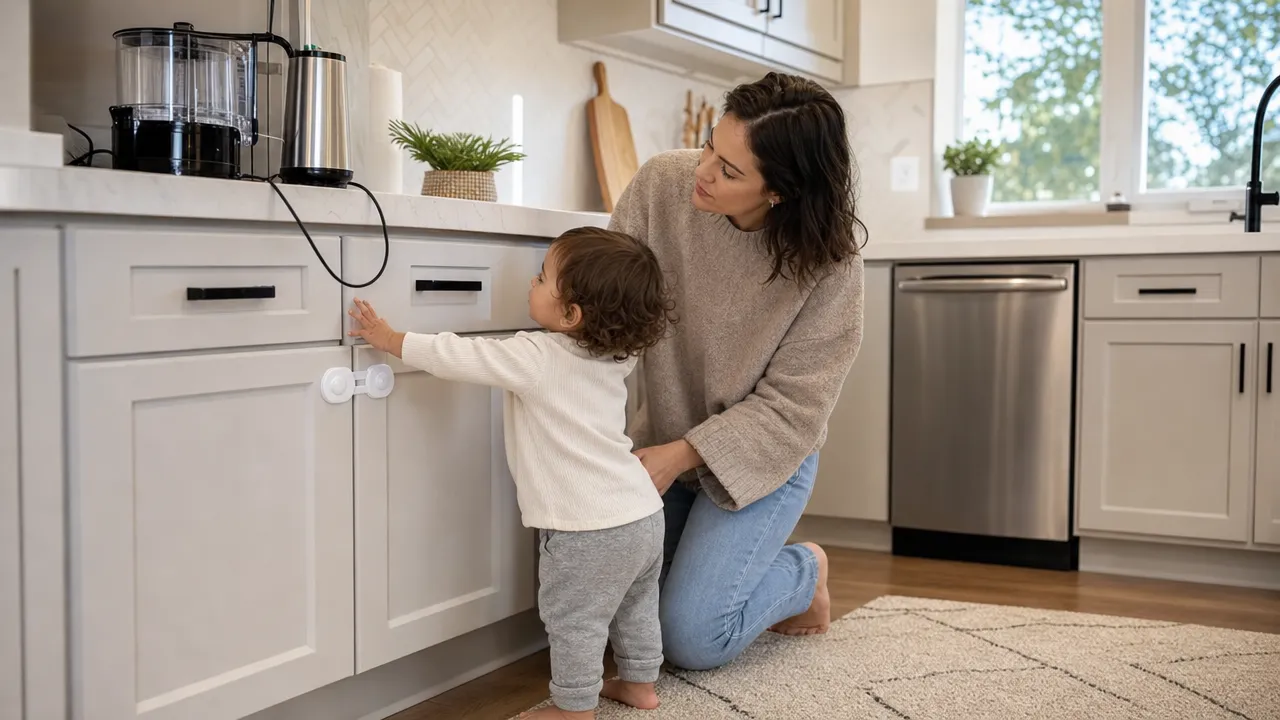
According to the CPSC childproofing guide, parents should look at the home from a child's point of view and use protective devices where needed. The American Academy of Pediatrics' HealthyChildren guidance also emphasizes outlet protection, furniture tip-over prevention, choking prevention, and ongoing home safety habits through toddler development in its home safety recommendations.
Why comprehensive home babyproofing starts with toddler behavior, not a starter kit
Comprehensive home babyproofing begins with one practical question: what can your child reach, open, pull, climb, swallow, or tip over? That question is more useful than counting how many pieces come in a kit.
Toddlers do not explore by product category. They explore by height, curiosity, repetition, and speed. A baby who only crawled yesterday may pull up tomorrow. A child who ignored a cabinet last month may learn to open it after watching an adult do it twice. That is why babyproofing checklists should change as your child develops.
All-in-one safety kits can be helpful because they reduce decision fatigue and give parents a fast starting point. But a starter kit may not include every high-risk item for your home, such as blind cord safety, window stops, furniture anchors, toilet locks, hinge guards, or kitchen and appliance locks. Treat kits as the first layer, not the finish line.
For a deeper comparison of kit-style planning, see Vmaisi's guide to comprehensive home babyproofing kits. It is especially useful if you are trying to decide between buying one starter bundle and adding targeted products room by room.
The best approach is layered. Use locks and latches where appropriate, but also move dangerous items up and away, anchor furniture, manage cords, install gates correctly, and re-check the home after every developmental leap.
Comprehensive home babyproofing mistakes parents make in cabinets, drawers, and appliances
Cabinets are usually the first thing parents lock, but they are not the only access points at toddler height. Drawers, appliances, trash cans, pantry doors, bathroom vanities, and laundry cabinets often matter just as much.
| Mistake | Why it creates risk | Safer fix |
|---|---|---|
| Locking only the cabinet under the sink | Other drawers may hold knives, peelers, batteries, medicine, or small choking hazards | Check every low drawer and cabinet, then move or lock hazardous items |
| Assuming child-resistant caps are childproof | Packaging may slow access, but it should not be treated as fully childproof | Store medicines up, away, out of sight, and locked |
| Forgetting the dishwasher | Detergent pods, sharp utensils, glassware, and hot steam may be accessible | Store pods locked away and consider a dishwasher lock if the door opens easily |
| Ignoring the fridge or trash can | Toddlers may access breakables, choking hazards, or unsafe items | Use targeted locks if repeated access is a problem |
| Installing adhesive locks too quickly | Grease, dust, moisture, poor alignment, or lack of curing time can weaken performance | Clean, dry, dry-fit, press firmly, cure as instructed, and inspect regularly |
Poison prevention deserves special attention. Poison Control recommends keeping hazardous products out of reach and using safer storage habits. If you suspect poisoning in the U.S., contact Poison Control at 1-800-222-1222 or use its online help tool.
For cabinets and drawers that need an internal locking solution, the 12 Pack magnetic cabinet locks are a relevant product landing page to consider. For larger kitchen or storage areas, the 16 Pack magnetic child safety cabinet locks may fit broader coverage needs.

Installation matters as much as product choice. Vmaisi's guide on how to babyproof cabinets with magnetic locks can help parents think through placement, while the troubleshooting babyproofing lock installation page is useful when adhesive locks do not seem to hold as expected.
Kitchen and appliance locks deserve a separate pass in your checklist. A cabinet lock does not stop a toddler from opening a dishwasher, pulling on a fridge door, or lifting a toilet seat. The 6 Pack multi-use adhesive straps locks are relevant for homes that need flexible no-drill locking for selected appliances, cupboards, trash cans, or toilet seats. Always check the surface, placement, appliance shape, heat exposure, and product instructions before use.
Overlooked safety items in comprehensive home babyproofing
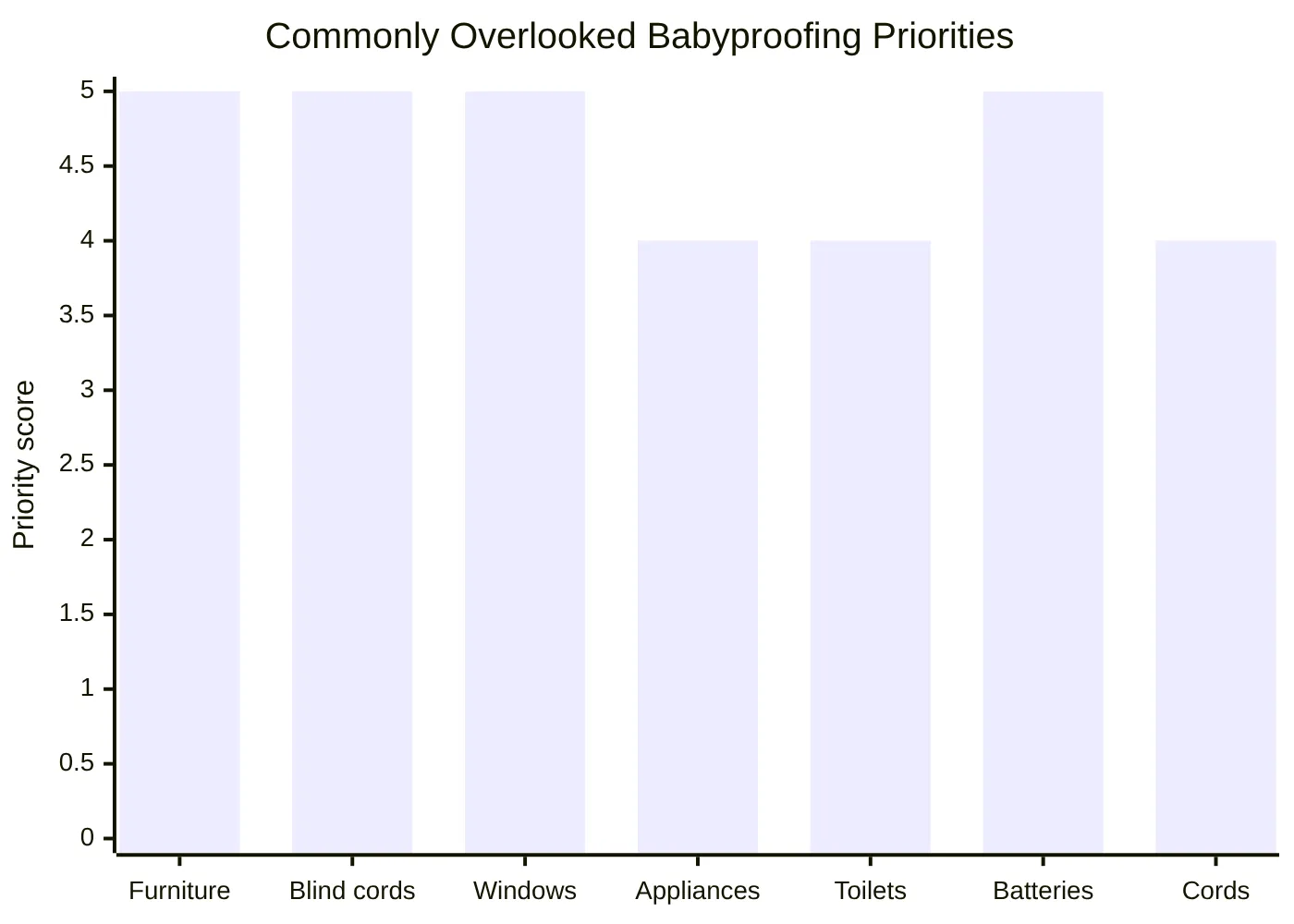
The most dangerous missed hazards are often the ones that blend into daily life. Parents notice outlets and cabinets, but may overlook furniture that can tip, cords that can be pulled, button batteries in remotes, or windows that a toddler can reach by climbing.
The CPSC Anchor It guidance recommends anchoring furniture and TVs to reduce tip-over risk. Dressers, bookshelves, media consoles, and TVs can become climbing targets once a toddler starts pulling drawers open.
Window and blind cord safety also belongs on every babyproofing checklist. The CPSC warns about window covering cord hazards in its window covering cord safety guide. Safe Kids also provides practical guidance on window safety, including keeping furniture away from windows.
Other overlooked safety items include:
- Door hinge guards or pinch guards in high-traffic rooms.
- Toilet locks when bathroom access is realistic.
- Cord management for lamps, monitors, chargers, and countertop appliances.
- Battery safety for remotes, thermometers, toys, scales, and key fobs.
- Window stops or guards where appropriate.
- Anti-tip brackets for ranges and heavy appliances.
- Hardware-mounted gates at the top of stairs, not pressure-mounted gates.
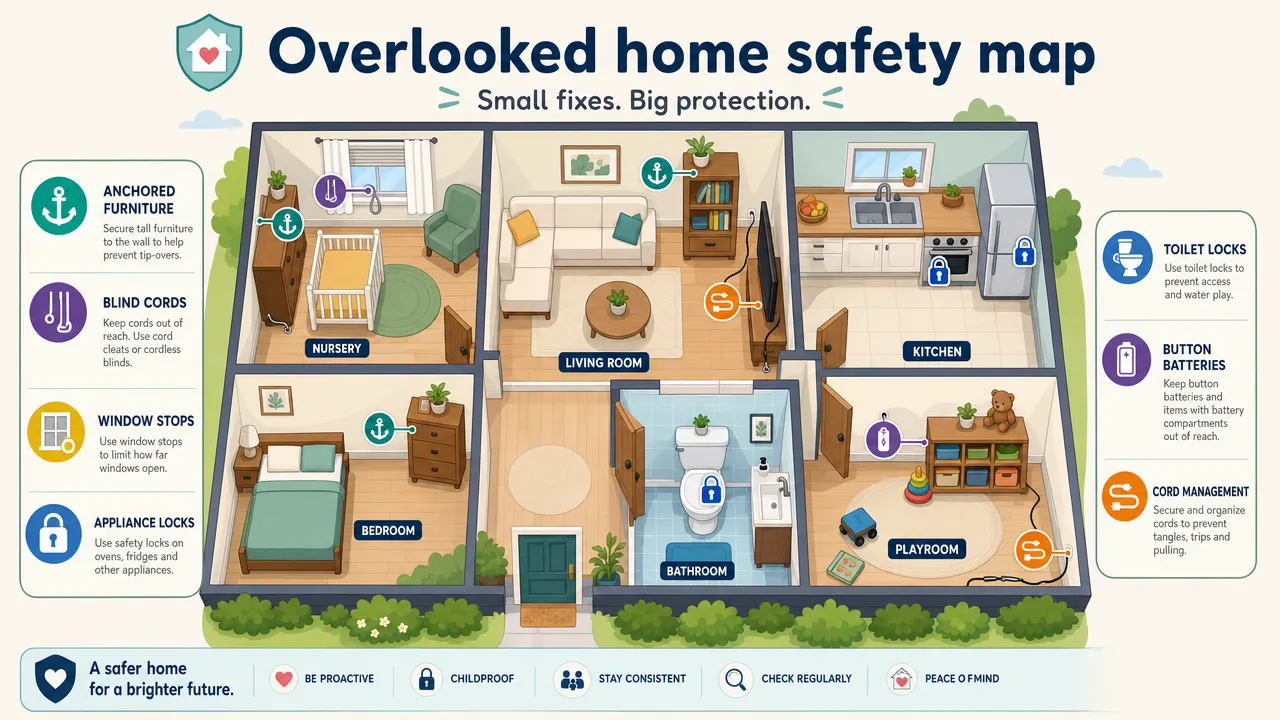
For a parent-friendly summary of commonly missed items, Vmaisi's guide to overlooked babyproofing items is a strong companion resource. Use it as a second pass after you have already handled obvious hazards like outlets and low cabinets.
Babyproofing checklists and all-in-one safety kits for comprehensive home babyproofing
Babyproofing checklists help parents shift from product-first thinking to hazard-first thinking. Instead of asking, ‘Which kit has the most pieces?‘ ask, 'Which hazards exist in this exact room?’
All-in-one safety kits can be useful when a baby is about to crawl and parents need a fast starter layer. They often help with common needs such as outlet covers, cabinet latches, corner guards, and door accessories. However, they may not match every cabinet style, appliance layout, staircase, window, or rental limitation.
A strong checklist compares your actual home against what the kit includes.
| Checklist area | What to inspect | Possible safety layer |
|---|---|---|
| Kitchen cabinets | Cleaners, chemicals, glass, heavy cookware | Cabinet locks, safer storage |
| Kitchen drawers | Knives, peelers, scissors, small tools | Drawer locks, relocation |
| Appliances | Dishwasher, fridge, oven, trash can | Kitchen and appliance locks where suitable |
| Bathroom | Toilet, medicines, razors, cosmetics, cleaners | Toilet lock, cabinet locks, door control |
| Living room | TV, shelves, cords, batteries, small objects | Anchors, cord control, locked storage |
| Nursery | Dresser, monitor cords, blinds, windows | Anchors, cord safety, window precautions |
| Stairs | Top and bottom stair access | Correctly installed gates |
| Windows | Climbable furniture nearby, blind cords | Cordless coverings, stops, guards |
For parents comparing starter kits and add-ons, this is where bundle marketing becomes practical rather than pushy: build a starter layer, then add room-specific products based on the checklist. A kitchen add-on bundle may include magnetic cabinet locks plus multi-use straps. A bathroom add-on may focus on cabinet locks and toilet access. A living room pass may prioritize furniture anchors, cord control, and battery storage.
Vmaisi's guide to kitchen and appliance locks bundles can help parents think through appliance-specific gaps. If your toddler is drawn to the refrigerator or oven area, the guide to child safety locks for fridge and oven offers more focused planning. For dishwasher concerns, see the guide to child safety locks for dishwasher.
Room-by-room comprehensive home babyproofing action plan
Start with a floor-level audit. Crawl or sit in each room and look for what your toddler can see and reach. Open every low drawer. Tug every cord. Check whether furniture wobbles. Look behind curtains. Test whether appliance doors open easily. Then repeat the process after major milestones: crawling, pulling up, walking, climbing, opening doors, and copying adult routines.
A practical room-by-room plan looks like this:
-
Kitchen: Move cleaners, pods, knives, breakables, and heavy cookware out of reach or behind locks. Add cabinet and drawer locks where needed. Review dishwasher, fridge, oven, stove, trash, cords, and countertop appliance access. Use back burners when possible and turn pot handles inward, as recommended in pediatric kitchen safety guidance from the University of Michigan's safety at home resource.
-
Bathroom: Store medicines, razors, cosmetics, and cleaners up, away, and locked. Do not rely on a closed door as the only layer. Consider toilet access if your child can enter the room.
-
Living room: Anchor furniture and TVs, secure cords, remove small choking hazards, and lock away button batteries. Check remote controls, toys, decor, and low storage.
-
Nursery: Anchor dressers and bookshelves, keep monitor cords away from the crib, manage blind cords, and keep furniture away from windows.
-
Stairs and hallways: Use gates correctly. Safe Kids' stair safety guidance supports careful gate use and supervision around stairs. Hardware-mounted gates are the safer choice at the top of stairs.
-
Windows and doors: Use cordless window coverings where possible, secure cords, keep climbable furniture away from windows, and consider hinge or pinch protection in doors used frequently.
For product planning, two Vmaisi landing pages fit common high-priority needs: multi-use child safety locks for selected appliances and flexible access points, and magnetic cabinet locks for cabinets and drawers. Product images should be selected from the verified Vmaisi Shopify or CMS media library before publishing; no verified product image URLs were provided in the research materials.
The final rule is simple: no lock, latch, kit, or checklist replaces supervision. Safety devices add layers, but toddlers keep changing. Comprehensive home babyproofing works when parents combine safer storage, correct installation, trusted safety guidance, and regular re-checks as their child grows.