

Which Babyproofing Items Do Parents Often Miss?
Parents often miss babyproofing items that sit outside the obvious outlet-cover-and-cabinet-lock checklist. Are you staring at your crawling baby, a kitchen full of cabinets, and a half-used babyproofing kit, wondering what safety item you might have forgotten?
That worry is reasonable. Comprehensive home babyproofing is not a one-time shopping trip or a single box of supplies. It is a practical way of looking at your home from your child's level and asking: What can my baby reach, open, pull, climb, swallow, tug, tip, or pinch?
A good plan starts with the basics, but it cannot stop there. Outlet covers, cabinet latches, corner guards, and gates matter. Still, many overlooked safety items are not in the first babyproofing checklists parents find online, especially appliance doors, blind cords, toilets, windows, batteries, magnets, trash cans, and laundry storage.
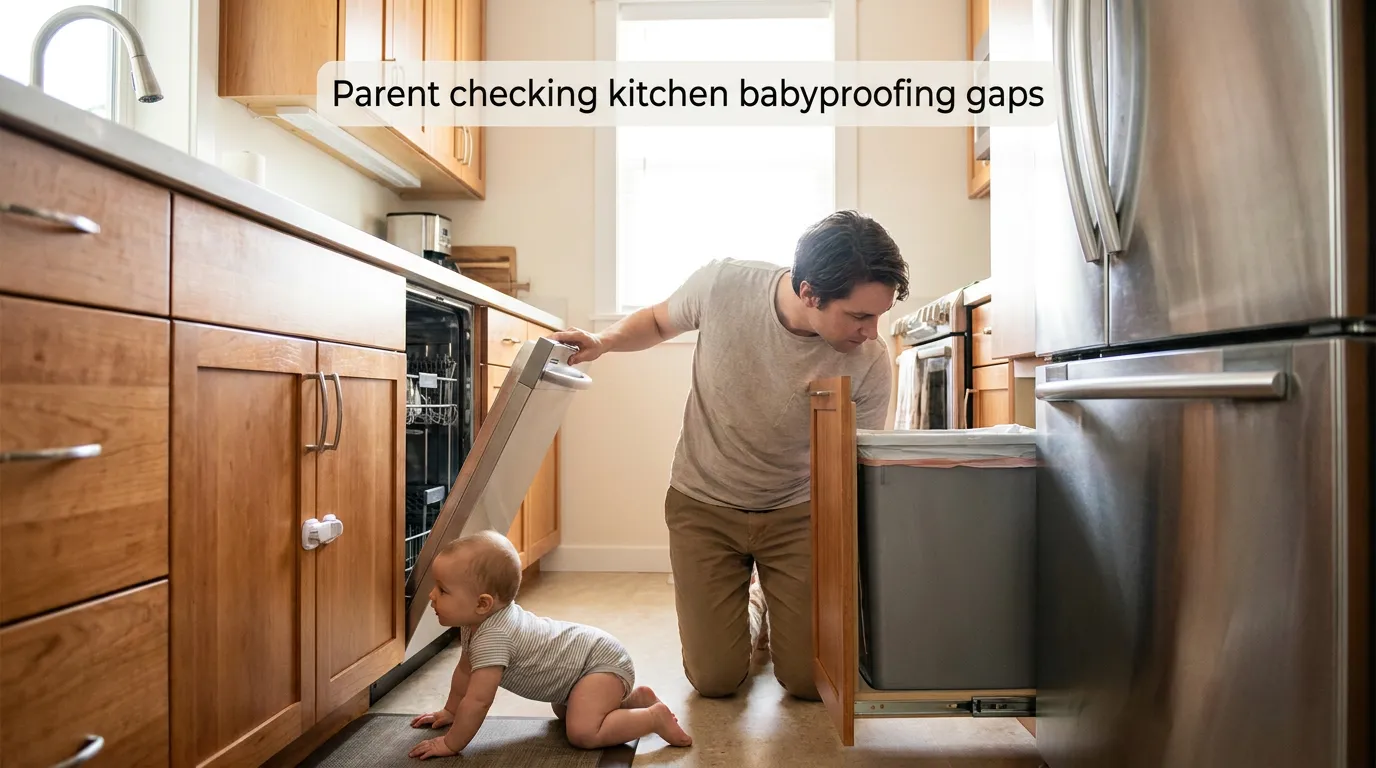
How comprehensive home babyproofing catches hazards basic babyproofing checklists miss
Basic babyproofing checklists are useful, but many are built around products rather than behavior. Babies do not explore by category. They crawl toward movement, pull on handles, copy adults, open and close doors, put small objects in their mouths, and climb toward whatever looks interesting.
That is why comprehensive home babyproofing should be based on development stage as much as room type. Before crawling, furniture anchors, blind cords, medicine storage, and batteries already matter. During crawling, cabinets, outlets, pet bowls, and toilets become more urgent. Once a child starts pulling up, fridge doors, dishwasher handles, oven doors, and drawer pulls suddenly become part of the safety map.
Authoritative safety guidance supports this layered approach. The CPSC childproofing guidance recommends using safety latches and locks to help reduce access to hazardous household items. The American Academy of Pediatrics resource HealthyChildren on childproofing for poisons also emphasizes keeping dangerous products out of reach and out of sight.
Here is the opinion many parents need to hear: a home is not 'done‘ after the first round of locks. It needs rechecking as your baby grows.
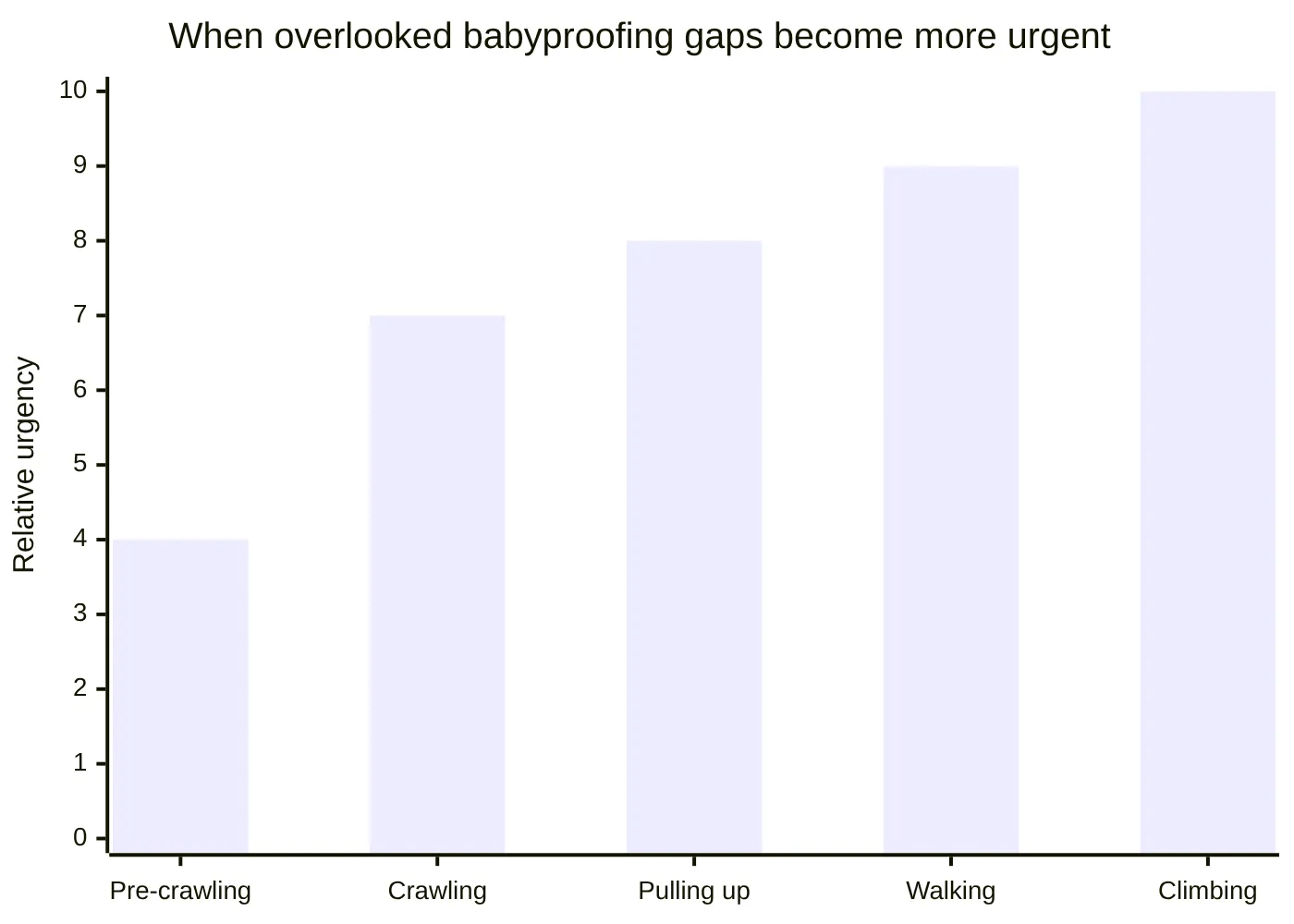
This chart is a practical planning guide, not injury-rate data. The point is simple: the more mobile and curious your child becomes, the more your first checklist needs to expand.
Most overlooked safety items in comprehensive home babyproofing
The overlooked safety items parents miss most often are usually the ones that feel like normal household background: appliance handles, window cords, toilets, trash cans, remotes, batteries, and pet bowls. They do not always look like hazards until a baby becomes mobile.
| Overlooked item | Where parents miss it | Why it matters |
|---|---|---|
| Fridge lock | Kitchen | Helps reduce access to glass containers, heavy items, spills, and choking-risk foods. |
| Dishwasher lock | Kitchen | A control lock may not physically stop the door from opening. |
| Oven lock | Kitchen | Helps reduce access to hot surfaces, racks, and the oven door. |
| Stove knob covers | Kitchen | The CPSC has urged knob-cover use and other strategies to help limit child access to stove controls. |
| Toilet lock | Bathroom | Toilets combine water access, germs, and curiosity. |
| Blind cord safety device | Nursery, bedroom, living room | Window covering cords can pose serious strangulation hazards. |
| Window stops or guards | Bedrooms and living areas | Climbing changes window risk quickly. |
| Furniture anchors | Nursery and living room | The CPSC Anchor It campaign focuses on reducing tip-over risks. |
| Door pinch guards | Hallways and bedrooms | Door hinges and closing doors can injure small fingers. |
| Button battery storage | Remotes, toys, thermometers | Batteries should be kept away from children and secured. |
| Magnet storage | Fridge, toys, desk items | High-powered magnets can be dangerous if swallowed. |
| Pet bowls and pet food | Kitchen, mudroom, laundry area | Bowls can create slipping, choking, contamination, and water-access concerns. |
Two categories deserve special attention: small objects and vertical hazards. Parents often look down for outlet covers and cabinet locks, but babies also look up, pull cords, climb furniture, and reach for remotes. The CPSC button battery report and CPSC magnet safety notice are worth reviewing because these risks are easy to underestimate.
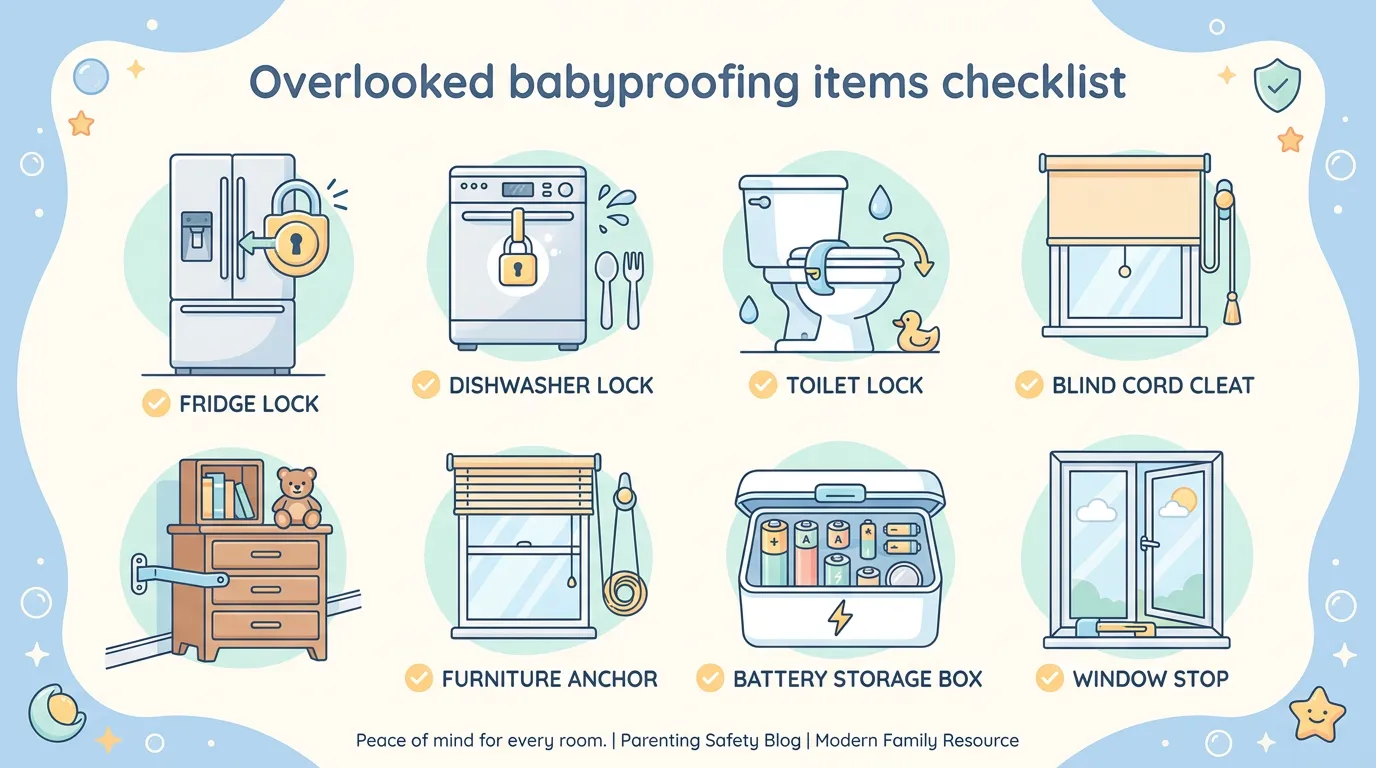
Room-by-room comprehensive home babyproofing checklist parents can use this week
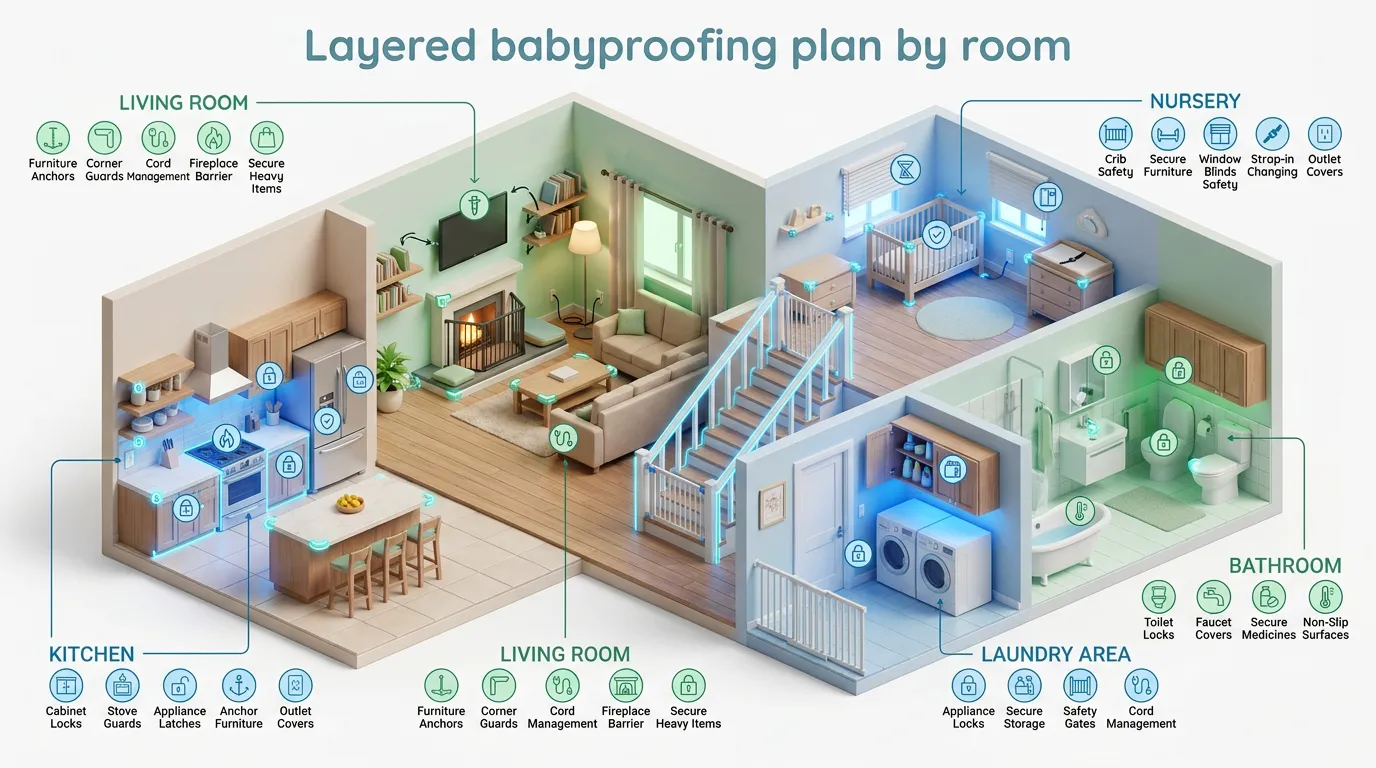
Comprehensive home babyproofing works best when parents walk room by room and think from a baby's height. Do not begin with 'What product do I need?' Begin with 'What can my child access here?'
Kitchen
The kitchen is often the most underestimated room because parents already expect to install cabinet locks. The missed pieces are usually appliance access, trash access, detergent pods, sharp drawers, and stove knobs.
Use cabinet or drawer locks for knives, peelers, under-sink cleaners, plastic bags, and breakables. For cabinet-heavy areas, the Vmaisi Child Safety Magnetic Drawer & Cabinet Locks can be considered as one layer of a broader plan. For installation planning, Vmaisi also provides a practical guide on how to babyproof cabinets with magnetic locks.
Bathroom
Bathrooms are often treated as supervised spaces, but mobile toddlers can enter quickly. Add toilet access to your checklist, move medicines and vitamins high and locked, store razors and cosmetics out of reach, and consider door control that still allows adult emergency access. The CDC medication safety toolkit reinforces the importance of storing medicines up and away.
Nursery and bedroom
The nursery can look calm while hiding climbing and cord risks. Anchor dressers and bookshelves, keep monitor and lamp cords out of reach, choose safer window-covering options, and remove small objects from low shelves. The HealthyChildren baby room safety checklist is a helpful reference.
Living room
Living rooms are full of adult habits: remotes on tables, decorative objects on shelves, cords behind furniture, and pet items on the floor. Secure TVs and furniture, check battery compartments, manage cords, and move pet bowls during floor play when needed.
Laundry and utility areas
Laundry pods, cleaning chemicals, buckets, appliance doors, garage tools, and utility storage often sit low for adult convenience. That makes them easy to miss in babyproofing checklists. Use locked high storage first, then add locks or restricted room access where appropriate.
Why kitchen and appliance locks matter in comprehensive home babyproofing
Kitchen and appliance locks are often the gap between a basic setup and a more realistic safety plan. Cabinet locks help reduce access to hidden storage. Appliance locks help reduce access to doors, handles, and surfaces that traditional latches do not cover.
A fridge, dishwasher, oven, toilet seat, cupboard, or trash can may need a different solution than a standard cabinet door. That is where multi-use strap-style locks can make sense, depending on the surface and installation instructions. Parents comparing these options can review the Vmaisi 6 Pack Multi-Use Adhesive Straps Locks, which is positioned for uses such as fridge, dishwasher, toilet seat, cupboard, oven, and trash can applications.
Installation matters as much as product choice. Adhesive products should be placed on compatible surfaces, cleaned thoroughly, dried fully, pressed firmly, and allowed to cure according to the manufacturer's instructions. Grease, steam, texture, heat, and poor alignment can all affect performance. Locks should also be inspected regularly for lifting, cracking, or looseness.
For more appliance-specific planning, Vmaisi offers a guide to child safety locks for fridge and oven setups, a resource on choosing child safety locks for dishwashers, and guidance on how to plan a kitchen and appliance lock bundle.
| Kitchen zone | Common miss | Practical layer to consider |
|---|---|---|
| Under-sink cabinet | Cleaning products and detergent | Move high and locked, then add cabinet lock. |
| Knife drawer | Sharp utensils | Drawer lock or magnetic cabinet lock where compatible. |
| Dishwasher | Door access, detergent, sharp utensils | Dishwasher lock or multi-use strap lock. |
| Fridge | Glass, heavy items, choking-risk foods | Fridge lock or compatible strap lock. |
| Oven | Door access and heat concerns | Oven lock placed according to appliance instructions. |
| Stove knobs | Toddler imitation | Stove knob covers and adult cooking habits. |
| Trash can | Food scraps, sharp packaging, small items | Trash can lock or restricted access. |
Are all-in-one safety kits enough for comprehensive home babyproofing?
All-in-one safety kits can be a helpful starting point, especially for tired parents who are facing decision fatigue. They usually include basic items such as outlet covers, cabinet latches, door knob covers, corner guards, and sometimes slide locks. That bundle marketing works because it reduces the mental load: one purchase feels easier than choosing each item separately.
The problem is that piece count is not the same as coverage. A kit might include many outlet covers but no fridge lock, toilet lock, blind cord solution, window stop, anti-tip strap, or appliance-focused lock. That does not make the kit bad. It simply means parents should compare it against the actual hazards in their home.
A smarter approach is to use all-in-one safety kits as a first layer, then add room-specific items where your checklist shows gaps. For example, a starter kit might cover outlets and some cabinets, while kitchen and appliance locks fill gaps around the dishwasher, oven, fridge, trash can, and toilet. Parents can also review Vmaisi's article on commonly missed babyproofing items for another perspective.
The best babyproofing setup is not the one with the most pieces. It is the one adults can use correctly every day, installed on the right surfaces, matched to the child's current behavior, and rechecked as the child grows.
Final comprehensive home babyproofing recheck and product CTA
Comprehensive home babyproofing should end with a recheck, not a receipt. Walk through your home this week and focus on the places that are easy to forget: appliance doors, toilet lids, blind cords, low windows, batteries, magnets, pet bowls, laundry pods, trash cans, and furniture that can tip.
Use this quick recheck:
| Area | Recheck question |
|---|---|
| Cabinets and drawers | Can my baby open anything with cleaners, medicines, sharp tools, plastic bags, or breakables? |
| Appliances | Can my baby pull open the fridge, dishwasher, oven, washer, dryer, or trash can? |
| Furniture and TVs | Is every climbable dresser, bookcase, and TV secured? |
| Windows and cords | Are blind cords inaccessible, and are windows protected from climbing access? |
| Bathroom | Can my child enter alone, open the toilet, or reach medicines and razors? |
| Small objects | Are button batteries, magnets, coins, small toys, and guest bags out of reach? |
| Installation | Are adhesive locks still firmly attached and easy for adults to use correctly? |
For cabinet-heavy hazards, consider the Vmaisi Child Safety Magnetic Drawer & Cabinet Locks as a cabinet and drawer layer for kitchens, bathrooms, pantries, and storage areas.
For appliance, toilet, cupboard, oven, dishwasher, fridge, and trash can access points, compare the Vmaisi 6 Pack Multi-Use Adhesive Straps Locks.
Corresponding product image note: verified product image URLs were not available in the provided research data. Before publication, select the matching product image directly from the official Vmaisi product landing page so the visual accurately reflects the product being recommended.
No lock, latch, strap, gate, or kit replaces supervision. But the right product, installed correctly and checked regularly, can help reduce access to hazards while your child grows. The safest opinion is also the most practical one: start with what your baby can reach today, then keep expanding your checklist before your baby reaches the next stage.