

Don't Miss These: 5 Essential Babyproofing Items for a Truly Safe Home
Are you checking off the usual babyproofing basics, like outlet covers, cabinet latches, and corner guards, but still wondering whether your home has hidden gaps? That question sits at the heart of comprehensive home babyproofing. A starter kit can be a helpful beginning, but many families learn that the real risks are often found in the details that standard shopping lists skip.

A room-by-room approach is what makes comprehensive home babyproofing more effective. Guidance from sources like the CPSC childproofing guide, Consumer Reports babyproofing checklist, and UGA Extension's room-by-room safety checklist consistently points to whole-home planning rather than one-size-fits-all buying. In other words, the goal is not to buy the most pieces. The goal is to reduce access to real hazards in the rooms your child actually uses.
One reason this topic matters is that many babyproofing checklists cover the basics well but do not always go far enough on room-specific hazards. The same is true of many all-in-one safety kits. They can reduce decision fatigue, but they may still leave out some of the most practical overlooked safety items, especially in kitchens, bathrooms, and around windows and doors. That gap is exactly where a more complete plan becomes useful.
What comprehensive home babyproofing really includes
At its core, comprehensive home babyproofing means evaluating your home zone by zone. Instead of asking, ‘Did I buy a kit?’, the better question is, ‘What can my child reach, open, pull, climb, or get pinched by in each room?’
Most standard checklists focus on these essentials:
- Outlet covers
- Cabinet and drawer latches
- Safety gates
- Corner guards
- Furniture anchors
- Basic cord management
Those items matter. But a checklist is only as useful as the hazards it includes. Stronger babyproofing checklists also look at appliances, toilets, window access, blind cords, and interior door pinch points. Those details are often what separate a starter setup from comprehensive home babyproofing.
The table below shows the difference between standard coverage and common gap areas.
| Standard checklist items | Often missed in comprehensive home babyproofing | Why the gap matters |
|---|---|---|
| Outlet covers | Blind cord safety devices | Vertical hazards are easy to overlook until a child becomes mobile |
| Cabinet latches | Appliance locks | Cabinet protection does not automatically secure fridges, dishwashers, or ovens |
| Safety gates | Door hinge pinch guards | Daily finger injuries often happen on interior doors |
| Corner guards | Toilet locks | Bathrooms combine water access, germs, and nearby cleaners |
| Furniture anchors | Window guards or window stops | Low windows near furniture can create fall risks |
If you are comparing kits before building your plan, Vmaisi's guide to comprehensive home babyproofing kits is a useful next read because it explains where many bundle-style purchases help and where they commonly fall short.
5 overlooked safety items in comprehensive home babyproofing
When families think about comprehensive home babyproofing, they often focus on cabinets and stairs first. That makes sense, but it can also create blind spots. These five items are especially worth reviewing if you want your setup to go beyond the obvious.
1. Appliance locks for comprehensive home babyproofing
Appliance locks are one of the clearest examples of why comprehensive home babyproofing is not the same as installing a few cabinet latches. Refrigerators, dishwashers, and ovens create a different set of risks than regular cupboards.
For example:
- A fridge may contain glass containers, choking hazards, or heavy items that can fall.
- A dishwasher may expose knives, detergent pods, glassware, and hot steam.
- An oven door can create burn risks and access to hot surfaces.
This is also why kitchen and appliance locks deserve their own planning category. Parents sometimes assume that locking lower cabinets makes the kitchen safe enough. In practice, appliance handles and doors often become just as interesting to toddlers as drawers.
Vmaisi's child safety locks for fridge and oven guide explains an important distinction: a built-in control lock is not the same thing as physically preventing a door from opening. That difference matters in real-world kitchens.

If your main concern is lower storage, drawers, and cabinet doors, the Magnetic Cabinet Locks collection is a practical place to start. For homes securing multiple cabinets at once, the Vmaisi Child Safety Magnetic Drawer & Cabinet Locks product page offers a more specific option.
Appliance access also connects to one of the most overlooked issues in bundle marketing. A kit with a large piece count can still leave the highest-risk kitchen touchpoints uncovered if it focuses mostly on outlets, corners, and generic latches.
2. Toilet locks in comprehensive home babyproofing
Bathrooms are easy to underestimate in comprehensive home babyproofing because families often focus on under-sink cabinets and medicine storage first. But toilets are another common gap.
A toilet lock can help reduce:
- Access to standing water
- Germ exposure from play behavior
- Contact with nearby bathroom cleaning products
- Repeated lid lifting by curious toddlers
Not every family will prioritize this item the same way, but it fits naturally into stronger babyproofing checklists, especially for crawling babies and early toddlers. It is one of those items many parents do not think about until they catch their child exploring the bathroom independently.
Vmaisi's appliance lock guide notes that flexible adhesive strap locks may be used across multiple surfaces, including toilets and some appliances, which is one reason this category often gets missed in all-in-one safety kits. Kits may include standard cabinet pieces, but bathroom-specific add-ons often need to be chosen separately.
If you are also reviewing your bathroom and kitchen storage together, Vmaisi's guide on how to babyproof cabinets with magnetic locks can help you think through adjacent access points rather than treating each hazard in isolation.

3. Blind cord safety devices in comprehensive home babyproofing
Blind cord safety devices are a classic example of an environmental hazard that disappears into the background. They are part of the room, so they often get less attention than a cabinet or outlet. Yet stronger babyproofing checklists regularly include window covering safety for a reason.
Blind cord safety devices may include:
- Cord cleats
- Cord winders
- Cord-shortening solutions
- In some cases, cordless blind replacements
This item is especially relevant in:
- Nurseries
- Living rooms
- Bedrooms with reachable cords
- Spaces where furniture sits close to windows
Consumer-facing advice often underweights these hazards because they do not look like a typical babyproofing product aisle purchase. That is also why many all-in-one safety kits skip them. A true comprehensive home babyproofing plan, however, looks upward as well as outward. It includes what a child can reach by standing, climbing, or pulling.
This kind of detail is also where overlooked safety items become more than a listicle concept. They become the difference between a shopping-based setup and a hazard-based one.
Why all-in-one safety kits can leave comprehensive home babyproofing gaps
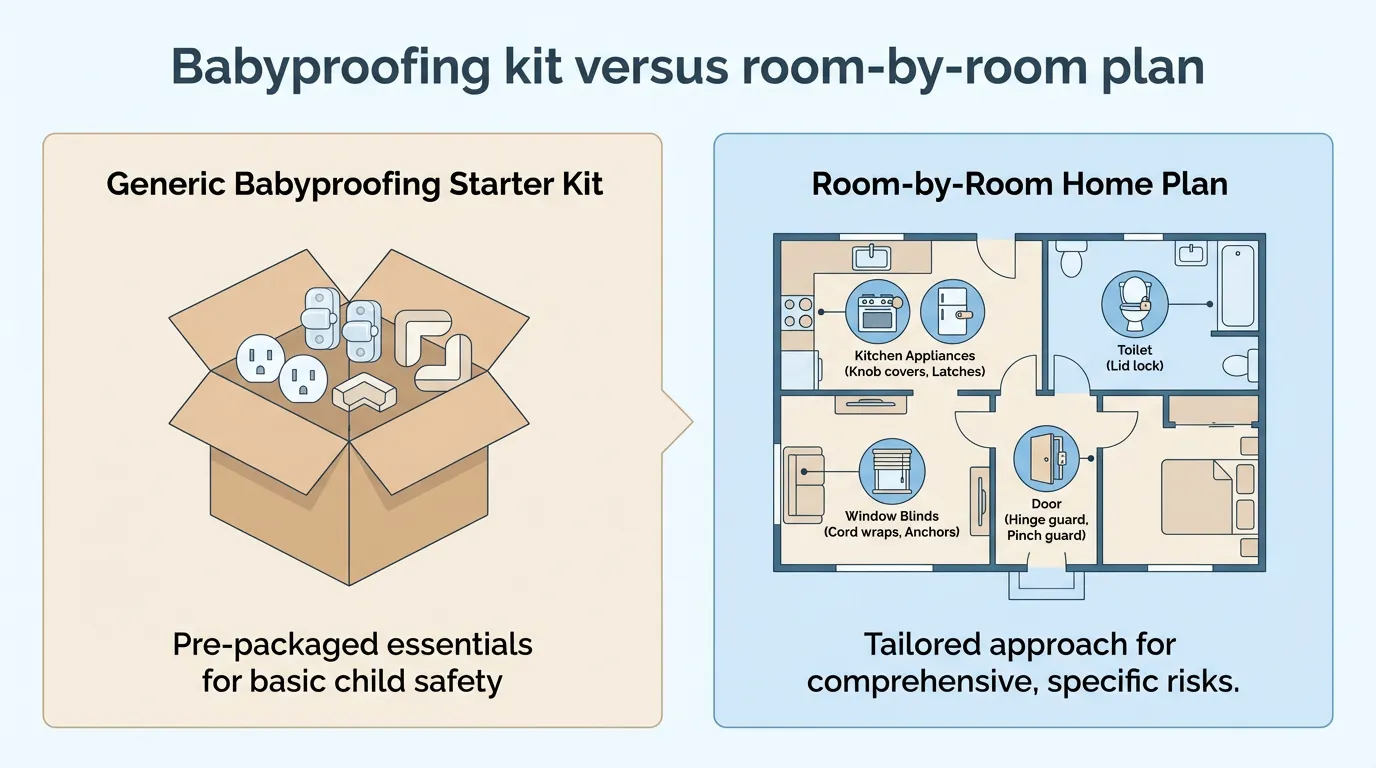
It is important to be fair here: all-in-one safety kits are not useless. In many homes, they are a solid starting layer. They can cover mainstream basics quickly and simplify the first phase of setup. The issue is not that kits are bad. The issue is that some kits create a false sense of completion.
That is where bundle marketing matters. A bigger box, more pieces, or a longer checklist can make a purchase feel more complete than it really is. But piece count does not always equal room coverage.
The chart below shows the relative planning value of standard items versus commonly missed add-ons in comprehensive home babyproofing.
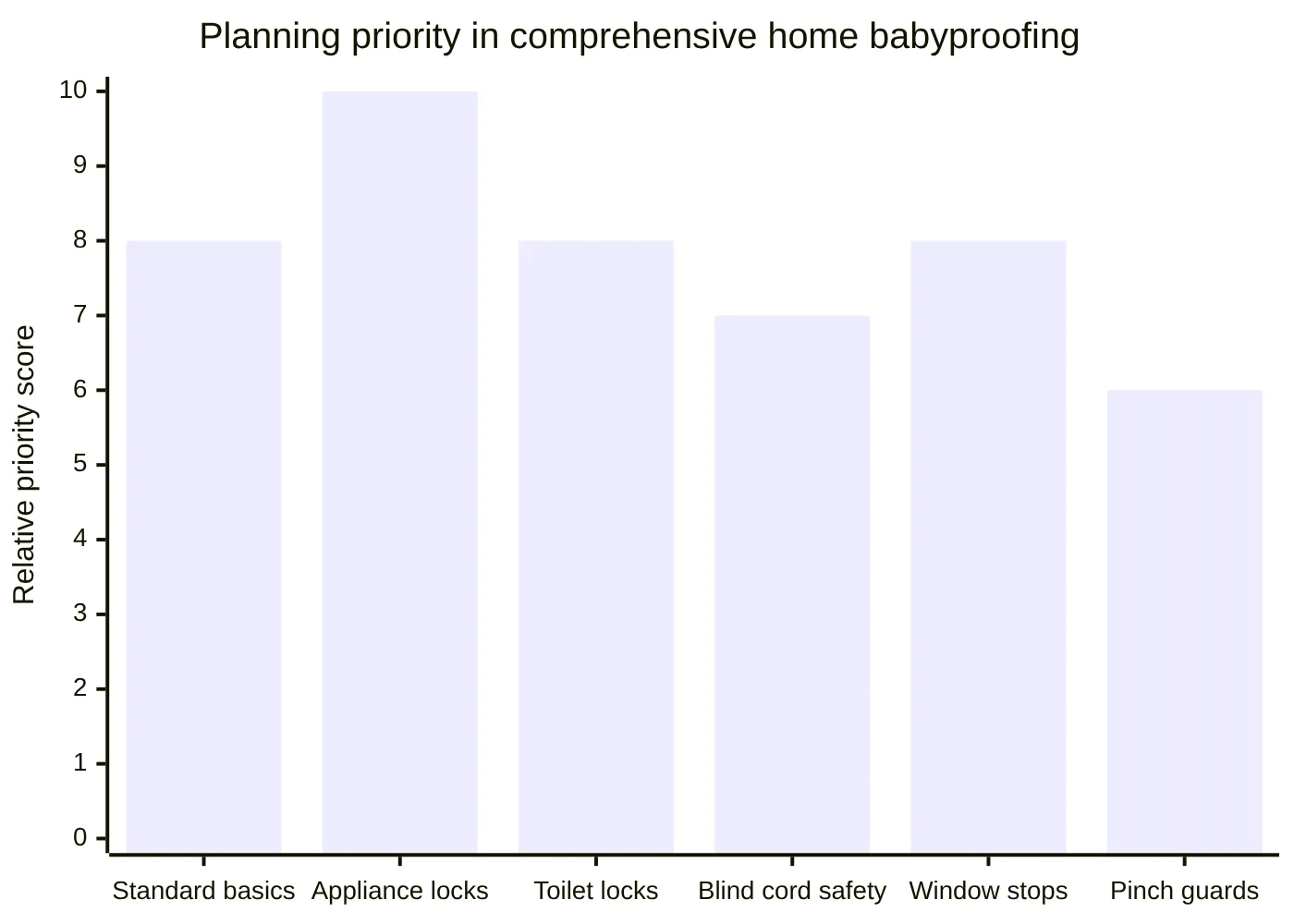
A better way to think about kits is this:
- A kit helps with foundational basics.
- A checklist helps you audit what is still missing.
- Targeted add-ons help complete your comprehensive home babyproofing plan.
That is why Vmaisi's article on comprehensive home babyproofing kits is helpful in the middle of the buying process, not just at the beginning. It frames kits as part of layered planning rather than a complete answer by default.
A room-by-room babyproofing checklist for comprehensive home babyproofing
The simplest way to apply comprehensive home babyproofing is to review your home by room and ask what a standard kit might have missed.
| Room | Core risks | Common basics | Overlooked safety items to review |
|---|---|---|---|
| Kitchen | Burns, chemicals, sharp tools, appliance access | Cabinet latches, outlet covers | Appliance locks for fridge, dishwasher, and oven |
| Bathroom | Water, medicines, cleaners | Cabinet locks | Toilet locks, medicine-cabinet-specific planning |
| Living room | Cords, windows, furniture climbing | Corner guards, outlet covers | Blind cord safety devices, window stops |
| Nursery | Drawers, cords, low windows | Drawer locks, anchors | Window guards or window stops, blind cord safety |
| Hallways and bedrooms | Wandering, door injuries | Basic door controls | Door hinge pinch guards |
In kitchens, start with cabinets but do not stop there. If your toddler goes straight for handles, doors, and appliance fronts, kitchen and appliance locks should move up your list. If you have awkward layouts, corner storage, or hard-to-secure lower cabinets, Vmaisi's article on whether magnetic cabinet locks fit corner cabinets can help you plan around those tricky spots.
In stair and hallway zones, door and gate stability can also affect your whole-home setup. If you use pressure-mounted gates, the Baby Gate Wall Protector collection and the VMAISI 4 Pack Baby Gates Wall Cups are relevant add-ons for families trying to improve contact-point stability in those transition areas.
For families thinking beyond cabinets alone, Vmaisi's guide to childproof door locks and pet-baby combo gates adds useful context for room boundaries, wandering control, and interior traffic flow.
How to build comprehensive home babyproofing without overbuying
The most practical approach is not to buy every product category at once. It is to build comprehensive home babyproofing in layers.
Start with your highest-risk rooms first:
- Kitchen
- Bathroom
- Stairs and hallways
- Nursery and living room windows
- Interior doors and daily pinch points
Then compare your setup against strong babyproofing checklists, not just your shopping cart. Ask yourself:
- Have I protected only cabinets, or also appliances?
- Have I addressed bathroom water access, not just bathroom storage?
- Have I checked windows and blinds near furniture?
- Are frequently used interior doors creating finger injury risks?
- Am I relying too heavily on an all-in-one safety kit that may not reflect my home's layout?
This approach also helps you avoid overreacting to bundle marketing. A large kit may still be a good purchase, but it should be treated as a base layer. The smarter move is to add targeted products where your home's real gaps appear.
If your current priority is cabinet-heavy spaces, start with the Magnetic Cabinet Locks collection. If you are securing multiple cabinets and drawers at once, the Vmaisi Child Safety Magnetic Drawer & Cabinet Locks page is the most direct product route. And if installation confidence is holding you back, Vmaisi also provides an installation video resource to help reduce setup friction.
In the end, the biggest takeaway is simple: comprehensive home babyproofing is not about buying the most products. It is about noticing what the basics miss. Appliance locks, toilet locks, blind cord safety devices, window stops, and pinch guards may not always be the first items on a shopping list, but they are exactly the kind of practical add-ons that turn a basic setup into a more complete one.