

Monthly Home Child-Safety Inspection Checklist
Has your baby started opening a drawer, pulling up on a cabinet handle, or reaching things that were safely out of reach just a few weeks ago? A monthly child safety home inspection gives you a calm, repeatable way to spot what has changed as your child grows.
This is not a formal home inspection or a replacement for supervision. It is a practical monthly reset: look at your home from your child's current level, focus on the most serious reachable hazards, test existing safeguards, and fix what no longer works.
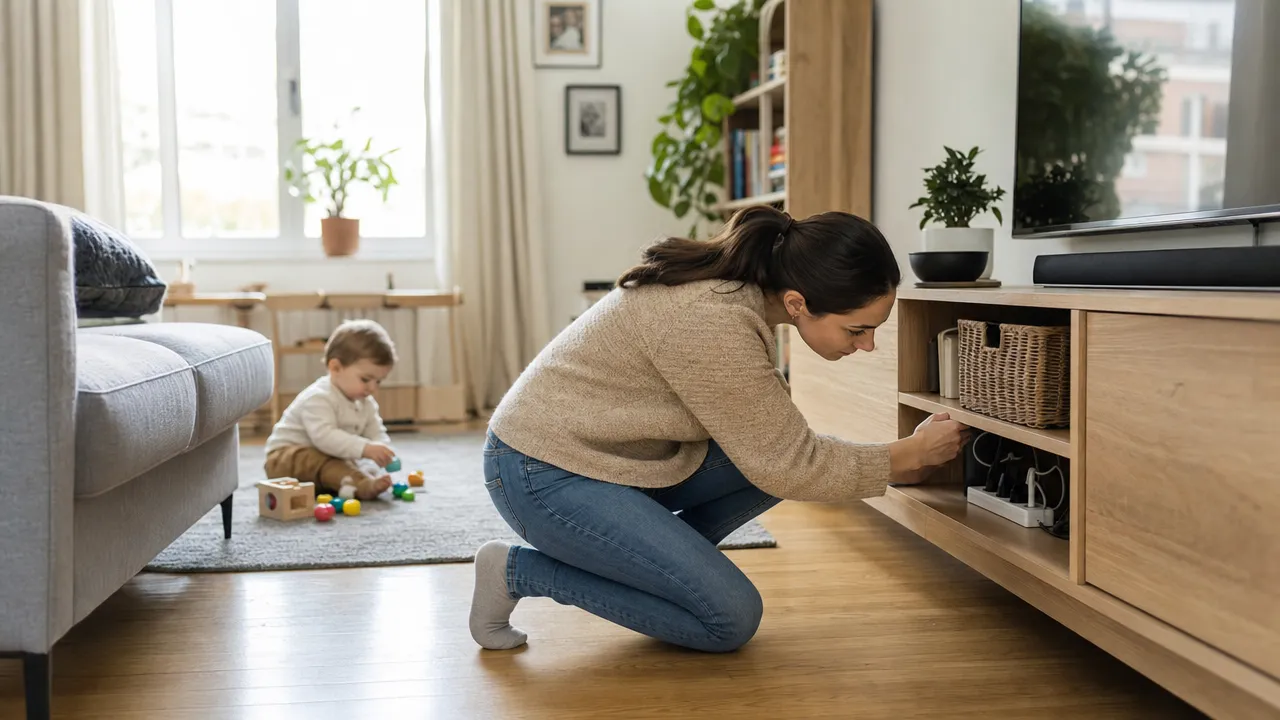
Why a Monthly Child Safety Home Inspection Matters
Babyproofing is not a one-time task. A child who once stayed on a play mat may soon crawl into the bathroom, pull open a pantry drawer, climb onto a chair, or copy the way adults use everyday objects.
A monthly child safety home inspection helps you answer four useful questions:
- What can my child reach now?
- What can my child open, pull, climb, swallow, or tip over?
- Are our current safety measures still secure and functional?
- What has changed since last month?
The U.S. Consumer Product Safety Commission recommends using layers of protection around household hazards, including safer storage and cabinet or drawer safety devices where appropriate. The American Academy of Pediatrics also advises storing medicines, cleaning products, laundry products, pesticides, paints, and similar hazards in their original containers, secured and out of children's sight and reach. See the AAP poison-prevention guidance and the CPSC home childproofing guide.
A monthly routine is an editorially practical habit, not a guarantee that a home will be risk-free. Direct supervision, correct installation, and safer storage remain essential.
How to Start a Monthly Child Safety Home Inspection
Set aside about 20 minutes and follow the same route through your home each month. Start with hazards that are both serious and accessible, then move through each room.
| Inspection step | What to do | Why it matters |
|---|---|---|
| Check from child height | Crawl, kneel, sit, or stand at your child's level | Reveals cords, low drawers, small items, and handles you may overlook |
| Prioritize high-risk items | Start with medicines, chemicals, sharp tools, water access, batteries, and stairs | Reachable hazards with greater potential harm need prompt action |
| Test safeguards | Check latches, furniture anchors, gates, outlet protection, cords, and alarms | Daily use, moisture, and changing layouts can affect how safeguards work |
| Correct and record | Remove, relocate, repair, replace, or restrict access | A short task list prevents small fixes from being forgotten |
| Recheck after changes | Inspect again after milestones, visitors, renovations, or moved furniture | Your child's abilities and home routines change quickly |
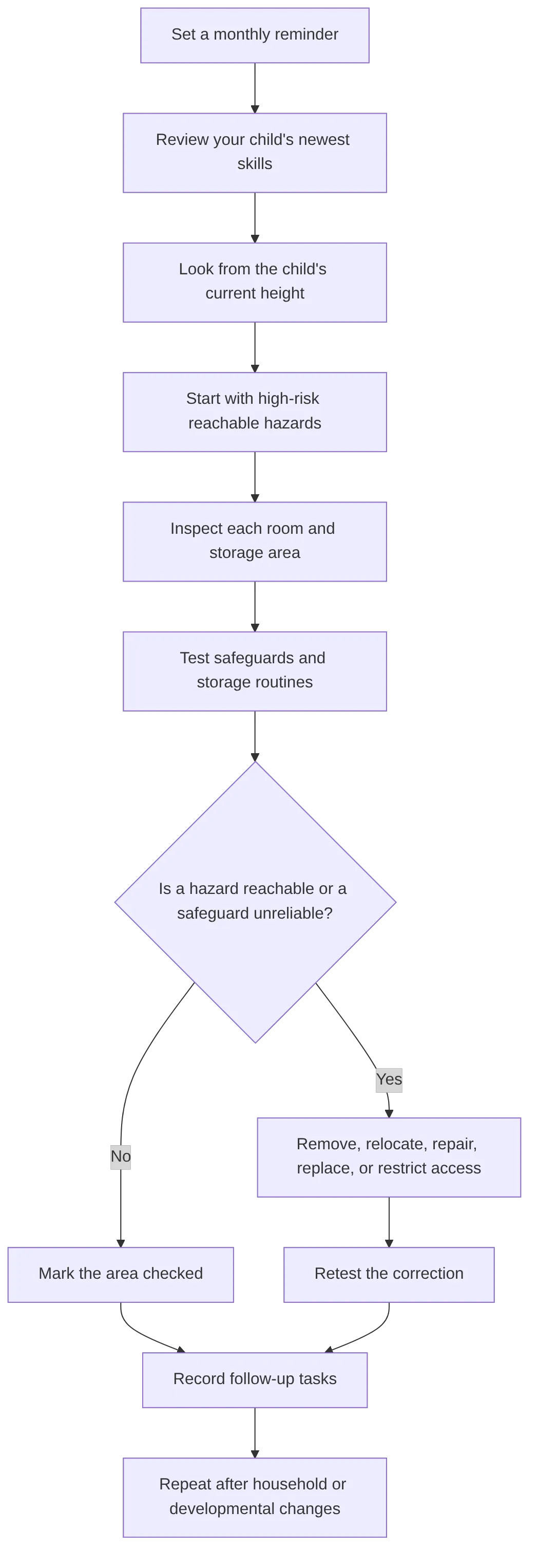
A useful rule is: do not depend on a device that is loose, cracked, misaligned, or inconsistent. If a reachable cabinet contains a hazardous item, move the item to safer storage first while you arrange a repair or replacement.
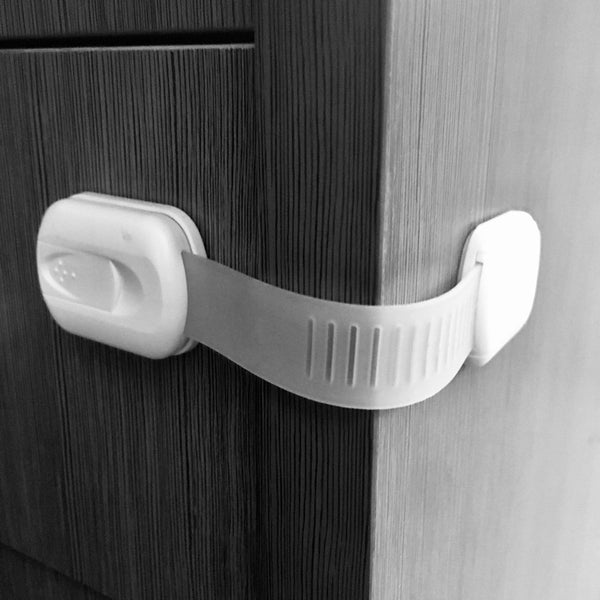
6 Pack Vmaisi Multi-Use Adhesive Straps Locks
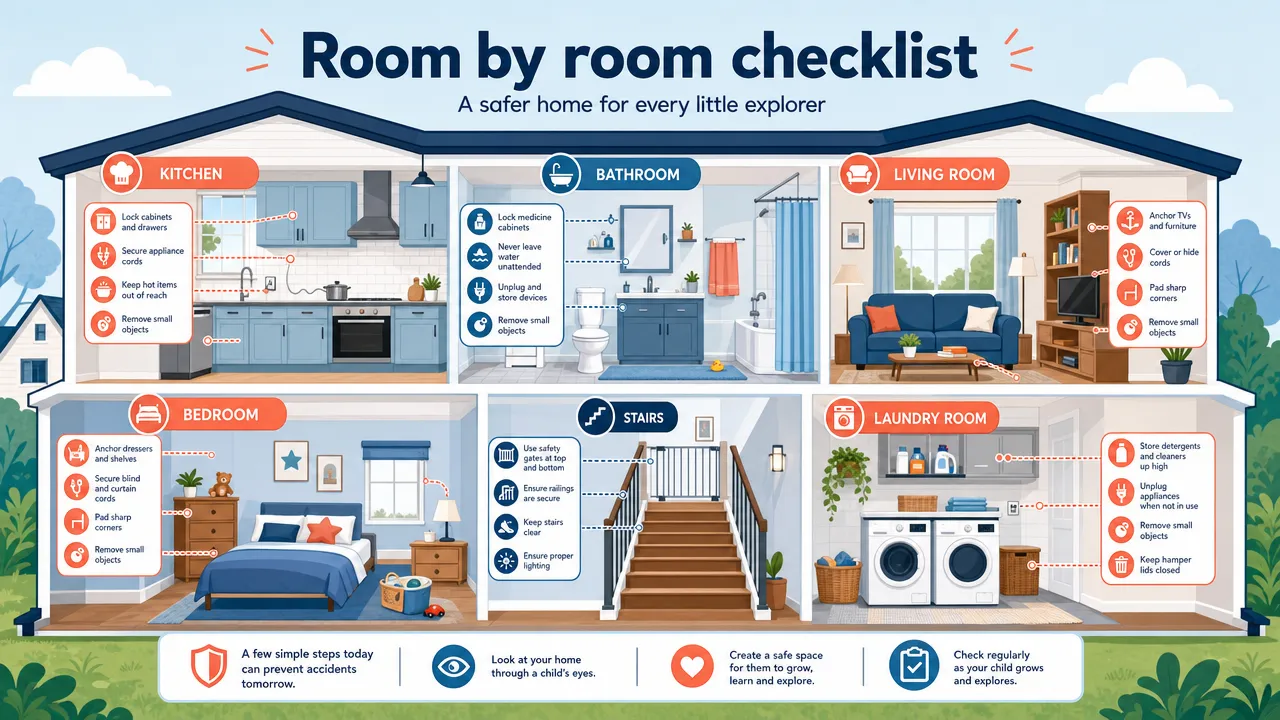
Monthly Child Safety Home Inspection by Room
A room-by-room route is easier to repeat than a long product list. Use this checklist as a monthly walk-through.
Entryway and living room
Check visitor bags, purses, coats, low tables, sofa cushions, remote controls, cords, lamps, pet bowls, and decorative objects. Look for medicines, loose batteries, coins, small objects, and other swallowable items that may have been left at child height.
Inspect TV and furniture anchors, especially after rearranging the room. Keep climbable furniture away from windows, because window screens are not designed to prevent falls. The CPSC provides guidance on furniture stability and whole-home childproofing in its home safety resource.
Kitchen and pantry
Inspect lower cabinets, drawers, pantry shelves, trash areas, countertop cords, and accessible appliances. Prioritize cleaning products, dishwasher products, knives, peelers, scissors, glassware, batteries, plastic bags, and heavy cookware.
Use back burners when possible, turn pot handles inward, and stay with cooking food and hot liquids. The University of Georgia room-by-room checklist offers additional kitchen safety guidance.
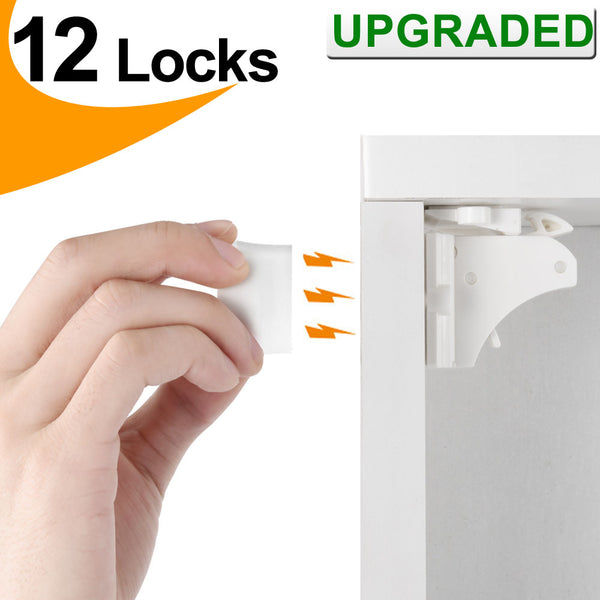
Vmaisi Baby Proofing Magnetic Cabinet Locks 12 Pack - Childproof your house
Bathroom
Review vanity cabinets, drawers, counters, toiletry bags, wastebaskets, toilet access, and bath supplies. Medicines, vitamins, razors, cleaners, cosmetics, and small objects should not remain accessible.
Put medicine away immediately after use rather than leaving it on a counter, bedside table, or in a guest bag. For more bathroom-specific planning, read this guide to childproofing a medicine cabinet safely.
Never leave a young child alone in or near water, including bath water. If you suspect a child has swallowed medicine, cleaning products, or another potentially poisonous substance in the U.S., contact Poison Help at 1-800-222-1222. For immediate danger or severe symptoms, call emergency services.
Bedrooms, nursery, and play areas
Check dressers, bookshelves, low drawers, monitor cords, lamp cords, window coverings, bedside tables, and the space under beds. Remove small objects, batteries, jewelry, and cosmetics from reachable surfaces and storage.
As your child begins pulling up or climbing, reassess furniture stability and any route that could lead toward a window or higher shelf. This is also a good time to review toddler babyproofing mistakes to avoid.
Laundry, utility, office, and storage spaces
These spaces can change quickly because adults often use them for temporary storage. Check detergent, bleach, stain removers, tools, paints, hardware, chargers, batteries, scissors, paper clips, and work bags.
Empty buckets after use and restrict access to rooms that contain household chemicals, tools, or standing water. Do not overlook guest rooms and home offices, where bags, medications, coins, and small objects can easily accumulate.
Monthly Child Safety Home Inspection for Cabinets and Drawers
Cabinets and drawers deserve special attention because their contents and your child's abilities can change from month to month. A low drawer that held towels last month may now hold batteries, scissors, cosmetics, or small objects. A cabinet may also become easier to access once a toddler learns to pull a handle or climb on nearby furniture.
Prioritize reachable storage containing:
- Medicines, vitamins, and supplements.
- Cleaning and laundry products.
- Sharp kitchen tools.
- Batteries and small objects.
- Breakables and heavy items.
- Tools, hardware, paints, and garden products.
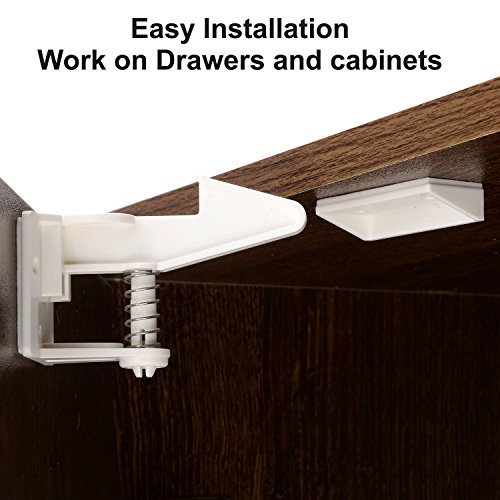
For cabinets and drawers that still contain household hazards after you improve storage, adhesive cabinet locks, no-drill cabinet locks, cabinet latches, and drawer safety locks can add a safety layer. They should not replace moving high-risk items up, away, and secured whenever possible.
During your monthly check:
- Confirm the latch still engages fully.
- Look for peeling adhesive, cracks, shifting, or poor alignment.
- Check that the cabinet or drawer closes correctly.
- Consider whether grease, moisture, dust, or a textured surface may affect adhesion.
- Test the setup according to the product instructions before relying on it.
- Move hazards immediately if the safety measure is unreliable.
For more setup and maintenance context, see no-drill cabinet lock safety considerations and adhesive versus no-drill cabinet locks.
VMAISI offers adhesive, no-drill child safety cabinet locks and cabinet latches for selected cabinets and drawers. As with any safety device, check surface compatibility, follow the instructions, and inspect function regularly.
Cabinet Locks Child Safety Latches - VMAISI 12 Pack Baby Proofing Cabinet Locks
Monthly Child Safety Home Inspection Triggers to Watch
Your calendar reminder is the baseline. Do an extra child safety home inspection whenever your child gains a new skill or your household changes.
| Trigger | What to recheck |
|---|---|
| Crawling | Floor hazards, outlets, low cabinets, pet areas, toilets, and stairs |
| Pulling up | Drawer handles, lamp cords, furniture stability, and countertop edges |
| Cruising and walking | Gates, room boundaries, exterior-door routines, and faster access to hazards |
| Opening drawers or cabinets | Every reachable storage area, not only the kitchen |
| Climbing | Furniture anchors, windows, balcony access, chairs, stools, and shelves |
| Copying adults | Medicines, appliances, remotes, tools, and laundry routines |
| Visitors or guests | Bags, coats, medications, nicotine products, and small personal items |
| Rearranging or renovating | Furniture anchors, cords, window access, new storage, and debris |
A helpful second pass is to look beyond obvious areas. This resource on overlooked babyproofing items can help you review commonly missed issues such as cords, windows, batteries, toilets, and appliance access.
Your Monthly Child Safety Home Inspection Checklist
Use this short checklist as a repeatable safety reset:
- Sweep floors, cushions, bags, and low surfaces for batteries, coins, medicines, and small objects.
- Confirm medicines, chemicals, laundry products, and sharp tools are stored up, away, and secured.
- Test reachable cabinet latches and drawer safety measures.
- Check furniture and TV anchors for visible looseness or changes.
- Review stairs, windows, cords, water access, and climbable furniture.
- Check bathroom access, toilet areas, and bath-time routines.
- Inspect laundry, utility, office, garage, guest, and storage areas.
- Write down repairs or follow-up tasks before ending the inspection.
- Schedule an extra check after a new milestone, visitor, move, or home change.
The goal is not perfection. A monthly child safety home inspection helps you notice the everyday changes that can make an old setup less suitable for a growing child. Start with the highest-risk reachable hazards, make the needed corrections, and keep reassessing as your child learns what they can do next.
Reviewed against guidance from HealthyChildren, the CPSC, and pediatric safety organizations. This article is for general education and is not medical, emergency, electrical, structural, or professional safety advice.