

Baby Proofing for Visiting Toddlers: Quick Checklist
Are you wondering how to make your home safer before a toddler visits? Whether you are hosting a grandchild, planning a playdate, or welcoming relatives for the afternoon, you do not need to complete a permanent whole-home project to reduce common risks.
Baby proofing for visiting toddlers starts with a focused safety pass: move reachable hazards, control access to high-risk spaces, and agree on active adult supervision. A checklist, cabinet latch, or gate can add protection, but none replaces close attention from adults.
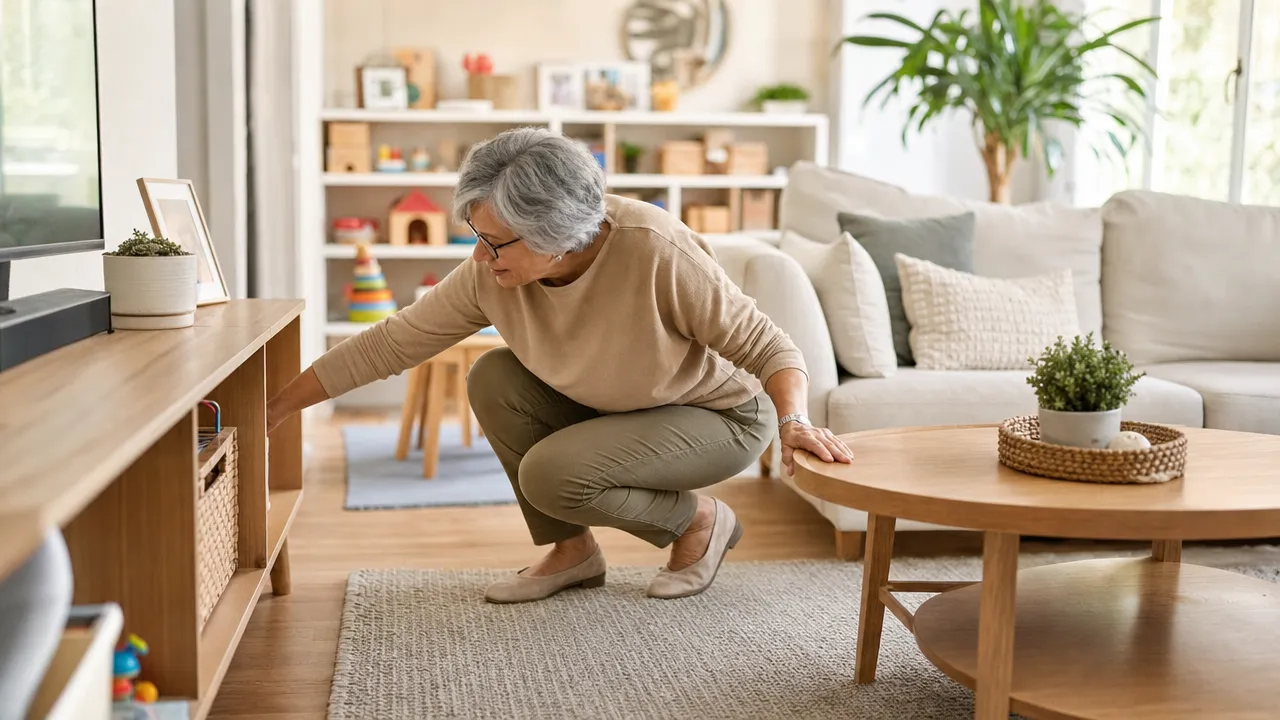
Baby proofing for visiting toddlers: Start with critical hazards
Start with anything a mobile toddler could quickly reach, open, mouth, pull down, climb, or enter. The U.S. Consumer Product Safety Commission recommends viewing the home from a child's perspective and using protective measures as part of a broader safety routine. CPSC childproofing guidance and Seattle Children's home safety checklist both emphasize safer storage, controlled access, and supervision.
Handle these priorities before worrying about less urgent details:
| Priority | What to check | Fast action before the visit |
|---|---|---|
| Critical | Medicines, vitamins, cleaners, detergent products, nicotine products | Move them up, away, and into secure storage. Check purses, guest bags, counters, and bedside tables too. |
| Critical | Button batteries, coins, jewelry, small toy parts, pet items | Pick them up from floors, low tables, remotes, drawers, and baskets. Store spare batteries securely. |
| Critical | Stairs, water, pools, buckets, bathrooms | Keep access controlled and never leave a toddler alone near water. Empty buckets and small pools. |
| Critical | Knives, scissors, peelers, razors, and tools | Clear low drawers and counters, then store sharp items securely. |
| High | Unstable furniture and TVs | Keep toddlers away from climbable or unsecured furniture. Furniture anchoring is an important long-term safety measure. |
| High | Cords, windows, and blind cords | Gather cords out of reach, secure windows, and move climbable furniture away from windows. |
If an area cannot be prepared in time, make it off-limits. Closing off an unprepared storage room, garage, workshop, or bathroom is often more realistic than rushing to install a new safety device.
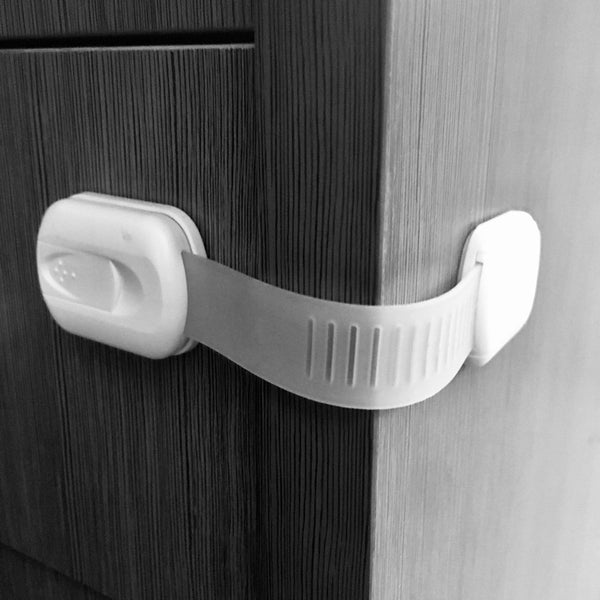
6 Pack Vmaisi Multi-Use Adhesive Straps Locks
Baby proofing for visiting toddlers: Complete a 30-minute walkthrough
A quick walkthrough is one of the most useful temporary babyproofing ideas. Crouch down to toddler height in every room the child may enter. Look beneath tables, behind furniture, inside low drawers, and around bags left on the floor.
Use this order to keep the task manageable:
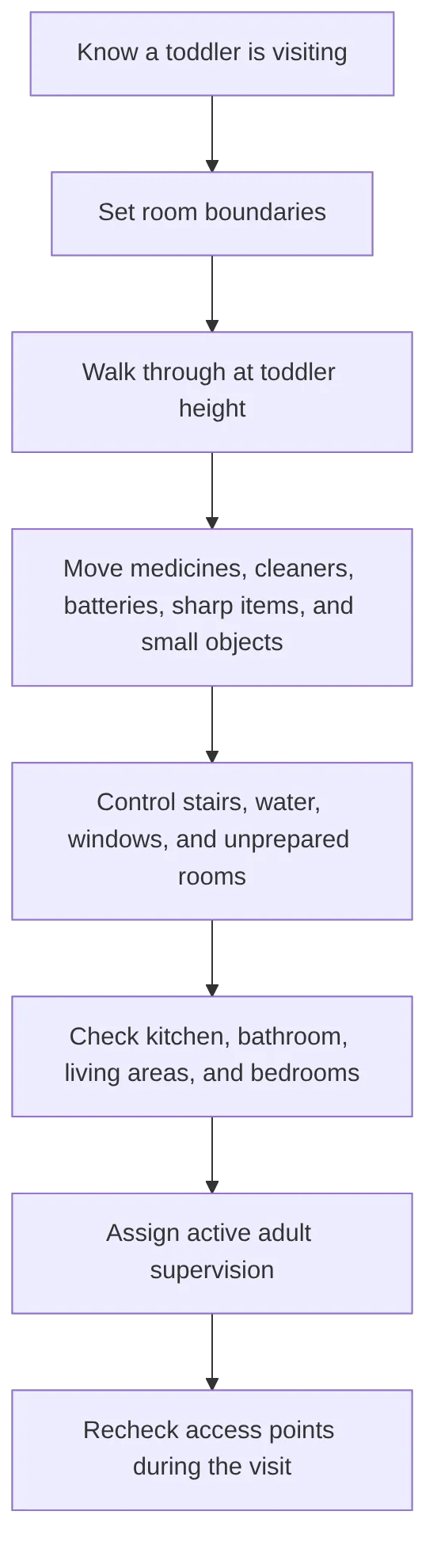
Quick visitor-prep checklist
- Put handbags, backpacks, and coats out of reach. They may contain medication, cosmetics, batteries, small objects, or other items a toddler can explore.
- Clear coffee tables, low shelves, side tables, and floor baskets of breakables and small items.
- Put pet food, pet medicine, and water bowls where the toddler cannot access them. Supervise all pet-child interactions.
- Unplug and move countertop appliances away from edges. Gather charging cords, lamp cords, and television cords.
- Identify rooms that will stay closed, including utility rooms, storage areas, garages, and workshops.
- Tell every adult which rooms are off-limits and who is watching the toddler during arrivals, meals, outdoor time, and departures.
For a helpful second-pass review of overlooked household risks, see this guide to common babyproofing mistakes. It reinforces the value of checking ordinary drawers, cords, furniture, and low storage, not only the obvious hazards.
Baby proofing for visiting toddlers: Check kitchen, bathroom, and laundry areas
Kitchens, bathrooms, and laundry spaces often hold several high-priority risks in a small area. For a short visit, the safest first step is usually to relocate hazardous items and keep the space adult-controlled.
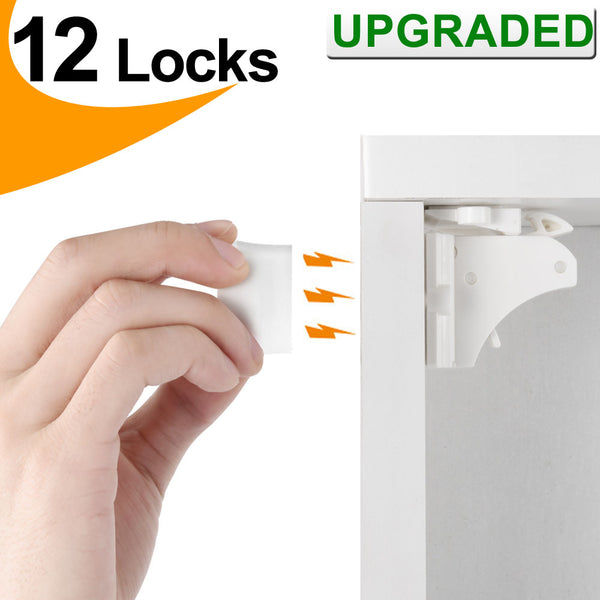
Vmaisi Baby Proofing Magnetic Cabinet Locks 12 Pack - Childproof your house
Kitchen and dining room
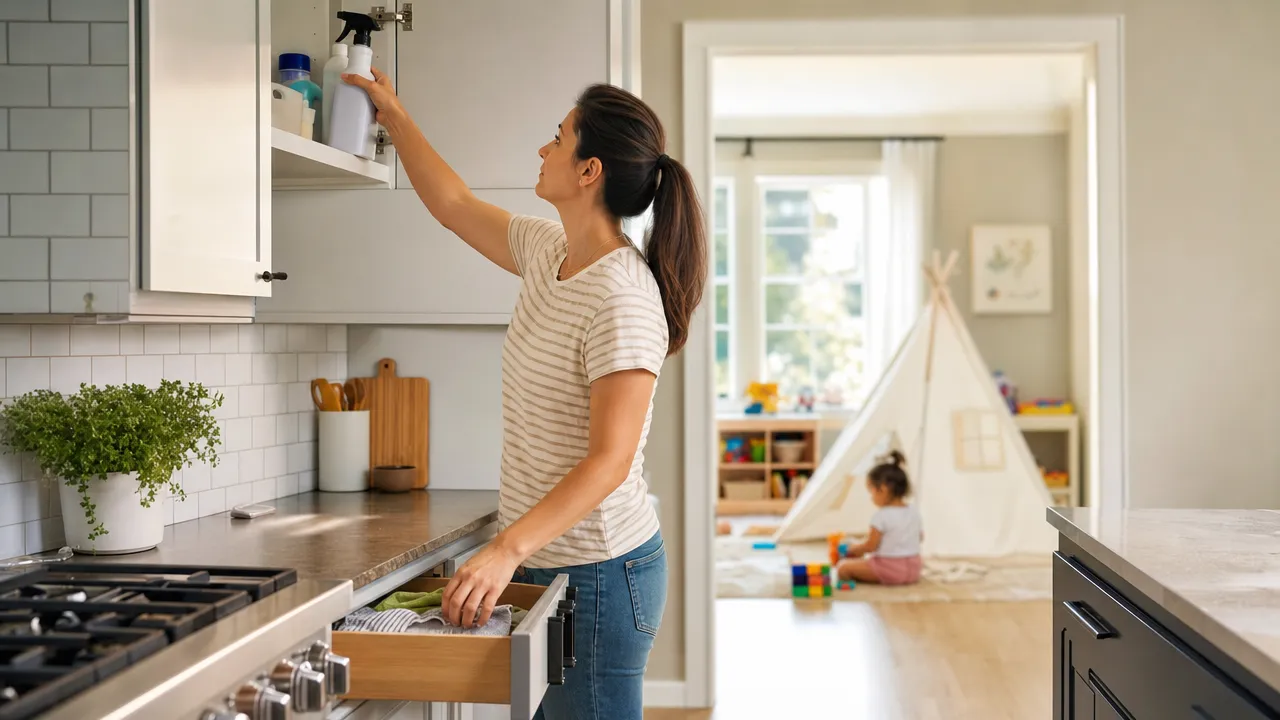
Move cleaning products, dishwasher products, plastic bags, glassware, sharp utensils, and small objects out of reach. Do not leave an open dishwasher, hot cookware, or hot drinks near a toddler's reach. Keep the child out of the cooking zone whenever possible.
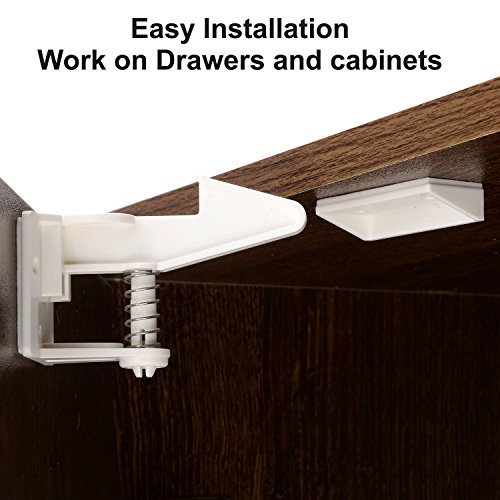
For accessible drawers or cabinets that still contain a hazard, child safety cabinet locks, adhesive cabinet locks, baby proofing cabinet locks, no-drill cabinet locks, cabinet latches, and drawer safety locks may add a layer of access control. First confirm the cabinet or drawer is compatible with the device instructions, then check that adults can use it consistently.
A latch is not a substitute for safer storage. The preferred order is simple:
- Move hazardous items up and away.
- Use secure storage where appropriate.
- Add cabinet or drawer safety measures for reachable access points.
- Inspect the setup regularly.
- Continue active supervision.
If you are reviewing your storage layout, this cabinet and drawer safety guide can help you identify low cabinets and drawers that deserve a second look.
Bathroom and laundry room
Before the toddler arrives, remove medicines, vitamins, razors, cosmetics, cleaners, detergent products, grooming tools, and small containers from counters and low storage. Check toiletry bags and purses as carefully as permanent bathroom storage.
Keep bathroom access controlled when it is not in use. A toddler should never be left alone in or near a bathtub, toilet, bucket, pool, or any other water source. Seattle Children's specifically advises close supervision around water and secure storage for medicines, cleaners, detergent products, and button batteries.
For more planning around this high-priority category, review VMAISI's safer medicine-storage planning guide. Keep the focus on storage up and away, with cabinet latches as an added layer where appropriate.
Baby proofing for visiting toddlers: Secure living areas, stairs, and outdoor access
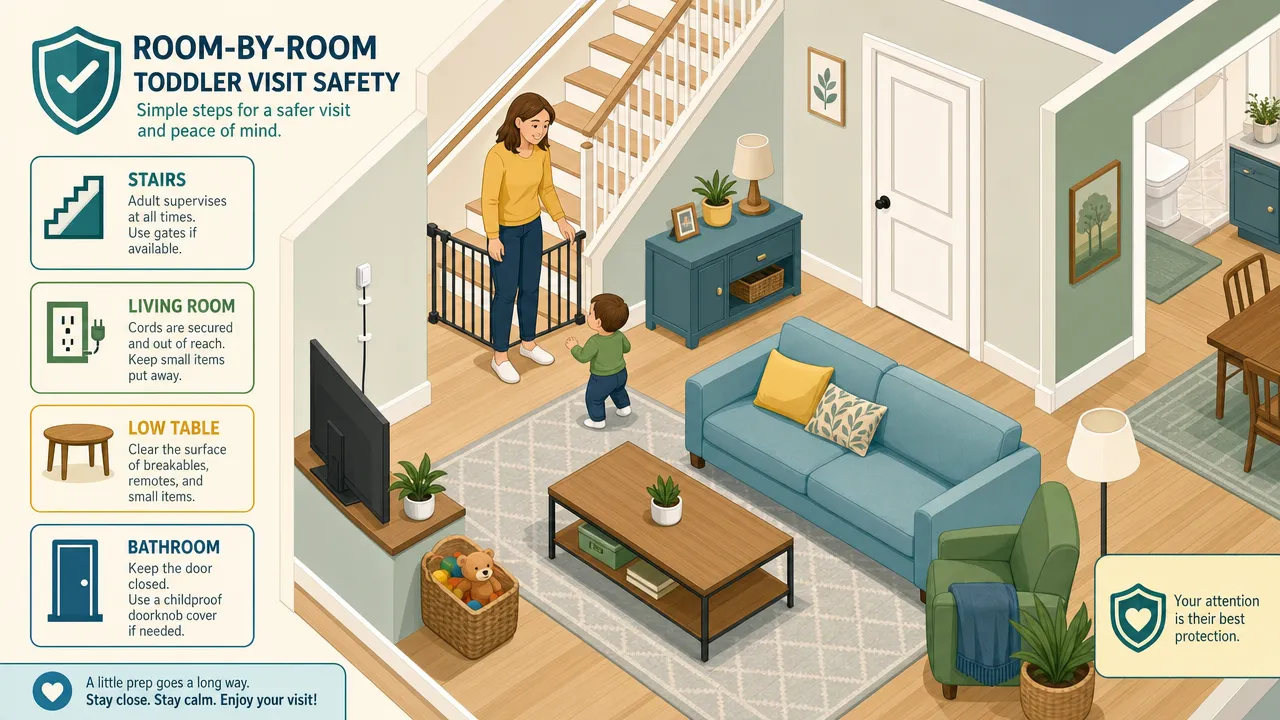
Living rooms and bedrooms can look harmless because they are familiar to adults. From a toddler's perspective, though, they may include climbable furniture, remotes with batteries, dangling cords, breakable decor, open windows, and bags full of small items.
Living rooms and bedrooms
- Keep toddlers away from furniture or televisions that are not securely anchored.
- Remove tempting items from low drawers and shelves that may encourage climbing.
- Check remotes, scales, key fobs, toys, and other devices for accessible button batteries.
- Secure cords from lamps, chargers, blinds, and window coverings.
- Keep furniture away from windows and ensure windows are secured.
- Clear jewelry, coins, hair accessories, cosmetics, and small electronics from accessible surfaces.
- Put fragile decor and pet items out of reach.
Children's Hospital Colorado's room-by-room checklist is a useful authoritative resource for reviewing furniture, cords, windows, small objects, and common household spaces.
Stairs, doors, outdoor spaces, and water
Stairs need active supervision every time, especially during busy gatherings when adults may assume someone else is watching. If a suitable gate is already correctly installed, use it as intended. Do not treat a rushed installation as a replacement for supervision.
For windows, keep them secured and move climbable furniture away. For outdoor areas, control access to driveways, garages, sheds, pools, hot tubs, ponds, and buckets. Keep garages and workshops off-limits because they may contain tools, chemicals, batteries, and equipment that cannot be made visitor-ready quickly.
Cabinet Locks Child Safety Latches - VMAISI 12 Pack Baby Proofing Cabinet Locks
Baby proofing for visiting toddlers: Supervise during the visit and reset afterward
The most effective baby proofing for visiting toddlers continues after the walkthrough. Toddlers change rooms quickly, and household routines can reopen a risk that was addressed earlier.
Use these simple supervision rules:
| Moment | Practical rule |
|---|---|
| At arrival | Remind adults which rooms are off-limits and where the toddler can play. |
| During meals | Keep hot drinks, hot food, and sharp utensils away from table edges. |
| Kitchen and bathroom trips | Keep an adult close by. Re-secure cabinets, drawers, and access points after use. |
| Outdoor transitions | Confirm who is supervising before anyone goes outside or near water. |
| Busy conversations | Hand supervision over clearly: say who is watching rather than assuming. |
| Before departure | Recheck floors, bags, low furniture, and accessible drawers for small objects or misplaced medicines. |
If visiting toddlers become regular guests, make notes after each visit. Perhaps the toddler repeatedly heads for a particular drawer, pulls a furniture handle, or notices a low shelf that adults had ignored. These observations help you prioritize long-term upgrades without trying to change everything at once.
For hosts comparing latch styles based on fit, visibility, installation preferences, and adult access, VMAISI's one-hand latch considerations offer additional category-level guidance. As with any safety measure, follow the manufacturer's instructions, inspect the installation, and continue to store hazards out of reach.
Baby proofing for visiting toddlers does not require a perfect home. It requires a calm, critical-first plan: remove accessible hazards, limit access to spaces that are not ready, and keep adults actively attentive throughout the visit.