

No Drill vs Adhesive Cabinet Locks for Safety
Are you worried because your baby just started crawling, pulling up, or opening lower kitchen drawers? That moment can make everyday cabinets feel very different. Cleaning supplies, sharp utensils, small objects, laundry products, and bathroom items may suddenly be within reach.
For many parents, the search for no drill cabinet locks starts with one practical question: "How can I help secure cabinets and drawers without damaging them?" That is where adhesive cabinet locks and no drilling cabinet locks often overlap. In many baby-proofing setups, "no drill" describes the installation goal, while "adhesive" describes the way the latch attaches.
This guide explains the difference, where they overlap, how adhesive strength works, and how to choose between VMAISI's 12 Pack and 20 Pack child safety cabinet latches.
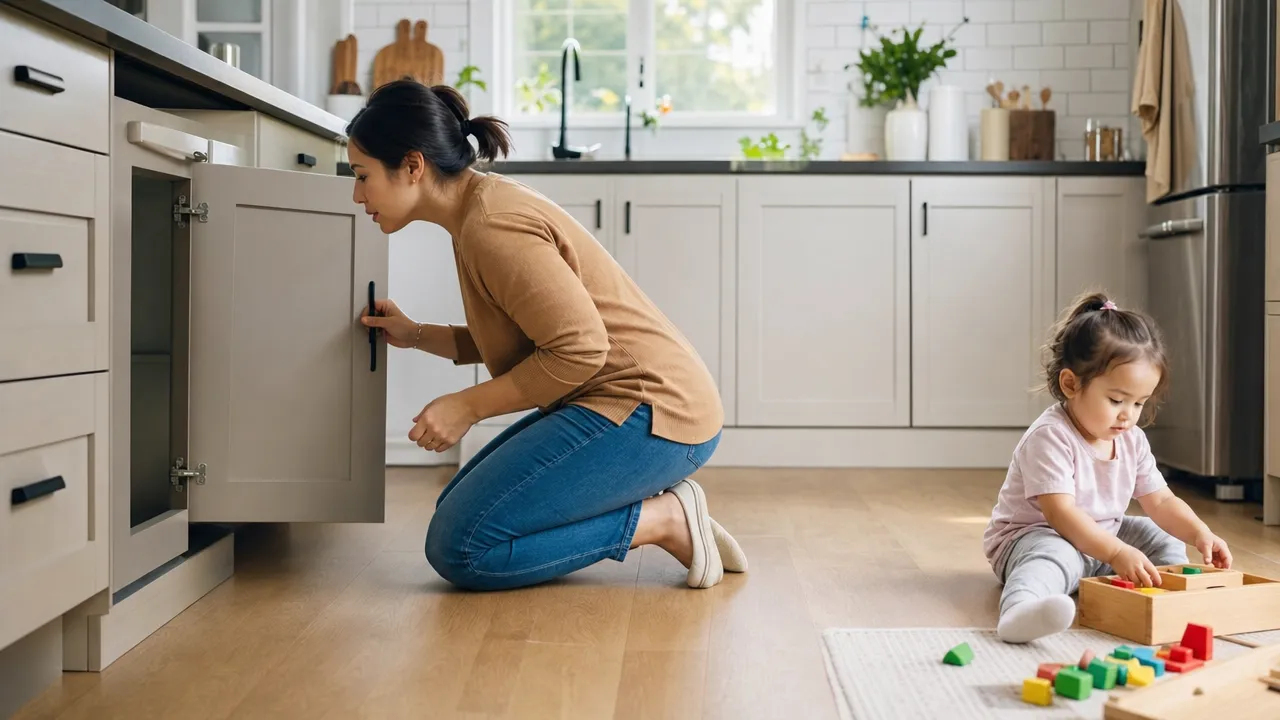
What no drill cabinet locks mean for parents
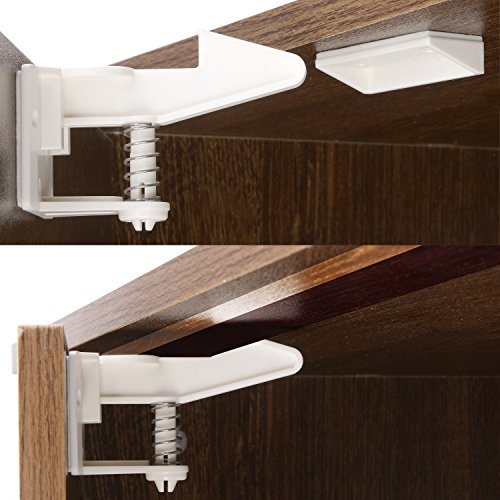
No drill cabinet locks are child safety latches designed to help secure cabinets and drawers without making holes or using screws as the main installation method. Parents often prefer them because they are simple, practical, and more cabinet-friendly than hardware-mounted options.
For renters, no drilling cabinet locks can be especially appealing because they reduce the need for permanent changes. For homeowners, they can also help protect finished cabinetry while giving a fast way to start baby proofing.
In everyday family life, no-drill cabinet latches are most useful for reachable areas such as:
- Under-sink kitchen cabinets.
- Bathroom cabinets with cosmetics, razors, cleaners, or medicines.
- Low drawers with small objects or sharp utensils.
- Laundry or utility cabinets.
- Storage cabinets that contain household tools or small parts.
The U.S. Consumer Product Safety Commission recommends using safety latches and locks on cabinets and drawers to help prevent poisonings and injuries. It also emphasizes that hazardous items should be kept out of children's reach. In other words, cabinet latches are important, but they work best as one layer of a broader safety plan.
How adhesive cabinet locks compare with no drill cabinet locks
The terms are closely related, but they are not exactly the same.
"No drill" describes what you do not need to do during installation. "Adhesive" describes how the latch attaches to the cabinet or drawer surface. Many adhesive cabinet locks are also no drill cabinet locks because they use adhesive backing instead of screws.
| Question parents ask | No drill cabinet locks | Adhesive cabinet locks | Practical takeaway |
|---|---|---|---|
| Do I need to drill holes? | No, that is the main benefit. | Usually no, when adhesive is the mounting method. | Good for renters and finished cabinets. |
| What holds the latch in place? | Depends on the design. | Adhesive backing. | Surface prep matters. |
| Are tools required? | Usually minimal. | Usually minimal. | Helpful for busy parents. |
| Can they work on drawers? | Many designs can. | Many adhesive latches can. | Check fit and alignment before use. |
| Do they need maintenance? | Yes, periodic checks are smart. | Yes, adhesive bond should be checked. | Recheck high-use cabinets often. |
The comparison is not always "no drill vs adhesive." In many homes, the better way to think about it is: adhesive latches are a common type of no drill cabinet locks.
For parents starting with a few high-priority areas, VMAISI Cabinet Locks Child Safety Latches 12 Pack can be a practical starter option. For larger homes or multiple rooms, VMAISI Cabinet Locks Child Safety Latches 20 Pack is better suited for broader cabinet and drawer coverage.
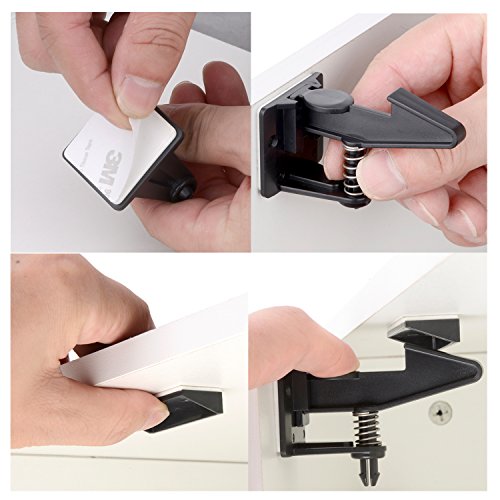
Why no drill cabinet locks need proper adhesive setup
Parents searching for stronger adhesive cabinet locks are usually asking a very reasonable question: "Will the adhesive hold up to daily use?" The answer depends on both the product and the installation.
Adhesive performance can be affected by:
- Dust, grease, or moisture on the surface.
- Rough or uneven cabinet material.
- Poor alignment.
- Not pressing firmly during installation.
- Heavy use before the adhesive has had time to set.
- Frequent pulling or repeated opening in high-traffic areas.
A practical installation routine can make a real difference:
- Choose the cabinet or drawer first.
- Clean the mounting area to remove dust, oil, and residue.
- Let the surface dry fully.
- Align the latch carefully before pressing.
- Press firmly to help the adhesive bond.
- Follow the product instructions for any recommended set time.
- Test gently after installation.
- Recheck the latch periodically, especially on cabinets used every day.
The Kitchen Cabinet Kings childproofing guide also notes the value of cleaning surfaces and testing childproofing products after installation. This supports a simple but important point: adhesive cabinet locks work best when installed thoughtfully, not rushed onto a dusty or damp surface.
For parents who need more latches and want a larger pack with stronger adhesive relevance, the VMAISI Cabinet Locks Child Safety Latches 20 Pack is the better fit.
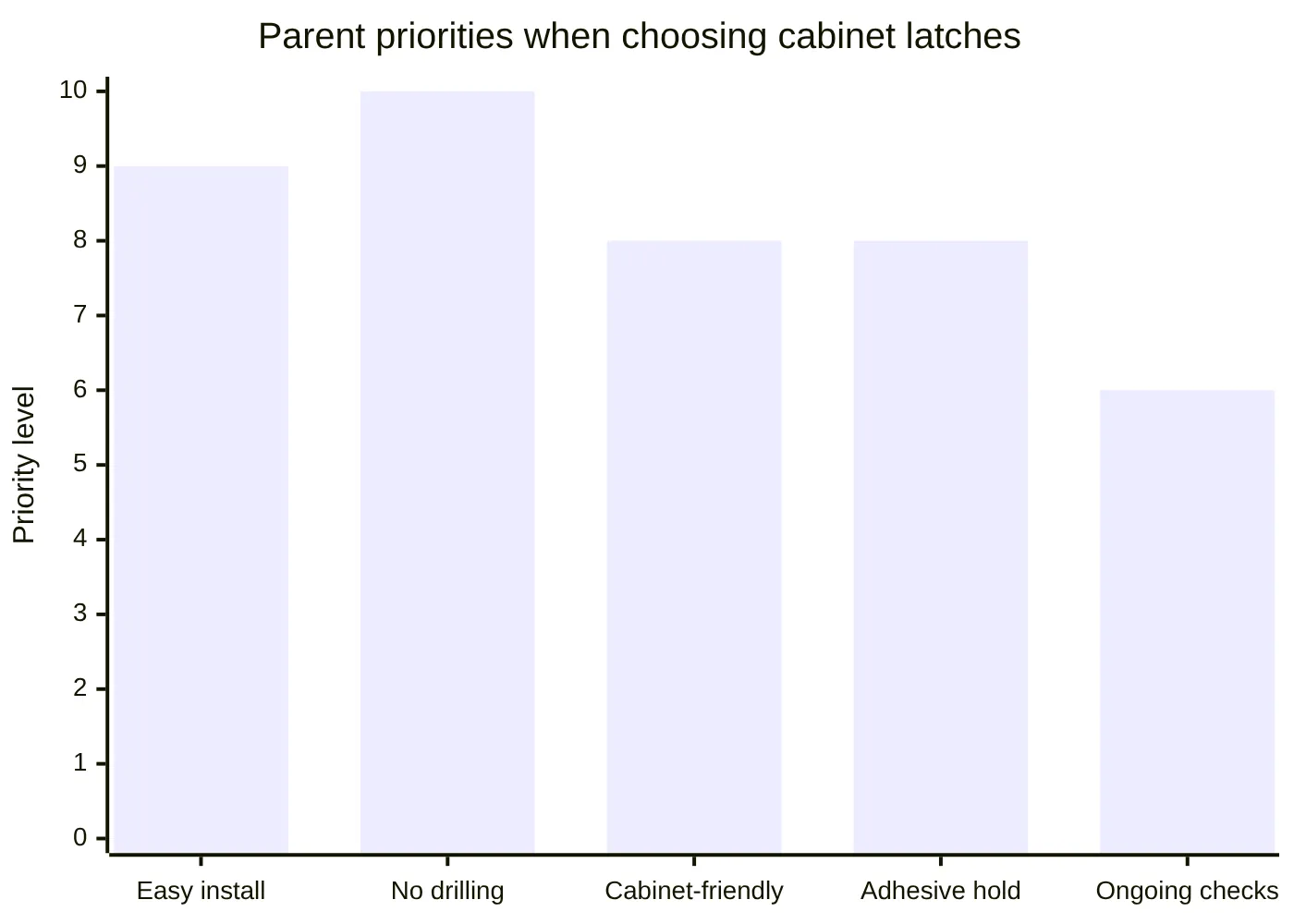
Where to use no drill cabinet locks room by room
Once a child becomes mobile, parents often discover that one or two cabinet latches are not enough. A room-by-room check helps you decide how many no drill cabinet locks you need.
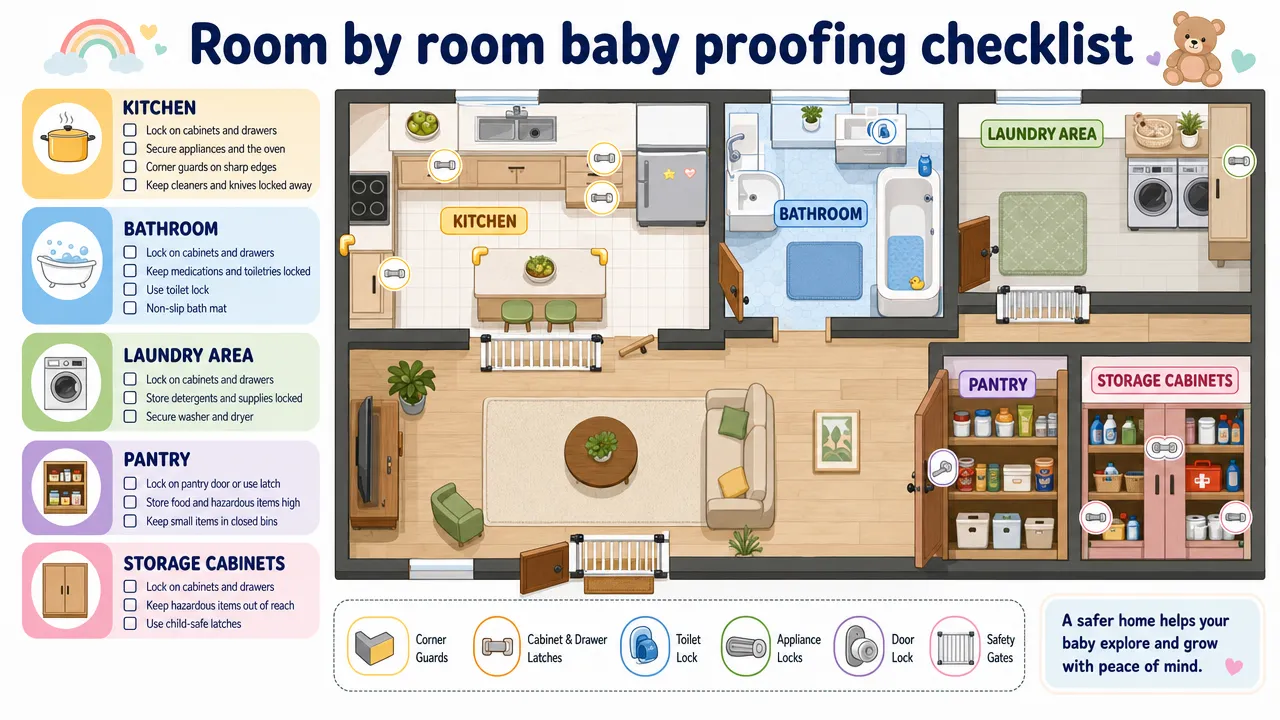
| Room or area | Common reachable items | Priority level | Parent tip |
|---|---|---|---|
| Kitchen cabinets | Cleaners, trash bags, small objects | High | Start with the under-sink cabinet. |
| Kitchen drawers | Utensils, tools, small items | High | Prioritize low drawers first. |
| Bathroom cabinets | Medicines, razors, cosmetics, cleaners | High | Store medicines high and out of reach too. |
| Laundry or utility area | Detergent, pods, chemicals, tools | High | Secure reachable storage quickly. |
| Pantry | Small packages, breakable containers | Medium to high | Check choking-risk items. |
| Storage cabinets | Tools, batteries, small parts | High if reachable | Move dangerous items higher when possible. |
The Cleveland Clinic childproofing guide recommends locking reachable cabinets and drawers and keeping chemicals out of reach and locked away. That balanced approach matters: cabinet latches help slow access, but the safest plan also includes safer storage habits and supervision.
A simple order of priority is:
- Start with cabinets your child can already reach.
- Secure areas with cleaners, sharp tools, medicines, and small objects.
- Add drawer latches where low drawers contain risky items.
- Recheck latches during regular cleaning or cabinet use.
- Move the most hazardous items higher whenever possible.
Choosing no drill cabinet locks: 12 Pack or 20 Pack
The right pack size depends on how many cabinets and drawers you want to secure. Parents in a small apartment may only need to start with a few areas. Families in larger homes may quickly need coverage across the kitchen, bathroom, laundry area, pantry, and storage spaces.
| VMAISI option | Best for | Recommended use case |
|---|---|---|
| VMAISI Cabinet Locks Child Safety Latches 12 Pack | Smaller or basic baby-proofing needs | A few cabinets, a starter kitchen setup, bathroom storage, or selected drawers. |
| VMAISI Cabinet Locks Child Safety Latches 20 Pack | Larger homes or multiple rooms | Whole-home baby proofing, more cabinets and drawers, and stronger adhesive relevance. |
If you are just beginning, walk through your home at your child's height. Count only the cabinets and drawers that contain items you do not want your baby or toddler to access. Then add a few extra latches for areas you may discover later.
Choose the 12 Pack if:
- You need to secure a few high-risk cabinets or drawers.
- You are starting with the kitchen and one bathroom.
- You want a basic first step before expanding.
Choose the 20 Pack if:
- You are baby-proofing multiple rooms.
- You have several low drawers and cabinets.
- You want a larger supply for whole-home planning.
- You are specifically looking for stronger adhesive cabinet locks for broader use.
No drill cabinet locks as one layer of family safety
No drill cabinet locks can make everyday baby proofing more manageable, especially for parents who want an easy, no-drill solution for cabinets and drawers. Adhesive cabinet locks are popular because they are practical, fast to install, and helpful in homes where drilling is not preferred.
Still, no latch should be treated as complete protection. The most trustworthy safety guidance is layered: secure reachable cabinets, move hazardous items high and out of reach, supervise young children, and inspect latches regularly.
For a starter setup, consider VMAISI Cabinet Locks Child Safety Latches 12 Pack. For multiple rooms, whole-home coverage, or a larger pack with stronger adhesive relevance, choose VMAISI Cabinet Locks Child Safety Latches 20 Pack.
FAQs:
Are no drill cabinet locks the same as adhesive cabinet locks?
Not always, but they often overlap. "No drill" describes the installation method, while "adhesive" describes the mounting method.
Do adhesive cabinet locks work on drawers?
Many adhesive cabinet latches can be used on suitable cabinets and drawers, but fit, alignment, and surface condition matter.
Will adhesive cabinet locks damage cabinets?
They reduce the need for holes, but removal still requires care. Follow product instructions and be gentle with delicate finishes.
Are cabinet latches enough by themselves?
No. They are one layer of prevention. Hazardous items should still be stored high, out of reach, and preferably in secured storage.