

Safe No Drilling Cabinet Locks: What to Avoid
Are you worried your baby might open a kitchen cabinet before you even notice? When a child starts crawling, pulling up, or exploring lower drawers, parents often want a fast solution that does not require tools, screws, or permanent cabinet changes. That is why no drilling cabinet locks are so appealing.
But safe use is not just about buying adhesive cabinet locks and sticking them on. Parents also need to avoid poor placement, dirty surfaces, rushed installation, undercounting latch points, and relying on locks as the only safety step. Used correctly, no drill cabinet locks can help add a practical layer of protection around cabinets and drawers, especially in kitchens, bathrooms, laundry areas, pantries, and storage spaces.
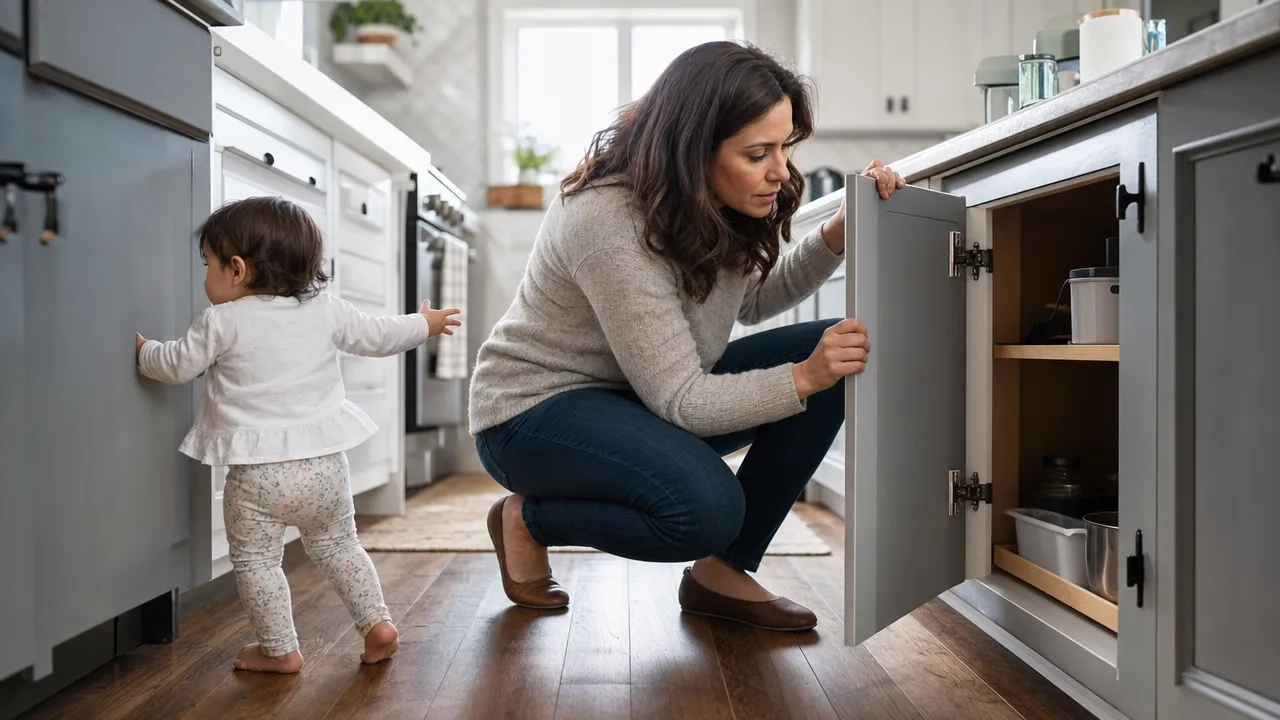
Why parents choose no drilling cabinet locks
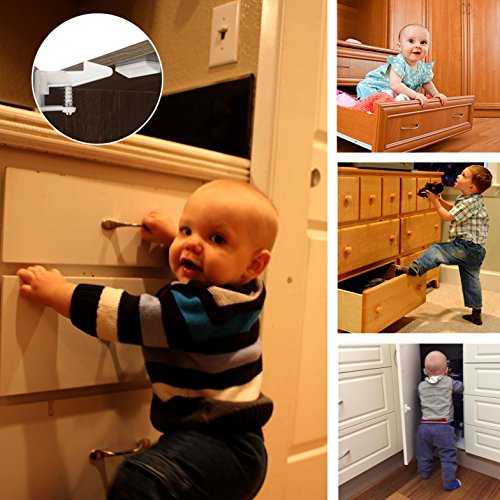
Parents choose no drilling cabinet locks because babies and toddlers explore with their hands. A lower cabinet that seemed harmless yesterday can suddenly become a favorite place to pull, open, and investigate.
The U.S. Consumer Product Safety Commission recommends safety latches and locks on cabinets and drawers in kitchens, bathrooms, and other areas to help prevent children from accessing hazardous household items. The Cleveland Clinic also advises locking cabinets and drawers a toddler can reach, especially where cleaners, detergents, medicines, chemicals, or sharp objects are stored.
Common cabinet and drawer hazards include:
| Room or area | Items parents often want to secure | Why it matters |
|---|---|---|
| Kitchen under-sink cabinet | Cleaning supplies, dish detergent, trash bags | Often low and easy for crawling babies to reach |
| Kitchen drawers | Knives, peelers, scissors, batteries, clips | Sharp tools and small objects can create risks |
| Bathroom vanity | Medicines, razors, toiletries, cleaners | Bathrooms often store multiple hazards in one small space |
| Laundry area | Detergents, stain removers, laundry packets | Laundry products should stay out of children's reach |
| Pantry and storage cabinets | Breakables, plastic bags, tools, small objects | Mixed household storage can hide unexpected hazards |
No-drill options appeal to renters, grandparents, apartment families, and homeowners who do not want screw holes in finished cabinetry. Adhesive cabinet latches can also be installed in stages, so parents can start with the highest-risk cabinets first and expand as their child grows.
Still, the key safety point is this: cabinet latches are one layer, not a complete safety system. The National Safety Council emphasizes broader childproofing steps, including keeping hazards out of reach and maintaining supervision.
What no drilling cabinet locks are and how they work
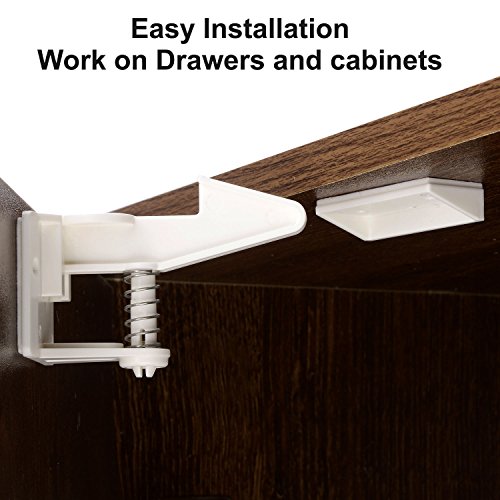
No drilling cabinet locks are child safety cabinet locks or cabinet latches designed to help secure cabinets and drawers without drilling holes. VMAISI's priority cabinet latch products are adhesive, no-drill child safety cabinet latches for cabinets and drawers.
Adhesive cabinet locks usually attach to the inside of a cabinet or drawer using peel-and-stick adhesive. A latch and catch engage when the door or drawer closes. Adults can release the latch, while the latch helps reduce a baby's or toddler's ability to fully open the cabinet or drawer.
They are commonly used on:
- Kitchen under-sink cabinets
- Lower kitchen cabinets
- Kitchen drawers
- Bathroom vanities
- Bathroom drawers
- Laundry cabinets
- Pantry cabinets
- Storage cabinets
- Grandparent-home cabinets
The benefits are practical:
- No drilling required
- No screw holes
- Easier installation for many parents
- Useful for cabinets and drawers
- Helpful for renters and finished cabinetry
- Flexible pack sizes for small or larger baby-proofing projects
But no-drill does not mean no preparation. Adhesive cabinet locks work best on smooth, clean, dry, flat surfaces. Grease, dust, moisture, soap film, furniture polish, rough texture, peeling paint, and poor alignment can reduce performance.
For more buying context, VMAISI's guide to buying child safety cabinet locks with no drilling explains how parents can compare no-drill options by room, surface, and pack size.
Safe no drilling cabinet locks: What to avoid
The safest approach is to choose compatible no drilling cabinet locks, install them carefully, and avoid common mistakes that make adhesive cabinet latches less reliable.
Avoid ignoring cabinet or drawer fit
Not every cabinet or drawer has the same shape. Before installing, check:
- Cabinet frame depth
- Drawer clearance
- Whether the latch and catch can meet properly
- Whether the surface is flat enough
- Whether the cabinet closes fully
- Whether adults can release the latch comfortably
If the latch does not catch cleanly, the lock may frustrate adults or fail to reengage. Dry-fit before removing the adhesive backing.
Avoid dirty, wet, greasy, or uneven surfaces
This is one of the biggest mistakes with adhesive cabinet locks. Kitchens can have grease film. Bathrooms may have moisture or soap residue. Storage cabinets can be dusty.
Avoid applying adhesive to:
- Greasy cabinet interiors
- Damp under-sink surfaces
- Soap-film-covered bathroom surfaces
- Waxed or polished wood
- Rough or textured areas
- Peeling paint
- Dusty storage cabinets
Clean the mounting area first, then let it dry completely.
Avoid rushing the bonding process
Some adhesive latch manufacturers recommend waiting up to 24 hours before regular use. Follow the product instructions for your locks. If a wait time is recommended, do not test the latch aggressively before the adhesive has had time to bond.
Avoid placing latches where toddlers can manipulate them
Good placement matters. Avoid positioning the release area where a toddler can easily see, reach, or learn the motion. Also avoid awkward adult placement. If a latch is too hard for parents to use, it may not be used consistently.
Avoid assuming locks replace safe storage
Cabinet locks should never be the only safety step for medicines, chemicals, laundry products, sharp tools, batteries, or small objects. The CPSC notes that child-resistant packaging is not the same as childproof storage. Hazardous items should still be kept locked away and out of reach whenever possible.
For poison-related emergencies or questions in the U.S., save Poison Control and the Poison Help number: 1-800-222-1222.
Avoid forgetting less obvious locations
Parents often start in the kitchen but forget other rooms. Walk through your home from your child's eye level and check:
- Bathroom drawers
- Bathroom vanity cabinets
- Laundry cabinets
- Pantry base cabinets
- Storage cabinets
- Office drawers
- Craft drawers
- Utility drawers
- Grandparent-home cabinets
For a broader planning view, VMAISI also explains which no-drill cabinet locks work best at home.
Installation factors for no drilling cabinet locks
Correct installation can make a major difference in how well no drilling cabinet locks perform. Even strong adhesive cabinet locks may disappoint if the surface is greasy, the latch is misaligned, or the lock is used too soon.
Use this parent-friendly installation checklist:
| Step | What to do | What to avoid |
|---|---|---|
| 1. Choose priority areas | Start with cabinets and drawers containing higher-risk items | Installing everywhere randomly before checking hazards |
| 2. Check surface and fit | Confirm the area is smooth, dry, flat, and compatible | Sticking adhesive to rough, damp, or greasy surfaces |
| 3. Clean the mounting area | Remove dust, grease, soap film, oil, and residue | Applying adhesive over buildup |
| 4. Dry-fit the latch | Test latch and catch position before peeling backing | Guessing placement |
| 5. Press firmly | Apply even pressure so the adhesive contacts the surface | Lightly tapping it into place |
| 6. Follow wait-time instructions | Allow bonding time if the product instructions recommend it | Pulling hard immediately after installation |
| 7. Test and inspect | Confirm adult access and latch engagement | Assuming installation is done forever |
Here is a simple installation flow parents can follow:
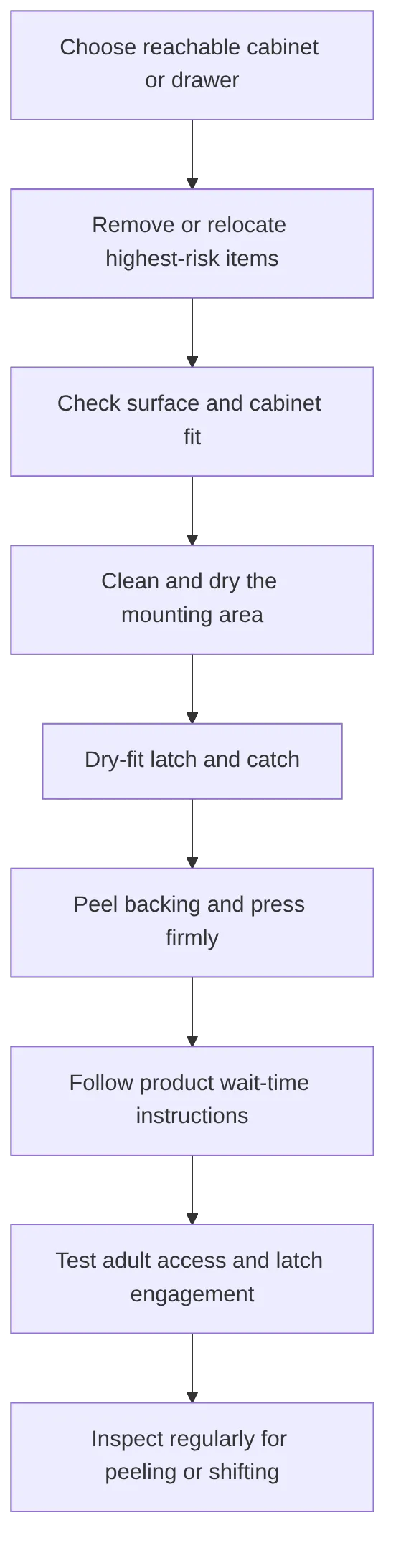
Regular inspection is important because adhesive can be affected by moisture, heat, repeated pulling, or daily use. Check for peeling, shifting, cracking, weak engagement, or drawer contents blocking the latch.
If a latch becomes loose or unreliable, do not keep relying on it for hazardous items. Move the hazard to a safer location and replace or reinstall the latch according to the product instructions.
You can also browse VMAISI's more baby-proofing tips for room-by-room safety planning.
How many no drilling cabinet locks you may need
Many parents underestimate how many no drilling cabinet locks they need because they count rooms instead of latch points. A single kitchen may include multiple lower drawers, a sink cabinet, pantry storage, and base cabinets. Then the bathroom, laundry area, and storage spaces add more.
A practical approach is to count every cabinet door or drawer you want to secure.
| Project size | Typical areas included | Best-fit option |
|---|---|---|
| Small starter setup | Under-sink cabinet, one bathroom vanity, a few drawers | 12 Pack |
| Small apartment | Kitchen basics, one bathroom, limited storage | 12 Pack |
| Kitchen-only project | Lower cabinets, several drawers, pantry base | 12 Pack or 20 Pack, depending on count |
| Kitchen plus bathroom | Multiple cabinets and drawers across two rooms | 20 Pack |
| Multi-room baby-proofing | Kitchen, bathroom, laundry, pantry, storage | 20 Pack or more as needed |
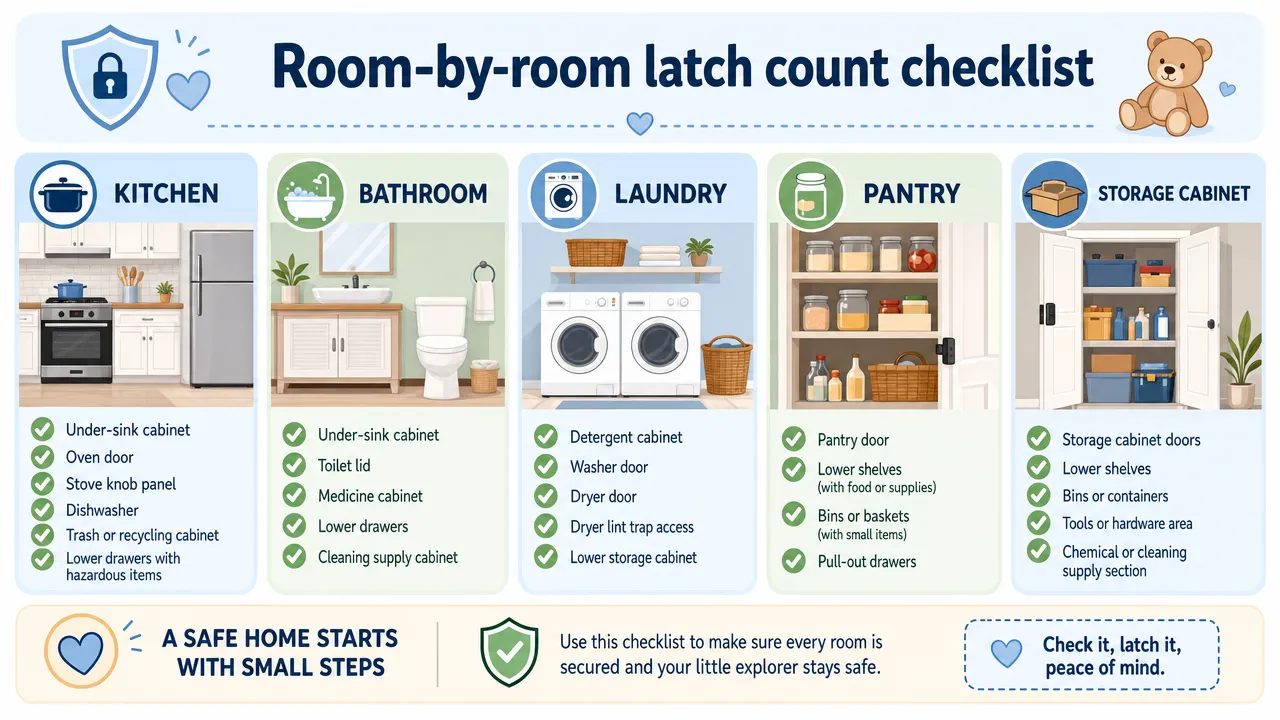
For smaller or focused baby-proofing needs, choose the VMAISI Cabinet Locks Child Safety Latches 12 Pack. It is a practical starter option for parents securing a few cabinets or drawers, such as an under-sink cabinet, a bathroom vanity, and several kitchen drawers.
For larger homes, multi-room baby-proofing, or parents who want more coverage, choose the VMAISI Cabinet Locks Child Safety Latches 20 Pack. This option is better suited for kitchens plus bathrooms, laundry areas, pantries, storage cabinets, or whole-home planning. The product page also highlights upgraded stronger adhesive.
For more comparison support, VMAISI's article on the best no drill cabinet locks for child safety can help parents think through surface prep, pack size, and priority rooms.
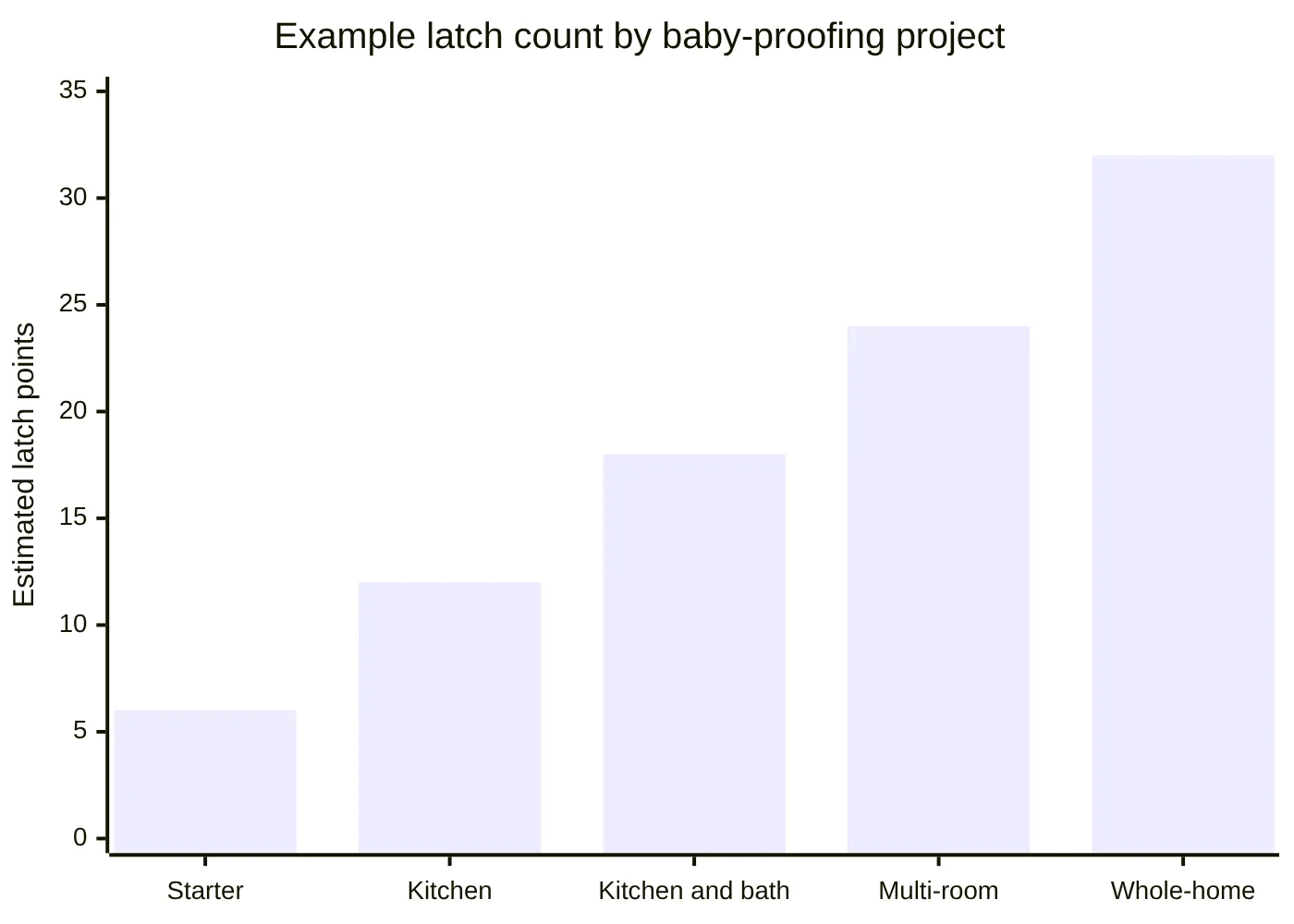
This chart is only a planning example. Your home may need fewer or more drawer safety locks and cabinet latches depending on layout.
No drilling cabinet locks safety checklist and VMAISI pack guide
Before calling your baby-proofing project complete, use this final checklist for no drilling cabinet locks:
- Move medicines, chemicals, cleaners, laundry products, sharp tools, batteries, and small objects high and secured whenever possible.
- Lock reachable cabinets and drawers that still contain items you do not want a baby or toddler to access.
- Clean and dry surfaces before installing adhesive cabinet locks.
- Dry-fit every latch before peeling the adhesive backing.
- Press firmly and follow any product wait-time instructions.
- Test each latch after installation.
- Inspect regularly for peeling, shifting, or weak engagement.
- Continue adult supervision, especially in kitchens, bathrooms, and laundry areas.
Choose your VMAISI pack based on your actual latch count:
| If you need to secure... | Consider this option |
|---|---|
| A few high-risk cabinets or drawers | VMAISI Cabinet Locks Child Safety Latches 12 Pack |
| A small apartment or grandparent home | VMAISI Cabinet Locks Child Safety Latches 12 Pack |
| Kitchen plus bathroom areas | VMAISI Cabinet Locks Child Safety Latches 20 Pack |
| Multiple rooms or whole-home baby-proofing | VMAISI Cabinet Locks Child Safety Latches 20 Pack |
No drilling cabinet locks can make daily baby-proofing feel more manageable, especially when you choose the right pack size and install each latch carefully. Start by counting your reachable cabinets and drawers, secure the highest-risk areas first, and remember that cabinet latches work best alongside safe storage, regular checks, and supervision.