

BPA-Free Toilet Seat Lock for Toddlers: Easy to Install and Trusted by 50,000 Moms
Are you constantly wondering whether your toddler will head for the bathroom, then the kitchen, then the laundry area before you can react? That is exactly why many parents start by looking for child safety locks for toilet seat use, then quickly realize they also need child safety locks for fridge doors, child safety locks for dishwasher access points, and child safety locks for oven safety planning. The good news is that you do not always need a different system for every room.
A practical approach is to start with the immediate concern, usually the toilet, and then choose a lock style that can also help reduce access to other common household hazards. For many families, that means looking at no-drill adhesive strap locks that can work across multiple surfaces when installed correctly.
According to Safe Kids Worldwide's home safety report, home injuries and poison-related risks remain a major concern for young children. The American Academy of Pediatrics childproofing guidance also supports locks and latches as part of a broader home safety plan, including oven-related protection. Just as important, locks are a layer of protection, not a replacement for supervision.
Why child safety locks for fridge searches often lead parents to child safety locks for toilet seat concerns
Parents rarely childproof only one thing. A toddler who learns to lift a toilet lid may also start opening the fridge, tugging on the dishwasher, or exploring the oven door. That is why the main keyword, child safety locks for fridge, naturally connects to child safety locks for toilet seat planning.

In the bathroom, the main concern is usually quick access to toilet water, germs, and nearby cleaning products. For very young children, parents also worry about water hazards and unsafe play around the toilet. Practical childproofing sources, including Lucie's List's toilet lock guide, repeatedly show that this concern is common in crawling and early toddler stages.
In the kitchen, the risks are different but equally urgent. Child safety locks for dishwasher use matter because dishwashers may contain detergent pods, knives, glassware, and residual heat or steam after a cycle. Child safety locks for oven planning matter because the oven door, racks, and controls can all become part of a burn risk scenario. Meanwhile, child safety locks for fridge access can help reduce repeated opening, spills, broken containers, and unsafe climbing behavior.
What ties these spaces together is not just curiosity, but speed. Toddlers move from one hazard to the next fast. That is why many parents prefer a single no-drill system that can be used in several rooms instead of mixing unrelated lock types.
How child safety locks for toilet seat compare with child safety locks for fridge, dishwasher, and oven
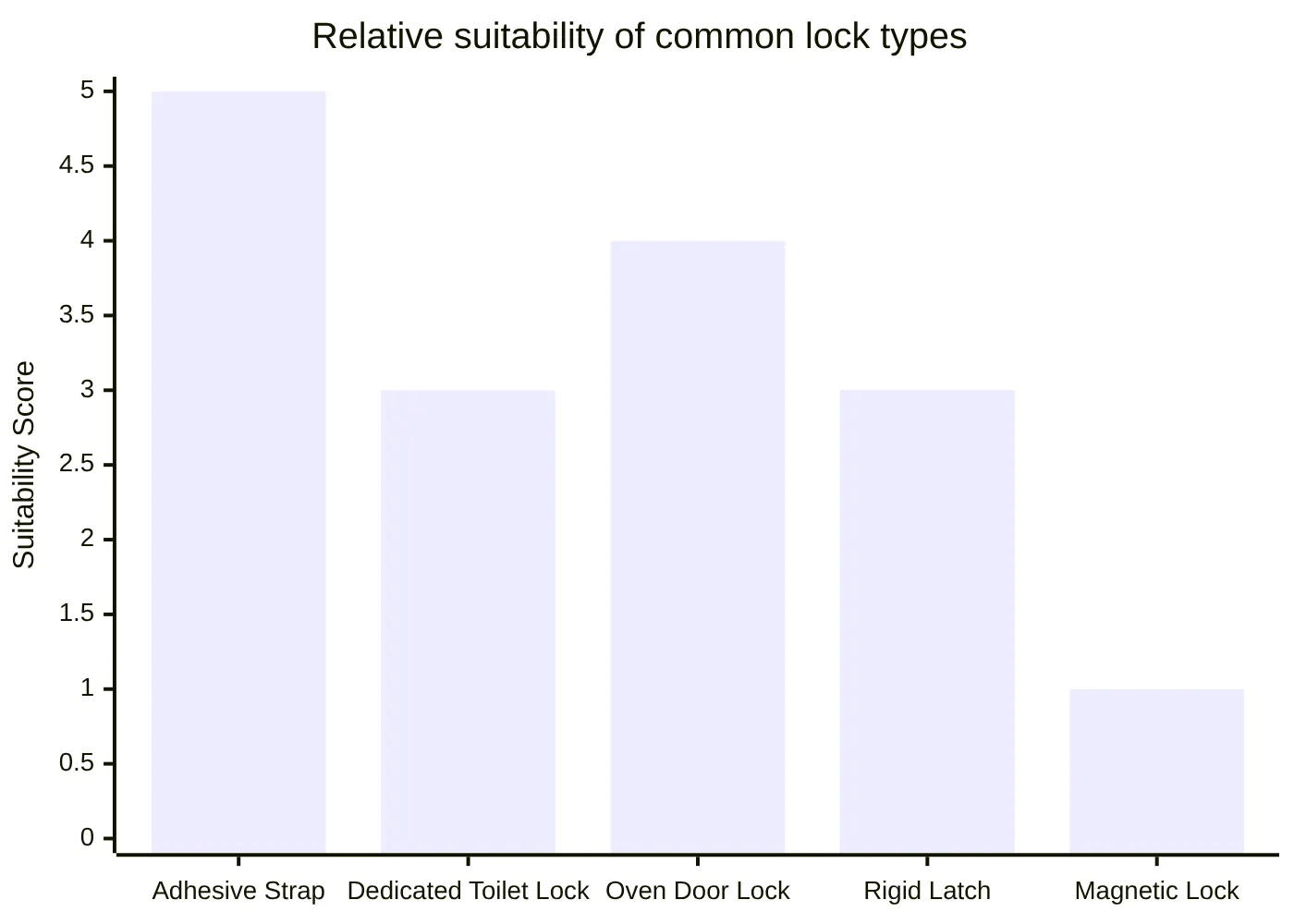
If your first search was for child safety locks for toilet seat use, you will usually run into two broad options: a dedicated toilet lock or a multi-use adhesive strap lock. The right choice depends on your layout, your routine, and whether you want to childproof more than one area.
Quick comparison table
| Lock type | Best fit | Main strengths | Main limitations |
|---|---|---|---|
| Dedicated toilet lock | Toilet-only setup | Designed around lid access | Fit can vary by toilet shape |
| Multi-use adhesive strap lock | Toilet, fridge, dishwasher, some oven-adjacent spots | No-drill, flexible, multi-room use | Installation quality matters a lot |
| Oven-specific door lock | Oven-focused safety plan | Built around oven use | Less versatile for other surfaces |
| Stove knob covers | Burner controls | Helpful for accidental activation | Does not secure the oven door |
| Rigid adhesive latch | Flat, consistent surfaces | Simple format | Less adaptable on curved or awkward surfaces |
For a toilet alone, a dedicated product can make sense if you know it fits your toilet well. Examples from practical product pages, such as the KidCo adhesive toilet lock, show how toilet-specific designs aim to deter lid lifting. But fit is not universal, and some guides note that toilet geometry can affect performance.
For broader use, a multi-use strap lock is often more practical. The VMAISI Multi-Use Child Safety Locks collection is built around that idea, and the VMAISI 6 Pack Multi-Use Adhesive Straps Locks product page specifically references use for fridge, dishwasher, toilet seat, cupboard, oven, and more.

That kind of flexibility matters because child safety locks for fridge searches often turn into a whole-home buying decision. Instead of solving one problem today and another next week, many parents want one lock style they can learn once and use repeatedly.
If you want one no-drill lock style that can help secure your toilet seat, fridge, dishwasher, and other high-risk spots, take a look at the VMAISI 6 Pack Multi-Use Adhesive Straps Locks. It matches the multi-surface, practical use case most families are actually shopping for.
What to look for in child safety locks for fridge, child safety locks for dishwasher, and child safety locks for oven use
Once you know you may need more than a toilet lock, the buying criteria become clearer. Across the source material, the same factors come up again and again.
First is no-drill installation. Renters and busy parents usually prefer a lock that does not require tools, holes, or permanent hardware. The VMAISI product page and brand guidance support this no-drill approach, which is one reason adhesive straps fit the topic so well.
Second is adult usability. A lock only helps if adults actually use it every time. If grandparents, babysitters, or tired parents find it annoying, it may get ignored. That is one reason one-handed operation matters so much in child safety locks for fridge and child safety locks for dishwasher setups.
Third is surface compatibility. Fridges may be smooth stainless steel, dishwashers may have curved or flat fronts, toilets may involve humid bathroom conditions, and ovens introduce heat-related limitations. This is where flexible straps often outperform rigid latches. In VMAISI's own child safety locks for fridge and oven guide, the brand explains that flexible strap designs are often better suited to varied surfaces and also notes that oven placement should avoid the hottest zones and vents.
Fourth is understanding the difference between physical locks and built-in control locks. This point matters a lot for child safety locks for dishwasher and child safety locks for oven planning. A built-in appliance control lock may disable buttons, but it may not physically prevent the door from opening. That distinction is specifically addressed in VMAISI's existing guide, and it is one many shoppers miss.
Here is a simple way to think about the main risk by area:
| Area | Why parents lock it | Important note |
|---|---|---|
| Toilet seat | Water access, germs, bathroom curiosity | Dedicated or multi-use options may help |
| Fridge | Breakables, spills, repeated opening, climbing risk | Multi-use straps are often a practical fit |
| Dishwasher | Detergent pods, knives, glassware, hot steam | Control lock alone may not secure the door |
| Oven | Hot door, racks, burn risk, accidental access | Placement must avoid high-heat zones |
If you want to compare more appliance-focused guidance before choosing, VMAISI already has a useful related article on child safety locks for fridge and oven, which fits naturally with this broader childproofing strategy.
How to install child safety locks for toilet seat, fridge, dishwasher, and oven areas correctly
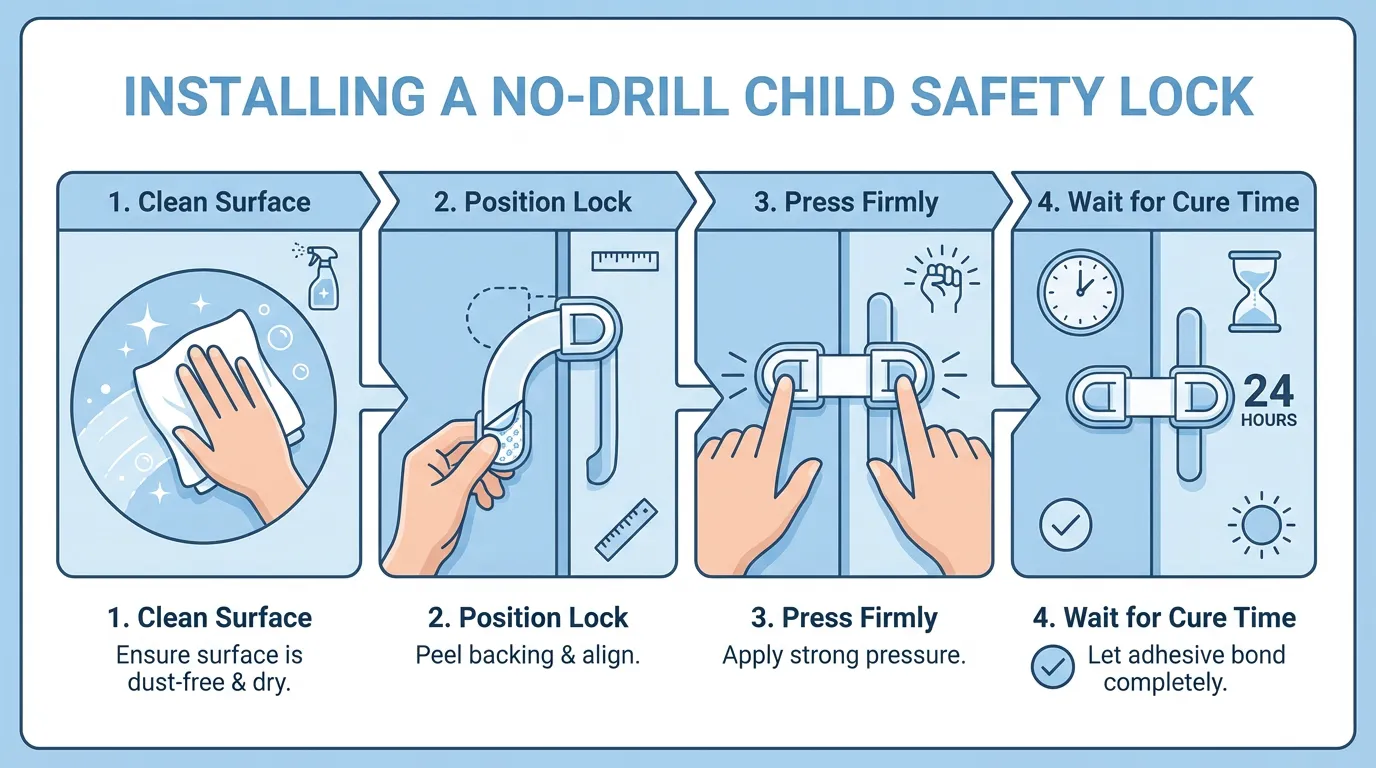
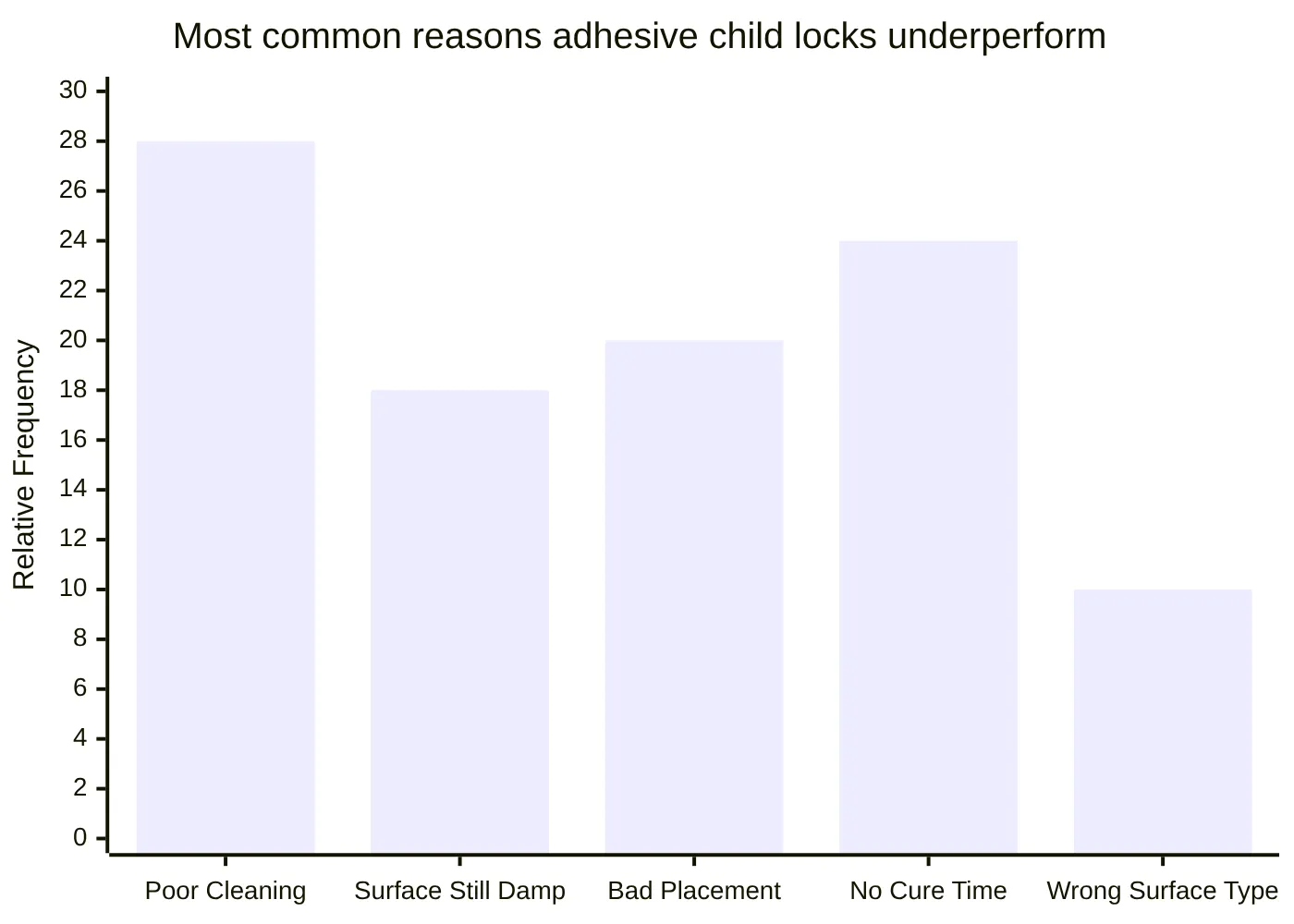
A surprising number of lock complaints are really installation problems. Across product guidance and practical demonstrations, the same issue appears repeatedly: the lock fails because the surface was not cleaned properly, was still damp, or was used before the adhesive had time to set.
For child safety locks for fridge use, clean the area thoroughly and dry it fully before placing the lock. Test the exact position before removing the adhesive backing, because alignment matters for daily use. Press firmly once applied. Then let the adhesive cure before putting it into real use. VMAISI's guidance emphasizes allowing about 12 to 24 hours before relying on the lock.
For child safety locks for toilet seat use, moisture is the extra challenge. Bathroom humidity can interfere with adhesion if the surface is not completely dry. It is also smart to test whether your toilet shape allows comfortable adult access without forcing the strap at an awkward angle.
For child safety locks for dishwasher use, place the lock where it can physically limit opening without interfering with surrounding cabinetry. And for child safety locks for oven planning, be cautious. A strap lock may work in some oven-adjacent placements, but you should avoid the hottest parts of the appliance and never assume universal compatibility.
If you want visual help with setup, the VMAISI installation and review video page is a natural next step. For many parents, seeing the angle and placement before sticking the lock makes installation much easier.
One more note on removal: avoid making promises about residue-free removal. The safest phrasing is that careful removal may reduce the chance of leftover adhesive. VMAISI's guide suggests warming the adhesive gently and peeling slowly rather than pulling it off abruptly.
When child safety locks for fridge and toilet seat use are enough, and when you need a broader safety plan
Child safety locks help, but they are not magic. They are deterrents and barriers, not guarantees. A determined toddler may eventually learn patterns, and any lock that becomes loose, damaged, or easy to defeat should be replaced or re-evaluated.
This is also why supervision still matters. Safe Kids and the AAP both support layered safety habits, not one-product thinking. If you are using child safety locks for dishwasher access, you should still store detergent safely. If you are planning child safety locks for oven protection, you may also need knob covers or extra caution around hot surfaces. If you are using child safety locks for toilet seat concerns, keep bathroom cleaners secured and limit unsupervised bathroom access whenever possible.
For many households, the best next step is not buying four separate systems. It is choosing one practical no-drill option for the highest-risk doors and lids first, then expanding room by room. If that is your goal, browse the VMAISI Multi-Use Child Safety Locks collection or go directly to the VMAISI 6 Pack Multi-Use Adhesive Straps Locks. It is the clearest match for families who want one lock style for toilet seat, fridge, dishwasher, and other everyday childproofing needs.
FAQ
Do I really need child safety locks for toilet seat use?
If your child is mobile and interested in the bathroom, many parents find child safety locks for toilet seat access useful as part of a broader bathroom safety routine. They can help reduce quick, unsupervised access, but they should not replace supervision.
Can the same lock work as child safety locks for fridge and child safety locks for dishwasher use?
Yes, in many homes a multi-use adhesive strap lock can work for both. That is one reason this style is so practical for parents who want a whole-home solution.
Are child safety locks for oven doors always safe to use?
Not universally. Heat-safe placement matters, and you should avoid the hottest zones and vents. If you are concerned mainly about controls, you may also need knob covers or built-in control safety features.
Will adhesive locks damage appliances?
They can leave residue in some situations, so it is better not to promise damage-free removal. Careful prep, proper placement, and slow removal can help reduce the risk.
What is the main mistake people make during installation?
Using the lock too soon. Adhesive locks usually perform better when the surface is cleaned, dried, pressed firmly, and left to cure before use.