

Buy Child Safety Cabinet Locks With No Drilling
Are you trying to baby-proof cabinets without drilling holes into your furniture? If your baby is crawling, pulling up, or suddenly interested in every lower drawer, no drilling cabinet locks can be a practical way to add a safety layer without turning your cabinets into a weekend construction project.
Parents often look for baby proofing cabinet locks because lower cabinets and drawers may hold cleaning supplies, sharp tools, small objects, medicines, laundry products, or breakable items. The U.S. Consumer Product Safety Commission recommends safety latches and locks for cabinets and drawers to help prevent children from accessing hazardous household items.
This guide explains how adhesive cabinet locks work, where to install child safety cabinet locks first, how to choose between VMAISI 12 Pack and 20 Pack options, and how to install child safety latches correctly.
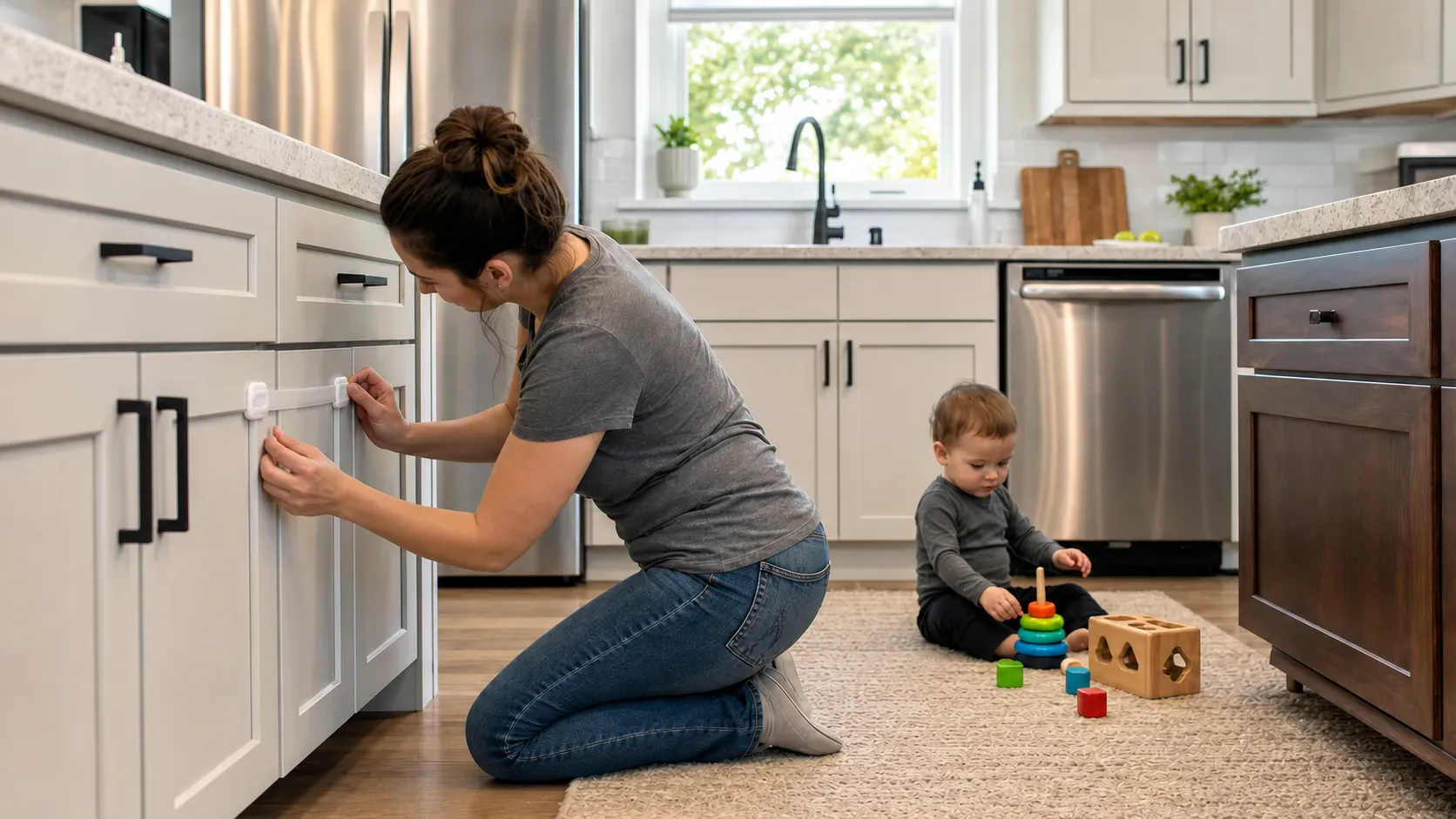
Why no drilling cabinet locks matter for everyday baby-proofing
No drilling cabinet locks matter because babies and toddlers explore with their hands. A cabinet that was once ignored can quickly become a daily attraction once a child learns to crawl, stand, or pull on handles.
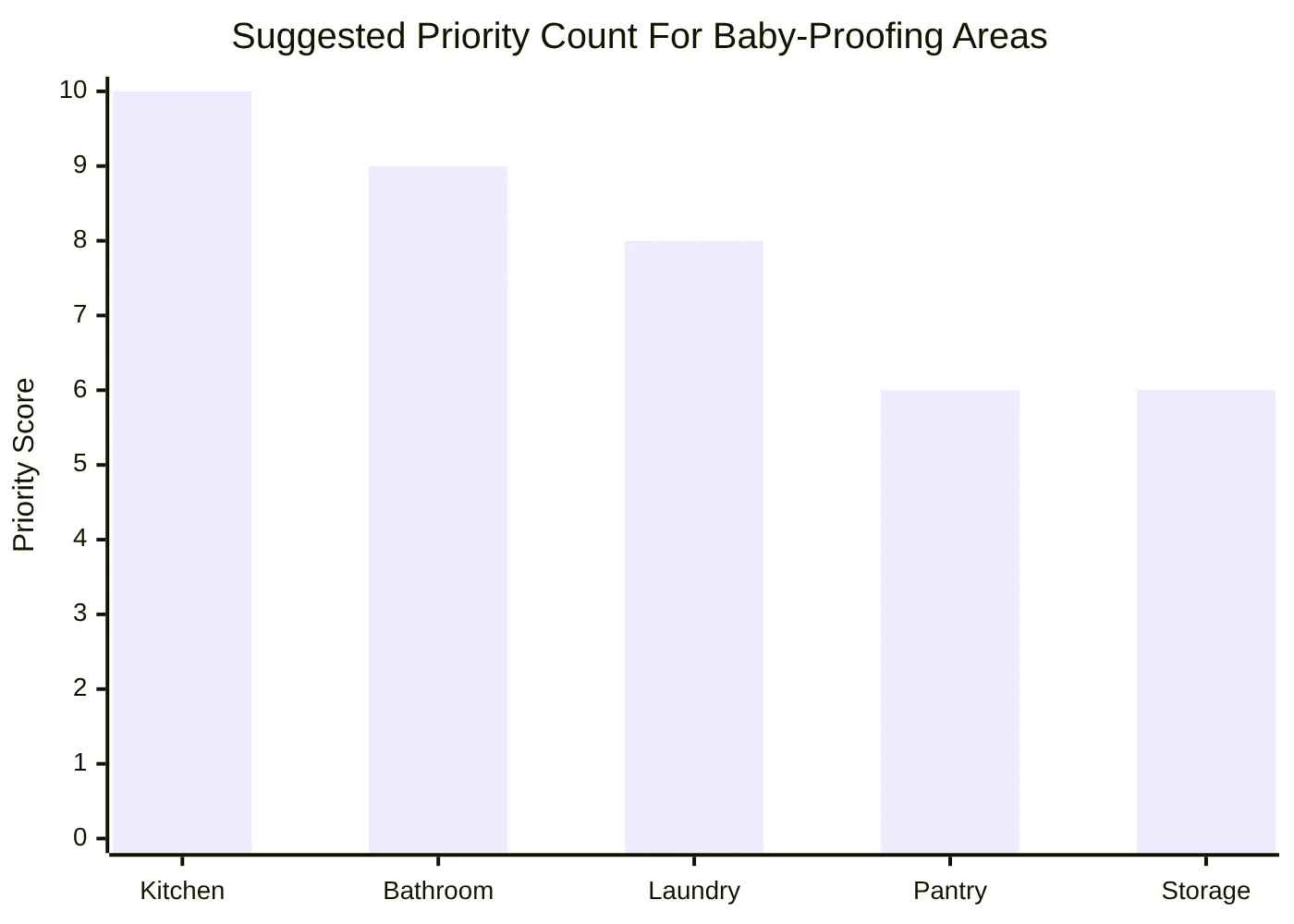
Common priority areas include:
| Area | Items parents often want to secure | Why it matters |
|---|---|---|
| Kitchen under-sink cabinet | Cleaning supplies, dish detergent, trash bags | This is often within easy reach of crawling babies |
| Kitchen drawers | Knives, peelers, scissors, small tools | Sharp tools and small objects should be harder to access |
| Bathroom vanity | Medicines, razors, cosmetics, cleaners | Poisoning and cut risks are common concerns |
| Laundry area | Detergent packets, bleach, stain removers | Laundry products should be stored carefully |
| Pantry and storage cabinets | Breakables, plastic bags, batteries, craft supplies | These areas often contain mixed household hazards |
No drill cabinet locks are especially useful for renters, grandparents, apartment parents, and anyone who wants baby proof cabinet locks without screw holes. They are not a replacement for supervision, but they can help reduce easy access when installed and maintained correctly.
For a broader planning approach, VMAISI also has a helpful guide on best no-drill cabinet locks for child safety, which pairs well with this buying guide.
What no drilling cabinet locks are and how adhesive cabinet locks work
No drilling cabinet locks are cabinet safety locks or cabinet latches that help secure cabinets and drawers without drilled holes. Adhesive cabinet locks typically use peel-and-stick pads to attach the latch and catch to a smooth, clean, dry surface.
In everyday baby-proofing language, parents often use these terms interchangeably:
- Child safety cabinet locks
- Child safety latches
- Cabinet latches
- Baby proofing cabinet locks
- Childproof cabinet locks
- Cabinet locks for babies
- Cabinet locks for toddlers
- Drawer safety locks
The goal is simple: make it harder for a baby or toddler to open a cabinet or drawer while still allowing adults to access it.
Adhesive child safety latches are popular because they:
- Require no drilling.
- Avoid screw holes.
- Are useful for many cabinets and drawers.
- Can be installed in stages.
- Work well for parents who want a practical, no-tools setup.
- Are helpful for baby proofing cabinets and drawers in kitchens, bathrooms, laundry rooms, pantries, and storage areas.
However, no-drill does not mean no preparation. Adhesive performance depends on the surface, alignment, pressure, and regular checks. Smooth, clean, dry, flat surfaces usually give adhesive cabinet locks the best chance to bond well. Rough, damp, oily, waxed, peeling, or heavily textured surfaces can reduce performance.
If you rent, you may also want to read VMAISI's guide on which child safety latches work best for renters. No-drill locks avoid screw holes, but adhesive removal can still affect delicate painted, older, or veneered finishes, so always follow product instructions and remove slowly.
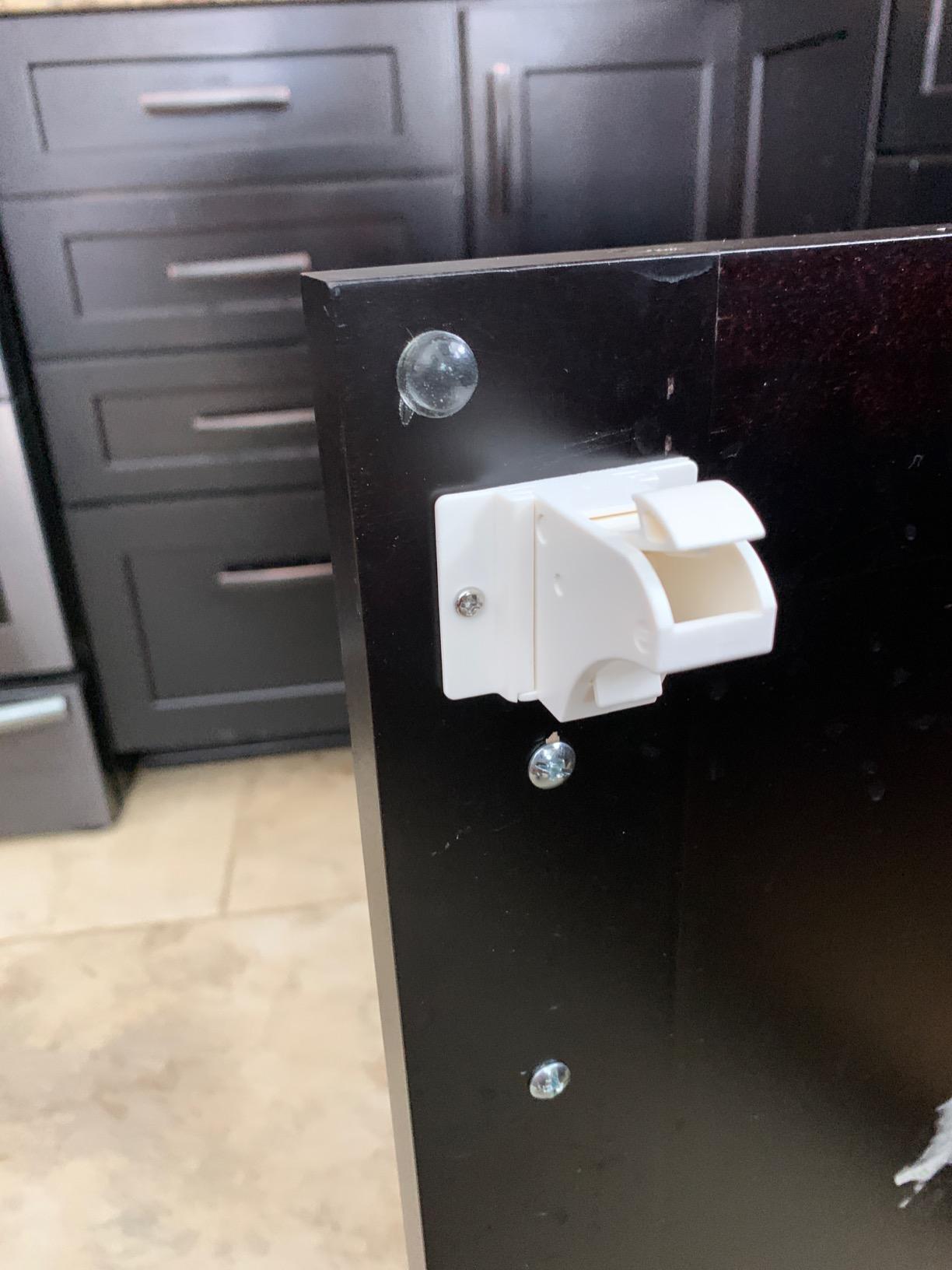
Where to use no drilling cabinet locks first
The best way to start is not by locking every cabinet immediately. Start with the highest-priority spots. The American Academy of Pediatrics through HealthyChildren.org recommends keeping poisonous products and medicines out of sight and reach, ideally secured. Poison Control is also an important U.S. resource for household poison safety and emergency guidance.
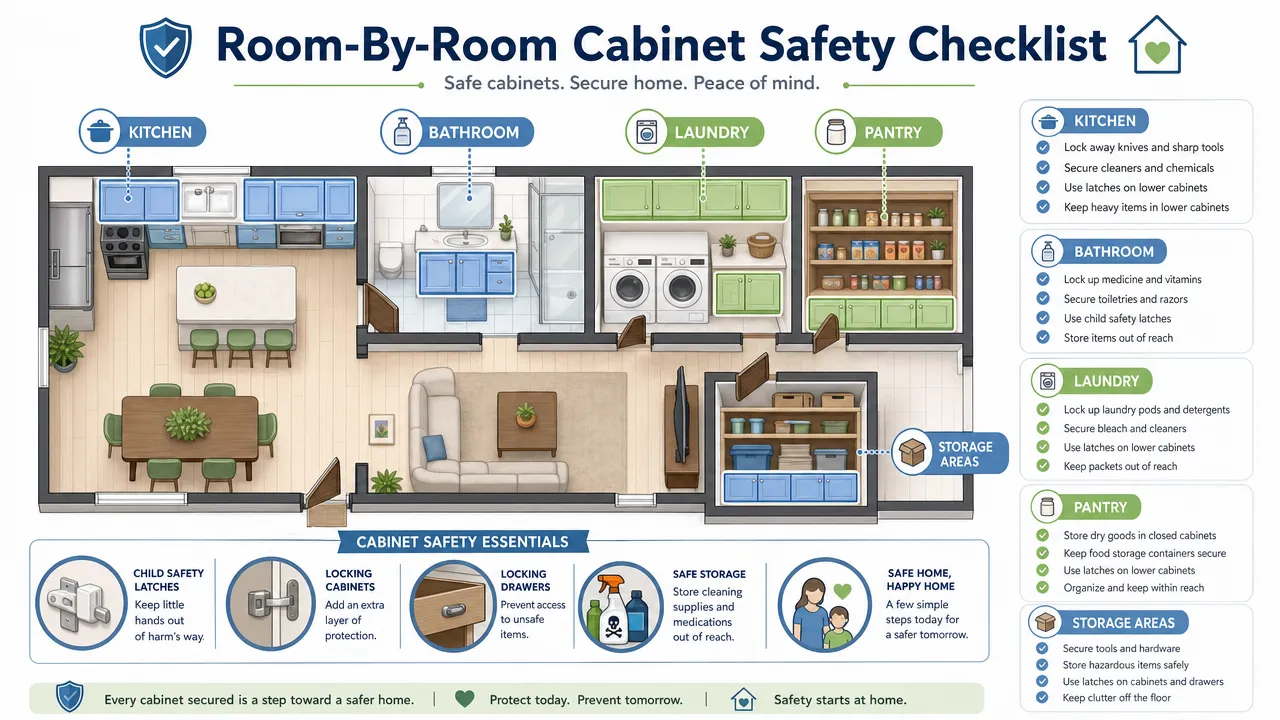
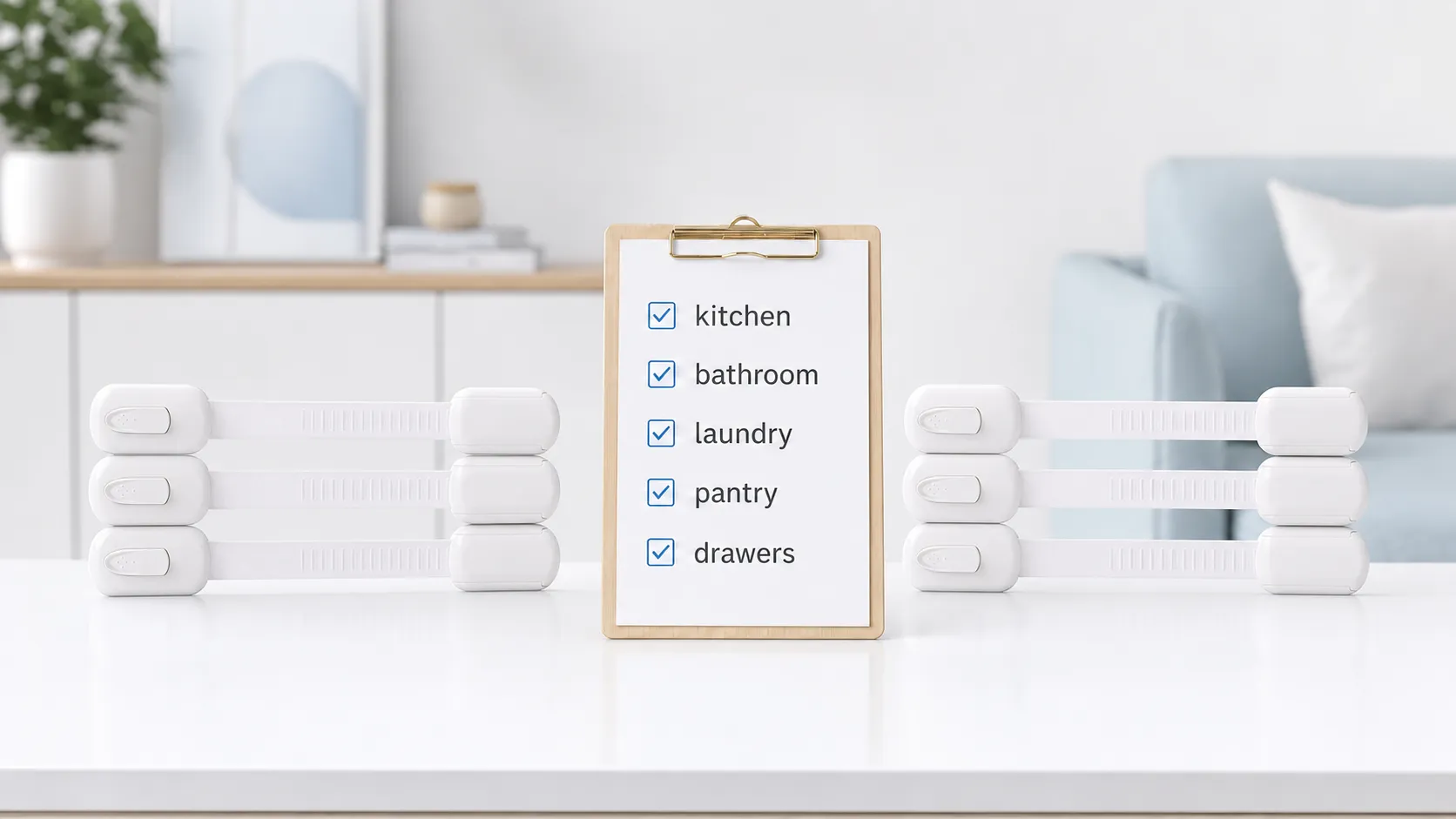
Use this room-by-room checklist:
| Priority level | Location | What to do |
|---|---|---|
| High | Kitchen under-sink cabinet | Move cleaners higher if possible, then add cabinet safety locks |
| High | Bathroom vanity | Keep medicines high and secured, then latch lower storage |
| High | Laundry cabinet | Secure detergent, bleach, and stain removers |
| High | Drawers with sharp tools | Use compatible drawer safety locks after checking fit |
| Medium | Pantry lower cabinets | Secure breakables, plastic bags, and small loose items |
| Medium | Storage cabinets | Check for batteries, tools, craft supplies, and chemicals |
For cabinet locks for babies, start before crawling if possible. For cabinet locks for toddlers, expect more pulling, more curiosity, and more need for regular inspection. A latch that worked well for a quiet cabinet may need closer attention on a drawer opened many times each day.
Safe Kids Worldwide also advises storing medicines and household products out of children's sight and reach. You can review their poison prevention tips at Safe Kids Worldwide.
How to choose no drilling cabinet locks for your home
When comparing child safety cabinet locks, focus on fit, installation quality, adult convenience, and pack size. Stronger adhesive cabinet locks are helpful, but adhesive strength is only one part of the decision.
Adhesive strength and surface compatibility
Adhesive cabinet locks work best when the mounting area is:
- Smooth.
- Clean.
- Dry.
- Flat.
- Free from dust, grease, soap film, furniture polish, oil, and moisture.
Avoid applying adhesive to rough, peeling, damp, oily, waxed, or heavily textured surfaces. If the surface does not look suitable, move the hazardous items higher and consider another safety method for that location.
Cabinet and drawer fit
Many child safety latches can be used on cabinets and drawers, but compatibility depends on the cabinet frame, drawer depth, internal clearance, and latch alignment. Always dry-fit before removing the adhesive backing.
For drawers, check whether the drawer can still close fully and whether an adult can release the latch comfortably. Drawer safety locks are useful only if they catch reliably and reengage after each use.
Adult convenience
A lock that is too frustrating for adults may not get used consistently. Consider how often you open the cabinet. High-use drawers and cabinets need a latch that adults can operate reliably during normal routines.
Some parents also compare spring cabinet locks or spring-style child safety latches because they allow a press-and-release motion. If this topic matters to your daily routine, VMAISI's article on one-hand child safety locks and spring push latches can help you think through convenience.
Pack size
Count latch points, not rooms. One room may need only two latches, while a kitchen alone may need ten or more. If you are baby proofing cabinets and drawers across multiple rooms, a larger pack may save you from stopping halfway through the project.
VMAISI no drilling cabinet locks: 12 Pack vs 20 Pack
VMAISI offers adhesive, no-drill child safety cabinet locks and cabinet latches for cabinets and drawers. The two main options for this topic are the 12 Pack and the 20 Pack.
| Buying situation | Recommended option | Why it fits |
|---|---|---|
| A few cabinets or drawers | VMAISI Cabinet Locks Child Safety Latches 12 Pack | A practical starter choice for smaller baby-proofing needs |
| Apartment or grandparent home | VMAISI Cabinet Locks Child Safety Latches 12 Pack | Useful when you need to secure priority areas first |
| Kitchen plus bathroom plus laundry | VMAISI Cabinet Locks Child Safety Latches 20 Pack | Better for multi-room coverage |
| Larger home or whole-home plan | VMAISI Cabinet Locks Child Safety Latches 20 Pack | More latches for cabinets and drawers across the home |
| Stronger adhesive relevance | VMAISI Cabinet Locks Child Safety Latches 20 Pack | The product page highlights upgraded stronger adhesive |
Choose the VMAISI Cabinet Locks Child Safety Latches 12 Pack if you are starting with a few high-priority cabinets or drawers, such as an under-sink cabinet, a bathroom vanity, and several kitchen drawers.
Choose the VMAISI Cabinet Locks Child Safety Latches 20 Pack if you are securing multiple rooms, planning whole-home baby-proofing, or want a larger supply of no-drill cabinet latches with stronger adhesive relevance.
If you want more comparison guidance around adhesive cabinet locks generally, VMAISI also offers a related article on top adhesive cabinet locks.
How to install no drilling cabinet locks and maintain them
Installation is where no drilling cabinet locks succeed or disappoint. Even strong adhesive cabinet locks can underperform if installed on a greasy surface, placed out of alignment, or used before the adhesive has bonded according to the product instructions.
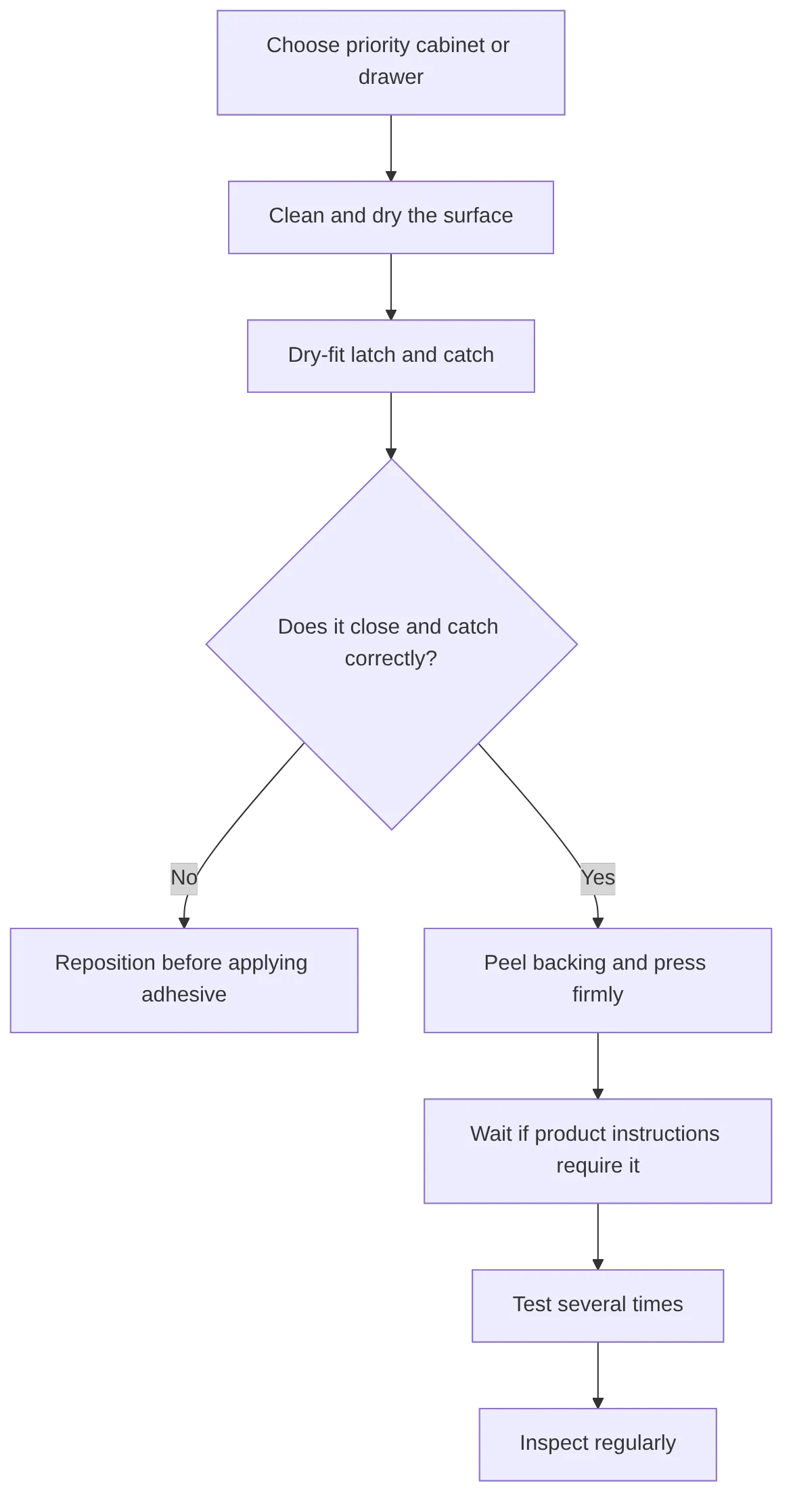
Follow this practical process:
- Choose priority cabinets and drawers.
- Remove or relocate the most hazardous items when possible.
- Check that the surface is smooth, clean, dry, and flat.
- Clean away dust, grease, soap film, oil, furniture polish, and residue.
- Let the surface dry completely.
- Dry-fit the latch and catch before peeling the adhesive backing.
- Confirm the cabinet or drawer closes and catches properly.
- Peel the backing and place the latch carefully.
- Press firmly so the adhesive makes full contact.
- Follow product instructions for any recommended wait time before regular use.
- Test the cabinet or drawer several times.
- Inspect regularly for peeling, shifting, cracking, or weak engagement.
A few final safety reminders:
- Childproof cabinet locks help reduce access, but they do not make a cabinet impossible to open.
- Store medicines, cleaners, chemicals, laundry products, sharp tools, batteries, and small objects high, out of sight, and secured whenever possible.
- Supervise babies and toddlers, especially in kitchens, bathrooms, and laundry areas.
- Replace or reinstall any latch that becomes loose, cracked, misaligned, or unreliable.
- Save the Poison Control number in the U.S.: 1-800-222-1222.
No drilling cabinet locks are a practical solution for parents who want easier installation and fewer cabinet changes. Start with the VMAISI Cabinet Locks Child Safety Latches 12 Pack if you only need to secure a few cabinets or drawers. Choose the VMAISI Cabinet Locks Child Safety Latches 20 Pack if you are baby-proofing multiple rooms or want broader coverage with stronger adhesive relevance.