

Magnetic vs Adhesive Child Safety Latches
Are you worried your toddler might open a kitchen cabinet before you notice? If you are comparing magnetic-style systems with adhesive child safety latches, you are probably trying to solve a very real daily problem: keeping little hands away from low cabinets and drawers that may contain cleaners, sharp tools, small objects, medicines, or other household hazards.
Child safety latches are not a replacement for supervision, safer storage, or common sense. But when installed and inspected correctly, they can add a practical layer of protection for cabinets and drawers. This guide compares general magnetic-style child safety latch systems with adhesive no-drill cabinet latches, then helps you decide whether a starter pack or a larger whole-home pack makes more sense for your family.
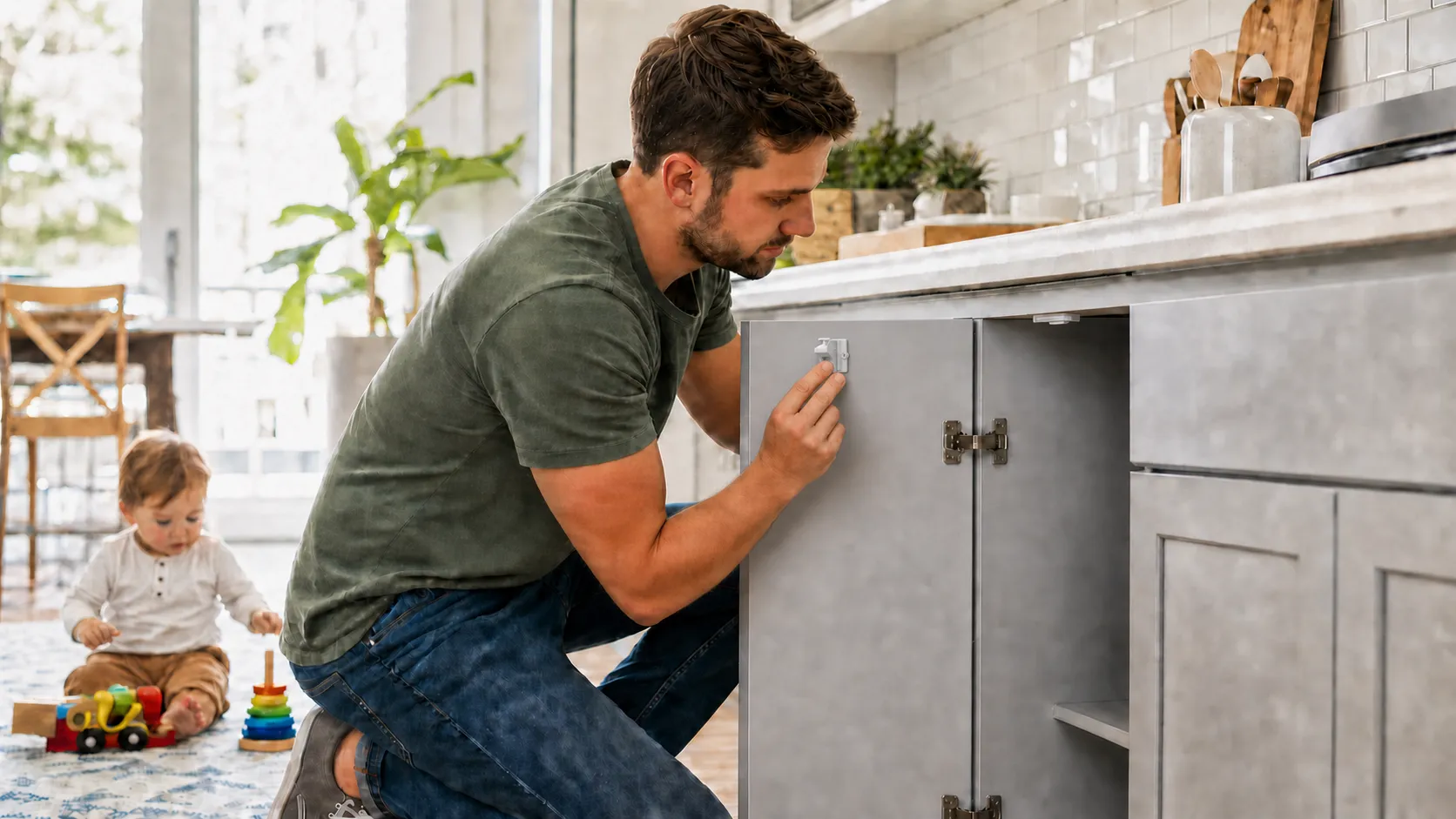
Why child safety latches matter for cabinets and drawers
The main job of child safety latches is simple: they help reduce a baby or toddler's access to selected cabinets and drawers. Parents often install them when a baby starts crawling, pulling up, cruising, or walking, because those lower storage areas suddenly become reachable.
According to the U.S. Consumer Product Safety Commission, families should use safety latches and locks on cabinets and drawers in kitchens, bathrooms, and other areas to help reduce access to items such as medicines, laundry detergent, household cleaners, matches, lighters, knives, and sharp objects. You can review the guidance in the CPSC childproofing guide.
Common places parents use child safety cabinet locks include:
| Room or area | Cabinet or drawer to check first | Common concern |
|---|---|---|
| Kitchen | Under-sink cabinet, lower drawers, pantry base cabinets | Cleaners, dishwasher products, sharp tools, glass, small items |
| Bathroom | Vanity cabinet, low drawers | Medicines, razors, cosmetics, cleaning products |
| Laundry area | Low storage cabinet or shelf drawer | Detergents, laundry packets, sprays |
| Storage area | Utility cabinet, tool drawer | Batteries, tools, hardware, small objects |
| Grandparent home | Any reachable low cabinet used during visits | Mixed household items not normally arranged for toddlers |
Seattle Children's also recommends storing medicine, cleaning products, dishwasher soap, detergent pods, button batteries, and other unsafe products out of reach or in locked cabinets. Their home safety checklist is a useful room-by-room reference.
The key wording is "helps reduce access." No cabinet latches make a home completely childproof. Parents should still move high-risk items up and away when possible, keep products in original containers, test latches after installation, and inspect them regularly.
Magnetic-style child safety latches vs adhesive no-drill options
When parents compare child safety latches, they usually look at two broad categories.
General magnetic-style child safety latch systems are often designed to sit inside cabinets or drawers. They may appeal to parents who want a hidden look from the outside. However, they typically require careful alignment, compatible cabinet construction, and management of a separate release accessory.
Adhesive no-drill cabinet latches use adhesive mounting to help secure cabinets and drawers without screw holes. They are especially attractive to renters, parents with finished cabinetry, and families who want a quicker baby-proofing setup. VMAISI's priority cabinet products belong in this second category: adhesive child safety cabinet locks and no-drill cabinet locks for cabinets and drawers.
Here is a practical comparison:
| Factor | General magnetic-style child safety latch systems | Adhesive no-drill cabinet latches |
|---|---|---|
| Main appeal | Hidden appearance | Simple no-drill setup |
| Installation focus | Internal alignment and release-point placement | Clean surface prep, dry-fitting, adhesive bond |
| Daily use | Adults must manage the release method | Adults use the latch mechanism directly |
| Cabinet impact | Depends on product design and mounting method | No drilling when used as directed on compatible surfaces |
| Best for | Parents prioritizing a hidden look | Parents wanting practical adhesive cabinet locks for cabinets and drawers |
| Watch-outs | Alignment, cabinet thickness, drawer depth, release accessory storage | Surface type, bonding time, placement, regular inspection |
For many parents, the deciding question is not "Which type sounds more advanced?" It is "Which type fits my cabinets, my routine, and my tolerance for installation steps?"
If your main concern is avoiding screw holes, adhesive no-drill cabinet latches are often the simpler starting point. If your main concern is keeping hardware completely hidden, a general magnetic-style system may be worth comparing, as long as you are comfortable with the extra setup and daily release routine.
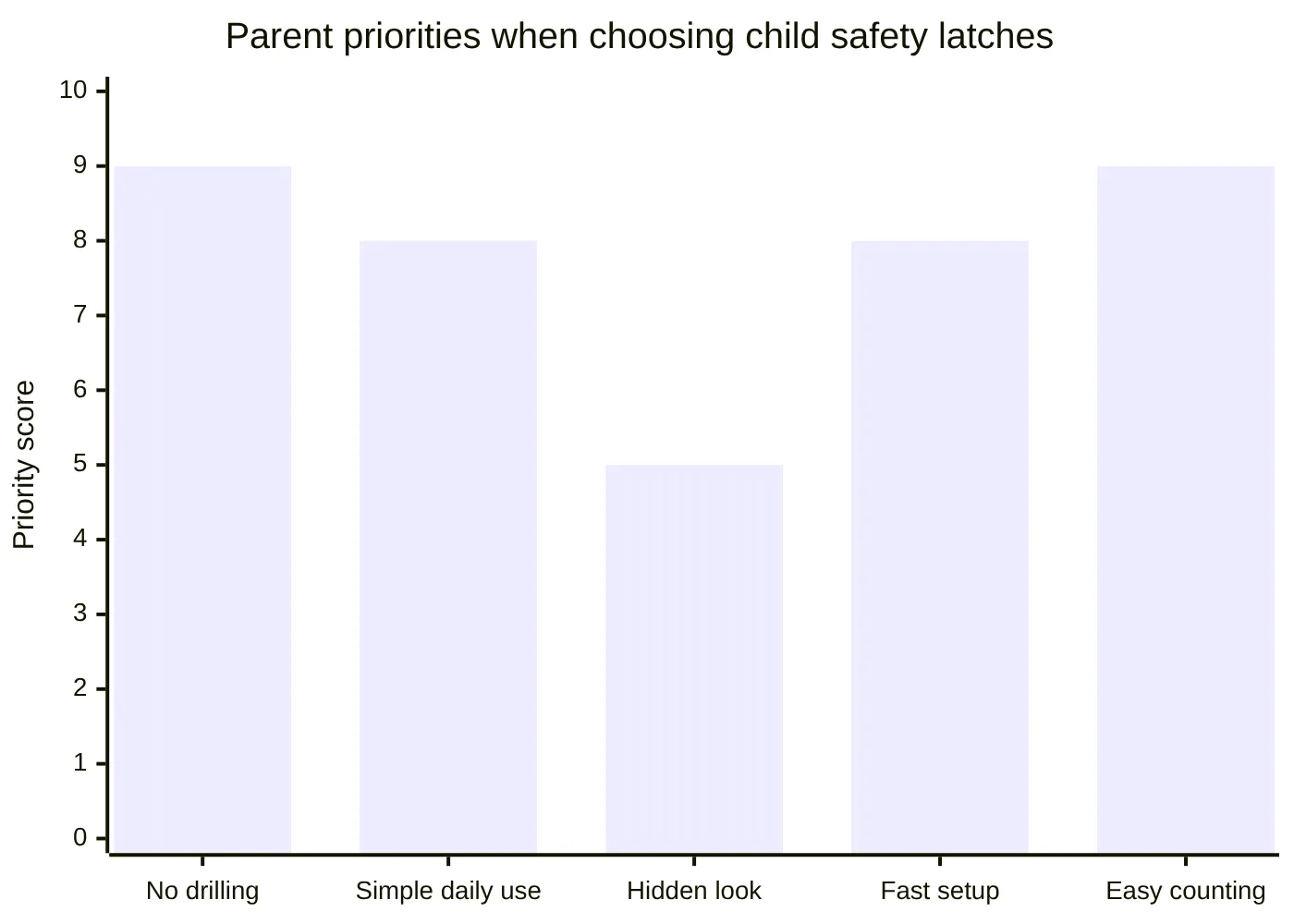
How to choose adhesive child safety latches for your home
Adhesive child safety latches are a good fit when your cabinets and drawers offer a clean, dry, smooth, flat mounting area. They are not magic: adhesive performance depends on preparation, placement, bonding time, and ongoing inspection.
Before installing adhesive cabinet locks, check these points:
- Clean the surface: Remove dust, grease, soap film, moisture, and residue.
- Dry the area fully: Adhesive works best on dry surfaces.
- Dry-fit first: Position the latch and catch before removing the adhesive backing.
- Confirm closure: Make sure the cabinet door or drawer can close fully.
- Press firmly: Apply steady pressure according to product instructions.
- Allow bonding time: Follow the product's installation guidance before relying on the latch.
- Test several times: Open and close the cabinet or drawer to confirm alignment.
- Inspect regularly: Look for peeling, shifting, wear, or loosened parts.
If you want more setup help, VMAISI's adhesive cabinet latch installation guide walks through surface prep, placement, testing, and inspection. For parents comparing installation methods, this guide on adhesive vs screw-mounted child safety locks can also help.
A simple planning formula is:
Reachable high-risk cabinet doors + reachable high-risk drawers + a few extras = the number of child safety latches to buy.
Start with the highest-risk zones first: under-sink cabinets, sharp-tool drawers, bathroom vanities, laundry storage, and low cabinets holding small or breakable items. The CPSC's Home Safe with Young Children guide also advises keeping household cleaning products and laundry packets in original containers and in cabinets with child safety latches or locks.
For a more detailed count, use VMAISI's guide on how many cabinet locks do you need?. If you are deciding between cabinet and drawer placement, the cabinet and drawer safety lock comparison can help you think through real-use differences.
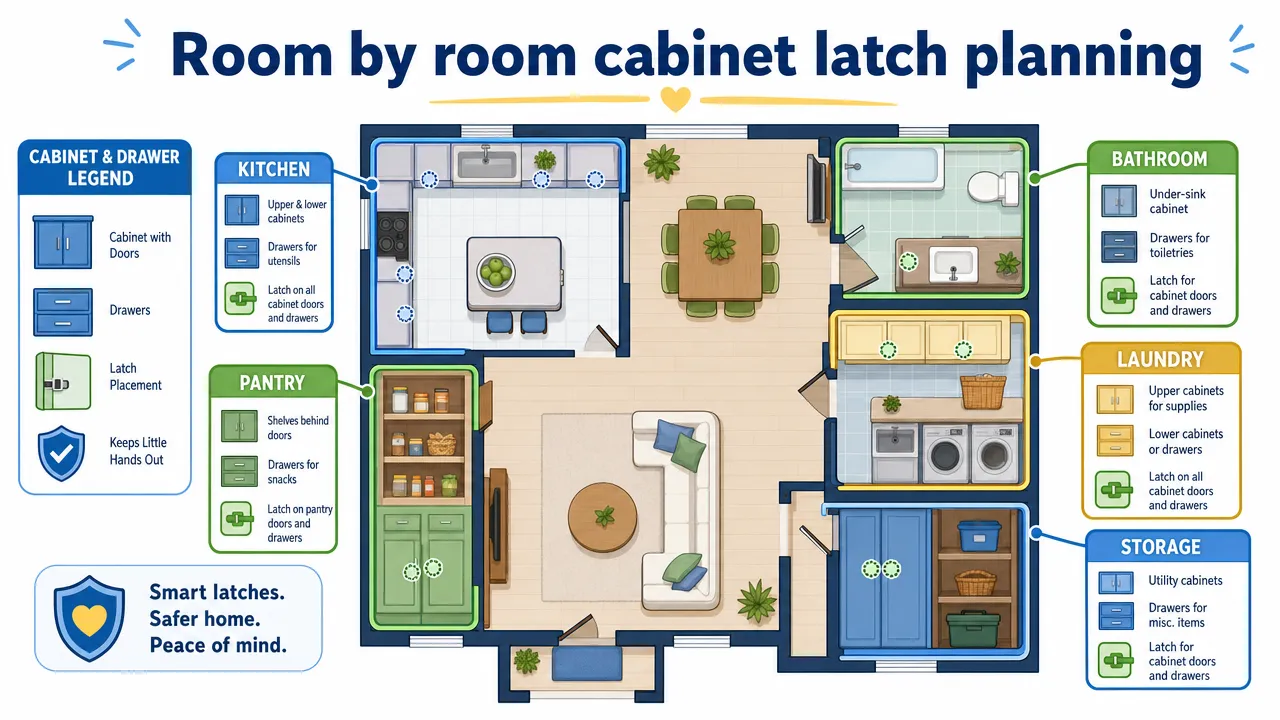
VMAISI child safety latches: 12 Pack vs 20 Pack
VMAISI focuses on practical family home products, including adhesive child safety cabinet locks for baby-proofing cabinets and drawers. The goal is straightforward: help parents secure selected cabinets and drawers without drilling.
Choose the VMAISI Cabinet Locks Child Safety Latches 12 Pack if you are starting with a focused baby-proofing project. It is a practical choice for parents who need to secure a few cabinets or drawers, such as an under-sink kitchen cabinet, one bathroom vanity, several lower kitchen drawers, or a grandparent home used during visits.
Choose the VMAISI Cabinet Locks Child Safety Latches 20 Pack if you are planning broader coverage. This larger pack is better suited for multiple rooms, kitchen plus bathroom baby-proofing, pantry and laundry areas, or larger homes. The product page positions this pack with upgraded stronger adhesive, easy installation, and no drilling.
| Choose this option | Best for | Typical parent scenario |
|---|---|---|
| VMAISI 12 Pack | Smaller or basic baby-proofing needs | A few high-risk cabinets and drawers |
| VMAISI 20 Pack | Larger homes or multi-room coverage | Kitchen, bathroom, pantry, laundry, and storage areas |
If your count is close to 12, consider whether you want extras for future cabinets, placement changes, or newly discovered toddler-reachable drawers. If your count is 13 or more, the 20 Pack usually makes more sense.
Installation tips for child safety latches that work better day to day
Good installation makes child safety latches easier to live with. Poor placement can make adult access frustrating or reduce latch performance. Before you install every latch in the pack, test one or two locations first.
Use this parent-friendly checklist:
| Step | What to do | Why it matters |
|---|---|---|
| 1 | Empty or reorganize the cabinet first | Move the highest-risk items out of reach when possible |
| 2 | Clean and dry the mounting area | Grease, dust, and moisture can reduce adhesive bonding |
| 3 | Dry-fit the latch and catch | Prevents misalignment before adhesive is applied |
| 4 | Close the door or drawer slowly | Confirms the latch does not block normal closure |
| 5 | Press firmly during installation | Helps the adhesive make full contact |
| 6 | Follow bonding instructions | Gives the adhesive time to set properly |
| 7 | Test with normal adult use | Confirms the cabinet or drawer opens and closes as expected |
| 8 | Recheck regularly | Helps catch peeling, shifting, or wear |
For no-drill cabinet locks, surface compatibility matters. Smooth painted wood, laminate, and many finished cabinet interiors may work well when cleaned and dried correctly. Rough wood, dusty surfaces, peeling paint, textured finishes, oily areas, or damp bathroom surfaces can be more challenging.
Also remember that drawer safety locks may need more careful planning than cabinet doors. Drawers vary in depth, frame design, and available mounting area. Before applying adhesive, make sure the drawer can close fully and that the latch position does not interfere with normal drawer movement.
If a cabinet stores especially hazardous items, do not rely on a latch alone. Move those items higher, use safer storage habits, and supervise closely. Child safety latches are one layer of baby-proofing, not the entire safety plan.
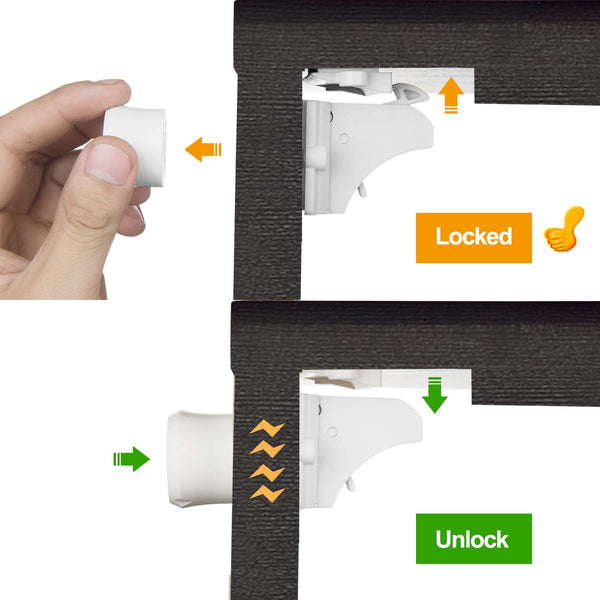
Final decision on child safety latches
If you want a hidden look and are comfortable with a more involved setup and release routine, general magnetic-style child safety latch systems may be worth researching as a market category. If you want a practical no-drill solution for cabinets and drawers, adhesive child safety latches are often the simpler fit.
For VMAISI shoppers, the choice is mainly about project size:
- Choose the VMAISI Cabinet Locks Child Safety Latches 12 Pack for a few priority cabinets or drawers.
- Choose the VMAISI Cabinet Locks Child Safety Latches 20 Pack for multiple rooms, larger homes, or broader baby-proofing cabinet locks coverage.
The best child safety latches are the ones that fit your cabinets, your daily routine, and your installation needs. Start with the areas your child can reach first, install carefully, test every latch, and keep inspecting them as your child grows and gets stronger.