

Best Places to Use Child Safety Strap Locks Around the Home
Are you wondering which cabinets, drawers, appliances, and bathroom areas your toddler may try to open next? If so, you are not alone. Many parents search "where to use child safety strap locks" right after a baby starts crawling, pulling up, cruising, or copying how adults open things around the home.
The short answer: child safety strap locks are most useful on compatible external surfaces such as a fridge, appliance door, toilet lid, trash bin, or odd-shaped storage area. For standard cabinets and drawers, child safety cabinet locks, cabinet latches, or drawer safety locks are often a better fit.
Child-safety latches and strap locks can help reduce access to hazards, but they do not replace adult supervision, safer storage, or regular inspection. The American Academy of Pediatrics notes that safety latches can help, but they may malfunction or be defeated, so dangerous items should still be stored out of sight and reach whenever possible. You can review the AAP guidance through HealthyChildren.org poison prevention advice.
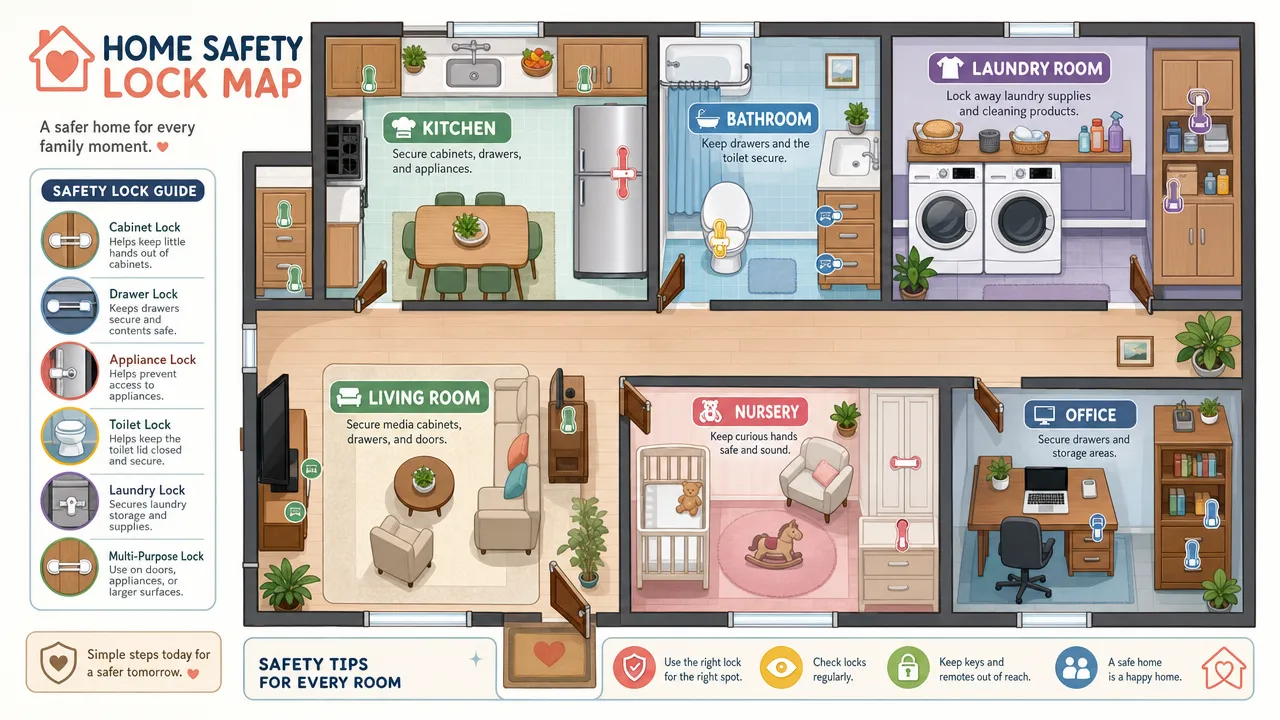
Quick answer: Where to use child safety strap locks around the home
If you are deciding where to use child safety strap locks, start with what your child is trying to open. Strap-style locks are external, flexible latches that bridge two surfaces. They can be helpful when an internal cabinet latch is not the right shape or fit.
Common places parents consider child safety strap locks include:
| Area | Why parents secure it | Better product category |
|---|---|---|
| Fridge | Toddler opens food containers or reaches refrigerated items | Fridge strap lock if compatible |
| Toilet lid | Water play, hygiene concerns, bathroom mess | Toilet safety lock |
| Dishwasher, washer, dryer, or oven | Appliance doors and handles attract toddlers | Appliance child lock designed for that appliance |
| Trash or recycling bin | Sharp items, spoiled food, small objects, or messy contents | Strap-style lock or secured cabinet |
| Odd-shaped cabinet or storage bin | Internal latch may not align well | Strap-style lock if surface allows |
| Standard cabinet or drawer | Cleaners, sharp tools, small objects, toiletries, or batteries | Cabinet latches or drawer safety locks |
For cabinets and drawers, especially in kitchens, bathrooms, laundry rooms, nurseries, and offices, baby proofing cabinet locks are usually the more targeted choice. VMAISI's recommended products for this kind of project are adhesive, no-drill child safety cabinet latches for cabinets and drawers, not fridge, toilet, or appliance products.
For a broader comparison of adhesive options, VMAISI also has a helpful guide to adhesive cabinet locks for babyproofing.
Strap locks vs cabinet latches: Where to use child safety strap locks correctly
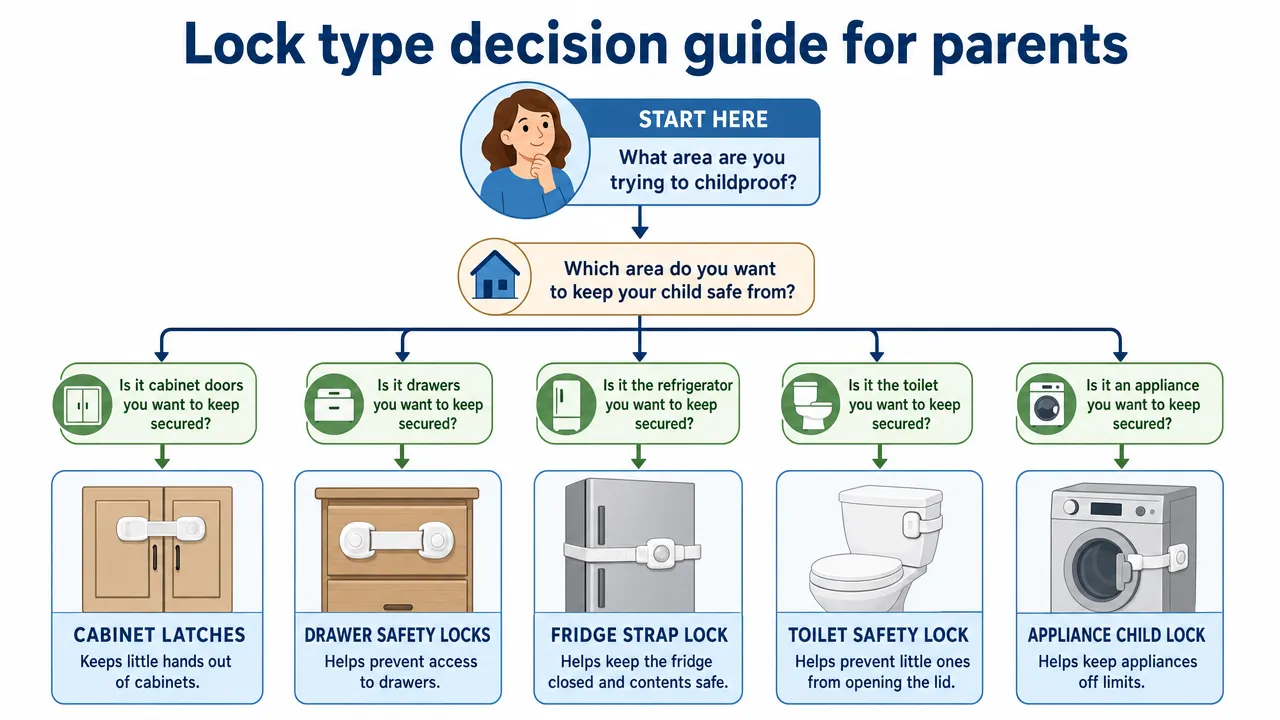
The biggest mistake is assuming one lock type belongs everywhere. A fridge strap lock, toilet safety lock, appliance child lock, cabinet latch, and drawer safety lock all solve different problems.
| Product type | Best used for | Not ideal for |
|---|---|---|
| Child safety strap locks | Fridges, trash bins, toilet lids, appliance doors, irregular surfaces | Every standard cabinet or drawer |
| Fridge strap lock | Refrigerator access when the product is designed for that surface | Bathroom vanities, dresser drawers, or under-sink cabinets |
| Toilet safety lock | Keeping a toilet lid closed | Cabinets, drawers, or appliances |
| Appliance child lock | Fridge, oven, dishwasher, microwave, washer, or dryer areas | Standard storage cabinets unless the product says so |
| Cabinet latches | Cabinets with cleaners, toiletries, pantry items, trash, or unsafe objects | Fridge doors, toilet lids, or appliance handles |
| Drawer safety locks | Drawers with knives, scissors, batteries, tools, cosmetics, or small objects | Toilet lids or appliance doors |
Consumer Reports recommends locking cabinets with cleaning supplies, medications, or sharp items and considering appliance locks on refrigerators, ovens, or other appliances. You can read more in the Consumer Reports babyproofing checklist.
For cabinets and drawers specifically, no-drill cabinet locks can be useful when parents want a renter-friendly setup. VMAISI explains more about surface prep, compatibility, and installation planning in its guide to no-drill cabinet locks for child safety.
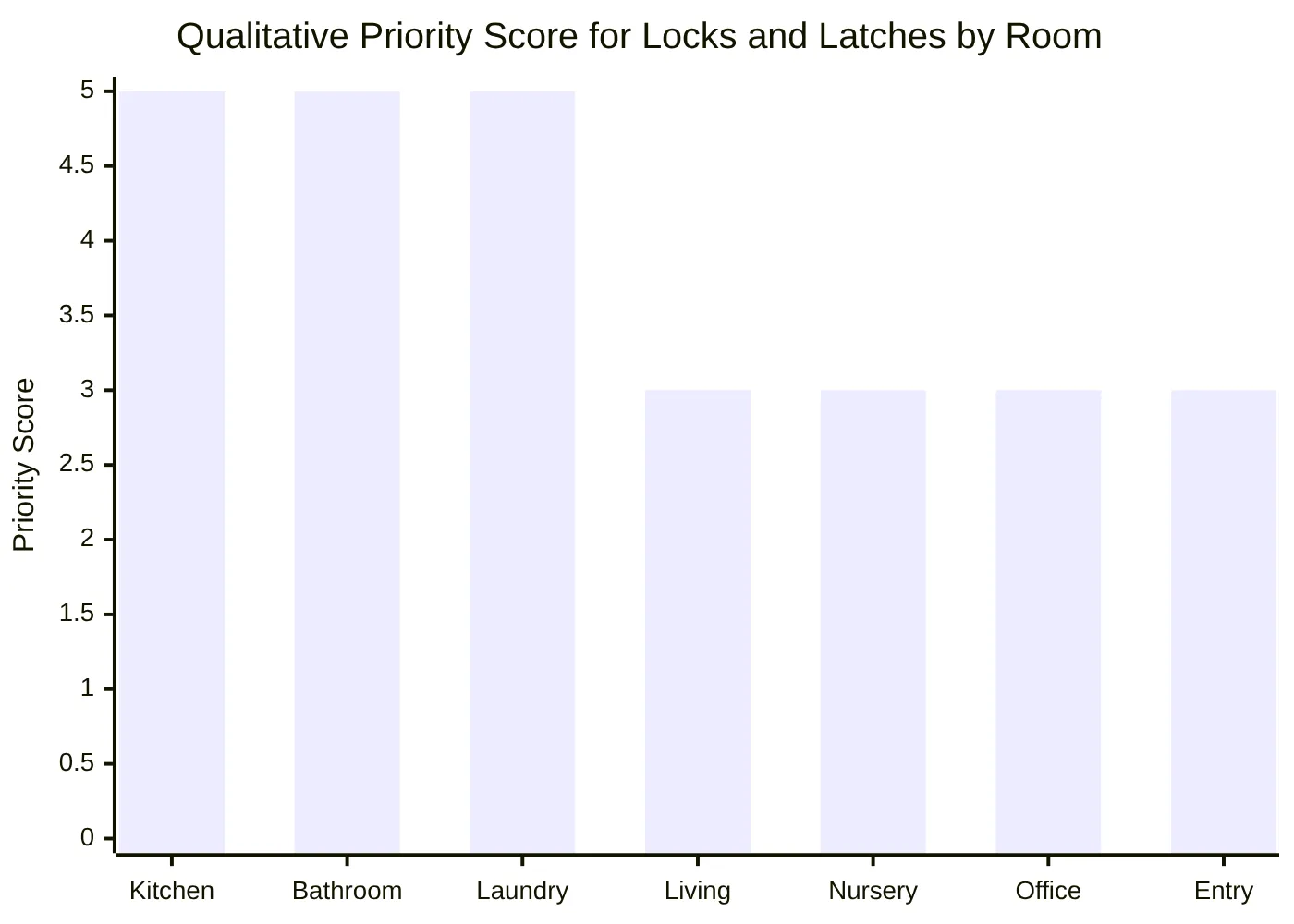
This chart is a qualitative planning tool, not verified injury data. It simply shows how many everyday homes combine easy toddler access with higher-risk household items in kitchens, bathrooms, and laundry rooms.
Room-by-room guide: Where to use child safety strap locks first
A room-by-room walk-through is the easiest way to decide where to use child safety strap locks and where to choose adhesive cabinet locks or drawer safety locks instead.
Kitchen
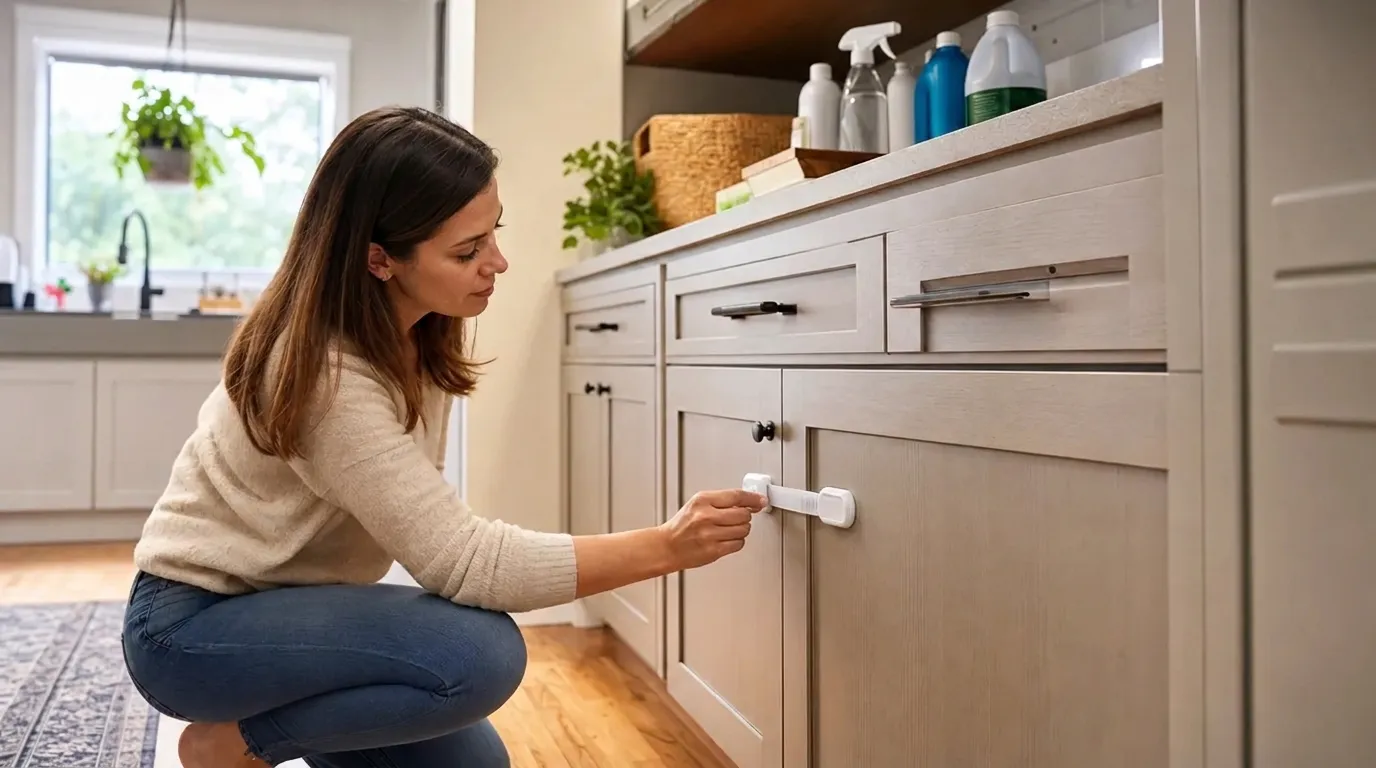
The kitchen is often the first room parents babyproof because toddlers can reach lower cabinets, pull drawers, tug on appliance handles, and investigate trash.
Start with:
- Under-sink cabinets with cleaners, dishwasher products, or trash bags.
- Drawers with knives, peelers, scissors, skewers, or small gadgets.
- Pantry cabinets with glass containers, pet food, breakables, or small packages.
- Trash and recycling areas.
- Fridge, dishwasher, oven, and microwave doors if your child repeatedly opens them.
AAP guidance recommends safety locks on cabinets containing cleaning fluids or other dangerous items. University of Michigan Pediatric Trauma guidance also recommends keeping cleaners in upper locked cabinets and using cabinet locks if cleaners are kept under the sink. See the University of Michigan safety at home guidance.
A fridge strap lock may make sense if your toddler is repeatedly opening the fridge and the product is designed for that surface. But for lower kitchen cabinets and drawers, use child safety cabinet locks or cabinet latches.
If you are securing a few high-risk cabinets or drawers, the VMAISI Cabinet Locks Child Safety Latches 12 Pack is a practical starter option for focused baby-proofing coverage.
Bathroom
Bathrooms create two different safety questions: toilet access and cabinet or drawer access.
Use a toilet safety lock if your toddler can lift the toilet lid or plays near the toilet. Pediatric Specialists recommends keeping the bathroom door closed, keeping the toilet seat cover down, and considering a toilet lid latch. You can view the Pediatric Specialists home safety checklist.
For bathroom vanities and drawers, focus on:
- Medicines.
- Razors.
- Cosmetics.
- Toiletries.
- Cleaning products.
- Electrical grooming tools.
VMAISI cabinet latches fit here only for compatible vanity cabinets and drawers. They should not be used as a toilet safety lock.
Laundry room
Laundry rooms are high priority because detergent packets, bleach, stain removers, dryer sheets, and utility tools are often stored low.
America's Poison Centers warns that highly concentrated laundry detergent packets can cause serious harm to young children and recommends storing containers closed, sealed, high, out of sight and reach. See their laundry detergent packet safety page.
Use cabinet latches or drawer safety locks for detergent storage cabinets and utility drawers. Use an appliance child lock only when you are securing a washer or dryer door and the product is designed for that appliance.
Living room, nursery, bedroom, and office
These rooms may seem lower risk, but toddlers are drawn to drawers, remotes, cords, containers, and small shiny objects.
Prioritize:
- Media cabinets with remotes, batteries, cords, or small accessories.
- Sideboards with breakables or alcohol storage.
- Dresser drawers with small personal items, jewelry, creams, or grooming supplies.
- Changing table drawers with ointments or small items.
- Office drawers with scissors, paper clips, tape dispensers, chargers, batteries, or craft supplies.
Poison.org warns that button batteries are hazardous and recommends keeping loose batteries away from children and securing battery compartments. You can review general battery and poisoning guidance at Poison.org.
VMAISI adhesive cabinet latches may fit compatible media cabinets, sideboards, dresser drawers, office drawers, and storage cabinets. Just remember that drawer safety locks do not prevent furniture tip-over; dressers and shelving still need proper anchoring.
Priority checklist: Where to use child safety strap locks and cabinet latches first
Before buying anything, walk through your home at toddler height. Open every reachable cabinet, drawer, appliance, toilet lid, bin, and storage area. Then prioritize by risk.
High-priority areas to secure first:
- Under-sink kitchen cabinets with cleaners or dishwasher products.
- Bathroom vanities with medicines, razors, toiletries, or cleaners.
- Laundry cabinets with detergent packets, bleach, or stain removers.
- Drawers with knives, scissors, tools, batteries, or choking hazards.
- Toilets that toddlers can access.
- Fridge or appliance doors your child repeatedly opens.
- Trash or recycling areas with unsafe or messy contents.
Medium-priority areas:
- Pantry cabinets.
- Pet food storage.
- Media cabinets.
- Dresser drawers.
- Home office drawers.
- Entryway or utility cabinets.
Lower-priority areas:
- Empty lower cabinets.
- Drawers with only soft linens.
- Storage areas the child cannot access.
- Cabinets already cleared of hazards.
For the U.S., save Poison Help at 1-800-222-1222. America's Poison Centers also recommends keeping cleaning products and cosmetics up and away. See their poison prevention guidance.
| First-week plan | Action | Product category |
|---|---|---|
| Day 1 | Remove medicines, cleaners, detergents, and sharp tools from low storage when possible | Safer storage first |
| Day 2 | Secure kitchen under-sink cabinets and sharp-tool drawers | Cabinet latches or drawer safety locks |
| Day 3 | Secure bathroom vanity storage and evaluate toilet access | Cabinet latches plus toilet safety lock if needed |
| Day 4 | Secure laundry detergent cabinets and utility drawers | Cabinet latches or drawer safety locks |
| Day 5 | Evaluate fridge, dishwasher, washer, dryer, oven, and trash access | Fridge strap lock, appliance child lock, or strap-style lock if compatible |
| Day 6 | Secure media cabinets, office drawers, and small-object storage | Cabinet latches or high storage |
| Day 7 | Test every latch, inspect adhesive edges, and adjust routines | Maintenance and supervision |
For parents comparing mounting methods, VMAISI's guide to adhesive vs screws for child safety locks can help you think through surface type, rental needs, and long-term use.
VMAISI fit: Where to use child safety strap locks versus cabinet latches
VMAISI's recommended products for this topic are best used for cabinets and drawers. They are adhesive, no-drill child safety cabinet latches that help parents secure compatible cabinets and drawers without drilling.
They are not fridge strap locks, toilet safety locks, or appliance child locks. If the target is a fridge, toilet, oven, dishwasher, washer, or dryer, choose a product designed for that specific surface and follow its instructions.
| Home project | Recommended VMAISI option | Why it fits |
|---|---|---|
| A few key cabinets or drawers | VMAISI Cabinet Locks Child Safety Latches 12 Pack | Good for a focused starter project, such as an under-sink cabinet, bathroom vanity, and a few drawers |
| Kitchen plus bathroom coverage | 12 Pack or 20 Pack, depending on count | Choose based on the number of cabinet doors and drawers that need latches |
| Multi-room babyproofing | VMAISI Cabinet Locks Child Safety Latches 20 Pack | Better for larger homes, whole-home coverage, or multiple cabinets and drawers |
| Renter-friendly cabinet and drawer setup | 12 Pack or 20 Pack | Adhesive, no-drill setup avoids drilling into compatible cabinets and drawers |
| Fridge, toilet, oven, dishwasher, washer, or dryer | Use a separate product category | These areas need a fridge strap lock, toilet safety lock, or appliance child lock designed for that use |
Before installing adhesive cabinet locks, clean and dry the surface, dry-fit the latch placement, press firmly, follow the product instructions, test several times, and inspect regularly. For a more complete planning overview, see VMAISI's whole-home safety planning guide.
Final safety reminders:
- Move hazardous items high and out of sight whenever possible.
- Use the right lock type for the object being opened.
- Do not rely on one latch as the only safety layer.
- Inspect adhesive latches for peeling, shifting, or misalignment.
- Replace or reinstall any latch that no longer catches reliably.
- Keep bathrooms, laundry rooms, and kitchens supervised when toddlers are nearby.
FAQs: Where to use child safety strap locks at home
Where should I use child safety strap locks?
Use child safety strap locks on compatible surfaces where an external flexible latch makes sense, such as a fridge, toilet lid, trash bin, appliance door, or irregular storage area. For standard cabinets and drawers, cabinet latches or drawer safety locks are usually more targeted.
Can I use a strap product as a fridge strap lock?
Yes, if the product is designed for refrigerator use and fits your fridge surface and door movement. If refrigerated medicine is stored inside, place it high and out of reach when possible.
Do I need a toilet safety lock?
A toilet safety lock may be useful if your toddler can access the bathroom and lift the toilet lid. Also keep the bathroom door closed when possible and supervise closely.
What is an appliance child lock?
An appliance child lock helps limit access to appliance doors, handles, or controls, such as refrigerators, ovens, dishwashers, microwaves, washers, or dryers. Use appliance-specific products according to the product and appliance instructions.
Are cabinet latches better than strap locks for cabinets?
Often, yes. Cabinet latches are designed for cabinets and drawers, while strap-style locks are often more useful for appliances, toilet lids, trash bins, and irregular surfaces.
Where do VMAISI adhesive cabinet latches fit best?
They fit best on compatible cabinets and drawers in kitchens, bathrooms, laundry rooms, pantries, bedrooms, offices, and storage areas. Use the 12 Pack for a few high-risk areas and the 20 Pack for multi-room coverage.
Are adhesive cabinet locks good for renters?
They can be helpful for renters because they avoid drilling. However, adhesive removal can still affect some finishes, so follow instructions, test carefully when possible, and remove slowly.
How many cabinet latches do I need?
Count each reachable cabinet door and drawer that contains hazards or attractive items. A few key areas may need a smaller pack. Kitchen, bathroom, laundry, pantry, and storage coverage may need a larger pack.
Do child-safety locks replace supervision?
No. Child-safety locks are safety aids, not substitutes for adult supervision, safer storage, or regular inspection. AAP guidance notes that latches can help, but they can malfunction or be defeated.
Should I lock laundry detergent cabinets?
Yes, if children can reach them. Laundry products should be stored closed, sealed, high, out of sight and reach. If they remain in a reachable cabinet, secure that cabinet and inspect the latch regularly.
The best plan is not to put one product everywhere. Decide where to use child safety strap locks for fridges, toilets, appliances, and irregular surfaces, then use child safety cabinet locks, adhesive cabinet locks, cabinet latches, and drawer safety locks for cabinets and drawers. If you are starting small, choose the VMAISI 12 Pack. If you are planning multi-room babyproofing, choose the VMAISI 20 Pack.