

Magnetic Drawer Locks vs Cabinet Locks: What’s Different in Real Use?
Are you standing in the kitchen while your toddler tugs on a low drawer, wondering whether "magnetic drawer locks vs cabinet locks" is even the right comparison to make? You are not alone. Parents often see overlapping product names like cabinet safety locks, drawer child safety locks, cabinet latches, drawer safety locks, and baby-proofing cabinet locks, then have to decide what will actually work in a real home.
The practical answer is this: the best choice depends less on the label and more on your cabinet style, drawer construction, installation preference, daily access needs, and how many areas you need to secure. Some families care most about a hidden look. Others want a no-drill, key-free latch they can use quickly every day. For many parents, adhesive child safety cabinet locks are a realistic option for kitchens, bathrooms, pantries, storage cabinets, and everyday drawers.
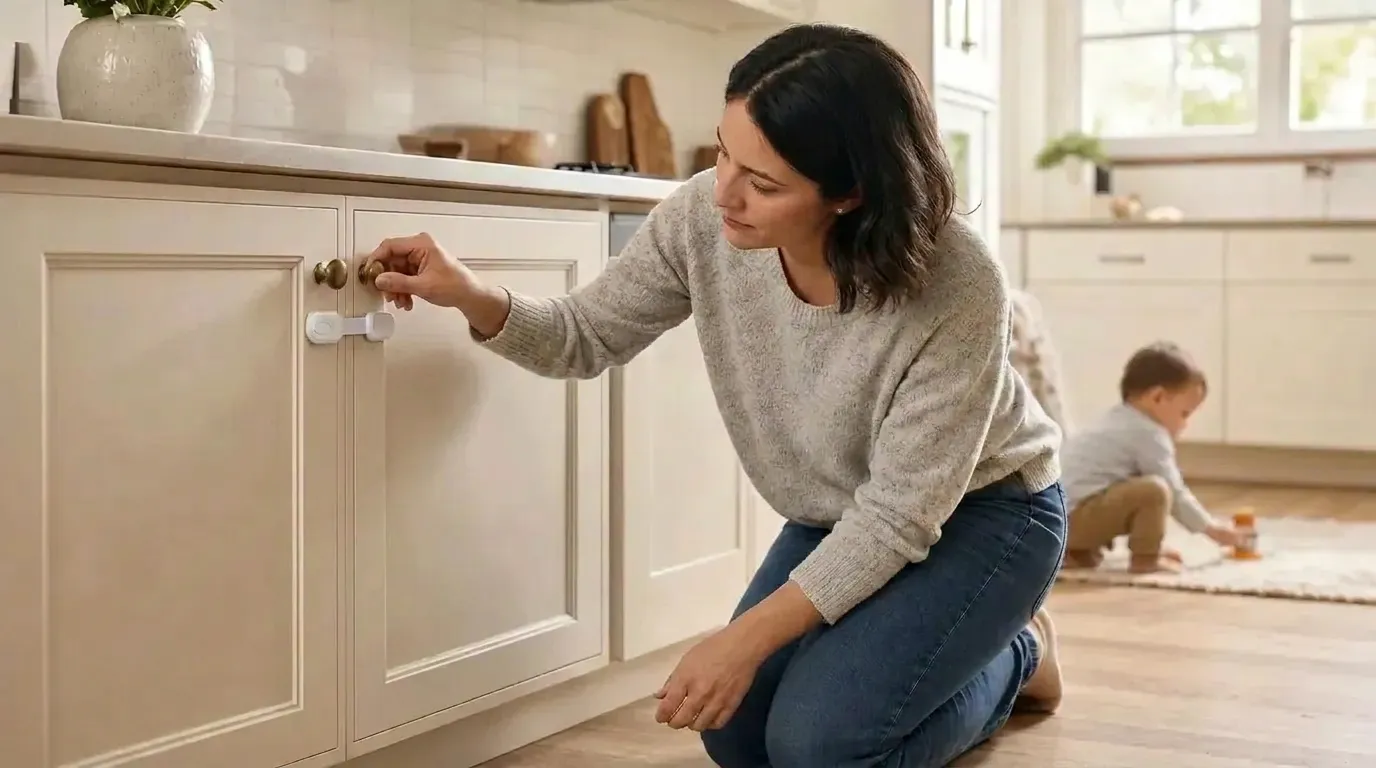
Magnetic drawer locks vs cabinet locks: What parents are really comparing
When parents search for magnetic drawer locks vs cabinet locks, they are usually comparing two broader ideas:
| Term parents see | What it usually means in real use | What to check before buying |
|---|---|---|
| Magnetic-style drawer systems | A hidden child-safety category that uses a separate release mechanism from outside the drawer or cabinet | Cabinet thickness, drawer depth, alignment, and whether adults can release it easily |
| Cabinet safety locks | A broad category that may include adhesive latches, internal latches, strap-style products, and screw-mounted hardware | Whether the lock fits your cabinet door, frame, drawer gap, and daily routine |
| Drawer child safety locks | Latches or locks used to help stop children from opening low drawers | Drawer depth, inset or overlay style, latch reach, and adult access |
| Adhesive cabinet locks | Peel-and-stick child safety cabinet locks that usually avoid drilling | Surface prep, adhesive bonding time, finish type, humidity, and alignment |
| Cabinet latches | Catch-and-release devices that help keep cabinets or drawers closed until an adult opens them | Release position, catch alignment, and whether the latch reengages after use |
The U.S. Consumer Product Safety Commission childproofing guide recommends safety latches and locks for cabinets and drawers in kitchens, bathrooms, and other areas to help reduce access to items such as medicines, household cleaners, knives, and other sharp objects. The National Safety Council childproofing guidance also lists cabinet and drawer latches as part of a home child-safety plan.
That said, no device should be treated as a complete substitute for safe storage and supervision. Hazardous items should be moved up high and out of reach whenever possible, and locks should be checked regularly.
Magnetic drawer locks vs cabinet locks: Real-use differences that matter
The phrase magnetic drawer locks vs cabinet locks sounds technical, but daily use is usually what decides whether parents stay consistent. A lock that is hard for adults to use may be left disengaged, which defeats the purpose.
Here are the real-use differences to think through.
| Factor | Hidden magnetic-style systems, general category | Adhesive cabinet latches | Strap-style products | Screw-mounted latches |
|---|---|---|---|---|
| Installation | Usually installed inside; alignment matters | Peel-and-stick; no drilling for typical setup | External adhesive pads bridge two surfaces | Requires tools and holes |
| Visibility | Often hidden from the outside | Often low-profile or inside-mounted depending on design | Visible from the outside | Often internal |
| Adult access | Can be convenient if the release process is easy | Usually quick once you learn the press-and-release motion | Can be slower for frequent-use cabinets | Durable but may take more hand motion |
| Drawer fit | Depends on drawer depth, front thickness, and layout | Depends on gap, frame, and latch reach | Works better on some irregular surfaces | Depends on screw placement and frame |
| Rental-friendliness | Depends on whether adhesive or drilling is used | Strong appeal for renters because it avoids screw holes | Renter-friendly but visible | Less renter-friendly |
| Maintenance | Check release function and alignment | Check adhesive, catch alignment, and latch engagement | Check strap tension and adhesive pads | Check screws and latch wear |
| Common failure points | Misalignment, incompatible materials, misplaced release accessory | Oily, dusty, waxed, rough, or damp surfaces; early use before bonding | Pulling on visible straps; weakened adhesive | Cabinet damage, stripped screws, misplacement |
For appearance-focused parents, hidden systems may be appealing. For parents who want straightforward, key-free, no-drill cabinet locks for everyday family use, adhesive cabinet latches can be more practical.
The CPSC also emphasizes that safety devices should be easy for adults to install and use, while still being sturdy enough to withstand pulls and tugs from children. This is why adult convenience is not a small detail. It affects whether cabinet safety locks are used every single time.
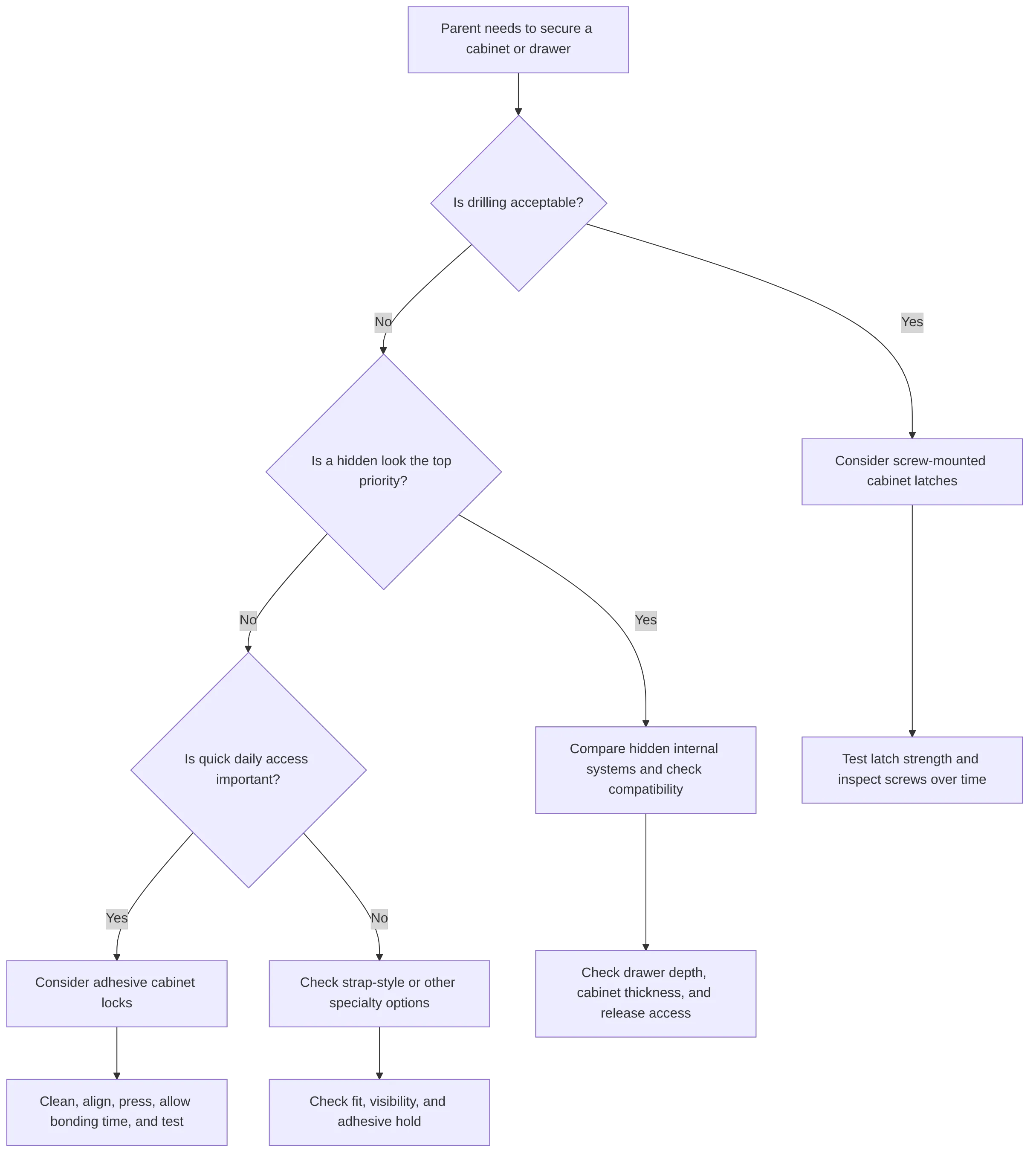
Magnetic drawer locks vs cabinet locks: When adhesive cabinet locks make sense
Adhesive cabinet locks make sense when parents want a practical no-drill solution for many common household cabinets and drawers. They are especially useful if you are renting, trying to avoid screw holes, or baby proof drawers and cabinets in stages.
They are a good fit for many situations, including:
- Kitchen base cabinets with cleaning supplies, trash bags, dish detergent, or breakable items.
- Bathroom vanity drawers with toiletries, razors, small items, or medicines.
- Pantry cabinets with small packages, breakable containers, or items toddlers scatter easily.
- Laundry or storage cabinets with household supplies.
- Bedroom or hallway storage drawers with small objects.
A key point: no-drill does not mean no prep. Adhesive products need clean, dry, smooth surfaces and careful placement. Poor surface prep is one of the most common reasons adhesive cabinet locks fail.
Use this simple installation workflow:
- Choose the cabinet or drawer you want to secure.
- Remove or relocate the most hazardous items when possible.
- Clean the mounting surface and let it dry fully.
- Dry-fit the latch and catch before peeling the adhesive backing.
- Check that the drawer or cabinet closes properly.
- Press the adhesive firmly in place.
- Allow bonding time according to the product instructions.
- Test adult access and latch engagement.
- Inspect regularly for shifting, peeling, or weak catch alignment.
Independent safety guidance is consistent on this point: child-safety devices work best when installed, reengaged, and maintained properly. The CPSC specifically notes that devices should be checked frequently to make sure they remain secure and properly installed.
If you already know you want a no-drill option, VMAISI offers adhesive child safety cabinet locks designed for cabinets and drawers. For a smaller setup, see the VMAISI Cabinet Locks Child Safety Latches 12 Pack. For a larger home or multi-room plan, see the VMAISI Cabinet Locks Child Safety Latches 20 Pack.

Magnetic drawer locks vs cabinet locks: How to choose room by room
The most useful baby-proofing plan starts with priority zones, not every cabinet in the house. Focus first on areas where babies or toddlers may access cleaners, medicines, sharp tools, small objects, breakables, or household supplies.
| Room or area | What parents usually worry about | Practical lock planning |
|---|---|---|
| Kitchen under-sink cabinet | Cleaning products, dish detergent, trash bags, sponges | Secure early and consider moving hazardous items higher |
| Kitchen drawers | Knives, peelers, scissors, small gadgets, batteries | Use drawer child safety locks where drawer fit allows |
| Bathroom vanity | Medicines, razors, toiletries, cleaning sprays | Lock lower storage and keep medicines up high when possible |
| Pantry | Small packages, breakable jars, plastic bags, choking hazards | Secure low pantry cabinets and check for small loose items |
| Laundry area | Detergents, sprays, tools, household chemicals | Prioritize low cabinets and storage drawers |
| Storage cabinets | Tools, batteries, craft supplies, hardware, pet items | Lock reachable cabinets and remove small loose parts |
The CPSC notes that child-resistant packaging is not the same as childproof storage. Even products with child-resistant packaging should be locked away and kept out of reach. This is especially relevant for bathroom cabinets, laundry areas, and medicine storage.
For parents asking how to baby proof drawers without drilling, the practical answer is to combine three steps:
- Remove high-risk items from reachable drawers when possible.
- Use drawer safety locks or cabinet latches compatible with your drawer construction.
- Test the drawer after installation to make sure adults can open it and the latch reengages.
For cabinet doors, also check whether your cabinets are framed or frameless, inset or overlay, and whether there is enough internal space for the latch to catch. Real homes vary, so it is better to test placement before committing every latch.
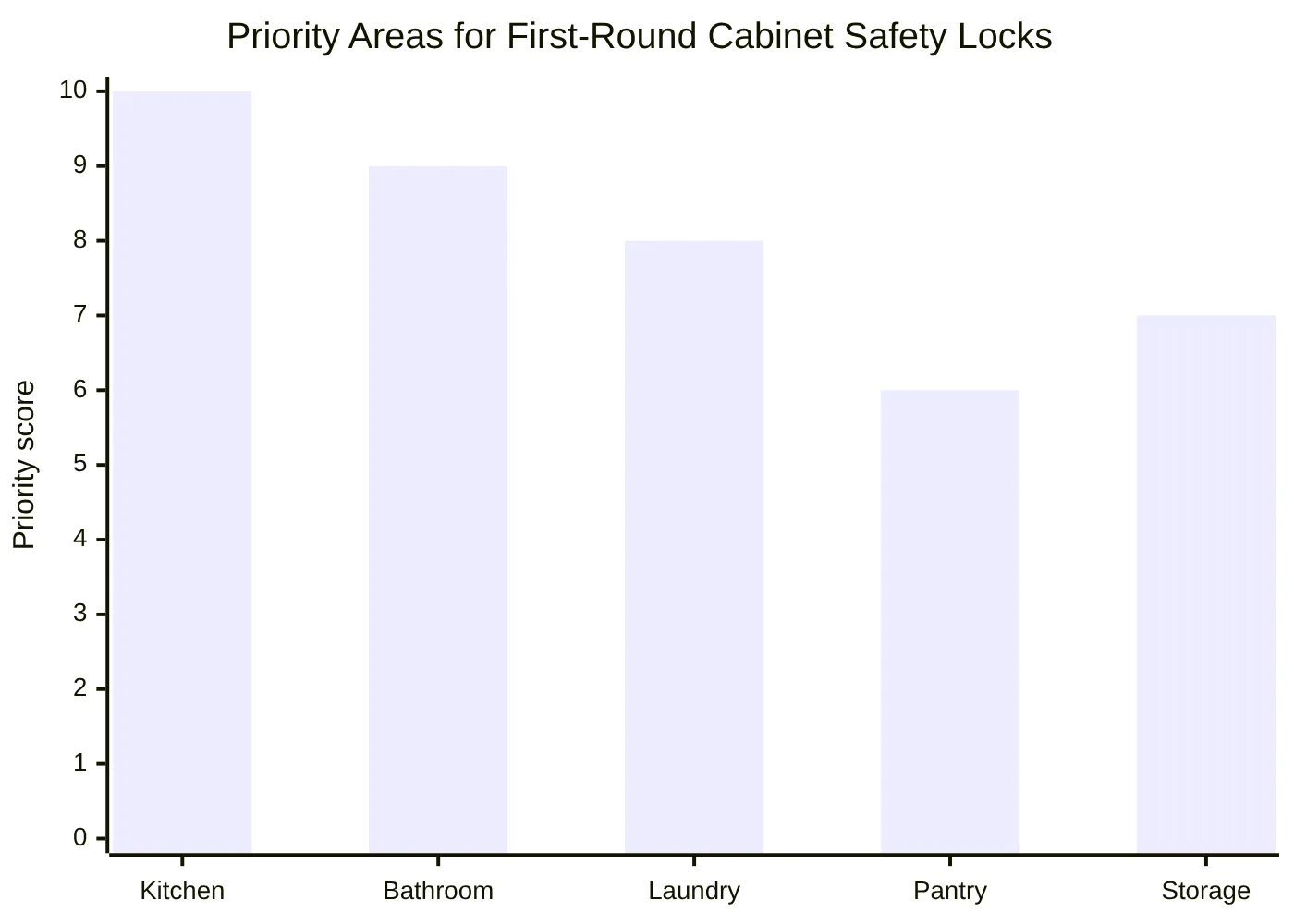
Magnetic drawer locks vs cabinet locks: How many cabinet safety locks do you need?
Many parents underestimate the count. A few drawers in the kitchen, one bathroom vanity, a laundry cabinet, and a pantry area can quickly use more locks than expected. Before buying, walk through your home and count the cabinets and drawers you actually want to secure.
Start with these priority zones:
- Under-sink kitchen cabinet.
- Low cabinet with cleaning supplies.
- Drawer with knives, scissors, peelers, or sharp tools.
- Bathroom vanity drawer or cabinet.
- Laundry product storage.
- Low pantry cabinet.
- Storage area with tools, batteries, hardware, or small objects.
- Any low drawer your toddler already tries to open.
For a starter setup, the VMAISI Cabinet Locks Child Safety Latches 12 Pack is a practical option for parents securing a few priority cabinets or drawers. It is positioned for smaller baby-proofing projects, apartments, or families who want to begin with the highest-risk areas first.
For larger homes, multiple rooms, or whole-home baby-proofing, the VMAISI Cabinet Locks Child Safety Latches 20 Pack is the better fit. This 20 Pack is especially useful when you need no-drill cabinet latches for several cabinets and drawers, and the product page emphasizes upgraded stronger adhesive.
Use this simple pack-size guide:
| Your situation | Recommended VMAISI option | Why it fits |
|---|---|---|
| You only need to secure a few cabinets or drawers | VMAISI Cabinet Locks Child Safety Latches 12 Pack | Good for starter baby-proofing or smaller homes |
| You are baby-proofing multiple rooms | VMAISI Cabinet Locks Child Safety Latches 20 Pack | Better for kitchens, bathrooms, pantries, storage areas, and bedrooms |
| You are unsure | Count priority cabinets and drawers first | If the count is close, choose the larger pack to avoid stopping mid-project |
Magnetic drawer locks vs cabinet locks: FAQs before you buy
Are magnetic drawer locks better than cabinet locks?
Not always. Magnetic drawer locks vs cabinet locks is really a comparison between a hidden lock category and a broader group of cabinet safety locks. Hidden systems may appeal if appearance is your top concern. Adhesive cabinet latches may be more practical if you want no-drill installation, key-free daily access, and a straightforward setup for many cabinets and drawers.
Do I need different locks for cabinets and drawers?
Sometimes. Many child safety cabinet locks are designed for both cabinets and drawers, but compatibility depends on the construction. Drawers can be trickier because depth, inset design, frame position, and latch reach all matter. Always dry-fit before final placement.
Are adhesive cabinet locks strong enough for toddlers?
They can be effective when installed correctly on compatible surfaces, but no child safety product is a guarantee. Clean, dry surfaces, correct alignment, firm pressure, bonding time, and regular inspection all matter. Also continue moving hazardous items up high when possible.
How do I baby proof drawers without drilling?
To baby proof drawers without drilling, start by removing sharp tools, medicines, batteries, and choking hazards from reachable drawers. Then use compatible no-drill drawer child safety locks or adhesive cabinet latches. Test each drawer after installation to make sure the latch catches and adults can release it consistently.
Will no-drill cabinet locks damage cabinets?
No-drill cabinet locks avoid screw holes, which is why many renters and parents with finished cabinets prefer them. However, adhesive removal can still affect delicate paint, veneer, or older finishes. Follow product removal instructions carefully and test cautiously if your cabinet finish is fragile.
Where should I install cabinet safety locks first?
Start with the highest-risk areas: under-sink cabinets, bathroom storage, laundry supplies, drawers with sharp tools, and low cabinets with small objects or breakables. The CPSC childproofing guide recommends using safety latches and locks in kitchens, bathrooms, and other areas where children might access hazardous items.
Is there a safety standard for cabinet and drawer child-safety latches?
ASTM F3492-21 addresses child safety locks and latches for cabinet doors and drawers. You can read more about the specification through this SGS overview of ASTM F3492-21 and the CPSC voluntary standards page. Do not assume any individual product meets a standard unless the manufacturer specifically verifies it.
The bottom line: choose the lock style that fits your cabinets, your routine, and your installation comfort. If you want a practical no-drill option for everyday family baby-proofing, count your priority cabinets and drawers, then choose the VMAISI 12 Pack for a starter setup or the VMAISI 20 Pack for broader whole-home coverage.