

Strap Locks for Fridges and Appliances: When Cabinet Locks Are Not Enough
Are you worried your toddler can now reach the fridge handle, tug at the dishwasher, and open low kitchen drawers faster than you can react? If so, you are not alone. Many parents start by searching for fridge strap locks, then realize the bigger issue is not just one appliance. It is the whole zone around it: cabinets, drawers, pantry spaces, bathroom vanities, and storage areas.
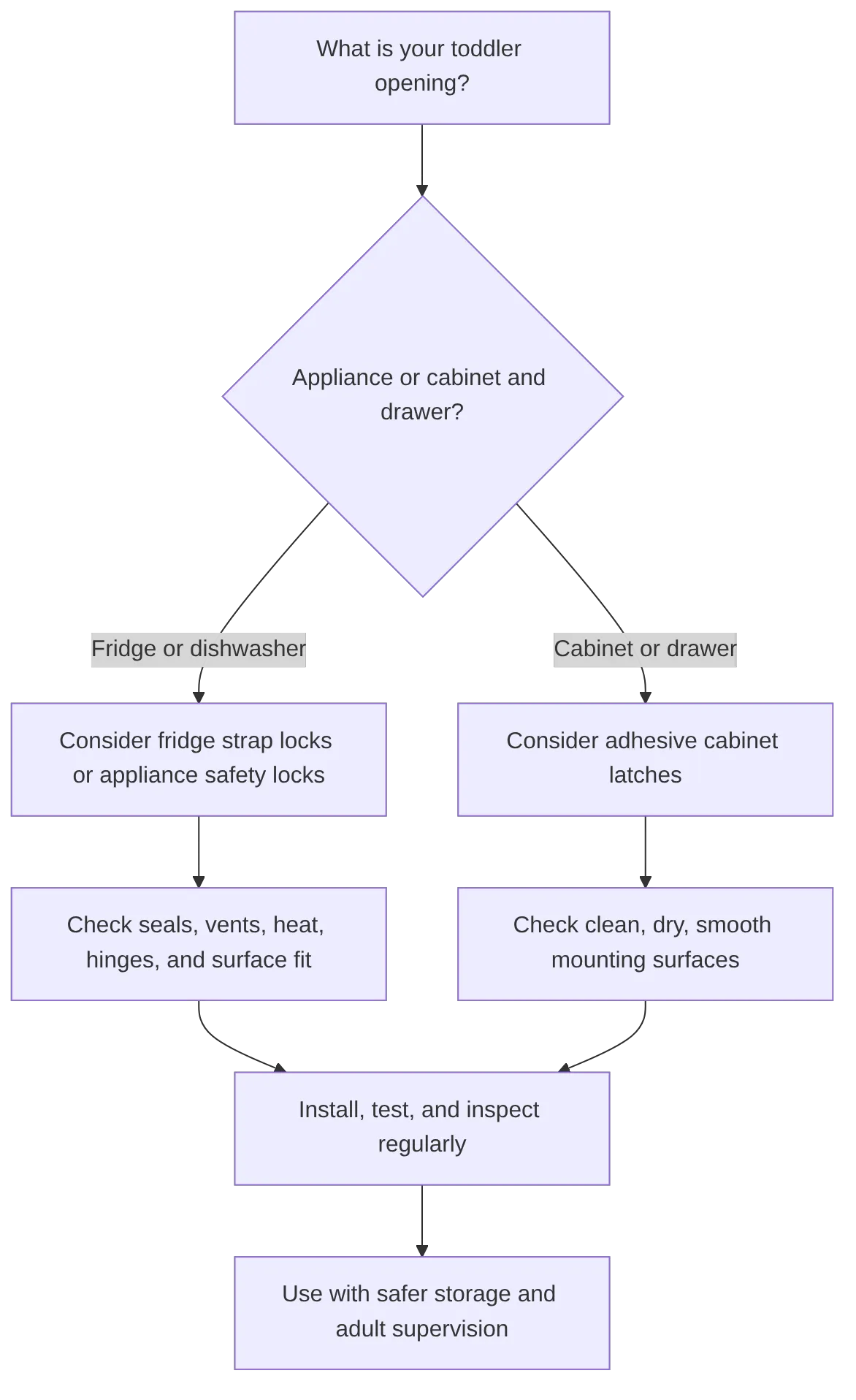
The practical answer is to match the safety product to the surface. Fridge strap locks and other appliance safety locks are usually best for appliances and odd exterior surfaces. Adhesive cabinet latches are usually a better fit for cabinets and drawers. Many families need both, because toddlers explore everything within reach, not just one product category.
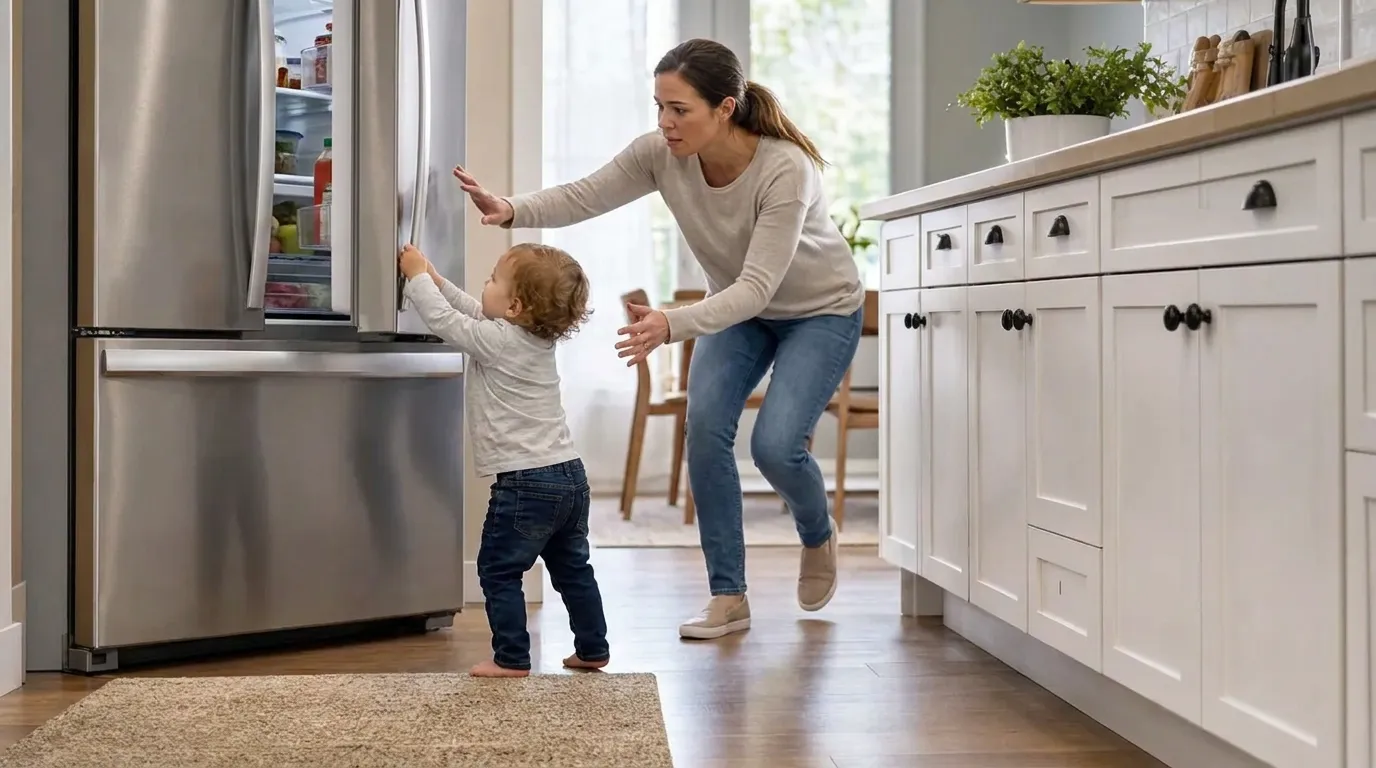
Fridge strap locks quick answer: Use straps for appliances and latches for cabinets
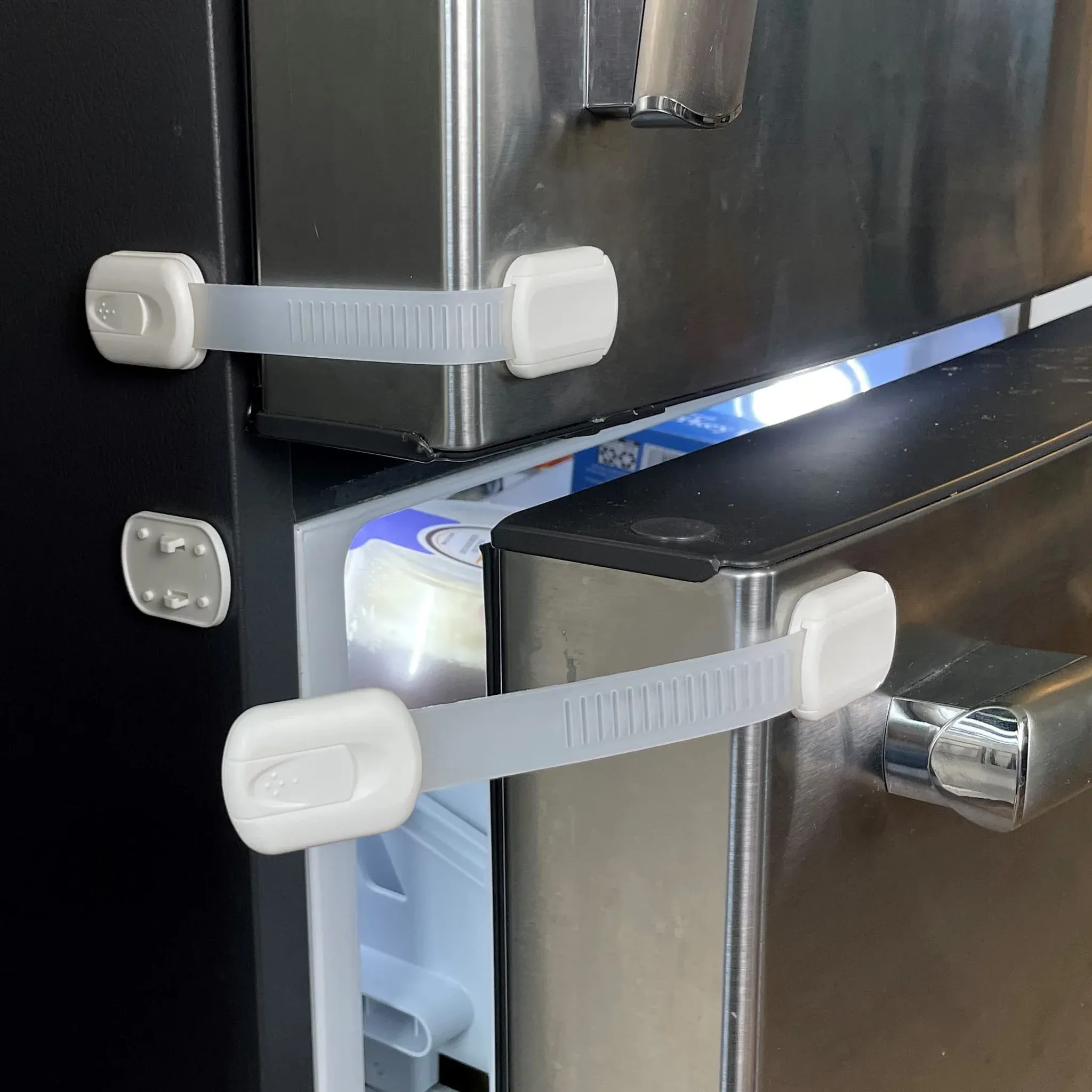
Fridge strap locks are external child safety straps that usually attach with adhesive pads and bridge two surfaces, such as the fridge body and the fridge door. They can help reduce repeated toddler access to a fridge when installed and used correctly.
But they are not the same thing as child safety cabinet locks. A fridge child lock solution is designed around an appliance surface. A cabinet latch is designed around cabinet and drawer movement. If your toddler is opening both the fridge and nearby cabinets, treat those as two separate baby-proofing problems.
| What your child is opening | Better product category | Why it fits |
|---|---|---|
| Fridge | Fridge strap locks or appliance safety locks | External straps can bridge appliance surfaces. |
| Dishwasher | Appliance safety locks or compatible child safety straps | Appliance fronts often need external restraint. |
| Low kitchen cabinets | Adhesive cabinet latches | Designed for cabinet use and daily family routines. |
| Kitchen drawers | Drawer safety locks or cabinet latches where compatible | Helps reduce access to sharp utensils, small items, or tools. |
| Bathroom vanity cabinets | Adhesive cabinet locks | Useful for cabinets that may contain cosmetics, razors, cleaners, or medicines. |
| Pantry or storage cabinets | Baby proofing cabinet locks | Helps add a safety layer to accessible storage zones. |
The U.S. Consumer Product Safety Commission recommends using safety latches and locks on cabinets and drawers in kitchens, bathrooms, and other areas to help prevent access to hazards. You can review the broader guidance in the CPSC childproofing your home guide.
Fridge strap locks for appliances: Where child safety straps make sense
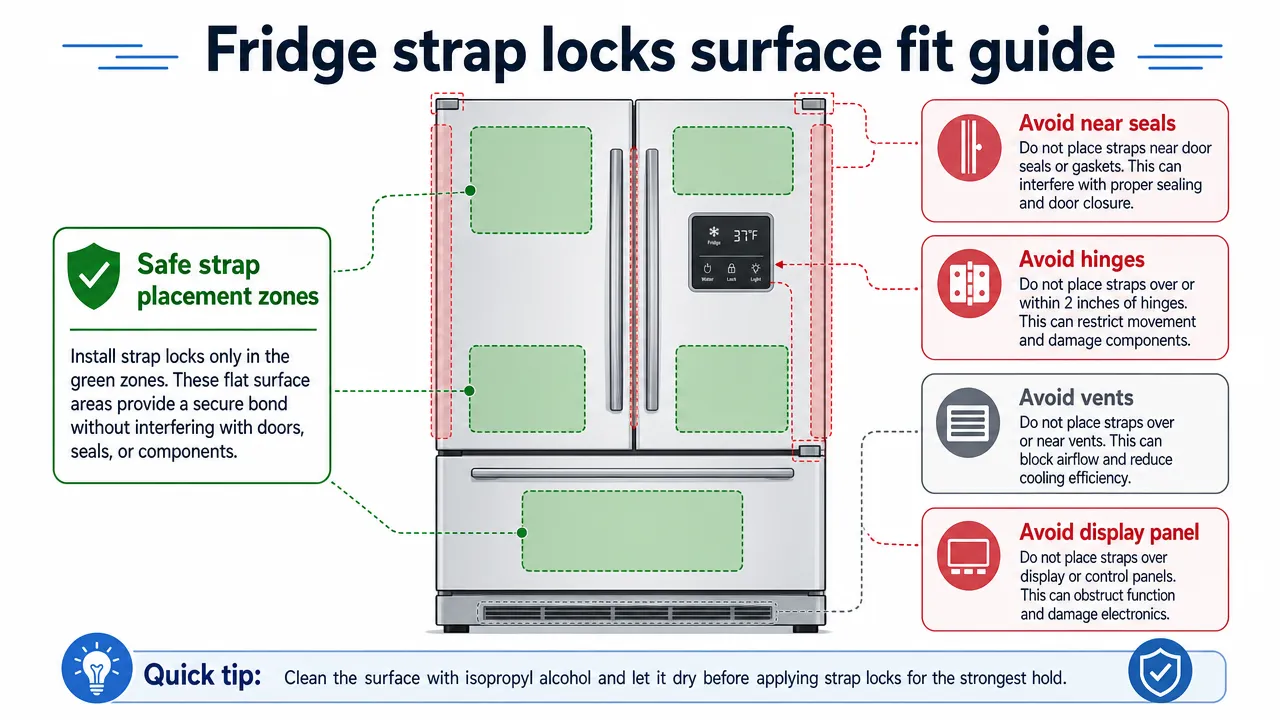
Fridge strap locks are useful because appliance surfaces are different from cabinets. A fridge has seals, hinges, handles, dispensers, vents, curves, and exterior panels. An internal cabinet latch is not usually the right tool for that kind of surface.
Child safety straps may be a better fit for:
- Fridges and freezers, if the strap can be placed without blocking the seal or hinge.
- Dishwashers, if the placement does not interfere with normal operation.
- Some microwave or appliance fronts, depending on heat, venting, and manufacturer guidance.
- Toilet lids or trash cans, when using a product designed for that purpose.
- Irregular surfaces where a cabinet latch would not align correctly.
Before using any appliance safety locks, check the surface carefully. Adhesive products usually need a smooth, clean, dry contact area. Avoid placing straps over seals, vents, hot areas, display panels, moving trim, or any spot that affects how the appliance closes or operates.
Also remember convenience. A fridge is opened many times a day. If a fridge child lock is frustrating for adults, it may not be re-latched consistently. The safest product is the one that fits the surface, is installed correctly, and is used every time.
Fridge strap locks are not enough when cabinets and drawers are reachable
A fridge may be the first thing you notice, but most kitchen safety planning should also include the cabinets and drawers around it. Toddlers often move from one access point to the next. If the fridge is secured but the under-sink cabinet is not, the highest-risk item may still be within reach.
Common cabinet and drawer concerns include:
- Cleaning supplies under the sink.
- Dishwasher detergent or laundry products stored low.
- Sharp utensils, peelers, scissors, or small tools.
- Batteries, small objects, plastic bags, or breakables.
- Medicines, razors, cosmetics, or bathroom cleaners.
- Pantry items that can spill, break, or create choking concerns.
Poison prevention guidance emphasizes keeping potentially harmful items away from children. In the U.S., Poison Control is available through Poison Help, including the national hotline 1-800-222-1222.
For cabinets and drawers, VMAISI adhesive no-drill cabinet latches are the more relevant product type. They are not fridge strap locks, and they should not be presented as appliance straps. Instead, they help parents secure cabinets and drawers as part of a broader baby-proofing plan.
If you only need to secure a few priority spots, such as an under-sink cabinet, one bathroom vanity, and several kitchen drawers, the VMAISI Cabinet Locks Child Safety Latches 12 Pack is a practical starter option.
For a larger project across the kitchen, bathroom, pantry, and storage areas, the VMAISI Cabinet Locks Child Safety Latches 20 Pack gives parents more coverage, with an upgraded adhesive focus for multi-room baby-proofing.
Fridge strap locks and cabinet latches: A room-by-room plan
The simplest way to avoid overbuying or choosing the wrong product is to walk room by room and list what your child can reach today.
| Room or zone | Start here | Product direction |
|---|---|---|
| Fridge area | Fridge handle, freezer drawer, nearby lower cabinets | Use fridge strap locks for the appliance and cabinet latches for nearby cabinets. |
| Dishwasher area | Dishwasher front, detergent storage, utensil drawers | Use appliance safety locks for the appliance and drawer safety locks for drawers. |
| Kitchen lower cabinets | Under-sink cabinet, trash cabinet, pantry cabinet | Use adhesive cabinet locks or cabinet latches. |
| Kitchen drawers | Sharp tools, small items, batteries, food wraps | Use drawer safety locks where the drawer surface is compatible. |
| Bathroom | Vanity cabinets, drawers, cosmetics, razors, medicines | Use cabinet latches and move hazardous items higher when possible. |
| Storage and pantry | Tools, pet food, breakables, small objects | Use baby proofing cabinet locks for cabinets and drawers within reach. |
A helpful order of priority is:
- Secure the most reachable high-risk items first.
- Move dangerous products up and away when possible.
- Add the correct safety device for each surface.
- Test the latch or strap before relying on it.
- Inspect regularly for peeling, looseness, cracking, or misalignment.
- Continue supervision, because locks and latches are safety layers, not guarantees.
For additional planning, VMAISI has a helpful guide to no-drill cabinet locks and a comparison of adhesive vs screw-mounted child safety locks. If your concern includes appliances beyond the fridge, you may also find this fridge and oven child safety planning guide useful.
Fridge strap locks installation lessons that also apply to adhesive cabinet locks
Whether you are installing child safety straps on an appliance or adhesive cabinet locks inside a cabinet, surface preparation matters. Adhesive performance depends on the surface, placement, pressure, curing time, and regular use.
Before you peel the backing, use this checklist:
- Clean away grease, dust, moisture, soap film, and residue.
- Let the surface dry fully.
- Dry-fit the strap or latch first.
- Check that the product will not block normal appliance or drawer movement.
- Press firmly after applying the adhesive.
- Follow the product instructions for bonding time before heavy pulling or regular use.
- Test gently after installation.
- Recheck often, especially in busy kitchen and bathroom areas.
Here is a simple way to think about installation quality:
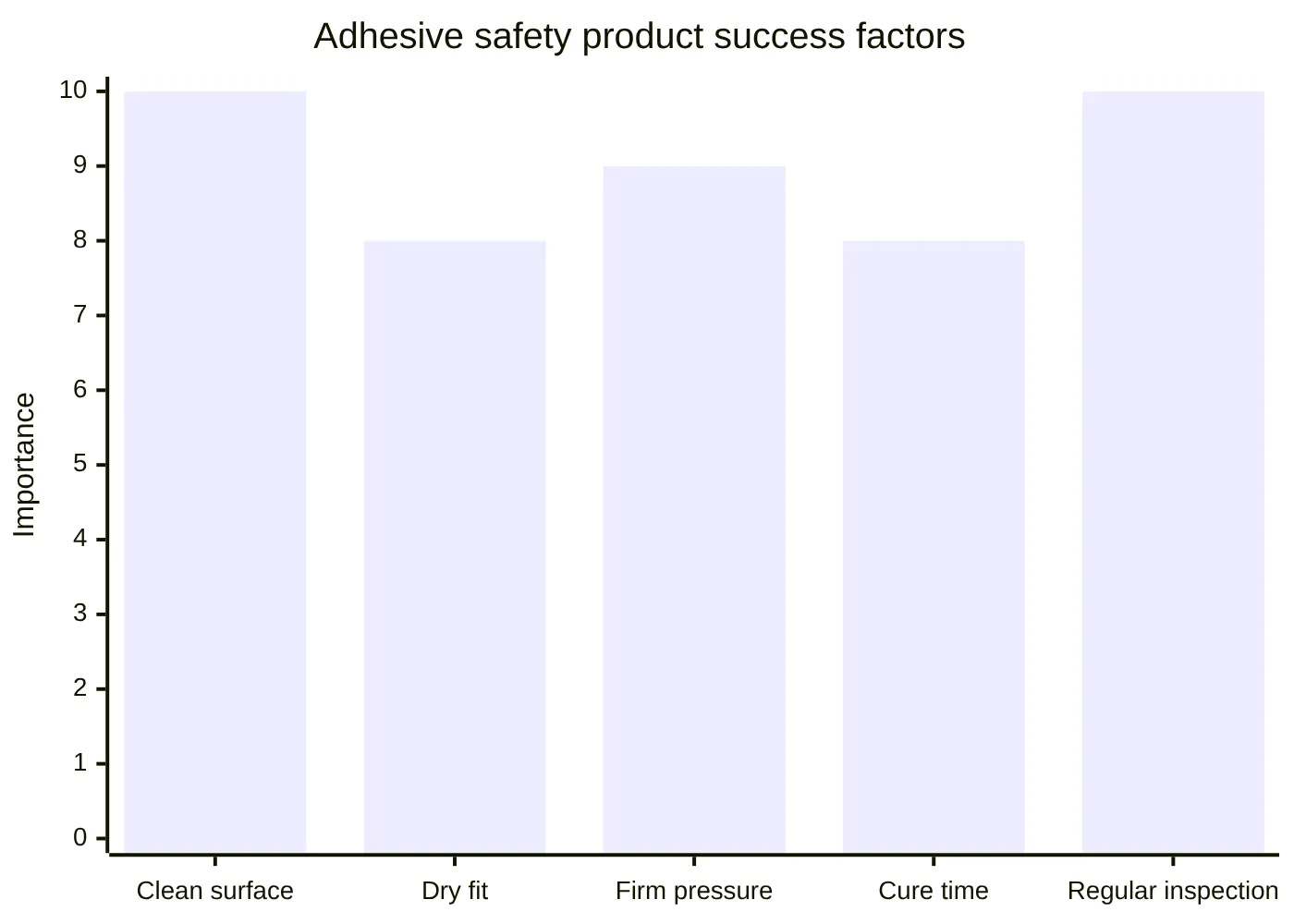
No adhesive child-safety product should be treated as permanent or fail-proof. Heat, moisture, rough surfaces, repeated pulling, and poor alignment can reduce performance. If a product becomes loose or does not latch reliably, replace it or choose another safety method.
Fridge strap locks FAQ: What parents ask before buying
Are fridge strap locks the same as cabinet latches?
No. Fridge strap locks are external child safety straps commonly used on appliances. Cabinet latches are designed for cabinets and drawers. They solve related but different baby-proofing problems.
Can I use the same product everywhere?
Not always. A strap may fit an appliance or odd surface, while a cabinet latch may be better for a cabinet or drawer. Choose based on the surface, movement, and hazard.
What should I baby-proof first in the kitchen?
Start with the areas your toddler can already reach: the fridge if they can open it, the under-sink cabinet, drawers with sharp utensils or small objects, and low cabinets with cleaners or breakables.
Are adhesive cabinet latches strong enough?
They can help reduce access when installed on smooth, clean, dry, compatible surfaces. Proper placement, bonding time, and regular inspection are important.
Which VMAISI pack should I choose?
Choose the VMAISI Cabinet Locks Child Safety Latches 12 Pack for a few cabinets or drawers. Choose the VMAISI Cabinet Locks Child Safety Latches 20 Pack for larger homes, multi-room coverage, or whole-home cabinet and drawer baby-proofing.
Do appliance safety locks and cabinet latches replace supervision?
No. They are helpful safety layers, not substitutes for adult supervision, safer storage, and routine checks.
The bottom line: if your toddler is opening the fridge, look for fridge strap locks that fit that appliance safely. If your toddler is also opening cabinets and drawers, use adhesive no-drill cabinet latches designed for those surfaces. A surface-by-surface plan is more practical than expecting one product to solve every baby-proofing challenge.