

All-in-One Safety Kits vs DIY Babyproofing
All-in-one safety kits can simplify comprehensive home babyproofing, but a room-by-room plan is what closes the gaps that kits often miss.
Parents usually compare kits and DIY babyproofing for one reason: they want a safer home without wasting money on products that feel reassuring at checkout but leave real hazards untouched. Research across consumer testing, pediatric safety guidance, and Vmaisi's own babyproofing content points to the same conclusion. All-in-one safety kits are useful starter layers. DIY babyproofing gives you more control. For most homes, the strongest answer is a hybrid approach that starts with basics and then adds targeted protection for overlooked safety items such as appliance locks, furniture anchors, toilet locks, blind cord safety, and window restrictions.
That distinction matters because comprehensive home babyproofing is not about piece count. It is about hazard coverage in the rooms your baby can reach, open, pull, climb, switch on, or put in their mouth.
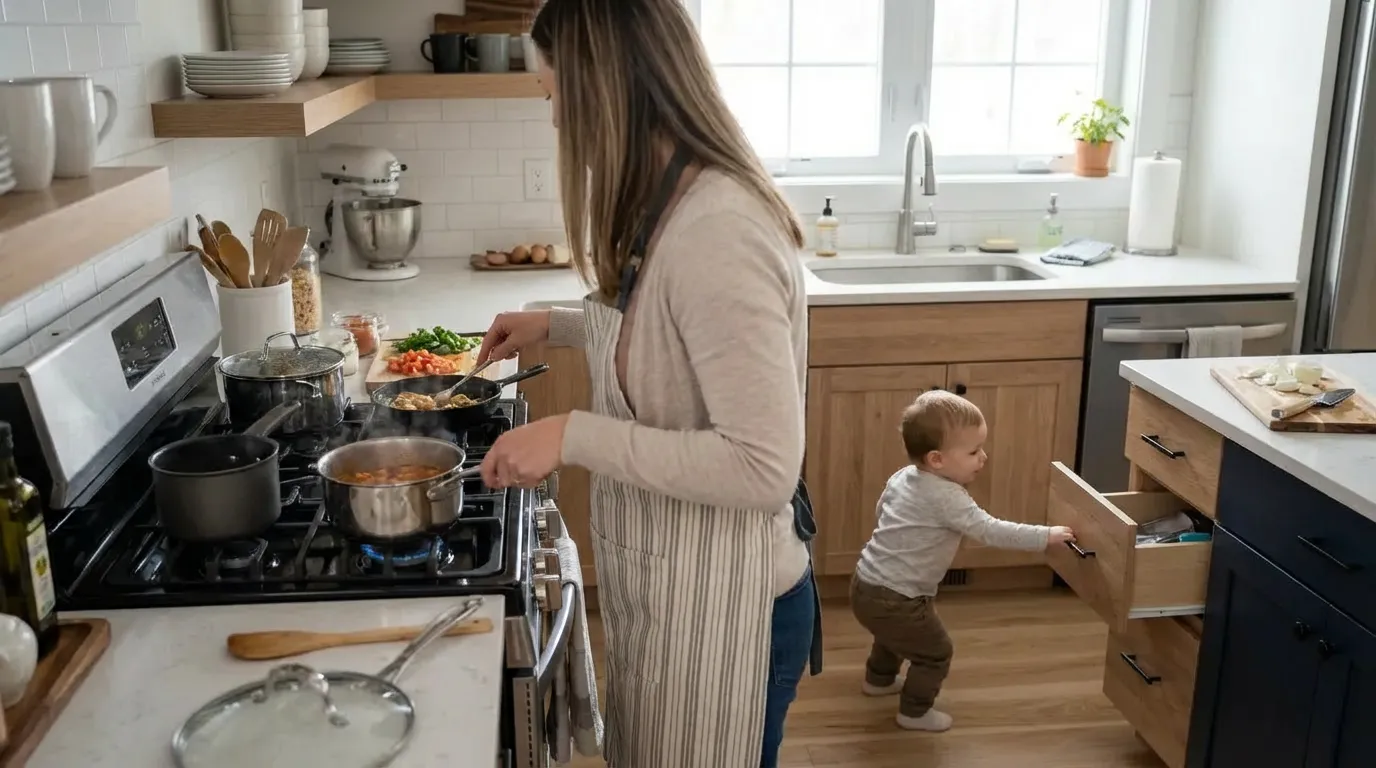
Why comprehensive home babyproofing needs more than all-in-one safety kits
Comprehensive home babyproofing means evaluating the whole house by risk, not just installing a few common basics. According to the research report, most all-in-one safety kits focus on products like outlet covers, cabinet latches, corner guards, drawer latches, and doorknob covers. Those are helpful, especially for parents who want a fast start before crawling begins. But they do not automatically address every meaningful hazard.
Safety guidance cited in the research consistently emphasizes room-by-room assessment. That includes poison prevention, furniture anchoring, safe sleep, burn prevention, drowning risks, strangulation hazards, and controlled access to appliances and storage. In practical terms, comprehensive home babyproofing should cover what a child can do in each room, not just what typically comes in a bundle.
A common mistake in bundle marketing is treating a high piece count as proof of complete protection. In babyproofing, that can create a false sense of security. Thirty or forty pieces may still leave the dishwasher, fridge, blind cords, toilet lid, stairs, or unstable furniture unaddressed.
Here is the simplest way to think about it:
| What parents often assume | What comprehensive home babyproofing actually requires |
|---|---|
| More pieces means more complete safety | Better room-by-room hazard coverage means better safety |
| One kit can handle the whole home | Most homes need starter items plus targeted add-ons |
| Cabinets and outlets are the main risks | Appliances, cords, windows, furniture, and bathrooms matter too |
| Convenience equals best choice | Best choice depends on layout, age stage, and overlooked safety items |
If your priority is cabinet-heavy rooms, hidden solutions can be a strong first step. Vmaisi's Vmaisi Baby Proofing Magnetic Cabinet Locks 12 Pack is especially relevant for parents who want child-resistant cabinet protection without visible hardware on the outside.
How comprehensive home babyproofing compares between all-in-one safety kits and DIY babyproofing
The main tradeoff is convenience versus coverage depth. All-in-one safety kits reduce decision fatigue and speed up setup. DIY babyproofing takes more effort, but it usually gives parents a better fit for their rooms, appliances, and daily routines.
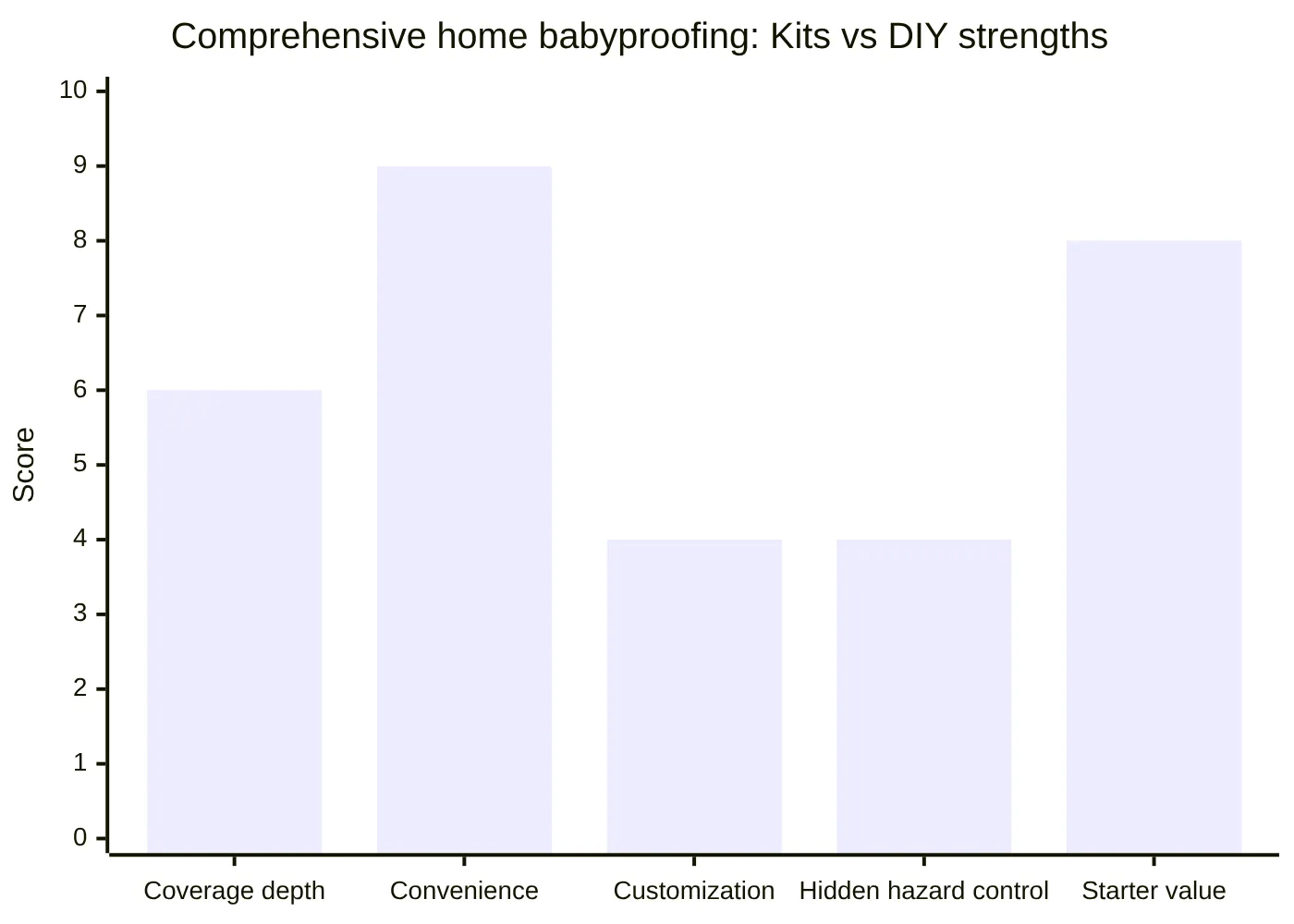
The chart above reflects the strongest pattern from the research: kits are fast and convenient, but they often fall short on specialized hazards.
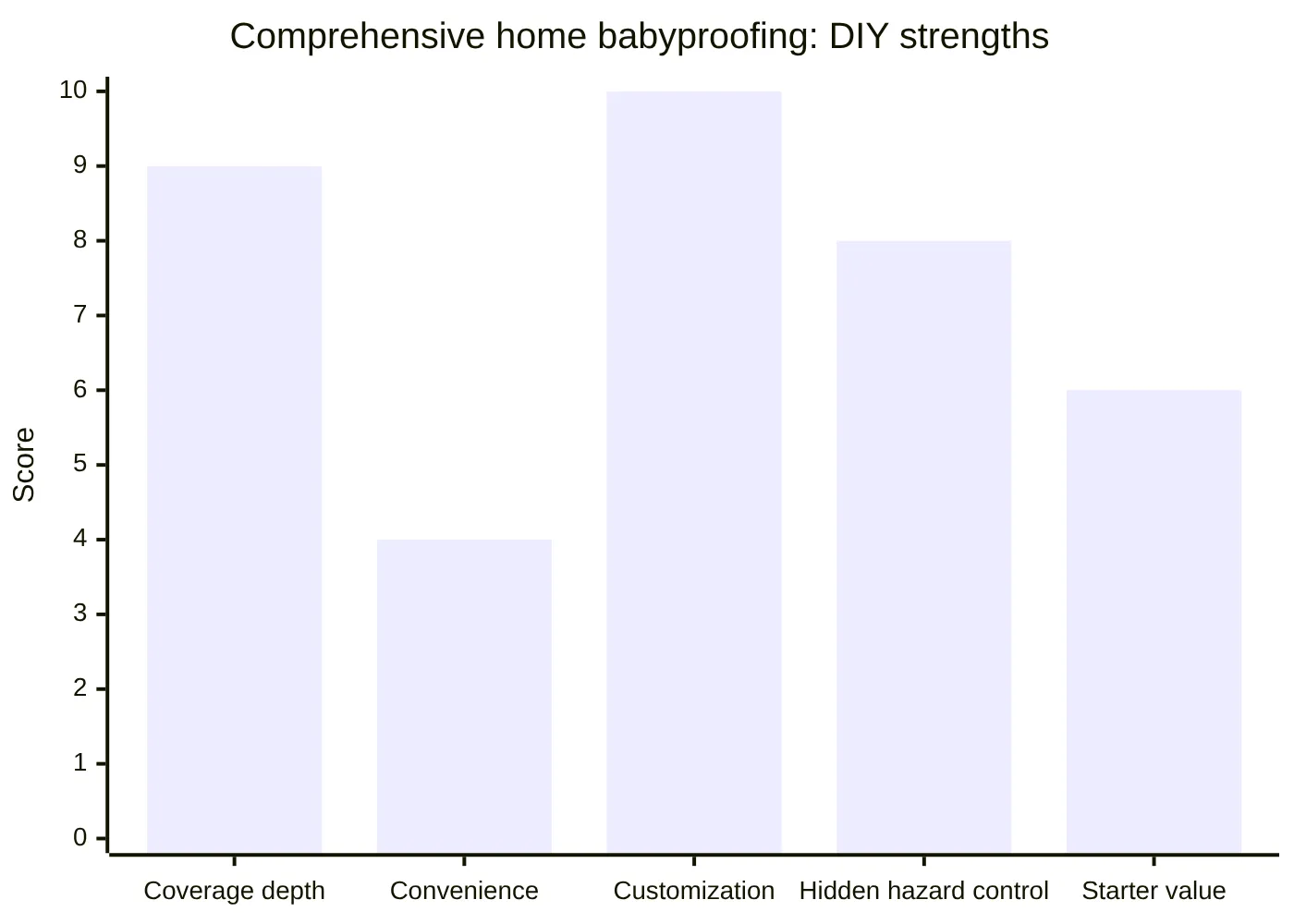
DIY babyproofing scores better when parents use strong babyproofing checklists and audit each room carefully.
A direct comparison makes the decision easier:
| Factor | All-in-one safety kits | DIY babyproofing | Best takeaway |
|---|---|---|---|
| Setup speed | Fast | Slower | Kits are better for immediate basics |
| Product selection | Fixed bundle | Custom by room | DIY is better for unusual layouts |
| Comprehensive home babyproofing coverage | Partial | Potentially stronger | DIY or hybrid usually covers more hazards |
| Kitchen and appliance locks | Often limited | Easier to prioritize | DIY or hybrid is stronger in kitchens |
| Cost at checkout | Often lower upfront | Flexible | Kits may still need add-ons later |
| Confidence | Easy to buy | Harder to plan | Kits help start, checklists help finish |
The best approach for many families is hybrid. Start with the basics, then compare your setup against room-specific needs. That reduces overwhelm without assuming the bundle is complete.
For additional context, Vmaisi has a related guide on comprehensive home babyproofing kits, which supports the same idea: starter kits help, but they do not replace a more complete safety review.
Where comprehensive home babyproofing checklists reveal overlooked safety items
Strong babyproofing checklists do more than repeat the obvious. They reveal the overlooked safety items that often separate a quick setup from a truly practical whole-home plan. Research in the report highlights the same repeated gap: parents often secure outlets and cabinets first, then realize later that the bigger daily risks are attached to rooms and routines.
This is where comprehensive home babyproofing becomes more useful than generic shopping lists. A checklist-led approach helps you inspect by behavior: what your child can grab, pull, climb, open, switch on, or swallow.
Here is a focused room-by-room checklist:
| Room | Core risks | Common basics | Overlooked safety items |
|---|---|---|---|
| Kitchen | Burns, knives, cleaners, appliance access | Cabinet latches, drawer locks | Dishwasher lock, fridge lock, oven lock, stove knob covers, trash can lock |
| Bathroom | Water, medicines, cleaning products | Under-sink locks | Toilet lock, medicine storage plan, hot water awareness |
| Living room | Tip-over, cords, windows, power strips | Corner guards, outlet covers | Furniture anchors, blind cord safety, window stops |
| Nursery | Climbing, cords, low windows | Drawer locks | Furniture anchors, crib placement away from cords, window restrictions |
| Bedroom | Wandering, pinch points, drawers | Door controls, drawer latches | Door pinch guards, blind cord safety, reachable chargers |
| Stairs and hallways | Falls, wandering | Basic gates | Hardware-mounted top-of-stairs gate, gate stability accessories |
| Laundry area | Detergents, appliance doors | Cabinet locks | Appliance locks, secure detergent storage |
| Home office | Batteries, cords, office supplies | Outlet covers | Power strip protection, drawer locks, battery awareness |
These overlooked safety items matter because many of them are not framed as baby products in everyday thinking. A blind cord, trash can, or dishwasher door feels like part of the house, not part of the nursery aisle. That is exactly why they get missed.
Vmaisi also has a useful supporting article on overlooked babyproofing items, which aligns well with the checklist-based approach.
If your home has difficult drawers, cupboards, or corner cabinets, you may also find how to babyproof cabinets with magnetic locks and do magnetic cabinet locks fit corner cabinets helpful before choosing hardware.
Why comprehensive home babyproofing should prioritize kitchen and appliance locks
The kitchen is where comprehensive home babyproofing most clearly moves beyond standard kits. Research consistently identifies the kitchen as a high-risk zone because it combines sharp tools, hot surfaces, detergents, breakables, glass, and appliance access in one space.
Many all-in-one safety kits help with lower cabinets and drawers, but kitchen and appliance locks are often where parents need targeted add-ons. Securing a cabinet under the sink does not prevent a toddler from opening the dishwasher, pulling on the oven door, or accessing the fridge repeatedly.
A practical priority list for kitchen and appliance locks looks like this:
| Product type | Why it matters | Typical fit in kits |
|---|---|---|
| Cabinet locks | Blocks routine access to cleaners, tools, and breakables | Common |
| Drawer latches | Helps secure knives and sharp utensils | Common |
| Dishwasher locks | Prevents access to detergent pods, knives, and hot interiors | Often missing |
| Fridge or freezer locks | Limits repeated access, spills, glass containers, and climbing temptations | Often missing |
| Oven door locks | Reduces access to a major burn zone | Often missing |
| Stove knob covers | Helps prevent accidental burner activation | Sometimes missing |
| Trash can locks | Limits access to germs, choking hazards, and sharp waste | Rarely included |
This section is also where trust matters most. Parents are not just asking whether the lock works. They are asking whether the adhesive will hold, whether adults can still use the appliance easily, and whether the product will damage surfaces. The report makes an important point here: no adhesive lock should be treated as universally perfect on every surface. Correct installation and ongoing checks still matter.
For homes that need one lock style across several high-risk areas, Vmaisi's multi-use child safety locks are directly relevant. The 6 Pack Vmaisi Multi-Use Adhesive Straps Locks is especially suited to families who want one no-drill option for fridge, dishwasher, toilet seat, cupboards, and some appliance-adjacent uses.
For more detailed planning, Vmaisi also offers a helpful guide to child safety locks for fridge and oven, which fits naturally into a kitchen-focused safety upgrade.

How comprehensive home babyproofing works best as a hybrid strategy
The research supports a balanced conclusion. All-in-one safety kits are not a bad choice. They are a good first layer. DIY babyproofing is not automatically better either, because it can become incomplete if parents rely on weak babyproofing checklists or lose momentum after securing only one room.
The strongest plan for comprehensive home babyproofing usually follows this sequence:
- Start with visible, high-frequency risks such as lower cabinets, drawers, outlets, and sharp corners.
- Use room-based babyproofing checklists to identify what the starter setup missed.
- Add overlooked safety items based on the rooms your child explores most.
- Prioritize kitchen and appliance locks, bathrooms, furniture anchoring, windows, cords, and stairs.
- Recheck the home as your baby becomes more mobile and curious.
This hybrid model works because it keeps the convenience of all-in-one safety kits while avoiding the blind spots that bundle marketing can create. It also fits the emotional reality of parenting. Most families do not want a long, technical project. They want an efficient way to improve safety without guessing.
If you are ready to turn a starter setup into a more complete one, the most practical next step is to choose a product by room, not by bundle size. For cabinet-heavy spaces, start with the Vmaisi Baby Proofing Magnetic Cabinet Locks 12 Pack. For kitchens, bathrooms, and appliances, compare the Vmaisi Multi-use Child Safety Locks collection or go directly to the 6 Pack Vmaisi Multi-Use Adhesive Straps Locks.
Parents who also need support for room boundaries can continue with childproof door locks and baby gate installation tips, especially for hallways and stairs.

FAQ
Is an all-in-one safety kit enough for comprehensive home babyproofing?
Usually not on its own. A kit can cover the basics well, but comprehensive home babyproofing often requires add-ons for appliance access, furniture anchoring, blind cords, windows, toilets, and stairs.
Are all-in-one safety kits still worth buying?
Yes, especially for first-time parents who want a fast start. The key is to treat them as a starter layer rather than a complete solution.
What do parents most often forget when using babyproofing checklists?
The report shows common misses include appliance locks, toilet locks, furniture anchors, blind cord safety devices, window stops, trash can locks, and top-of-stairs gate planning.
Why are kitchen and appliance locks so important?
Because cabinets are only part of the kitchen risk. Toddlers also explore dishwashers, fridges, ovens, stove knobs, microwaves, and trash cans.
Are adhesive safety locks reliable?
They can be effective when installed correctly on compatible surfaces, but performance depends on surface prep, placement, cure time, humidity, and ongoing checks. No adhesive product should be treated as a one-time install-and-forget solution.
What is the most practical buying strategy?
For most families, hybrid is best: use a starter kit or core basics first, then add room-specific products for the highest-risk gaps.
Comprehensive home babyproofing works best when you measure success by hazards covered, not by pieces purchased.