

Safe Babyproofing: What to Check Before You Buy
Safe babyproofing starts with choosing products that match the real hazard, show credible safety support, disclose materials clearly, and hold up in daily use.
Parents looking for sustainable and certified baby safety products often run into the same problem: nearly every listing sounds reassuring. Words like eco-friendly babyproofing, hypoallergenic materials, BPA-free products, and certified can appear on the same package, even when they mean very different things. For families with a new baby, that creates understandable hesitation. The safest buying decision usually comes from checking the product's actual purpose first, then reviewing compliance, materials, installation, durability, and honest sustainability details.
A good rule is simple: buy for the risk, not for the slogan. Guidance from the U.S. Consumer Product Safety Commission emphasizes matching the safety tool to the household hazard, whether that means cabinet locks for chemicals, furniture anchors for tip-over prevention, outlet protection for electrical risk, or a properly selected gate for stair safety. Claims about being green or non-toxic can be helpful, but they should never replace hazard fit and product transparency.
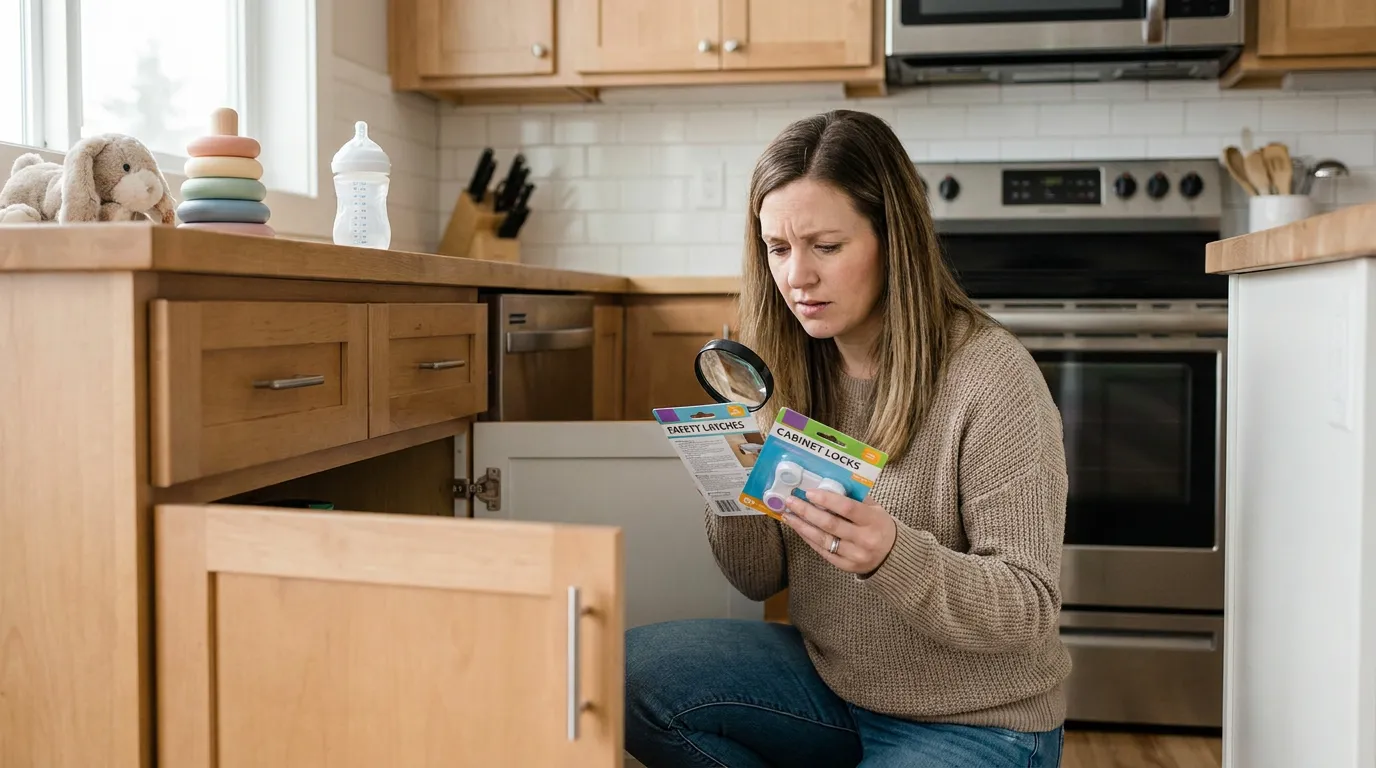
How sustainable and certified baby safety products should be evaluated before purchase
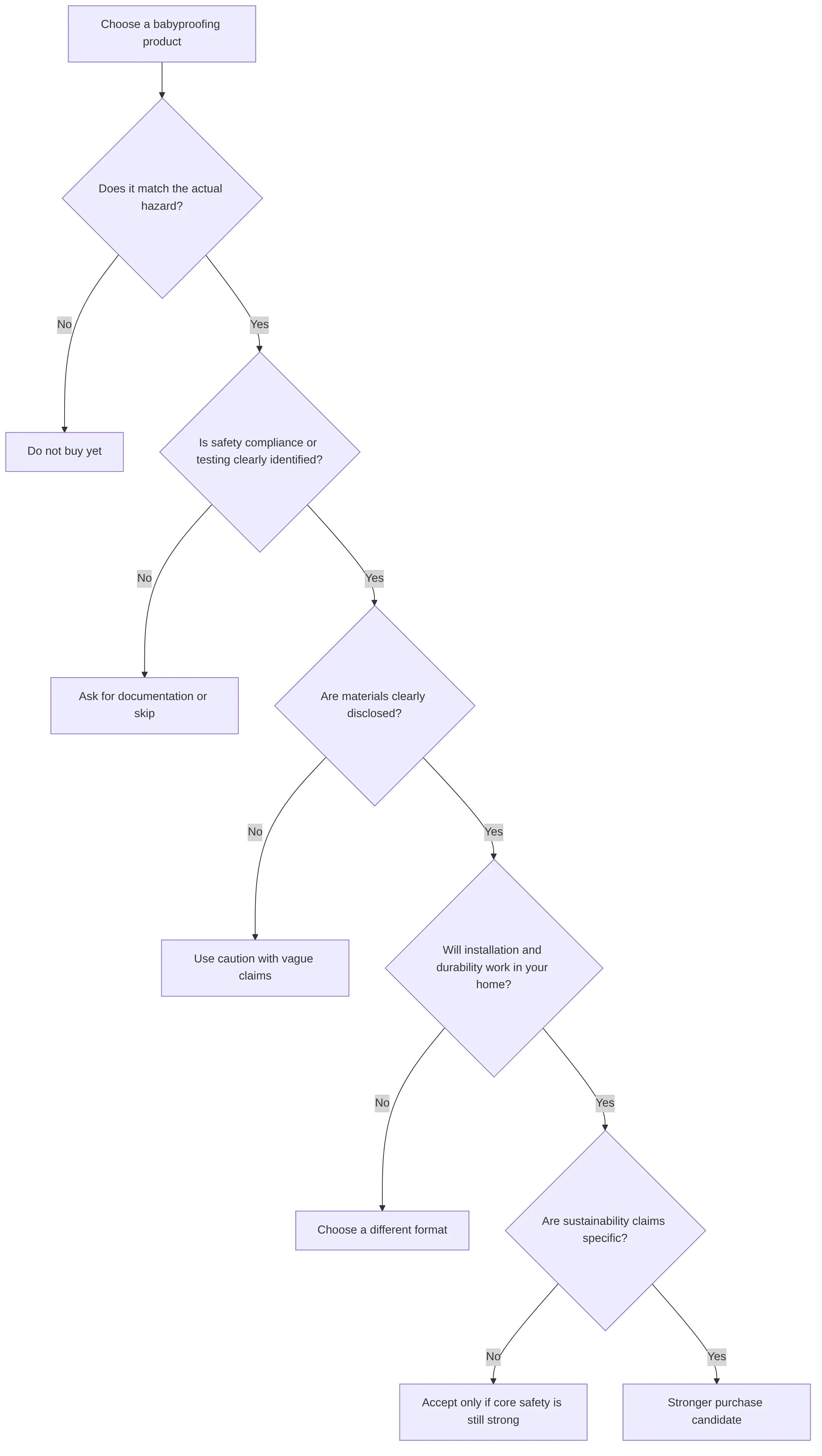
The best way to evaluate sustainable and certified baby safety products is to use a layered screen. Start with the hazard. Then verify the safety basis. Then review material transparency, installation reliability, and sustainability claims.
That order matters because a product can have recyclable packaging and still be the wrong choice for your home. A product can also be marketed as eco-friendly babyproofing without naming any meaningful certification, standard, or material details. Likewise, Baby Safety Alliance Verification may be a useful trust signal, but it should be treated as supplementary rather than a substitute for applicable safety compliance or clear documentation.
The chart below shows a practical decision order for parents who want clarity before they buy.
Here is a quick reference table you can use while shopping:
| What to check | Why it matters | Stronger signal | Weak signal |
|---|---|---|---|
| Hazard fit | A safe product must fit the risk | Cabinet lock for chemicals, hardware-mounted gate for stairs | Generic big kit with no room planning |
| Safety basis | Helps confirm testing or compliance | CPC support where applicable, ASTM reference, clear warnings | Certified with no standard named |
| Materials | Reveals what the product is actually made from | Plastic type, adhesive details, coatings, textiles listed | Non-toxic with no specifics |
| Installation | Prevents misuse and failure | Surface guidance, cure time, heat and moisture limits | No instructions or vague claims |
| Sustainability | Helps assess realistic lower-waste value | Durable design, recyclable packaging, named certifications | Eco-friendly without proof |
If you are starting with cabinet and drawer hazards, Vmaisi's magnetic cabinet locks are a direct example of a hidden, room-specific solution. For broader planning, the brand's eco-friendly babyproofing guide adds useful context on durability, material disclosure, and low-waste choices.

Why sustainable and certified baby safety products still need material transparency
Sustainable and certified baby safety products are only as trustworthy as the details behind their materials. Parents often notice the visible plastic or silicone first, but hidden components such as adhesives, coatings, foam, metal hardware, inks, and straps can matter just as much.
This is where many listings become vague. A package may say BPA-free products, but that only addresses one chemical concern. According to FDA and NIEHS information on BPA, BPA-free does not automatically mean phthalate-free, low-VOC, fragrance-free, or broadly non-toxic. For babyproofing products, that means parents should ask what else is in the item, especially if the product includes soft plastic, foam padding, adhesive backing, or textile parts.
Hypoallergenic materials need the same careful reading. The term can suggest lower irritation potential, but it does not mean allergy-proof, and there is no universal legal definition that guarantees the same outcome across all baby products. In practice, parents should treat hypoallergenic materials as one possible reassurance point, not as final proof of safety.
A practical material checklist looks like this:
| Material area | What to ask | Why it matters |
|---|---|---|
| Plastics | Is the plastic type disclosed? Are BPA-free products the only claim? | BPA-free is incomplete on its own |
| Adhesives | What surfaces work best? How long is cure time? | Adhesive failure creates a real safety risk |
| Foam | Is there odor, emissions info, or vague composition? | Hidden foam ingredients are often unclear |
| Coatings and finishes | Are low-emission claims supported by a named program? | Paint and finish claims are often broad |
| Textiles or straps | Are standards like OEKO-TEX or GOTS relevant? | Useful for regular skin contact |
| Wood or paper-based parts | Is FSC mentioned where relevant? | Helps support responsible sourcing |
The strongest listings explain what the product is made from instead of relying on broad comfort words. They also explain how the product should be installed and maintained. That matters a lot for adhesive locks, because moisture, grease, painted surfaces, and rushed installation can affect performance.
If your main concern is appliances, fridge doors, or toilet access points, Vmaisi's multi-use child safety locks offer a flexible category to review. Families comparing hazard zones may also find the article on overlooked babyproofing items helpful, especially when a basic kit does not cover everything.
How sustainable and certified baby safety products connect to eco-friendly babyproofing and recyclable packaging
Eco-friendly babyproofing is most useful when it is practical, specific, and secondary to real safety performance. In this category, sustainability usually comes down to durability, fewer replacement cycles, reusable design where appropriate, lower-waste packing, and recyclable packaging that local recycling systems can actually accept.
That is an important distinction. Recyclable packaging is a positive signal, but it does not make a product safer by itself. It simply tells you something about the packaging. The same applies to environmental certifications. FSC can be useful for responsibly sourced wood or paper. OEKO-TEX Standard 100 and GOTS can add reassurance for textiles. GREENGUARD Gold can be relevant when indoor emissions matter. Each certification has a defined scope, so parents should match the claim to the actual product type.
A more realistic sustainability screen looks like this:
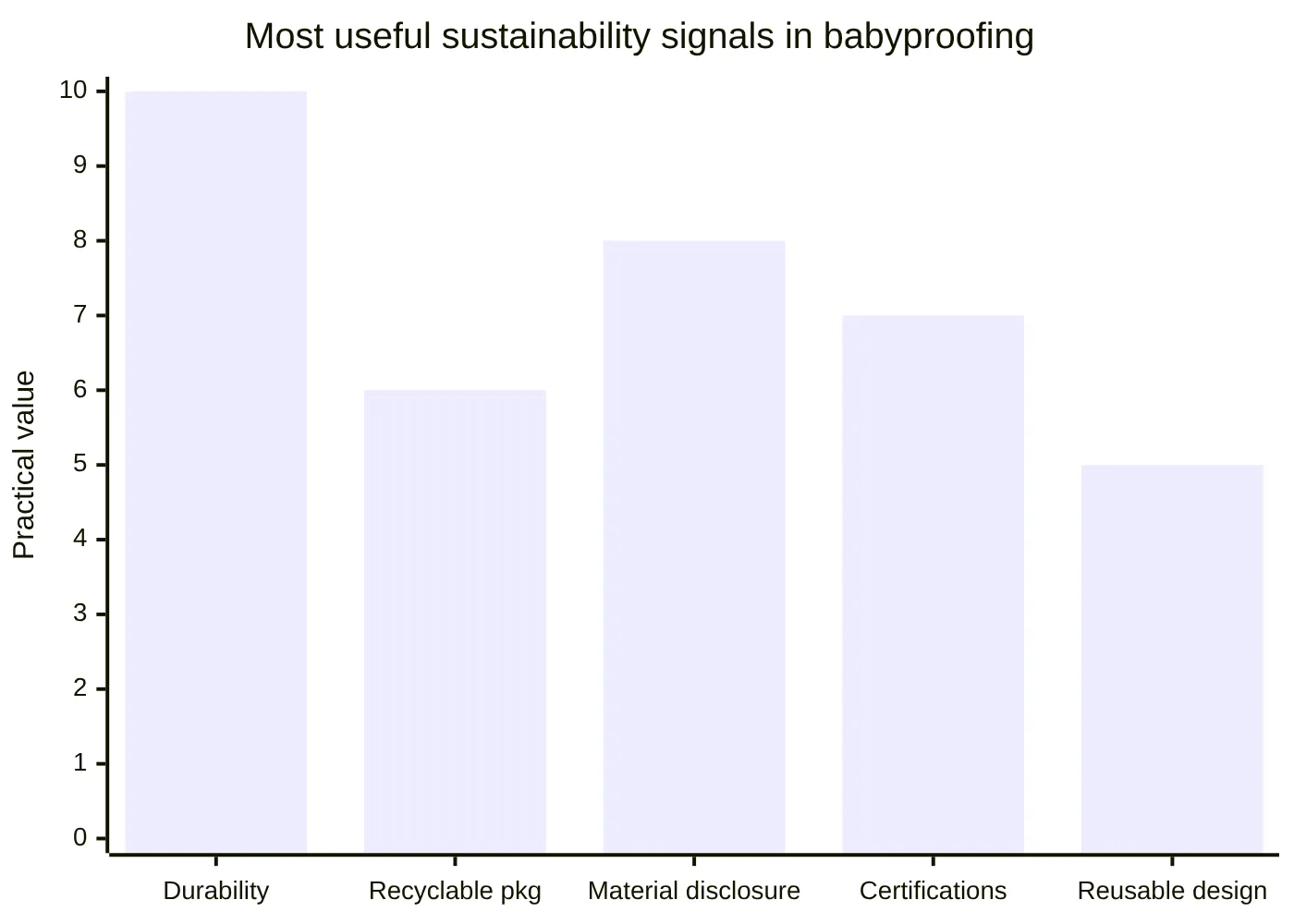
For many families, the most sustainable choice is not the one with the most green language on the package. It is the product that lasts through the high-risk stage, works correctly, does not need repeated replacement, and avoids excess packaging. That is why eco-friendly babyproofing should be judged with a calm, practical lens instead of perfection.
This is also where Baby Safety Alliance Verification should be explained carefully. Public information suggests it can serve as a voluntary trust cue, but it should not be described as a universal guarantee of safety or sustainability. It is better treated as an additional signal alongside compliance, named standards, and product-specific material details.
If you are building a lower-damage setup for gates or pressure-mounted barriers, Vmaisi's baby gate wall protector is worth reviewing. It can support wall protection and stability planning, while the article on childproof door locks and baby gate planning adds more room-by-room context.
Which sustainable and certified baby safety products fit the biggest household hazards
Parents make better buying decisions when they shop by hazard zone instead of by product hype. A large piece-count kit can sound efficient, but it may still leave major risks uncovered if it does not match the rooms your child actually uses.
Here is a practical room-by-room view:
| Room or zone | Main hazard | Better product type to check | Extra buying note |
|---|---|---|---|
| Kitchen cabinets and drawers | Cleaners, knives, breakables | Magnetic cabinet locks | Hidden locks help preserve the look of cabinets |
| Fridge, dishwasher, toilet, trash can | Frequent access points | Multi-use child safety locks | Check adhesive guidance and surface fit |
| Stairs | Falls | Proper gate for the location | Top of stairs generally requires hardware-mounted guidance |
| Hallways and doorways | Room access and wandering | Gates and related accessories | Wall support matters for pressure-mounted setups |
| Living room and nursery | Furniture tip-over, cords, outlets | Anchors, outlet protection, cord management | Add corner protection only where impact risk exists |
This room-first method reflects official guidance better than shopping for the biggest bundle. It also helps parents notice when a seller is overselling a one-size-fits-all system. A lock that works well on standard cabinets may not be the best answer for a fridge or dishwasher. A pressure-mounted barrier that works in a hallway may not be suitable for the top of stairs.
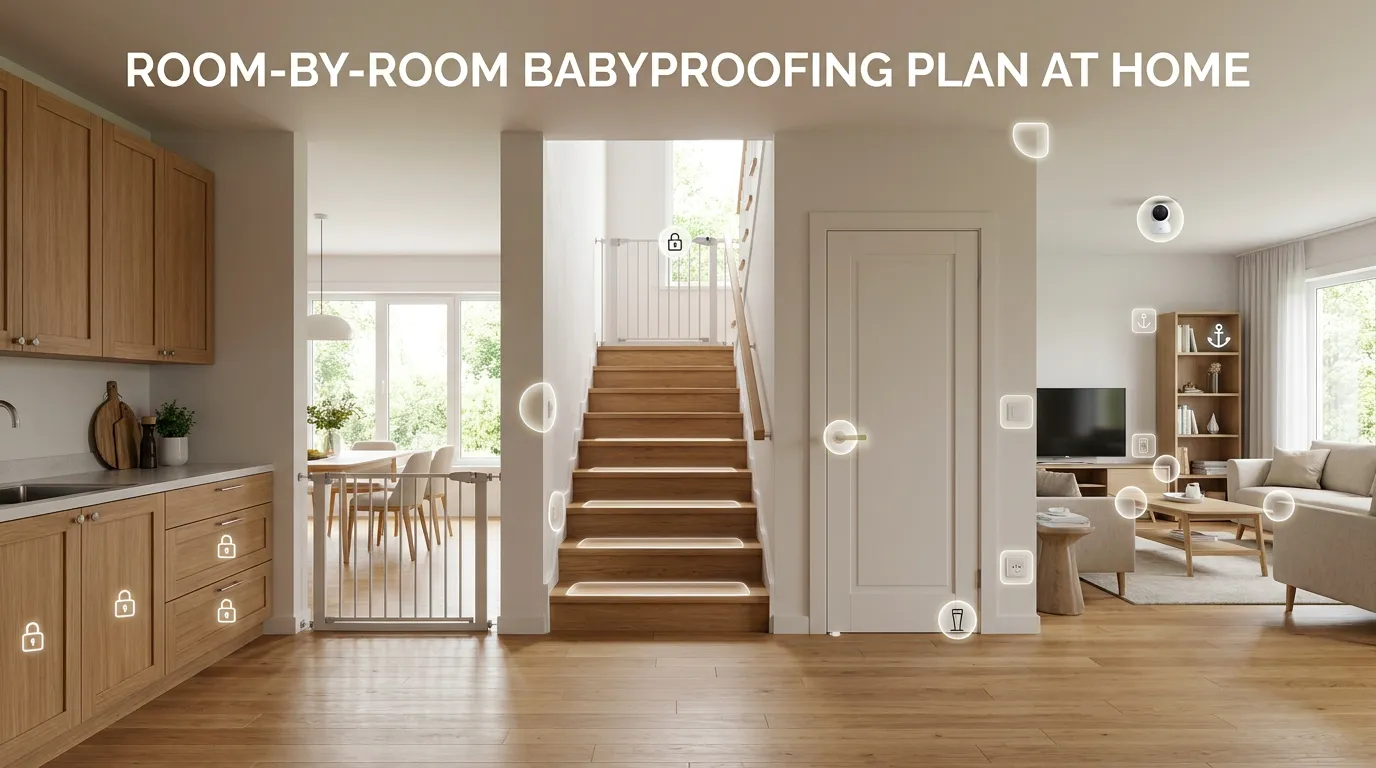
The best purchase path is usually the most specific one. If cabinets and drawers are your highest concern, go straight to magnetic cabinet locks. If your bigger issue is the fridge, dishwasher, toilet, or other awkward surfaces, compare multi-use child safety locks. If your setup depends on a gate staying stable without damaging paint or trim, review the baby gate wall protector.
For parents who want extra guidance before choosing, Vmaisi also offers related reading on eco-friendly babyproofing, overlooked safety gaps, and gate and door planning.
What to avoid when buying sustainable and certified baby safety products online
Online shopping adds convenience, but it also increases the risk of vague claims and weak documentation. Parents should slow down when a listing looks polished but provides very little evidence.
The biggest red flags include:
- no clear manufacturer name
- no warnings or age-stage guidance
- unnamed seals or badges
- certified with no standard listed
- non-toxic or eco-friendly with no supporting details
- limited installation instructions
- no mention of recalls, testing basis, or material disclosure
Use this quick screening table before ordering:
| Listing claim | What to do |
|---|---|
| BPA-free products | Check whether other materials or chemical claims are disclosed |
| Hypoallergenic materials | Look for context, because the term is not a universal guarantee |
| Baby Safety Alliance Verification | Treat as supplementary, then look for product-specific details |
| Recyclable packaging | Check whether the rest of the product information is equally transparent |
| Certified | Confirm the standard name and who issued it |
You can also review official consumer resources such as the CPSC's childproofing guidance, CPSC information on the Children's Product Certificate, and the CPSC recalls page. For broader shopping caution, Consumer Reports also offers guidance on buying baby products online safely.
The bottom line is straightforward: sustainable and certified baby safety products are worth considering, but only when the safety fit is right, the evidence is clear, and the materials and installation details are transparent. Marketing terms can support a decision, but they should never make the decision for you.
When you are ready to move from research to action, choose the specific product page that matches your home's most urgent hazard first: magnetic cabinet locks for cabinets and drawers, multi-use child safety locks for appliance and bathroom access points, or baby gate wall protector for a more stable, wall-friendly gate setup.