

Which Eco-Friendly Babyproofing Options Work Best
Are you confused about how to babyproof your home for a new baby without filling it with flimsy plastic, vague green claims, or products that are hard to trust? If so, you are not alone. Many new parents want sustainable and certified baby safety products, but the market often mixes real safety features with unclear marketing language. The best approach is simple: choose products that reduce real hazards first, then compare materials, durability, and packaging.
This guide explains which eco-friendly babyproofing choices work best, what labels actually matter, and how to shop more confidently on vmaisi8.com without falling for greenwashing.
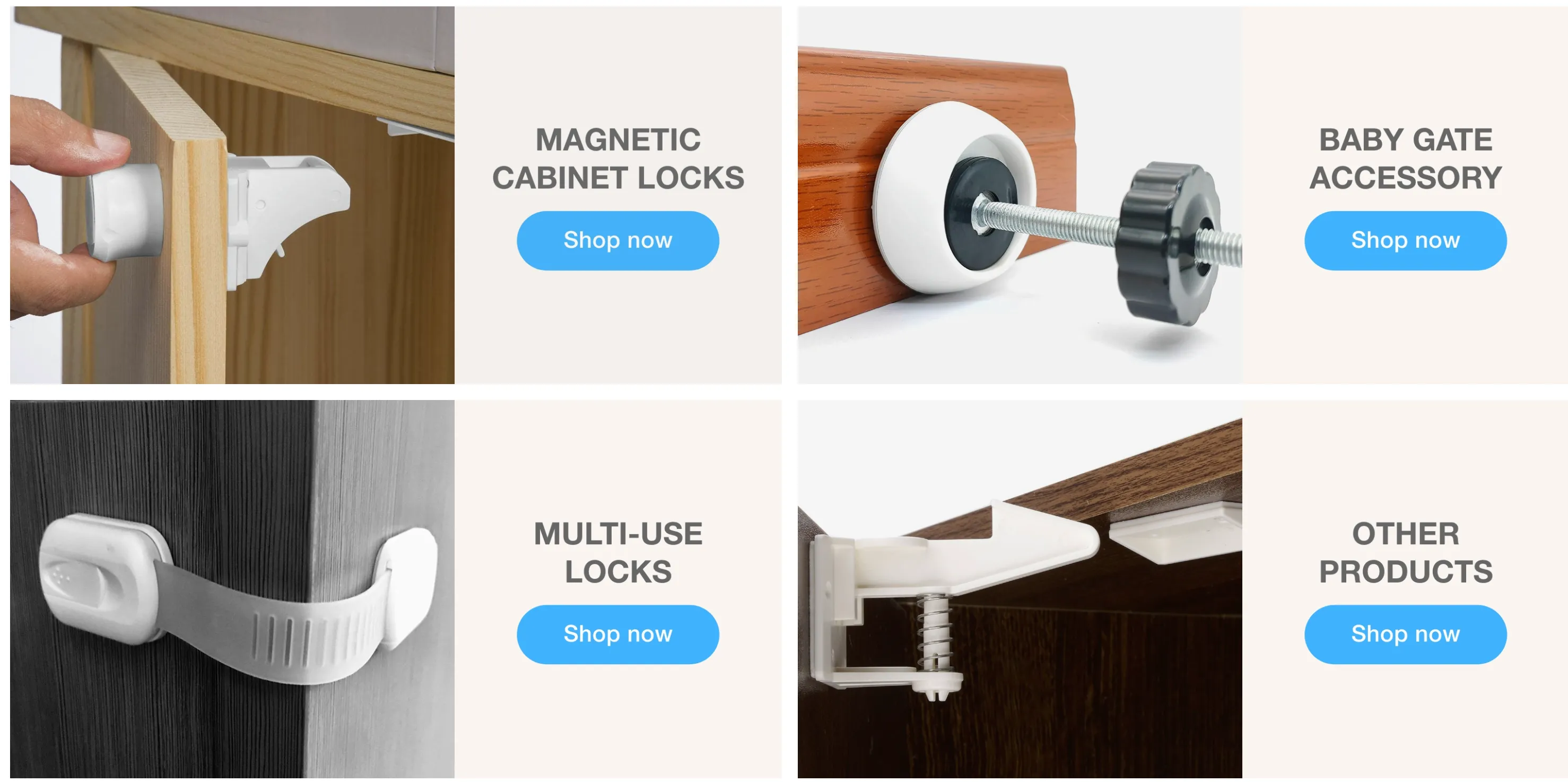
Vmaisi Baby Proofing Magnetic Cabinet Locks 12 Pack - Childproof your house
What sustainable and certified baby safety products really mean
Sustainable and certified baby safety products are not one official product class. In real-world shopping, the phrase usually means babyproofing items that do four things well: reduce household risks, offer clearer material information, last long enough to avoid frequent replacement, and create less waste through design or recyclable packaging.
That distinction matters because ‘eco-friendly babyproofing’ is a broad consumer term, not a formal safety certification. The CPSC childproofing guidance focuses first on hazard reduction such as cabinet locks, outlet protection, gates, and window safety. The FTC Green Guides also remind brands to avoid vague environmental claims that are not specific or substantiated.
So when comparing sustainable and certified baby safety products, use this order of importance:
- Safety function
- Reliable installation and daily performance
- Adult ease of use
- Material transparency
- Durability and reusability
- Recyclable packaging
A green product that fails under toddler force is not the better option. By contrast, a durable, well-designed lock that lasts through multiple stages of childhood is often the more sustainable choice even if the sustainability benefit comes mainly from longevity.
If you want a broader overview before shopping room by room, Vmaisi's eco-friendly babyproofing guide is a helpful starting point.
Which sustainable and certified baby safety products work best by category
For most families with a new baby, the best sustainable and certified baby safety products are the ones that solve common household risks without forcing constant replacement. That usually means focusing on cabinet access, appliances, gates, furniture stability, and a few touchpoint protections rather than buying a giant starter bundle all at once.
Cabinet and drawer locks
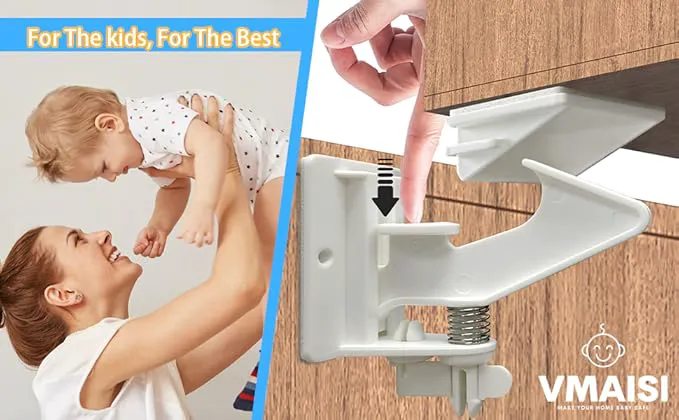
Cabinet locks are one of the most practical categories because they help block access to cleaners, medicines, sharp tools, and breakables. Hidden magnetic systems can be especially useful if you want lower visual clutter and fewer exposed parts for children to grab.
The magnetic cabinet locks collection is a strong fit for parents looking for a reusable, hidden option. If you want a direct product example, child safety magnetic cabinet locks are designed for everyday kitchen and bathroom use. For smaller setups, adhesive magnetic cabinet locks can make sense when you want a renter-friendly install.
These products support eco-friendly babyproofing when they reduce duplicate purchases across multiple rooms and hold up well over time. If you have an unusual layout, this guide on whether magnetic cabinet locks fit corner cabinets can help you decide.
Multi-use adhesive locks
One of the best low-waste ideas in sustainable and certified baby safety products is using one lock style across several surfaces. That is where multi-use child safety locks stand out. Instead of buying separate devices for the fridge, toilet seat, trash can, dishwasher, and drawers, a multi-use system can cover more areas with fewer total products.
The multi-use adhesive strap locks are especially useful for parents who want flexible placement without drilling. They are also a good example of eco-friendly babyproofing that balances practicality with lower home damage.
Still, adhesive products have tradeoffs. They depend on clean surfaces, room conditions, and proper cure time. In hot, damp, or greasy areas, installation quality matters just as much as product quality. For kitchen-specific concerns, this article about strong child safety locks for dishwasher adds useful context.
Baby gates and wall protection
Baby gates become more urgent as mobility increases, especially around stairs, kitchens, and pet zones. In this category, certified baby safety products should be evaluated with extra care because gates are tied to formal safety expectations such as ASTM F1004 and 16 CFR 1239. That makes mechanical reliability more important than broad sustainability language.
If you use pressure-mounted gates, baby gate wall protector accessories can help reduce wall damage while improving contact points. Products like baby gate wall cups may support a more renter-friendly setup and help extend the life of painted walls and trim.
For families planning room boundaries, this post on childproof door locks and gates is a helpful next step.
Other essentials parents should not ignore
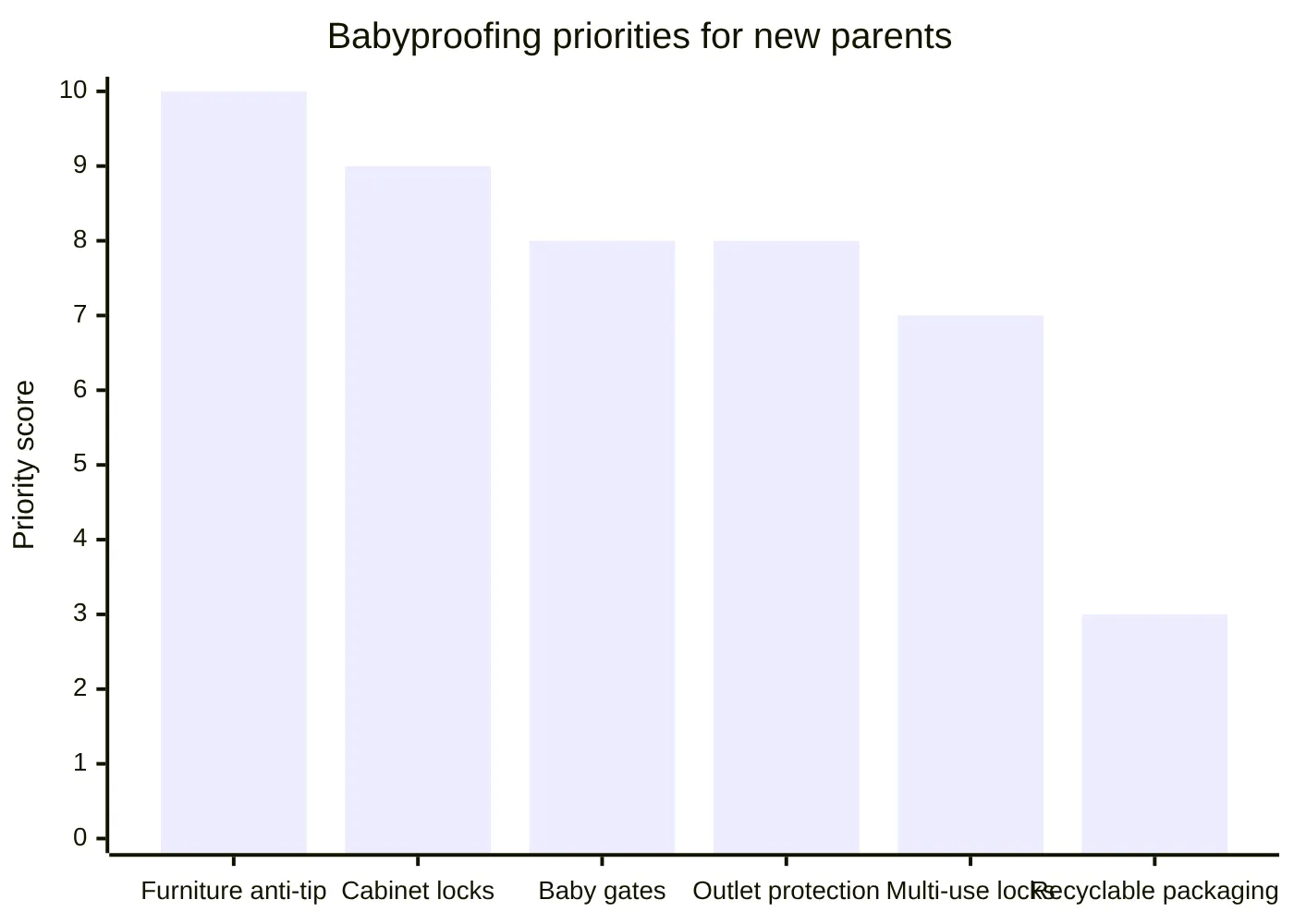
Some of the highest-priority safety actions are not always the most marketable. Furniture anti-tip products, blind-cord safety, and outlet protection often deserve attention before decorative add-ons. The National Safety Council highlights furniture anchoring as a key childproofing priority, while the CPSC includes outlet protection and core home childproofing measures in its safety guidance.
That means the smartest eco-friendly babyproofing plan is not ‘buy more.’ It is ‘protect the biggest risks first.’
| Category | Why it matters | Best sustainability angle | Main caution |
|---|---|---|---|
| Cabinet locks | Blocks access to chemicals and sharp items | Reusable hidden systems, multi-room use | Weak adhesive or brittle parts |
| Multi-use locks | Reduces duplicate purchases | One system for many surfaces | Surface compatibility |
| Baby gates | Restricts high-risk access zones | Longer life, wall protection accessories | Must meet performance expectations |
| Furniture anti-tip | Prevents tip-over injuries | Durability over disposable design | Installation must match wall type |
| Outlet protection | Reduces shock risk | Long-term built-in options during updates | Small caps can be lost |
How sustainable and certified baby safety products should be evaluated for materials and claims
Parents often search for BPA-free products, hypoallergenic materials, and low-emission options because they want more confidence about what enters the home. That instinct makes sense, but these labels need context.
BPA-free products
BPA-free products can be a useful signal when a baby safety item contains plastic parts that are handled often. However, BPA-free does not mean chemical-free, and it does not automatically prove stronger safety performance. The FDA's BPA overview makes clear that BPA is one specific compound, so the claim is meaningful but limited.
Vmaisi has an educational post about a BPA-free toilet seat lock, which is helpful for parents thinking beyond kitchen cabinets into bathroom safety.
Hypoallergenic materials
Hypoallergenic materials are often appealing, especially for products children may touch often. But hypoallergenic is not a universal medical guarantee in babyproofing. In practice, it should be treated as a comfort and trust signal rather than proof that every child will react the same way.
For touch surfaces such as corner protection or wall-contact accessories, more durable silicone-style materials may be preferable to low-grade foam because they often clean more easily and may last longer. In broader home products, standards like OEKO-TEX Standard 100 can matter more when textiles are involved.
Low-VOC and emission-focused labels
Low-VOC and indoor-air labels are most relevant for paints, coatings, foam, furniture, and engineered wood. They are usually less central for a small latch than for a nursery dresser, foam mat, or room finish. The EPA VOC guidance supports this distinction.
That is why sustainable and certified baby safety products should be judged by category. A gate made with wood may benefit from FSC certification for sourcing, while a furniture or room product may benefit from UL GREENGUARD certification. But for locks and latches, performance and material clarity usually matter more than advanced emissions labeling.
A practical way to compare material claims is to ask three questions:
- Is the material actually named?
- Is the claim specific, like BPA-free products, rather than vague, like ‘non-toxic’?
- Does the safer-sounding material weaken durability or installation reliability?
If the answer to the third question is yes, it may not be the best choice.
Which certifications matter for sustainable and certified baby safety products
This is where many parents get overwhelmed. Not every badge means the same thing. Some labels refer to legal compliance, some to performance standards, some to emissions or materials, and some are simply marketing claims.
Here is the clearest way to rank trust signals in sustainable and certified baby safety products:
| Trust level | What to look for | Why it matters |
|---|---|---|
| Highest | Category-relevant legal compliance | Baseline requirement for applicable products |
| High | Standards and testing frameworks such as ASTM F1004 | Supports performance expectations |
| Medium to high | Third-party certification such as JPMA Certification where applicable | Adds independent trust |
| Medium | Material and emissions labels such as GREENGUARD, OEKO-TEX, FSC | Useful in the right product category |
| Lower unless explained | Marketing claims like eco-friendly, BPA-free, hypoallergenic, recyclable packaging | Helpful only when clearly defined |
For baby gates, ASTM F1004 and the federal gate rule under 16 CFR 1239 are especially relevant. For textile or emissions-heavy categories, OEKO-TEX and GREENGUARD may be more useful. For wood sourcing, FSC can support sustainability claims without saying anything by itself about mechanical child safety.
One term that deserves careful wording is Baby Safety Alliance Verification. Based on the research report, Vmaisi references Baby Safety Alliance Verification as a voluntary verification concept, but it could not be robustly confirmed through the most authoritative mainstream regulatory and standards sources listed in the report. That means parents should treat Baby Safety Alliance Verification as a brand-level trust signal, not as a substitute for formal compliance, ASTM standards, JPMA certification, or environmental certifications.
This distinction is important because truly sustainable and certified baby safety products should be backed by clear, category-relevant evidence rather than broad reassurance alone.
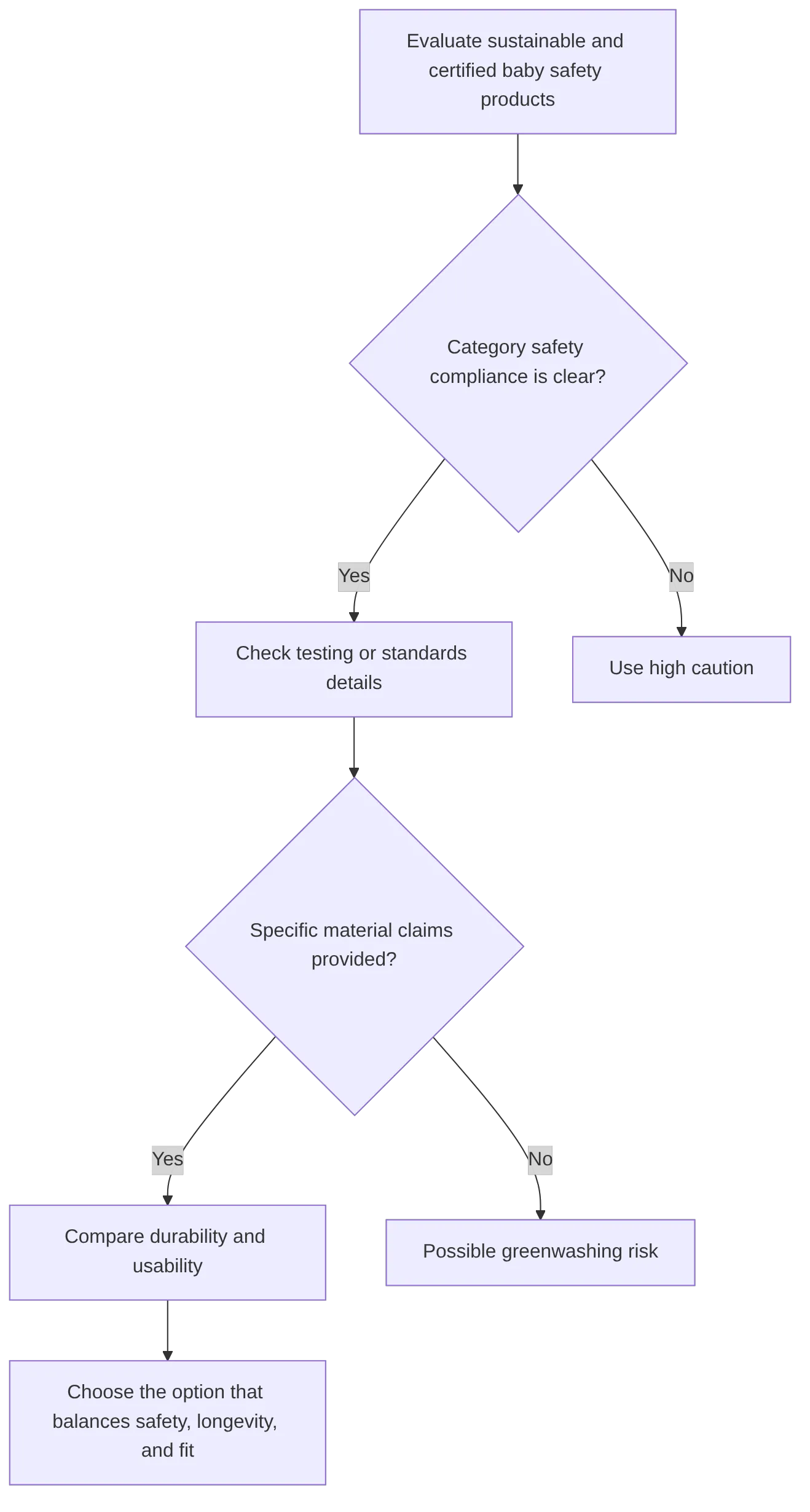
How to choose sustainable and certified baby safety products without greenwashing
The most effective eco-friendly babyproofing strategy is not chasing every environmental claim. It is buying fewer, better-matched products that solve actual risks in your home.
Here is a simple decision framework for new parents:
- What exact hazard does this product stop?
- Will it work on my surface, room, or layout?
- Are the claims specific and verifiable?
- Will it last long enough to justify the materials and packaging used?
If you are shopping now, these are often the most practical options to start with:
- Hidden magnetic cabinet locks for kitchens and bathrooms
- Flexible multi-use child safety locks for appliances and lids
- Pressure-gate support such as baby gate wall protector accessories for lower wall damage
- Installation support through Vmaisi's installation video if you want to reduce setup hesitation before buying
Recyclable packaging is still worth noticing, but it should be a tie-breaker rather than the deciding factor. A product in recyclable packaging is not automatically better if it breaks quickly or fails in daily use. In babyproofing, durability is often the more meaningful sustainability win.
For parents who want a final takeaway, the best sustainable and certified baby safety products are usually the ones that are durable, clearly described, easy for adults to use consistently, and matched to real household risks. That is why hidden cabinet locks, multi-use locks, and practical gate accessories tend to outperform trendier green items with weaker evidence.
If your next step is buying rather than researching, start with the highest-risk rooms first and move directly to the most relevant product pages on vmaisi8.com. That keeps your setup focused, lowers waste, and gives you a more realistic path to safer eco-friendly babyproofing.