

Eco-Friendly Babyproofing Guide For 2026
Are you trying to make your home safer for a crawling baby without filling every cabinet, corner, and doorway with throwaway plastic? Many parents in 2026 want sustainable and certified baby safety products that protect children, reduce unnecessary waste, and feel trustworthy in daily use. The challenge is that labels like eco-friendly babyproofing, hypoallergenic materials, BPA-free products, and Baby Safety Alliance Verification can blur together fast.
This guide breaks the topic down into practical steps. You will learn which safety standards matter, how to compare materials, what recyclable packaging really tells you, and where durable, low-damage babyproofing products can fit into a real family home. We will also point you to relevant resources and product pages from Vmaisi so you can move from research to action more confidently.
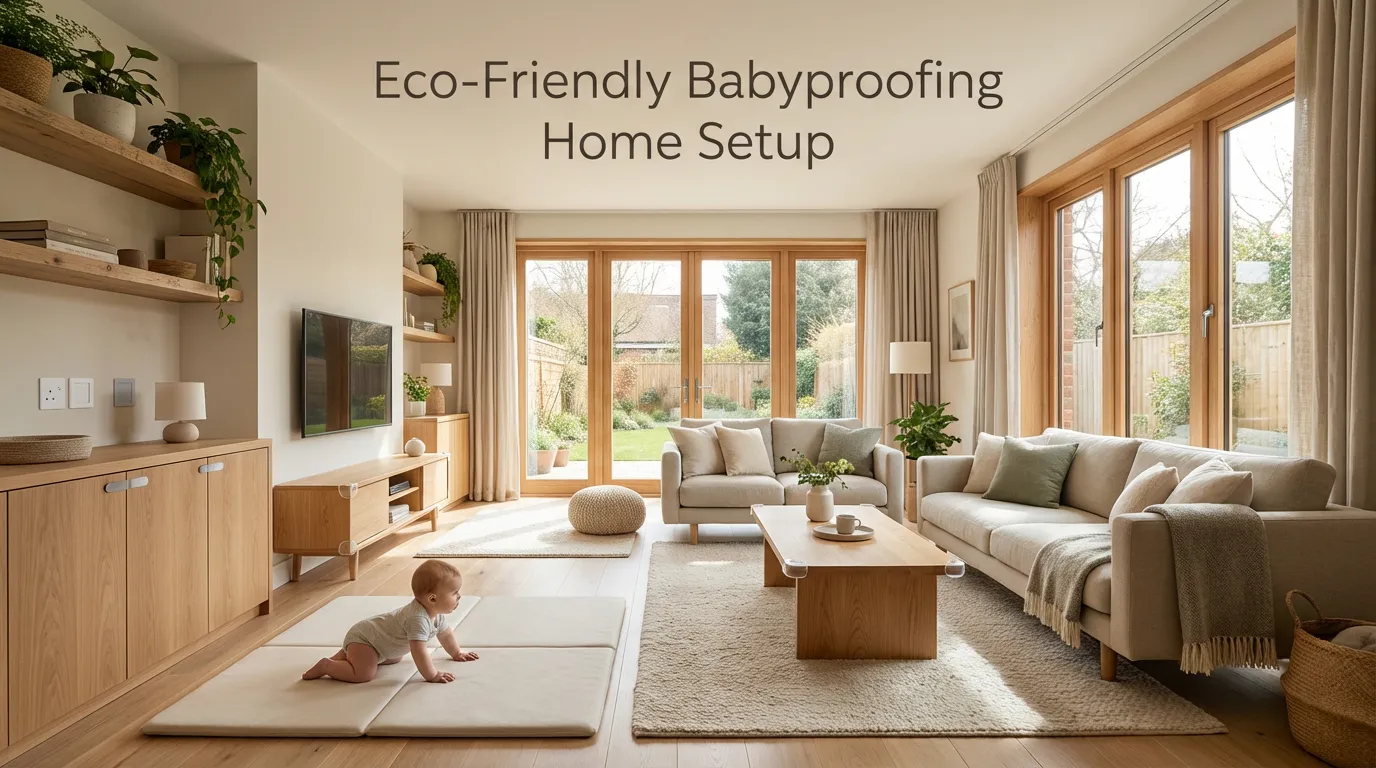
Sustainable and Certified Baby Safety Products in 2026
At a basic level, sustainable and certified baby safety products do two jobs at once. First, they help reduce real household risks such as falls, access to chemicals, electrical hazards, and impact injuries. Second, they aim to lower environmental and health concerns through better materials, better durability, and lower-waste packaging.
For parents, that usually means looking for products that align with applicable safety requirements and voluntary verification programs, while also paying attention to material transparency. In the U.S., children's products are expected to meet applicable rules tied to the Children's Product Certificate from CPSC. Depending on the category, product standards may also reference ASTM, and baby gates in Europe are commonly associated with EN 1930.
A helpful way to think about eco-friendly babyproofing is to evaluate products through four lenses:
| Lens | What to check | Why it matters |
|---|---|---|
| Safety | ASTM, CPSC, category-specific compliance, recall history | Confirms the product is built for actual risk reduction |
| Verification | Baby Safety Alliance Verification where applicable | Adds extra trust through voluntary independent verification |
| Materials | BPA-free products, lower-VOC finishes, hypoallergenic materials, reduced phthalate exposure | Helps parents avoid common chemical concerns |
| Packaging and lifespan | Recyclable packaging, durable parts, reusability | Reduces waste and supports longer-term value |
One important distinction: Baby Safety Alliance Verification is a safety-focused voluntary verification program, not an environmental certification. According to the Baby Safety Alliance verification program, Verified products are reviewed against applicable ASTM standards, regulatory requirements, and annual testing expectations. That is useful for trust, but parents still need to check separate sustainability signals such as FSC-certified wood, GREENGUARD, or OEKO-TEX where relevant.
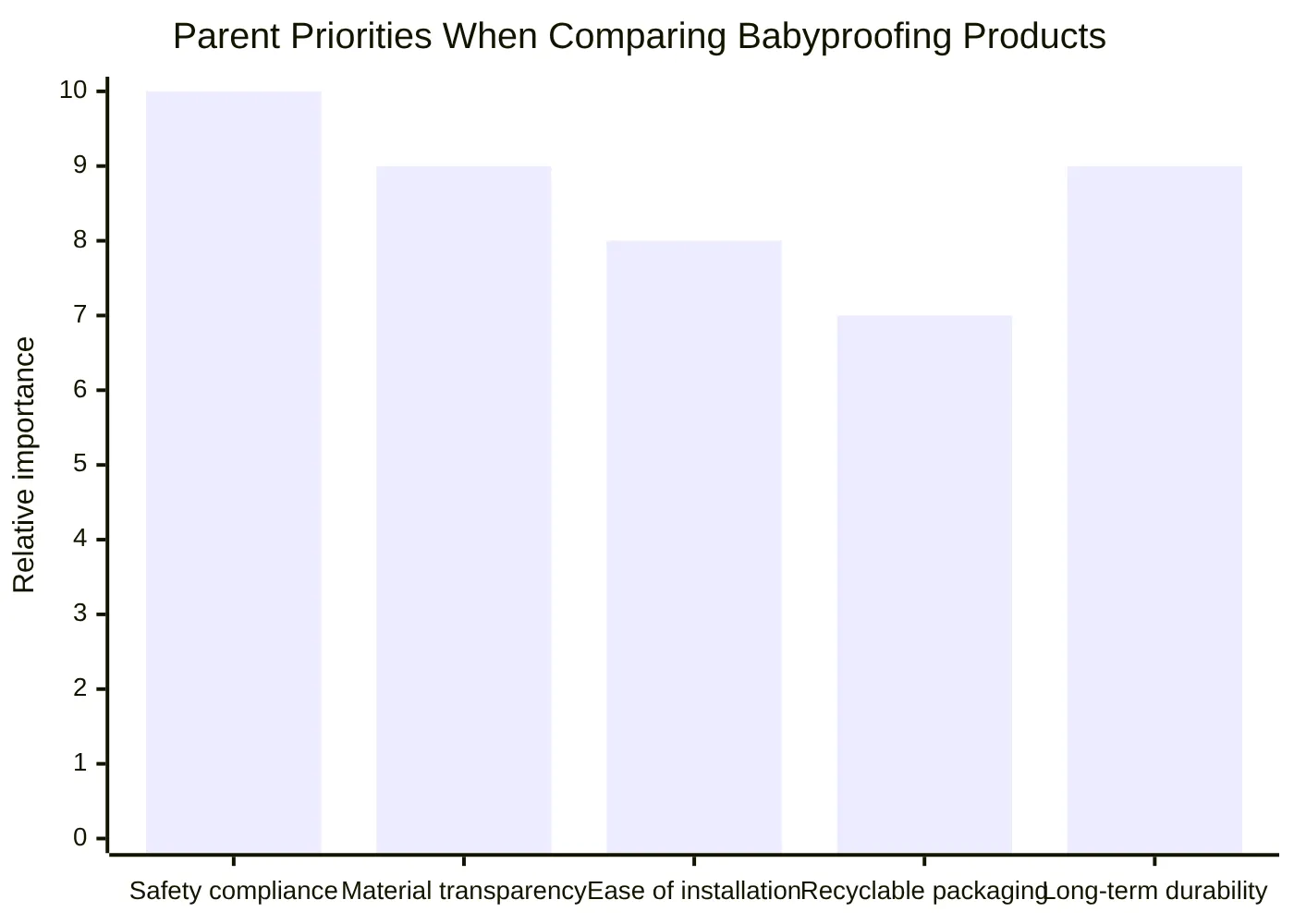
Eco-Friendly Babyproofing Essentials for Sustainable and Certified Baby Safety Products
When families talk about eco-friendly babyproofing, they are usually not looking for perfection. They want realistic upgrades in the rooms where babies face the biggest risks first. That makes a room-by-room approach the most practical.
In kitchens and bathrooms, cabinets, drawers, cleaning supplies, and appliances create some of the highest-priority hazards. This is where invisible, durable locks often make the biggest difference. The Vmaisi Magnetic Cabinet Locks collection is relevant for parents who want hidden hardware and no-drill installation. If you want a direct product example, the Vmaisi Baby Proofing Magnetic Cabinet Locks page highlights adhesive installation and an inside-the-cabinet design that helps preserve the look of the room.
For multi-surface use, flexible strap locks can reduce the need to buy separate products for every hazard zone. The Vmaisi Multi-Use Child Safety Locks collection and the 6-pack Vmaisi Multi-Use Adhesive Straps Locks can fit fridges, toilet seats, dishwashers, trash cans, and drawers. From a sustainability angle, multi-use designs may help reduce excess product buying because one format works across several surfaces.
Stairways and entryways usually call for more robust hardware. In these zones, long-lasting metal frames or responsibly sourced wood can be more appealing than flimsy, disposable-feeling plastic options. Parents comparing gates should pay attention to product-specific standards like ASTM F1004 and installation guidance. If you are trying to avoid wall damage while setting up gates, Vmaisi also offers educational resources through its Helpful Ideas blog, where parents can explore practical setup tips related to wall protection and home safety use cases.
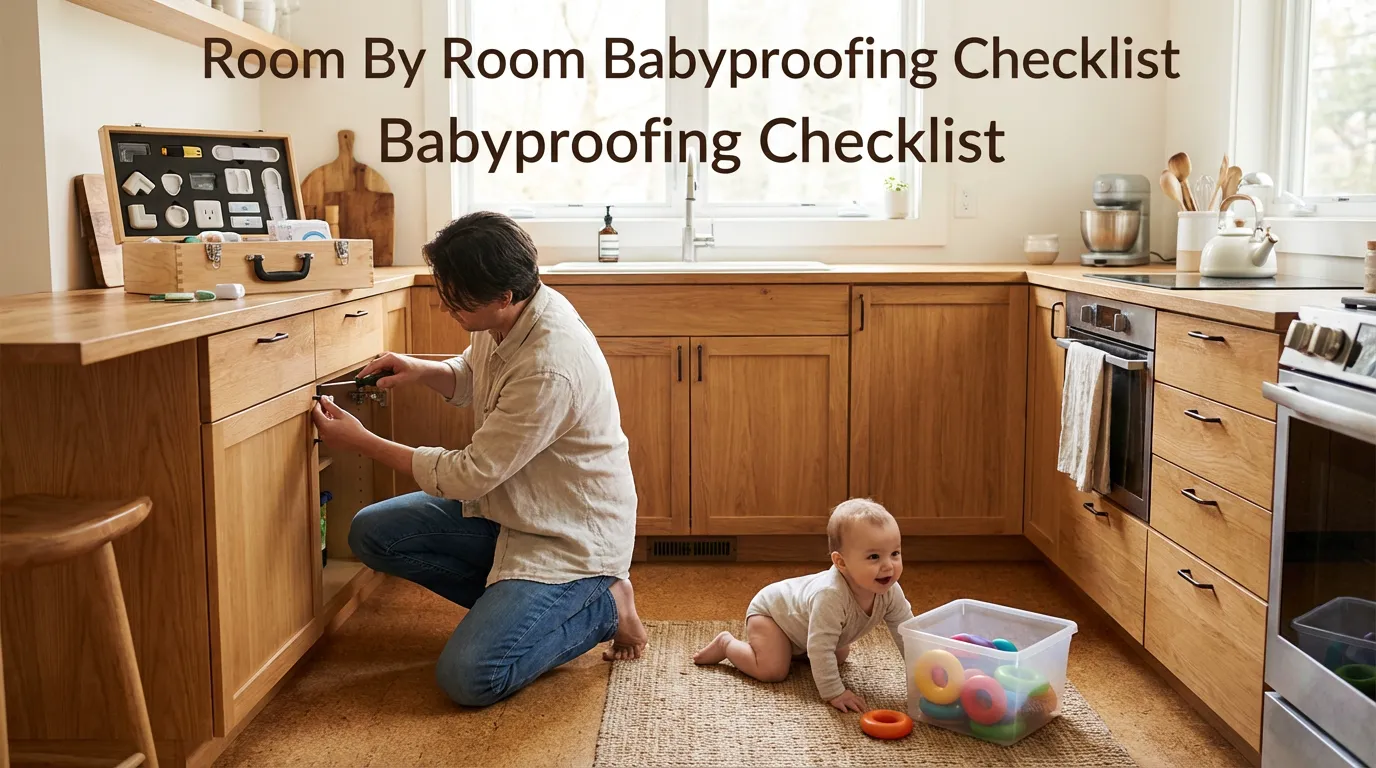
Living rooms and nurseries bring a different set of concerns: sharp corners, unstable furniture, and easy-to-reach outlets. Corner guards made from better-quality silicone can be preferable to unknown foams, while furniture anchoring remains critical for tip-over prevention. Electrical safety accessories should be sturdy enough for repeated daily use rather than acting like one-season throwaways. If you want to see installation demonstrations and product context before buying, the Vmaisi review and installation videos page can help bridge that gap.
Here is a simplified room-by-room checklist for sustainable and certified baby safety products:
| Room | Main risks | Better eco-friendly babyproofing choices |
|---|---|---|
| Kitchen | Cabinets, cleaners, knives, appliances | Magnetic cabinet locks, multi-use strap locks, durable outlet protection |
| Bathroom | Toilets, cleaners, drawers, slippery storage areas | Multi-use adhesive strap locks, cabinet locks, minimized-drill solutions |
| Stairway and hallway | Falls, unsupervised room access | Sturdy gates with applicable safety compliance, durable wall-protection accessories |
| Living room | Sharp corners, TV stands, unstable furniture, outlets | Silicone corner guards, furniture anchors, long-lasting outlet covers |
| Nursery | Dressers, cords, changing station storage | Anchors, drawer safety, low-VOC and low-irritant material choices |
If you are building a full plan, it also helps to browse related educational content before installation. The Vmaisi Helpful Ideas blog and review video page offer more than product listings alone, which is useful for renters or first-time parents who want lower-damage setup options.
Hypoallergenic Materials in Sustainable and Certified Baby Safety Products
Parents often search for hypoallergenic materials because they are not only thinking about injuries. They are also thinking about skin sensitivity, indoor air quality, hidden additives, and everyday contact. In babyproofing, 'hypoallergenic' generally means a material is less likely to trigger irritation or allergic reactions, but it is not a universal guarantee. The safer approach is to treat it as one signal among several.
Some materials tend to inspire more confidence than others:
| Material | Why parents consider it | Watch-outs |
|---|---|---|
| Silicone | Soft, durable, often low-irritant, useful for corner protection | Recycling access can be limited depending on location |
| Stainless steel | Long-lasting, recyclable, low maintenance | Higher upfront cost |
| FSC-certified wood | Renewable material option for gates or packaging | Finishes still matter, especially low-VOC coatings |
| High-quality BPA-free plastic | Practical, lightweight, versatile | BPA-free does not automatically mean free of all related chemicals |
| PVC with phthalates | Usually less preferred | Greater concern around additives and disposal |
For textile-related products and nursery-adjacent items, parents often look for standards such as OEKO-TEX Standard 100 and GREENGUARD certification. These do not apply equally to every babyproofing category, but they can still be helpful when soft materials, coverings, or low-emission furniture are involved.
The phrase BPA-free products deserves special attention. According to the FDA's BPA overview, BPA has long been a concern in food-contact plastics. In babyproofing, the risk profile depends on the product. A high-mounted gate is different from a corner guard or lock component that is within easy reach of a teething baby. So while BPA-free products are worth preferring, parents should avoid treating a single label as a full safety answer. It is smarter to look for a combination of safety compliance, material transparency, and sensible product placement.
Chemical concerns also go beyond BPA. Families increasingly want to avoid phthalates, questionable foams, and poorly disclosed coatings. The European Chemicals Agency overview on phthalates helps explain why soft plastics can raise extra questions. This is one reason eco-conscious parents often prefer silicone, metal hardware, and clearly disclosed plastics over vague material descriptions.
A practical rule for eco-friendly babyproofing is this: choose the simplest durable material that fits the job. Use metal or wood where structure matters, silicone where impact protection matters, and clearly labeled plastics where flexibility and affordability matter. Avoid buying duplicate products with unclear material claims just because the packaging says 'green'.
Baby Safety Alliance Verification and Recyclable Packaging in Eco-Friendly Babyproofing
A major reason parents feel overwhelmed is that safety labels and sustainability labels do not always overlap. Baby Safety Alliance Verification is one of the clearest examples. It is helpful, but it answers a specific question: has this product met the requirements of a recognized voluntary verification process for safety and compliance? The Baby Safety Alliance seal and the verification program page explain that Verified products can display the seal after meeting applicable testing and compliance expectations.
That matters because safety products should not rely on marketing alone. Verification adds confidence that the product category has been evaluated against real standards. At the same time, the program is not designed to certify recyclability, compostability, or hypoallergenic properties. So parents shopping for sustainable and certified baby safety products should think in layers:
- Confirm the product meets applicable safety expectations.
- Check whether Baby Safety Alliance Verification is available for that category.
- Review the materials for BPA-free products, lower-risk polymers, metal, wood, or other suitable options.
- Look at packaging quality, especially recyclable packaging and reduced plastic waste.
- Consider whether the product is durable enough for reuse with another child.
Packaging deserves more attention than it usually gets. Recyclable packaging is valuable, but only when the material can realistically be processed by local systems. Paperboard and cardboard packaging are generally easier for families to recycle than mixed plastic blisters or laminated materials. The FSC labels guide is also useful because it helps parents understand whether paper or wood fibers come from responsibly managed forests.
The best low-waste setup is not necessarily the one with the most eco words on the box. It is the one that combines durability, minimal packaging, and fewer unnecessary SKUs. A parent who buys one strong set of cabinet locks and one multi-use lock system may create less waste than a parent who repeatedly replaces cheaper accessories that break, peel, or become unusable after a few months.
To help simplify decision-making, use this checklist:
| Question | Why it matters | What to look for |
|---|---|---|
| Is it appropriate for the hazard? | Safety comes first | Product category fit, installation instructions, compliance info |
| Is there trusted verification? | Adds confidence beyond ad copy | Baby Safety Alliance Verification where applicable |
| Are the materials clearly described? | Reduces guesswork | BPA-free products, lower-phthalate risk, durable components |
| Is installation renter-friendly? | Encourages correct use and less home damage | Adhesive or no-drill options when suitable |
| Is the packaging low waste? | Supports eco-friendly babyproofing goals | Recyclable packaging, reduced plastic, paper-based inserts |
| Can it be reused later? | Improves value and lowers total waste | Durable design, removable parts, clean removal potential |
How to Build an Eco-Friendly Babyproofing Plan With Sustainable and Certified Baby Safety Products
The easiest way to start is not by shopping. It is by auditing your home. Walk room by room and identify the highest-risk areas first: stairs, kitchens, bathrooms, unstable furniture, and reachable drawers with dangerous contents. Once those are mapped, choose sustainable and certified baby safety products that solve specific problems rather than buying every gadget on a generic checklist.
For many homes, this order makes sense:
- Secure stairs and restricted areas with a compliant gate solution.
- Lock cabinets and drawers that store cleaners, medication, sharp tools, or breakables.
- Use multi-use locks for appliances, fridges, toilets, and other frequent-access hazards.
- Add corner protection and furniture anchors in living spaces.
- Finish with outlet safety and cable management where needed.
If you want products that align with low-damage installation and long-term use, start with the most versatile categories on Vmaisi. Explore the Magnetic Cabinet Locks collection for hidden cabinet protection, the Multi-Use Child Safety Locks collection for flexible daily hazards, and the Vmaisi review video page if you want to see setup details before ordering. For broader guidance and practical tips, the Helpful Ideas blog is a natural next stop.
A smart final filter is to ask whether each item supports both safety and longevity. If a product is durable, easy to install correctly, less likely to damage the home, and usable for future children, it often delivers a better sustainability outcome than a cheaper throwaway alternative.
In the end, eco-friendly babyproofing is not about creating a perfect zero-waste nursery. It is about making better choices, one hazard at a time. By focusing on trusted standards, Baby Safety Alliance Verification where available, hypoallergenic materials, BPA-free products, and recyclable packaging, you can create a home that feels safer, calmer, and more intentional for 2026 and beyond.