

Top Sensor-Based Safety Products for Babies
Are you confused about how to build a safer home when every product claims to be the smartest answer? If you are weighing cameras, alerts, locks, gates, and hidden latches, the real goal is simpler: choose innovative babyproofing solutions that reduce risk without making daily life harder.
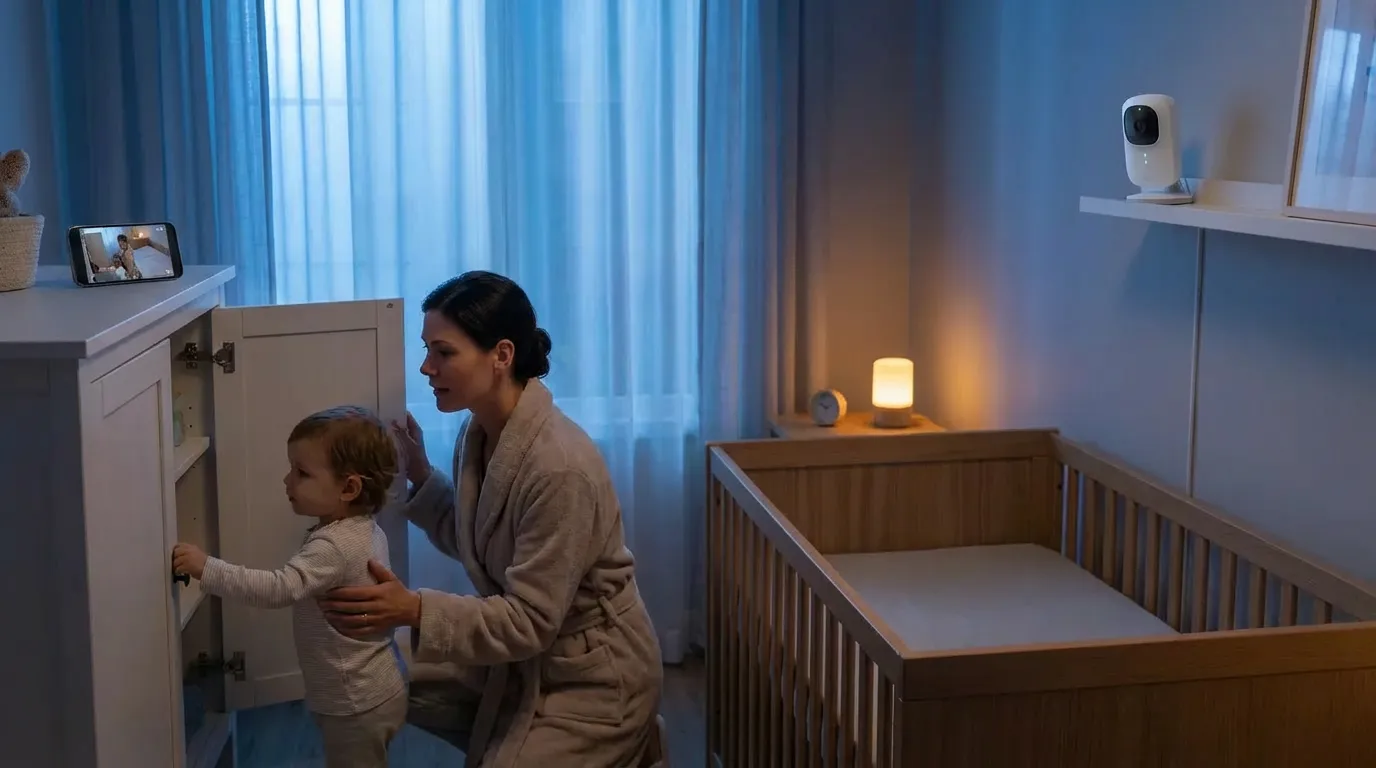
Modern parents are seeing more sensor-based choices than ever before, but the best setup is rarely all-tech or all-mechanical. In most homes, the smartest plan combines practical barriers with selective monitoring. That means understanding where sensor-based safety products help most, where classic protection still wins, and how hidden options like invisible magnetic locks fit into a layered strategy.
This guide breaks down the top options for families who want a realistic, evidence-aligned approach, while also showing where Vmaisi products naturally fit for cabinets, drawers, appliances, and gate setups.
Why innovative babyproofing solutions now include both sensors and hidden hardware
The babyproofing market is evolving because parents want more than basic plastic caps and bulky latches. They want innovative babyproofing solutions that improve safety, preserve home aesthetics, and adapt to busy routines. That is why interest has expanded beyond basic guards into invisible magnetic locks, smart outlet covers, childproof door locks, pet-baby combo gates, and sensor-based safety products.
Traditional products still do essential work. Gates block stairs, outlet protection reduces shock risk, and cabinet locks physically stop access to dangerous items. But sensor-based tools add visibility. A smart nursery monitor can alert you to movement or room conditions. A contact sensor can notify you when a gate or door opens. A smart plug can help cut power to certain appliances remotely.
Market research cited in the report shows steady growth across baby safety categories, with smart and IoT-enabled products identified as a fast-growing subsegment. At the same time, families still rely heavily on mechanical products because they are simple, durable, and often the first line of defense.
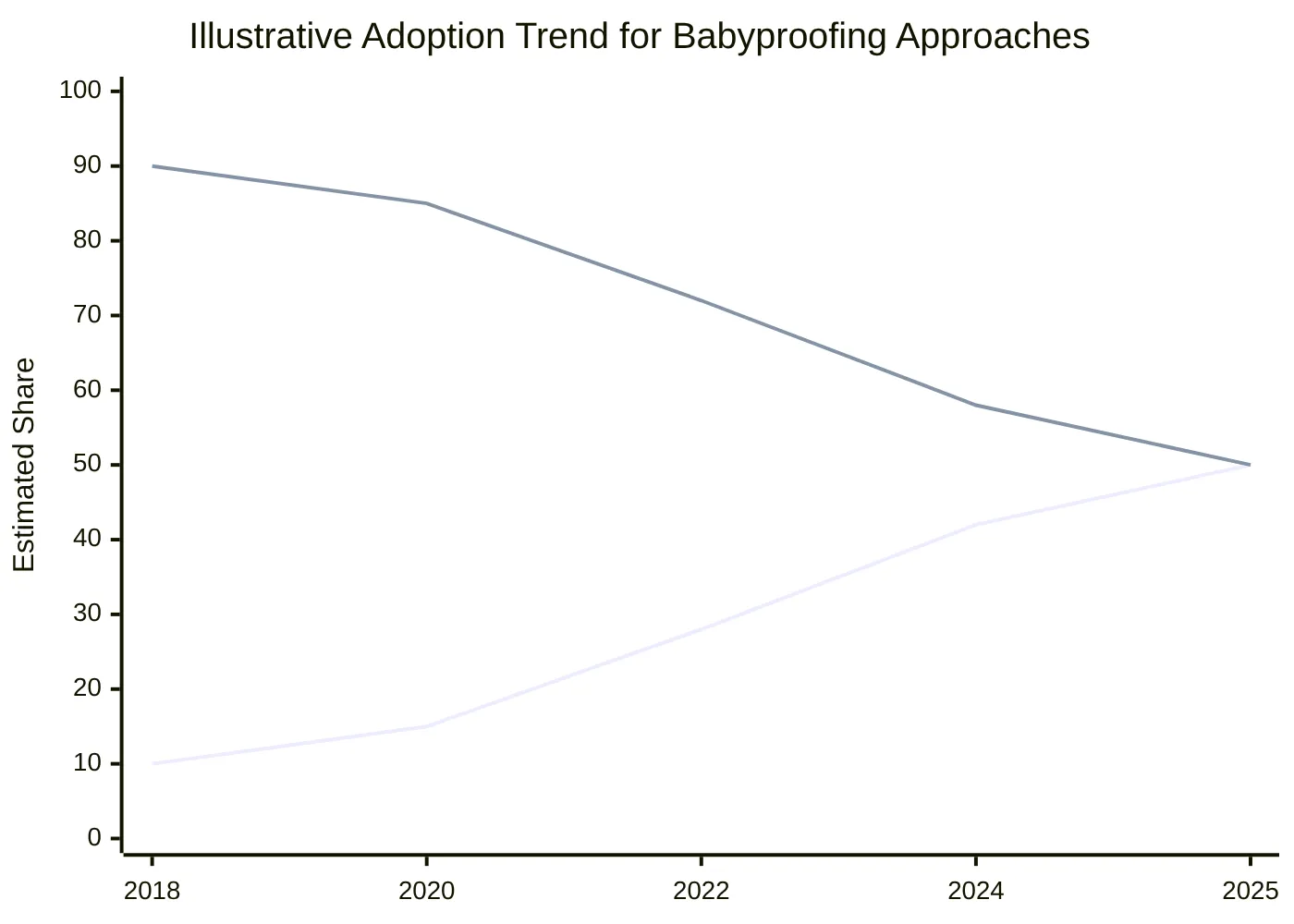
The chart above is illustrative, based on qualitative market direction in the research. The takeaway is straightforward: sensor-based tools are growing, but they are complementing mechanical protection, not replacing it.

For families shopping with aesthetics in mind, this matters. Hidden hardware often solves a major pain point: keeping rooms functional and visually clean. For example, the Vmaisi magnetic cabinet locks collection is built around concealed cabinet protection that stays out of sight while helping restrict access to cleaners, sharp tools, and other household hazards.
How innovative babyproofing solutions use sensor-based safety products for real-time awareness
When people talk about sensor-based safety products for babies, they usually mean devices that detect motion, contact, room conditions, or activity changes and then trigger an alert or log. The most visible category is the smart baby monitor, but the idea is broader than that.
Common sensor-based safety products include smart monitors with video and audio, breathing or movement tracking, temperature and humidity sensors, door or gate contact sensors, and smart outlet devices that support remote control or overload-related protection. Products like Nanit, Miku, and Babysense are widely discussed in this space, each taking a different approach to movement or breathing monitoring based on camera vision, radar, or under-mattress sensing.
Here is a practical comparison of where these products fit:
| Product type | Main function | Best use case | Main limitation |
|---|---|---|---|
| Smart baby monitor | Video, audio, environment alerts | Nursery visibility | Can require Wi-Fi and subscriptions |
| Breathing or movement monitor | Tracks motion patterns | Newborn peace of mind | Not a medical device |
| Door or gate contact sensor | Alerts when opened | Restricted areas, stairs, exits | Usually a DIY add-on |
| Smart plug or outlet device | Remote shutoff, energy monitoring | Lamps, heaters, appliances | Does not replace physical outlet protection |
These products can absolutely improve awareness. If a nursery gets too warm, if a gate opens unexpectedly, or if you want to check on a sleeping baby without entering the room, sensor-based safety products can help. But expert commentary and safety guidance in the research repeatedly stress an important point: these tools are not substitutes for safe sleep practices, supervision, or physical childproofing.
The American Academy of Pediatrics says consumer monitors marketed for SIDS prevention are not proven to reduce SIDS risk. The U.S. Consumer Product Safety Commission also emphasizes core home childproofing measures such as secure gates, outlet safety, and locked storage. In other words, sensors may improve responsiveness, but they do not replace foundational safety habits.
Parents also need to weigh stress versus reassurance. Some caregivers find breathing and movement tracking calming. Others report that false alarms, connectivity issues, and constant data increase anxiety. That trade-off is one reason many families prefer a mixed system: use sensor-based safety products where awareness matters most, but let physical products do the heavy lifting elsewhere.
Which innovative babyproofing solutions work best with invisible magnetic locks, smart outlet covers, and childproof door locks
The most effective innovative babyproofing solutions often start with the least glamorous products: the ones that physically stop access. That is where hidden cabinet systems, outlet protection, and door controls remain central.
Invisible magnetic locks
Invisible magnetic locks are one of the strongest examples of modern babyproofing that feels updated without becoming overly technical. They install inside cabinets or drawers, stay out of view, and open with a magnetic key. This preserves the appearance of the room while making it harder for toddlers to figure out how the lock works.
Vmaisi has multiple options in this category, including the Vmaisi Baby Proofing Magnetic Cabinet Locks 12 Pack, the Vmaisi Child Safety Magnetic Cabinet Locks 4 Pack, the Magnetic Child Safety Cabinet Locks 16 Pack, and the Vmaisi Child Safety Magnetic Drawer and Cabinet Locks 20 Pack.
These products are especially useful in kitchens, bathrooms, pantry spaces, and laundry areas. They also appeal to renters and design-conscious households because adhesive installation can avoid drilling. If you want installation guidance, Vmaisi also has a helpful post on how to babyproof cabinets with magnetic locks and another on whether magnetic cabinet locks fit corner cabinets.
Smart outlet covers and outlet safety
The term smart outlet covers can be confusing because it may refer to very different products. In practical babyproofing, there are three layers to understand:
| Option | What it does | Role in babyproofing |
|---|---|---|
| Basic outlet covers | Blocks direct socket access | Core physical protection |
| Tamper-resistant receptacles | Built-in shutters prevent easy insertion | Recommended code-aligned electrical safety |
| Smart plugs or outlets | Remote on/off, scheduling, sometimes overload functions | Useful for appliance management |
The CPSC childproofing guidance supports physical outlet protection and tamper-resistant receptacles as the primary strategy. Smart outlet covers and smart plugs can be helpful add-ons for controlling devices like space heaters or humidifiers, but they should not be treated as the main solution for preventing shock hazards.
Childproof door locks
Childproof door locks matter most when toddlers become mobile enough to wander. Bathrooms, garages, laundry rooms, and exterior doors all become higher-risk zones at that stage. Most families still rely on mechanical solutions such as knob covers, lever handle locks, and top-of-door latches. Some also add smart lock systems on exterior doors, but those are usually adult security products first and toddler barriers second.
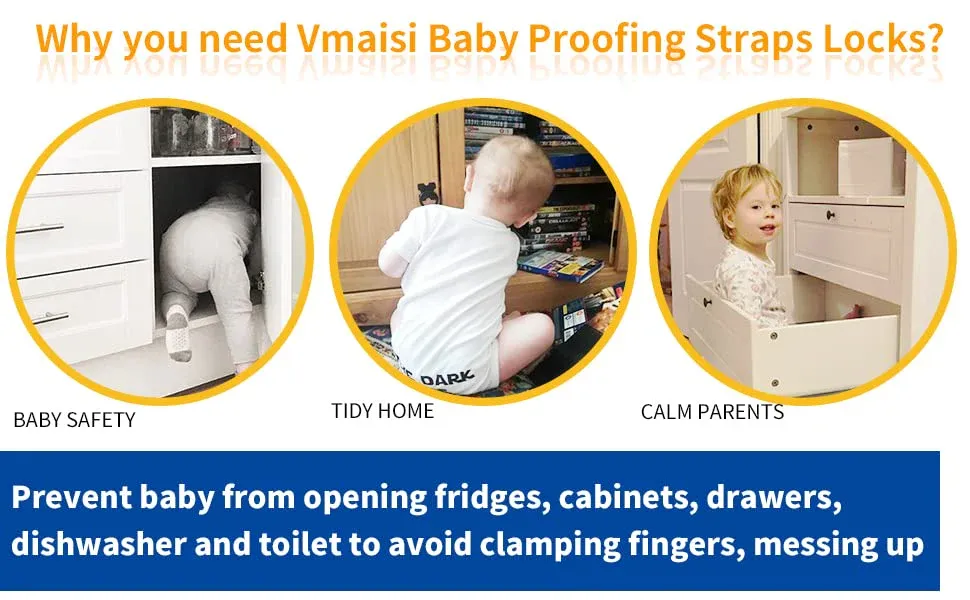
If you also need more flexible protection across appliances and non-standard surfaces, the Vmaisi Multi-use Child Safety Locks collection can help cover fridges, dishwashers, toilets, drawers, and similar access points. A direct option is the 6 Pack Vmaisi Multi-Use Adhesive Straps Locks. For planning these areas, Vmaisi also offers a useful child safety locks for fridge and oven guide.
For many households, this combination is the sweet spot: invisible magnetic locks for cabinets, multi-use straps for appliances, outlet protection for sockets, and limited smart additions where alerts actually improve awareness.
How innovative babyproofing solutions compare for pet-baby combo gates and mixed-use homes
Homes with both children and pets face a slightly different challenge. A barrier that stops a crawler may not stop a medium-size dog. A gate that works for pets may have slat spacing or stability issues for babies. That is why pet-baby combo gates are a practical search category, even when families end up using standard baby gates plus accessories.
The research shows that mixed households value gates with enough height and strength for pets, narrow spacing for child safety, and secure installation. At the top of stairs, CPSC guidance still favors hardware-mounted gates. Pressure-mounted gates are more common at room boundaries, especially when families want easier setup or less permanent installation.
Vmaisi's current site data points more toward gate accessories and educational content than full gate products, but those resources are still useful for anyone planning pet-baby combo gates. Two relevant internal articles are 5 Do's and 5 Don'ts of Baby Gates and 10 Ideas How VMAISI Baby Gate Wall Protector Help You Use Baby Gates or Pet Gates.
If wall protection and gate stability are part of your setup, the VMAISI 4 Pack Baby Gates Wall Cups and the Vmaisi Baby Gate Wall Cup Protector can help reduce wall damage while improving grip for pressure-mounted gates.
Here is a simple planning table for mixed-use homes:
| Home situation | Priority product type | Why it helps |
|---|---|---|
| Top of stairs | Hardware-mounted gate | Better stability and safety |
| Doorway with pets and baby | Pet-baby combo gates or strong pressure gate | Shared boundary control |
| Cabinets with chemicals | Invisible magnetic locks | Hidden, strong access control |
| Fridge, dishwasher, toilet | Multi-use adhesive locks | Flexible coverage across surfaces |
| Nursery monitoring | Sensor-based safety products | Alerts and visibility |
This is also where aesthetics matter again. Families often dislike bulky barriers and visible plastic hardware throughout the house. That is why invisible magnetic locks and compact accessories remain popular even as interest in smart products grows. The best innovative babyproofing solutions are often the ones that fit real behavior patterns without making adults stop using them correctly.
How to choose innovative babyproofing solutions that match your baby's stage and your home's risks
The easiest mistake is buying products by trend instead of by hazard. A better approach is to match innovative babyproofing solutions to the child's development stage, the home's layout, and the caregiver's comfort with technology.
Start with the highest-risk physical hazards
Before adding sensor-based safety products, cover the basics:
- Secure cabinets and drawers with invisible magnetic locks or other strong latches.
- Protect appliances and awkward surfaces with multi-use adhesive locks.
- Use proper gate types for stairs and room divisions.
- Add outlet protection and follow electrical safety guidance from the CPSC.
- Store dangerous items high up and in locked areas whenever possible.
Add sensor-based products where alerts matter most
Sensor-based safety products make the most sense when they solve a real awareness gap:
- Nursery monitoring during sleep.
- Notifications if a door, gate, or restricted room is opened.
- Remote shutoff for selected plugged-in devices.
Reassess every few months
A pre-crawling baby and a climbing toddler create completely different risks. Re-check locks, gate placement, adhesives, and monitoring needs every 3 to 6 months.
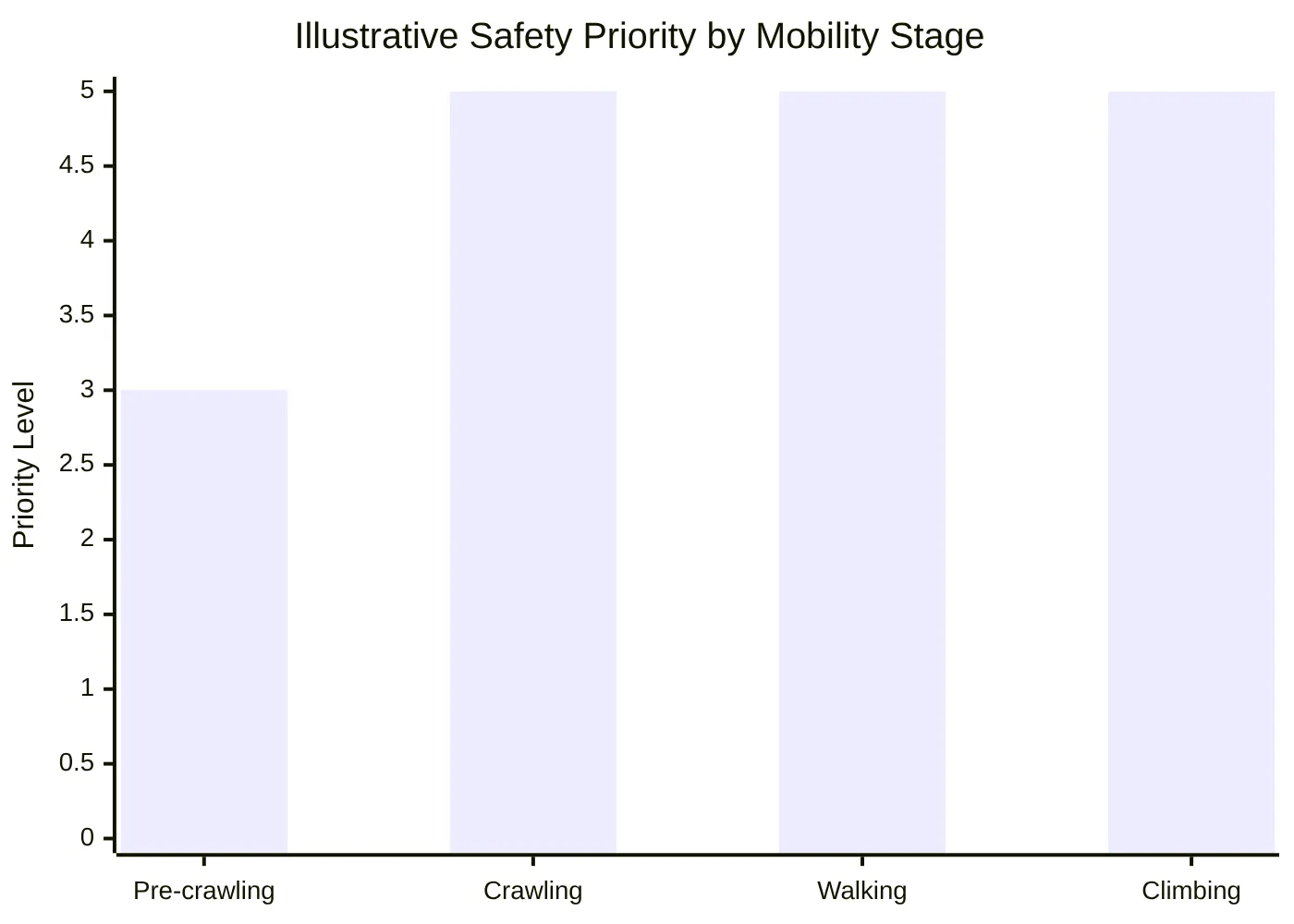
That bar chart reflects a simple truth from the research: as mobility increases, the importance of physical access control rises sharply. Monitoring can help, but gates, locks, and barriers become even more critical.
If you want a practical place to start, begin with hidden cabinet protection through the Vmaisi magnetic cabinet locks collection, then expand to appliance areas with the Vmaisi multi-use adhesive straps locks. If gates are part of your layout, review the baby gate tips and wall-protector guidance on Vmaisi's blog before finalizing placement.
In the end, the strongest innovative babyproofing solutions are layered, not flashy. Use sensor-based safety products for awareness, rely on invisible magnetic locks and other physical barriers for direct access control, and choose childproof door locks, smart outlet covers, and pet-baby combo gates based on the risks your child actually faces today. That balanced approach is what turns overwhelm into a plan.