

Magnetic vs Strap Cabinet Safety Locks
Are you trying to baby-proof kitchen cabinets but unsure which style will fit your doors, drawers, and everyday routine? Choosing cabinet safety locks is less about finding one universal answer and more about matching the lock approach to your home. Cabinet construction, the items you store, how often adults need access, and how many reachable spaces need attention all matter.
For many families, baby proofing cabinet locks are one helpful layer in a larger home-safety routine. The U.S. Consumer Product Safety Commission recommends safety latches and locks for accessible cabinets and drawers that may contain cleaning supplies, medicines, laundry products, matches, lighters, knives, or other sharp items. The American Academy of Pediatrics guidance on childproofing your home also emphasizes keeping potentially harmful products out of sight and reach, ideally in locked storage.
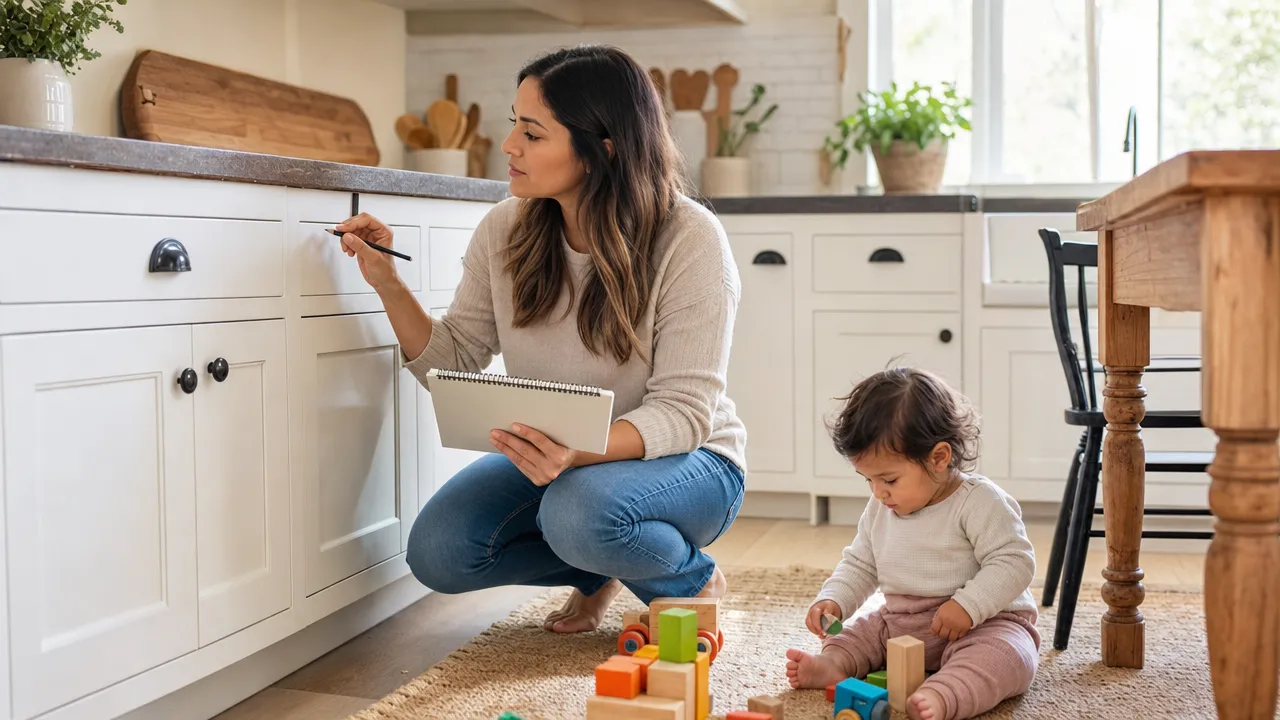
Why cabinet safety locks matter for growing families
Cabinets and drawers are not automatically unsafe. The concern is what a baby or toddler may be able to reach as crawling, pulling up, and climbing skills develop. A lower kitchen cabinet might hold cleaning products. A bathroom drawer may contain medicines or small personal-care items. A pantry or utility cabinet may store sharp tools, matches, or laundry detergent.
The CPSC home childproofing guide recommends safety latches and locks for cabinets and drawers in kitchens, bathrooms, and other accessible areas. This supports a practical priority: secure the storage spaces that contain items requiring adult control.
Start with a room-by-room review:
- Kitchen cabinets and drawers with cleaners, knives, or sharp utensils.
- Bathroom cabinets with medicines, cleaners, or small objects.
- Laundry and utility storage with detergent or household products.
- Pantry and storage areas with matches, lighters, or off-limit items.
- Reachable drawers that a toddler may pull open independently.
Cabinet locks for babies are not a replacement for supervision, safer storage, or keeping products in their original containers where appropriate. Instead, they can help reduce access while you build safer habits around the home. Revisit your plan as your child becomes taller, stronger, and more curious.
Magnetic vs strap cabinet safety locks: The practical differences
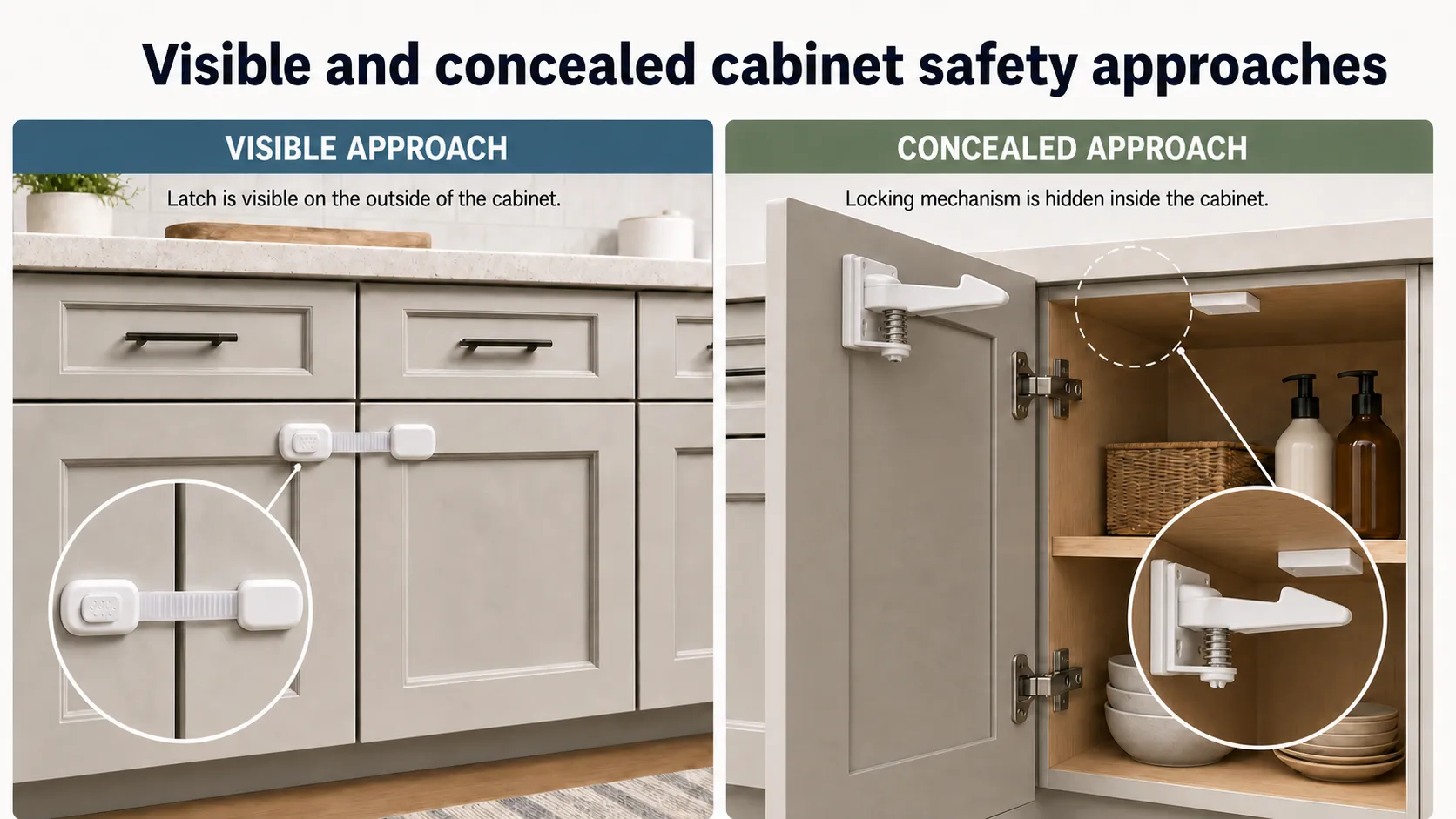
Parents comparing cabinet safety locks often see two broad approaches: externally applied adhesive latch or strap-style designs and concealed interior magnetic systems. Neither is automatically better for every household. The more useful question is: Which approach works with your cabinet setup and adult access routine?
| Consideration | Adhesive latch or strap-style approach | Concealed magnetic system |
|---|---|---|
| Placement | Typically installed on exterior-facing cabinet or drawer surfaces | Installed inside the cabinet or drawer |
| Appearance | Usually visible after installation | Usually concealed from outside view |
| Adult access | Direct-release latch mechanism | Separate accessory used for adult access |
| Installation preference | May suit parents looking for a no-drill option | Installation requirements vary by model and cabinet interior |
| Key consideration | No separate key routine | Requires keeping track of the separate access accessory |
| Setup review | Check adhesive surfaces, latch path, and alignment | Check interior clearance, mounting space, and configuration |
Adhesive latch and strap-style baby proof cabinet locks may appeal to parents who want a visible, direct-release option without drilling into cabinetry. Their fit depends on having appropriate mounting surfaces and enough space for the latch path. Always follow the specific product instructions, especially for surface preparation and placement.
Concealed magnetic systems can be a practical choice for families who strongly prefer hardware that is not visible from the outside. However, adults need to be comfortable with the separate access routine and confirm that each cabinet or drawer has the required interior space.
For either style, avoid assuming universal compatibility. Cabinet door profiles, drawer fronts, handles, interior clearance, finishes, and surface conditions differ from home to home.
How to choose cabinet safety locks for doors and drawers
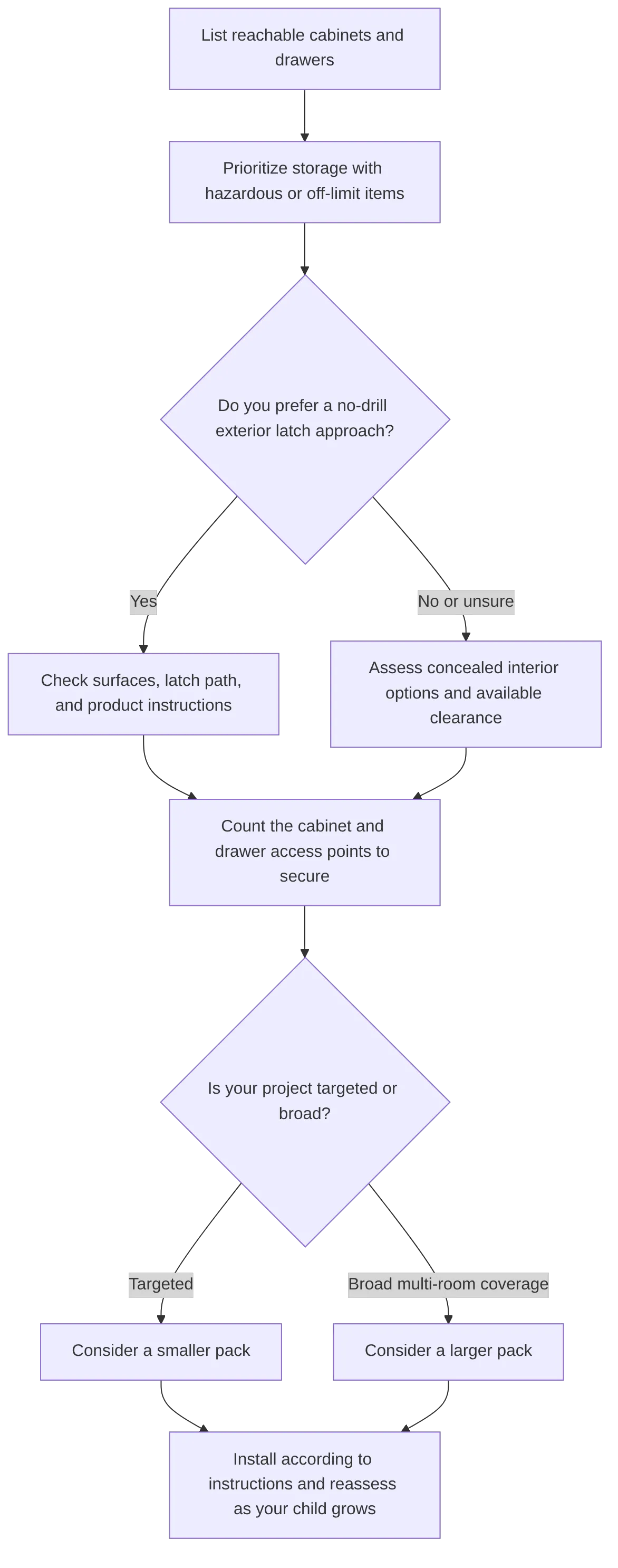
Before buying child safety cabinet locks, count the access points you want to secure and inspect the configuration of each one. A quick walkthrough can prevent you from choosing a style that does not suit your cabinets or daily habits.
Use this five-step checklist:
-
Prioritize reachable storage. Begin with doors and drawers that hold hazardous or off-limit items. Consider what your child can reach now, not only what was reachable a few months ago.
-
Separate doors from drawers. Look at how each cabinet opens. Check whether a latch can follow a workable path and whether a drawer has an appropriate placement area.
-
Review surfaces and clearance. Adhesive cabinet latches need suitable surfaces and correct positioning. Interior systems need enough room inside the cabinet or drawer. Product instructions should guide the final decision.
-
Choose your preferred adult routine. If you access a cabinet frequently, consider the release method you will use throughout the day. A lock that fits your routine is more likely to be used consistently.
-
Decide on targeted or broad coverage. A bathroom vanity and a few kitchen drawers may call for a smaller project. A kitchen, laundry area, pantry, and bathroom may require more comprehensive planning.
No-drill cabinet locks may be especially appealing when you want to avoid drilled holes. Still, no-drill does not mean every adhesive will behave the same way on every finish. Adhesive performance and removal outcomes depend on the product, the surface, preparation, placement, and the manufacturer's instructions.
Cabinet safety locks for a targeted or whole-home plan
Once you have counted reachable cabinets and drawers, pack size becomes a simpler decision. VMAISI offers adhesive, no-drill cabinet latches for cabinets and drawers in two coverage options.
| Your baby-proofing project | Recommended VMAISI option | Why it may fit |
|---|---|---|
| A few kitchen cabinets, a bathroom vanity, or selected drawers | VMAISI Cabinet Locks Child Safety Latches 12 Pack | A practical smaller-pack choice for targeted baby-proofing needs |
| Multiple rooms, broader kitchen coverage, or many accessible cabinets and drawers | VMAISI Cabinet Locks Child Safety Latches 20 Pack | A larger-pack option for a wider home project; the product page describes upgraded stronger adhesive |
The VMAISI Cabinet Locks Child Safety Latches 12 Pack is a sensible starting point when your plan focuses on a smaller set of accessible cabinets or drawers. For example, you may begin with the lower kitchen storage, one bathroom cabinet, and a few drawers that contain items you want to keep under adult control.
The VMAISI Cabinet Locks Child Safety Latches 20 Pack can better suit a larger baby-proofing project across several rooms. It is positioned for broader coverage, and its product page describes upgraded stronger adhesive, easy installation, and no-drilling.
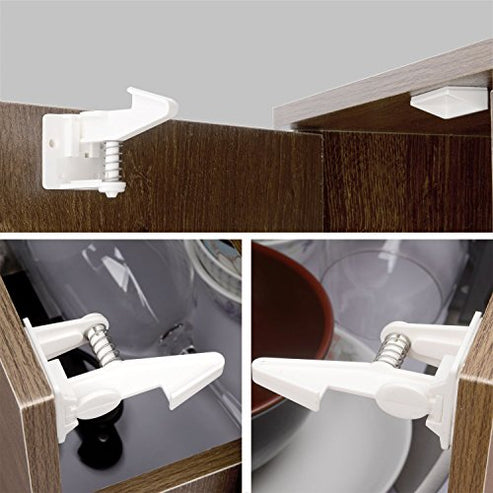
A larger pack is not necessarily the right choice for every family. Count the cabinets and drawers you plan to secure first. Then leave room in your plan to reassess later as your child begins exploring new areas of the home.
Cabinet safety locks and a safer daily routine
The most effective baby-proofing plan combines cabinet safety locks with thoughtful storage and supervision. Keep harmful items high, out of sight, and out of reach whenever possible. Consider locked storage for items that require adult control, and keep household products in their original containers when applicable.
Parents often search for "childproof cabinet locks," but it is more accurate to think of locks as one layer of protection rather than a guarantee. Correct installation, cabinet compatibility, adult routines, and changing child abilities all influence how a solution works in daily life.
Are concealed systems better than visible latches?
Not universally. Concealed systems may suit a family that prefers an uncluttered cabinet exterior and is comfortable with a separate access routine. Visible adhesive latches may suit parents who prefer a straightforward, no-drill release method.
Can cabinet locks be used on drawers?
Some cabinet and drawer locks are designed for both, but you should review the product's stated compatibility and inspect the drawer's layout before installation.
Which cabinet locks for toddlers should I secure first?
Start with reachable cabinets and drawers containing cleaners, medicines, sharp tools, laundry products, small objects, matches, or lighters. Then reassess as reach and mobility change.
Are adhesive options suitable for renters?
They may appeal to renters who prefer not to drill. However, adhesive suitability and removal depend on the surface, cabinet finish, installation, and product instructions.
How many locks do I need?
Count each accessible cabinet door and drawer you intend to secure. A smaller, focused project may align with the 12 Pack, while a multi-room plan may align with the 20 Pack.
Choose cabinet safety locks based on your cabinet setup, your family's daily routine, and the number of reachable access points you want to address. Begin with the areas that need attention first, follow installation instructions carefully, and treat every latch as part of a broader, ongoing home-safety routine.