

Outlet Plug Covers vs Tamper-Resistant Receptacles
The basic difference between the two options
When comparing these two options, it helps to start with their different roles. Both can help reduce a child's access to energized receptacle openings, but they are not interchangeable solutions.
Removable outlet plug covers are accessories inserted into unused receptacle openings. The U.S. Consumer Product Safety Commission recommends safety covers for unused outlets in its Home Electrical Safety Checklist. Their usefulness depends on a secure fit, the cover's condition, and whether a child can remove it.
Tamper-resistant receptacles, often called TRRs, are installed receptacles with internal shutters. According to the Electrical Safety Foundation International, the shutters stay closed unless equal pressure is applied to both slots, as happens during ordinary plug insertion.
The basic distinction is simple:
- A removable plug cover is temporary, removable supplemental protection for an unused outlet.
- A tamper-resistant receptacle is a built-in, longer-term receptacle category.
- Neither option repairs a damaged outlet or replaces attentive supervision.

How each type of protection works
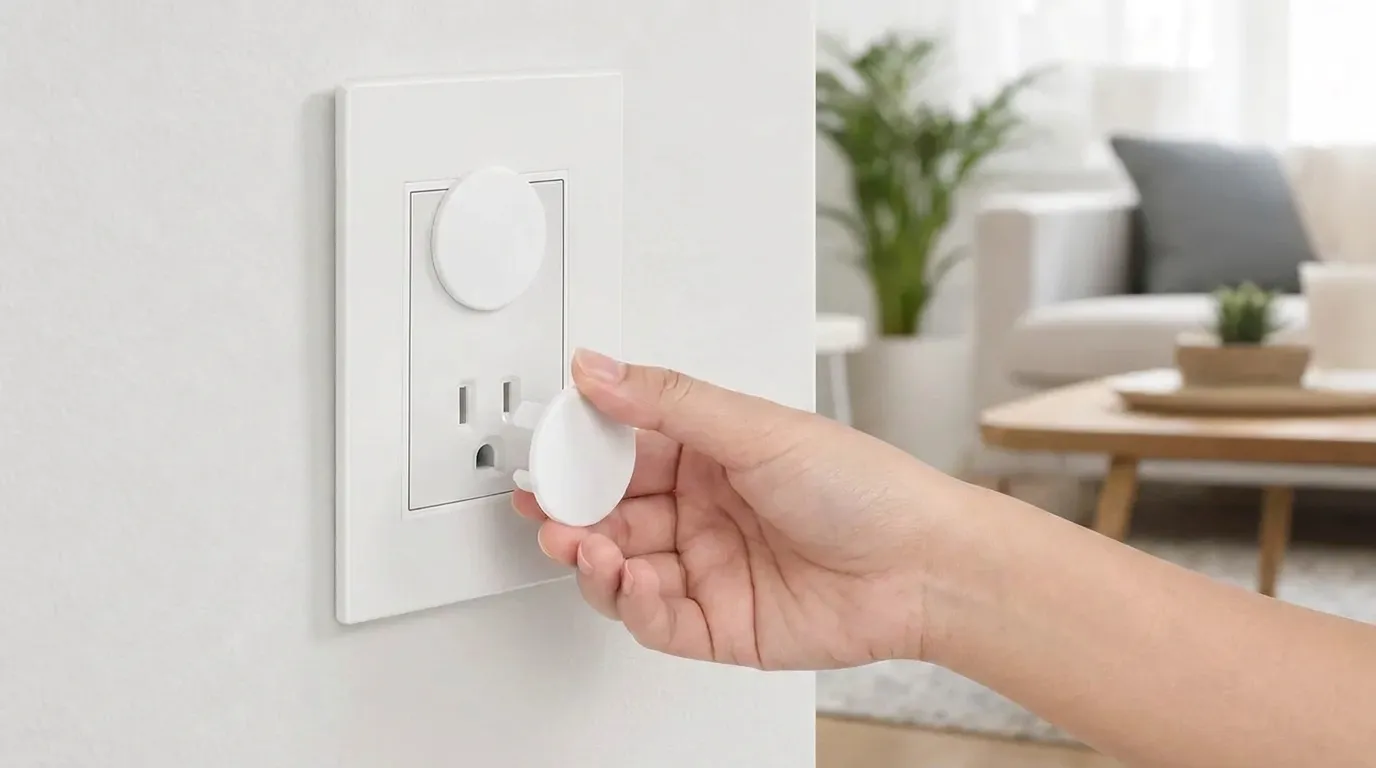
A removable outlet plug cover creates a physical barrier over an unused receptacle opening while it remains properly fitted. It does not alter the receptacle, wiring, or electrical system. That makes it a practical category to consider for a compatible, undamaged, unused receptacle, especially when a household needs a removable approach.
For that narrow use, the Vmaisi Plug-In Outlet Cover can be used as removable supplemental protection for a compatible, undamaged, unused receptacle. It is not a replacement receptacle, electrical repair, permanent upgrade, or substitute for a tamper-resistant receptacle.
TRRs work differently. Their protective shutters are part of the receptacle itself. The shutters are designed to limit access to the slots unless a plug applies pressure to both sides at the same time. This built-in feature remains available during normal plug use, unlike a removable cover that must be taken out before an appliance, charger, or lamp can be plugged in.
The National Electrical Code began requiring TRRs for specified receptacles in new residential construction under the 2008 edition, according to ESFI's TRR white paper. However, code adoption and enforcement vary by state and locality. Do not assume every existing U.S. home is required to have TRRs. Questions about replacement, installation, permits, or local requirements belong with a qualified electrician.
A side-by-side look at the trade-offs
| Decision factor | Removable outlet plug covers | Tamper-resistant receptacles |
|---|---|---|
| Primary role | Supplemental barrier for unused receptacle openings | Built-in shutters that help limit access to receptacle slots |
| Reversibility | Removable when the outlet is needed | Part of the installed receptacle |
| Electrical work | None for normal accessory use | Replacement or installation requires a qualified electrician |
| Best practical fit | Compatible, undamaged, unused outlets | Longer-term planning for child-accessible outlets, including frequent-use outlets |
| Daily routine | Must be removed, secured, and reinserted as use changes | Built-in mechanism stays in place during ordinary plug use |
| Short stays | May be useful if fit and outlet condition are appropriate | Not a temporary travel accessory |
| Inspection needs | Check fit, damage, looseness, and removal attempts | Monitor outlet condition and seek professional help for concerns |
| Key limitation | May be misplaced, damaged, or removed by a child | Does not correct a defective outlet or wiring issue |
The most useful comparison is not which option sounds stronger. It is whether the outlet is unused, frequently used, or showing signs that it needs professional attention.
ESFI notes that removable outlet caps can become a small-object concern if a child removes them. That does not mean every cover will be removed, but it does mean caregivers should reassess fit and child behavior rather than treating any removable accessory as a set-it-and-forget-it solution.
Which option fits common household situations
For a truly unused outlet in a child's reachable area, a removable plug cover may be a reasonable supplemental measure when it fits securely without force and the receptacle appears undamaged. Check each receptacle individually. A cover that fits in one room does not automatically fit the same way elsewhere.
For frequently used outlets, the daily routine changes. An outlet used for a lamp, vacuum, charger, or appliance requires repeated cover removal and replacement. That can make a removable option less practical because the cover may be left off, misplaced, or put back without a reliable fit. In those locations, a built-in TRR approach may be worth discussing with a qualified electrician.
Travel, rentals, and grandparents' homes make the difference especially practical. A removable cover may be helpful during a short stay when all of these conditions are met:
- The outlet is currently unused.
- The receptacle and wall plate appear stable and undamaged.
- The cover fits securely without force.
- The child cannot remove it during observation.
- The caregiver can secure the cover out of reach when it is removed.
For broader planning before an occasional visit, see Vmaisi's checklist for visiting toddlers. A temporary accessory can support a careful plan, but it does not make a questionable outlet suitable for use.
For a family home where accessible outlets are used often or where a child has learned to remove covers, a built-in solution may be more practical over time. That does not mean every outlet needs the same approach. It means the safety plan should match the room, outlet use, and child's current behavior.
Fit checks and electrical warning signs
Routine observation matters with either approach. For removable covers, remove the accessory from service if it is loose, cracked, distorted, incomplete, or easily removed by the child. Keep removed covers away from children, and do not bend, tape, glue, reshape, or force them to improve the fit.
For more guidance on this situation, review what to do if an outlet plug cover feels loose. A loose cover is an accessory problem unless the outlet itself also shows warning signs. It should never be treated as a reason to test, probe, or alter the receptacle.
Stop using the outlet and contact a qualified electrician if you notice:
- A loose or moving wall plate or receptacle.
- A normal appliance plug that wobbles, pulls out easily, or will not remain seated.
- Heat at the outlet or plate.
- Discoloration, scorching, melting, or a burned odor.
- Buzzing, crackling, or sparking.
- A shock or tingle.
The CPSC's Guide to Home Wiring Hazards identifies loose plugs and shocks or tingles as potential warning signs. It also advises against using an unusually warm or hot outlet and recommends qualified electrical evaluation.
Renters should promptly report these concerns to the landlord, property manager, or designated maintenance contact rather than attempting repairs or receptacle replacement.
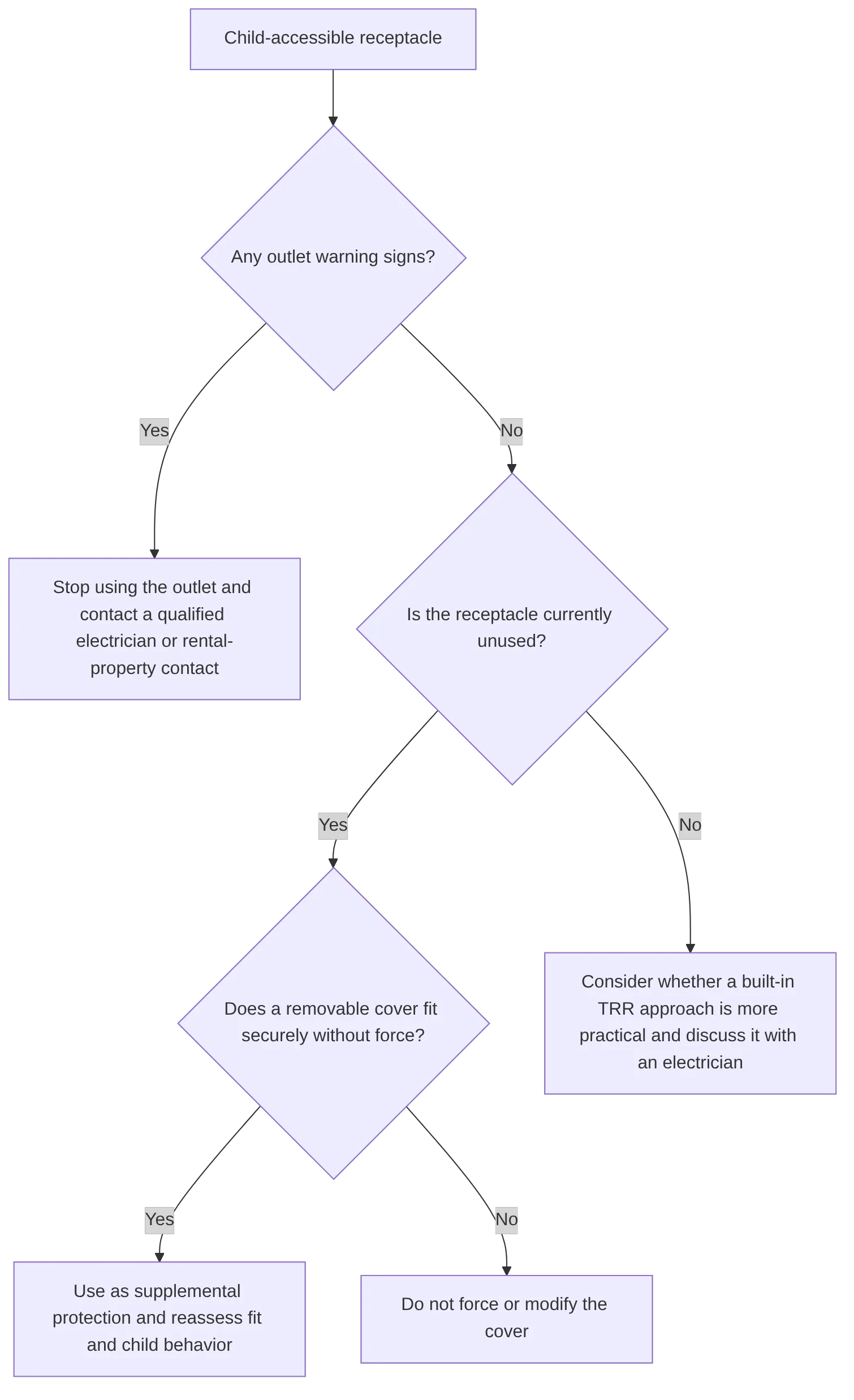
If a child can remove a cover, or if a cover becomes unreliable, it is time to reassess rather than simply pushing it in more firmly. Vmaisi's guide on when to stop using plug-in outlet covers explains why child behavior, fit, and outlet condition matter more than a fixed age.
Choosing between a temporary and built-in approach
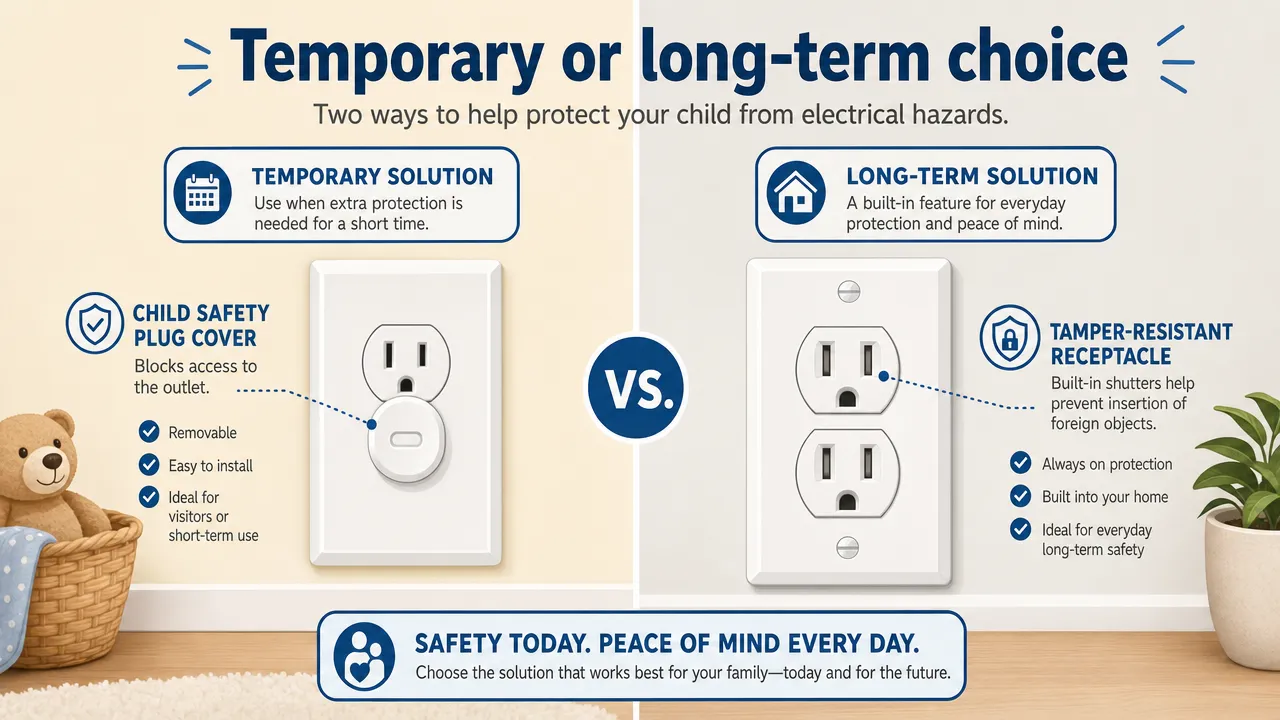
The best choice depends on the outlet's condition and how the household uses it.
Temporary supplemental option: A removable cover may be considered for a compatible, undamaged, unused receptacle when it seats securely without force, remains intact, and cannot be removed by the child.
Longer-term built-in category: A tamper-resistant receptacle has internal shutters and may be more practical for regularly used, child-accessible outlets or homes seeking a built-in approach. Direct any TRR replacement, wiring, or code questions to a qualified electrician.
Non-negotiable boundary: Neither option repairs electrical problems. If an outlet is loose, hot, damaged, discolored, noisy, sparking, smells burned, causes a shock or tingle, or does not hold a plug securely, stop using it and arrange professional evaluation.
A thoughtful safety plan is not about declaring one option universally better. It is about matching a removable accessory or a built-in receptacle approach to the actual outlet, the family's routine, and the child's changing ability to explore.