

What to Do If an Outlet Plug Cover Feels Loose
Remove a loose outlet cover from service immediately. Keep it away from children, and do not keep pushing it back into the same receptacle as if the fit were reliable. A cover a child can remove is no longer a dependable barrier. It can also become a small loose object that a child may carry or put in their mouth.
Plug-in outlet covers add a layer of protection for unused outlets. They do not replace active adult supervision or safe electrical equipment.
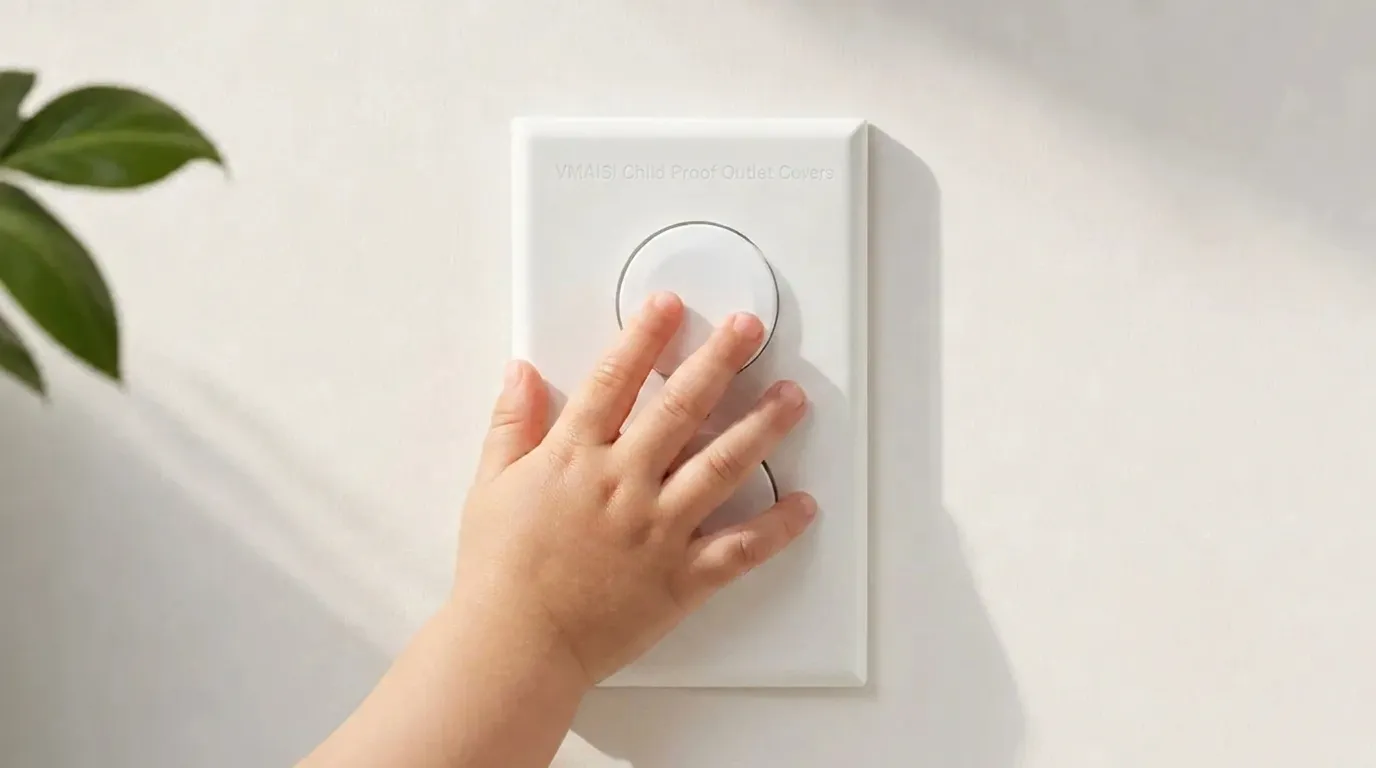
Loose outlet cover: Remove and inspect the cover
Remove the loose outlet cover and place it in a secure location immediately. Do not leave it on a counter, in a bag pocket, or anywhere a child can reach it.
Inspect the cover in good light. Check for the following conditions:
- Cracks in the plastic.
- Bent, distorted, or damaged prongs.
- Worn edges or visible deformation.
- Dust, food residue, grease, cleaning-product film, or sticky contamination.
- A history of the cover working loose repeatedly.
Do not return a cracked, misshapen, damaged, or repeatedly loose cover to service. Discard rejected covers according to local household-waste guidance, and keep them away from children until disposal.
Contamination can also affect fit. Do not assume an intact cover will remain secure after wiping away residue. A clean-looking cover is not necessarily a securely fitting cover.
Do not bend or reshape cover prongs. Do not try to make a loose outlet cover fit by thickening its prongs or changing its shape.
Loose outlet cover: Check for receptacle warning signs
A loose cover may be a cover-specific problem, or it may point to a worn or loose receptacle. Do not diagnose the receptacle by inserting objects, tools, probes, modified covers, or loose parts.
Observe ordinary appliance plugs only during normal intended use. If a lamp, charger, or other normal appliance plug does not stay seated, stop using that receptacle. Do not repeatedly insert and remove plugs to test retention.
The U.S. Consumer Product Safety Commission identifies plugs that wobble or pull out easily as a possible home-wiring hazard. Review the CPSC Guide to Home Wiring Hazards for additional warning signs.
Stop using the receptacle and contact a qualified electrician if you notice any of these conditions:
| Warning sign | Required action |
|---|---|
| An ordinary appliance plug pulls out or will not stay seated during normal use | Stop using the receptacle and contact an electrician. |
| The outlet or wall plate moves | Stop using the receptacle and arrange professional evaluation. |
| Heat or pain when touching the outlet cover or plate | Stop using the receptacle immediately. |
| Discoloration, buzzing, sparks, or a burned odor | Stop using the receptacle and seek qualified electrical help. |
Renters should contact the responsible landlord, property manager, or maintenance contact instead of attempting repairs. The CPSC also lists easy-to-remove plugs, hot outlets, buzzing sounds, sparks, and overheating odors as electrical hazard indicators in its Electrical Safety Month poster.
These signs do not identify the exact electrical problem. They indicate that the receptacle needs professional attention.
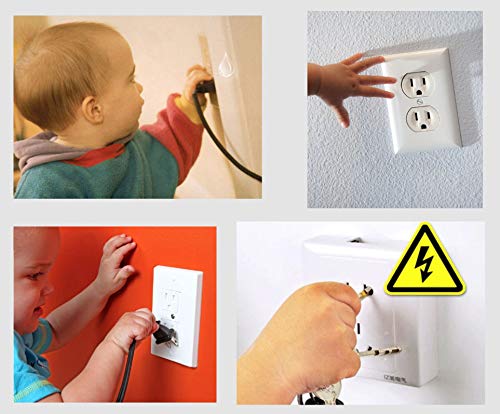
Loose outlet cover: Avoid modifications and makeshift fixes
Do not use household materials to make a cover stay in place. These methods can conceal an unreliable fit and create another hazard.
Never do the following:
- Bend or thicken outlet-cover prongs.
- Add tape, glue, putty, spacers, friction material, or foil.
- Force an oversized cover into a receptacle.
- Use a plug-in cover as a receptacle tester.
- Insert tools, probes, loose parts, or modified covers into the outlet.
- Open, repair, or alter the receptacle unless qualified to perform electrical work.
A loose outlet cover cannot correct a worn, damaged, or unsafe receptacle. A cover held in place with tape or adhesive is not a reliable substitute for a secure fit or proper electrical repair.
Keep rejected covers secured until they are discarded. A loose cover is no longer just an ineffective outlet barrier. It is also a small object that should not remain available to a child.
Loose outlet cover: Replace covers one receptacle at a time
Use a replacement cover only in a compatible, undamaged, unused receptacle. Check each replacement individually in every outlet where it will be used.
A secure fit in one room does not prove that the same cover will fit securely throughout the home. Receptacles can differ in condition, age, and retention.
Use this replacement process:
- Inspect the replacement cover before use.
- Select an unused receptacle with no visible warning signs.
- Follow the cover's applicable instructions.
- Confirm the cover appears properly seated without forcing it.
- Remove the replacement from service if it is loose, damaged, or rejected during the fit check.
- Repeat the check separately for each planned location.
When you need a replacement, review the Vmaisi Plug-In Outlet Cover for the intended outlet-protection use. This is supplemental child-safety protection, not a substitute for electrical repair or a tamper-resistant receptacle. Check the fit separately in each compatible, undamaged, unused receptacle, follow the product instructions, and remove the cover from service if it sits loose or cannot remain securely seated.
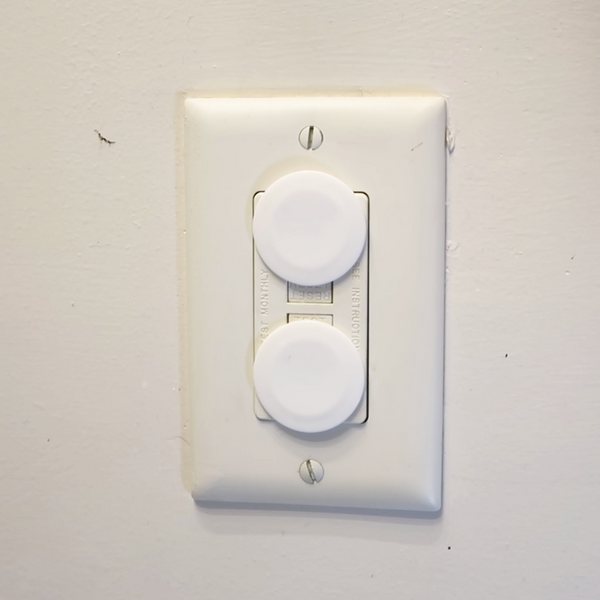
Loose outlet cover: Plan for frequently used outlets
Do not make repeated removal and reinsertion of a loose cover part of a daily routine. Frequently used outlets for lamps, chargers, vacuums, or appliances need a practical adult-use plan.
Keep a frequently used outlet under adult control when possible. Move the device to another appropriate location if that reduces repeated cover handling. If ordinary appliance plugs are loose in that outlet, stop using it and arrange professional evaluation.
For a more durable long-term approach, a qualified electrician may recommend tamper-resistant receptacles. These receptacles have built-in shutters designed to help prevent foreign objects from being inserted into the slots. The Electrical Safety Foundation International explanation of tamper-resistant receptacles describes how this built-in feature works.
Tamper-resistant receptacles do not remove the need to act on heat, movement, discoloration, buzzing, sparks, or burned odors. Receptacle installation and replacement should be performed by a qualified electrician or the appropriate rental-property professional.
Review outlet protection as part of a larger room-by-room safety check. Vmaisi's commonly missed babyproofing items guide covers other reachable household hazards. Its sensor-based safety products guide also distinguishes monitoring tools from physical safety barriers. For broader planning around home access points, see Vmaisi's child-safety planning guide for mixed-use homes.
Loose outlet cover: Caregiver checklist
- Remove the loose outlet cover from service now.
- Keep removed and rejected covers out of children's reach.
- Inspect for cracks, distortion, damaged prongs, wear, and contamination.
- Do not bend, thicken, tape, glue, or force the cover.
- Do not probe, test, or open the receptacle.
- Stop using the receptacle if ordinary plugs pull out easily or if the outlet or plate moves.
- Stop using the receptacle if there is heat, discoloration, buzzing, sparks, or a burned odor.
- Contact a qualified electrician or responsible rental-property contact when warning signs are present.
- Check every replacement cover individually in each compatible, undamaged, unused receptacle.
- Continue active supervision. No outlet cover makes an outlet completely childproof.