

How to Clean Outlet Covers Safely Before Reuse
Treat this task as care for a removable accessory, not maintenance of the electrical outlet itself. First, an adult should look at the receptacle and faceplate from the outside. If everything appears undamaged, remove the plug-in cover with dry hands according to its product instructions. Then move away from the receptacle and handle the loose cover on a clean, dry surface.
Follow the cover's current manufacturer care instructions first. There is no universal cleaning method for every removable plug-in outlet cover. The rules below provide a conservative decision process for ordinary dust or grime, while keeping all cleaning completely separate from the installed electrical device.
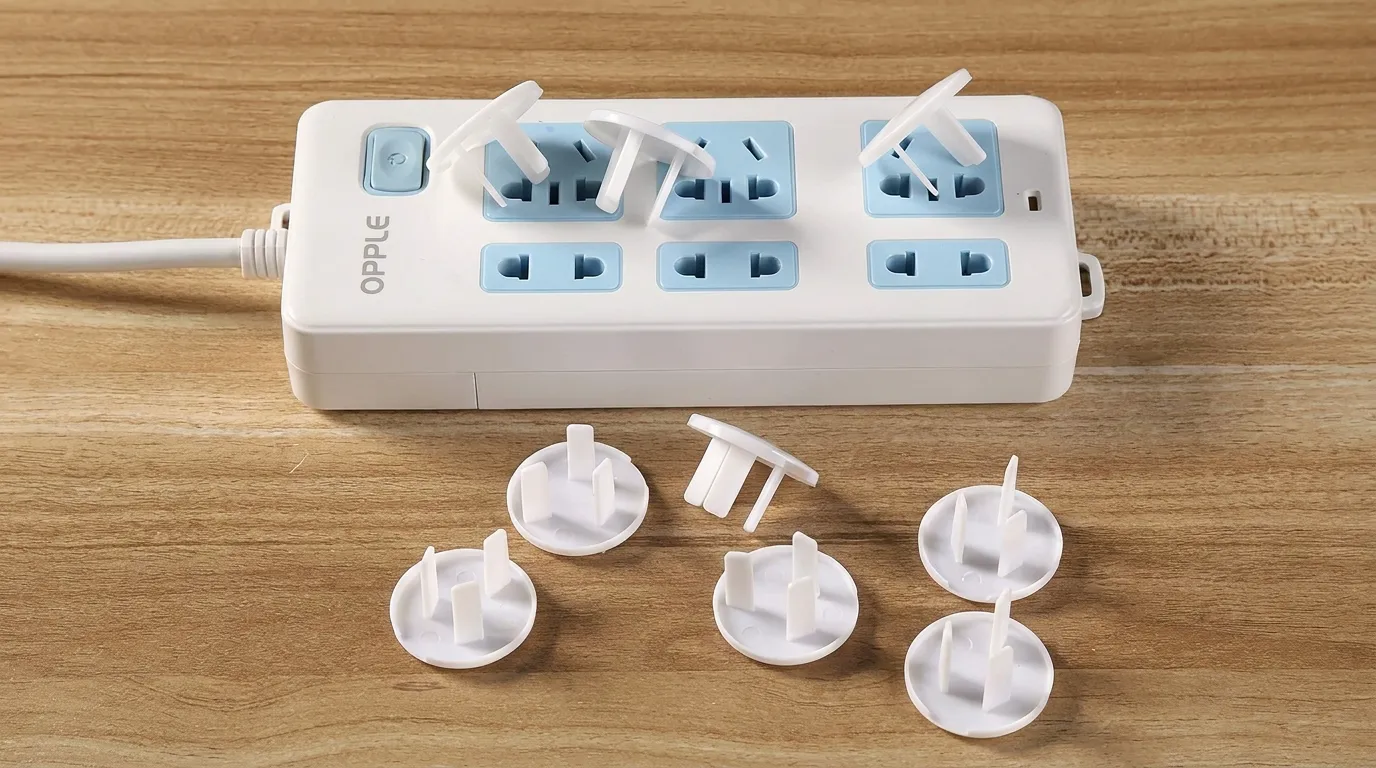
Check the receptacle before removing the cover
A removable cover and a receptacle are different things. The cover is a loose accessory. The receptacle is the installed electrical device that receives a plug. A dirty cover may be eligible for careful cleaning if its manufacturer permits it. A questionable receptacle requires a different response.
Before removing the cover, look only at the outside of the receptacle and faceplate. Stop using that receptacle and contact a qualified electrician if it is:
- Loose, moving, cracked, or visibly damaged.
- Hot or unusually warm.
- Scorched or discolored from heat.
- Buzzing, crackling, or sparking.
- Wet.
- Unable to hold an ordinary appliance plug securely during normal use.
Do not try to identify the cause. A plug-in cover cannot repair a damaged receptacle, loose electrical device, or wiring problem. Renters should promptly report the condition to the landlord, property manager, or designated maintenance contact.
Most importantly, never apply water, cleaner, spray, wipes, cloths, swabs, tools, probes, or any other object to receptacle slots. Do not clean, test, tighten, open, or investigate inside the receptacle. The U.S. Consumer Product Safety Commission's home wiring safety guidance identifies warning signs such as heat, loose plugs, buzzing, and sparks as concerns that need qualified attention.
Remove and sort plug-in outlet covers safely
If the receptacle looks stable, dry, and undamaged, an adult can remove the cover with dry hands. Use only the removal method stated in the product instructions. Do not use tweezers, metal objects, swabs, improvised hooks, or other tools to pull out the cover.
Move the removed cover away from the outlet before deciding what to do next. Place it on a clean, dry surface where children cannot reach it. This separation is essential: any permitted cleaning applies to the loose cover only, never to the receptacle.
Sort covers into two groups before cleaning.
| Cover condition | Appropriate action |
|---|---|
| Intact cover with ordinary surface dust or grime | Check the current manufacturer care instructions before cleaning. |
| Cracked, split, deformed, warped, sticky, incomplete, or heat-discolored cover | Remove from service rather than cleaning for reuse. |
| Cover with damaged prongs, worn edges, or a history of slipping out | Remove from service. |
| Cover a child can remove | Do not reuse it in that location. |
| Cover that appears intact but has no available care guidance | Do not improvise a cleaning method. Inspect it and consider replacement if needed. |
Cleaning does not restore a reliable shape, secure fit, or intact condition. If a cover is unusually loose, repeatedly works free, or can be removed by a child, it is no longer dependable for that receptacle. For a closer review of this situation, see guidance for a loose outlet plug cover.
Clean outlet plug protectors only as instructed
The safest rule for removable outlet cover care is simple: use the exact product's current instructions. Designs and materials vary, so do not assume that one cover's method applies to another.
If the manufacturer permits cleaning, clean only the ordinary surface dust or grime addressed in those instructions. Keep the cover away from the receptacle throughout the process. Avoid turning a small cleaning task into a disinfection project or a deep-cleaning experiment.
Unless the exact current manufacturer instructions expressly allow a method, do not use:
- Harsh solvents or strong chemicals.
- Abrasive powders, pads, or scrubbers.
- Heat, heated drying, boiling, or microwaving.
- Dishwasher cycles.
- Bleach or disinfectants.
- Oils or oil-based residue treatments.
- Adhesives, tape, glue, putty, or spacers.
- Bending, trimming, reshaping, or modifying the cover or its prongs.
These materials and methods can damage plastic, leave residue, change the cover's shape, or create an unreliable fit. Never attempt to improve retention by thickening prongs, adding tape, or forcing a cover deeper into an opening.
If the care instructions are unavailable or unclear, do not assume the cover is washable, soakable, dishwasher-safe, or compatible with a particular cleaner. It is better to leave the cover uncleaned and out of service than to use an unsupported method.
Dry and inspect outlet covers before fit reassessment
After any manufacturer-permitted cleaning, allow the loose cover to dry completely according to the product instructions. Do not rely on a guessed number of minutes or hours. The cover should have no visible moisture and no cleaning residue before you inspect it, store it, or consider reusing it.
In good light, inspect the entire accessory:
- Face and surface: Look for sticky film, haze, residue, scratches, or discoloration.
- Edges: Check for cracks, splits, chips, rough wear, or distortion.
- Prongs: Confirm they are present, straight, undamaged, and unchanged.
- Shape: Look for warping, bending, flattening, or deformation.
- Completeness: Make sure no piece is missing or separating.
- Heat exposure: Reject covers that are discolored from heat or show signs of melting.
A fully dry cover is not automatically reusable. It must also be intact and retain its original shape. If anything looks questionable, remove it from service and keep it away from children until disposal.
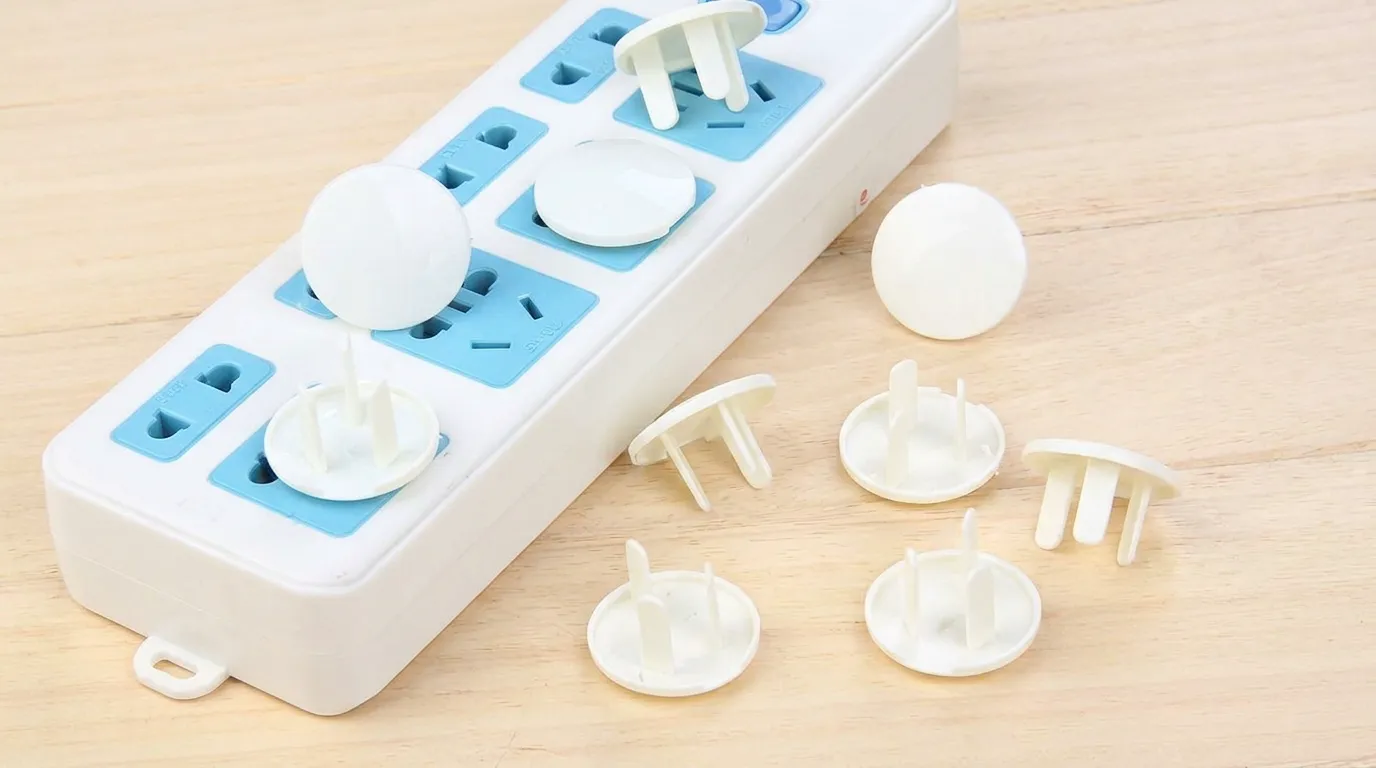
Use a clean, dry, closed container for accepted spare covers. Keep rejected covers separate so they cannot be mistaken for reusable ones. Store all loose covers in an adult-controlled location, not on a low shelf, countertop edge, or open bag pocket. For additional visual checks as a child's abilities change, review how to inspect outlet covers as your child grows.
Reassess fit one receptacle at a time
Fit reassessment comes last, after removal, permitted cleaning, complete drying, and visual inspection. It is not electrical testing. It simply means checking whether the fully dry, intact cover seats normally in one compatible, undamaged, unused receptacle opening.
Use this sequence:
- Choose an unused receptacle with no visible warning signs.
- Follow the cover's product instructions.
- Insert the cover normally, without force.
- Confirm that it appears fully seated and not tilted or slipping outward.
- Remove the cover from service if it does not seat securely, feels unusually loose, or can be removed by a child.
Do not assume a cover that fits in one room will fit every receptacle in the home. Receptacles can vary with age, condition, and retention. Check each intended opening separately.
Never force, bend, trim, tape, glue, or reshape a cover to make it fit. If it does not fit securely in a particular location, do not use that cover there. For further end-of-use criteria, read when to stop using plug-in outlet covers.
A removable cover is supplemental protection for an appropriate unused opening. It does not repair electrical problems, replace adult supervision, or take the place of a tamper-resistant receptacle. Learn more about the difference in this guide to outlet plug covers and tamper-resistant receptacles.
Replace rejected covers instead of trying to repair them
Discard or otherwise remove a cover from service if it is cracked, deformed, sticky, incomplete, heat-discolored, unusually loose, or child-removable. A clean appearance cannot compensate for poor condition or an unreliable fit.
When an intact replacement is needed, the Vmaisi Plug-In Outlet Cover is removable supplemental protection for compatible, undamaged, unused receptacle openings. Check each cover's fit separately, follow its current instructions, and remember that no removable cover repairs a receptacle or replaces supervision.