

How to Childproof Unused Electrical Outlets Room by Room
Assess each room before adding outlet protection
Start with a room-by-room check of each accessible receptacle before adding removable protection. An outlet opening is unused only when no device is plugged into it and it is not needed for a lamp, monitor, charger, appliance, medical-support device, or regular household task.
Inspect each receptacle visually before classifying it.
- Check that the wall plate is present, flat, and free from cracks, warping, browning, or black marks.
- Check that the receptacle face does not appear loose, damaged, wet, or discolored.
- Look around the outlet for pinched cords, furniture pressure, chargers, appliances, or water exposure.
- Mark each opening as:
- Unused and suitable for further review.
- In use or needed.
- Not compatible with a removable protector.
- Unsafe and excluded from use.
- Store removed, spare, damaged, or rejected small covers in secure adult-only storage.
Tamper-resistant receptacles, or TRRs, use built-in shutters to block access to openings unless a plug applies equal pressure to both slots. The Electrical Safety Foundation International guidance on tamper-resistant receptacles describes TRRs as a built-in approach. A removable outlet cover does not replace a TRR, safe cord management, electrical repairs, or adult supervision.
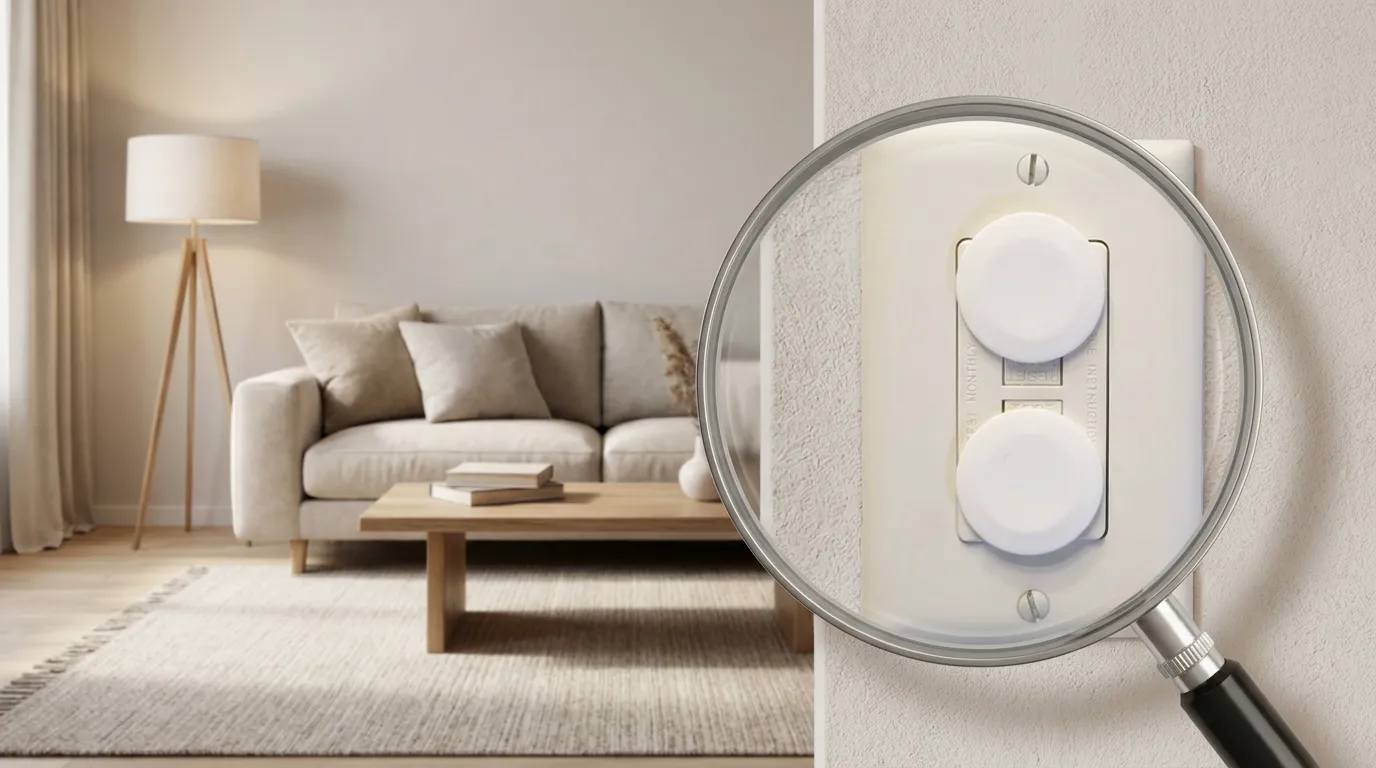
For removable supplemental protection of a compatible, undamaged, unused receptacle, review the Vmaisi Plug-In Outlet Cover. Check fit separately at every location. Do not force, tape, glue, reshape, or modify a cover to make it fit.
Check bedrooms, play areas, and shared rooms
Nursery. Check outlets behind dressers, near reading chairs, beside the crib wall, and near sleep equipment. Do not label an opening unused if it supports a monitor, night-light, humidifier, fan, or charger. Keep those cords managed and out of child reach. Furniture may hide an outlet, but it can also move or pinch cords.
Child's bedroom. Check outlets behind beds, beside bookshelves, below windows, and near closets. Reclassify an outlet as in use when a child begins using a fan, sound device, night-light, or charging device. Do not rely on a bed or bookshelf as the only access control. Confirm that furniture is not pressing on the wall plate or cord path.
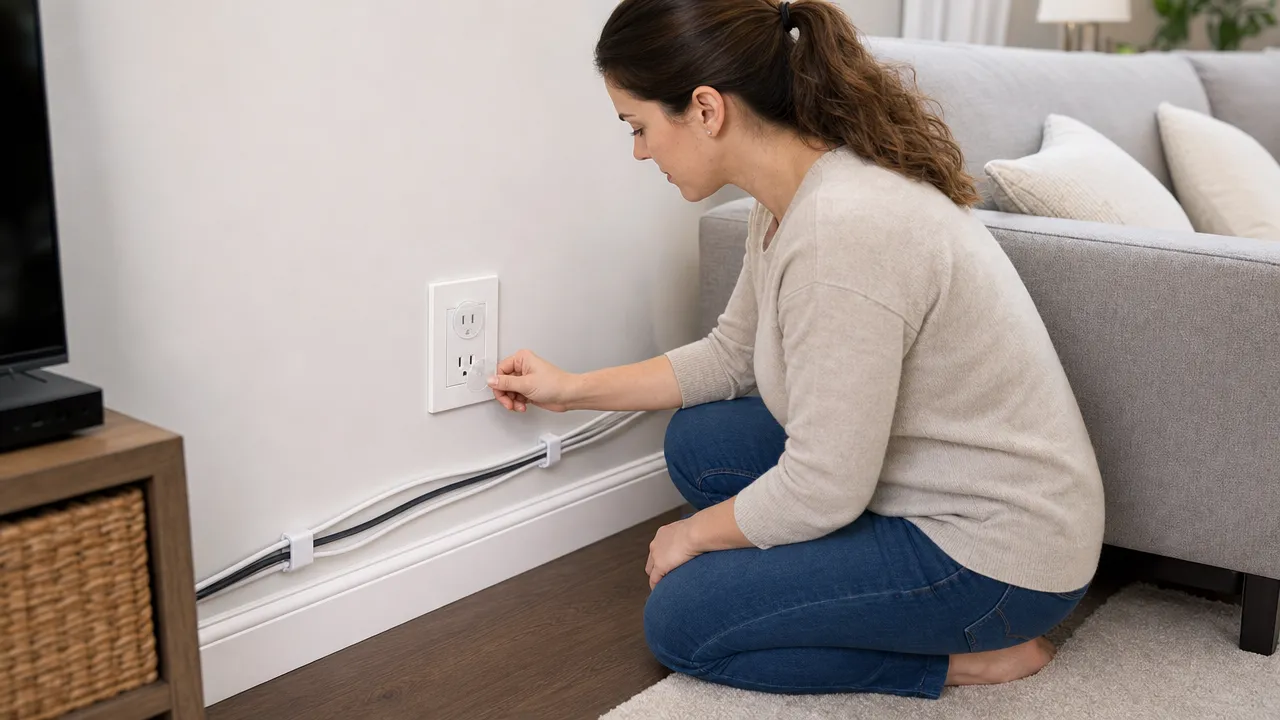
Living room. Inspect outlets behind sofas, side tables, lamps, and media furniture. An empty opening beside television, router, speaker, or charging equipment may still be part of an active setup. Check for flattened, frayed, or strained cords before moving furniture back into place. Do not route cords under rugs or use extension cords as permanent wiring. The CPSC home electrical safety checklist identifies damaged cords, loose plugs, and overloaded connections as hazards.
Playroom. Check outlets from floor level and at child height. Open wall space makes unused receptacles more visible and reachable. Inspect low storage furniture to ensure it does not block adult access for later checks. If a child repeatedly handles or removes a protector, remove that protector from use in that location and reassess the outlet plan. See when to stop using plug-in outlet covers for cover-specific removal conditions.
Check service areas and guest spaces
Kitchen. Review outlets near counters, islands, dining nooks, sinks, and appliance areas. An opening that is empty now may still be regularly needed for a blender, coffee maker, phone charger, or other appliance. Treat routinely needed openings as in use. Do not use a removable cover where moisture, splash risk, grease buildup, or damaged components are present. Kitchen outlets require separate attention to water exposure and appliance cords.
Bathroom. Check outlets near vanities, sinks, tubs, showers, wet countertops, and towel areas. A dry, intact, genuinely unused receptacle can be assessed for compatible supplemental protection. A wet outlet is not a cover-selection issue. Stop using it and arrange qualified assessment. A removable cover does not provide water protection or replace GFCI protection.
Hallway. Check low outlets near doors, entry furniture, stair-adjacent walls, and vacuum access points. Inspect for impact damage caused by doors, moving furniture, or cleaning equipment. Do not leave a removed cover on the floor or a low table after vacuuming or temporary device use.
Home office. Inspect receptacles behind desks, printers, filing furniture, and spare walls. Empty openings near computers, routers, monitors, and chargers may be needed during work hours. Check for heat, overloaded connections, discolored plates, crushed cords, and plugs that do not remain seated. Keep the outlet area accessible enough for visual reinspection.
Guest room or grandparents' room. Complete the inspection before a baby or toddler visits. Check outlets behind beds, nightstands, dressers, and luggage areas. Confirm that an outlet is not needed for a lamp, charger, clock, or essential equipment. Secure removed covers immediately. For a broader pre-visit review, use this guide to preparing for a visiting toddler.
Tell a cover problem from an unsafe receptacle
A removable cover problem and an unsafe receptacle require different actions.
| Condition | What to do | Do not do |
|---|---|---|
| Cover is loose, cracked, distorted, incomplete, missing, or removable by the child | Remove it from use. Store it away from children. Reassess the outlet and use only a compatible option if the receptacle remains intact and unused. | Do not force, bend, tape, glue, or leave the cover within reach. |
| Outlet is now needed for a device | Remove and secure the cover. Reclassify the opening as in use. Manage the device and cord separately. | Do not repeatedly remove and reinstall a cover as a daily routine. |
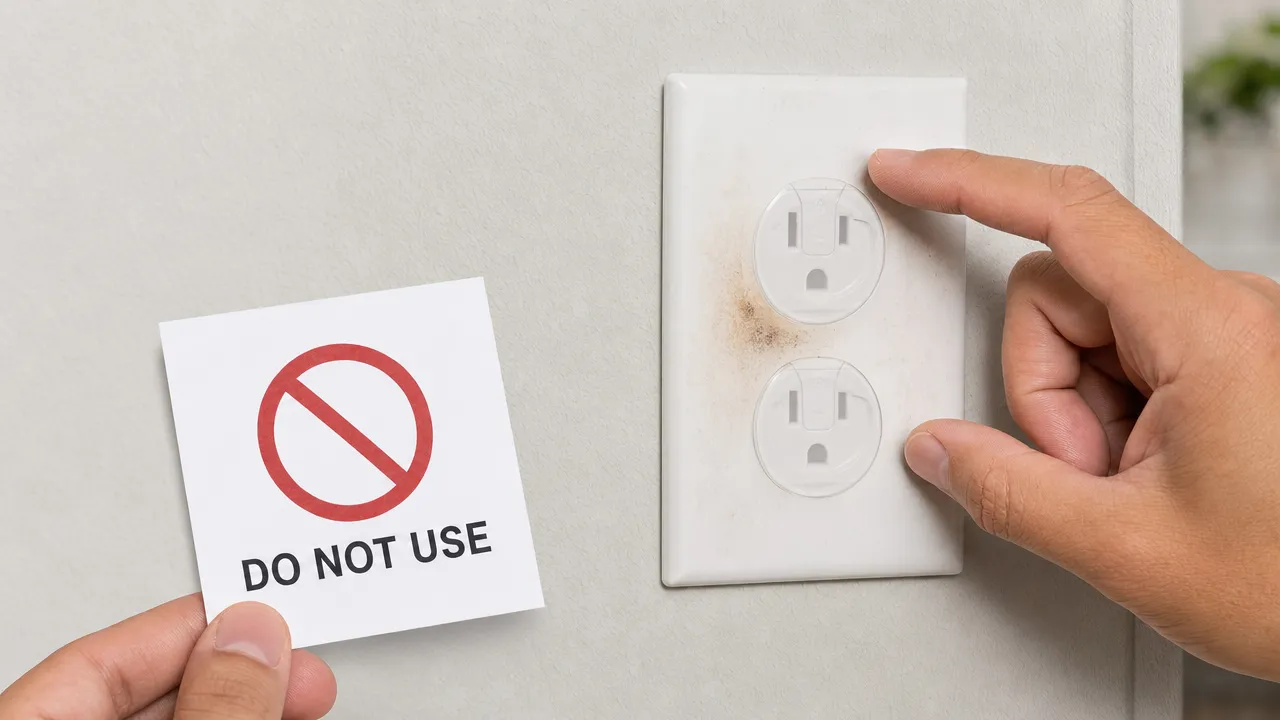
| Wall plate or receptacle is hot, loose, moving, cracked, wet, discolored, melted, noisy, or sparking | Stop using the receptacle. Keep children away from the area as practical. Contact a qualified electrician. Renters should notify the landlord, property manager, or maintenance contact. | Do not attempt wiring work, tightening, probing, diagnosis, or repair. |
| Ordinary plug wobbles, slips out, or will not stay seated | Stop using the receptacle and arrange qualified electrical assessment. | Do not use a removable cover as a test or repair method. |
Treat buzzing, sizzling, popping, crackling, a burning odor, sparks, unusual warmth, moisture, or a shock or tingle as electrical warning signs. The CPSC guide to home wiring hazards identifies several of these conditions as reasons for professional attention.
For a cover that feels loose but shows no outlet warning signs, follow the steps in what to do if an outlet plug cover feels loose. A loose cover does not prove that the receptacle is safe. It only starts a separate inspection.
Finish with a room-by-room count and inspection
Use this checklist in one room before moving to the next.
- Record the room name and count accessible wall receptacles.
- Note outlets behind furniture, near doors, windows, counters, and floor-level play areas.
- Count individual openings that are genuinely unused.
- Exclude openings needed for devices, chargers, lamps, appliances, monitoring equipment, or essential equipment.
- Inspect every candidate receptacle for a flat, intact wall plate and a dry, undamaged receptacle face.
- Check for heat, movement, cracks, discoloration, buzzing, burning odor, sparks, moisture, exposed internal parts, or poor plug retention.
- Check nearby furniture, cords, chargers, appliances, walking paths, and water exposure.
- Use removable supplemental protection only when the opening is unused, the receptacle is intact and dry, and the protector fits securely without force.
- Store removed and spare components where children cannot access them.
- Reinspect after furniture moves, cleaning, water exposure, changed equipment needs, or changes in a child's reach and behavior.
- Stop using and seek qualified electrical help when warning signs appear.
Protective accessories are only one layer of outlet safety. Continue to use supervision, manage cords, keep receptacles in safe working condition, and ask a qualified electrician about tamper-resistant receptacles when electrical work or replacement is needed.