

38-Pack vs 62-Pack Outlet Covers: Choosing the Right Quantity
Choosing a package is less about the size of your house and more about the number of individual receptacle openings your child can reach. A thoughtful count helps avoid buying too few covers for the places you actually use, while also avoiding the mistake of counting every outlet in every room.
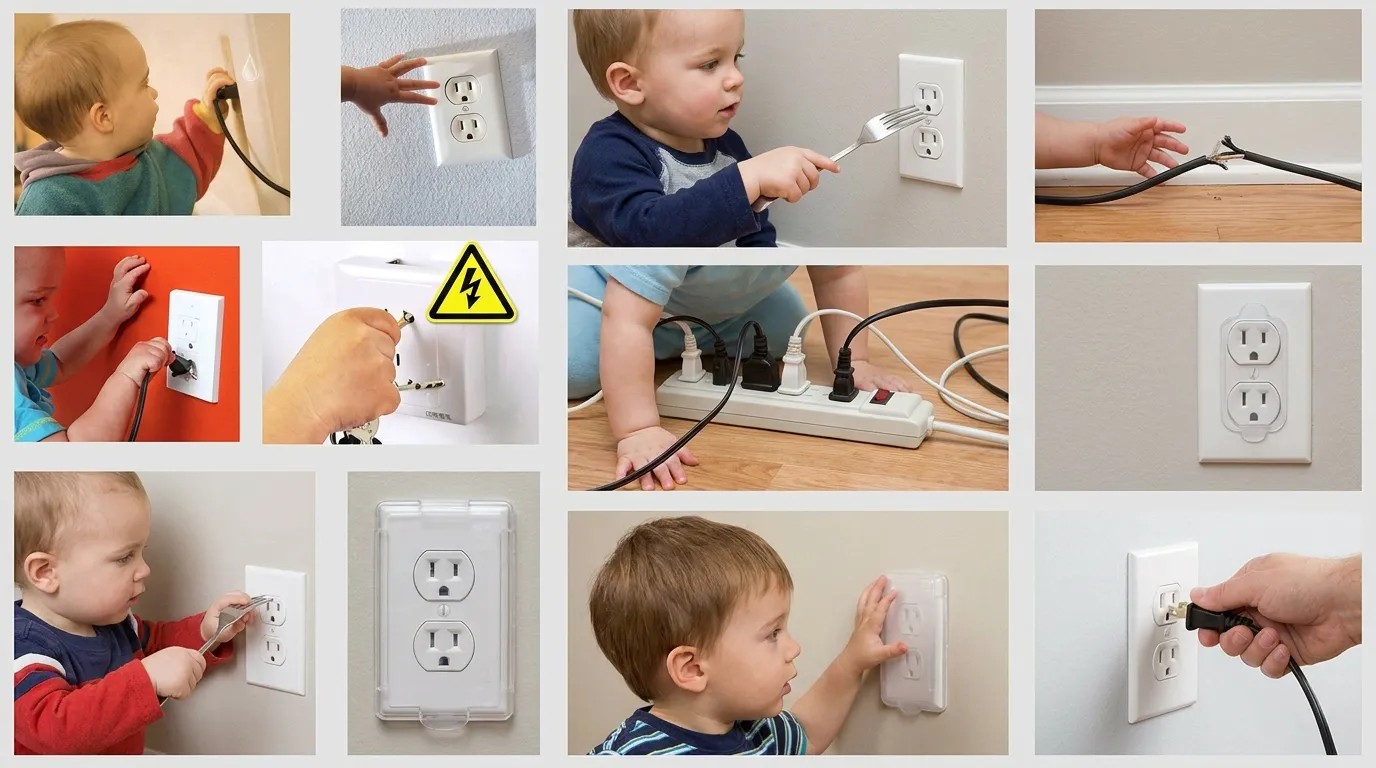
Plug-in covers are removable supplemental protection for compatible, undamaged, unused receptacle openings. They do not repair an outlet, guarantee childproofing, fit every receptacle, replace tamper-resistant receptacles, or replace attentive adult supervision.
Start with the openings your child can reach
The most reliable way to compare these quantity options is to count eligible openings, one at a time. Do not count rooms, wall plates, or entire outlets automatically.
A standard duplex receptacle typically has two individual plug openings. If both openings are unused, child-reachable, compatible, and undamaged, count two covers. If a floor lamp uses one opening and the second opening is unused and reachable, count only one. A wall plate with several receptacles may need several individual counts.
For a practical count, an opening must meet all three conditions:
- Unused: It is not needed for a lamp, charger, appliance, Wi-Fi equipment, or another regular routine.
- Child-reachable: Your child can reasonably reach it now, or may reach it as mobility, height, and climbing ability change.
- Compatible and undamaged: The receptacle appears stable and sound, and the cover fits securely without force.
This is why a small apartment can need more covers than a larger home. A home with many regularly used outlets may have fewer eligible openings than a smaller space with several unused, low wall receptacles.
Make a room-by-room count
Walk through the areas your child can access rather than estimating from memory. Bring a phone note or printed worksheet, and count each eligible opening immediately.
Living rooms, bedrooms, and play areas
Start with low outlets near sofas, beds, low shelving, dressers, and media furniture. Check from the angle a child might approach, including beside or behind furniture that could be moved later.
A duplex receptacle beside a sofa might have one opening in use for a lamp and one empty opening. In that case, only the empty opening belongs in the count. Do not unplug something that is routinely used simply to make an opening eligible.
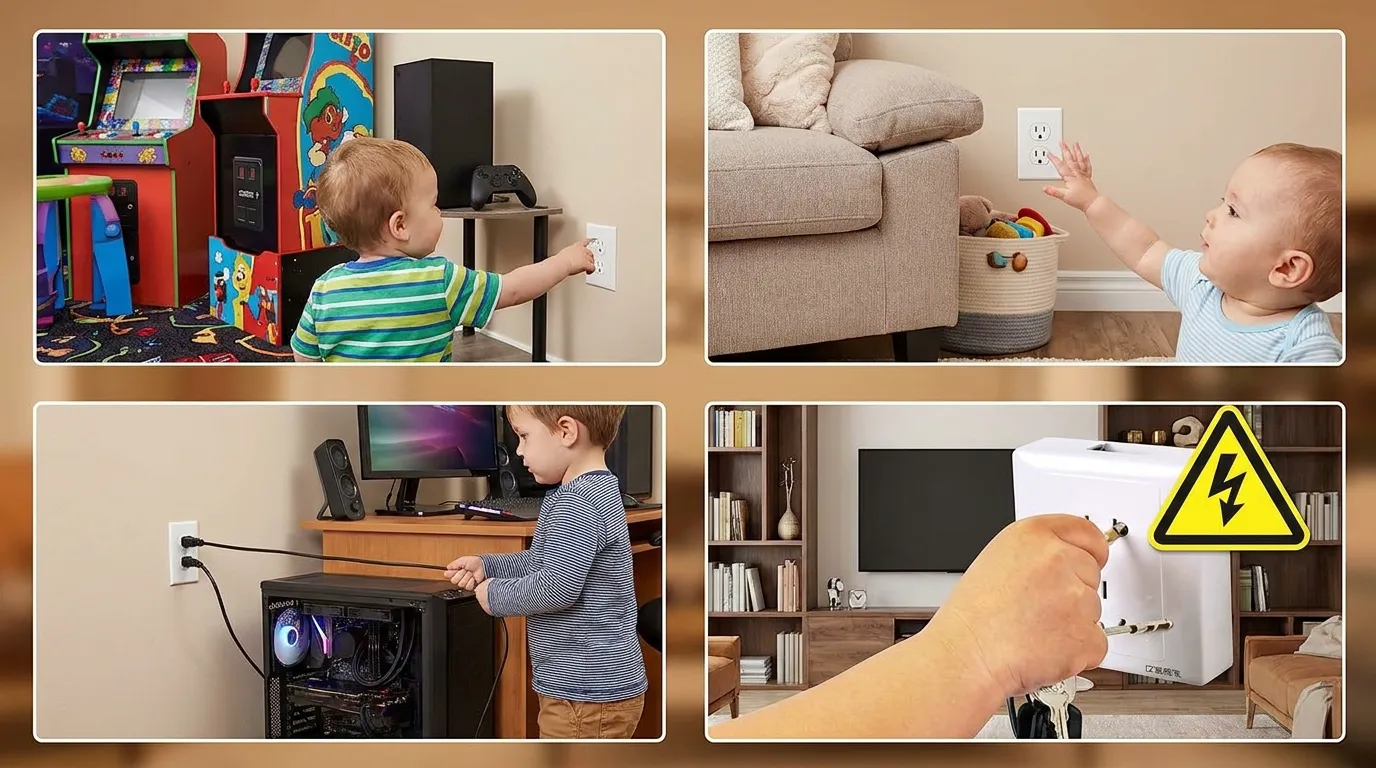
Nurseries, children's bedrooms, and play areas deserve a second look after furniture moves. An opening once blocked by a bed or storage unit may become reachable after a room is rearranged.
Hallways, guest rooms, and home offices
Hallways and guest rooms often have easy-to-miss outlets near doorways, low furniture, or open wall space. These may add a few eligible openings even when the rooms are not used every day.
Home offices need more careful exclusions. Outlets supporting a router, printer, desk lamp, monitor, computer equipment, or charger are frequently used. Repeatedly removing and reinserting a removable cover is not a dependable daily routine, so leave those openings out of your package calculation.
Kitchen, laundry, basement, and garage spaces
These areas can change quickly based on the day's appliances and storage. Exclude openings used for countertop appliances, laundry equipment, freezers, tools, or other regularly plugged-in equipment.
Only add an empty opening if it will remain unused, is genuinely reachable, and the receptacle is compatible and undamaged. A location can become newly accessible when storage shifts, an appliance is relocated, or a child starts entering an area that was previously less accessible.
Use this worksheet before deciding:
| Area or location | Unused child-reachable openings | Frequent-use openings excluded | Covers needed | Notes |
|---|---|---|---|---|
| Living room | ||||
| Nursery or child's bedroom | ||||
| Play area | ||||
| Primary bedroom | ||||
| Guest room | ||||
| Hallway or entry | ||||
| Home office | ||||
| Kitchen | ||||
| Laundry, basement, or garage | ||||
| Travel or relatives' home | ||||
| Small reserve | - | - | ||
| Total | - | Add the Covers needed column |
Match the package size to your total
Once you have a total, the choice becomes straightforward. The two packages are quantity variants in the same product family, not different performance levels. The larger option simply provides 24 more covers.
| Quantity consideration | 38-piece option | 62-piece option |
|---|---|---|
| Covers included | 38 | 62 |
| Best fit | Final count is 38 or fewer | Final count is 39 to 62 |
| Reserve capacity | Limited when the count is near 38 | More flexibility for a modest reserve |
| Multiple locations | Works if the combined count stays within 38 | More practical when totals span several locations |
| Product difference | Quantity only | Quantity only, with 24 additional covers |
Choose the 38-piece option when your completed worksheet, including any small reserve you genuinely want, fits comfortably under 38. It can be a sensible choice for one primary living area or a limited set of accessible rooms.
Choose the 62-piece option when the final total is above 38, when a small reserve would make the smaller package too tight, or when you are planning for more than one location. The bigger quantity does not mean a different type of outlet protection. It simply gives you more capacity to match your count.
Allow for other places your child spends time
A higher cover count does not automatically mean a larger home. It can reflect more places where your child spends time, more accessible rooms, or several properties.
Add locations before adding a reserve
Review whether your worksheet needs rows for:
- A grandparent's or relative's home.
- Travel stays or temporary accommodations.
- More than one floor in your home.
- Shared-custody or split-household arrangements.
- A second home, rental, or vacation property.
- Rooms that may become accessible as your child becomes more mobile.
For a visit away from home, count only openings that will remain unused during the stay. A bedside lamp, phone charger, kitchen appliance, or other daily-use device should remain excluded even if it is unplugged when you first look.
A small reserve can be useful for an overlooked opening, a room rearrangement, or an intact cover that is lost or removed from use. Keep the reserve modest. It is not a reason to use covers in questionable receptacles or force a cover into a location where it does not fit securely.
After you finish the count, you can compare the available quantities on the Vmaisi Plug-In Outlet Cover product page and choose the option that covers your total without an excessive surplus.
Keep quantity planning separate from electrical safety
Quantity planning should always stay separate from outlet condition. Do not use a plug-in cover to address an electrical problem.
Stop using an outlet and contact a qualified electrician if you notice looseness, heat, scorching, buzzing, sparking, damage, discoloration, a burned smell, a plug that pulls out easily, a shock or tingle, or another electrical warning sign. The U.S. Consumer Product Safety Commission identifies several of these conditions as potential home-wiring hazards. The National Fire Protection Association also advises professional attention for warm or discolored outlets, burning smells, sparks, and tingling sensations.
Do not force, alter, tape, or glue a cover to make it fit. Remove a cover from use if it is loose, cracked, distorted, damaged, incomplete, or removable by the child. Keep removed covers out of a child's reach.
Tamper-resistant receptacles are a separate, built-in approach with internal shutters. They do not change the need to stop using an outlet with warning signs, and they do not replace attentive adult supervision.
The simplest decision is this: complete a room-by-room count of unused, child-reachable, compatible, undamaged receptacle openings. Add a modest reserve only if it serves a realistic need. If your total fits comfortably within 38, select the smaller quantity. If it exceeds 38 or needs room for several locations, select 62.