

Do Magnetic Cabinet Locks Work on Thick Cabinet Doors?
Are you wondering whether a hidden cabinet lock will still work if your cabinet doors are unusually thick? Many parents ask this before baby-proofing a kitchen, bathroom vanity, pantry, or storage cabinet. The short answer is: magnetic-style hidden systems often work on standard household cabinet doors, but thick doors, dense materials, inset construction, drawer layers, nearby metal hardware, and poor alignment can make performance less reliable.
This guide explains what to measure, how cabinet door thickness affects hidden cabinet locks, how to handle the adult-only question of how to open magnetic cabinet lock systems safely, and when adhesive no-drill cabinet latches may be a more practical choice for families.
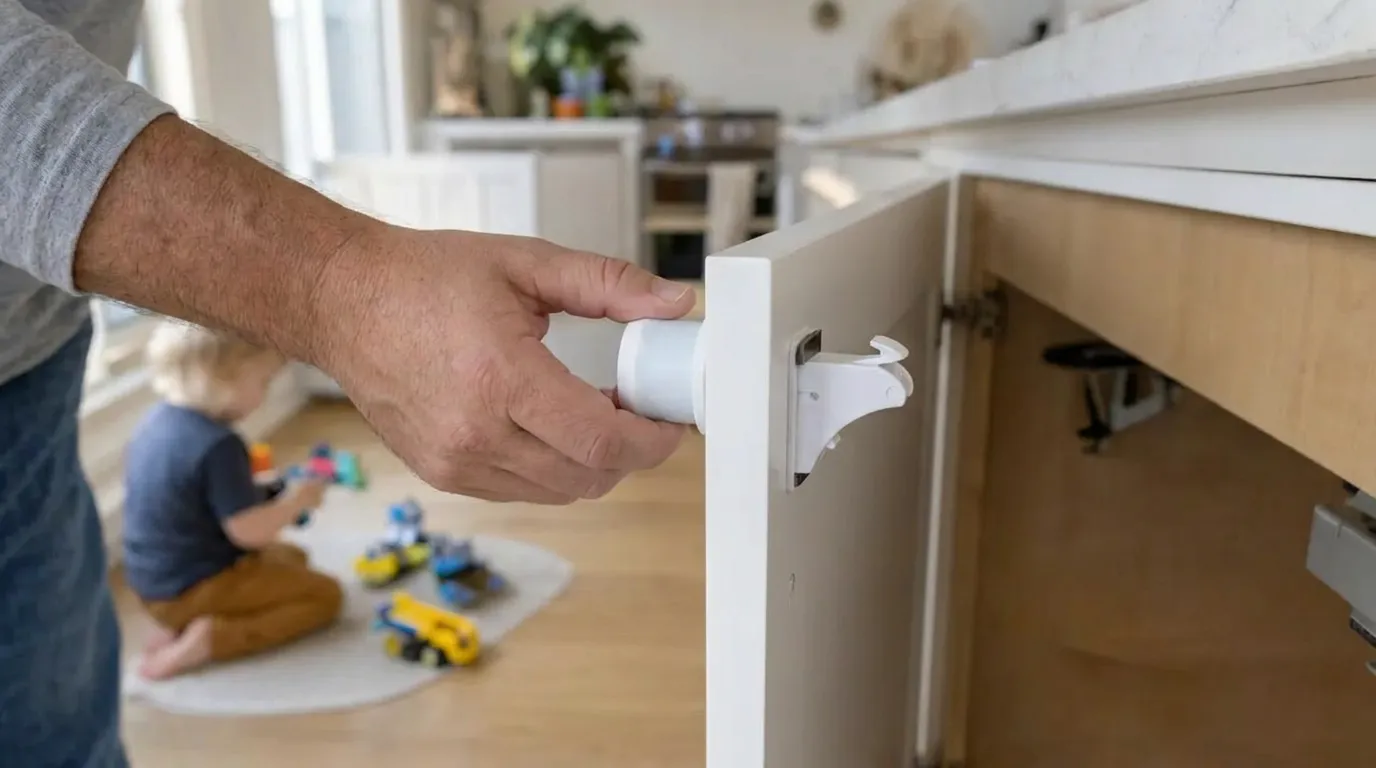
Magnetic cabinet locks thick doors: the quick answer for parents
Magnetic cabinet locks thick doors compatibility depends on the specific product and the cabinet construction. Many homes use cabinet doors with frames or slab material around 3/4 inch, or about 19 mm, while recessed center panels can be thinner depending on the style. Cabinet construction resources such as CabinetDoors.com cabinet door sizing guidance and cabinet-making discussions from FineWoodworking support this general construction pattern.
However, "standard" does not mean universal. Some hidden systems publish specific thickness limits. For example, a RevaLock listing from Woodworker Express gives a maximum door thickness of 1 inch for that product. Other products may claim different limits, so the best rule is simple: measure first, then compare your cabinet door thickness with the product instructions.
For parents, the practical takeaway is:
| Cabinet situation | What it means for hidden cabinet locks | Parent-friendly next step |
|---|---|---|
| Common 3/4 inch cabinet doors | Often within the range for many hidden systems | Still check the product instructions |
| Thick custom cabinet doors | Compatibility becomes more uncertain | Measure carefully before buying |
| Inset cabinet doors | Alignment and depth are more sensitive | Dry-fit and test before relying on the latch |
| Drawer front plus drawer box | More material may sit between the outside and inside mechanism | Check the total working thickness, not just the drawer face |
| Metal hardware nearby | May interfere with some hidden systems | Avoid installing too close to metal parts |
If you decide that a simpler, key-free no-drill option fits your home better, VMAISI adhesive cabinet latches are designed for parents who want to help secure cabinets and drawers without drilling.
Magnetic cabinet locks thick doors and cabinet door thickness: what to measure
When parents search for cabinet door thickness, they may be thinking about the whole cabinet size. But for hidden cabinet locks, the important measurement is the thickness between the outside release point and the internal latch location.
Measure the actual door or drawer front where the latch would be installed. Do not rely only on cabinet height, width, or depth. A base cabinet may have standard dimensions, but the actual door material can vary by style, manufacturer, and construction.
Here is a simple measurement checklist:
- Open the cabinet or drawer.
- Measure the door or drawer front at the intended installation area.
- Check whether the door is slab, frame-and-panel, overlay, or inset.
- Look for extra layers, such as a drawer box behind the drawer front.
- Check for nearby screws, hinges, metal brackets, or pulls.
- Compare your measurement with the product's stated maximum thickness.
- Test the setup before depending on it for child safety.
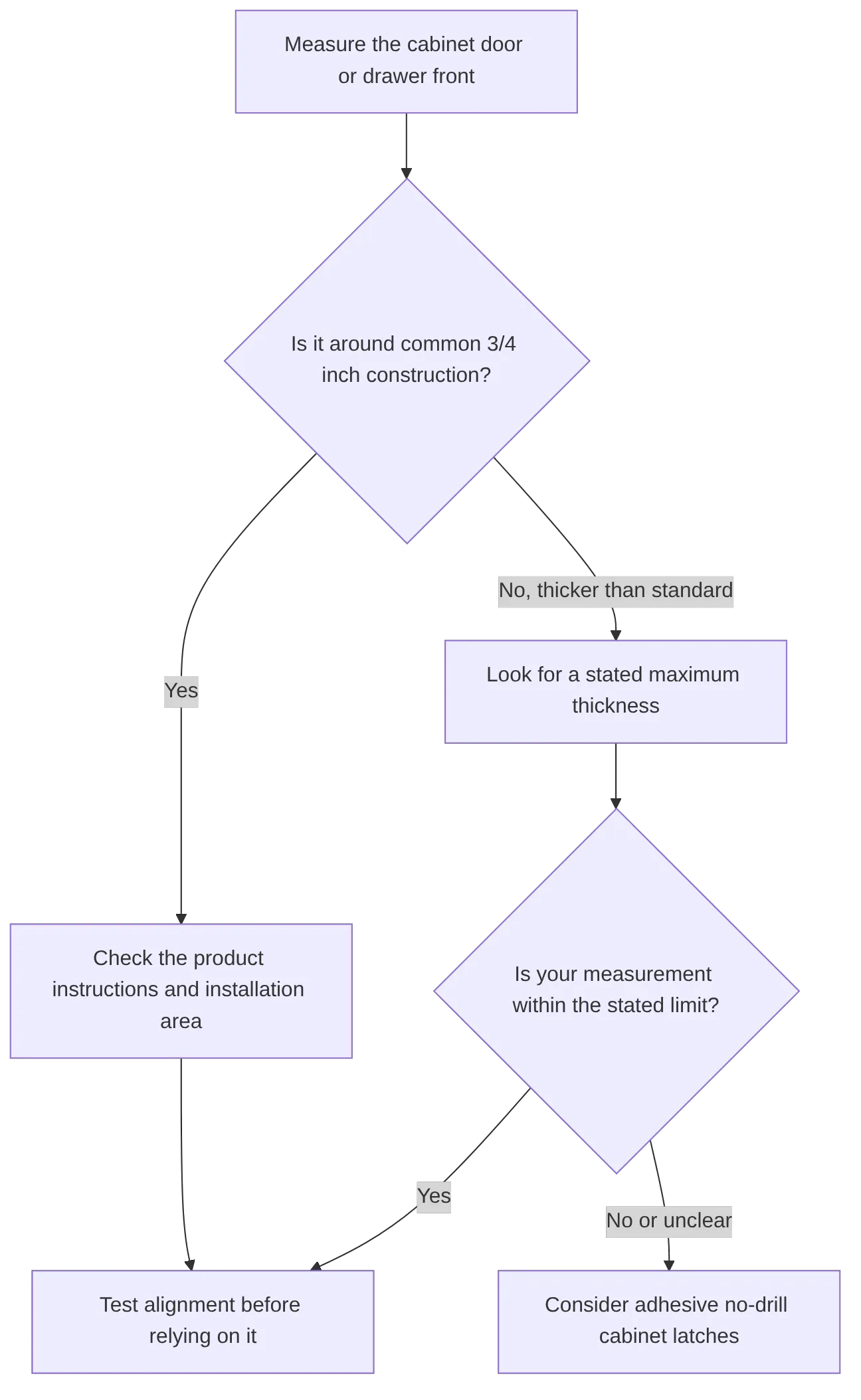
This matters because hidden cabinet locks depend on the cabinet material, placement, and internal alignment. Thick wood, dense MDF, inset designs, and drawer-box layers can all make daily use less predictable.
Magnetic cabinet locks thick doors: how hidden cabinet locks work and why they can struggle
Hidden cabinet locks are usually installed inside a cabinet or drawer so the hardware is not visible from the outside. Many parents like this clean look, especially in kitchens and bathrooms. In general, an adult uses the intended release method from the outside, near the installed latch, to open the cabinet.
The challenge with thick doors is that more material sits between the outside of the cabinet and the internal mechanism. That can reduce reliability. Alignment also matters: if the latch and catch are slightly off, the cabinet may bind, fail to close smoothly, or become difficult for an adult to open.
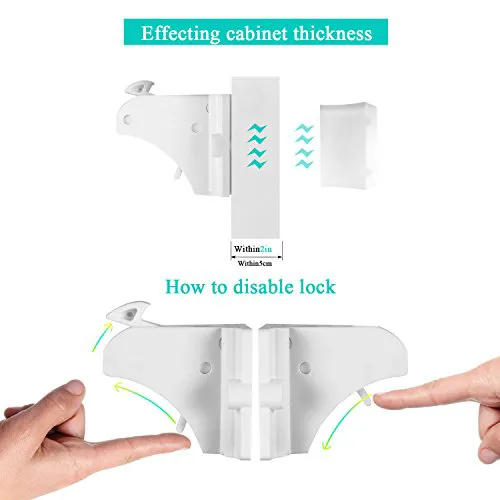
Common performance factors include:
| Factor | Why it matters |
|---|---|
| Door thickness | More material can reduce release consistency for magnetic-style hidden systems |
| Material density | Dense wood or MDF may behave differently than a thinner panel |
| Drawer construction | A drawer front plus drawer box can add extra material |
| Inset layout | The cabinet face and interior spacing may leave less room for alignment |
| Adhesive surface | Dust, grease, moisture, or rough finishes can weaken adhesive bond |
| Metal hardware | Metal parts near the latch area may affect operation in some systems |
For child safety, do not treat any lock or latch as the only layer. Guidance from HealthyChildren.org, Cleveland Clinic, and Consumer Reports consistently emphasizes safer storage habits too: keep medicines, cleaning products, laundry products, sharp tools, batteries, and small choking hazards out of reach and secured.
Magnetic cabinet locks thick doors troubleshooting: how to open magnetic cabinet lock systems safely
The search phrase how to open magnetic cabinet lock often comes from adults who are trying to use or troubleshoot a hidden system. Because cabinet safety products are meant to slow child access, troubleshooting should stay adult-focused and should not include improvised bypass methods.
If an adult cannot open a hidden system smoothly, use this safe troubleshooting sequence:
| Adult troubleshooting step | What to check |
|---|---|
| Keep children away from the cabinet | Do not troubleshoot while a child is watching closely |
| Review the manufacturer instructions | Use only the intended adult release method |
| Check latch and catch alignment | Misalignment is a common cause of sticking |
| Check adhesive cure time | Recently installed adhesive may need more time to bond |
| Recheck cabinet door thickness | The material may be thicker than the product supports |
| Look for drawer-box interference | The latch may be blocked by internal drawer structure |
| Contact the manufacturer | If the cabinet remains stuck, get product-specific support |
Do not force the cabinet aggressively. Force can damage cabinetry, loosen adhesive, or misalign the latch further. Also avoid explaining opening methods in front of children. Toddlers learn by watching, and baby-proofing works best when adults pair products with consistent habits.
For broader planning, VMAISI has related family-safety reading on babyproofing mistakes that put toddlers at risk, comprehensive home babyproofing kits, and overlooked babyproofing items for a safer home. These guides can help you think beyond one cabinet and review the whole room.
Magnetic cabinet locks thick doors vs adhesive no-drill cabinet latches
If your cabinets are unusually thick, if daily access feels inconvenient, or if you prefer not to manage a separate release accessory, adhesive cabinet latches can be a practical alternative. They are still child safety cabinet locks, but they are not dependent on a magnetic release working through a thick door.
VMAISI adhesive child safety cabinet locks are positioned for everyday baby-proofing needs in kitchens, bathrooms, pantries, storage cabinets, and drawers. They are adhesive, no-drill cabinet locks for parents who want a straightforward way to help secure household areas without drilling into cabinetry.
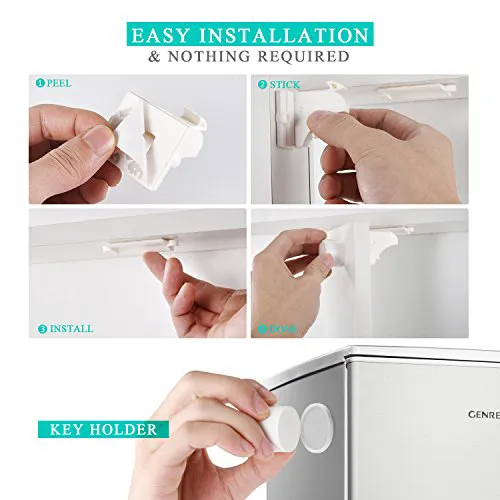
Here is how to compare the options:
| Feature | Magnetic-style hidden systems | Adhesive no-drill cabinet latches |
|---|---|---|
| Appearance | Usually hidden from outside | Often discreet, depending on placement |
| Thick-door sensitivity | Can be affected by thick or layered material | Less dependent on release force through the door |
| Daily adult access | Uses the intended outside release method | Typically uses the latch mechanism after opening slightly |
| Installation | Often adhesive, sometimes screw-assisted | Adhesive, no-drill setup for many cabinets and drawers |
| Best fit | Standard doors where product thickness limits are clear | Families who want simple, key-free cabinet latches |
| Main caution | Check maximum thickness and alignment | Clean surfaces, align carefully, and allow adhesive bonding time |
For a smaller baby-proofing project, consider the VMAISI Cabinet Locks Child Safety Latches 12 Pack. It is a practical starter option for parents securing a few high-priority cabinets or drawers, such as an under-sink cabinet, bathroom vanity, or drawer with small household hazards.
For broader coverage, the VMAISI Cabinet Locks Child Safety Latches 20 Pack is better suited for whole-home baby proofing cabinet locks needs, including multiple kitchen, bathroom, pantry, laundry, and storage areas. The 20 Pack is also the stronger adhesive recommendation based on the product page positioning.
FAQs about magnetic cabinet locks thick doors
Do magnetic-style hidden cabinet locks work on thick cabinet doors?
Often on standard doors, yes. But magnetic cabinet locks thick doors performance is not universal. Thick, dense, inset, or layered cabinet construction can reduce reliability, so measure and check product limits.
What cabinet door thickness is typical?
Many cabinet doors or door frames are commonly around 3/4 inch, while some recessed center panels may be thinner. Always measure your own cabinet because construction varies.
What thickness matters most for drawers?
The important thickness is the material between the outside release area and the internal mechanism. For drawers, this may include both the drawer front and part of the drawer box.
Are hidden cabinet locks better than visible latches?
Hidden cabinet locks can preserve the look of cabinetry, but they may be more sensitive to thickness and alignment. Adhesive cabinet latches can be simpler when compatibility is uncertain.
Are no-drill cabinet locks suitable for renters?
They can be a renter-friendly option because adhesive installation avoids drilling. Always test the surface, follow installation and removal instructions, and remember that adhesive may affect delicate finishes.
Where should parents install child safety cabinet locks first?
Start with cabinets and drawers containing cleaning supplies, medicines, sharp tools, batteries, small objects, laundry products, and other household hazards. Then reassess as your child grows, climbs, and learns new routines.
If thick cabinet doors make hidden systems feel uncertain, choose a solution that matches your actual cabinets, your daily routine, and your highest-risk storage areas. For many parents, VMAISI adhesive cabinet latches offer a practical no-drill path to safer cabinets and drawers without overcomplicating everyday access.