

Why Some Magnetic Cabinet Locks Fail: Adhesive, Alignment, and Door Thickness Explained
Are you confused because your cabinet lock seemed secure at first, but now your toddler can open the drawer again? You are not alone. Many parents search for "magnetic cabinet locks not working" when the real problem is more specific: the adhesive is peeling, the latch is not catching, the drawer opens slightly, or one cabinet works while another fails.
Here is the practical truth: most child safety cabinet lock problems come down to three things: adhesive bonding, alignment, and cabinet or drawer design. A product can be well made and still perform poorly if it is installed on a greasy surface, placed slightly too far from the catch point, or mounted inside a cabinet with bumpers, recessed panels, thick drawer fronts, or limited flat space.
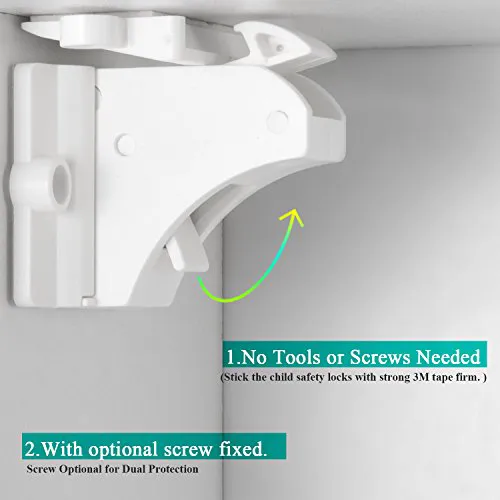
This guide uses the phrase "magnetic cabinet locks not working" as a parent search problem, but VMAISI's recommended cabinet products are adhesive, no-drill child safety cabinet locks and cabinet latches for cabinets and drawers. They are designed for everyday baby-proofing needs, not as key-required products.
What "magnetic cabinet locks not working" usually means for parents
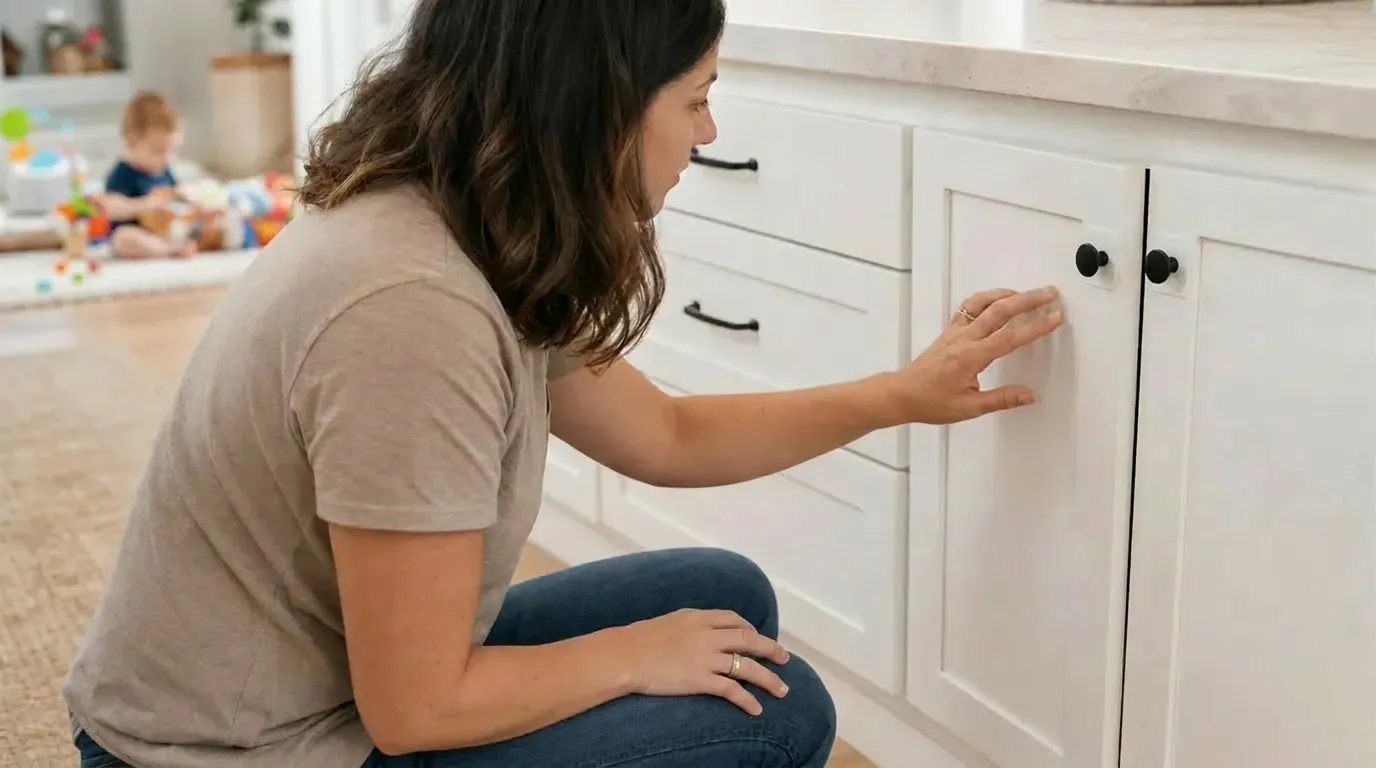
When parents say "magnetic cabinet locks not working," they may be describing several different problems. Identifying the exact symptom matters because the fix for cabinet lock adhesive failure is different from the fix for magnetic lock alignment or drawer spacing.
| Symptom | Likely issue | What to check first |
|---|---|---|
| The lock or latch fell off | Adhesive did not bond well | Surface cleanliness, moisture, grease, curing time |
| The cabinet closes but does not stay secured | Alignment problem | Whether the latch and catch meet correctly |
| The drawer opens a little | Placement or drawer design issue | Drawer box height, catch position, cabinet frame |
| It worked for a few days, then failed | Adhesive wear or repeated pulling | Lifting corners, shifting, toddler tugging |
| Some cabinets work, others do not | Cabinet design variation | Flat surface area, inset vs. overlay doors, bumpers |
A good first step is to move high-risk items out of reach while you troubleshoot. The U.S. Consumer Product Safety Commission recommends using safety latches and locks on cabinets and drawers to help prevent access to medicines, household cleaners, laundry products, knives, and sharp objects, but it also emphasizes keeping dangerous items away from children and checking safety devices regularly. You can review the CPSC's guidance on childproofing your home.
If you are replacing or adding no-drill cabinet locks, the VMAISI Cabinet Locks Child Safety Latches 12 Pack is a practical starting point for a few high-risk cabinets or drawers, such as under-sink storage, bathroom vanities, or several kitchen drawers.
Why "magnetic cabinet locks not working" often starts with adhesive failure
Cabinet lock adhesive failure is one of the most common reasons parents lose trust in a latch. Adhesive products need a clean, dry, smooth, flat surface. If the mounting area has grease, dust, furniture polish, soap film, cleaner residue, moisture, or peeling paint, the adhesive may stick at first but weaken once the cabinet is used.
Common adhesive problems include:
- Installing on a greasy kitchen cabinet interior.
- Applying adhesive to a damp bathroom vanity.
- Mounting on rough, unfinished, waxed, or textured surfaces.
- Pressing the latch lightly instead of firmly and evenly.
- Repositioning the adhesive repeatedly.
- Letting a toddler tug on the cabinet before the bond has had time to strengthen.
- Relying on a latch with lifting corners or visible gaps.
A parent-friendly installation routine should look like this:
- Choose a smooth, flat mounting area.
- Remove dust, crumbs, grease, soap film, and residue.
- Use a cleaning method that is safe for your cabinet finish.
- Let the surface dry fully.
- Dry-fit the latch and catch before peeling the backing.
- Apply the adhesive once, then press firmly and evenly.
- Wait according to the product instructions before relying on it.
- Test the cabinet several times.
- Inspect regularly for peeling, shifting, or misalignment.
For a more detailed preparation and placement walkthrough, VMAISI's adhesive child safety cabinet lock installation guide explains why clean, dry, flat surfaces and careful dry-fitting matter before installation.
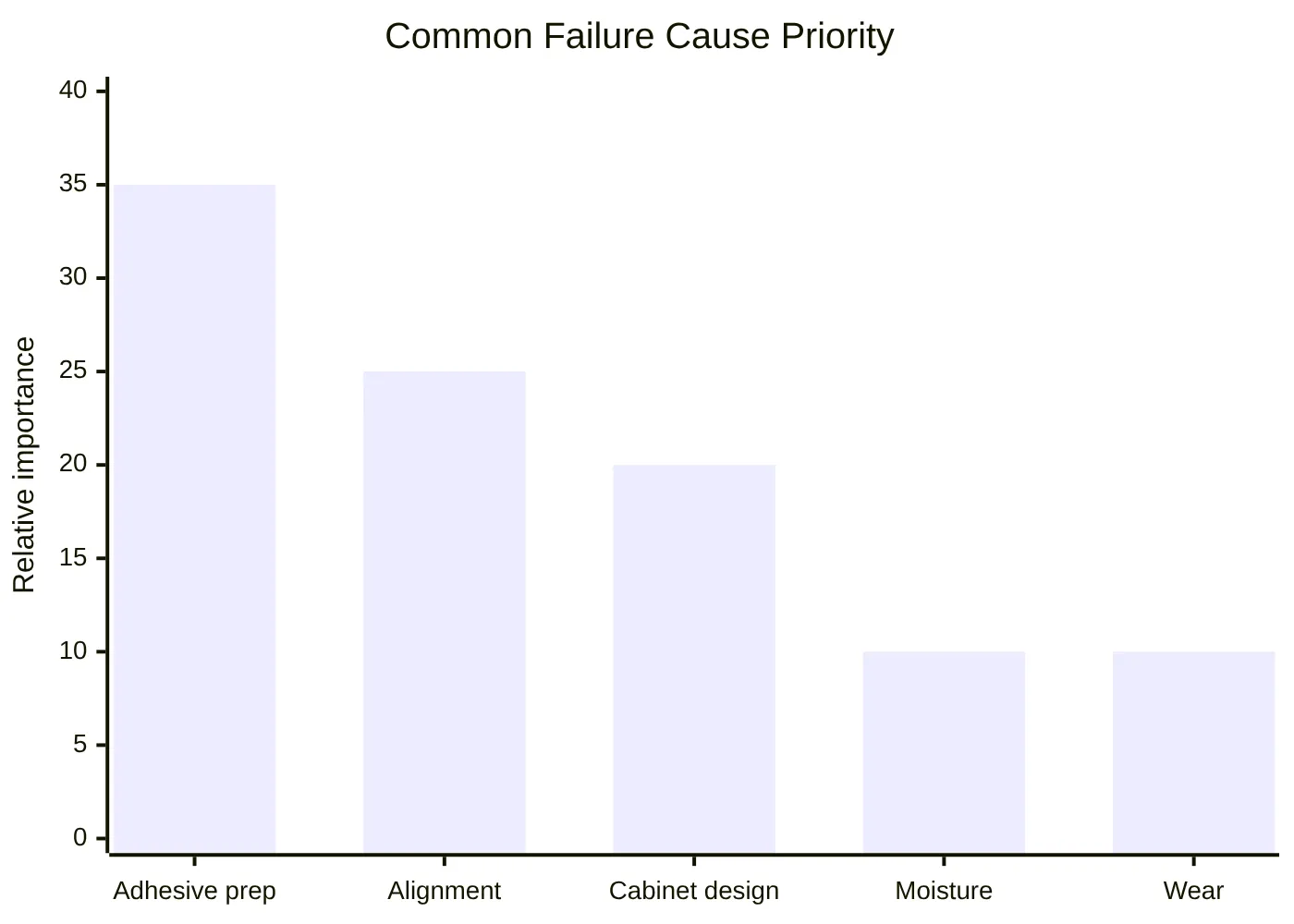
Think of adhesive as part of the safety system, not just a sticky backing. The bond has to resist repeated opening, closing, pulling, humidity, and daily cabinet use. If a latch is loose, sliding, cracked, or inconsistent, it should not be trusted for a cabinet that holds cleaners, sharp tools, medicines, small objects, or other household hazards.
How "magnetic cabinet locks not working" can be caused by alignment
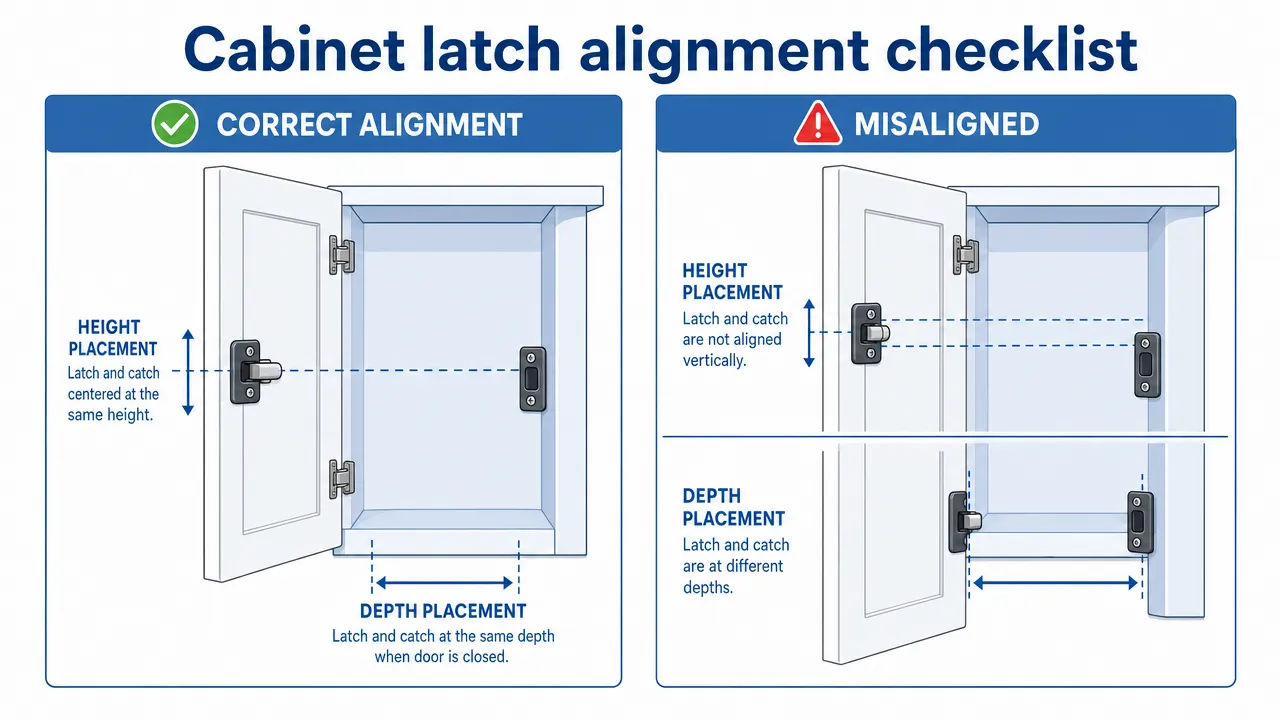
Magnetic lock alignment is a common search phrase because many parents notice that the cabinet looks closed, but the latch does not engage. The same principle applies broadly to child safety lock troubleshooting: if the latch and catch do not meet correctly, the cabinet may still open.
Alignment problems may happen when:
- The catch is too high or too low.
- The latch is mounted too far forward or too far back.
- The cabinet door does not close fully.
- A drawer shifts slightly during daily use.
- Cabinet bumpers change the spacing.
- A shelf, hinge, drawer slide, or stored object blocks movement.
- The adhesive pad does not sit flat, causing the latch to tilt.
- The same placement method is used on different cabinet styles without testing.
Before peeling the adhesive backing, dry-fit the parts with the cabinet or drawer open and closed. This simple step can prevent many failures. Watch whether the latch catches cleanly, whether anything rubs, and whether the cabinet still closes naturally.
| Alignment check | What you want to see | Warning sign |
|---|---|---|
| Door closes fully | No bounce-back or forced closure | Door stops short or springs open |
| Latch meets catch | Smooth, repeatable engagement | It catches only sometimes |
| Adhesive pad sits flat | Full contact across the pad | One edge floats or bends |
| Drawer clears latch | No rubbing on drawer slide or frame | Scraping, bending, or blocked motion |
| Adult release works | Predictable opening for adults | Sticking, jamming, or awkward pulling |
If you are comparing different options before reinstalling, VMAISI's adhesive cabinet locks guide can help you think through adhesive style, fit, and everyday use.
Why "magnetic cabinet locks not working" may really be a cabinet design issue
Sometimes the product is not the only issue. Cabinet and drawer construction can make installation easier or harder. A latch that works perfectly on one cabinet may fail on another because the internal shape, depth, frame, or drawer box is different.
Design details that can affect performance include:
| Cabinet or drawer feature | Why it matters | Practical parent tip |
|---|---|---|
| Overlay cabinet doors | The door sits over the frame, affecting placement | Dry-fit with the door fully closed |
| Inset cabinet doors | The door sits inside the frame, so depth matters | Check whether there is enough internal clearance |
| Thick drawer fronts | The latch may not reach or engage as expected | Test before applying adhesive |
| Tall drawer box | The drawer body can block the latch | Check clearance from drawer slides and frame |
| Cabinet bumpers | They can stop the door from closing far enough | Test with bumpers in place |
| Recessed panels | They may not offer a flat mounting area | Use a flat rail or interior surface if compatible |
| Curved decorative edges | Adhesive may not make full contact | Avoid curved mounting surfaces |
| Narrow frames | Too little adhesive contact area | Consider a different mounting spot |
| Corner cabinets | Angles may interfere with engagement | Test carefully before final installation |
This is why child safety lock troubleshooting should not stop at "the adhesive failed." Look at the cabinet as a whole: the surface, the angle, the closure, the catch point, and the amount of flat area available.
For renters or parents who want to avoid drilling, adhesive products can be useful, but the surface still matters. Painted, delicate, old, or veneered surfaces may be more vulnerable during removal. If you want more guidance on no-screw options, see VMAISI's guide to best no-drill cabinet locks for child safety.
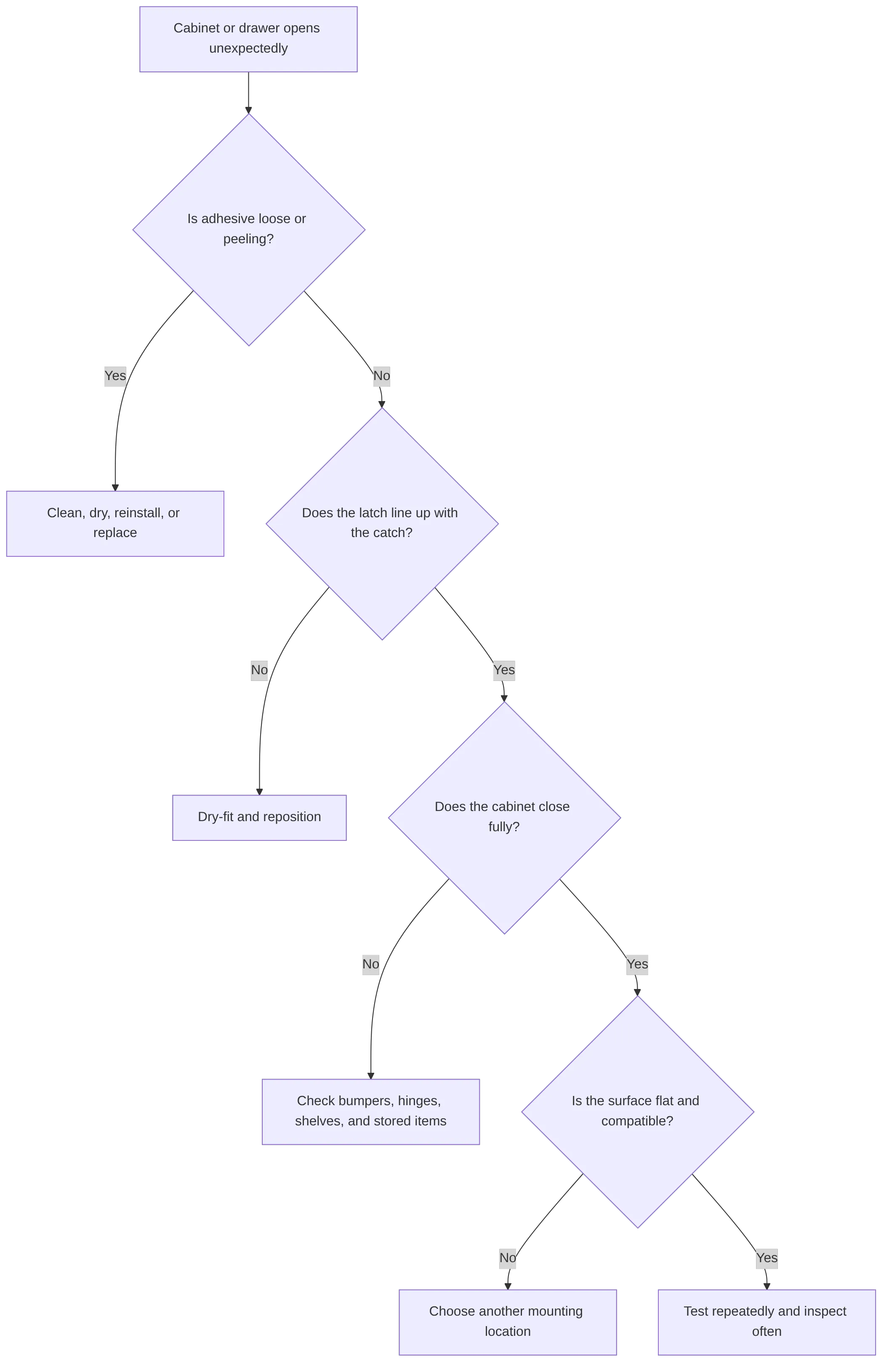
A parent-friendly "magnetic cabinet locks not working" troubleshooting checklist
When something fails, slow down and inspect the setup in order. This checklist works for many adhesive cabinet locks, cabinet latches, drawer safety locks, and baby proofing cabinet locks.
-
Move hazards first. If the cabinet contains cleaners, medicines, sharp items, batteries, laundry products, or small choking hazards, move them up and away before troubleshooting.
-
Check the adhesive bond. Look for lifting edges, sliding, gaps, or a latch body that wiggles when gently touched.
-
Check the surface. Look for grease, dust, soap film, cleaner residue, wax, polish, moisture, peeling paint, rough wood, or texture.
-
Check curing and early use. If the latch was tugged or used immediately after installation, the adhesive may not have had enough time to bond.
-
Check alignment. Open and close the cabinet several times. The latch should catch consistently, not occasionally.
-
Check closure. Make sure the door or drawer closes fully without bumpers, stored items, hinges, or slides blocking movement.
-
Check cabinet shape. Inset doors, overlay doors, thick drawer fronts, recessed panels, corner cabinets, and narrow frames may need different placement.
-
Check high-use areas more often. Kitchen, bathroom, laundry, pantry, and under-sink areas may face more moisture, cleaning residue, and repeated pulling.
-
Replace inconsistent latches. If a latch is cracked, bent, loose, or unreliable, do not depend on it for high-risk storage.
-
Plan coverage by room. Count all low cabinets and drawers that need baby-proofing before buying more.
For a few high-risk cabinets or drawers, the VMAISI Cabinet Locks Child Safety Latches 12 Pack is a practical smaller-pack option. For kitchens, bathrooms, pantries, laundry areas, and storage cabinets across the home, the VMAISI Cabinet Locks Child Safety Latches 20 Pack is better suited to larger baby-proofing projects and includes an upgraded stronger adhesive focus.
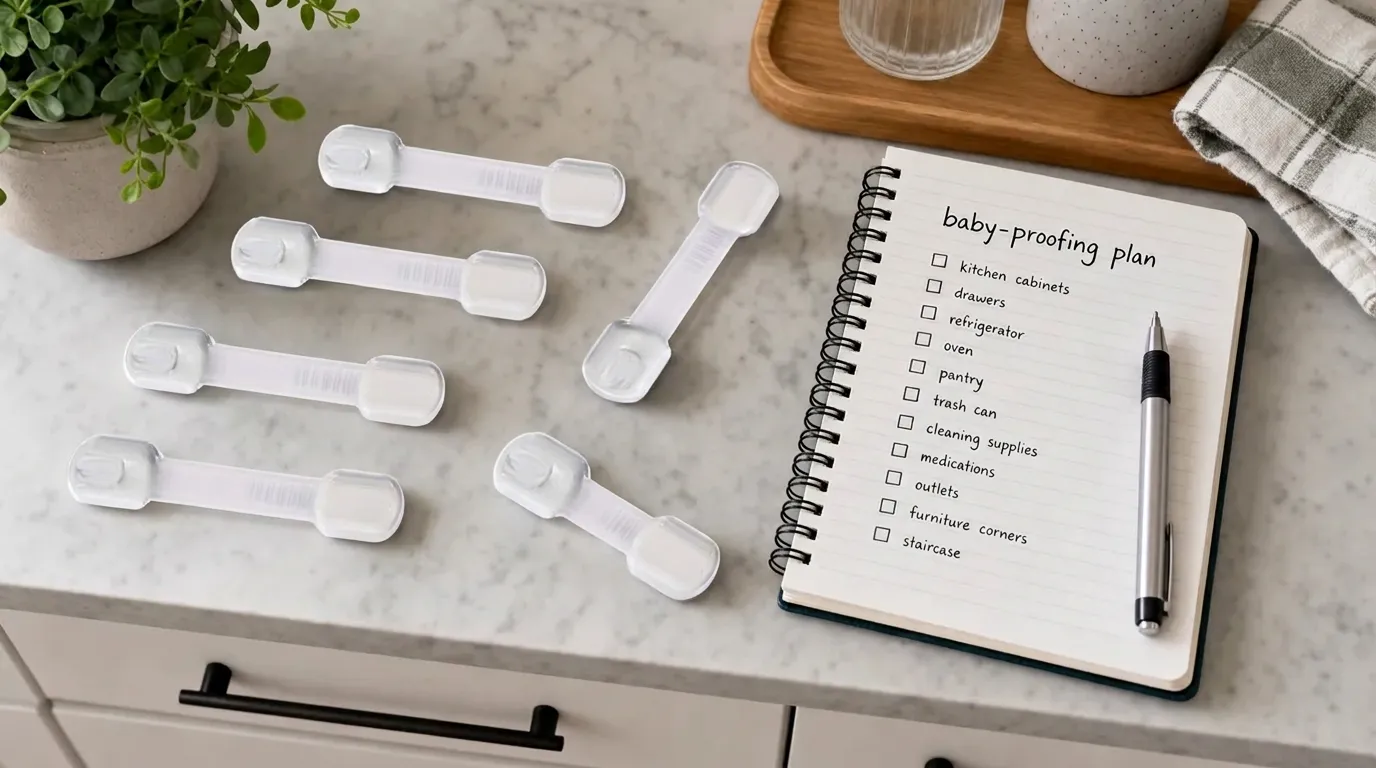
Choosing a safer next step when "magnetic cabinet locks not working"
The best response depends on what failed.
If the adhesive failed because the surface was dirty, greasy, damp, or waxed, reinstalling on a properly cleaned and dried surface may solve the problem. If the latch does not line up, dry-fitting and repositioning may be the better fix. If the cabinet design itself is the issue, look for a flatter internal mounting area or use a different child-safety approach for that cabinet.
Use this simple decision guide:
| Situation | Better next step |
|---|---|
| Adhesive corners are lifting | Replace or reinstall after proper surface prep |
| Latch only catches sometimes | Recheck alignment and reposition |
| Cabinet does not close fully | Inspect bumpers, hinges, drawer slides, and stored items |
| Surface is rough, peeling, curved, or damp | Choose another mounting spot or product format |
| Several rooms need coverage | Use a larger pack and plan room by room |
| Hazardous items are behind the cabinet | Move hazards up and away immediately |
For parents starting with a smaller baby-proofing project, the VMAISI Cabinet Locks Child Safety Latches 12 Pack can help cover common high-risk spots like an under-sink cabinet, bathroom vanity, or several kitchen drawers.
For broader coverage, the VMAISI Cabinet Locks Child Safety Latches 20 Pack is a stronger fit for whole-home baby-proofing across the kitchen, bathroom, pantry, laundry area, storage cabinets, and low drawers.
Most importantly, remember that child safety cabinet locks and cabinet latches are one layer of protection. They help reduce access, but they do not replace supervision, safer storage, or regular inspection. The CPSC recommends checking safety devices frequently to make sure they are secure and maintained. In the U.S., if you suspect a child has been exposed to poison, call Poison Control at 1-800-222-1222.
The calmest approach is also the safest: clean, dry, align, press, wait, test, inspect, and keep hazards out of reach.