

Lost the Key to a Magnetic Cabinet Lock? What Parents Can Do
Are you trying to open a childproof cabinet after misplacing the unlocking tool? Before you try to force anything, take a breath. A lost magnetic cabinet lock key is frustrating, especially when dinner supplies, medicine, cleaning products, or daily-use items are stuck behind a closed cabinet. But the safest next step is not to pry, drill, or guess. It is to keep your child away from the area, identify the product, and use the official support path whenever possible.
This guide is written for parents who are searching for "how to open magnetic cabinet lock" or "cabinet lock replacement key" and need practical, safety-first next steps. It also explains when it may be time to replace a frustrating setup with no-drill adhesive cabinet latches that are easier to manage in everyday family life.
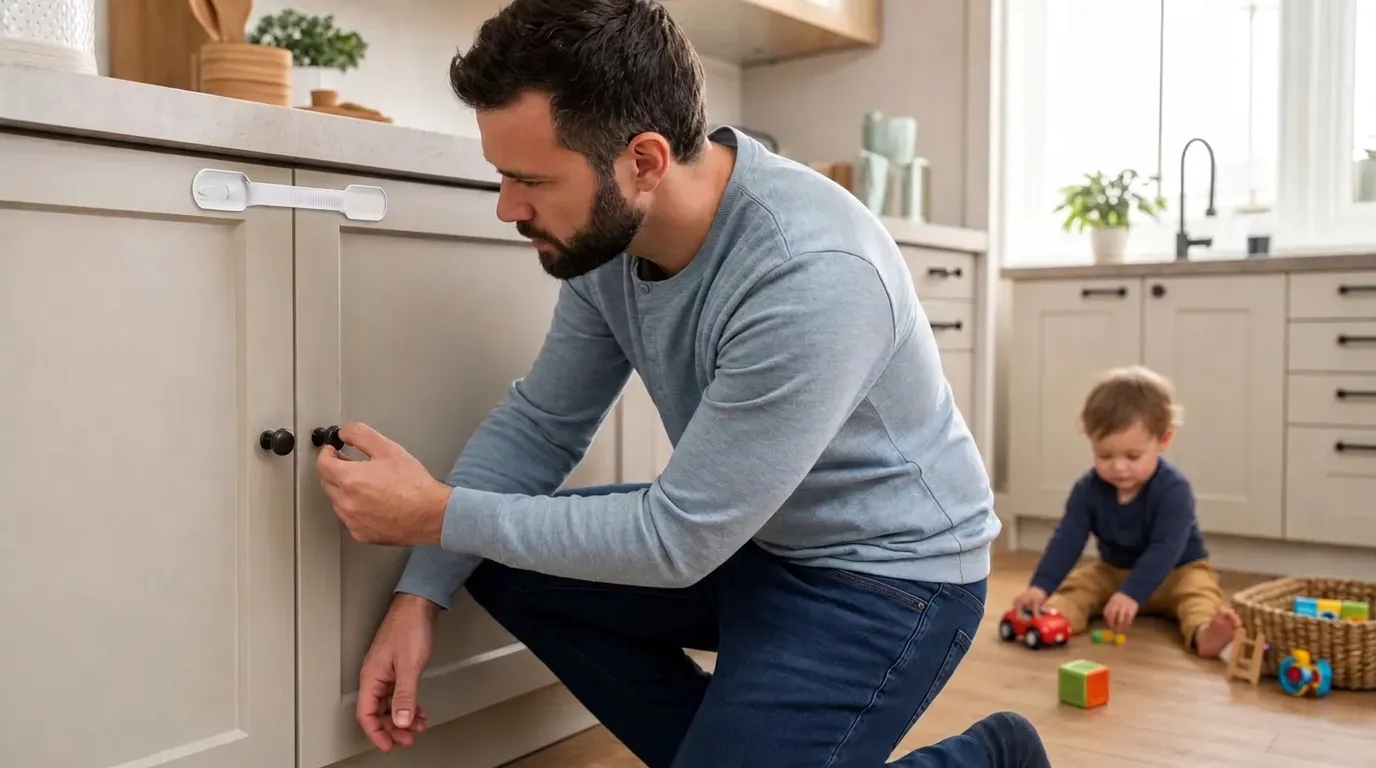
Lost magnetic cabinet lock key: Start with safety before access
When parents search "lost magnetic cabinet lock key," the real concern is often bigger than the missing accessory. The cabinet may contain items a baby or toddler should not touch. The U.S. Consumer Product Safety Commission recommends using safety latches and locks on cabinets and drawers to help keep children away from medicines, laundry detergent, household cleaners, matches, lighters, knives, and sharp objects. CPSC also notes that child-resistant packaging is not childproof, so those items should still be locked away and kept out of reach. You can review the guidance in the CPSC childproofing your home guide.
If you suspect a child has swallowed or touched a poisonous substance, contact Poison Control at 800-222-1222 in the U.S.
Start with these immediate steps:
- Keep your child away from the cabinet or drawer area.
- Think about what is inside: cleaners, medicines, sharp tools, small objects, batteries, or heavy items.
- If other hazards are accessible elsewhere, move them to a locked or out-of-reach location.
- Avoid forcing the cabinet open, because damaging a safety device or cabinet can create a bigger safety gap.
- Look for the original product information before trying any improvised method.
Cleveland Clinic also recommends locking cabinets and drawers that a toddler or young child can reach, especially when they contain cleaners, detergents, chemicals, medicines, or sharp objects. Their guide to childproofing your home is a useful parent-friendly reference.
Lost magnetic cabinet lock key: Identify the lock before you act
Not every cabinet safety product works the same way. That is why a cabinet lock replacement key may or may not be universal. Some systems use a separate unlocking accessory, while others use a latch, slide, strap, or press-release mechanism.
Here is a quick comparison parents can use:
| Cabinet safety type | How it usually works | Parent benefit | Common frustration |
|---|---|---|---|
| Hidden accessory-based systems | A hidden catch is released by a separate tool | Clean look from the outside | The unlocking accessory can be lost or misplaced |
| Spring-style cabinet latches | Door opens slightly, then an adult presses the latch | No separate tool to store | Alignment and door gap matter |
| Adhesive cabinet latches | Attach to cabinets or drawers with adhesive | No drilling, often renter-friendly | Adhesive needs a clean, dry, suitable surface |
| Sliding cabinet locks | Fit over compatible knobs or handles | Simple visible setup | Not ideal for every cabinet style |
| Strap-style locks | Adhesive strap limits opening | Flexible for many surfaces | Visible from outside and must be relocked |
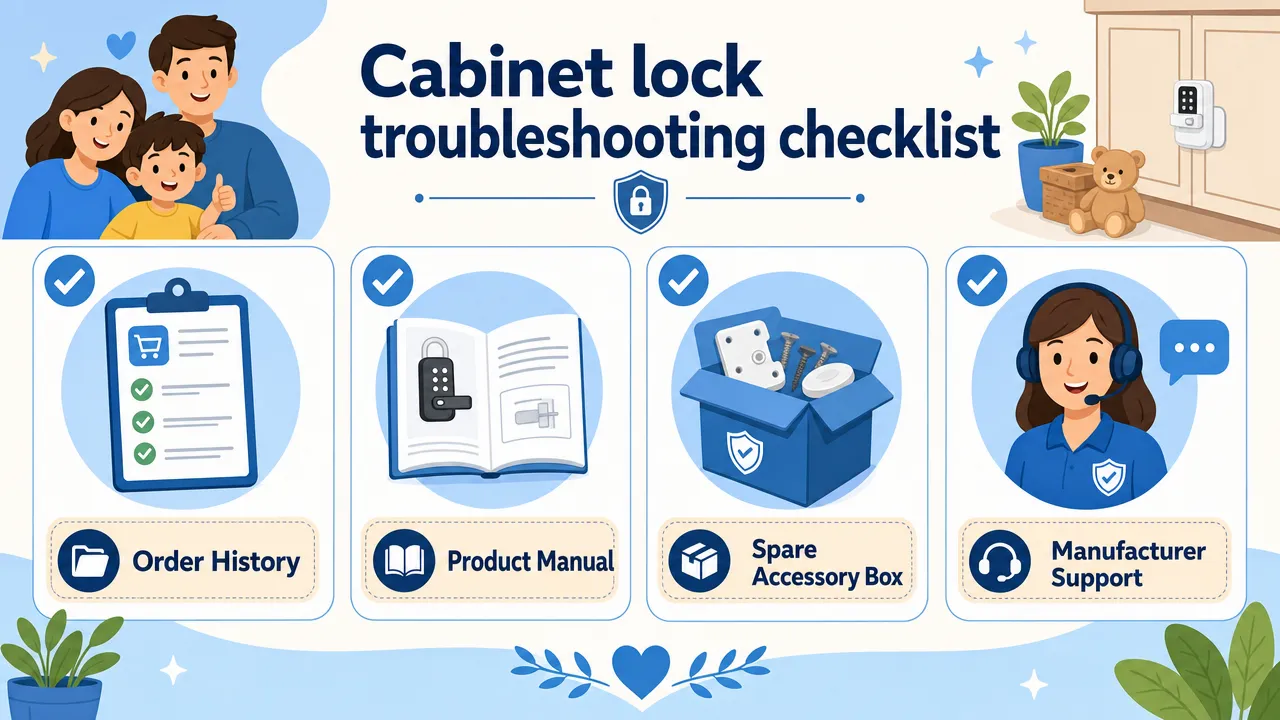
To identify your product, check:
- Your retailer order history.
- The original box or instruction sheet.
- Email receipts.
- Product listing photos.
- Any spare parts in your baby-proofing bin.
- The inside of nearby cabinets where a caregiver may have placed the unlocking tool.
If you are searching for a magnetic cabinet lock key, do not assume another brand's accessory will work safely or reliably. Compatibility varies, and the original manufacturer or retailer is the best place to ask about replacement parts and official opening or removal instructions.
Lost magnetic cabinet lock key: What to do and what not to do
If you are wondering how to open magnetic cabinet lock safely, the best answer is: use the official instructions for that exact product. Online videos may show improvised access methods, but those can damage cabinets, weaken safety devices, or teach unsafe bypass habits. For a parent-focused safety problem, the goal is not just opening the cabinet. The goal is opening it and then making sure hazardous items are secured again.
Use this decision path:
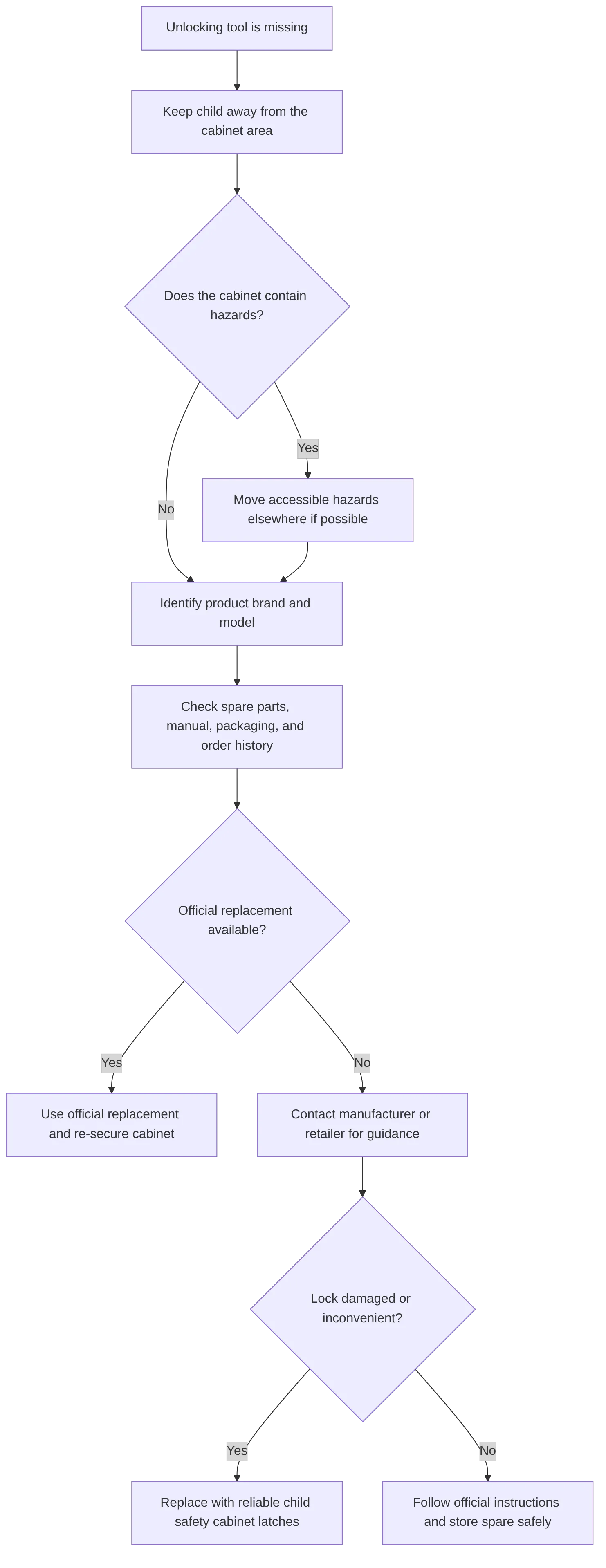
Do this first
- Search for a spare unlocking tool in high, parent-only storage.
- Check the original product page or manual.
- Contact the original manufacturer or retailer.
- Ask whether a cabinet lock replacement key is available for your exact model.
- Ask for official removal guidance if a replacement is not available.
- Re-secure the cabinet immediately after access is restored.
Avoid these shortcuts
- Do not pry the cabinet open.
- Do not drill into the lock or cabinet.
- Do not break the safety device as a first response.
- Do not leave cabinets with medicines, cleaners, sharp tools, or small objects unsecured.
- Do not store any replacement unlocking accessory within a child's reach.
- Do not rely on child-resistant packaging alone.
The American Academy of Pediatrics recommends repeating home safety checks because every home has different risks and children develop quickly. Their home safety checklist is a helpful reminder that baby-proofing is not a one-time project.
For more cabinet and room-by-room planning, VMAISI also has helpful parent resources, including Babyproofing Mistakes That Put Toddlers at Risk, Don't Miss These: 5 Essential Babyproofing Items for a Truly Safe Home, and Childproof Door Locks & Pet-Baby Combo Gates.
Lost magnetic cabinet lock key: When replacement makes more sense
Sometimes the missing accessory is a one-time inconvenience. Other times, it is a sign that your cabinet safety setup does not fit your family's routine. In my opinion, parents should not feel stuck with a system that creates repeated stress, especially in high-use areas like kitchens and bathrooms.
Consider replacing the current system if:
- The unlocking tool is lost repeatedly.
- Caregivers cannot find or use it consistently.
- The cabinet no longer closes securely.
- The latch is damaged.
- Adhesive has weakened.
- Your child has learned to defeat the latch.
- You have moved homes and no longer know the brand or model.
- You need to secure more cabinets and drawers than the original set covers.
No single cabinet safety product is perfect for every home. A good choice is one that fits your cabinet or drawer, is installed correctly, is simple enough for adults to use every time, and helps keep hazardous items inaccessible to children.
Here is a practical way to prioritize replacement areas:
| Area | Why it matters | Priority level |
|---|---|---|
| Under-sink kitchen cabinet | Cleaners, detergents, trash bags, dishwasher products | High |
| Bathroom vanity | Medicines, razors, cosmetics, cleaners | High |
| Low kitchen drawers | Knives, peelers, scissors, small tools | High |
| Pantry or storage cabinet | Choking hazards, breakables, chemicals | Medium to high |
| Laundry area | Detergent, pods, stain removers, cleaning sprays | High |
| Everyday low cabinets | Heavy cookware, glass, small objects | Medium |
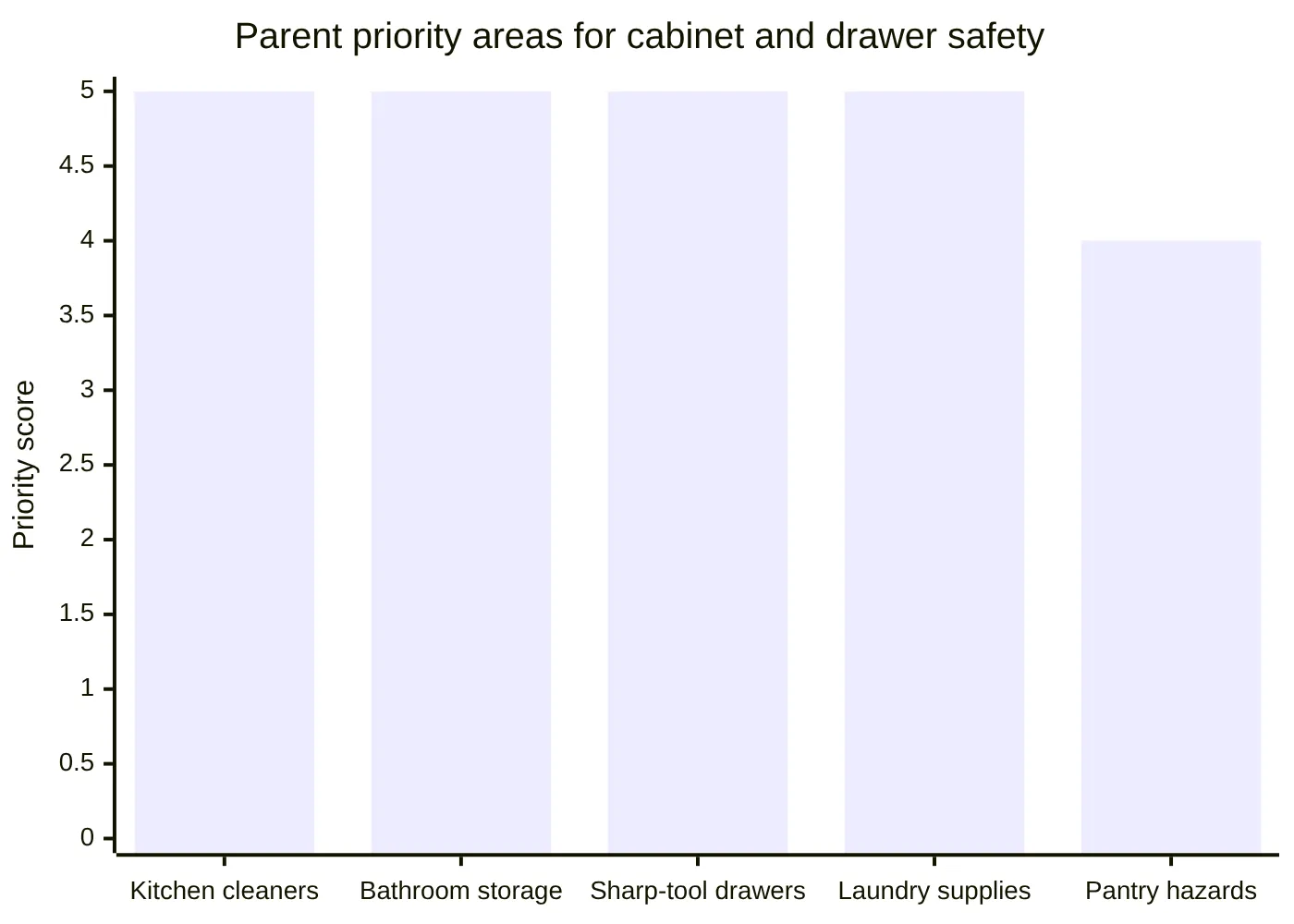
This chart is a planning aid, not a scientific measurement. It reflects the common safety priorities emphasized by CPSC, Cleveland Clinic, and parent-focused baby-proofing guidance.
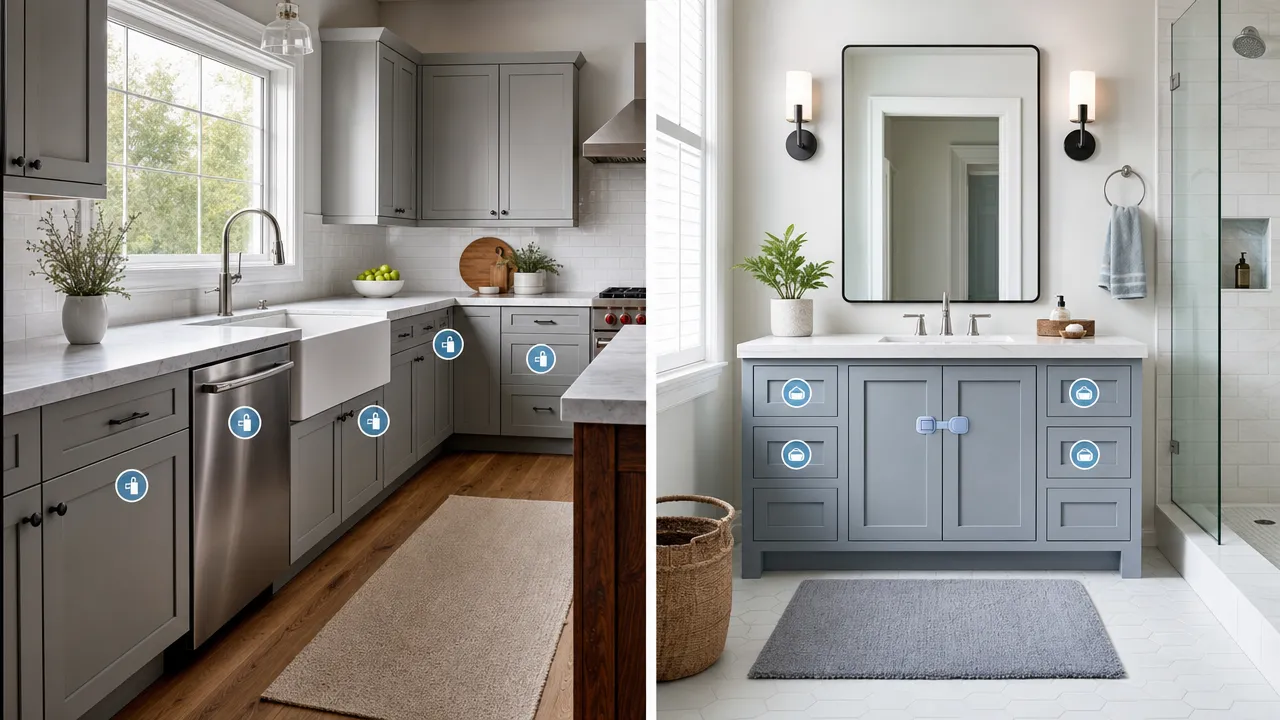
Lost magnetic cabinet lock key: A no-drill alternative for future baby-proofing
If losing the unlocking tool has made you rethink your current setup, you may want a cabinet safety option that is easier to manage day to day. VMAISI's cabinet safety products should be understood clearly: they are adhesive, no-drill child safety cabinet latches for cabinets and drawers. They are not being positioned here as magnetic or key-required products.
For parents who want practical adhesive cabinet locks, baby proofing cabinet locks, no-drill cabinet locks, cabinet latches, child safety latches, and drawer safety locks, VMAISI offers two useful pack sizes.
The VMAISI Cabinet Locks Child Safety Latches 12 Pack is a practical starter option if you need to secure a few key cabinets or drawers. It is well suited for focused baby-proofing in areas like the kitchen, bathroom, pantry, storage cabinet, or selected drawers.
The VMAISI Cabinet Locks Child Safety Latches 20 Pack is better for parents who want broader coverage across the home. It is positioned for multiple cabinets and drawers, larger homes, or families who want the upgraded stronger adhesive highlighted on the product page.
| VMAISI option | Best for | Why parents may choose it |
|---|---|---|
| VMAISI Cabinet Locks Child Safety Latches 12 Pack | A few cabinets or drawers | A basic, focused option for smaller baby-proofing needs |
| VMAISI Cabinet Locks Child Safety Latches 20 Pack | Whole-home cabinet and drawer coverage | Larger pack with upgraded stronger adhesive positioning and no-drill installation |
For adhesive cabinet latches, installation habits matter. Clean and dry the surface first, check alignment before pressing firmly, and allow bonding time according to the product instructions. Adhesive products work best on suitable surfaces and should be inspected regularly, especially on high-use cabinets and drawers.
Ready to simplify your cabinet baby-proofing? Choose the 12 Pack for key cabinets and drawers, or the 20 Pack for whole-home coverage.
Lost magnetic cabinet lock key: Prevent the same problem next time
Whether you keep your current system or switch to no-drill cabinet latches, prevention is part of child safety. A missing accessory can turn a normal morning into a stressful situation, and a damaged or unsecured cabinet can create risk.
Use this simple prevention checklist:
- Store any small unlocking accessory high and out of reach.
- Keep product instructions in a baby-proofing folder or phone album.
- Save your retailer order confirmation.
- Label spare parts by room or product type.
- Re-check high-risk cabinets every few months.
- Replace any latch that no longer holds securely.
- Reassess cabinet safety when your child starts crawling, pulling up, walking, climbing, or copying adult behavior.
- Do not assume a closed cabinet is safe if your toddler can open it.
A lost magnetic cabinet lock key is annoying, but it can also be a useful signal to review your whole setup. The safest approach is calm and practical: secure the child, identify the product, use official replacement or removal guidance, and replace unreliable systems when needed.
For parents who want a no-drill approach to cabinet and drawer safety, VMAISI adhesive child safety cabinet latches offer a straightforward path: the 12 Pack for focused needs, and the 20 Pack for broader home coverage. No safety product replaces supervision, but the right cabinet latches can help make everyday home safety easier to maintain.