

Child Safety Latches: Mistakes Parents Should Avoid
Are you worried your toddler might open a lower cabinet before you even notice? Once babies start crawling, pulling up, walking, and copying adults, cabinets and drawers can become daily targets. Child safety latches can help reduce easy access to cabinets and drawers, but they work best when parents choose the right locations, install them carefully, and keep checking them over time.
The biggest mistake is treating latches as a one-time fix. The U.S. Consumer Product Safety Commission recommends using safety latches and locks on cabinets and drawers to help limit access to medicines, cleaners, detergents, sharp objects, and other hazards. HealthyChildren.org from the American Academy of Pediatrics also emphasizes keeping harmful items out of reach, out of sight, and ideally in secured storage.
Child safety latches are a helpful layer, but no latch can replace adult supervision, safer storage habits, or regular checks.
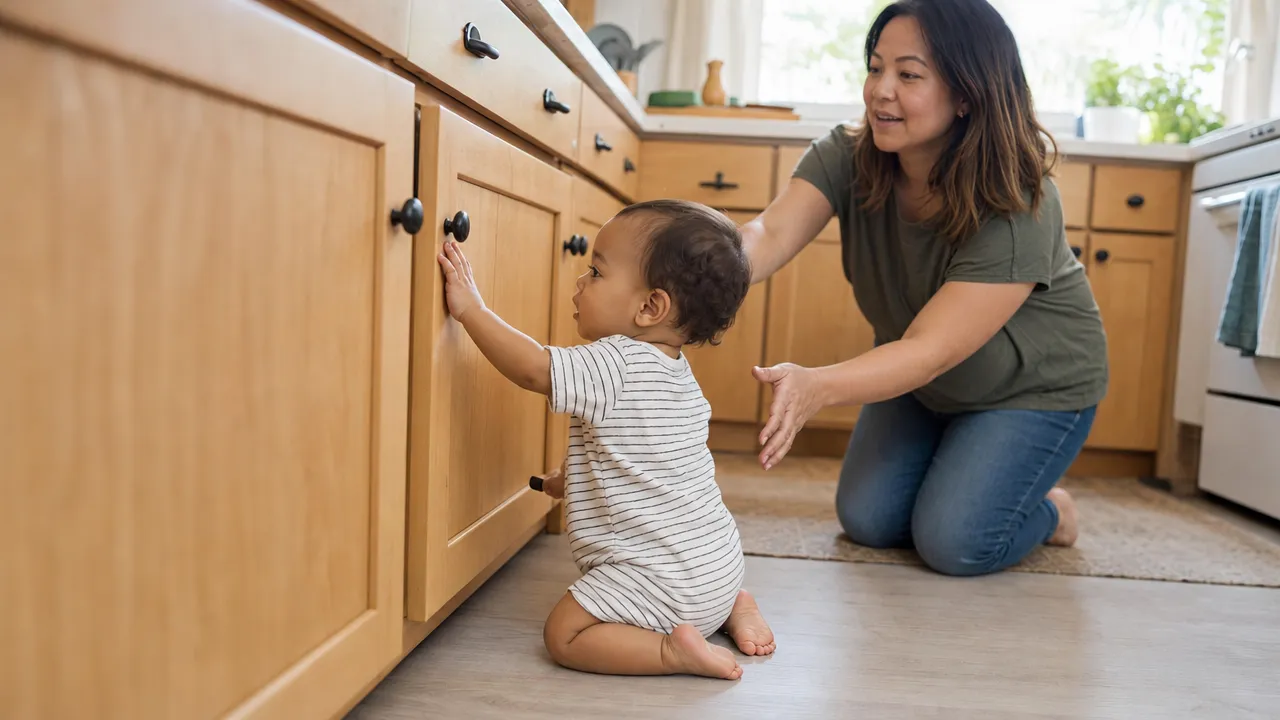
Why child safety latches matter in everyday family homes
Cabinets and drawers often hold ordinary items that are not ordinary for babies and toddlers: cleaning sprays, dishwasher detergent, scissors, peelers, batteries, razors, cosmetics, small objects, and medicines. These areas are often low, easy to reach, and opened frequently by adults, which makes them especially interesting to young children.
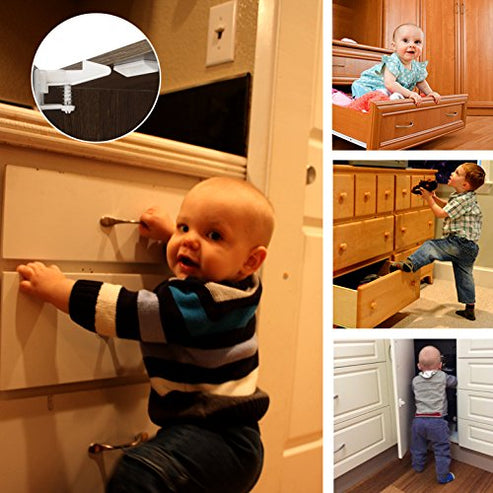
The goal of child safety latches is not to make a home risk-free. It is to add friction so curious hands do not get easy access before an adult can respond. That is why latch planning should start early, ideally before crawling and pulling up become part of the daily routine.
A practical first step is to look at your home from a toddler's height. Open every reachable cabinet and drawer and ask: "Would I be comfortable if my child had this item in their hands?"
For more planning guidance, VMAISI's renter-focused guide explains why adhesive, no-drill options can be useful in homes where parents want to avoid permanent cabinet changes. See which child safety latches work best for renters for additional room-by-room considerations.
Child safety latches mistake 1: Waiting too long and securing too little
Many parents wait until the first surprise cabinet opening before they install child safety latches. By then, a baby may already know which handles are interesting and which drawers make noise. A better approach is to install latches when your baby starts rolling with purpose, scooting, crawling, pulling up, or showing interest in handles and drawer fronts.
The second planning mistake is securing only the most obvious cabinet, usually the one under the kitchen sink. That spot matters, but it is rarely the only concern.
Use this quick room audit:
| Area | What parents often overlook | Why it matters |
|---|---|---|
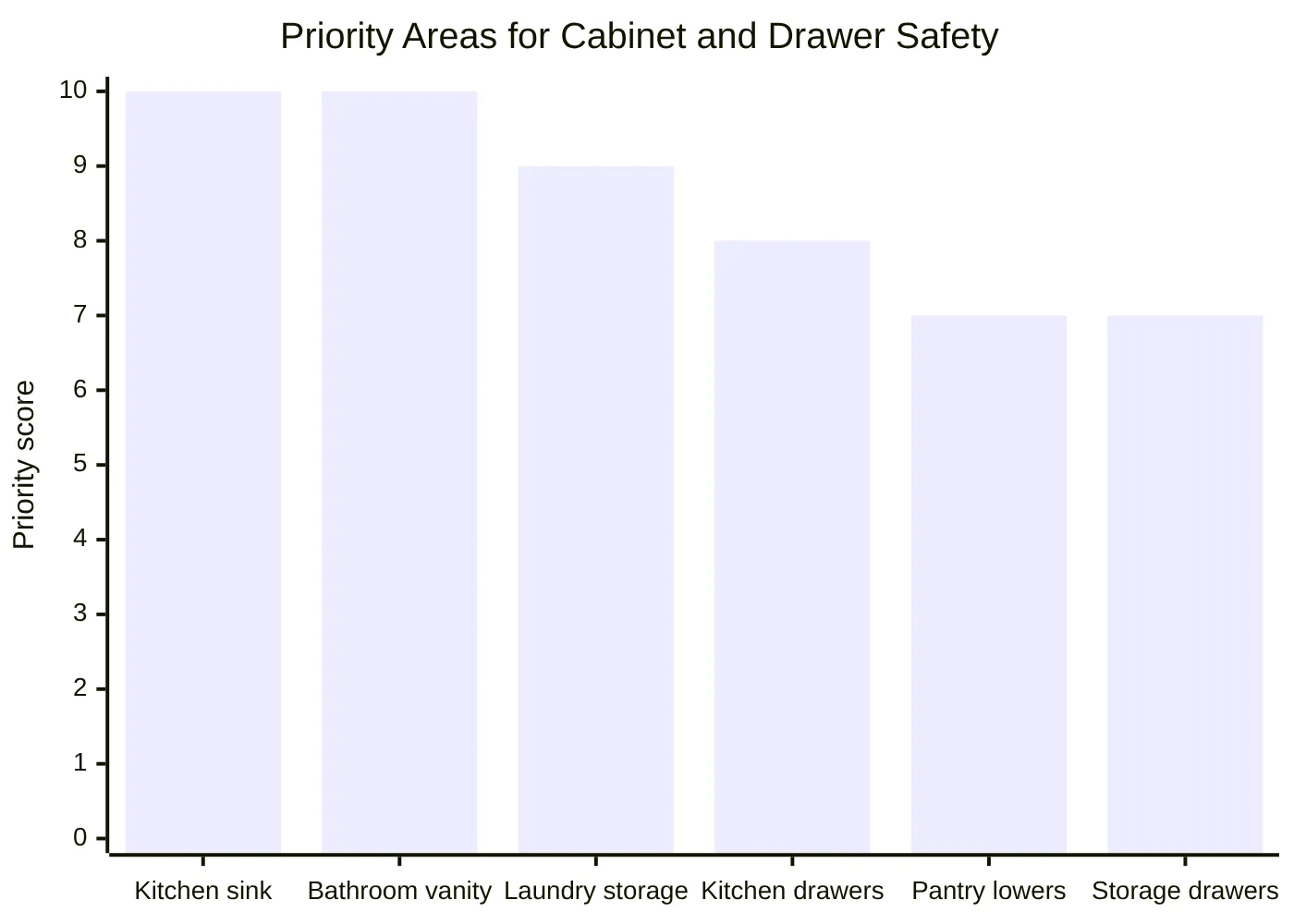
| Kitchen cabinets | Lower storage, under-sink items, trash bags, glass containers | These spaces are used daily and are easy to reach. |
| Kitchen drawers | Utensils, peelers, scissors, batteries, small gadgets | Drawers are often forgotten during baby-proofing. |
| Bathroom vanity | Medicines, razors, cosmetics, cleaners, small items | Bathrooms combine several common household hazards. |
| Laundry area | Detergent, stain removers, sprays | Laundry products may be stored low and within reach. |
| Pantry lowers | Bags, jars, small hard foods, heavy containers | Toddlers may pull or scatter items quickly. |
| Storage spaces | Tools, craft supplies, cords, hardware | Mixed storage can hide unexpected risks. |
Parents should count latch points, not rooms. Depending on cabinet design, each reachable cabinet opening and each drawer may need its own latch. If you are starting with a few high-priority locations, the VMAISI Cabinet Locks Child Safety Latches 12 Pack is a practical starter option for focused baby-proofing.
If you are planning kitchen, bathroom, laundry, pantry, and storage coverage at the same time, the VMAISI Cabinet Locks Child Safety Latches 20 Pack gives parents more latches for multiple cabinets and drawers across the home.
Child safety latches mistake 2: Forgetting drawer safety locks
Parents often think "cabinet" first and "drawer" later. But drawers can be just as important, especially in kitchens and bathrooms. A toddler may pull open a drawer containing sharp kitchen tools, batteries, small hardware, cosmetics, medicines, or personal-care items.
Drawer safety locks and cabinet latches should be planned together. Walk through the home and count:
- Kitchen utensil drawers.
- Junk drawers with small objects or batteries.
- Bathroom vanity drawers.
- Laundry storage drawers.
- Craft, tool, or hardware drawers.
- Low storage drawers in living areas or bedrooms.
The CPSC childproofing guide specifically includes cabinets and drawers in its safety-latch guidance. That detail matters because baby-proofing drawers is easy to miss when parents are focused only on lower cabinets.
For parents comparing convenience and everyday use, VMAISI also explains parent-friendly latch considerations in one-hand child safety locks: are spring push latches easier for parents?. The key takeaway is simple: a latch that adults can use consistently is more likely to stay part of the household routine.
Child safety latches mistake 3: Installing adhesive cabinet locks on the wrong surface
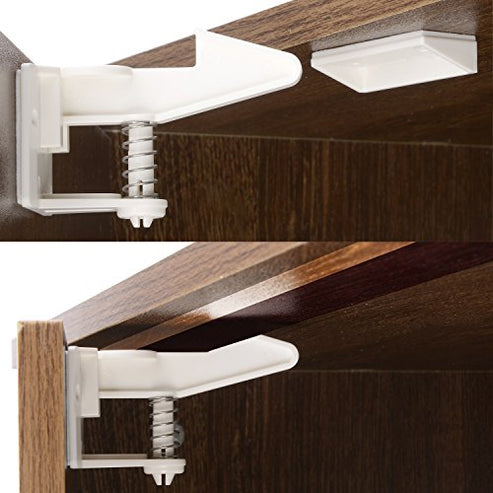
Adhesive cabinet locks are popular because they are no-drill cabinet locks. That can be especially helpful for renters, apartments, grandparents' homes, or parents who do not want to alter cabinets. But adhesive installation is only as good as the surface preparation and alignment.
Common installation mistakes include:
- Sticking the latch onto a greasy, dusty, damp, or soapy surface.
- Installing on peeling, rough, heavily textured, or uneven finishes.
- Skipping the dry-fit step before removing the adhesive backing.
- Placing the latch slightly out of alignment.
- Letting a toddler tug on it before following the product instructions for bonding time.
- Failing to test the latch after installation.
Before you install adhesive cabinet locks, wipe away grease, dust, soap film, and residue. Let the surface dry fully. Dry-fit the latch and confirm the placement before final attachment. Then follow the product instructions for bonding time before relying on the latch during regular use.
Use this 30-second test after installation:
| Test step | What to check |
|---|---|
| Open and close | The cabinet or drawer closes normally. |
| Catch engagement | The latch catches every time. |
| Gentle tug | The latch stays engaged under light adult testing. |
| Adult access | Adults can open it consistently without forcing it. |
| Recheck | Test again after following any bonding guidance in the instructions. |
For more surface and placement details, read VMAISI's guide to child safety latches for renters. If you are deciding where cabinet latches fit best compared with other home safety products, VMAISI's guide to the best places to use child safety strap locks around the home can help clarify product placement by surface type.
Child safety latches mistake 4: Choosing the wrong pack size
Buying too few child safety latches is common because parents count rooms instead of latch points. A kitchen, two bathrooms, a laundry area, a pantry, and a storage cabinet can quickly require more latches than expected.
Use this worksheet before buying:
| Count item | Example |
|---|---|
| Each reachable cabinet opening | Under-sink cabinet, bathroom vanity, pantry lower storage |
| Each reachable drawer | Kitchen tools, bathroom storage, laundry drawers |
| Each high-priority hazard area | Cleaners, medicines, detergents, sharp tools, small objects |
| Each frequently used space | Cabinets adults open daily may need especially careful placement |
| Extra latches | Helpful for expanding coverage or replacing a latch later |
Here is how to choose between VMAISI pack sizes:
| Product | Best for | Practical use case |
|---|---|---|
| VMAISI Cabinet Locks Child Safety Latches 12 Pack | Focused starter coverage | A smaller home, apartment, kitchen sink area, bathroom vanity, and several drawers. |
| VMAISI Cabinet Locks Child Safety Latches 20 Pack | Broader multi-room coverage | Kitchen, bathroom, laundry, pantry, storage cabinets, and multiple drawers. |
Both VMAISI options are adhesive, no-drill child safety cabinet locks designed for cabinets and drawers. The 12 Pack is well suited for a first baby-proofing pass. The 20 Pack is a stronger fit for parents who want broader cabinet and drawer coverage across the home, especially when a larger quantity and stronger adhesive positioning are relevant.
Child safety latches mistake 5: Assuming latches replace supervision and maintenance
This is the most important safety point: child safety latches are not a substitute for supervision. KidsHealth notes that keeping a close eye on young children is the most important safeguard. Latches help reduce easy access, but toddlers grow stronger, more observant, and more persistent.
Parents should also avoid leaving hazardous items in low cabinets simply because a latch is installed. When possible, move medicines, cleaners, detergents, sharp tools, batteries, and small hazardous objects high and out of sight. Consumer Reports recommends locking cabinets that hold cleaning supplies, medications, or sharp items, while also storing these items high and out of reach when possible.
Use this safer-storage hierarchy:
- Move hazardous items high and out of sight whenever possible.
- Use secured storage for items that need extra caution.
- Add cabinet latches and drawer safety locks to reachable spaces.
- Supervise closely.
- Recheck latches regularly.
A monthly latch check can be simple:
- Look for lifting adhesive.
- Check for loose, cracked, bent, or shifted parts.
- Open and close the cabinet or drawer to confirm the latch catches.
- Gently test engagement.
- Reinstall or replace any latch that no longer works properly.
- Check high-use cabinets more often.
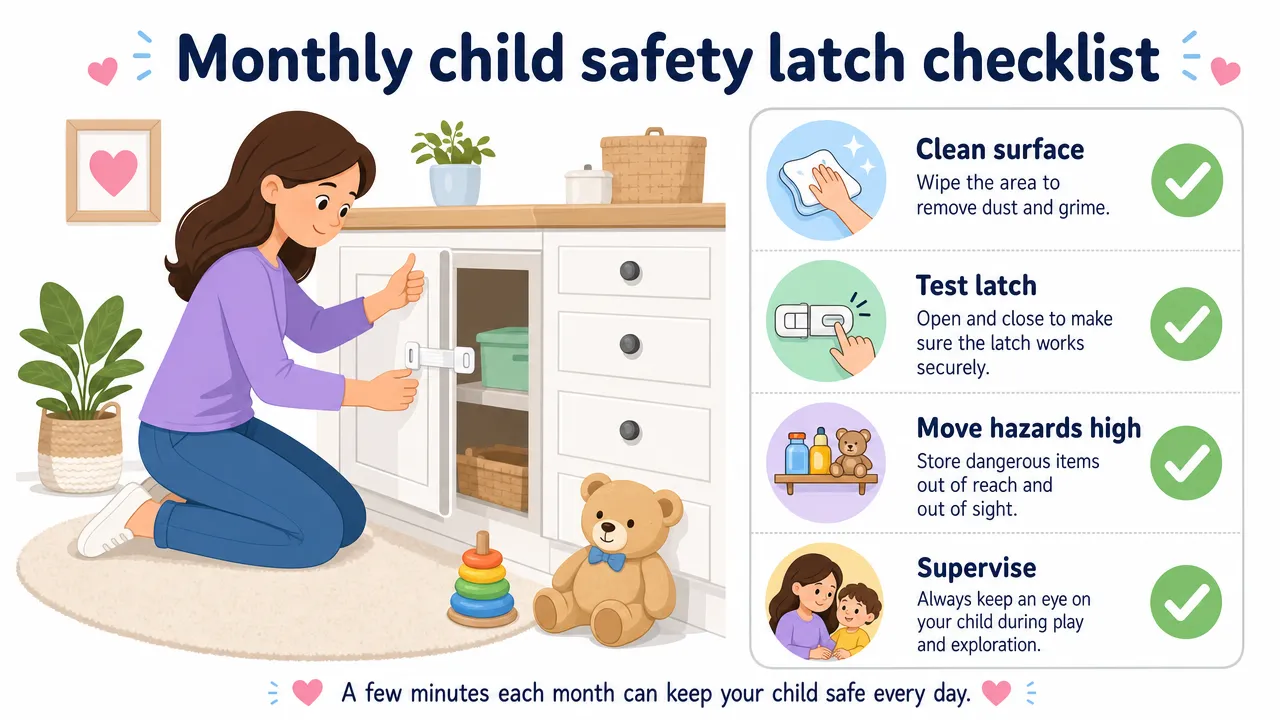
A final reminder: child safety cabinet locks, adhesive cabinet locks, baby proofing cabinet locks, no-drill cabinet locks, cabinet latches, and drawer safety locks all work best as part of a broader safety routine.
Child safety latches FAQ
When should parents install child safety latches?
Install child safety latches before or as soon as your baby begins crawling, pulling up, walking, or showing interest in cabinet and drawer handles. HealthyChildren.org recommends taking safety steps before or as soon as children begin crawling or walking.
Are child safety latches enough by themselves?
No. They are a helpful safety layer, but they do not replace supervision, safer storage, or regular checks. Keep hazardous items high and out of sight whenever possible.
Do drawers need latches too?
Yes, many drawers need attention. Kitchen, bathroom, laundry, craft, and storage drawers can contain sharp tools, batteries, small objects, cosmetics, medicines, or other items children should not access.
Where should I install cabinet latches first?
Start with the highest-priority areas: kitchen under-sink cabinets, bathroom vanities, laundry cabinets, kitchen drawers, pantry lower cabinets, and storage cabinets within toddler reach.
What surface is best for adhesive cabinet locks?
Adhesive cabinet locks work best on clean, dry, smooth, intact surfaces. Avoid greasy, dusty, damp, peeling, rough, or heavily textured surfaces.
How many child safety latches do I need?
Count reachable cabinets and drawers, not rooms. A smaller setup may fit the VMAISI Cabinet Locks Child Safety Latches 12 Pack. Larger multi-room coverage may fit the VMAISI Cabinet Locks Child Safety Latches 20 Pack.
How often should parents check child safety latches?
Check them regularly, especially on high-use cabinets and drawers. Look for lifting adhesive, shifting, looseness, cracks, or failure to catch.
What is the final baby-proofing checklist for cabinets and drawers?
Before you finish, confirm that you have counted all reachable cabinets and drawers, prioritized hazards, cleaned and dried surfaces, installed latches carefully, followed bonding instructions, tested every latch, moved hazards high where possible, and planned regular checks.