

Magnetic Cabinet Locks or Spring Push Latches: Which Is Better for Daily-Use Cabinets?
Are you tired of opening the same kitchen cabinet ten times a day while also trying to keep your toddler away from cleaning supplies, sharp tools, or small household items? If so, the debate around magnetic cabinet locks vs spring latches is not just about hardware. It is about whether a cabinet safety solution actually fits daily family life.
For my opinion, spring-style child safety latches and adhesive no-drill child safety cabinet locks are often the more practical choice for daily-use cabinets. Magnetic-style options as a general category can be useful when a hidden look is the top priority, but the extra release step can become frustrating on cabinets parents open constantly.
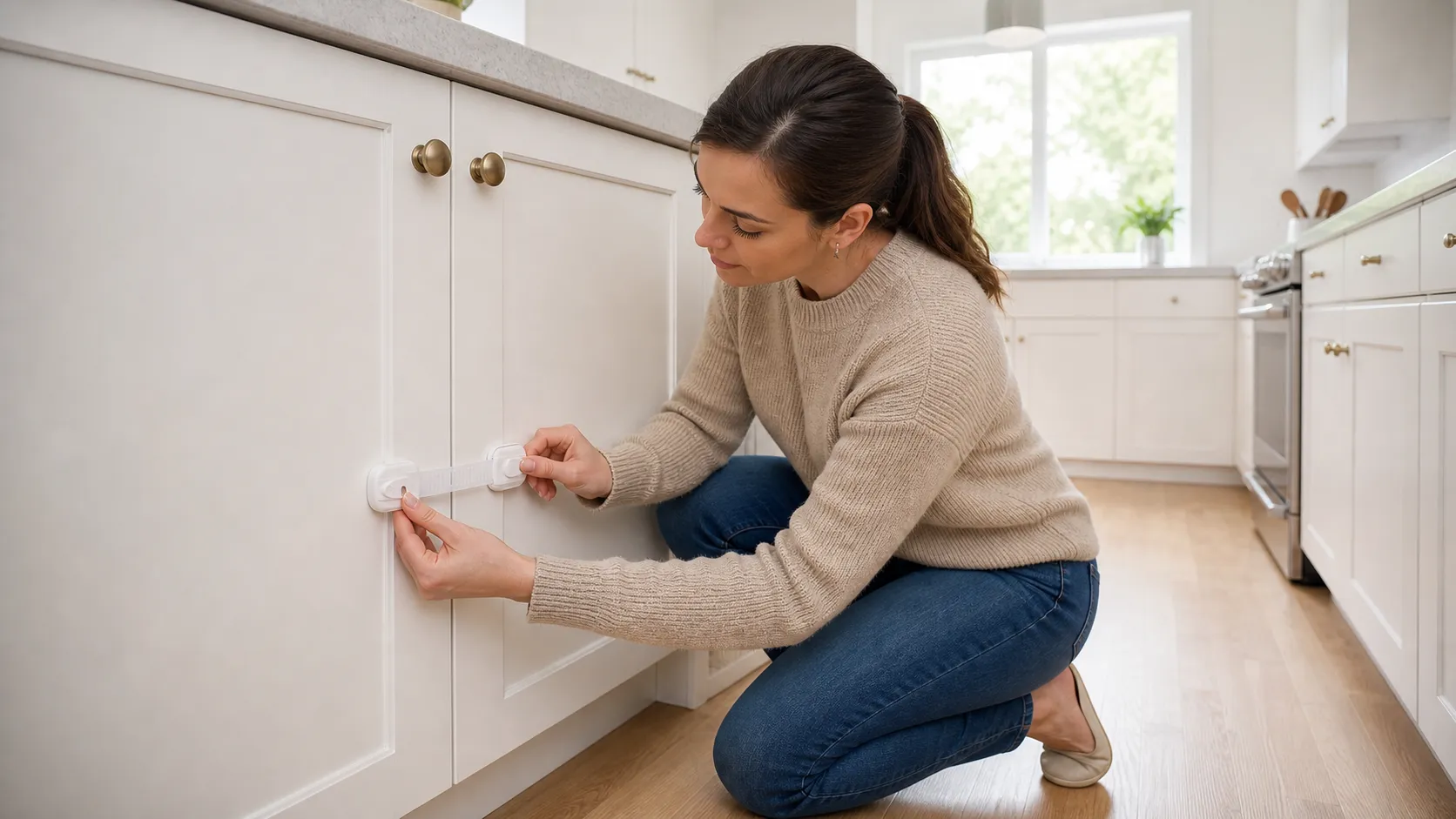
Magnetic cabinet locks vs spring latches: The quick answer for daily cabinets
The best choice depends on the cabinet's job.
If the cabinet holds household hazards, your first goal is safety. The CPSC childproofing guidance recommends using safety latches and locks on cabinets and drawers to help prevent access to medicines, cleaners, laundry products, knives, and other dangerous items.
If the cabinet is opened many times a day, convenience matters too. A latch that adults find annoying may be left disengaged, which defeats the purpose. That is why parents often search for one hand cabinet locks, child safety latches, and baby proof cabinet locks that work with real routines.
Here is the practical comparison:
| Factor | Magnetic-style category | Spring push latches | Adhesive child safety cabinet latches |
|---|---|---|---|
| Best for | Hidden appearance and less obvious release | Frequent adult access and handleless cabinet hardware | No-drill baby-proofing for cabinets and drawers |
| Daily-use convenience | Good if the release routine is easy | Often strong because no separate accessory is needed | Strong when installed correctly and used consistently |
| Child-safety role | Can be useful as a safety layer | Standard push-to-open hardware is not automatically child-safety hardware | Designed for baby-proofing when sold as child safety latches |
| Installation | Alignment matters; some versions are adhesive | Alignment and cabinet geometry matter | Adhesive setup, usually no drilling |
| Common drawback | Extra release routine | Some styles may be easier for children to imitate | Adhesive performance depends on surface prep and regular checks |
My view: for cabinets that parents open constantly, a key-free spring-style child safety latch or adhesive no-drill latch is usually easier to live with. For less frequently opened hazard cabinets where appearance matters most, hidden magnetic-style options may make sense as a general category.
Magnetic cabinet locks vs spring latches: How each option works
Magnetic-style cabinet safety products are typically installed inside a cabinet or drawer. The appeal is visual: the mechanism is hidden, so the outside of the cabinet stays clean. They may also be less obvious to toddlers because there is no visible button or strap.
The tradeoff is routine. Adults usually need a separate release accessory. If it is not nearby, daily access can feel inconvenient, especially when you are holding a baby, cooking, or rushing through a morning routine.
Spring push latches are different. In standard cabinet hardware, a push-to-open mechanism lets the user press the cabinet front to release the door. Southco's guide to cabinet latches explains that latches help hold panels or doors closed, but not every latch is designed for child safety.
That distinction matters. Standard spring push hardware may be great for handleless cabinetry, but it should not automatically be treated as a baby-proofing product. For child safety, parents should choose products specifically intended as child safety cabinet locks, cabinet latches, or drawer safety locks.
Adhesive no-drill child safety latches sit in the middle. They are made for baby-proofing, usually avoid drilling, and can be practical for renters, grandparents' homes, and busy parents who want a fast safety upgrade.
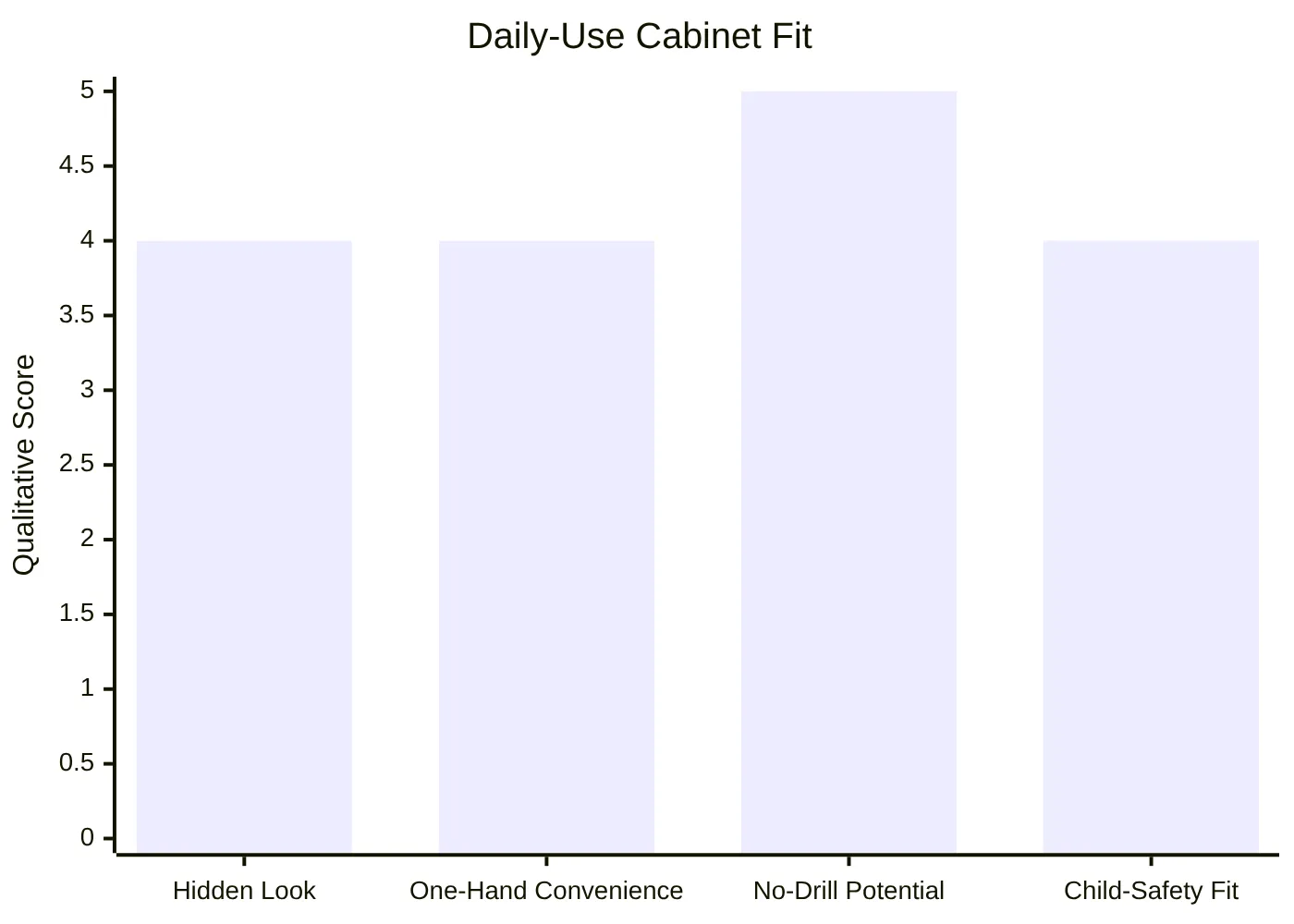
The chart above represents adhesive no-drill child safety latches as a practical middle-ground option, not lab-tested performance data.
Magnetic cabinet locks vs spring latches: Where child safety latches matter most
The most important question is not "Which latch is best?" It is "What is inside this cabinet?"
A snack cabinet is different from an under-sink cabinet. A drawer with plastic containers is different from a drawer with scissors, batteries, or small objects. The CDC medication safety guidance advises families to keep medicines where young children cannot reach or see them, and the CDC PROTECT Initiative emphasizes storing medicines, vitamins, and supplements up and away.
Use this room-by-room approach:
| Cabinet or drawer | Main concern | Better daily-use approach |
|---|---|---|
| Under-sink kitchen cabinet | Cleaners, sprays, trash bags | Use child safety latches and move hazards higher when possible |
| Bathroom vanity | Medicines, razors, cosmetics, cleaners | Secure the cabinet and store medicines out of reach and sight |
| Pantry | Snacks, glass containers, small packaging | Use a latch if items create a risk; otherwise consider a safe-access cabinet |
| Tool or utility drawer | Sharp tools, batteries, small objects | Prioritize drawer safety locks or child safety cabinet locks |
| Daily cooking cabinet | Frequent adult access | Choose a latch adults can operate consistently |
| Rental apartment cabinets | Avoid drilling into cabinets | Consider adhesive cabinet locks or no-drill cabinet locks designed for baby-proofing |
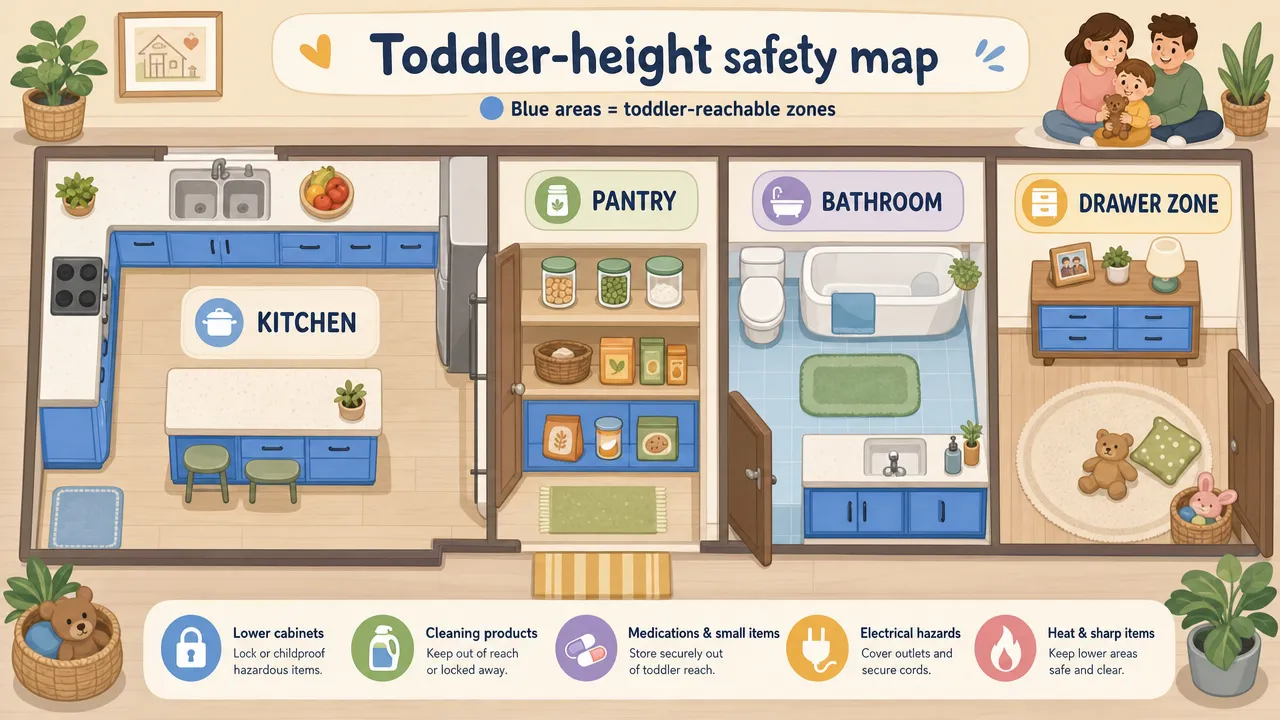
A good baby-proofing plan is layered. Cabinet latches help reduce access, but they do not replace moving hazards up, supervising children, and checking latches regularly. If there is a poison emergency in the U.S., Poison Help provides the national help line at 1-800-222-1222.
Magnetic cabinet locks vs spring latches: Why no-drill cabinet locks are a practical middle ground
For many families, the winning solution is not the most technical one. It is the one parents will actually use every day.
That is why I like adhesive no-drill child safety cabinet latches for many daily-use cabinets. They are especially helpful when parents want:
- Baby proof cabinet locks without drilling holes.
- Child safety latches for both cabinets and drawers.
- A practical option for kitchens, bathrooms, pantries, storage areas, and bedrooms.
- A setup that fits renters or families who do not want to permanently alter cabinets.
- Everyday access that does not require managing a separate release routine.
For smaller baby-proofing projects, the VMAISI Cabinet Locks Child Safety Latches 12 Pack is a practical starter option. It fits parents who want to secure a few high-risk cabinets or drawers, such as one under-sink cabinet, one bathroom vanity, or a grandparent's home.
For broader coverage, the VMAISI Cabinet Locks Child Safety Latches 20 Pack is better for multiple rooms, whole-kitchen baby-proofing, or families who want a larger pack with stronger adhesive.
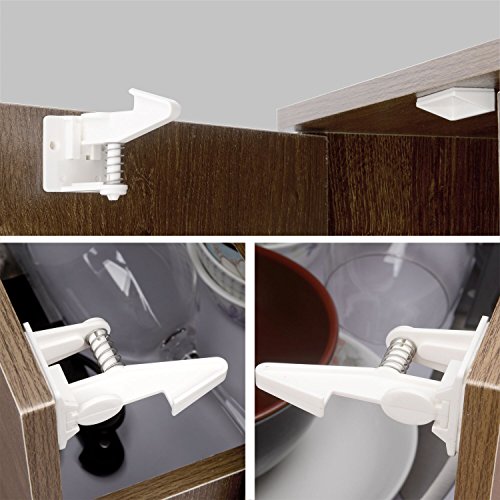
For adhesive products, installation habits matter. Clean and dry the surface first. Dry-fit the latch before final placement. Press the adhesive firmly. Allow proper bonding time according to the product instructions. Then inspect regularly for peeling, misalignment, or wear.
If you are still building your home safety plan, VMAISI's Home Safety Locks & Keys guide can help you think through higher-risk areas, but remember to choose the product type that matches your cabinet and daily routine.
Magnetic cabinet locks vs spring latches: My buying recommendation for parents
If I were advising a parent with a crawling baby or curious toddler, I would not start by asking which latch looks best. I would start with a quick walk-through at toddler height.
Ask:
- Which cabinets can my child reach?
- Which ones contain cleaners, medicines, sharp tools, small objects, or breakables?
- Which cabinets do adults open many times per day?
- Do I need a no-drill setup?
- Am I securing a few cabinets or the whole home?
Then choose by scenario:
| Parent situation | Recommended direction |
|---|---|
| You want to secure only a few high-risk cabinets | Choose the VMAISI 12 Pack |
| You need kitchen, bathroom, pantry, and drawer coverage | Choose the VMAISI 20 Pack |
| You rent or do not want to drill | Choose adhesive no-drill cabinet locks or child safety latches |
| You open the cabinet constantly | Prioritize convenient adult access |
| You care most about hidden appearance | Consider hidden internal options as a general category, but weigh the release routine |
| You are using standard push-to-open hardware | Do not assume it is a child safety product unless designed for that purpose |
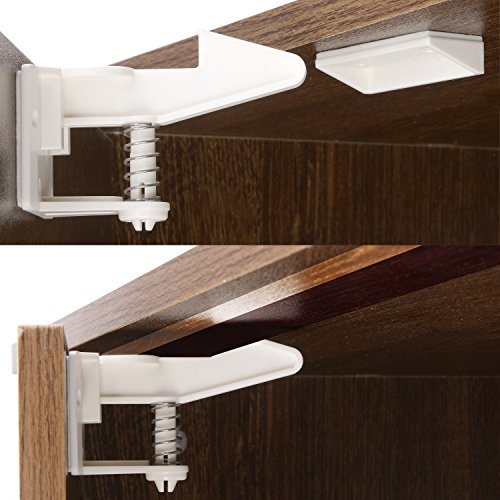
My final opinion: for magnetic cabinet locks vs spring latches, magnetic-style options can be strong for hidden appearance, but spring-style child safety latches and adhesive no-drill cabinet latches are often better for daily-use cabinets because they are more convenient for adults. And convenience is not a small detail. It is what helps parents keep using the safety layer consistently.
Before you install anything, move the most dangerous items higher when possible, especially medicines and chemicals. The Cleveland Clinic childproofing guide also recommends locking reachable cabinets and drawers that contain cleaners, detergents, medicines, and sharp implements.
For a simple starting point, baby-proof a few high-risk cabinets with the VMAISI Cabinet Locks Child Safety Latches 12 Pack. For larger homes or multi-room coverage, choose the VMAISI Cabinet Locks Child Safety Latches 20 Pack.
FAQ
Are magnetic-style cabinet safety products better than spring latches?
They can be better when hidden appearance is the top priority. For daily-use cabinets, spring-style child safety latches may be more convenient because adults do not have to manage a separate release routine.
Are spring push latches always child safety latches?
No. Standard push-to-open cabinet hardware is mainly for convenience and handleless design. Parents should choose products specifically made for baby-proofing if child safety is the goal.
Can baby proof cabinet locks be renter-friendly?
Adhesive no-drill options are generally more renter-friendly than screw-mounted hardware, but adhesive can still affect fragile finishes. Always follow installation and removal instructions.
Where should I install child safety latches first?
Start with reachable cabinets and drawers that contain medicines, cleaners, laundry products, sharp tools, batteries, razors, or small objects. Then expand to other areas based on your child's mobility and your home's layout.