

Babyproofing a Rental Bathroom Without Drilling
Are you worried that your toddler might open an unsafe bathroom cabinet or drawer in your rental? You can reduce access to many everyday hazards without adding screw holes to the vanity. The key is to start with what your child can reach now, move the highest-risk items first, and use compatible no-drill cabinet latches as one added layer of protection.
Child safety products do not replace close adult supervision. Never leave a young child alone in the bathroom or bath.
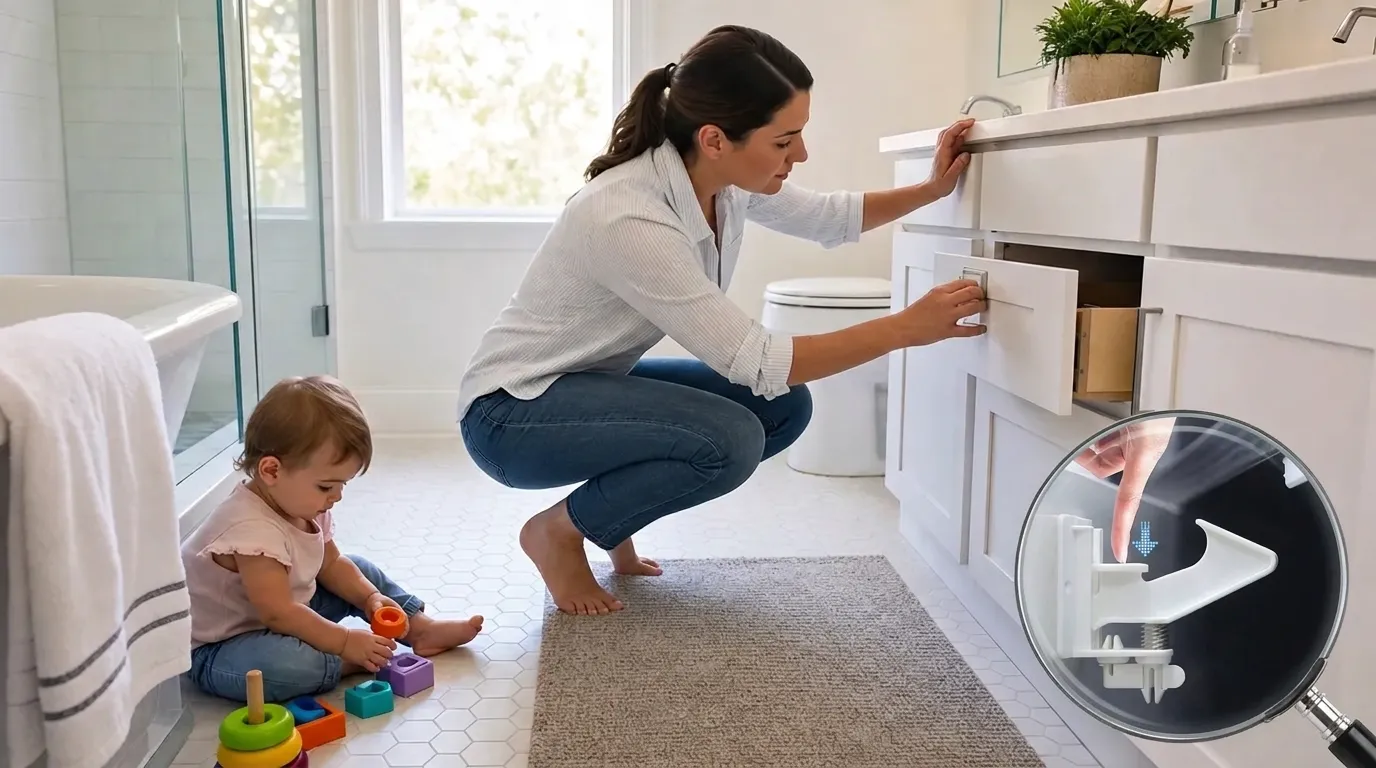
Babyproof rental bathroom without drilling: Start with reachable hazards
For babyproof rental bathroom without drilling projects, look at the room from your child's level. Crawl, sit, or crouch near the floor and notice what little hands can open, pull, grab, or mouth.
Focus first on reachable bathroom storage:
| Area to inspect | Examples of items to move or secure |
|---|---|
| Under-sink cabinet | Cleaners, sprays, dishwasher products, small containers |
| Vanity drawers | Razors, nail clippers, tweezers, batteries, grooming tools |
| Low shelves and baskets | Cosmetics, glass containers, small toiletry parts |
| Counter edges | Medicines, vitamins, hot styling tools, small items |
| Toilet and tub area | Water access, bath products, wet floors, cords |
The U.S. Consumer Product Safety Commission recommends keeping medicines and household cleaners locked and out of children's reach. The American Academy of Pediatrics also advises keeping medicines, cleaning products, and similar household products in their original containers, locked, and out of sight and reach. Read the guidance from the CPSC and HealthyChildren.
Start with the highest-consequence items. If possible, remove them from the bathroom or store them high and away before relying on a latch.
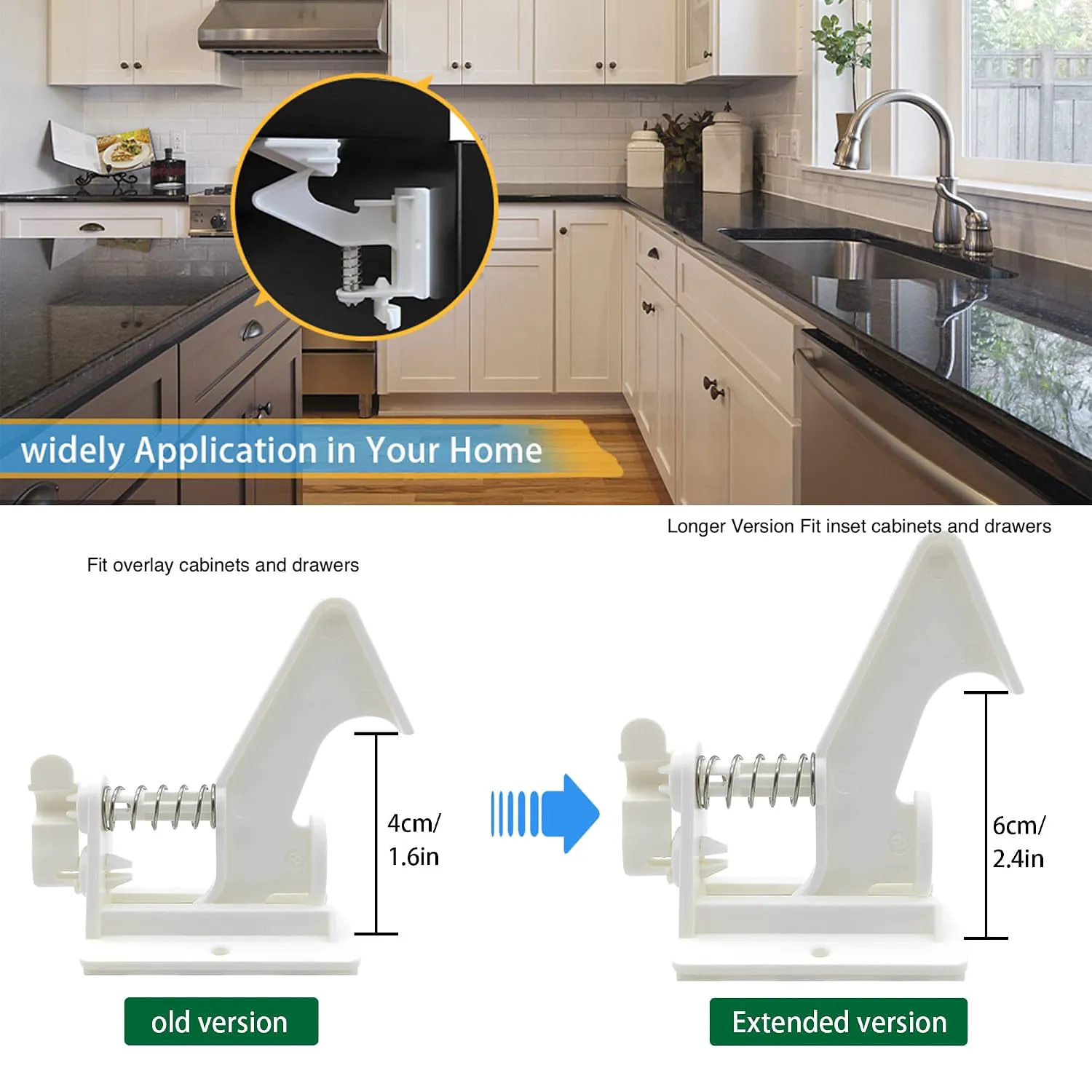
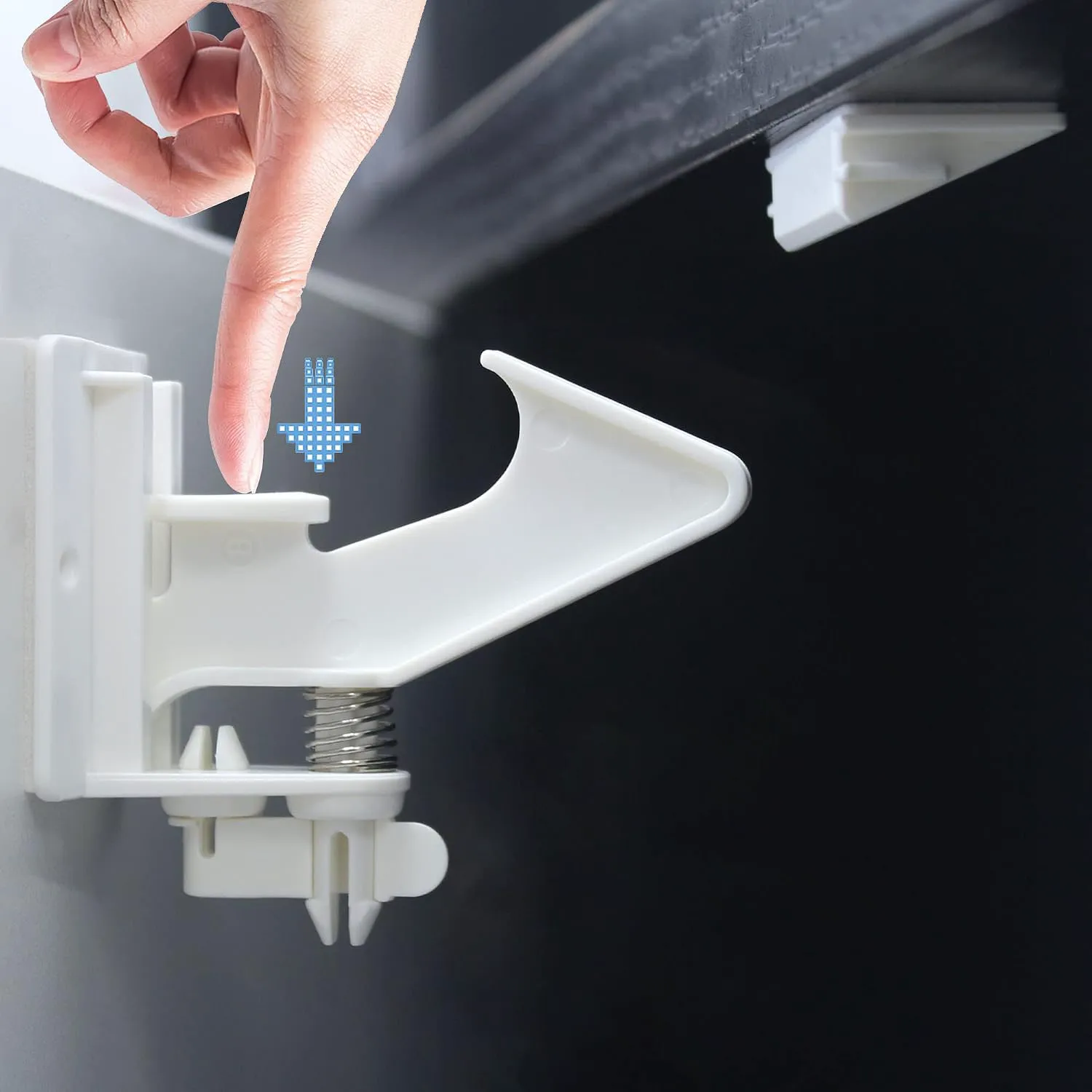
Cabinet Locks Child Safety Latches - VMAISI 12 Pack Baby Proofing Cabinet Locks
Babyproof rental bathroom without drilling: Move, secure, and supervise
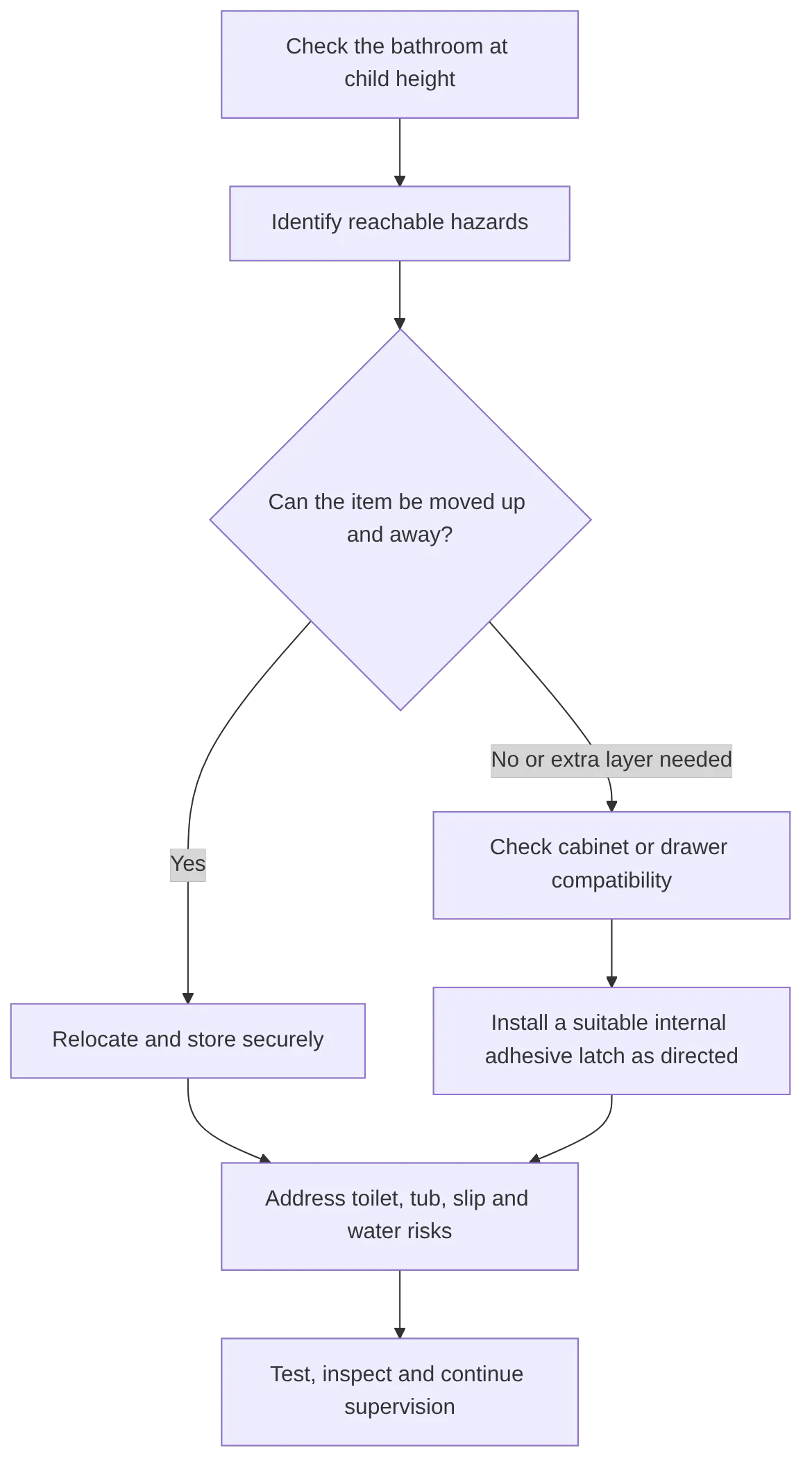
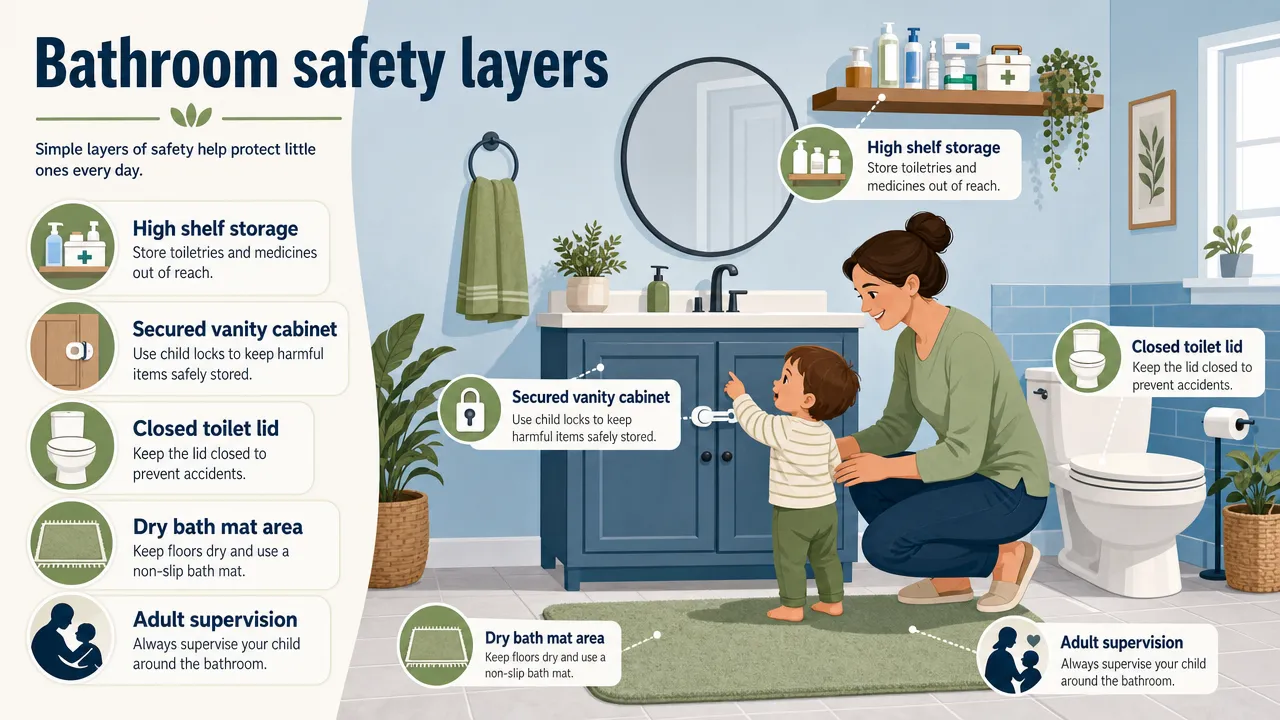
A renter-friendly plan works best in layers. A latch can help reduce a child's access to a compatible cabinet or drawer, but it does not make hazardous low storage safe on its own.
Use this order:
- Remove what you do not need. Clear old cosmetics, empty containers, loose batteries, and unused cleaning products.
- Move high-risk items up and away. Medicines, cleaners, sharp grooming tools, and small objects deserve the first move.
- Secure reachable storage. Add child safety cabinet locks to compatible cabinets and drawers that still need to hold household items.
- Address water hazards separately. Keep the toilet lid down, drain the tub after use, and maintain active supervision.
- Recheck often. Your child's reach, strength, and problem-solving skills can change quickly.
The American Academy of Pediatrics advises never leaving a young child unattended in the bathroom, keeping toilet lids down, draining the tub after use, and checking bathwater before bathing. See its infant water-safety guidance for more detail.
For a broader second-pass inspection of common household gaps, see VMAISI's guide to babyproofing mistakes parents may overlook.
Babyproof rental bathroom without drilling: Check latch compatibility first
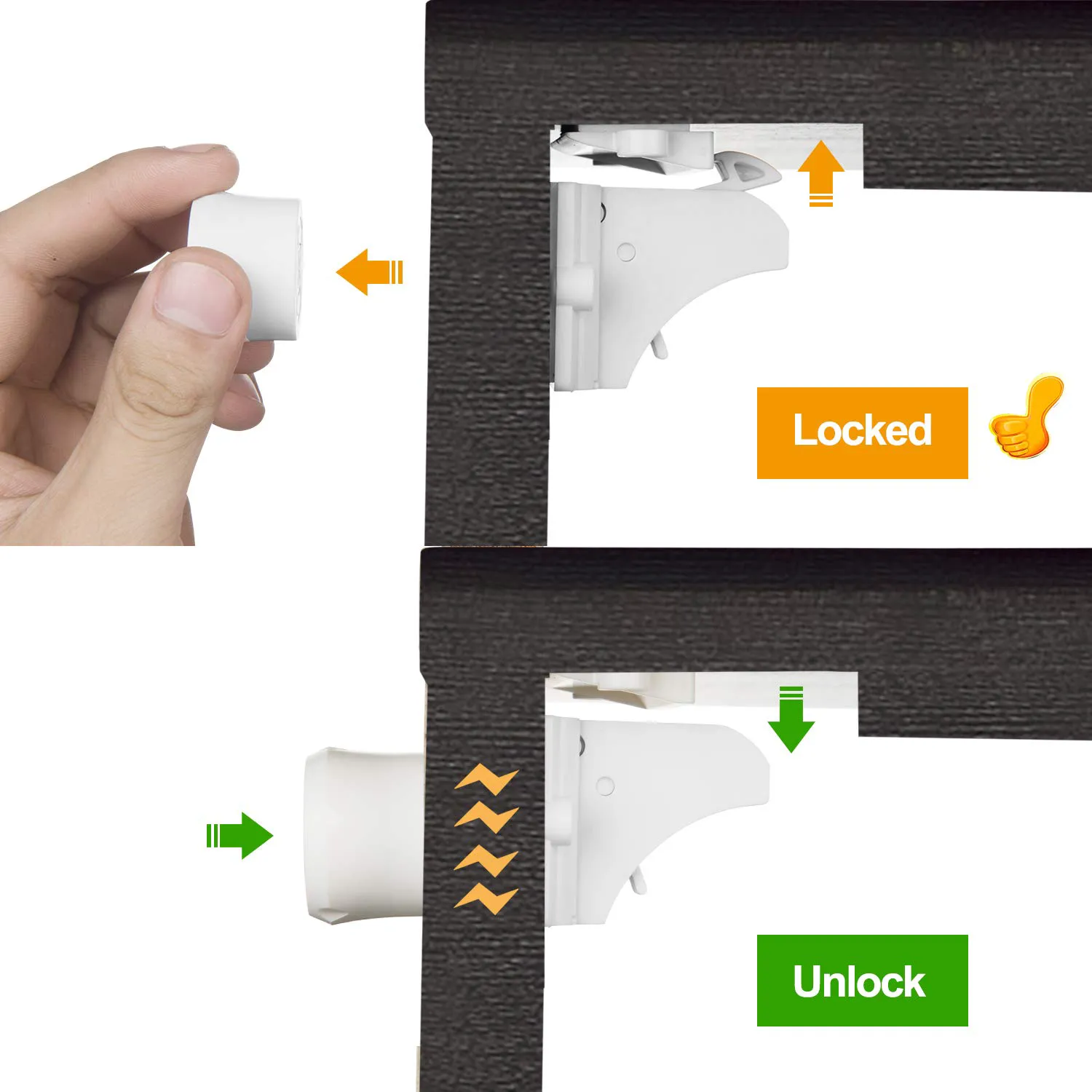
Internal adhesive cabinet latches can be a practical no-drill option for compatible bathroom cabinets and drawers. Before applying any adhesive, inspect the cabinet construction and follow the product instructions carefully.
Use this quick compatibility checklist:
- Is there usable internal mounting space?
- Is the mounting surface clean and fully dry?
- Can the latch and catch align correctly?
- Will the cabinet or drawer close fully afterward?
- Can adults operate the latch comfortably during daily routines?
- Does your lease or property handbook allow adhesive products?
- Have you photographed the cabinet's existing condition?
Bathroom steam, soap residue, damp surfaces, surface texture, cabinet geometry, and misalignment can affect suitability. No drilling helps avoid screw holes, but it does not guarantee that every surface will be unaffected by adhesive application or removal.
For compatible cabinets and drawers, VMAISI Child Safety Latches 12 Pack is designed for a smaller, focused project. These internal adhesive latches use manual spring-latch operation and do not require drilling.
For a detailed overview of latch styles and installation considerations, read this VMAISI comparison guide.
Vmaisi Baby Proofing Magnetic Cabinet Locks 12 Pack - Childproof your house
Babyproof rental bathroom without drilling: Choose the right latch count
Count your priority cabinets and drawers before choosing a pack. This prevents both under-planning and buying more than your current project needs.
| Your project scope | Practical option |
|---|---|
| One bathroom vanity and a few priority drawers | VMAISI Child Safety Latches 12 Pack |
| Bathroom plus kitchen, laundry, pantry, or other low storage | VMAISI Child Safety Latches 20 Pack |
The 12 Pack is a sensible starting point for a smaller number of compatible cabinets and drawers. The 20 Pack may suit multi-room planning, larger homes, or families who need broader coverage. The 20 Pack is positioned with upgraded stronger adhesive, but surface preparation, fit, alignment, and regular inspection still matter in every bathroom.
Before installation, clean and dry the interior mounting area, dry-fit the parts, follow the directions, and test the cabinet or drawer repeatedly before depending on it. For additional planning ideas, VMAISI's holiday cabinet and drawer checklist offers a useful way to review reachable storage by contents rather than by room alone.
Babyproof rental bathroom without drilling: Finish with water and rental checks
Cabinet and drawer safety is only one part of bathroom babyproofing. Complete your plan with these renter-conscious checks:
- Keep medicines, cleaners, razors, and small items up and away whenever possible.
- Keep the toilet lid down and evaluate toilet safety needs separately.
- Drain the tub immediately after use.
- Check bathwater with your wrist or elbow before every bath.
- Keep plugged-in devices and cords away from water and out of reach.
- Use an appropriate non-slip bath surface if needed, but never treat it as a substitute for supervision.
- Review your lease before applying adhesive products.
- Take dated photos of cabinets, tile, and fixtures before installation.
- Inspect installed latches for shifting, peeling, or wear.
The AAP states that the hottest faucet temperature should be no more than 120 degrees Fahrenheit to help reduce scald risk. If your rental's water seems excessively hot or the fixture appears unsafe, contact your landlord or property manager rather than altering plumbing yourself.
For short stays, travel, or visits with family, VMAISI's quick checklist for visiting toddlers can help you prioritize the most urgent hazards.
A thoughtful babyproof rental bathroom without drilling plan is not about securing every cabinet at once. It is about identifying today's reachable hazards, moving the highest-risk items, adding compatible latches where they make sense, and keeping close supervision at the center of every bathroom routine.