

Baby Gate Spindle Rod Too Short: Safe Troubleshooting Steps
Is your baby gate spindle rod too short to reach the wall or mounting surface securely? This is a common pressure-gate installation problem, especially around wide openings, baseboards, trim, or stair posts. The important thing is not to force the gate to fit. Until it is stable, level, latched, and installed exactly as its manual directs, do not rely on it as a child barrier.
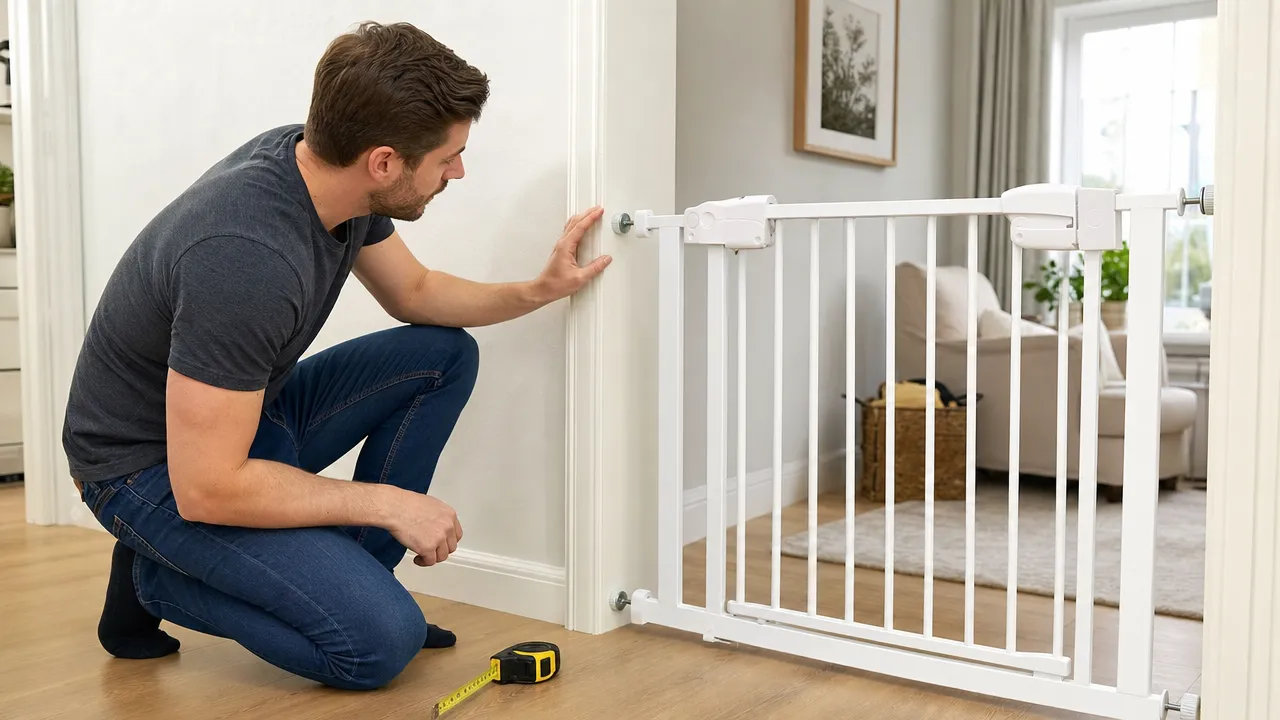
Baby gate spindle rod too short: Start with a safety pause
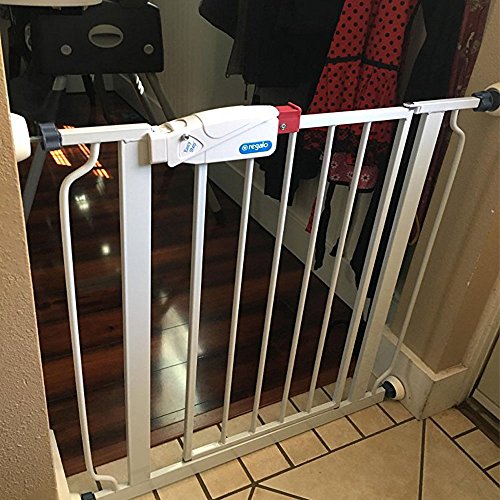
A spindle rod, also called a tension bolt or threaded adjustment bolt, creates the pressure that holds a pressure-mounted gate between two opposing surfaces. If even one spindle cannot make secure contact, the gate may shift, tilt, or fail to latch correctly.
Pause installation and use another safe supervision or access-control plan while you troubleshoot. A gate should only be used after it is secure, stable, correctly latched, and installed within its approved fit range.
The U.S. Consumer Product Safety Commission guidance for gates and enclosures reinforces the importance of following the specific product's instructions, labels, and installation requirements.
Do not try to make a short spindle reach with:
- Tape or household adhesive.
- Cardboard, books, foam, or loose wood.
- Generic threaded rods or bolts.
- Parts borrowed from a different gate.
- Rope, cords, zip ties, or bungee cords.
- Excessive tightening against weak drywall, narrow trim, or an unstable post.
These workarounds can create movement, gaps, or a false sense of security.
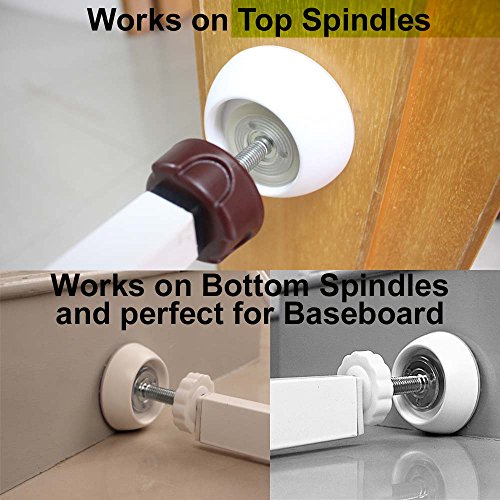
VMAISI 4 Pack Baby Gates Wall Cups - White
Baby gate spindle rod too short: Check the real cause
A short-looking spindle does not always mean the spindle itself is defective. Work through these checks before purchasing anything.
| Possible cause | What to check | Safer next step |
|---|---|---|
| Opening is too wide | Measure where the spindle pads actually touch | Confirm whether the gate has an approved extension or choose a gate designed for the opening |
| Gate is off-center | Check whether one side has much more space than the other | Center the gate and follow the manual's adjustment sequence |
| Spindles need normal adjustment | Inspect threaded engagement and adjustment nuts | Adjust only within the limits in the manual |
| A part is missing or damaged | Check pads, wall cups, threads, nuts, and latch pieces | Obtain an exact manufacturer-approved replacement part |
| Baseboards or trim change the fit | Measure top and bottom contact widths separately | Investigate an approved mounting solution or another gate type |
| The contact surface is rounded or uneven | Look for banisters, narrow edges, recessed walls, or weak surfaces | Use only an approved adapter or mounting system |
| The gate is in the wrong location | Review instructions for doorways, landings, and stairs | Select a gate and mounting method approved for that location |
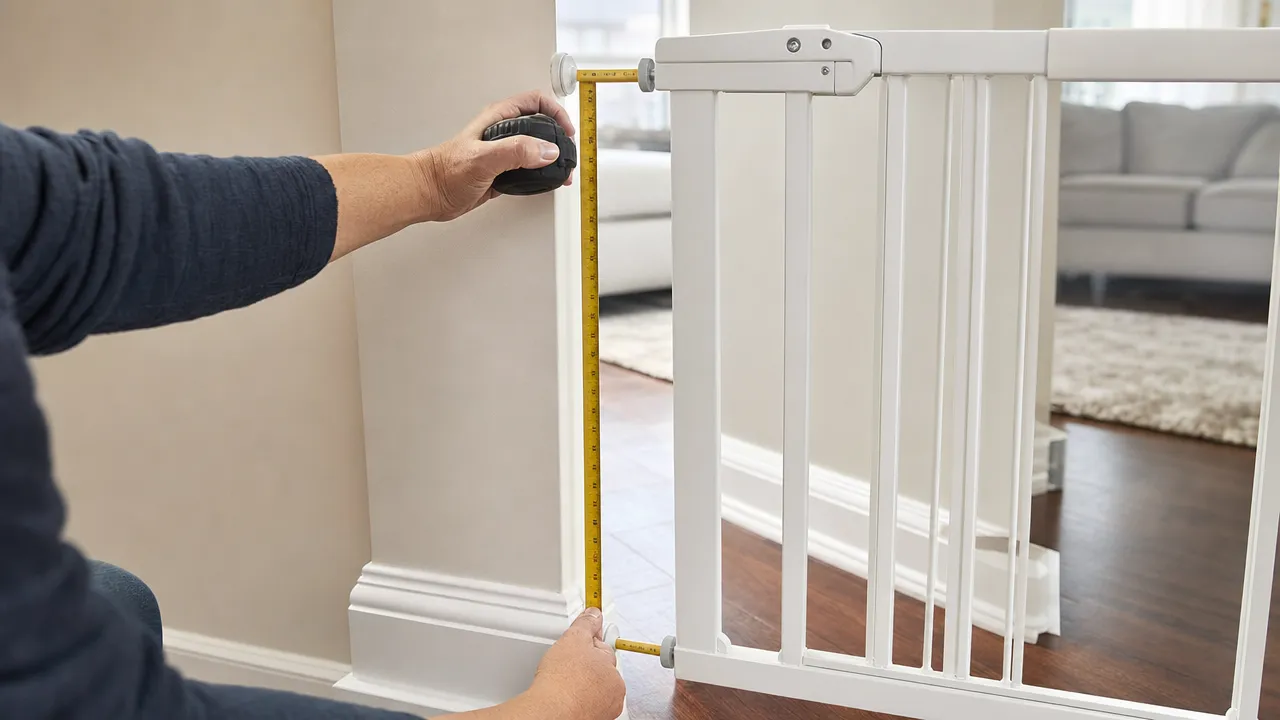
A pressure gate can appear nearly wide enough while still being outside its safe range. Measure the opening at the actual contact points, not just from wall to wall. A baseboard may reduce the usable width at the bottom, while trim or a recessed wall may affect contact at the top.
Baby gate spindle rod too short: Follow this safe checklist
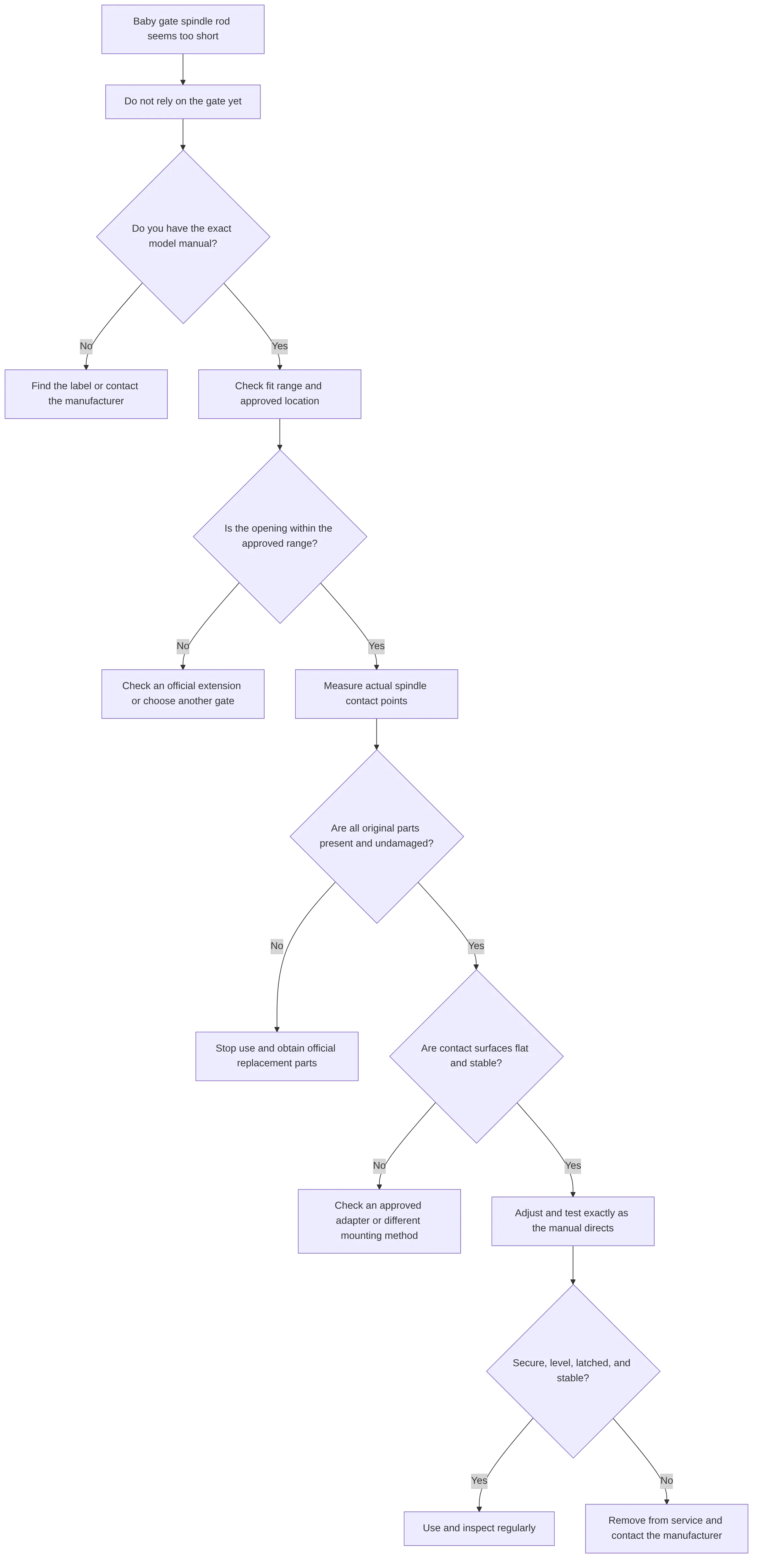
Use this sequence to identify whether the current gate can be installed safely.
-
Find the exact model and manual. Locate the label, product name, model number, or original order record. The manual should state the approved opening range, assembly steps, permitted locations, and compatible accessories.
-
Identify the gate type. Confirm whether it is pressure-mounted, hardware-mounted, or convertible. Do not assume instructions for one type apply to another.
-
Measure the true installation space. Measure where each spindle pad or mounting point will rest. Record both the top and bottom widths if baseboards, molding, or trim are present.
-
Inspect every original component. Make sure all spindles, pads, wall cups, adjustment nuts, brackets, and latch parts are present and undamaged. Bent rods, stripped threads, cracked cups, or missing pads are stop-use issues.
-
Check the mounting surface. Each contact point should be stable and suitable according to the manual. A spindle that only touches a corner, rounded banister, or loose trim is not a secure installation.
-
Center and adjust the gate as directed. Some pressure gates show a visible frame gap before final adjustment. That can be normal for certain designs, but only the exact manual can confirm the correct process.
-
Confirm approved accessories. If the opening is too wide, ask the gate manufacturer whether it offers an exact-model extension, replacement spindle, wall cup, or banister adapter.
-
Test before use. Follow the manual's testing directions for stability, alignment, closure, and latching. If the gate moves, leans, slips, or will not latch reliably, remove it from service in that opening.
Baby gate spindle rod too short: Extensions, replacements, and stairs
An approved extension and a replacement spindle solve different problems.
- An official extension may be appropriate when the doorway is wider than the base gate's approved range and the manufacturer lists that extension for your exact model.
- An official replacement spindle may be appropriate when the original is missing, bent, damaged, or confirmed incorrect for that model.
- An approved adapter or mounting kit may be needed where a rounded post, banister, uneven wall, or recessed surface prevents proper contact.
- A different gate is the right solution when the existing gate cannot safely fit the opening or is not approved for the intended location.
Do not assume baby-gate spindles are universal. Thread diameter, pitch, pad shape, maximum adjustment, and load behavior can differ by brand and model. A part that looks similar may not engage safely.
Stair locations deserve extra caution. The CPSC final rule for gates and enclosures includes installation-instruction requirements for gates recommended for top-of-stairs use. Do not install a pressure-mounted gate at the top of stairs unless the manufacturer explicitly permits that exact gate, mounting method, and location.
Many pressure-mounted models are intended for flat doorways or bottom-of-stairs locations rather than top-of-stairs installation. Check swing direction, landing space, mounting surface, and setback instructions in the exact manual.
Baby gate spindle rod too short: Know when to replace the gate
Stop using the gate in that opening and contact the manufacturer or select another option if any of these apply:
- The opening exceeds the stated fit range.
- A spindle cannot make stable contact using the original or approved components.
- Threads are stripped, bent, or will not engage correctly.
- A wall cup, pad, latch part, or mounting piece is cracked, missing, or loose.
- The frame is bent or the gate cannot sit level.
- The latch does not close and remain closed.
- The gate shifts, slides, rotates, or detaches during the manual-directed test.
- The manual does not permit the intended stair, banister, or mounting location.
- An official extension, adapter, or replacement part cannot be verified.
The safest answer is sometimes a wider gate, a hardware-mounted model, or a different installation location. A securely fitting gate is always more important than making the current one work.
Baby gate spindle rod too short: Check a compatible replacement rod
If troubleshooting confirms that the original spindle is missing, damaged, or too short, first check whether the gate manufacturer permits a replacement rod. When the manual specifies an M8 threaded spindle, compare the required thread diameter and pitch, usable rod length, adjustment range, and contact-pad shape before ordering a part.
The VMAISI 8 mm Baby Gate Threaded Spindle Rod Replacement Hardware Kit may be an option for a compatible pressure-mounted gate. It is replacement hardware, not a complete gate, and it should not be treated as universally compatible or used to extend a gate beyond its approved opening range. Do not use it if the gate manufacturer specifies a different thread size, rod design, or mounting method.
After installing an approved compatible replacement, adjust and test the gate exactly as its manual directs. Confirm that all contact points are stable, the frame is level, the latch closes correctly, and the gate does not shift during the required stability check. If the spindle still cannot make secure contact, stop using the gate in that opening and contact the gate manufacturer for the correct component or another approved installation option.