

Holiday Baby Proofing: Cabinet and Drawer Checklist
Are you wondering whether your kitchen cabinets and drawers are ready for a busy holiday visit with a newly mobile baby? Between cooking, guest bags, gift wrap, and shared cleanup, familiar storage areas can change quickly.
This holiday baby proofing checklist focuses on the low, reachable cabinets and drawers that deserve attention first. You do not need to secure every storage space at once. Start by identifying what your baby or toddler can reach, move hazards higher whenever practical, and use cabinet latches or drawer safety locks as an added layer where low storage is still necessary.
Why a holiday baby proofing checklist matters
Holiday routines often create temporary access points. A lower drawer may stay open while someone looks for serving utensils. Cleaning supplies may be left under the sink after a quick cleanup. A guest may set down a handbag containing medication, small personal items, or batteries.
These are common routine changes, not parenting failures. A simple plan helps everyone know where items belong before the gathering gets busy.
The American Academy of Pediatrics recommends keeping harmful items out of sight and reach, ideally in storage protected with a safety latch when appropriate. Review its guidance on childproofing your home for poisons as you make your room-by-room plan.
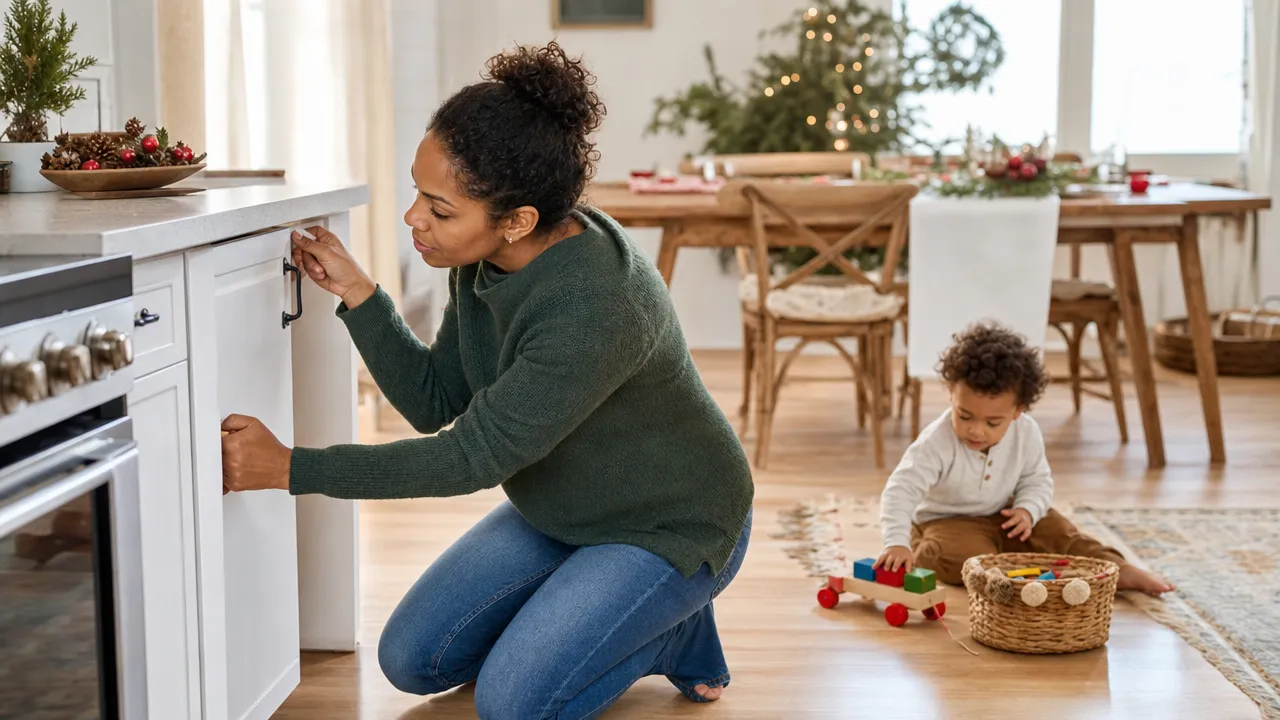
A useful holiday routine has four steps:
- Identify reachable storage.
- Move high-risk contents up and away.
- Add baby-proofing cabinet locks or cabinet latches to low storage that still needs to hold hazards.
- Recheck storage during and after the gathering.
Child safety cabinet locks can help limit access, but they do not replace safe storage, adult routines, or close supervision.
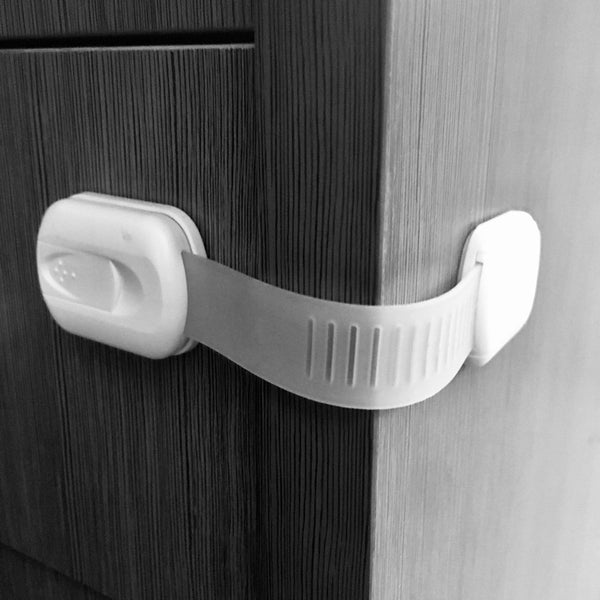
6 Pack Vmaisi Multi-Use Adhesive Straps Locks
Holiday baby proofing checklist: Start with high-priority storage
Prioritize cabinets and drawers by their contents, not simply by the room. The following locations usually deserve the first check when a baby is crawling, cruising, or walking.
| Storage area | What to check | Practical holiday action |
|---|---|---|
| Under-sink cabinet | Cleaners, dishwasher products, sponges, detergent | Move products out of reach when possible and secure low storage |
| Bathroom vanity | Medicines, vitamins, razors, cosmetics, guest toiletry bags | Put medicines up, away, and out of sight; keep guest bags elevated |
| Kitchen drawers | Knives, peelers, kitchen scissors, skewers, small tools | Secure or relocate sharp tools; close drawers before stepping away |
| Laundry storage | Detergent and cleaning supplies | Keep products in original labeled containers and inaccessible storage |
| Home office drawers | Batteries, scissors, small office supplies | Clear loose items and secure reachable drawers |
| Pantry and drink storage | Alcohol, small baking items, breakables | Relocate high-risk items from low shelves and cabinets |
| Guest areas | Handbags, medications, cosmetics, small personal items | Set up one out-of-reach bag and medication drop zone |
Cleaning products and laundry supplies
Lower kitchen, bathroom, and laundry cabinets are a top priority. Keep cleaning products in their original labeled containers and never transfer them into food or drink containers. The American Academy of Pediatrics offers more detail about safe storage for cleaners, sanitizers, and disinfectants.
If low storage is still needed for cleaners, adhesive cabinet locks or no-drill cabinet locks may add a useful access barrier. Still, the stronger first step is to keep hazardous products inaccessible whenever possible.
Medicines, vitamins, and guest bags
Holiday visitors can introduce new access points. A purse on the floor, an overnight toiletry bag in the bathroom, or vitamins in a coat pocket may be easy for a toddler to investigate.
Use a friendly arrival reminder: "Please place bags and any medication on the upper shelf so little hands cannot get into them." The Up and Away medication safety campaign similarly advises keeping medicines up, away, and out of sight.
Sharp tools, batteries, and small objects
During holiday cooking, low drawers may hold knives, peelers, scissors, corkscrews, skewers, or graters. These drawers need the same careful review as lower cabinets. Consider drawer safety locks for reachable drawers that must store sharp tools.
Loose batteries, especially button and coin batteries, also need immediate attention after gift opening or decorating. Store them in child-inaccessible storage and clear packaging promptly. If a button or coin battery may have been swallowed, seek immediate expert guidance from Poison Control rather than waiting for symptoms.
Holiday baby proofing checklist: Complete a room-by-room sweep
A quick crawl-height scan helps you notice what an adult standing up may miss. Move through the spaces where your child will spend time, then focus on cabinets and drawers within reach.
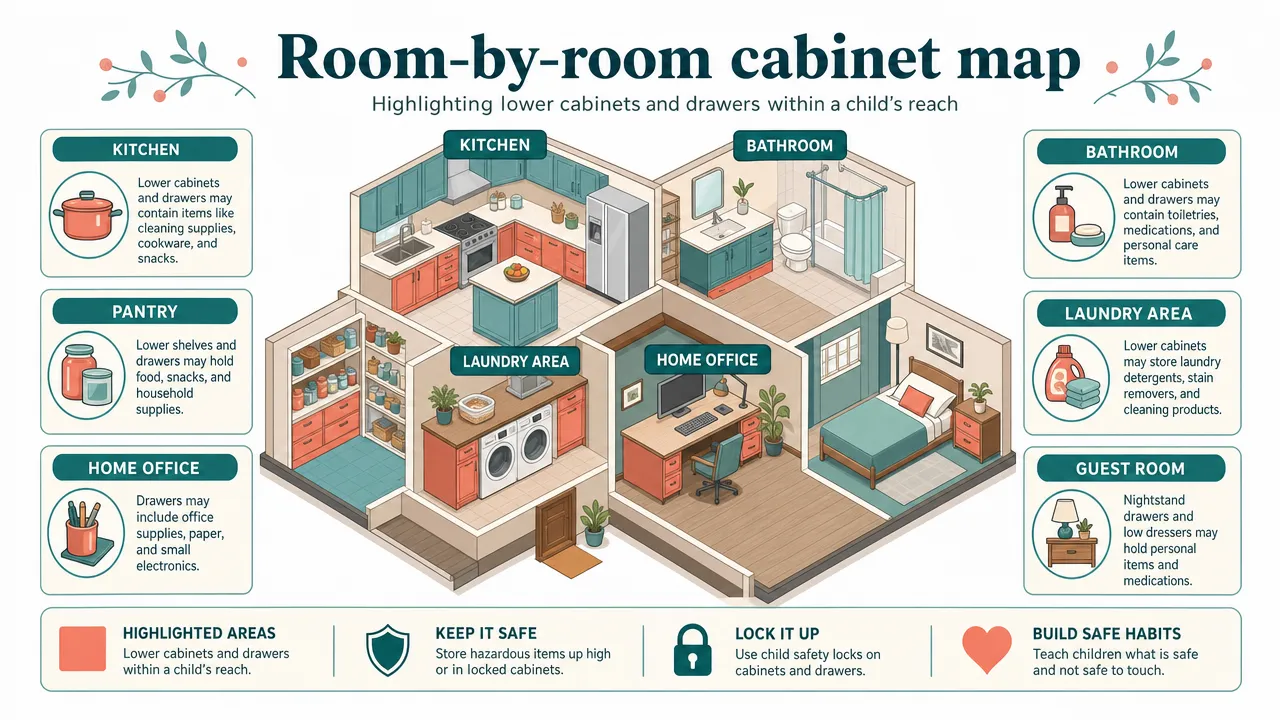
Kitchen and pantry
Check the under-sink cabinet, knife and utensil drawers, low pantry shelves, and any temporary drink-storage area. Holiday meal preparation often means more cabinets and drawers are opened throughout the day.
Before guests arrive:
- Move cleaners, sharp tools, and alcohol out of low storage where practical.
- Secure reachable storage that still contains hazards.
- Remove loose batteries, clips, ribbons, and small items from catch-all drawers.
- Ask adults to close active drawers before walking away.
Bathroom and laundry area
Bathroom vanities can collect medicines, vitamins, razors, cosmetics, and guest toiletry bags. Laundry cabinets may contain detergent and cleaning products. These locations deserve a second check after guests settle in, because bags and personal items often move.
For a practical safety foundation, KidsHealth's poisoning prevention guidance reinforces the importance of keeping household chemicals and potentially harmful products out of a child's reach.
Dining, office, and guest spaces
Do not overlook less obvious storage. Dining-room drawers may hold breakable serving items. A home-office drawer may contain batteries, scissors, or small supplies. Guest-room nightstands can hold medication, cosmetics, or personal items.
A designated high shelf, closet shelf, or closed adult-managed room can make guest coordination easier without making visitors feel singled out.
Choosing cabinet latches and drawer safety locks
Once you have identified a high-priority storage area, decide whether moving the contents is enough or whether a latch would add another useful layer.
VMAISI offers adhesive child safety cabinet locks and cabinet latches for parents seeking practical no-drill options. When considering adhesive cabinet locks, focus on fit and daily usability rather than assuming one approach works everywhere.
| Consideration | What to check before installation |
|---|---|
| Cabinet or drawer type | Confirm the device is designed for the storage style you need to secure |
| Surface condition | Follow product instructions for a clean, dry, compatible mounting surface |
| Placement | Make sure the cabinet or drawer can close fully without interference |
| Adult access | Test whether caregivers can operate the setup consistently |
| Installation timing | Allow any instruction-directed adhesive set time before relying on it |
| Contents | Use latches where reachable storage contains hazards, not automatically on every cabinet |
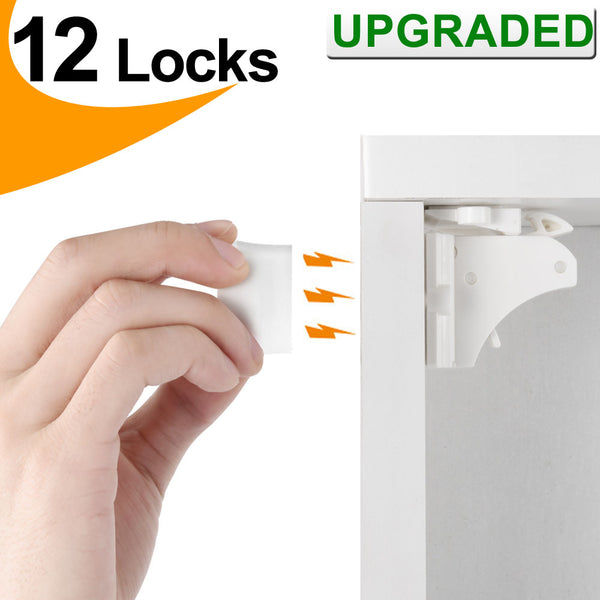
Vmaisi Baby Proofing Magnetic Cabinet Locks 12 Pack - Childproof your house
For families who prefer no-drill cabinet locks, adhesive options may be useful when the cabinet or drawer design and surface are compatible. Follow the specific manufacturer's instructions for placement, surface preparation, alignment, and testing. Check that adults can use the cabinet without leaving it partly open during busy cooking or cleanup.
Visibility is also a personal preference. Some families want a less noticeable setup in guest-facing rooms, while others prefer a visible reminder that a cabinet contains restricted items. The most practical choice is one your household can use correctly and consistently.
Holiday baby proofing checklist: Before, during, and after guests arrive
Use this printable-style checklist to keep your plan manageable.
Before guests arrive
- Scan reachable cabinets and drawers in the kitchen, bathroom, laundry area, pantry, office, and guest spaces.
- Put cleaning products and laundry products in inaccessible storage, in their original containers.
- Move medicines, vitamins, and supplements up, away, and out of sight.
- Secure or relocate knives, peelers, scissors, razors, and other sharp items.
- Store loose batteries and small objects out of reach.
- Check low storage for alcohol, breakables, ornament pieces, ribbons, and packaging debris.
- Inspect existing cabinet latches and drawer safety locks for closure and adult operation.
- Create one elevated area for guest bags, medications, and toiletry kits.
During the gathering
- Close cabinets and drawers before stepping away from food preparation, wrapping, serving, or cleanup.
- Return cleaners, sharp tools, and small objects to secure storage immediately after use.
- Recheck the kitchen and bathroom after guests have unpacked or moved bags.
- Keep alcohol and serving supplies inaccessible when not actively used by adults.
- Use a calm reminder if needed: "Bags and medications go on the upper shelf, please."
After guests leave
- Check floors, couches, low drawers, and guest spaces for medicines, wrappers, batteries, and small items.
- Complete a battery sweep after gift opening and decoration cleanup.
- Empty temporary catch-all drawers instead of leaving holiday clutter for later.
- Return cleaners, medicines, and other hazards to safe, inaccessible storage.
- Notice which cabinets or drawers your toddler repeatedly tried to open and reassess the contents.
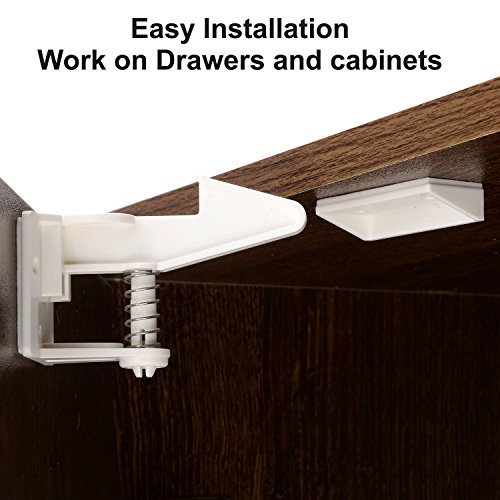
Cabinet Locks Child Safety Latches - VMAISI 12 Pack Baby Proofing Cabinet Locks
Holiday baby proofing checklist: Visiting relatives with a baby or toddler
A relative's home may not have the same storage routines as yours, and that is normal. A short, respectful conversation before the visit can make the arrival process much smoother.
Ask whether cleaners, medicines, sharp tools, batteries, or alcohol are stored in low cabinets or drawers. Once you arrive, do a quick crawl-height scan of the kitchen, bathroom, guest room, and main play area.
Focus on what your child can reach today. Ask the host to move hazards out of sight and reach, keep your own diaper bag and medication bag elevated, and maintain close supervision around unlatched storage. A visiting home is a changing environment, especially when several adults are cooking, serving, or unpacking.
The goal is not a perfect home overhaul. It is a calm, repeatable routine: identify reachable hazards, move what you can, secure what must stay low, and recheck as holiday plans change.