

Magnetic Cabinet Lock Keys: How They Work and Why Spare Keys Matter
Have you ever misplaced the release tool for your cabinet safety system right when you needed to open a cabinet? If you are searching for a replacement key for magnetic cabinet locks, you are probably trying to solve a very practical problem: adults need reliable access, while babies and toddlers still need help staying away from unsafe drawers and cabinets.
This guide explains how generic magnet-release cabinet safety systems work, why compatibility matters, what cabinet lock accessories parents should check before buying, and when a no-drill adhesive cabinet latch setup may be simpler for everyday family routines.
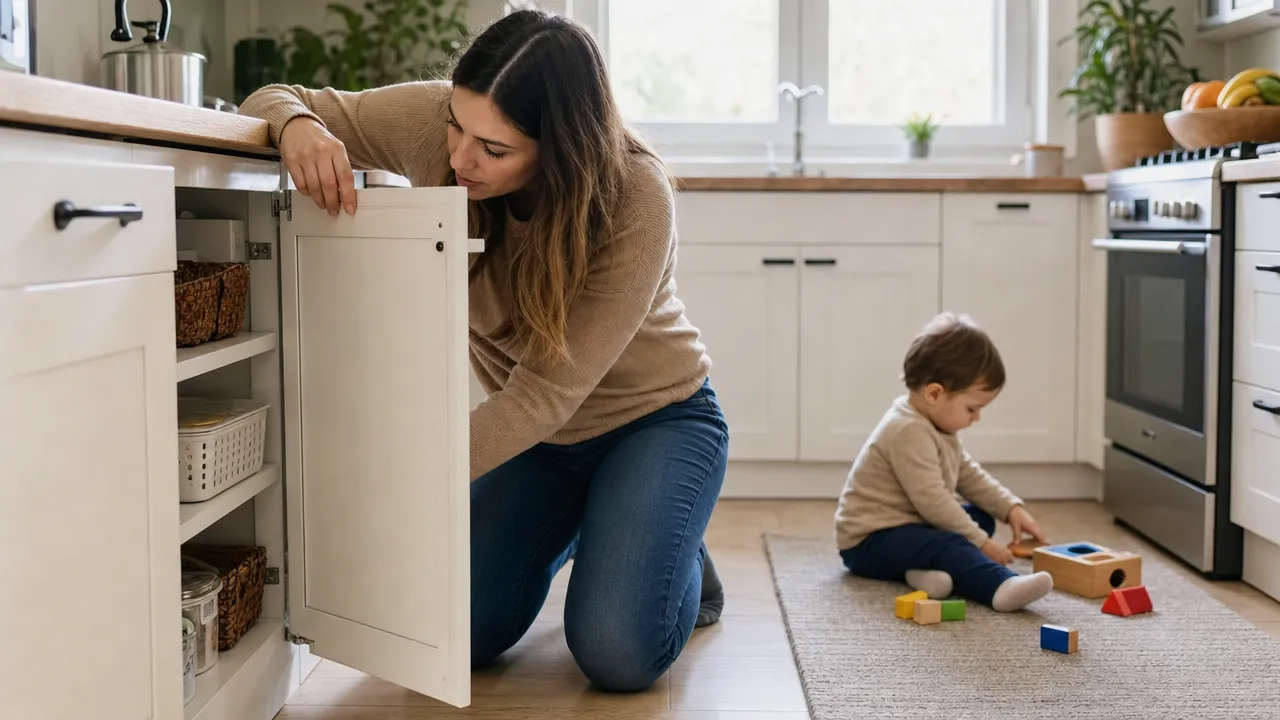
Why parents search for a replacement key for magnetic cabinet locks
A search for a replacement key for magnetic cabinet locks usually comes from an urgent home situation. The original release tool may be lost, damaged, packed away after a move, or missing from a secondhand setup already installed in the home.
For parents, the problem is not just convenience. Cabinets and drawers may contain cleaning products, sharp kitchen tools, small objects, batteries, toiletries, or medicines. The CPSC childproofing guide recommends using protective devices where needed to help reduce access to hazards. The American Academy of Pediatrics also reminds families to keep harmful items out of reach, out of sight, and in secured storage when possible through its HealthyChildren poison prevention guidance.
Common reasons parents look for replacement accessories include:
| Situation | What it usually means | Best next step |
|---|---|---|
| Lost release tool | The installed system may still work, but adults cannot open it easily | Identify the brand and model before buying |
| Multiple caregivers | Grandparents, babysitters, or relatives need access too | Keep adult-only backup access instructions |
| Unknown installed system | The family moved into a home with existing latches | Inspect latch shape and measure cabinet thickness |
| Replacement does not work | The accessory may not match the installed mechanism | Check compatibility, alignment, and manufacturer support |
| Too much daily friction | Adults may be tempted to disable the system | Consider a simpler child safety cabinet latch setup |
A magnetic lock key can be useful when it matches the installed system, but parents should not assume that every accessory will work with every latch.
How a replacement key for magnetic cabinet locks works in generic systems
In generic magnet-release child-safety systems, a latch is usually installed inside the cabinet or drawer. When the door or drawer closes, the internal latch catches. An adult places a release tool on the outside of the cabinet front at the correct spot, and the internal latch disengages.
The basic process is simple:
- The cabinet or drawer closes.
- The internal latch catches.
- The adult places the release tool on the outside surface.
- The mechanism disengages inside the cabinet.
- The adult opens the cabinet or drawer.
However, the details matter. A replacement key for magnetic cabinet locks may fail if the cabinet front is too thick, the latch is installed too deeply, the catch is misaligned, the adhesive has shifted, or the adult is placing the tool in the wrong spot.
Some products in this general category include installation templates, adhesive pads, catch pieces, optional screws, or extra release tools. These are all examples of cabinet lock accessories, but they are not automatically interchangeable.

Here is a practical way to think about where parents often run into problems:
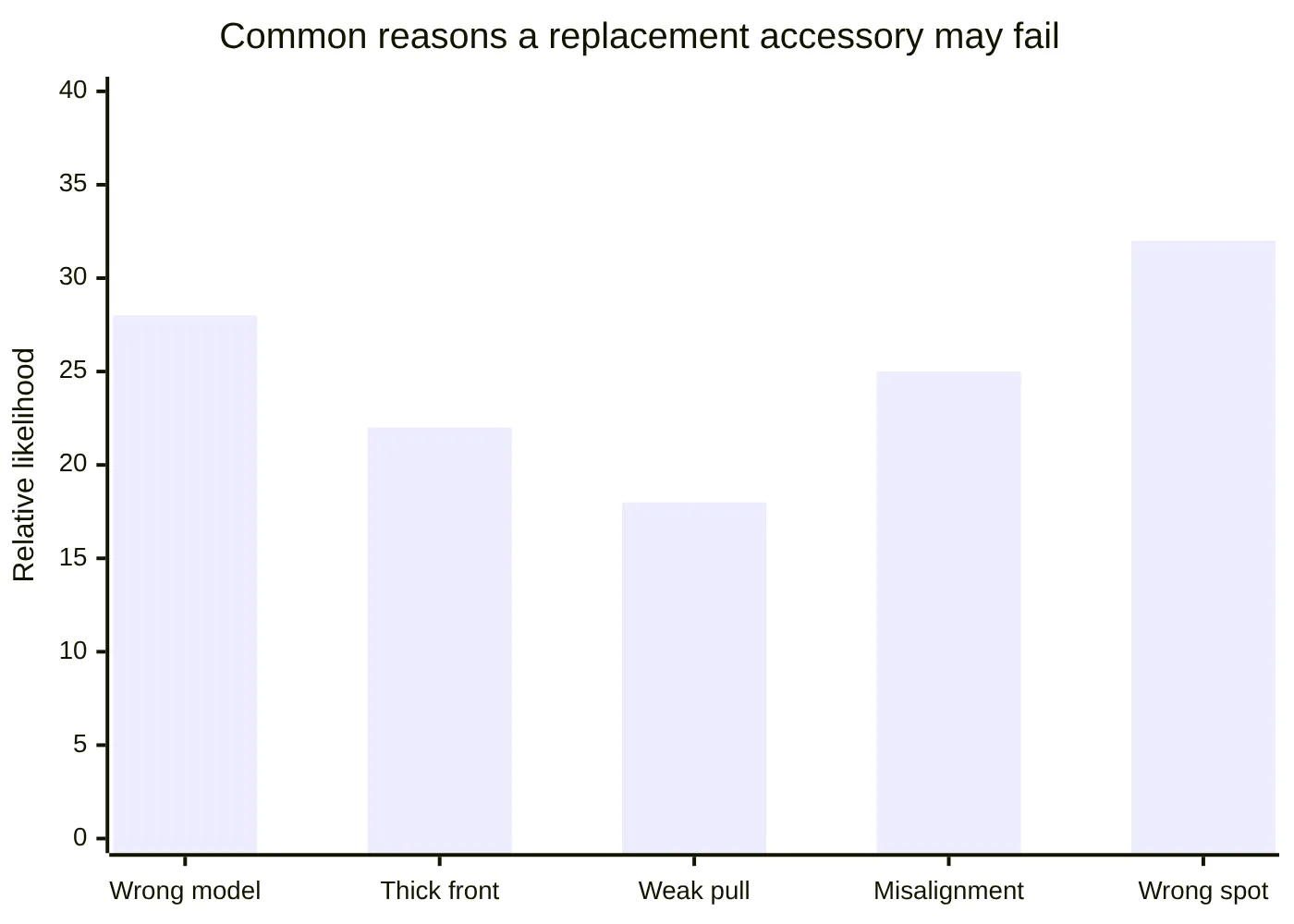
This chart is a qualitative planning guide, not market-share data. It simply reflects common troubleshooting issues parents should consider before assuming the release tool itself is defective.
Are replacement key for magnetic cabinet locks accessories universal?
Short answer: sometimes they are marketed that way, but compatibility is not guaranteed.
A replacement key for magnetic cabinet locks may be described as working with many brands, but "many" does not mean "all." Different systems can vary in magnet strength, latch geometry, release distance, cabinet thickness limits, and installation depth.
Before buying a magnetic lock key, check these factors:
| Compatibility factor | Why it matters |
|---|---|
| Brand and model | A brand-matched accessory is usually the most reliable starting point |
| Cabinet or drawer thickness | The release tool must work through the material |
| Latch shape | Different latch designs may release differently |
| Catch alignment | Poor alignment can make a good accessory seem ineffective |
| Adhesive condition | Shifted or loose adhesive can change how the latch engages |
| Material density | Dense wood or layered cabinet fronts may reduce performance |
| Adult access needs | Multiple caregivers may need clear instructions and backup access |
If you know the original brand, check the manufacturer support page first. If you do not know the brand, inspect the installed parts carefully and measure the cabinet or drawer front before purchasing any replacement accessory.
Avoid forcing a cabinet open. If access is urgent and you cannot identify the system, contact the product manufacturer if known, a qualified handyman, or another appropriate support professional instead of damaging the cabinet or disabling safety devices in a way that could create new risks.
What to check before buying cabinet lock accessories
Cabinet lock accessories can include release tools, catch pieces, adhesive strips, installation templates, spare latch parts, and mounting pieces. Before ordering anything, use a simple checklist.
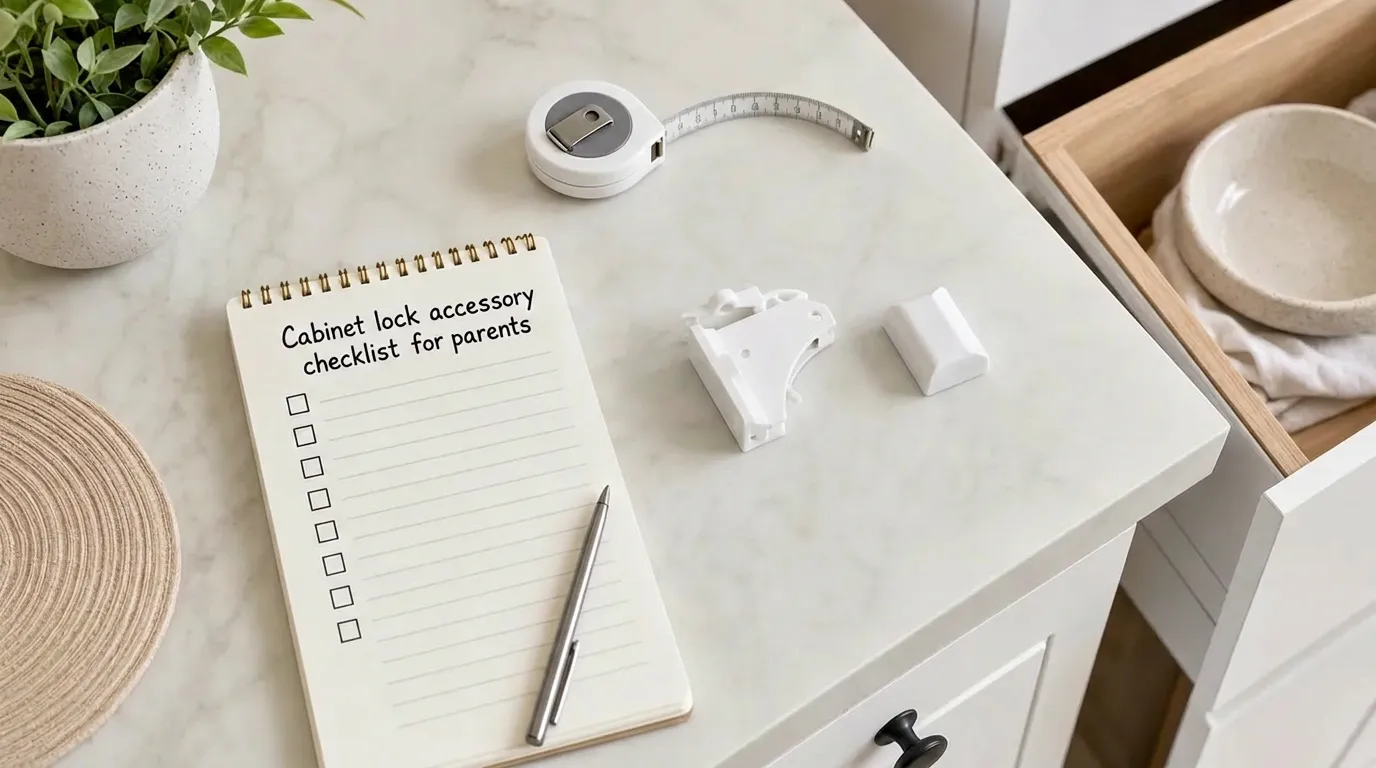
Use this buying checklist:
- Identify the original product brand and model if possible.
- Look for the original manual, packaging, or online order history.
- Measure the cabinet or drawer front thickness.
- Compare the replacement accessory specifications carefully.
- Check whether the accessory is intended for the same latch style.
- Review return options in case the accessory does not work.
- Teach all adult caregivers where the approved tool or instructions are stored.
- Re-check the installed latch and adhesive before blaming the accessory.
For home safety planning beyond cabinets, VMAISI also has related guides such as Babyproofing Mistakes That Put Toddlers at Risk and Don't Miss These: 5 Essential Babyproofing Items for a Truly Safe Home. These can help parents think beyond one drawer or one cabinet and review the whole home from a toddler's point of view.
A useful safety reminder: cabinet safety products are one layer, not the whole plan. The Seattle Children's home safety checklist highlights the importance of keeping hazards such as medicines, cleaning products, detergent pods, button batteries, and other unsafe items out of children's reach. In the U.S., families can also keep Poison Help at 1-800-222-1222 visible for adults, as recommended in pediatric safety guidance.
When no-drill cabinet latches are simpler than a replacement key for magnetic cabinet locks
If your current system depends on a separate release tool and you are tired of searching for it, teaching every caregiver how to use it, or guessing which replacement key for magnetic cabinet locks will fit, it may be time to consider another setup.
By contrast, VMAISI's current cabinet safety products are adhesive child safety cabinet locks and baby-proofing cabinet latches for cabinets and drawers. They should be considered by parents who want a practical, no-drill cabinet lock option that does not require tracking a separate release tool for daily access.
For smaller baby-proofing projects, the VMAISI Cabinet Locks Child Safety Latches 12 Pack is a focused option for parents who need to secure a few cabinets or drawers. It can work well as a starter choice for areas such as an under-sink cabinet, a bathroom vanity, or a few low kitchen drawers.
For larger homes or families securing multiple rooms, the VMAISI Cabinet Locks Child Safety Latches 20 Pack is the broader option. It is positioned for multiple cabinets and drawers across the home, with upgraded stronger adhesive positioning and no drilling required.
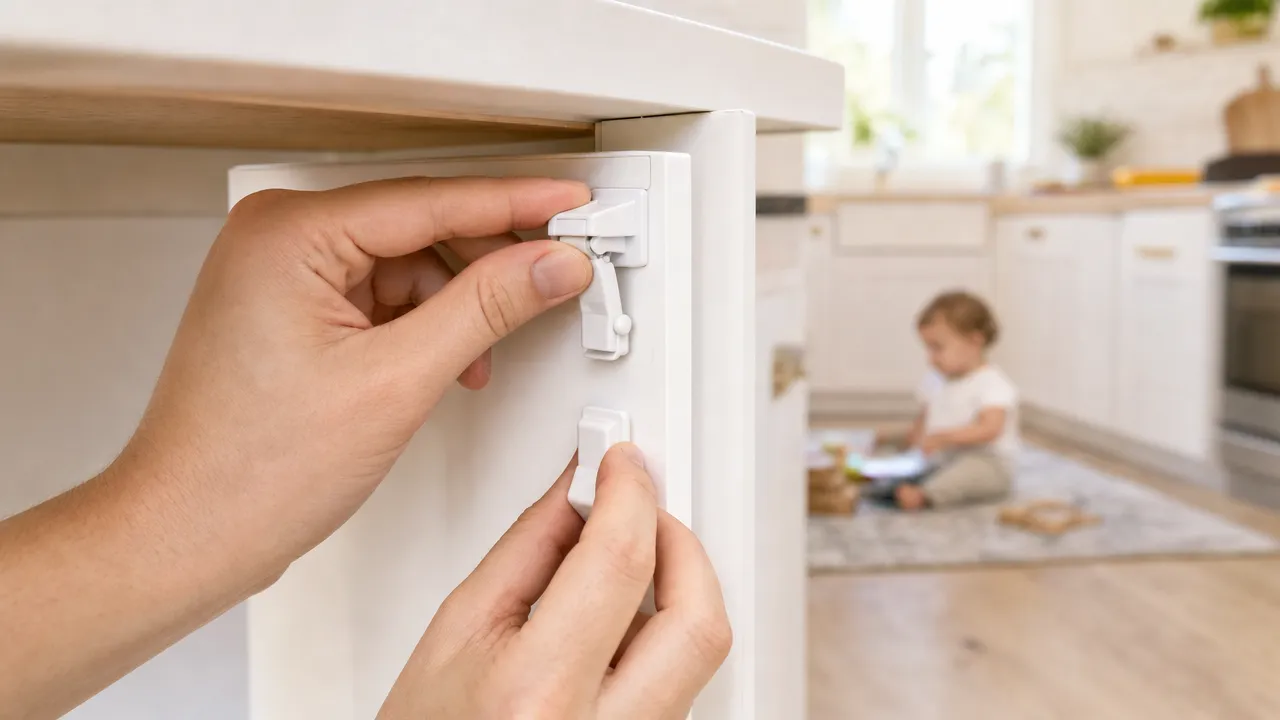
When choosing between pack sizes, start with the rooms where the risk is highest:
| Home area | Common concern | Practical VMAISI option |
|---|---|---|
| A few kitchen cabinets | Cleaners, trash bags, small items | VMAISI 12 Pack |
| Bathroom vanity | Toiletries, razors, personal care items | VMAISI 12 Pack |
| Kitchen plus bathroom | Multiple low cabinets and drawers | VMAISI 20 Pack |
| Whole-home setup | Kitchen, laundry, storage, pantry, bathroom | VMAISI 20 Pack |
| Larger homes | More cabinets and drawers to secure | VMAISI 20 Pack |
Choose based on how many cabinets and drawers you need to secure, how often adults access them, and whether a no-drill setup fits your cabinet surfaces.
FAQs about a replacement key for magnetic cabinet locks
Can I buy a replacement key for magnetic cabinet locks?
Yes, replacement accessories may be available for some generic magnet-release cabinet safety systems. The best first step is to identify the original brand and model, then check the manufacturer's support options. If the system is unknown, compatibility is less certain.
Are magnetic cabinet lock keys universal?
Not always. Some accessories are marketed as working with many systems, but a magnetic lock key may vary by strength, shape, and release distance. Cabinet thickness, latch depth, and alignment can also affect whether it works.
What should I do if my replacement accessory does not work?
Re-check the release location, cabinet thickness, latch alignment, and installation condition. If the installed system is old, damaged, or unknown, replacing the full setup may be more practical than buying multiple cabinet lock accessories.
Where should I store a release tool?
For generic systems that use a separate release tool, store it out of children's reach in a consistent adult-only location. If multiple caregivers need access, make sure they know the location and understand how the system works.
Are adhesive cabinet latches a good alternative?
They can be a practical option for parents who want no-drill cabinet locks without managing a separate release tool. For a few cabinets or drawers, consider the VMAISI 12 Pack. For multiple rooms or whole-home baby-proofing, consider the VMAISI 20 Pack.
A replacement key for magnetic cabinet locks can solve the problem if it matches your existing system. But if compatibility is unclear or the daily routine feels inconvenient, no-drill adhesive cabinet latches may be the simpler path. The goal is not to choose the most complicated solution. The goal is to help reduce toddler access to unsafe cabinets and drawers while keeping everyday adult use realistic.