

4 Pack vs 12 Pack vs 16 Pack Magnetic Cabinet Locks: Which Set Should Parents Buy?
Are you counting lower cabinets, bathroom drawers, and under-sink storage right now, wondering if a 4 pack is enough or if you should size up before your toddler starts opening everything? Many parents search for "magnetic cabinet locks pack size" because the real question is simpler: how many cabinet doors and drawers do I actually need to secure?
The honest answer is that pack size should follow your home layout, not the other way around. A 4 pack can solve one small problem area. A 12 pack is a practical starter size for priority areas. A 16 pack gives medium coverage. And if you are baby-proofing multiple rooms, a 20 pack often makes more sense than trying to stretch a smaller set.
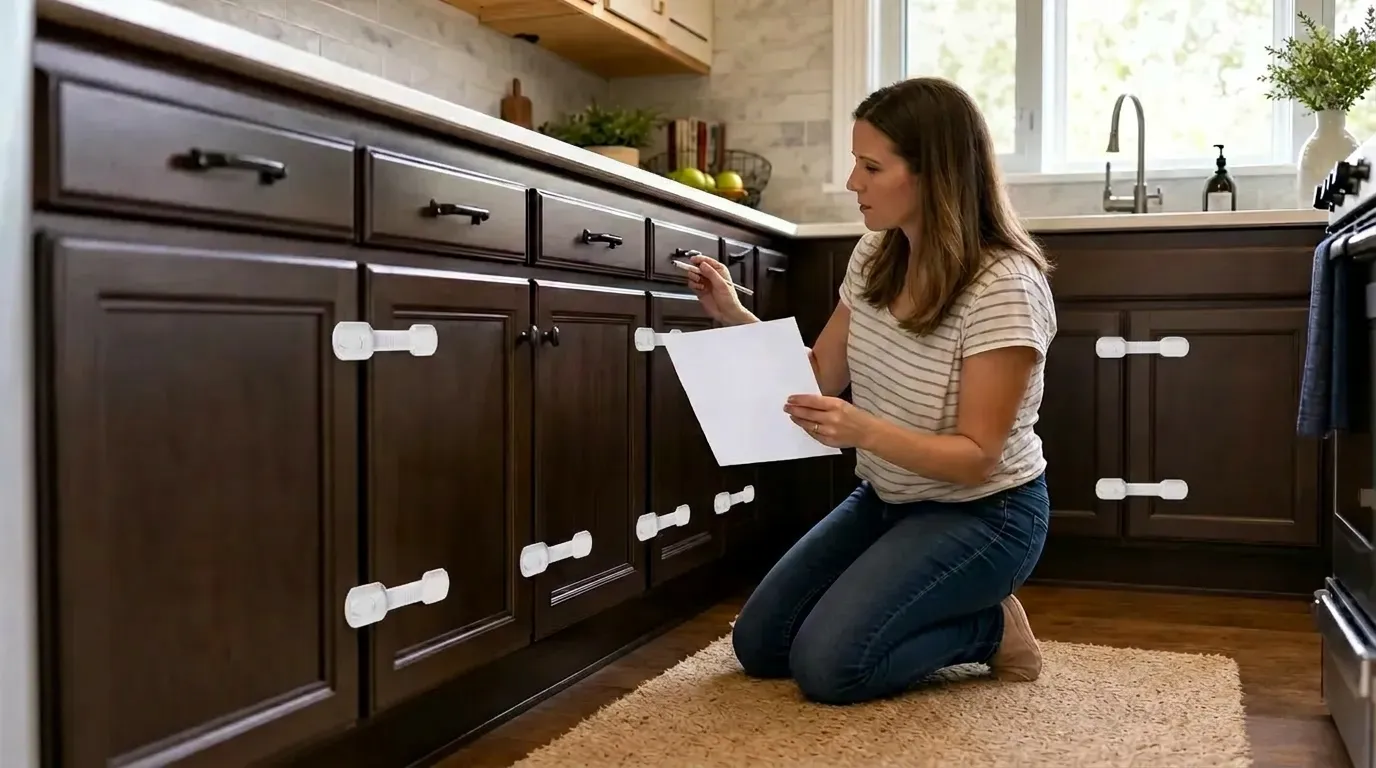
Magnetic cabinet locks pack size quick answer for busy parents
If you want the short version, start with the number of reachable cabinet doors and drawers that contain hazards. Then choose a pack size that gives you enough coverage plus a few extras.
| Pack size | Best fit | Practical opinion |
|---|---|---|
| 4 pack | One small zone, such as an under-sink cabinet or a few bathroom drawers | Useful for a focused fix, but often too small after parents count the kitchen and bathroom. |
| 12 pack | Apartments, smaller homes, or priority-risk areas | A strong starter size for parents who want to secure the most important cabinets first. |
| 16 pack | Medium coverage across a kitchen plus one or two bathrooms | A good middle ground, but it may run short if you include laundry, pantry, and extra drawers. |
| 20 pack | Larger homes or whole-home baby-proofing | Better when you are securing multiple rooms and want spare latches for future needs. |
This is why a search for 4 pack magnetic cabinet locks often leads parents to rethink the count. Four pieces may cover one bathroom vanity or one under-sink cabinet, but most homes have more than four reachable access points. A search for 12 pack cabinet locks usually fits parents who are starting with the highest-risk areas. A search for 16 pack cabinet locks often comes from families who have already realized the kitchen alone can use more pieces than expected.
Authoritative child-safety guidance supports the basic idea behind this planning. The U.S. Consumer Product Safety Commission childproofing guide recommends using safety latches and locks on cabinets and drawers to help prevent access to medicines, cleaners, and sharp objects. The Cleveland Clinic childproofing guide also emphasizes locking reachable cabinets and drawers that contain hazards. These products are helpful safety layers, but they do not replace adult supervision.
Magnetic cabinet locks pack size by room and risk level
The best way to choose a cabinet locks pack size is to walk through the home at toddler height. Count what your child can reach, not just what looks important to adults.
Start with these areas:
| Room or area | What to count | Scenario-based estimate | Priority |
|---|---|---|---|
| Kitchen lower cabinets | Under-sink doors, cleaning supply areas, low storage | 6 to 10 | High |
| Kitchen drawers | Utensils, sharp tools, small objects, batteries | 3 to 6 | High |
| Bathroom cabinets | Vanity doors, grooming items, personal care storage | 2 to 4 per bathroom | High |
| Laundry area | Detergent, pods, cleaners, utility storage | 2 to 4 | High |
| Pantry | Glass containers, small objects, low food storage | 1 to 3 | Medium |
| Storage cabinets | Tools, craft supplies, small parts | 2 to 4 | Medium |
Here is a simple planning chart. These are scenario-based estimates, not verified household averages.
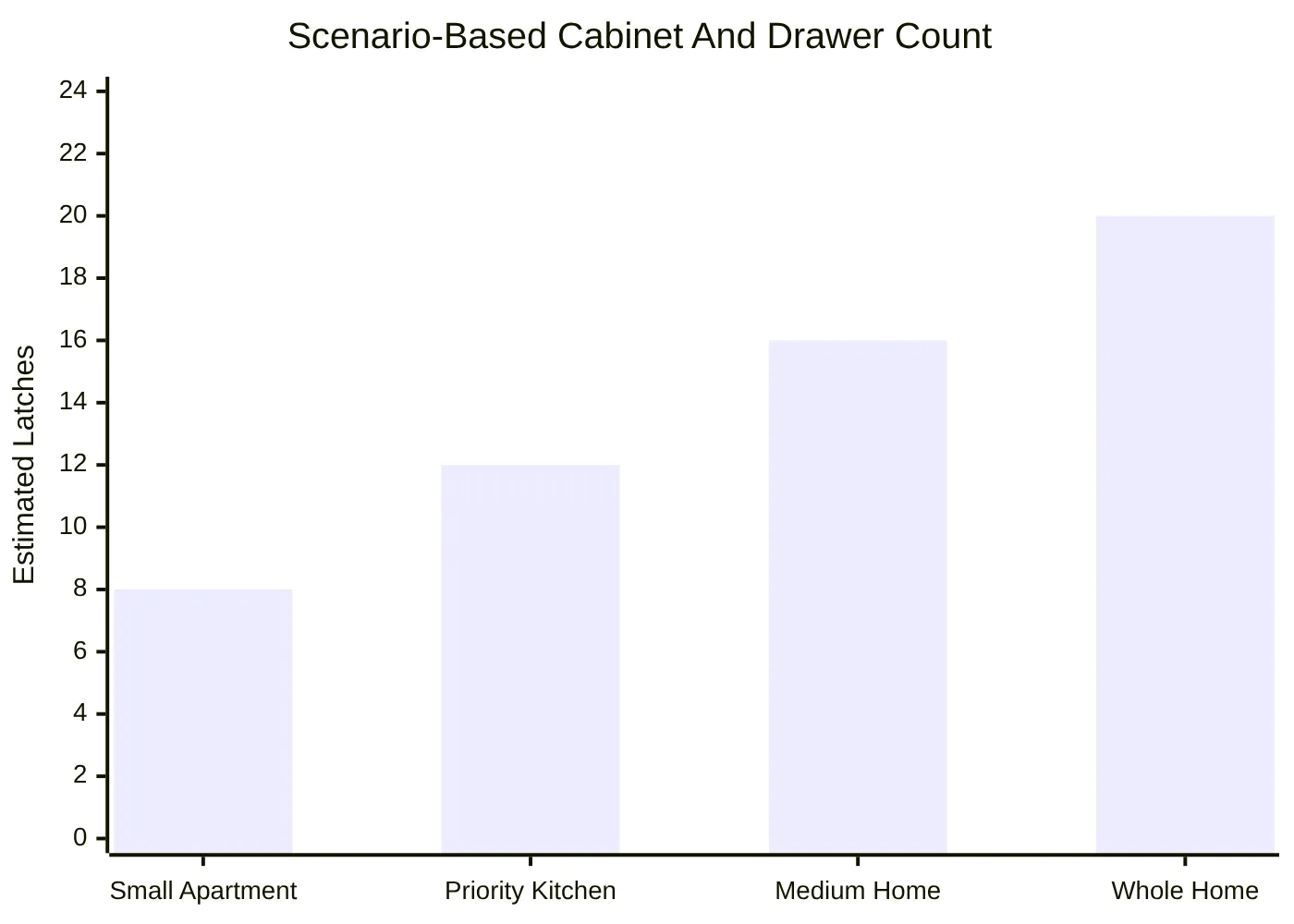
A practical rule: if your first count is close to the top of a pack size, size up. For example, if you count 11 or 12 priority spots, a 12 pack may work today, but it leaves little room for a second bathroom, a pantry drawer, or a newly discovered toddler favorite. If you count 15 or 16 spots, a 20 pack is often the less frustrating choice.
The Consumer Reports babyproofing checklist makes an important point parents should keep in mind: baby-proofing is layered. Cabinet latches help reduce access, but safer storage habits and supervision still matter.
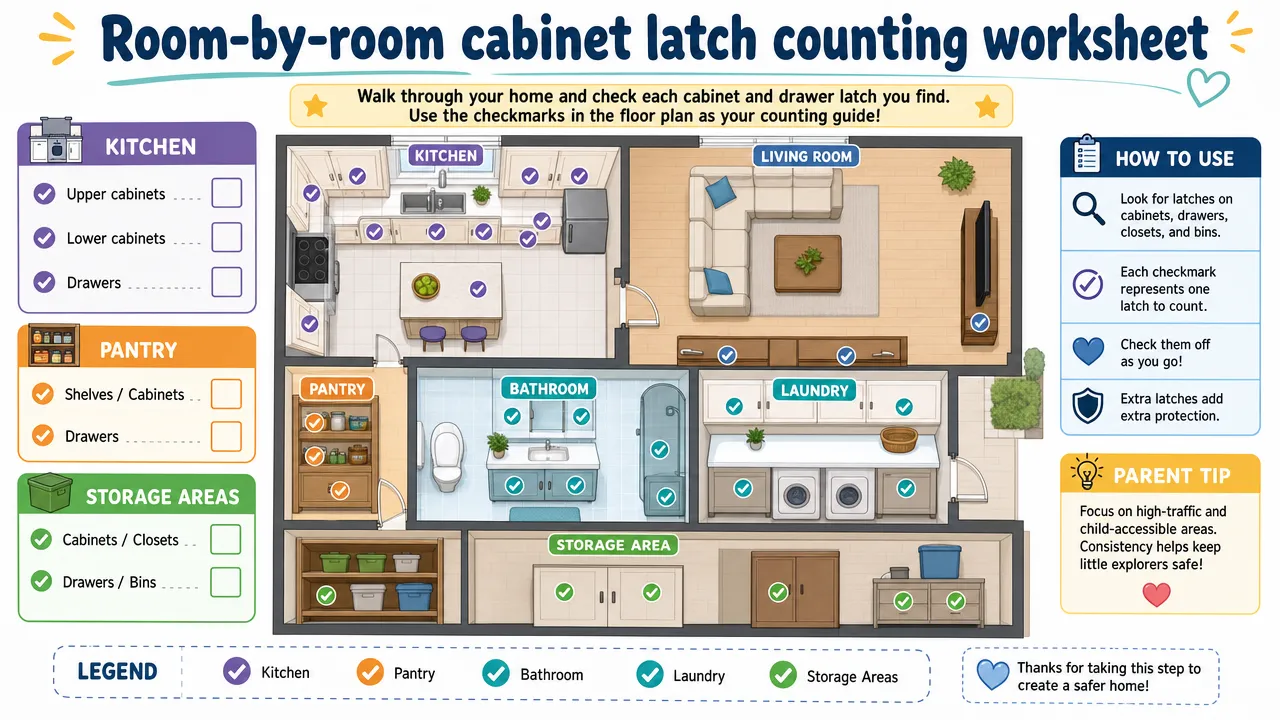
Magnetic cabinet locks pack size comparison: 4 pack vs 12 pack vs 16 pack
A 4 pack is not a bad choice. It is just a narrow choice. If you only need to secure one under-sink cabinet, one bathroom vanity, or a few drawers at a grandparent's house, a 4 pack magnetic cabinet locks search can make sense. It is low commitment and easy to understand.
The downside is that parents often count too optimistically. They count the obvious cabinet under the kitchen sink but forget the bathroom vanity, laundry detergent cabinet, low pantry shelf, utensil drawer, or drawer with small objects. That is how a 4 pack becomes a quick second purchase.
A 12 pack is the more practical starter size for many families. If you live in an apartment or smaller home, 12 pieces can often cover the most urgent zones: kitchen under-sink storage, a few lower kitchen cabinets, one bathroom vanity, and several drawers. This is where VMAISI Cabinet Locks Child Safety Latches 12 Pack fits naturally. It is a starter option for parents who want adhesive child safety cabinet latches for cabinets and drawers, with easy no-drill installation and optional screws when additional fixing is needed.
A 16 pack is the middle-ground option. It may fit a kitchen plus one or two bathrooms, or several cabinet and drawer zones in a medium-size home. But if your count includes laundry, pantry, storage cabinets, and future drawers, 16 can feel just short of comfortable.
That is why my opinion is simple: choose 12 when you are starting with priority areas, choose 16 only when your count truly stays within that range, and choose 20 when your plan crosses rooms.
Magnetic cabinet locks pack size and when 20 pieces make more sense
Even though the title question focuses on 4, 12, and 16 packs, many parents should also consider 20 pieces. Not because more is always better, but because whole-home baby-proofing uses latches faster than expected.
A 20 pack makes sense if:
- You counted 17 or more cabinet and drawer points.
- You have more than one bathroom.
- You want to secure kitchen, laundry, pantry, and storage areas.
- You want a few extras for future drawers or replacement needs.
- You prefer installing once instead of stopping halfway through the home.
For larger setups, VMAISI Cabinet Locks Child Safety Latches 20 Pack is the stronger whole-home recommendation. It is positioned for cabinets and drawers, offers easy no-drill adhesive installation, and includes upgraded stronger adhesive according to the product page. Optional screws are also available for parents who want additional fixing in certain locations.
To be clear, VMAISI's 12 Pack and 20 Pack products should be understood as adhesive child safety cabinet latches and no-drill cabinet locks for cabinets and drawers. Parents may arrive here after searching the phrase magnetic cabinet locks pack size, but the pack-size logic applies across adhesive cabinet locks, child safety cabinet latches, baby proofing cabinet locks, cabinet latches, and drawer safety locks.
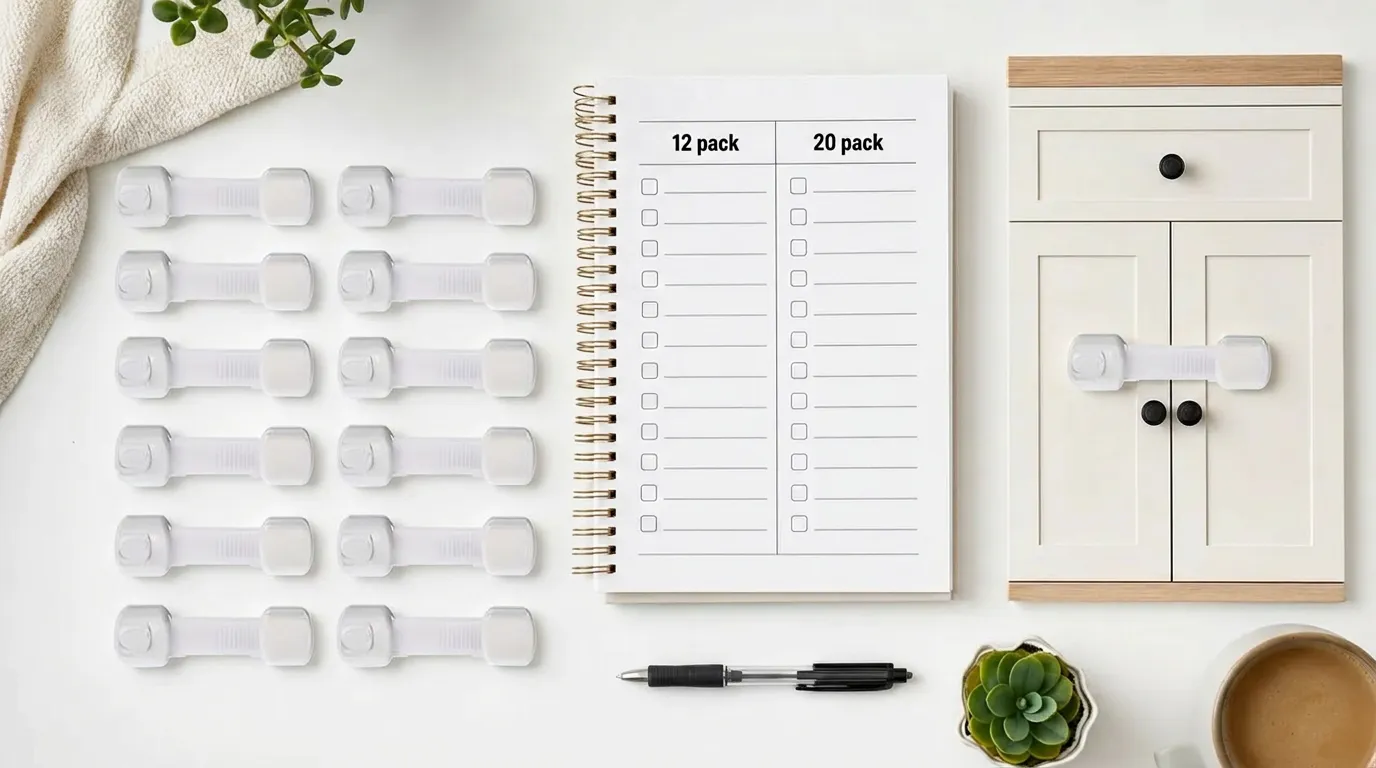
Magnetic cabinet locks pack size installation tips before you buy
Pack size is only half the decision. Installation matters, especially with adhesive cabinet locks and no-drill cabinet locks. A good latch can perform poorly if it is installed on a dusty, oily, wet, rough, or incompatible surface.
Before installing any child safety cabinet locks, use this checklist:
- Clean and dry the inside cabinet or drawer surface.
- Dry-fit the latch and catch before removing adhesive backing.
- Confirm the cabinet or drawer closes correctly.
- Press the adhesive firmly after placement.
- Allow bonding time before heavy pulling or repeated use.
- Use optional screws only where appropriate and only if you are comfortable making holes.
- Recheck latches regularly for peeling, cracking, or misalignment.
- Move the most dangerous items up and away whenever possible.
Adhesive cabinet locks are especially useful for renters or parents who do not want to drill into finished cabinetry. Screw-mounted products may be preferred in some high-use or long-term situations, but no-drill cabinet locks offer a convenient starting point for many families.
Also remember that drawer safety locks and cabinet latches are not a substitute for safe storage. Cleaning supplies, medicines, detergent pods, knives, scissors, batteries, and choking hazards should be moved out of reach when possible, not simply placed behind a latch.
Magnetic cabinet locks pack size final recommendation for parents
If I were advising a parent who has not counted yet, I would say this: do not buy by pack size first. Buy by room count.
Use this simple decision guide:
| Your count | Best choice | Why |
|---|---|---|
| 1 to 4 | 4 pack | Works for one small area or trial use. |
| 5 to 12 | 12 pack | Best starter range for priority cabinets and drawers. |
| 13 to 16 | 16 pack | Good medium coverage if you are confident the count stops there. |
| 17 or more | 20 pack | Better for whole-home coverage and future flexibility. |
For a smaller apartment, basic kitchen setup, or priority-risk project, choose the VMAISI Cabinet Locks Child Safety Latches 12 Pack. It is the practical starter option for parents securing several cabinets or drawers without overbuying.
For a medium or larger home, or if you are baby-proofing kitchen cabinets, bathroom cabinets, drawers, laundry storage, pantry spaces, and storage cabinets, choose the VMAISI Cabinet Locks Child Safety Latches 20 Pack. It gives broader coverage and reduces the chance of running out mid-installation.
My final opinion: a 4 pack is useful for one small zone, 12 pack cabinet locks are the best starter choice for many parents, 16 pack cabinet locks can work for medium coverage, and a 20 pack is usually the better fit once your home audit includes multiple rooms. Count first, prioritize the highest-risk spots, and choose the pack that leaves you with enough coverage to finish the job calmly.