 Skip to content

Best Child Locks for Medicine Cabinets That Last
The best child locks for medicine cabinet safety create a durable barrier between curious toddlers and everyday bathroom hazards, but they work best as one layer in a larger safe-storage routine. Are you worried your newly crawling baby could reach the bathroom cabinet before you have time to check what is inside? That concern is reasonable, especially when a medicine cabinet may hold prescriptions, over-the-counter medicine, vitamins, supplements, razors, cosmetics, or small items that look harmless to adults but attract young children.
For most standard wood or composite medicine cabinets, hidden magnetic cabinet locks are the strongest everyday choice because they are concealed, convenient for adults, and harder for toddlers to study. For mirrored, glass, metal, frameless, rental, or awkward bathroom cabinets, adhesive strap locks may fit better. For high-risk medicines, use a second locked layer, such as a lockable medicine box inside a locked cabinet.

How the best child locks for medicine cabinet safety reduce access to bathroom hazards
Medicine cabinets need more than child-resistant caps because toddlers do not understand risk, and many bathroom items are stored together. A single shelf can hold prescription medicine, gummy vitamins, pain relievers, supplements, nail scissors, razors, cosmetics, and personal-care products. A lock helps slow access, but it should never be treated as a guarantee.
The U.S. Consumer Product Safety Commission recommends safety latches and locks on cabinets and drawers to help keep children from accessing medicines, household cleaners, and sharp objects, while also noting that safety devices do not replace supervision. Safe Kids Worldwide also advises families to keep medicines out of children's sight and reach, not on counters, nightstands, or inside bags where children may explore them.
A strong routine looks like this:
| Safety layer | Why it matters | Parent-friendly habit |
|---|---|---|
| Store up and away | Height reduces easy access | Keep medicines above child reach, not in lower cabinets |
| Keep items out of sight | Visible bottles can invite curiosity | Close doors and avoid leaving medicine on the counter |
| Use a medicine cabinet child lock | A lock helps reduce quick access | Relock the cabinet every time |
| Keep original containers | Labels and child-resistant caps matter | Avoid loose pills in unlabeled bags |
| Add locked storage for higher-risk items | One more barrier helps with dangerous medicines | Use a lockable medicine box inside a locked area |
| Know emergency steps | Fast action matters in a suspected exposure | In the U.S., call Poison Help at 1-800-222-1222 |
For more step-by-step safety habits, Vmaisi's guide on how to secure a medicine cabinet safely is a useful companion to this product review.
What the best child locks for medicine cabinet use are by cabinet type
The best lock depends on your cabinet material, door style, and how often adults need access. A lock that works beautifully on a wood cabinet may not fit a mirrored or metal cabinet. A no-drill adhesive product may be ideal for a rental bathroom, but only if the surface is clean, dry, smooth, and checked regularly.
| Cabinet type or need | Best lock style | Why it fits | Vmaisi option |
|---|---|---|---|
| Standard wood or composite medicine cabinet | Hidden magnetic lock | Concealed inside the cabinet and easy for adults with the key | Vmaisi magnetic cabinet locks |
| Multiple cabinets and drawers | Magnetic lock multi-pack | Helps secure bathroom, kitchen, and storage areas consistently | 16-pack magnetic child safety cabinet locks |
| Mirrored, glass, metal, or frameless cabinet | Adhesive strap lock | External strap can bridge surfaces that internal locks may not fit | Vmaisi multi-use adhesive strap locks |
| Rental bathroom | No-drill adhesive lock | Avoids drilling when surface compatibility is suitable | Vmaisi multi-use child safety locks |
| High-risk medications | Cabinet lock plus lockable box | Adds a second barrier for medicines that need stricter control | Follow medication safety guidance from Children's Mercy |
For a standard medicine cabinet, magnetic locks are usually the best balance of durability, appearance, and adult convenience. The Vmaisi magnetic cabinet locks collection is the primary product landing page to review if your cabinet is wood or composite and has enough interior space for the lock body and catch.
The 16-pack magnetic child safety cabinet locks are especially practical for parents who want to secure a medicine cabinet plus bathroom drawers, kitchen cabinets, or other storage areas at the same time. During CMS setup, use the main product image from that product page as the corresponding product image. Suggested alt text: Vmaisi magnetic child safety cabinet locks for medicine cabinet.
Why the best child locks for medicine cabinet durability depend on installation
A durable child lock is not just a stronger piece of plastic or a better adhesive pad. Durability comes from choosing the right style for the surface, installing it correctly, letting adhesive bond when required, and inspecting it after real bathroom use. Bathrooms add extra stress because of humidity, cleaning products, wet hands, steam, and frequent opening.
For adhesive locks and strap locks, surface preparation is essential. Clean away dust, soap film, lotion residue, and moisture. Let the surface dry completely. Press firmly during installation, and avoid heavy pulling before the adhesive has had time to set according to the product instructions. Careful removal may reduce residue or finish damage, but no adhesive product should be described as universally damage-free.
For magnetic locks, alignment is the most common make-or-break detail. The latch must catch reliably, the magnetic key must work through the cabinet door, and the key should be stored high, out of sight, and away from children. If you have an unusual cabinet shape, Vmaisi's article on magnetic locks for corner cabinets can help you think through fit and placement. Parents who prefer no-drill installation may also find this guide to magnetic cabinet locks without screws useful.
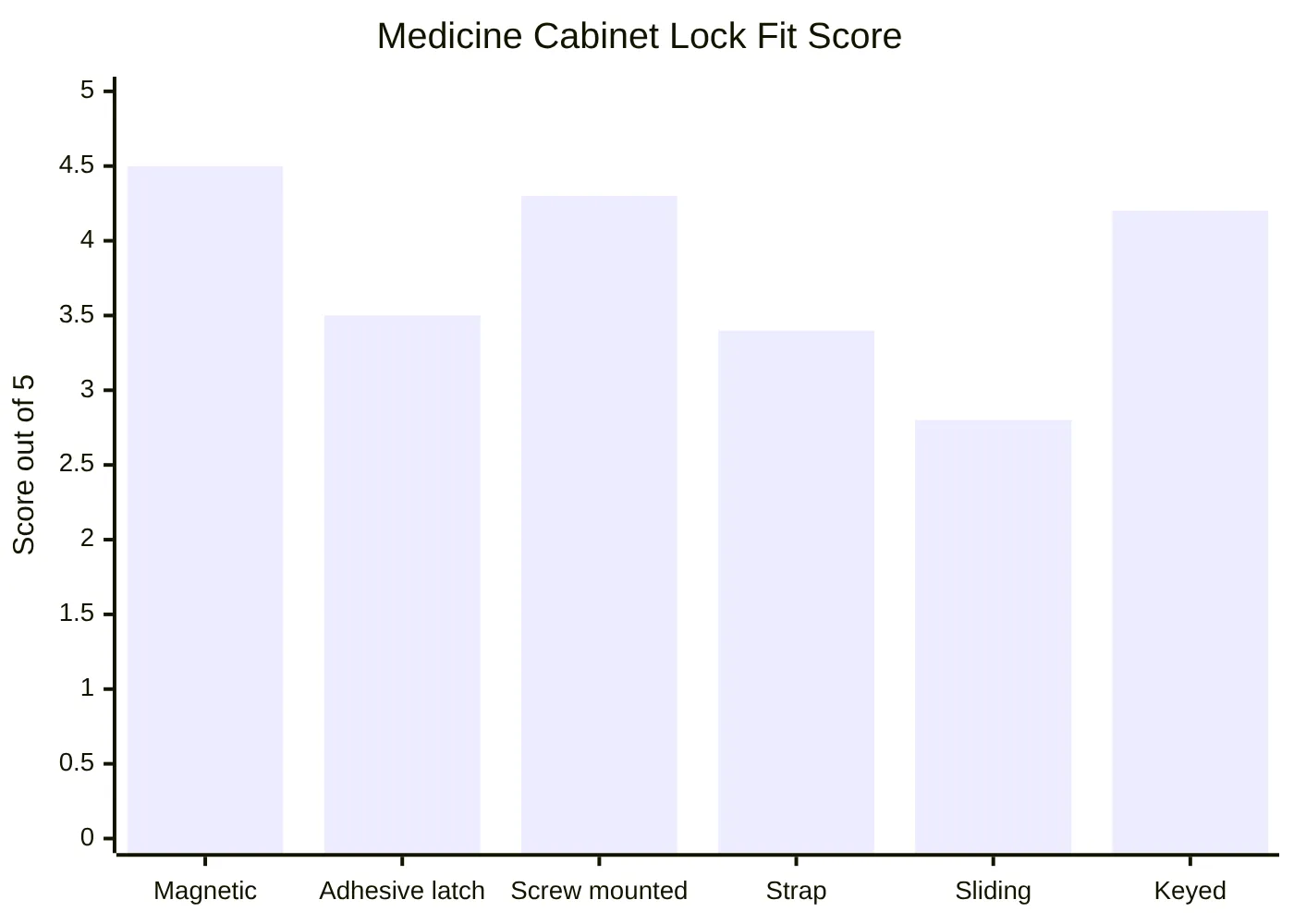
Replace or reinstall a lock if the adhesive edge lifts, the latch shifts, the cabinet opens farther than before, plastic cracks, the strap stretches, or your child starts defeating the mechanism. A lock that worked last month may not be reliable after humidity, cleaning, hinge changes, or repeated toddler pulling.
Where the best child locks for medicine cabinet routines fit with child safety locks for toilet seat
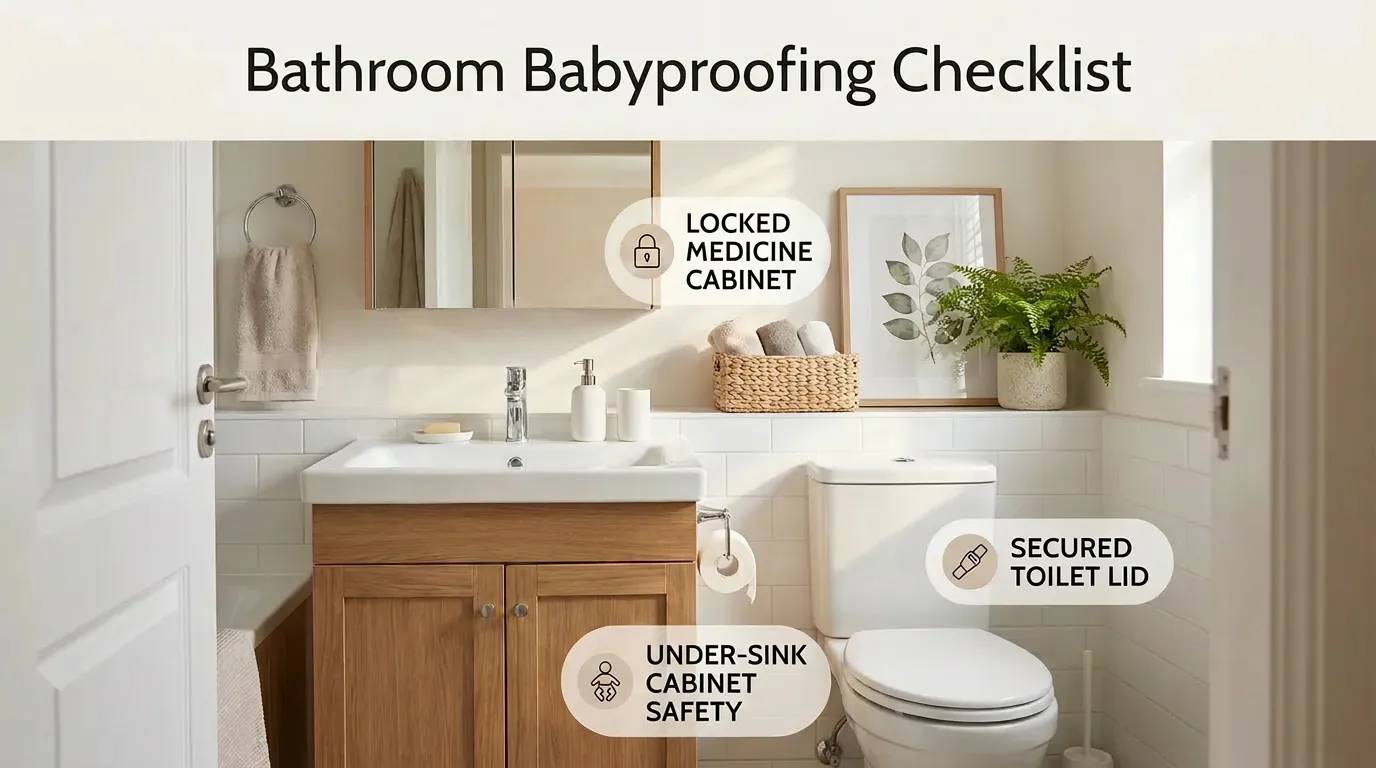
Bathroom safety rarely stops at the medicine cabinet. Once a child starts crawling, cruising, or walking, the toilet lid, trash can, under-sink cabinet, drawers, and lower shelves may all become points of interest. That is why many parents compare child safety locks for toilet seat areas at the same time they secure medicine storage.
Medicine cabinet locks and toilet seat locks solve different problems. A medicine cabinet lock helps reduce access to stored items such as medicine, vitamins, razors, and cosmetics. A toilet seat lock helps reduce lid lifting and bathroom exploration. Both depend on proper installation, adult consistency, and regular checks.
| Bathroom area | Main concern | Lock approach |
|---|---|---|
| Medicine cabinet | Medicines, supplements, sharp tools, cosmetics | Magnetic lock, internal latch, screw-mounted lock, or strap lock |
| Toilet seat | Lid lifting, water access, bathroom play, germs | Dedicated toilet lock or suitable multi-use strap |
| Under-sink cabinet | Cleaning products, toiletries, trash bags | Cabinet lock matched to door style |
| Bathroom drawers | Grooming tools, small choking hazards | Magnetic or adhesive drawer lock |
| Trash can | Used personal-care products, small items | Multi-use strap or move can out of reach |
The Vmaisi multi-use adhesive strap locks product page directly references use on drawers, fridge, dishwasher, toilet seat, cupboard, oven, and trash can applications. That makes it a practical secondary landing page for parents who need a flexible no-drill option in the bathroom and around the home. During CMS setup, use the main product image from that page as the corresponding product image. Suggested alt text: Vmaisi multi-use adhesive strap lock for toilet seat and bathroom safety.
For more bathroom-specific context, Vmaisi also has a related guide to child safety locks for toilet seat. If you are extending babyproofing beyond the bathroom, the guide to child safety locks for fridge and oven explains how multi-use locks can fit other household surfaces.
Which best child locks for medicine cabinet option should parents choose?
Choose hidden magnetic locks for most standard wood or composite medicine cabinets. They offer the best balance for daily family use because they stay out of sight, preserve the cabinet's exterior appearance, and make it harder for toddlers to pull directly on the lock. For many parents, the most practical first choice is Vmaisi magnetic cabinet locks, especially when securing more than one cabinet or drawer.
Choose adhesive strap locks when the cabinet is mirrored, glass, metal, frameless, curved, or rental-sensitive. Strap locks are more visible, so toddlers may notice them, but they can solve fit problems that internal locks cannot. The best secondary option is Vmaisi multi-use adhesive strap locks, especially if you also need a flexible lock for a toilet seat, trash can, or appliance.
For high-risk medication storage, do not rely on a cabinet lock alone. Follow guidance from sources such as Children's Mercy medication safety and add a lockable medication box or dedicated locked storage when appropriate. Keep medicines in original containers, store them up and away, and make sure every caregiver knows the routine.
Quick buying checklist:
| Question | Best answer |
|---|---|
| Is the medicine cabinet wood or composite? | Start with a magnetic cabinet lock |
| Is it mirrored, glass, metal, or frameless? | Consider an adhesive strap lock |
| Are you renting? | Use no-drill options only after checking surface compatibility |
| Does the cabinet hold high-risk medicines? | Add a lockable medicine box inside locked storage |
| Will adults relock it every time? | Choose the lock adults can use consistently |
| Is the bathroom humid or frequently cleaned? | Inspect adhesive and latch points often |
| Has the lock loosened or become easy to defeat? | Replace it immediately |
Child locks are safety aids, not substitutes for supervision, safe storage, or emergency readiness. The most dependable setup combines a suitable lock, careful installation, regular inspection, and strong medicine habits. For U.S. families, if you suspect a child has swallowed medicine or another harmful substance, call Poison Help at 1-800-222-1222, or contact emergency services if symptoms are severe.