

When a Longer Cabinet Latch Is Needed for Wide Gaps
Are you worried that your toddler might open an unsafe cabinet or drawer, but the visible space around it makes you wonder whether a different latch is needed? A longer cabinet latch wide gaps search often starts with a reasonable concern, but the gap you can see is not always the measurement that decides fit.
A longer latch may help only when the actual distance between two compatible mounting points is the problem. It will not solve limited interior space, poor alignment, uneven adhesive contact, or a drawer that cannot close normally. The practical approach is to inspect the inside of each cabinet or drawer before choosing a child-safety solution.
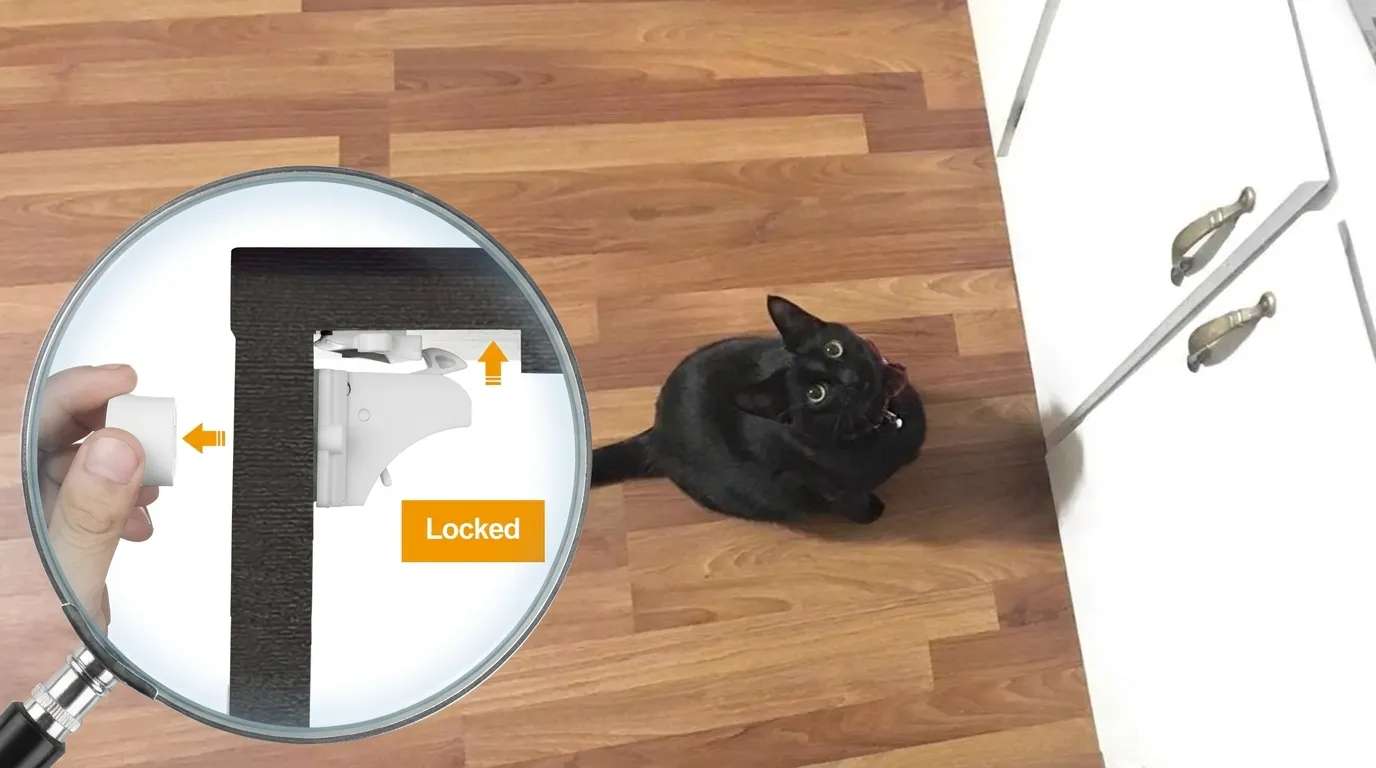
Does a longer cabinet latch wide gaps concern always mean more reach is needed?
Not necessarily. The seam between cabinet doors may look wide from the outside, yet an internal latch can still fit if the latch and catch have flat surfaces, align correctly, and allow the door to close. On the other hand, a narrow-looking exterior seam can hide a difficult interior layout.
For longer cabinet latch wide gaps decisions, focus on functional fit rather than appearance:
| Fit factor | What to inspect | Why it matters |
|---|---|---|
| Interior mounting area | Flat, accessible surfaces inside the cabinet or drawer | Adhesive components need full, stable contact |
| Latch and catch position | Where the parts meet when closed | They must align and engage consistently |
| Closing path | Door swing or drawer travel | The cabinet or drawer must close and operate normally |
| Cabinet construction | Face frames, recessed doors, hinges, shelves, and slides | These can restrict placement or block movement |
| Surface condition | Dust, grease, moisture, peeling paint, texture, or damage | Surface condition can affect adhesive contact |
Think of the visible gap as a clue, not a diagnosis. A cabinet latch for wide gap concerns should begin with an inside-the-cabinet inspection.
A longer latch may help only when the actual reach between compatible mounting points is the issue. Check the exact product instructions and confirm that the door or drawer can still close, align, and operate normally.
How to assess longer cabinet latch wide gaps before buying
Before buying adhesive cabinet locks, open the cabinet or drawer fully and assess the location where the latch would actually be installed. This simple check can prevent an adhesive latch from being placed on an unsuitable surface or in the path of moving hardware.
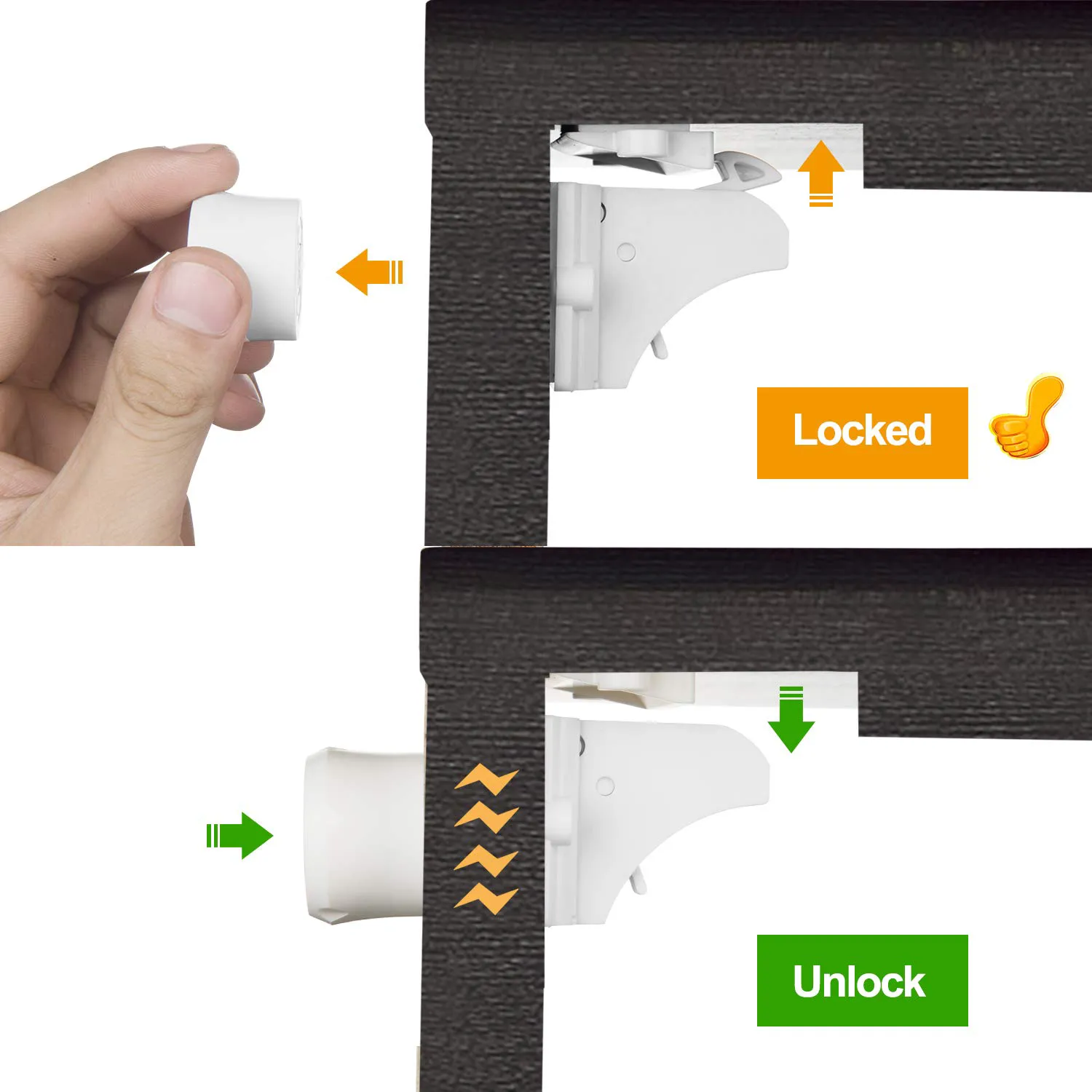
Vmaisi Baby Proofing Magnetic Cabinet Locks 12 Pack - Childproof your house
Use this parent-friendly checklist:
-
Identify priority storage first. Start with reachable cabinets and drawers that hold cleaning supplies, medicines, laundry products, sharp tools, batteries, or small objects. The U.S. Consumer Product Safety Commission childproofing guidance recommends safety latches and locks as part of a broader home-safety approach.
-
Look past the exterior seam. Check the distance between the proposed latch and catch locations inside the cabinet when the door or drawer is closed.
-
Find two usable mounting surfaces. Each component needs a clean, dry, reasonably flat interior area. A latch cannot perform as intended if only part of its adhesive area contacts the surface.
-
Dry-fit before applying adhesive. Hold the latch and catch in position without removing the backing. Slowly close the door or drawer and check for normal movement.
-
Check for interference. Look for hinges, face frames, pull-out shelves, pipes, dividers, drawer slides, or bumpers that could prevent engagement.
-
Confirm adult access. The manual latch operation should remain reachable and practical for adults in daily use.
-
Follow the instructions for the exact product selected. Do not apply a measurement, curing time, or compatibility claim from another product to your chosen cabinet latches.
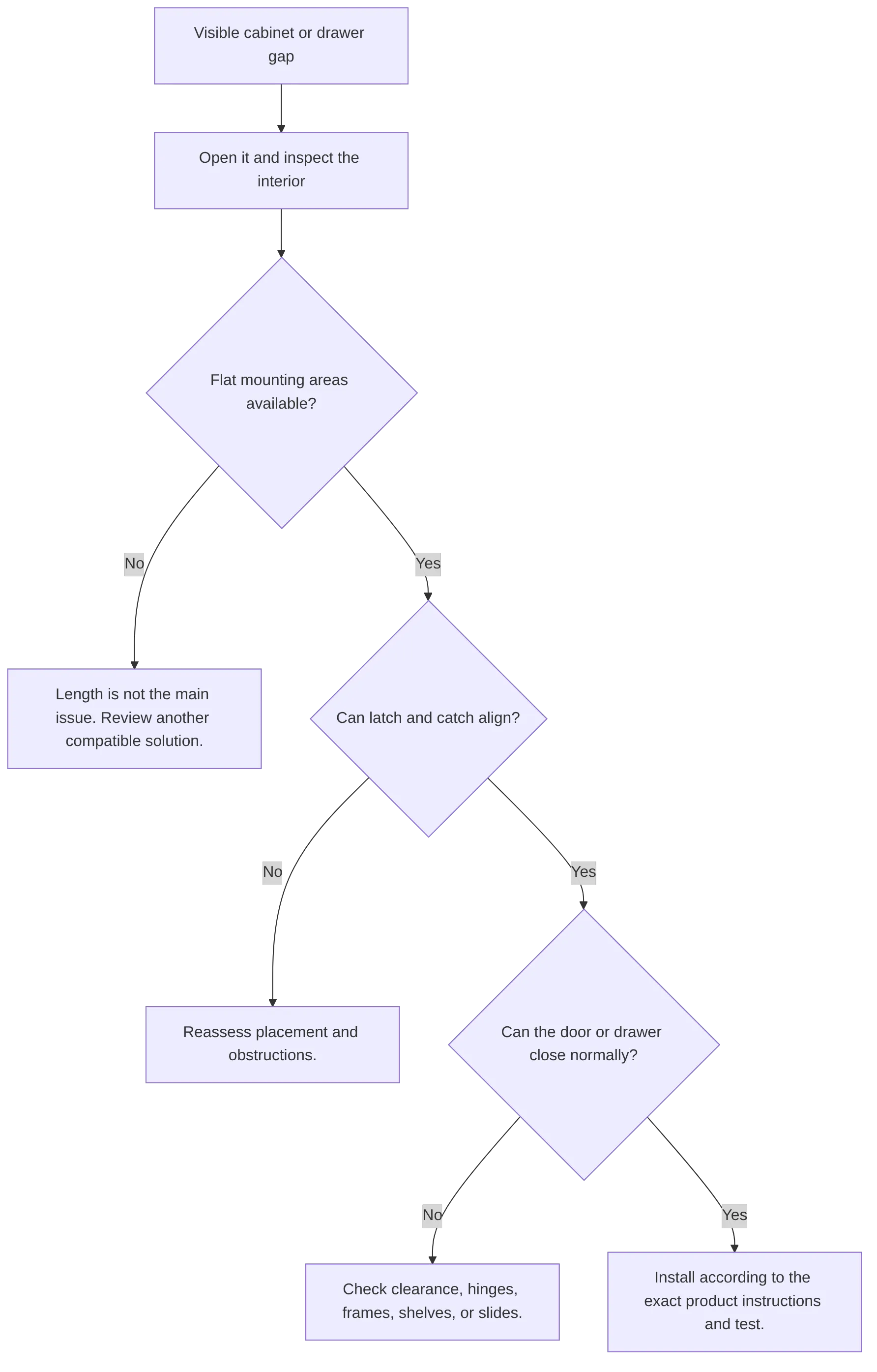
When longer cabinet latch wide gaps are not the real problem
It is easy to assume that a latch that will not engage needs more length. In many homes, however, another fit issue is responsible. Solving that issue first is more useful than choosing based on a generic wide-gap description.
| What you notice | Likely issue | Better next step |
|---|---|---|
| Adhesive edges lift or shift | Dust, grease, dampness, texture, or a damaged finish | Reassess the surface and follow product preparation guidance |
| Drawer will not close | Latch placement interferes with drawer travel | Dry-fit again and check the closing route |
| Latch catches only sometimes | Latch and catch are misaligned | Reposition only as the instructions allow |
| Door hits the latch or frame | Limited interior clearance or hardware interference | Select another permitted placement or compatible format |
| Recessed cabinet area has little flat space | Limited mounting surface, not reach | Verify exact product compatibility before applying adhesive |
| Parts are too far apart after a correct dry-fit | Functional reach may be the issue | Check a product designed and documented for that measured configuration |
A longer design cannot create a flat adhesive surface, remove a hinge from the way, or correct a catch that misses its target. This is why careful inspection matters for no-drill cabinet locks and drawer safety locks.
Choosing longer cabinet latch wide gaps solutions for your baby-proofing plan
Once a cabinet or drawer passes the fit check, choose pack size based on the number of locations you plan to secure. Pack size does not change latch reach or guarantee compatibility, but it can make a focused or whole-home project easier to plan.
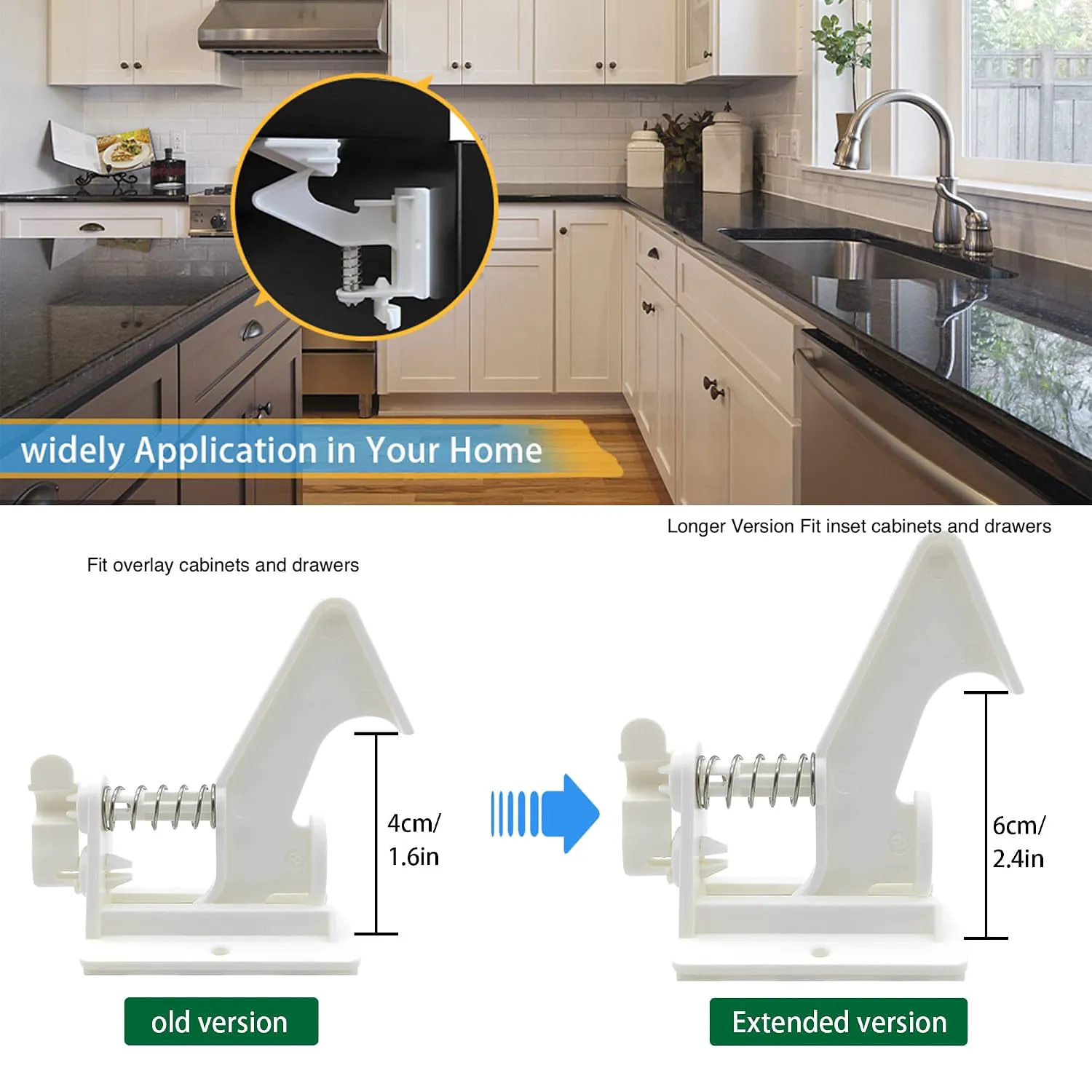
Cabinet Locks Child Safety Latches - VMAISI 12 Pack Baby Proofing Cabinet Locks
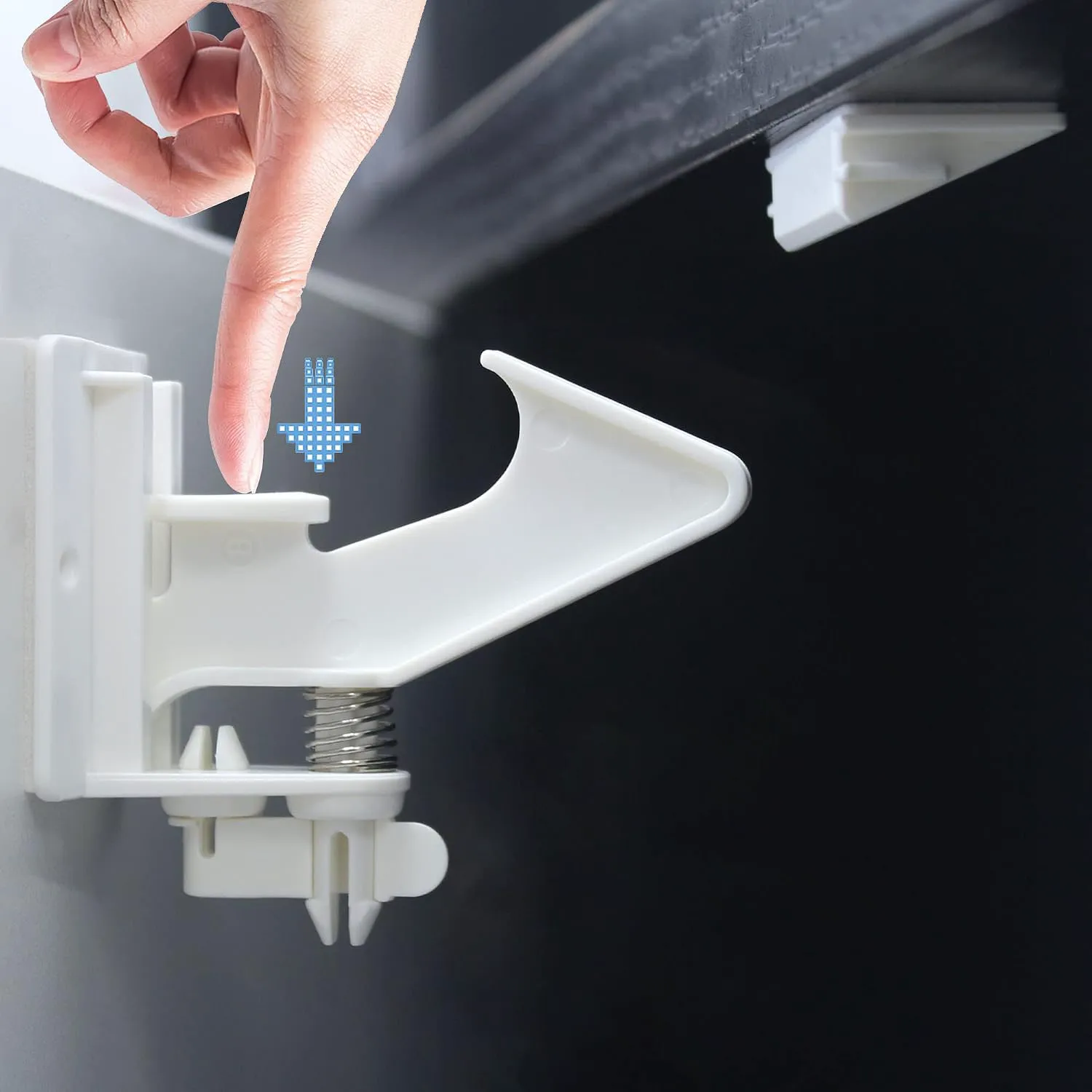
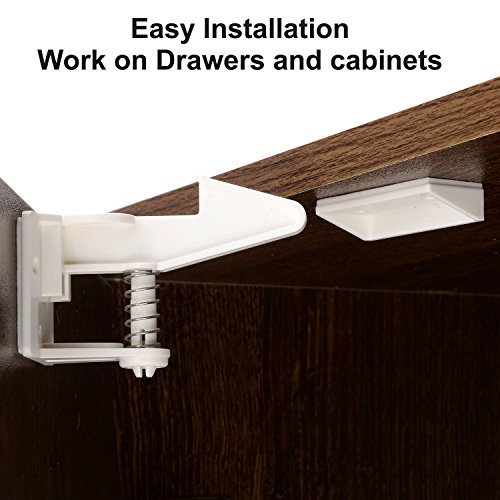
For a smaller number of priority cabinets and drawers, consider the VMAISI Cabinet Locks Child Safety Latches 12 Pack. This internal adhesive, no-drill option is positioned for basic coverage, such as an under-sink cabinet, a bathroom vanity, or a few low kitchen drawers.
For multiple cabinets and drawers across several rooms, consider the VMAISI Cabinet Locks Child Safety Latches 20 Pack. It is positioned for broader coverage and has stronger-adhesive positioning for parents planning a larger baby-proofing project.
| Project scope | Practical option to consider | Important reminder |
|---|---|---|
| A few high-priority cabinets or drawers | VMAISI Child Safety Latches 12 Pack | Verify fit at every location |
| Kitchen plus bathroom coverage | VMAISI Child Safety Latches 20 Pack | Count each compatible cabinet and drawer separately |
| Multiple rooms or whole-home planning | VMAISI Child Safety Latches 20 Pack | More latches do not resolve clearance or alignment issues |
Both options are internal adhesive child safety latches with manual latch operation and no-drill installation. Clean and dry the interior surface, align the latch and catch, apply the adhesive as directed, and test before regular use.
If you are comparing no-drill approaches more broadly, this guide to adhesive child safety latches can help you think through surface preparation, fit, and project scope without assuming every cabinet has the same construction.
Cabinet Locks Child Safety Latches - VMAISI 12 Pack Baby Proofing Cabinet Locks
How longer cabinet latch wide gaps planning supports safer storage
A compatible latch can add a useful layer of protection, but it should work alongside safer storage habits. The American Academy of Pediatrics home-safety guidance advises families to place safety locks on cabinets containing cleaning fluids or other dangerous items and to keep medications out of reach.
Start with locations that are both reachable and more likely to contain hazards:
| Area | Check first | Safer-storage step |
|---|---|---|
| Kitchen | Under-sink cabinets, sharp-tool drawers, low pantry cabinets | Move cleaners and sharp items up and out of reach when possible |
| Bathroom | Vanity cabinets, low drawers, medicine storage | Keep medications and cleaning products secured and out of reach |
| Laundry area | Detergent and cleaning-product storage | Keep products in original containers and secure low storage |
| Utility or storage area | Tool drawers, batteries, hardware, and chemicals | Reduce access to small objects and potentially unsafe items |
Child safety cabinet latches can help reduce access to selected cabinets and drawers, but they do not replace adult supervision, safer storage, or keeping hazardous items locked away and out of reach. Recheck your setup as your child becomes more mobile, curious, and able to reach new areas.
Do I need a longer latch for a wide cabinet gap?
Only if you confirm that the actual distance between compatible latch and catch mounting points is the problem. Check interior surfaces, clearance, alignment, and normal closing movement first.
Is the visible space between cabinet doors the most important measurement?
No. The more useful measurements are inside the cabinet: the usable flat mounting areas, the latch-to-catch relationship, and the door or drawer movement path.
Can a longer latch fix a drawer that will not close?
Usually not. A drawer that will not close often has a clearance, obstruction, or alignment issue. Dry-fit the parts and inspect drawer slides, frames, and interior space.
Should I choose the 12 Pack or 20 Pack?
Choose the 12 Pack for smaller or basic coverage needs. Choose the 20 Pack when you have multiple cabinets and drawers across several rooms. In either case, confirm fit before installation.