

How to Remove Tight Outlet Covers Without Damaging the Receptacle
To remove a tight child-safety outlet cover, use only the cover's intended adult grip or release method and pull straight outward with slow, controlled pressure. Stop immediately if the receptacle or wall plate moves, cracks, feels hot, shows discoloration, smells burned, buzzes, sparks, or appears damaged.
A plug-in cover can be deliberately difficult for an adult to remove. A loose wall plate or receptacle is a separate mechanical or electrical problem. Do not apply extra force to solve outlet movement. Electrical faults and repairs require a qualified electrician. In a rental, report the condition to the landlord or property manager.
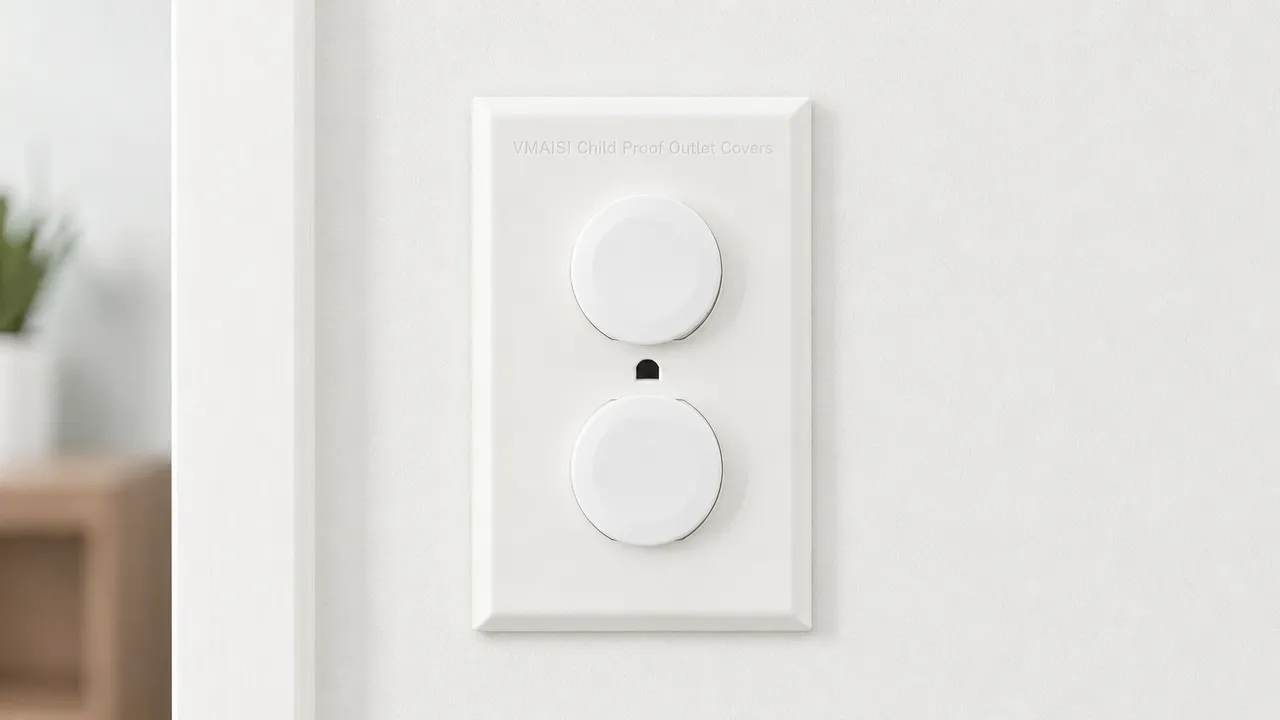
Remove a tight child-safety outlet cover: Stop conditions
Inspect the outlet area before touching a stuck outlet cover. The wall plate should sit flat against the wall. The receptacle should not shift when the cover is lightly touched. The cover should be cool, intact, and free of distortion.
Do not attempt child-safety outlet cover removal if you observe any of these conditions:
- The wall plate is cracked, loose, broken, or lifting away from the wall.
- The receptacle moves inside the wall or moves with the cover.
- The cover, plate, or receptacle has cracks, chips, melting, or discoloration.
- The outlet cover or wall plate feels hot or unusually warm.
- There is a burning or overheated-plastic odor.
- You hear buzzing, sizzling, or crackling.
- You see smoke or sparks.
- A normal plug pulls out of the receptacle easily.
The U.S. Consumer Product Safety Commission identifies heat, buzzing or sizzling, burning odors, sparks, and loose plug fit as electrical warning signs. See its electrical safety warning guidance. ESFI also advises using a qualified electrician for warm outlets, discoloration, buzzing, or a burning smell in its electrical safety recommendations.
Do not remove the wall plate, tighten outlet parts, or disassemble the receptacle. Turning off a breaker does not make prying, repair, or outlet disassembly appropriate for an unqualified person.
Remove a tight child-safety outlet cover: Hands-only procedure
Use this procedure only when the cover, wall plate, and receptacle appear stable, undamaged, cool, and free of warning signs.
-
Prepare the area. Keep children away from the outlet. Dry your hands fully. Move liquids, damp cloths, and unstable objects away from the work area.
-
Inspect the cover. Check for cracks, chewing damage, bending, splitting, or distortion. Do not pull a damaged plug-in outlet cover. A damaged cover can break during removal.
-
Identify the intended adult grip. Look for a molded edge, pull tab, exterior lip, or documented release method. Use only the cover's intended exterior grip and the instructions for that exact product.
-
Keep fingers outside the openings. Do not insert fingers into the receptacle slots. Do not press objects under the cover edge.
-
Brace only as product instructions allow. Some cover instructions may identify an exterior point for adult handling. Follow that method exactly. Do not press hard on the wall plate or receptacle to counter the pulling force.
-
Apply straight outward pressure. Grip the intended removal area. Pull directly away from the wall with slow, steady pressure. Keep your hand aligned with the cover to avoid levering it sideways.
-
Pause at unexpected resistance. Stop if the cover bends, the wall plate flexes, the receptacle shifts, or the required force increases sharply. Do not twist, rock aggressively, jerk, or repeatedly yank the cover.
-
Inspect after removal. Confirm that the wall plate remains flat and the receptacle remains stable. Check for cracks, scorch marks, looseness, odor, or damaged cover parts.
-
Store the cover securely. Put the removed cover where a child cannot reach it. Do not leave it on the floor, on furniture near a crib, or in a play area.
Remove a tight child-safety outlet cover: Normal resistance or outlet damage
A tight fit alone does not prove that a cover is stuck. Plug-in outlet covers are designed to stay in compatible receptacles and can require deliberate adult handling. Normal resistance occurs when the cover stays intact, the wall plate remains still, and the receptacle does not move.
Use the following distinction before applying more pressure.
| Condition | What it indicates | Required action |
|---|---|---|
| Cover releases slowly with a straight pull | Expected resistance | Continue with controlled hands-only pressure |
| Cover bends, cracks, or deforms | Damaged cover or poor fit | Stop and replace the cover after the outlet is inspected |
| Wall plate flexes, lifts, or cracks | Mechanical problem | Stop and arrange qualified assistance |
| Receptacle shifts in the wall | Loose or damaged outlet assembly | Stop using the outlet and contact a qualified electrician |
| Heat, odor, buzzing, or sparks | Possible electrical fault | Stop use and seek qualified help promptly |
A mechanically loose receptacle is not an extra-secure cover. Do not try to hold the plate in place while pulling harder. A loose outlet requires professional assessment.
CPSC advises discontinuing use of a hot receptacle or switch and obtaining qualified help as soon as possible. Review its home wiring hazard guide for electrical warning signs and response guidance.
Remove a tight child-safety outlet cover: Unknown release methods
Do not guess how an unfamiliar cover is meant to release. A stuck outlet cover may have a specific pull direction, exterior tab, or adult-only handling method. Use the original packaging, instruction sheet, or verified manufacturer guidance for the exact cover.
If the intended method is unknown, leave the cover in place until you can confirm it. Do not treat a similarly shaped cover from another brand as an instruction source.
Never use a knife, screwdriver, key, pliers, coin, or any other metal tool near receptacle openings. Do not use plastic items as wedges. Do not pry beneath the cover edge. Tools can crack the wall plate, deform the cover, loosen the receptacle, or create an electrical hazard.
If a cover remains stuck after one careful hands-only attempt using its intended method, stop. Contact the manufacturer for verified instructions if the outlet assembly is stable and undamaged. Contact a qualified electrician if the cover, wall plate, or receptacle is damaged, loose, hot, or otherwise questionable.
For a current Vmaisi option, see the Vmaisi Plug-In Outlet Cover. Use it only in a compatible, undamaged, unused receptacle, and follow the instructions for the exact cover in use. It is supplemental child-safety protection, not a way to repair or stabilize an unsafe outlet.
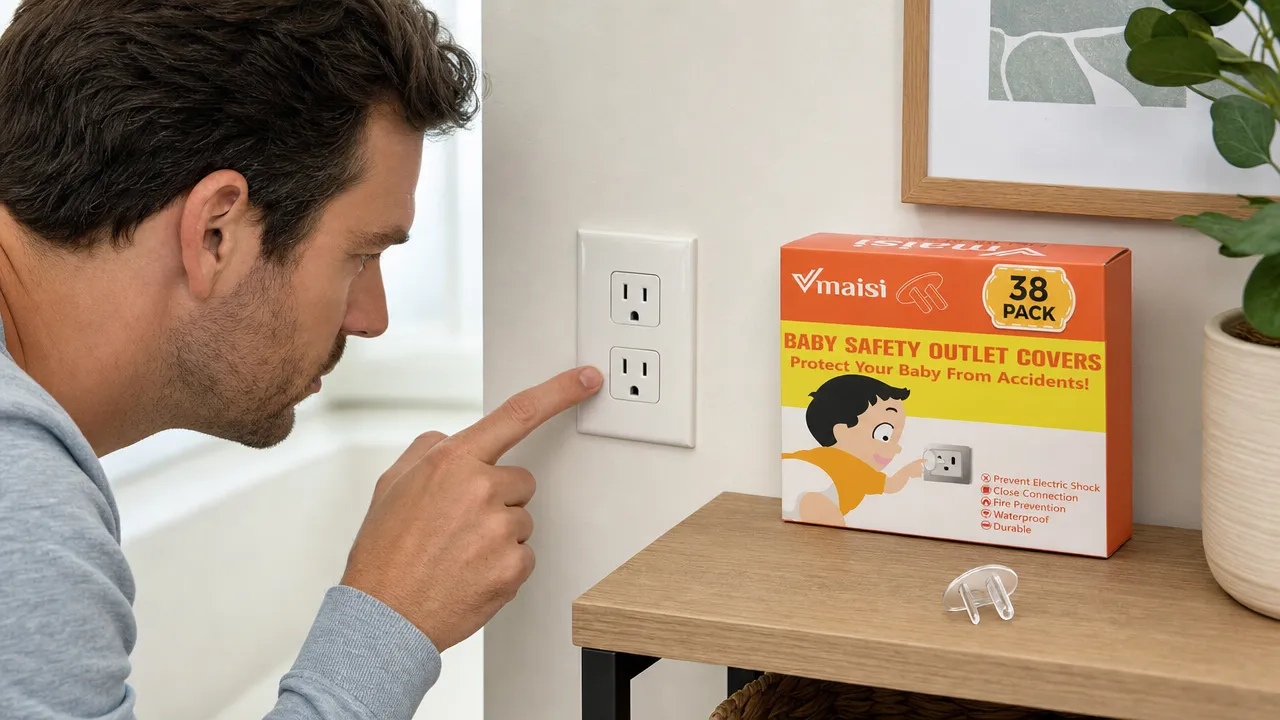
Remove a tight child-safety outlet cover: Prevention checks
Use plug-in covers only on compatible, undamaged, unused receptacles. Check the fit before relying on a cover in a child's area. The cover should sit normally without cracking, distortion, or an unusual need for force during installation.
Inspect covers and outlets regularly. Replace a cover that is split, deformed, chewed, loose, or difficult to remove by its intended method. Stop using any outlet with visible damage or electrical warning signs.
Avoid plug-in covers on outlets that adults use frequently. Repeated removal and reinstallation can lead to rushed handling and can make changes in the outlet condition easier to miss. Select an outlet-use plan that does not require frequent cover removal.
Plug-in covers are temporary or supplemental protection for compatible, undamaged, unused receptacles. They do not provide a childproof guarantee and do not replace active adult supervision. ESFI notes that removable caps should not be treated as adequate standalone protection in its outlet safety guidance.
For a more permanent option, ask a qualified electrician about tamper-resistant receptacles. These receptacles have built-in shutters that help block foreign objects from entering the slots. ESFI explains their operation in its tamper-resistant receptacle overview.
For a broader room-by-room review of overlooked safety needs, see babyproofing items parents often miss.