

Clear vs White Outlet Covers: Which Is Easier to Live With?
Are you trying to make your home feel polished and child-ready without turning every wall into a visual distraction? When comparing clear vs white outlet covers, the practical answer is usually simple: white is easier for everyday living, while clear can be the better design choice on colorful or patterned walls.
One important distinction comes first. A decorative outlet cover plate surrounds the receptacle. It does not block the openings where a child could insert an object. Outlet appearance and outlet safety should be treated as two separate decisions.
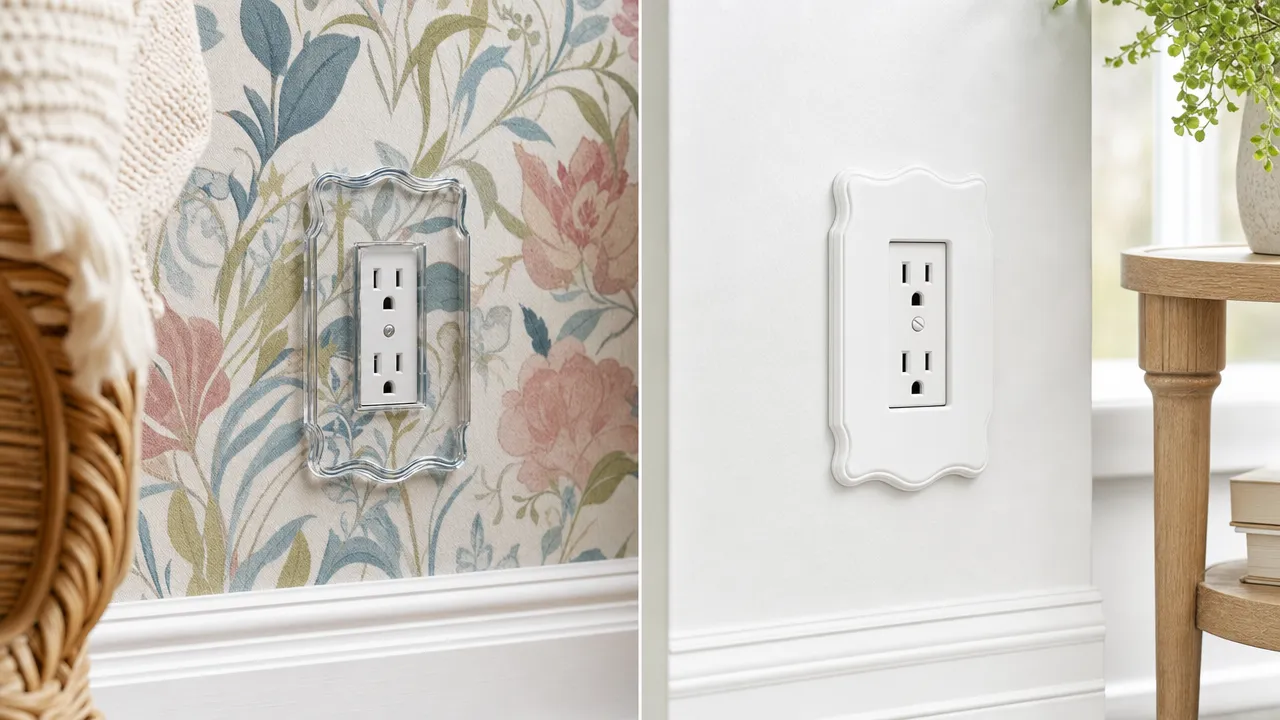
Clear vs white outlet covers: The quick answer
For most homes, white outlet cover plates are easier to live with long term. They match common white receptacles, switches, and trim, are easy to replace, and often make light everyday scuffs less noticeable.
Clear outlet cover plates are most useful when the wall itself is the visual feature. They can reduce the contrast of a bright white plate against wallpaper, dark paint, murals, tile, or a statement-color wall. Still, clear does not mean invisible. Edges, mounting screws, reflections, dust, and wall texture can remain noticeable.
| If your priority is... | Usually choose... | Why |
|---|---|---|
| Easy matching and replacement | White | White plates are widely available in many sizes and device styles. |
| White walls and white receptacles | White | The plate tends to look cohesive with standard electrical devices. |
| Wallpaper, murals, or colorful paint | Clear | A transparent plate can let more of the wall finish show through. |
| Busy family areas | White | Opaque finishes often make fine scratches and haze less obvious. |
| Low-contrast decorating | Clear | Clear can soften the visual interruption of a wall plate. |
| Quick outlet visibility on dark walls | White | A little contrast may make the outlet easier to locate. |
The material matters as much as the color. A well-made clear polycarbonate plate may handle everyday use differently from a clear acrylic plate. Likewise, white nylon, polycarbonate, thermoset, and painted metal plates have different levels of flexibility, finish, and wear resistance.
Clear vs white outlet covers: Cleaning and long-term wear
Clear plates can look sleek when new, but transparent glossy surfaces may reveal fingerprints, fine scratches, cleaning haze, and dust trapped near the edges. In bright sunlight or under direct overhead lighting, those marks can catch the eye more easily.
White plates can show dark grease, food splatters, or marker marks, especially in kitchens and playrooms. However, a matte or lightly textured white plate often disguises routine abrasion better than a glossy transparent one.
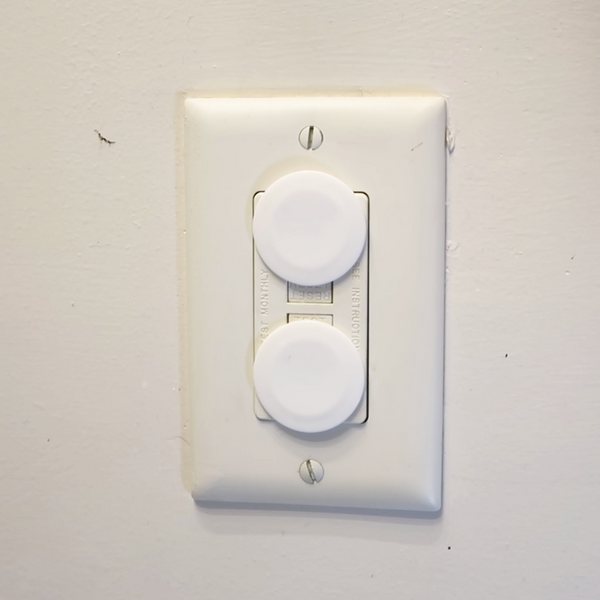
Use gentle cleaning methods for either type. Follow the plate manufacturer's instructions, wipe the external surface with a lightly dampened cloth, and avoid spraying liquids into receptacle openings. If an outlet is loose, cracked, warm, discolored, or does not sit flat behind the plate, stop using it as appropriate and contact a qualified electrician.
This practical comparison is an editorial assessment, not a laboratory durability test:
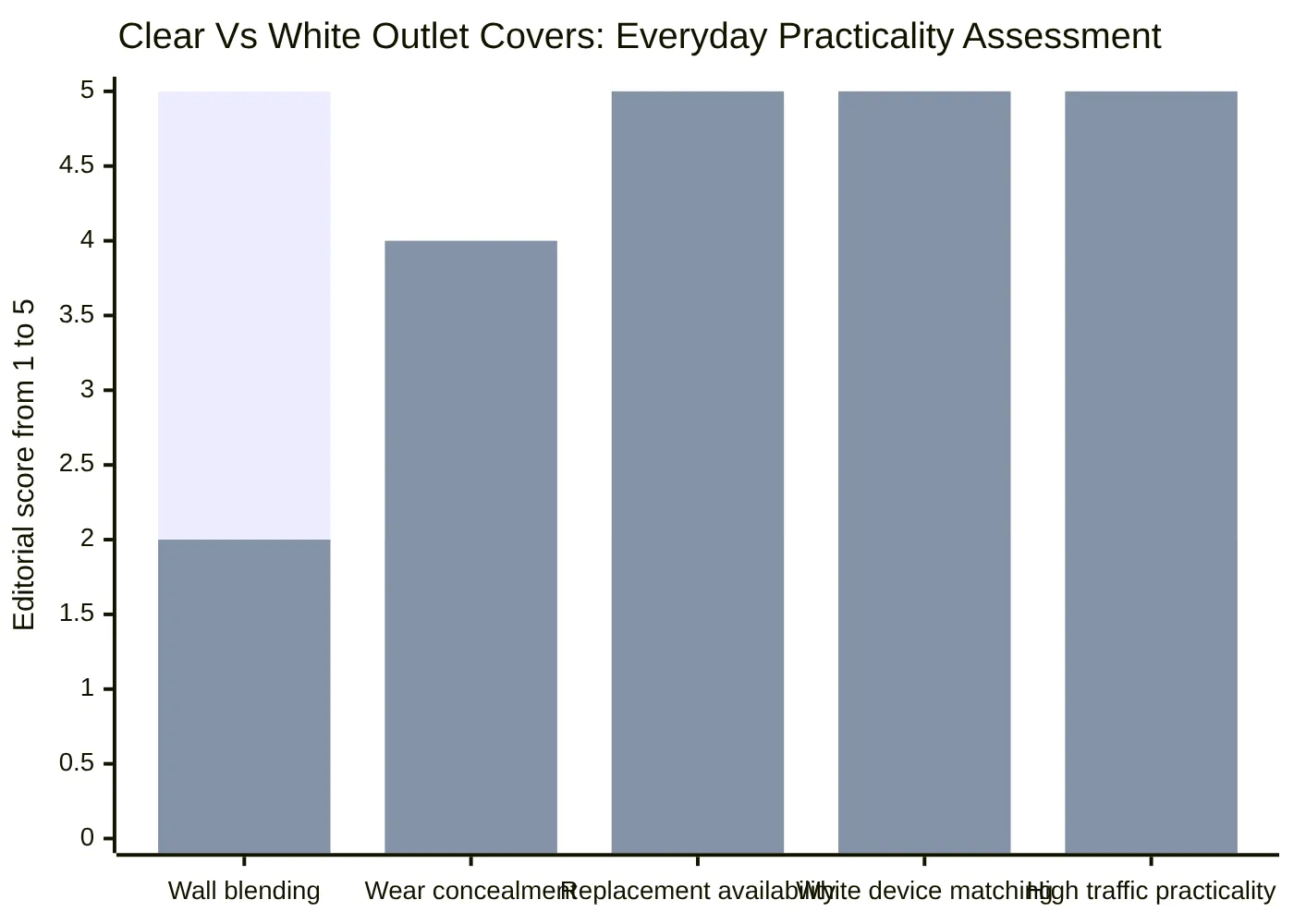
Clear vs white outlet covers: Choosing by room
The right choice can change from room to room. A clear plate that looks intentional in a nursery with patterned wallpaper may be less practical near a heavily used kitchen counter.
| Room | Better default | When the other option works |
|---|---|---|
| Nursery | White | Choose clear on a mural or wallpaper feature wall. |
| Playroom | White | Clear can work in a low-touch, design-focused play space. |
| Kitchen | White nylon or polycarbonate | Clear may suit a decorative backsplash if residue and reflections are not a concern. |
| Bathroom | White | Clear may show water spots and cleaning residue more readily. |
| Living room | Depends on the wall | Clear can suit statement walls; white works well in neutral rooms. |
| Hallway | White | White is easy to replace and can provide helpful contrast on darker walls. |
| Rental | White | Clear can be a reversible design option if the landlord permits a compatible plate change. |
For renters, keep the original plate and verify that a replacement is allowed. Changing a compatible decorative plate is different from replacing a receptacle or modifying wiring. Electrical repairs and upgrades should be handled by a qualified professional when needed.
Clear vs white outlet covers: What parents should know about safety
Neither clear nor white decorative outlet cover plates are childproofing devices by themselves. A wall plate finishes the area around a receptacle, but it does not automatically prevent access to unused outlet slots.
For homes with babies and toddlers, separate the safety question from the color question:
- Check the receptacle condition. A damaged, loose, warm, cracked, buzzing, or discolored outlet needs professional attention.
- Consider whether the outlet is unused or has a plug in it.
- For unused outlets, consider an appropriate certified plug protector based on the child's age, household needs, and product instructions.
- For outlets in use, consider a compatible in-use cover and cord-management approach.
- Ask an electrician about tamper-resistant receptacles when replacing outlets or planning updates.
The Electrical Safety Foundation International's guidance on tamper-resistant receptacles explains that these receptacles use internal shutters that generally open when equal pressure is applied by a plug. They are a built-in approach that is different from both decorative wall plates and removable plug protectors.
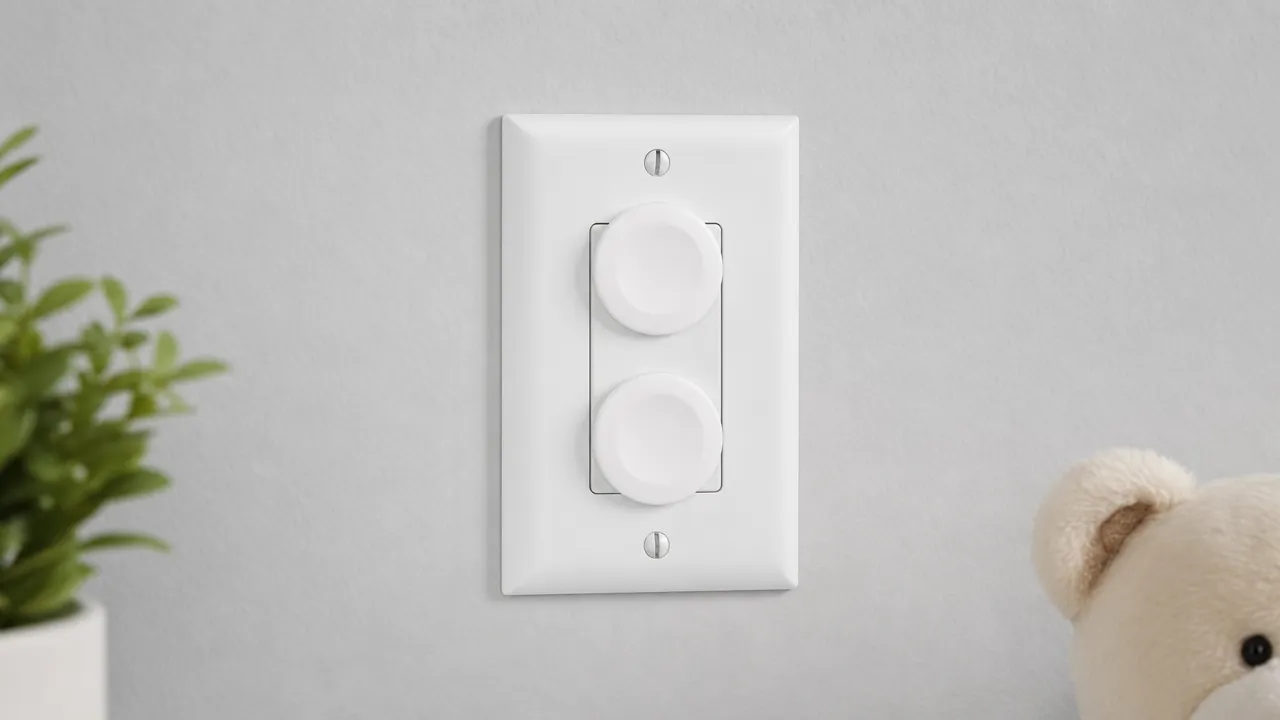
No outlet product replaces supervision, regular inspection, safer storage, and sensible cord management. Health Canada's child-safety guidance also notes the role of outlet safety covers in helping reduce the chance of children inserting fingers or objects into openings.
Clear vs white outlet covers: If you mean plug-in safety covers
Decorative wall plates and removable plug protectors solve different problems. A plate changes the appearance around the receptacle, while a plug-in cover is used in an unused outlet opening as supplemental child-safety protection. If that is the type of product you need, review the Vmaisi Plug-In Outlet Cover.
Use the plug-in cover only in a compatible, undamaged, unused receptacle, and check each outlet individually rather than assuming one fit applies throughout the home. Follow the product instructions, remove any cover that becomes loose or damaged, and remember that a removable cover does not replace a tamper-resistant receptacle, electrical repair, or active supervision.
For the room as a whole, continue checking reachable cords, furniture, and other household hazards separately from the clear-versus-white appearance decision.
Clear vs white outlet covers: Final recommendation
Choose white outlet cover plates when you want the easiest all-around option. They are widely available, simple to coordinate with white receptacles and trim, and generally more forgiving in high-touch rooms.
Choose clear outlet cover plates when preserving the look of colorful paint, wallpaper, murals, or decorative finishes matters most. Just select the material carefully and expect that reflections, dust, and fine scratching may be more visible over time.
Most importantly, do not choose clear vs white outlet covers based on child safety alone. Decorative wall plates are an appearance decision. Outlet safety requires its own plan, including sound receptacle condition, appropriate protection for unused or in-use outlets, cord management, supervision, and qualified electrical help when necessary.