

Babyproofing a Laundry Room: Cabinets, Detergent, and Appliances
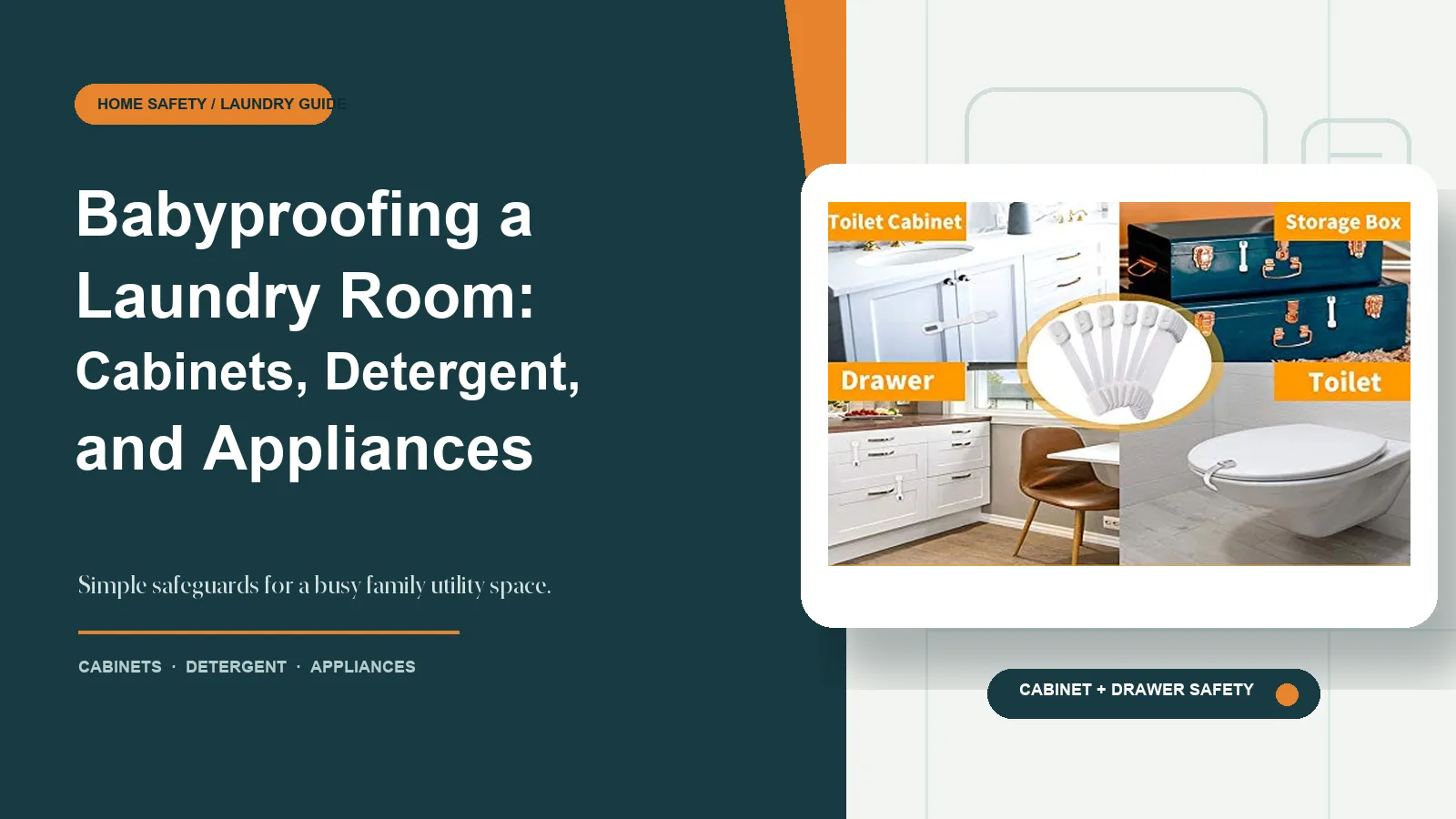
Laundry rooms put concentrated detergent, appliance doors, cords, water, and small objects into one compact space. The safest approach is layered: limit unsupervised access, store hazardous products high and locked, secure compatible cabinets and appliances, and check the setup as your child becomes taller and more capable.
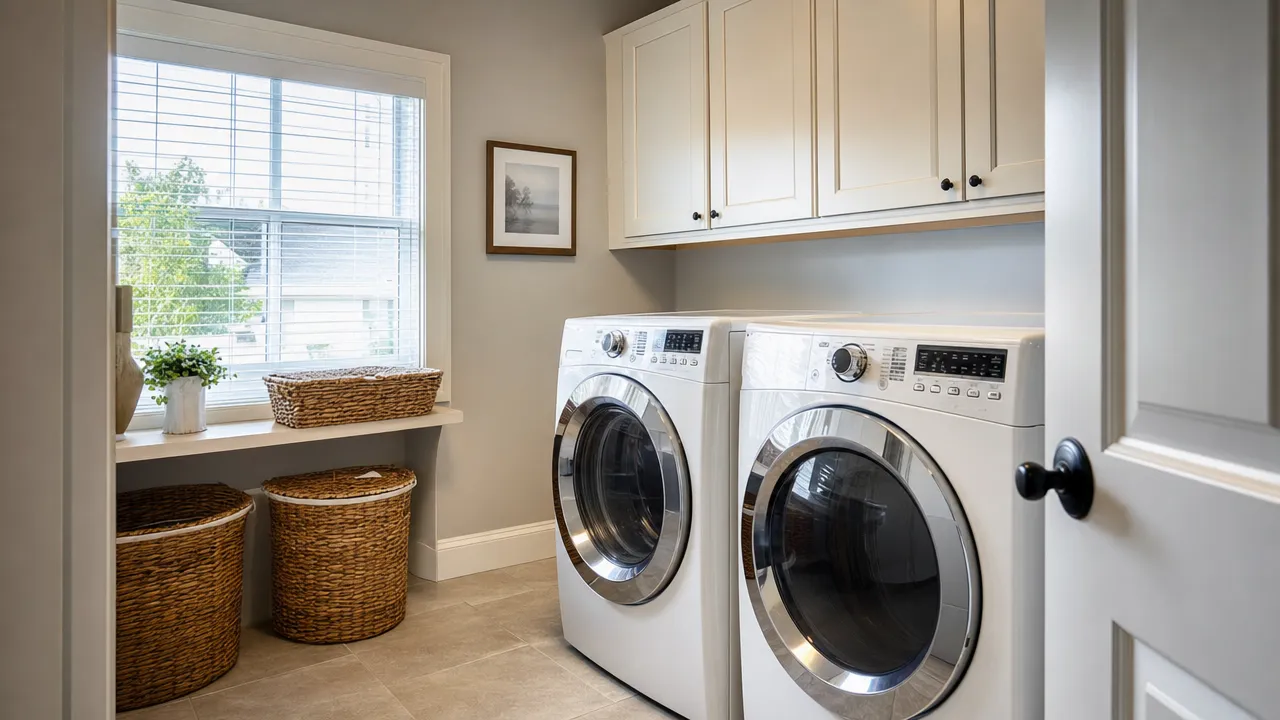
Limit access to the room
Start at the doorway. Keeping the laundry-room door closed when an adult is not using the space reduces access to several hazards at once. If your layout needs an additional entry barrier, choose one that fits the doorway and follow its manufacturer instructions. The room should function as a supervised work area, not as a play space.
A closed door is only the first layer. Someone may leave it open while switching loads or carrying a basket, so the hazards inside still need attention.
Make the room less inviting to climb and explore:
- Keep toys, snacks, phones, and other interesting objects out of the room.
- Store stools, baskets, hampers, and open bins where they cannot become steps.
- Do not leave loose change, batteries, clips, or pocket contents on appliance tops.
- Keep pet food, medication, and water bowls outside the room when practical.
- Tell older children that washers and dryers are not places to hide, climb, or hang.
Store laundry products high and locked away
Detergent pods, liquid or powder detergent, bleach, stain removers, fabric softener, scent products, dryer sheets, and cleaning concentrates belong in high, locked storage. A counter or the top of a washer may be out of reach today but accessible from a hamper or stool tomorrow.
Keep every product in its original labeled container. Close the cap or package immediately after dispensing the product, then return it to storage before handling the next part of the load. Do not transfer detergent or cleaners into cups, food containers, drink bottles, or unlabeled jars.
Use a simple one-product-out routine:
- Take out only the product needed for the current load.
- Measure or dispense it.
- Close the package completely.
- Put it back in locked storage.
- Check the work surface for pods, caps, spills, and residue.
Child-resistant packaging can delay access, but it does not replace locked storage. If a child may have swallowed or been exposed to a laundry product, keep the package available and contact Poison Control in the United States at 1-800-222-1222 for case-specific guidance. Call 911 for trouble breathing, a seizure, collapse, or unconsciousness.
Secure cabinets and drawers by what they contain
Open every low cabinet and drawer and sort the contents before choosing hardware. Priority locations include storage for:
- Detergent, bleach, stain treatments, and household cleaners.
- Medicines, vitamins, batteries, tools, scissors, and utility blades.
- Loose measuring caps, dryer accessories, coins, buttons, clips, and small repair parts.
- Pet products, fragrance products, and packaging pieces.
Move the highest-risk items to elevated locked storage whenever possible. A latch adds a barrier, but it should not be the only protection for chemicals, medication, sharp tools, or batteries.
An internal adhesive cabinet latch can work on a compatible cabinet door or drawer. It mounts inside, uses a manual release, and does not require a magnetic key. Before installation, confirm that the latch and catch have flat, aligned mounting areas and enough clearance for normal movement. Hinges, drawer slides, trim, stored items, and a shallow frame can all block correct placement.
Measure the door-to-frame gap and dry-fit one latch before applying adhesive. Clean dust, grease, detergent film, moisture, and furniture polish from the approved mounting area. Let it dry fully, then follow the product instructions for pressure and curing. Test the door several times before returning hazardous products to the cabinet.
A latch that worked on installation day can later shift because of humidity, a sagging door, a heavy drawer, cleaning, or repeated pulling. Check the adhesive edges, catch alignment, and release action regularly.
Treat washer and dryer access as a separate problem
Keep washer and dryer doors closed when you are not loading or unloading. Before starting a cycle, check inside the appliance. Do not let children climb, sit, hide, or play in or around the machines, and do not let them hang from the doors.
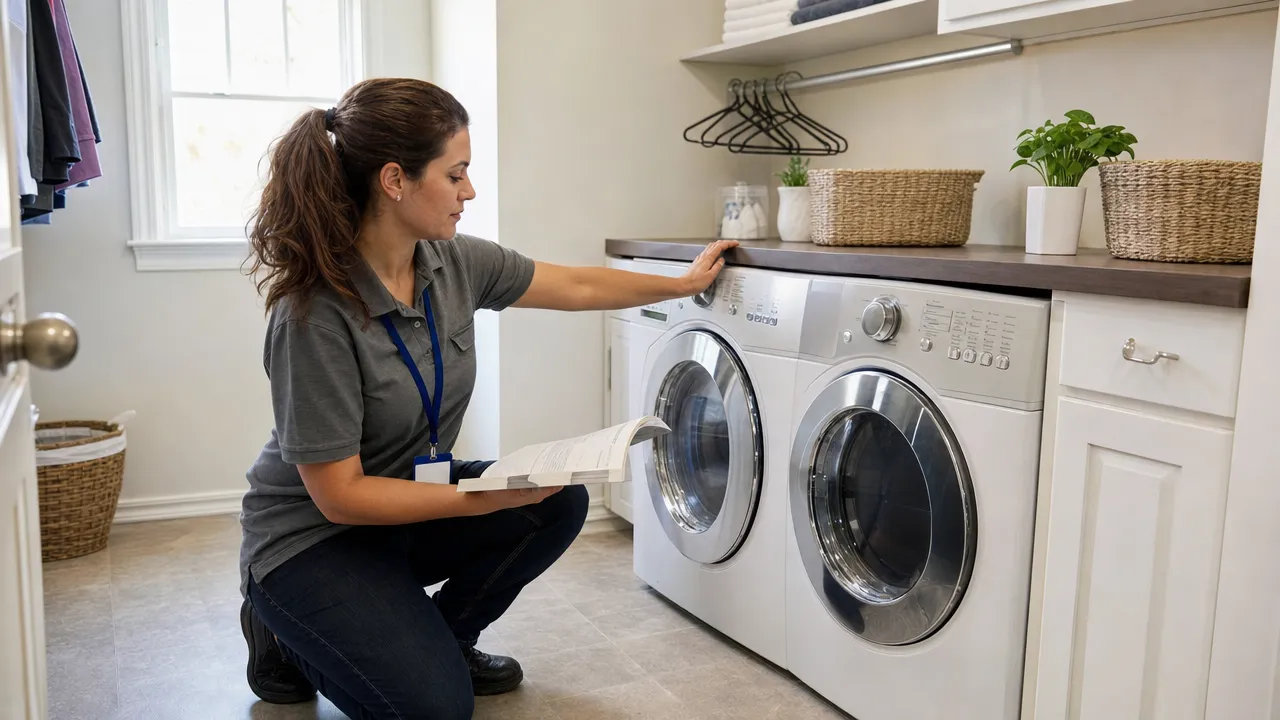
Many appliances have a Child Lock or Control Lock setting, but the name does not tell you exactly what it does. On some models it limits the controls without physically locking the door. Read the manual for the exact washer or dryer and confirm the feature's behavior before relying on it.
An external flexible strap lock addresses a different problem from an internal cabinet latch. It uses two adhesive bases and a visible strap across selected compatible exterior surfaces. It must be actively reconnected after every use.
Before considering a strap on an appliance, check that it will not cross or press on:
- A door gasket or seal.
- A vent, display, button, or control panel.
- A hinge, handle path, moving trim, or service panel.
- An area that becomes hot, wet, or affected by condensation.
- A flexible, curved, textured, damaged, or unstable surface.
There is no universal appliance fit. Dry-fit the complete route, release it, and move the door through its normal range. The appliance must still open, close, seal, and operate without force. Do not use a strap if placement conflicts with the appliance manual or if the manufacturer does not approve the attachment area.
Manage water, cords, and climbing aids
Leave appliance cords and plugs in the arrangement required by the manufacturer. Do not leave loose cord loops within reach, and do not use an extension cord as a permanent substitute for the required connection. Keep plugs and outlets dry. Stop using equipment with a damaged cord, loose plug, scorch mark, unusual warmth, or other sign of an electrical problem until it has been checked by a qualified professional.
Keep a utility sink empty when it is not in use. Empty buckets immediately, store them where children cannot reach them, and deal with leaks or standing water promptly. Do not leave chemicals, sharp objects, or soaking containers in or beside the sink.
Hampers also need attention. A tall hamper may tip, while a rigid bin can become a step. Keep heavy objects out of open hampers and place them where a child cannot use them to reach shelves, cabinet hardware, or appliance controls.
Reset the room after every load
A short routine is easier to maintain than an occasional deep safety check. At the end of each load:
- Return all laundry products to locked storage.
- Pick up coins, buttons, batteries, clips, caps, dryer balls, and packaging.
- Clear the tops of the washer and dryer.
- Close cabinets, drawers, hampers, and appliance doors.
- Empty the utility sink and any buckets.
- Dry wet surfaces and investigate recurring moisture.
- Put away stools and movable bins.
- Close the room door when supervised use ends.
Check the setup as your child grows
Inspect each latch or strap after heavy pulling, cleaning, a leak, appliance service, cabinet adjustment, or a noticeable change in humidity. Stop using a device if the adhesive lifts, the plastic cracks, the strap stretches, the catch stops aligning, or the door no longer closes normally. Do not reinforce failed adhesive with household tape or attach a device to a cord, hose, pipe, gasket, or moving part.
For compatible laundry-room cabinets and drawers, the Vmaisi Child Safety Latches, 12 Pack provide an internal manual-latch option for a focused project. For a selected exterior appliance or unusual cabinet surface, Vmaisi Multi-Use Adhesive Strap Locks are an external option to evaluate. Confirm surface compatibility and clearance first, follow the instructions, and keep safer storage and supervision in place.
Use this final checklist during a room review:
- Unsupervised entry is restricted.
- Detergent, bleach, stain products, cleaners, and dryer supplies are high, locked, and in original containers.
- Caps and packages are closed immediately after use.
- Hazardous cabinets and drawers have suitable, tested access barriers.
- Washer and dryer doors remain closed when not in active use.
- The appliance manual has been checked before relying on a control-lock feature or exterior accessory.
- Straps stay clear of seals, vents, controls, hinges, handles, and moving parts.
- Cords are managed, plugs stay dry, and damaged connections are taken out of use.
- The sink and buckets are empty, and leaks are addressed.
- Small objects, clutter, and climbing aids are removed.
- Every latch or strap is tested and inspected on a regular schedule.