

12-Pack vs 20-Pack Spring Latches: Which Fits Your Home?
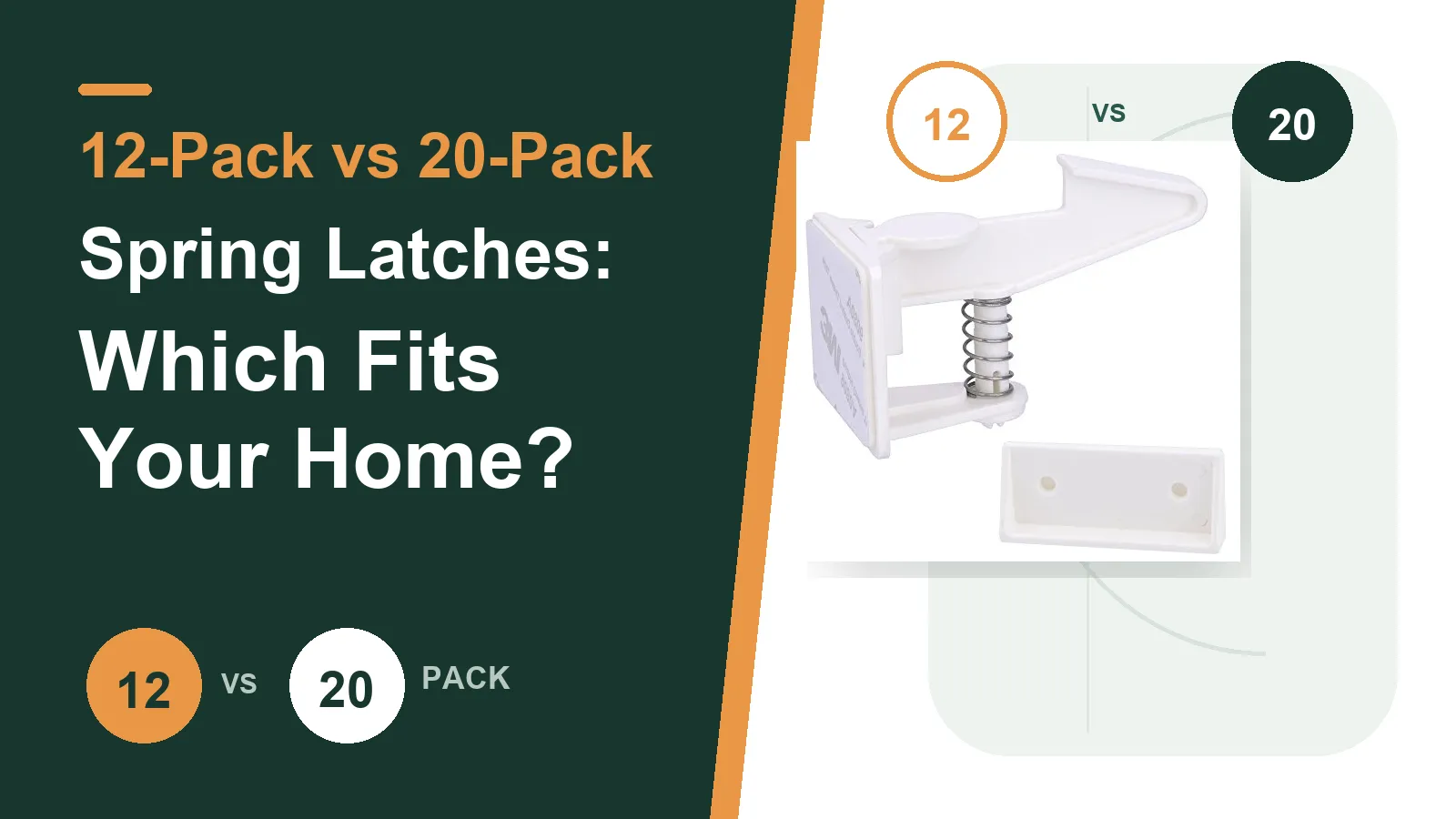
Choosing between a 12-pack and a 20-pack of internal spring latches is mostly a counting and fit question. A larger home does not always need the larger pack, and a compact kitchen can easily use more than 12 latches if it has many reachable drawers and cabinets.
Start by identifying the storage that needs restricted access. Then confirm that each location has enough interior space for a manual latch and catch. Once you have a verified count, the pack decision becomes much simpler.
Quick answer: Choose after counting compatible locations
The 12-pack is usually the practical choice for a focused project with no more than 12 compatible locations. The 20-pack is better suited to a larger kitchen, a multi-room project, or a verified total between 13 and 20.
| Verified compatible locations | Typical project | Pack to consider |
|---|---|---|
| 1 to 12 | Selected cabinets and drawers in one or two areas | 12-pack |
| 13 to 20 | A larger kitchen or several rooms | 20-pack |
| More than 20 | Broad coverage across the home | More than one pack or a phased project |
| Not yet checked | Any project size | Measure and dry-fit before buying |
Do not count every low door or drawer automatically. Count only the places that hold off-limits items and can accept the latch without blocking normal cabinet operation.

Count access points, not rooms
Walk through the home at a child's reachable height. Look first at cabinets and drawers that contain cleaning products, laundry supplies, medicines, sharp utensils, batteries, breakable objects, or other items that should not be available to a young child. Moving hazardous items to higher or separately secured storage can reduce the number of latch points you need.
Next, count each access point separately. A bank of four drawers may require four latches if every drawer needs restricted access. A two-door cabinet may need one or more latch points depending on how the doors move and where the catches can mount. The cabinet layout matters more than the room label.
Use a simple worksheet during the walk-through:
| Area | Storage to inspect | Compatible locations |
|---|---|---|
| Kitchen | Lower cabinets, drawers, under-sink storage, low pantry doors | |
| Bathroom | Vanity doors and reachable drawers | |
| Laundry area | Cabinets holding detergents or cleaning supplies | |
| Living area | Low consoles, media cabinets, and sideboard drawers | |
| Bedroom or office | Reachable drawers with medicines, batteries, or small objects | |
| Utility area | Enclosed storage for tools or household chemicals | |
| Total after fit checks | _____ |
The last line should include only locations that pass an interior fit check. Pipes, shelves, hinges, drawer slides, narrow rails, or uneven surfaces may rule out a latch even when the door looks suitable from the outside.
When the 12-pack makes sense
A 12-pack works well when the project is limited and the count is clear. It may cover a smaller kitchen, a kitchen plus one bathroom vanity, or selected high-priority cabinets in a grandparent's home.
It is also a sensible starting point when you have already moved many hazardous items to safer storage. There is no benefit in attaching latches to child-accessible storage that is intentionally filled with safe toys, towels, or other items a child is allowed to reach.
Before choosing the smaller pack, ask two questions:
- Have you checked all planned locations for fit?
- Are there other rooms you expect to address soon?
If you have checked every planned location and do not expect the project to expand soon, the VMAISI Child Safety Latches 12 Pack may match the plan. These are internal manual latches. An adult opens the door or drawer slightly, presses the latch, and then opens it fully. They do not use a magnetic key.

A count of exactly 12 deserves a second look. If several locations have not been dry-fit, or if another room is likely to be added, the larger pack may avoid a second purchase. Extra latches can provide some planning flexibility, but they are not a reason to install hardware where it is unnecessary.
When the 20-pack is the better fit
A 20-pack becomes more practical when the verified count is above 12 or when the project covers several parts of the home. A kitchen with many lower drawers can use most of a 12-pack by itself. Adding a bathroom vanity, laundry cabinet, and low utility storage may bring the total into the 13-to-20 range.
The larger quantity may also suit a grandparent's home or secondary property with several compatible storage areas. The decision should still come from the count. Square footage and the number of rooms are poor substitutes for inspecting the actual cabinets.
For a project with more than 12 and up to 20 confirmed locations, the VMAISI Child Safety Latches 20 Pack is the corresponding larger option. It uses the same general manual-release approach, but buyers should review the exact listing for current color, package contents, and installation accessories rather than assuming every pack is identical.

If the count exceeds 20, decide whether to buy more than one pack or complete the project in stages. A phased installation can be useful when cabinet finishes or layouts vary. Install and test one group before committing to every location.
Confirm that each cabinet can accept a latch
These latches install inside compatible cabinets or drawers. The latch must align with a catch point when the door closes, and an adult must be able to reach the release through the small opening created by the engaged latch.
Before removing any adhesive backing, hold the parts in the proposed positions and close the door or drawer slowly. Check that:
- Both mounting areas are flat enough for full adhesive contact.
- The latch and catch meet consistently.
- The door or drawer closes without force.
- Hinges, shelves, bumpers, pipes, and drawer slides stay clear.
- Stored items will not strike the latch.
- An adult can reach and press the release comfortably.
Drawers deserve extra attention. A deep drawer box, an upper cross rail, or slide hardware can occupy the same space the latch needs. An exterior gap does not reveal whether the interior geometry will work.
Do not include a location in the final count if engagement is intermittent, the adhesive pad cannot sit flat, or the release is hard to reach. Buying a larger pack cannot solve poor alignment or insufficient clearance.
Install one latch before completing the whole project
Clean and dry the interior mounting surfaces according to the product instructions. Grease, dust, soap film, furniture polish, moisture, and loose paint can weaken adhesive contact. A surface that looks clean may still have residue, especially near a stove, sink, or bathroom vanity.
Install one latch first. Follow the supplied directions for positioning, pressure, and cure time. Do not assume that a cure period stated for another adhesive product applies here. Keep hazardous contents somewhere else until the installed latch has completed the stated bonding period and passed repeated tests.
After curing, open and close the cabinet several times. Confirm that the latch catches every time, that the adult release works smoothly, and that the parts do not shift. Pull from more than one angle without using excessive force. If the product instructions permit screw reinforcement and permanent holes are acceptable, check cabinet thickness and hardware placement before using screws.
Repeat the same fit check at every location. Cabinets in one kitchen can differ in frame depth, hinge position, surface finish, and interior clearance.
Plan for everyday use and regular checks
Manual spring latches avoid the need to store a magnetic key, but they still depend on adult habits. The door must be closed fully so the latch can engage, and adults need to use the internal release rather than forcing the opening.
Inspect active latches regularly. Look for lifted adhesive edges, loose components, cracks, shifted alignment, a sagging door, or a latch that no longer catches consistently. Recheck after moving stored items, adjusting hinges, or cleaning the cabinet interior. As children grow stronger and learn by watching adults, reassess whether the setup still limits access as intended.
Spring latches are one part of a broader safety plan. Continue storing the most hazardous items high and securely, keep products in their original containers, and supervise young children. The right pack is simply the one that covers your verified compatible locations without turning an accurate count into guesswork.